AIO for Not Wanting to Invite My Friend to My Wedding After She Excluded My Fiancé From Hers?
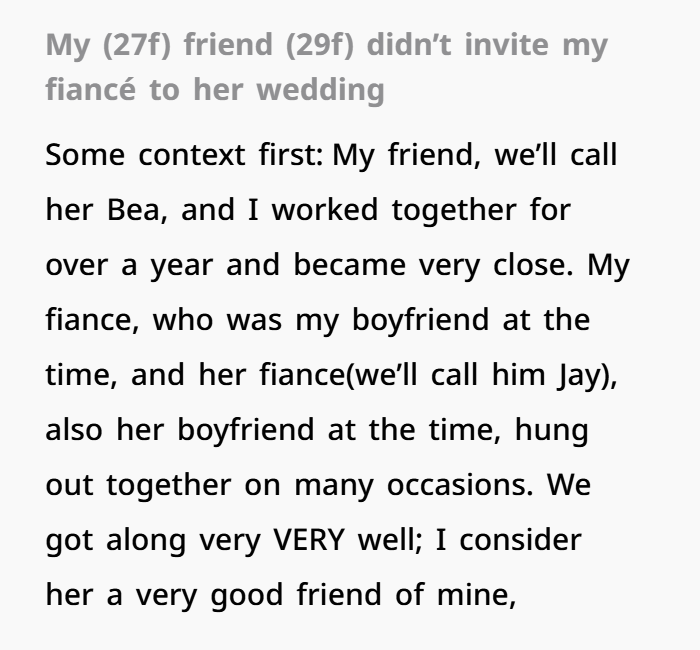
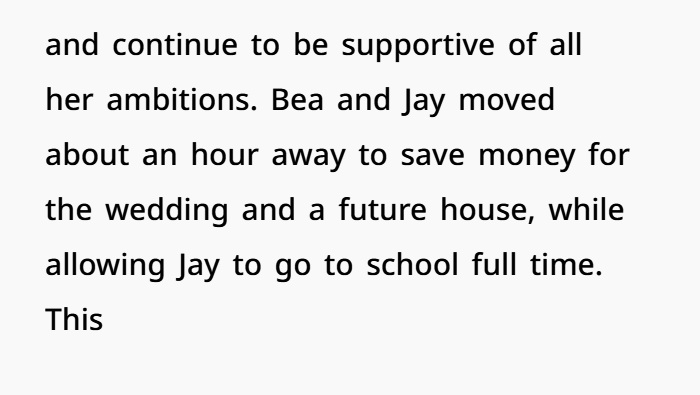
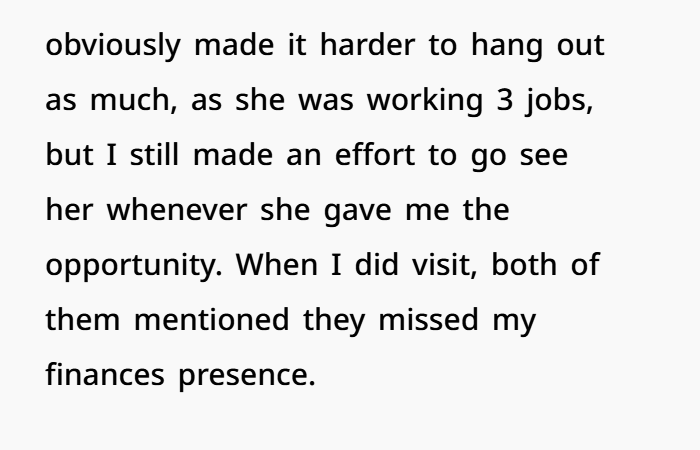
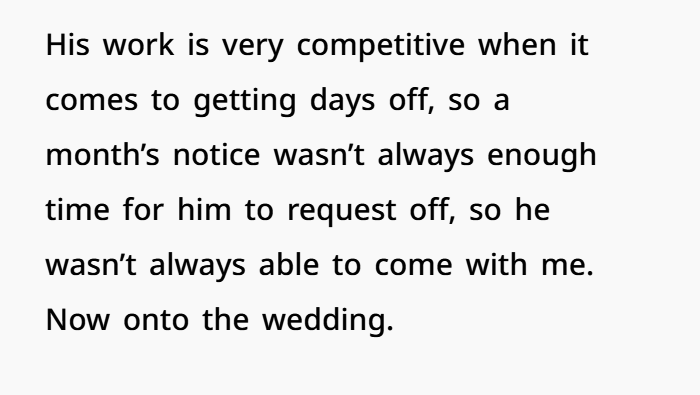
A 27-year-old woman started questioning her friendship after a disappointing experience at her friend’s wedding. She had become close to a 29-year-old former coworker named Bea. Their partners also knew each other, and both couples enjoyed spending time together. Even after Bea and her fiancé, Jay, moved an hour away to save money for their wedding and future home, the woman continued visiting them. She believed they had a strong friendship and was happy when Bea asked her to work as a bartender at her wedding reception.
As the wedding day got closer, the woman noticed that she had not received a wedding invitation. She also did not know the ceremony time or dress code. About a month before the wedding, she asked Bea for the details. Bea sent her a digital invitation but explained that she was not actually invited as a guest because she would be working. When the woman asked about bringing her fiancé, Bea said the wedding guest list was already too full. She also suggested that he would not enjoy the event because he did not know many people there.
The woman felt hurt because her fiancé already knew Bea and Jay and had been looking forward to their wedding. She was also surprised to learn that around 100 people attended the celebration. Even though she was disappointed, she kept her promise and worked as a wedding bartender. Her fiancé was upset about being left out. When he arrived to pick her up after the reception, he was so disappointed that he chose to stay in the car rather than go inside.
Now the woman is planning her own wedding for fall 2027, and the situation has become uncomfortable. Bea has already asked about her wedding plans and saved the date, even though she has not received an invitation. The woman’s fiancé thinks they should invite Bea but leave Jay off the wedding guest list. However, she is unsure if that would be the right decision. She had once thought about asking Bea to be a bridesmaid, but now she is questioning their friendship. For now, neither Bea nor Jay is included in her wedding invitations.

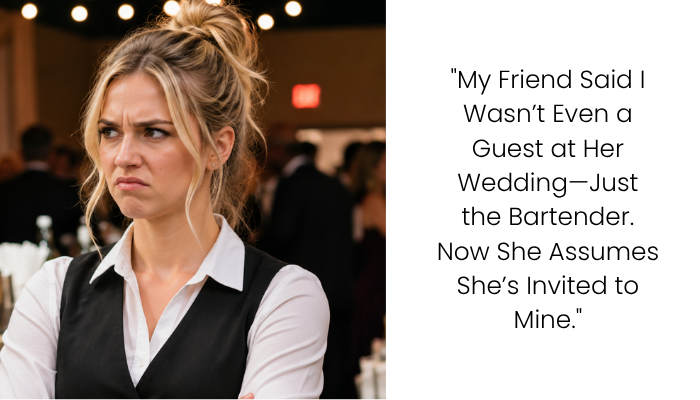
Woman Was Asked to Bartend at Her Friend’s Wedding but Her Fiancé Wasn’t Invited
A woman was excited to help at her friend’s wedding. But what happened next left her questioning their friendship.
Her friend, Bea, was getting married to Jay. Instead of receiving a regular wedding invitation, the woman was asked to work as a bartender.
She agreed because she thought they were close friends.
But about a month before the wedding, she still didn’t have all the details she needed.
When she asked about the invitation and whether her fiancé could attend, Bea gave her an answer she wasn’t expecting.
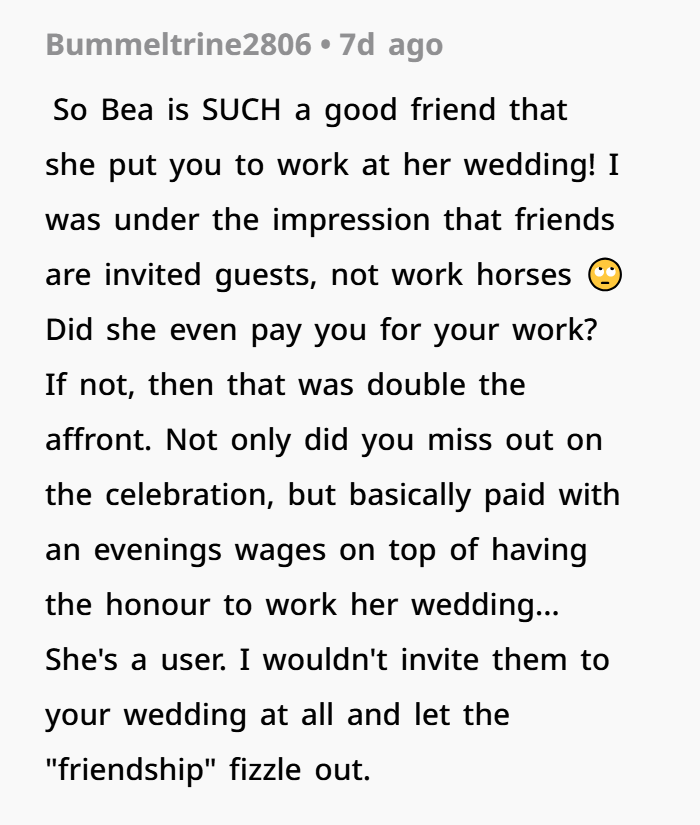
Bea explained that she wasn’t technically invited as a guest because she was bartending.
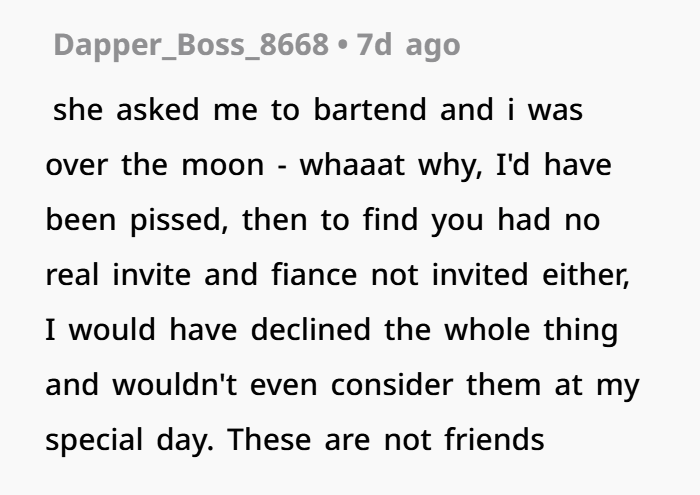
Her fiancé wasn’t invited either.
Now, with her own wedding planned for fall 2027, the woman is wondering whether she should invite Bea and Jay at all.
She Thought She Was Helping a Close Friend
The woman believed she had a good friendship with Bea and Jay.
She wasn’t just someone they knew casually.
She had spent time with them, and her fiancé knew them too.
So when Bea asked her to bartend at the wedding, she agreed to help.
She likely expected to be treated as a friend who was doing something nice for the couple.
But there was a problem.
She didn’t receive a normal wedding invitation.
And she didn’t get the event information she needed until she asked for it about a month before the wedding.
That’s when she learned that Bea saw her role differently.
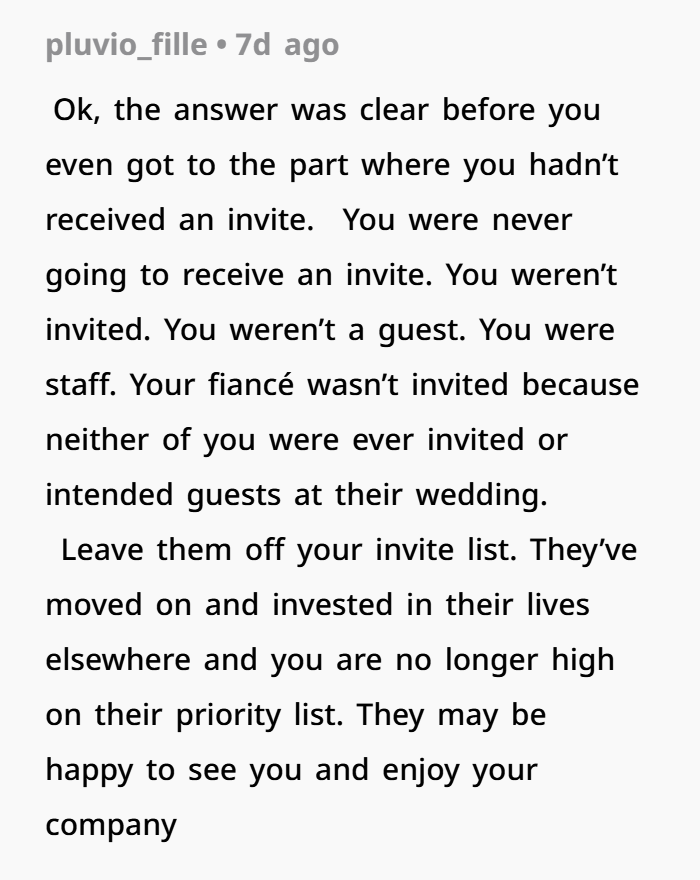
To Bea, she was working at the wedding rather than attending as a guest.
That difference was upsetting.
Is Working at a Wedding the Same as Being Invited?
Not really.
Wedding guests are invited to celebrate with the couple.
Wedding vendors and event staff are there to do a job.
Sometimes, a friend can do both.
For example, someone might help arrange decorations or serve drinks and still be included in the celebration.
But the expectations should be clear from the beginning.
If a friend agrees to provide bartending services, both sides should understand the arrangement.
That includes details such as working hours, responsibilities, payment, and whether the person is also considered a guest.
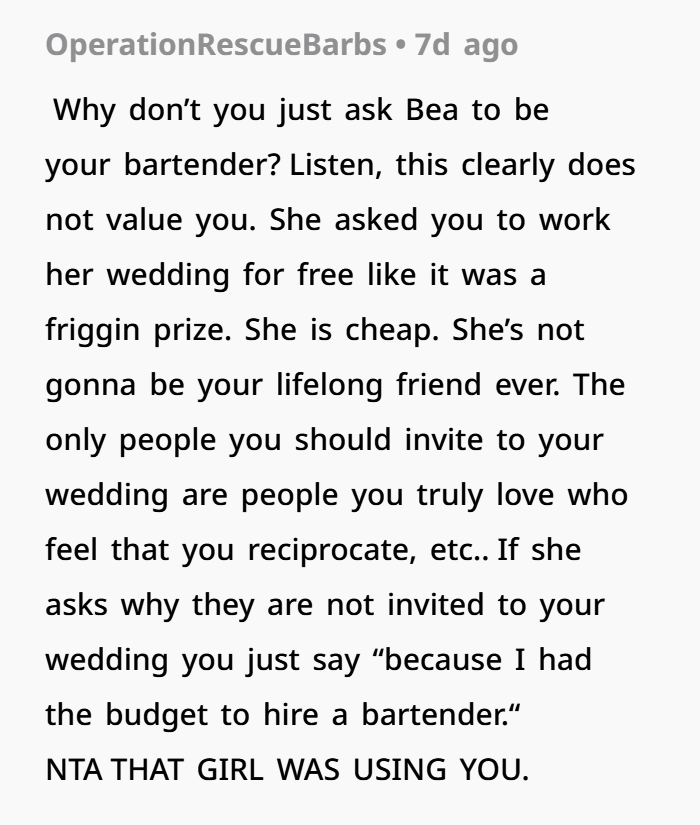
In this story, we don’t know whether the woman was paid for bartending.
We also don’t know how many hours she worked or whether she had time to enjoy the reception.
Those details matter.
Still, finding out that she wasn’t technically a guest could understandably make her feel unimportant.
Why Her Fiancé Wasn’t Invited
The woman was also surprised that her fiancé wasn’t included.
Bea explained that the wedding guest list was already too large.
She also suggested that the fiancé might not enjoy attending because he wouldn’t know many people.
But the woman found that explanation confusing.
Her fiancé already knew Bea and Jay.
They had spent time together before, and the couple had even mentioned missing him.
So he wasn’t a stranger asking for a random plus-one.
He was someone who believed he had a friendship with the bride and groom.
That made the decision feel more personal.
Should Engaged Couples Be Invited Together?
Wedding guest list etiquette can be tricky.
Some couples allow every guest to bring a plus-one.
Others limit invitations because of wedding venue capacity or catering costs.
But established couples, especially those who are married or engaged, are often treated differently from guests who want to bring a casual date.
Traditional wedding etiquette generally favors inviting established partners together.
That doesn’t mean every couple has to follow the same rule.
A bride and groom may have genuine reasons for limiting their guest list.
The problem often comes down to how the decision is explained.
In this situation, the woman felt that her fiancé should have been considered because he already had a relationship with Bea and Jay.
She wasn’t simply asking to bring someone they had never met.
Bea Said It Was a Small Wedding
Bea reportedly described her wedding as small.
She said the guest count was already higher than planned.
But according to the woman, around 100 people attended.
That made her wonder why there wasn’t room for her fiancé.
Still, a wedding with 100 guests can be considered small or large depending on the couple’s plans.
Some wedding venues have strict limits.
Wedding catering packages may also charge per guest, which can make adding extra people expensive.
For example, an additional guest may affect catering costs, seating arrangements, and other wedding expenses.
We don’t know Bea and Jay’s wedding budget or venue rules.
So it’s impossible to say whether they truly had room for another person.
But the woman’s disappointment makes sense.
She thought her fiancé was close enough to the couple to be included.
Her Fiancé Was Hurt by the Decision
The woman’s fiancé was especially upset about being left out.
According to her account, he was so hurt that he refused to get out of the car when he came to pick her up.
His reaction showed that the invitation mattered to him.
He wasn’t simply upset about missing a party.
He believed Bea and Jay were his friends.
Being excluded made him question whether they felt the same way.
Of course, the couple may not have intended to hurt him.
They could have been dealing with a difficult wedding guest list.
But even when a decision isn’t meant to be personal, it can still affect someone’s feelings.
Now the Woman Is Planning Her Own Wedding
The situation became more awkward because the woman is also engaged.
Her wedding is planned for fall 2027.
Before Bea’s wedding, she had even thought about asking Bea to be a bridesmaid.
That suggests she once considered Bea a very close friend.
But after what happened, she started looking at the friendship differently.
She wondered why she had been close enough to help at Bea’s wedding but not close enough to receive a regular invitation.
She was also surprised when Bea casually added her 2027 wedding date to her calendar.
To the woman, it seemed like Bea was already expecting an invitation.
That made the situation even more uncomfortable.
Her Fiancé Wants to Leave Jay Off Their Guest List
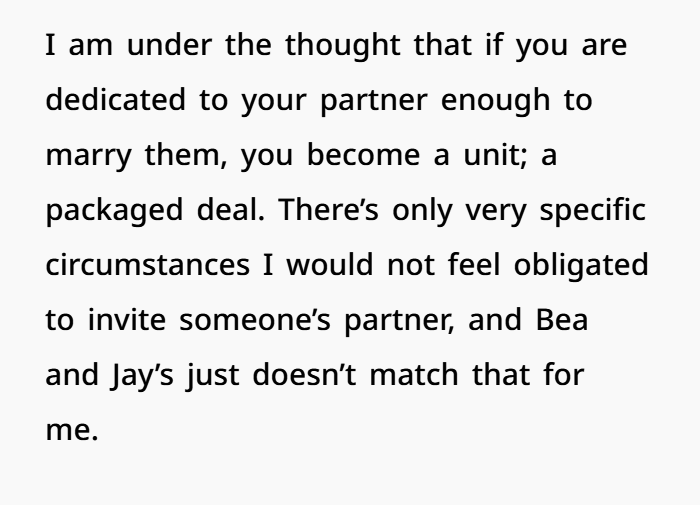
After being excluded from Bea and Jay’s wedding, the woman’s fiancé suggested doing something similar.
He wanted to invite Bea to their wedding but leave Jay off the guest list.
That way, Bea would experience the same situation he had.
It’s easy to understand why he felt that way.
He was hurt and wanted his feelings to be recognized.
But would excluding Jay really solve anything?
Probably not.
If the goal is to protect their wedding day and invite only people they feel close to, they can make that decision together.
But leaving Jay out only to make a point could create another argument.
It might also make the friendship harder to repair.
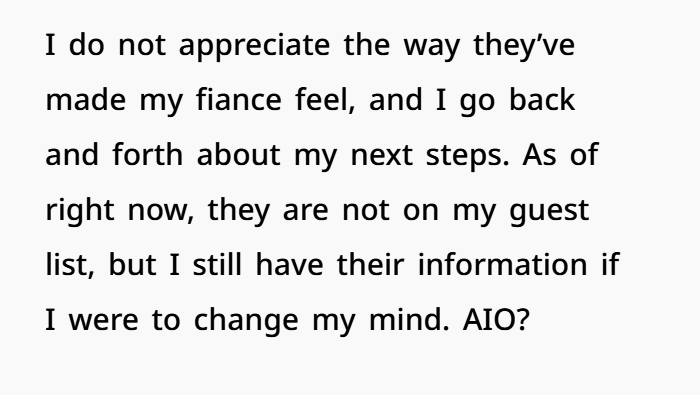
Is It Wrong to Leave Both Friends Off the Wedding Guest List?
The woman and her fiancé don’t have to invite Bea and Jay to their wedding.
Wedding invitations aren’t something people automatically earn because they invited someone to their own celebration.
A wedding guest list should include people the couple genuinely wants to celebrate with.
That might mean close friends, family members, and other important people in their lives.
Wedding planning already involves enough decisions.
Couples have to think about their wedding budget, venue capacity, catering services, and seating arrangements.
They shouldn’t feel forced to invite people just to avoid an uncomfortable conversation.
If the woman no longer feels close to Bea and Jay, leaving them off the guest list could be a reasonable choice.
But making that decision only to get even may lead to more hurt feelings.
Why Bea’s Wedding Date Comment Felt Strange
One small detail bothered the woman more than Bea may have realized.
Bea added the date of the woman’s upcoming wedding to her calendar.
On its own, that sounds like a friendly thing to do.
Maybe Bea was excited about the wedding.
Maybe she simply wanted to remember the date.
But after the earlier disagreement, the woman saw it differently.
Bea hadn’t treated her as a regular guest at her own wedding.
Yet she seemed to expect an invitation to the woman’s celebration.
That made the woman wonder whether they had different ideas about their friendship.
It doesn’t prove that Bea was being selfish.
But it does explain why the woman started questioning how close they really were.
Should She Talk to Bea Before Making a Decision?
The woman’s wedding isn’t until fall 2027.
That gives her time to think.
Instead of making a quick decision while she’s still upset, she could have an honest conversation with Bea.
She could explain that she was happy to help at the wedding but felt hurt when she learned she wasn’t considered a guest.
She could also share how disappointed her fiancé felt about being excluded.
The conversation doesn’t need to become an argument about wedding etiquette.
It could simply be a chance for both friends to understand what happened.
Bea might explain that the wedding budget or guest count was more difficult to manage than the woman realized.
Or she might acknowledge that she could have communicated things better.
Either response would help the woman decide what she wants from the friendship.
What This Story Teaches About Wedding Invitations
Wedding guest lists can reveal differences in how people view their friendships.
One person may believe a friendship is very close.
The other may see it as more casual.
Those differences can be painful, especially during important life events.
This story also shows why communication matters when friends help with wedding services.
If someone is asked to bartend, take photographs, or help with event planning, their role should be clear.
They should know whether they’re working, attending as a guest, or doing both.
That can prevent misunderstandings later.
And when it comes to wedding invitations, couples should try to be thoughtful about established partners.
Not every guest can always bring someone.
But a clear and respectful explanation can make a difficult decision easier to understand.
Final Verdict: Is the Woman Overreacting?
Based on her account, NTA (Not the A-Hole).
The woman has a reasonable reason to feel hurt.
She believed Bea was a close friend, agreed to bartend at her wedding, and later learned that she wasn’t technically considered a guest.
Her fiancé was also disappointed because he already knew Bea and Jay.
At the same time, Bea and Jay were allowed to make their own wedding guest list decisions.
We don’t know their exact wedding budget or venue limits, so it’s unfair to assume they could easily have added another person.
However, the way Bea explained the situation seems to have caused unnecessary hurt.
The woman and her fiancé don’t have to invite Bea and Jay to their 2027 wedding.
But intentionally inviting Bea while excluding Jay just to get even probably isn’t the best approach.
A calm conversation could help the woman decide whether she still wants to keep the friendship close.
In the end, wedding invitations should be about celebrating with people who matter to you, not settling old disagreements.
What do you think? If a friend asks you to work at their wedding but doesn’t consider you a guest, would you still invite them to yours?
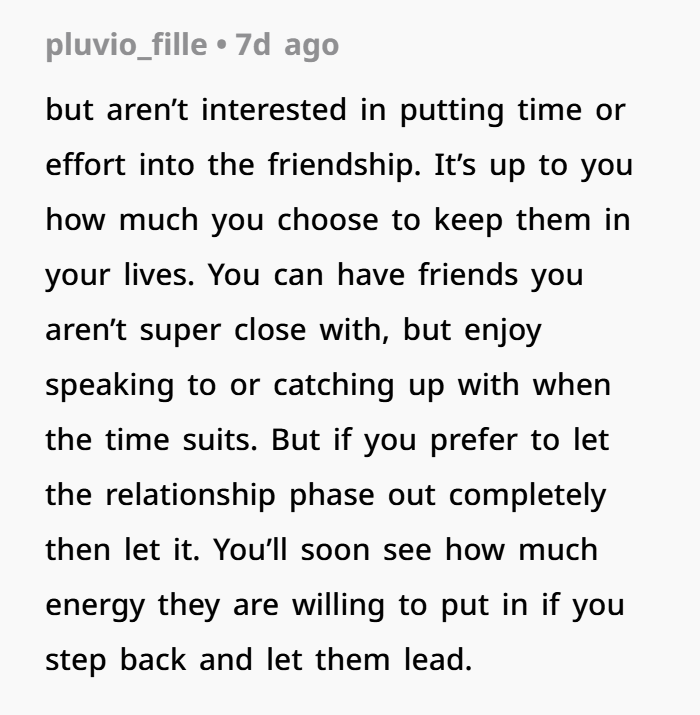
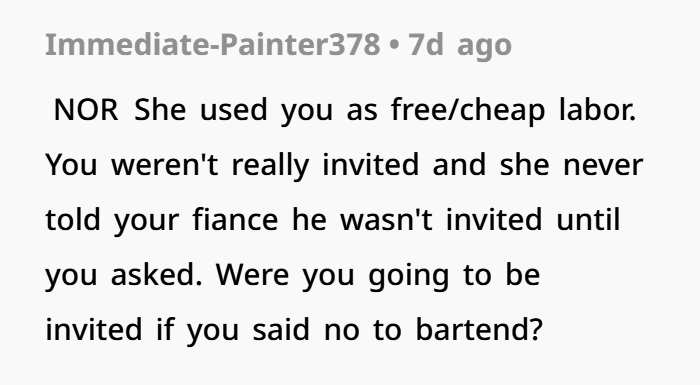
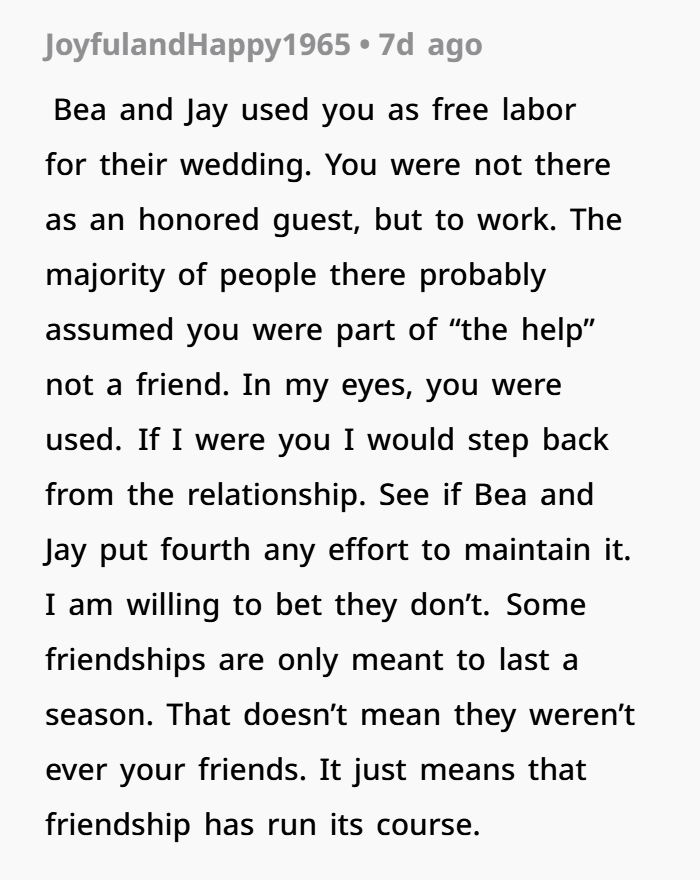
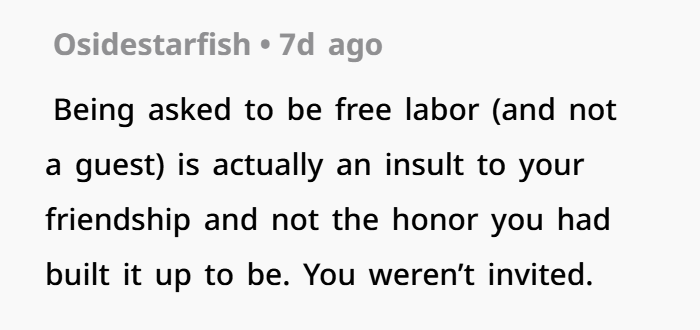
Comments From The Community