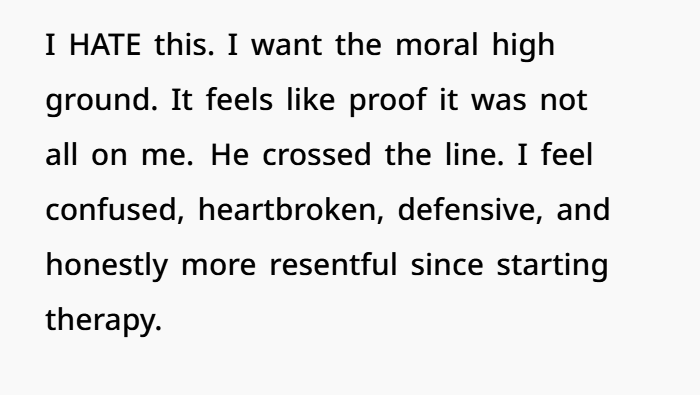
He Cheated — And Now I’m Told I Don’t Get the Moral High Ground
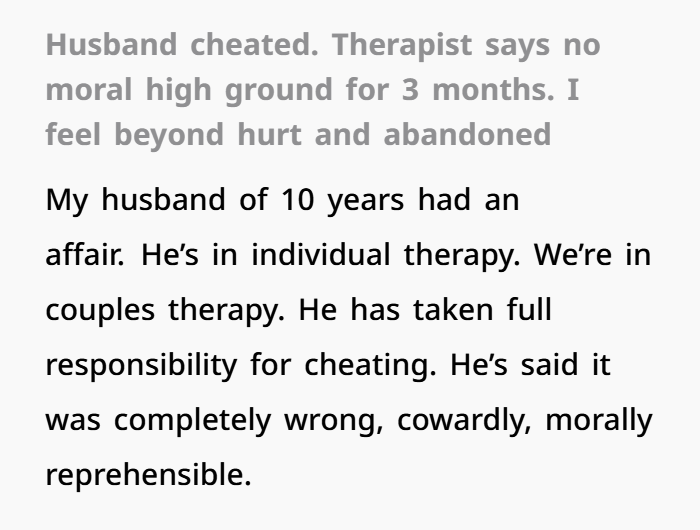
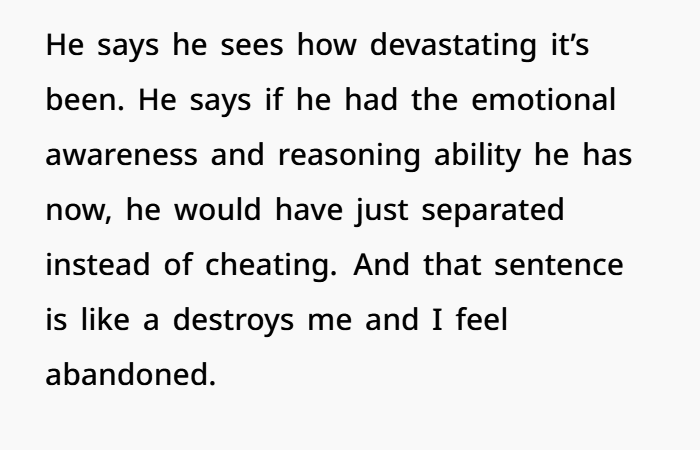
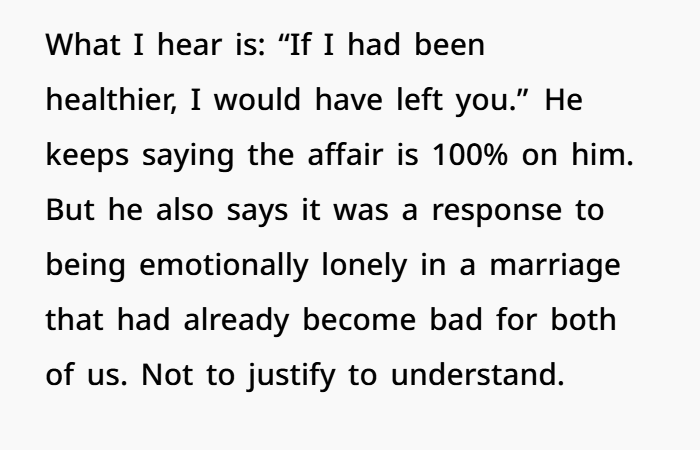
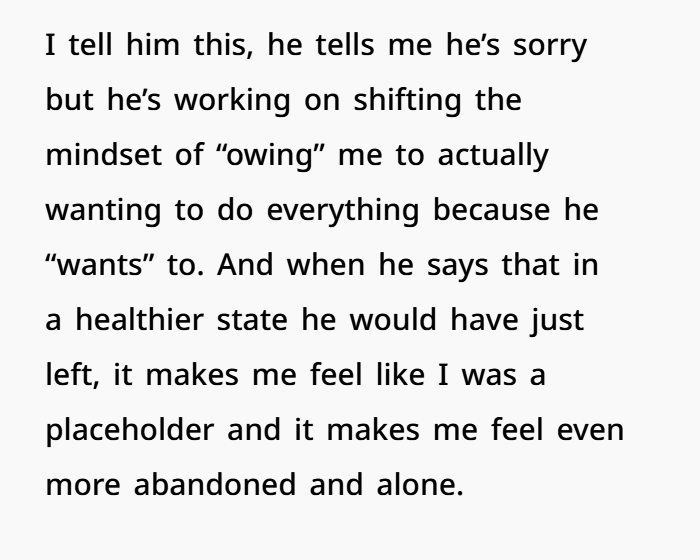
A woman is feeling very hurt and emotionally broken after finding out that her husband had an affair during their 10-year marriage. He has admitted that what he did was wrong and says it came from his own emotional problems. He also says that if he had been mentally stronger, he would have left the marriage instead of cheating. But to her, this does not feel like honesty or healing. It feels like the betrayal is being explained in a way that still leaves her feeling abandoned and deeply hurt.
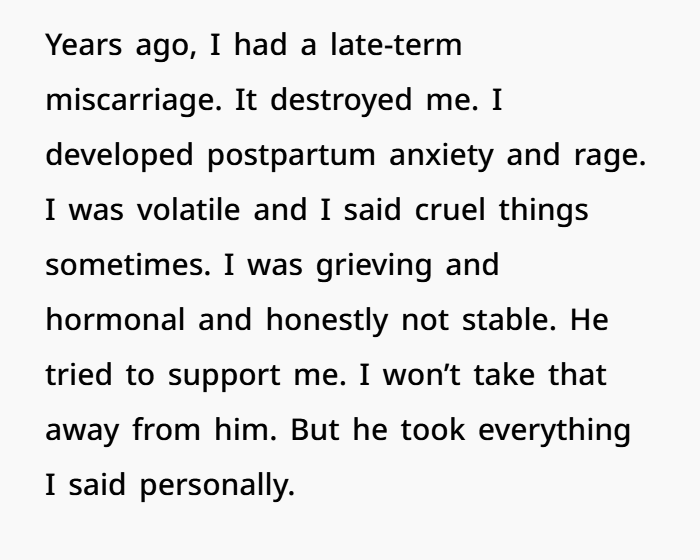
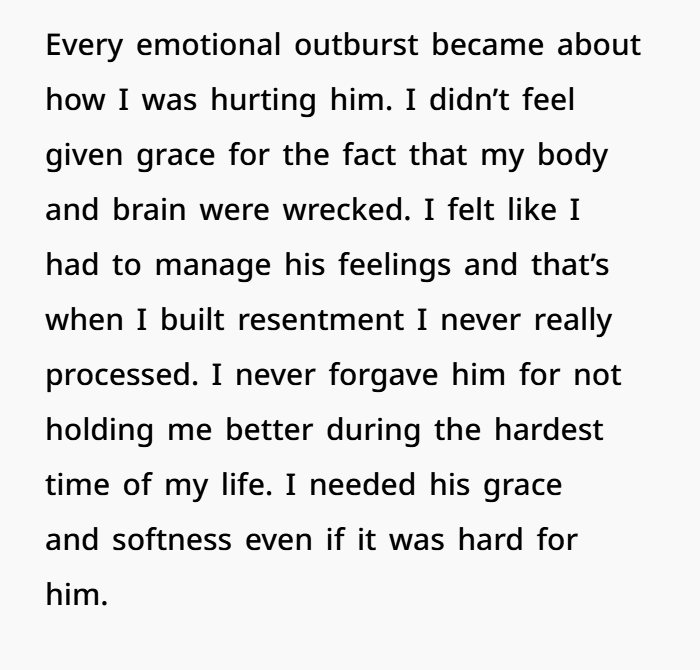
Their marriage did not become difficult suddenly. Years earlier, she went through a late-term miscarriage, which caused serious emotional stress, anxiety, and mood changes. During that time, she needed care, patience, and emotional support. Instead, she often felt alone, misunderstood, and judged. Over time, this created emotional distance and resentment in the relationship.
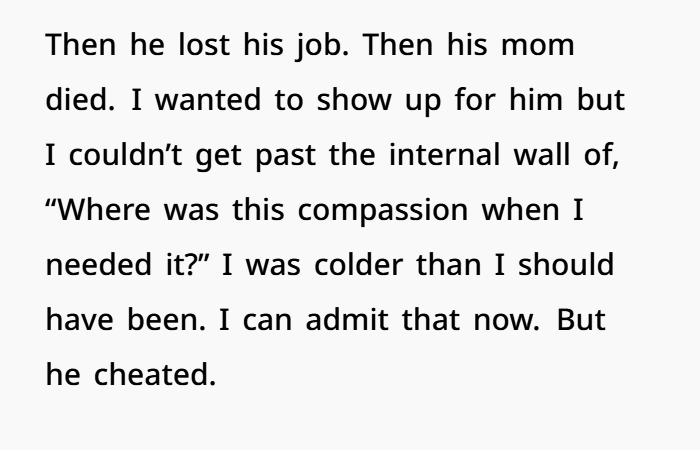
Later, life became hard for him as well. He lost his job and also went through the death of his mother. During this period, she found it difficult to fully support him emotionally, as she was still dealing with her own pain and unresolved feelings.
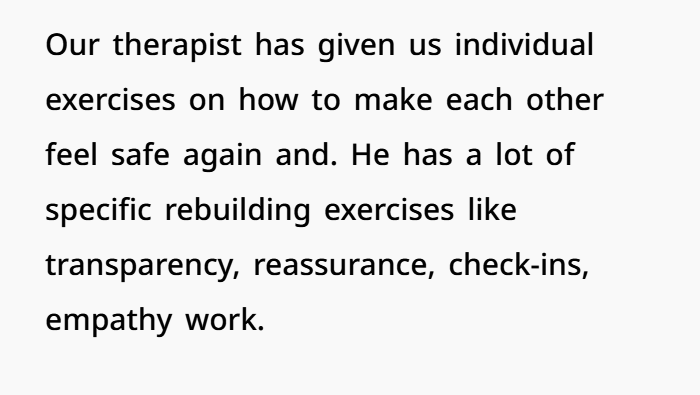
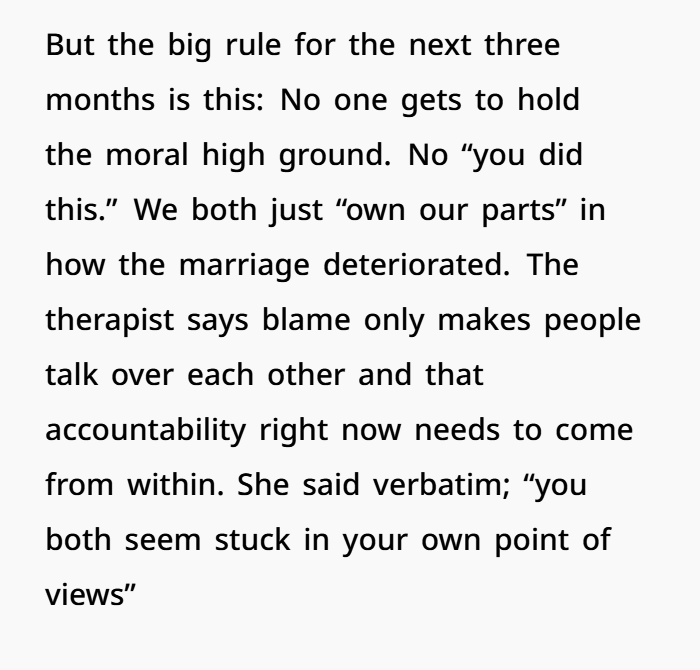
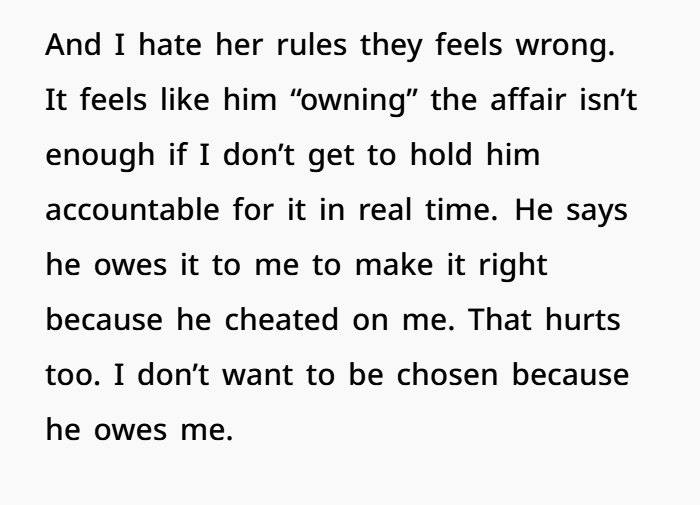
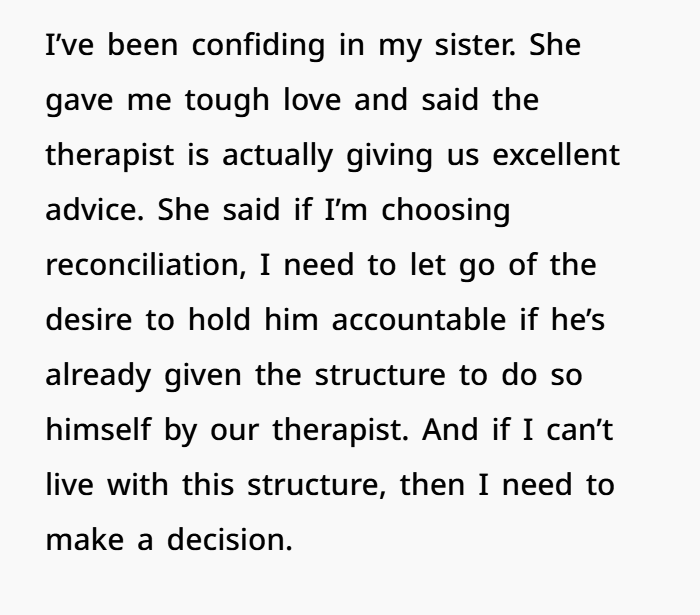
Now they are in therapy, trying to rebuild their marriage with the idea of shared responsibility and no blame. However, she is struggling with this approach. For her, it feels like the difference between pain and betrayal is being blurred, and she is unsure if she can accept this kind of emotional reconciliation or move forward in the relationship.
What you are going through is a mix of infidelity trauma, emotional stress, and couples therapy pressure, and it is one of the hardest situations in a marriage. It can feel like the very advice meant to help is also making your pain feel smaller or ignored.
Let’s break it down simply.
First, your feelings are completely normal. When a partner cheats, it is not just a relationship problem. It can feel like emotional betrayal and loss of safety. In relationship psychology, this is often called betrayal trauma. Many studies in marriage counseling and infidelity recovery show that the brain reacts to cheating in a way similar to strong emotional stress. That is why the pain can feel intense, repetitive, and hard to control.
There is an important difference here: taking responsibility and feeling emotionally understood are not the same thing.
Your husband is admitting he was wrong. That is important and is often a key step in couples therapy for affair recovery. But even if he is being honest, you still need emotional validation. You need your pain to be fully recognized, not reduced or blended into general “relationship problems.”
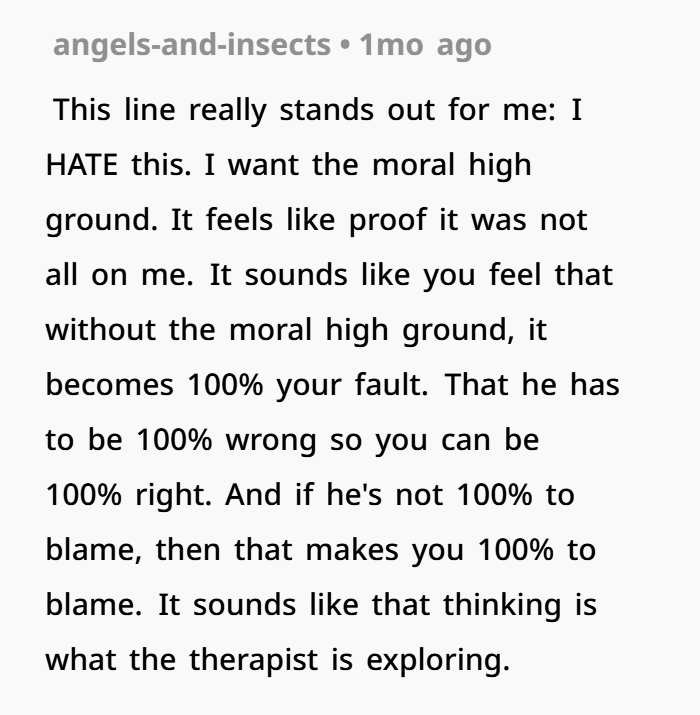
When you say you want the “moral high ground,” what you really mean is that you want your pain to be clearly seen and not blurred.
Now about the therapy approach you mentioned.
Many therapists use a method where both partners avoid blaming each other and focus on rebuilding the relationship. This is meant to stop constant fighting and help couples reconnect through marriage counseling and emotional healing techniques.
However, there is a problem when this approach is used too early.
Yes, relationships often break down because of both people over time. But cheating is still a personal choice made by one partner. In infidelity recovery, this difference is very important. If it is ignored too soon, it can feel like your pain is being treated as equal to the betrayal itself, which feels unfair and painful.
Now about his comment:
“If I was healthier, I would have left.”
To him, this may mean he was emotionally weak and unable to leave a failing relationship in a healthy way.
But to you, it feels like rejection. It can sound like: “I would not have stayed for you.”
That is why it hurts so much. It connects directly to your past emotional pain and feelings of being unsupported during hard times, like your miscarriage and postpartum anxiety period. Research in relationship therapy shows that couples often struggle deeply during grief and health crises, especially when emotional support is not balanced.
So this is not just about the affair. It is also about old emotional wounds being reopened.
Your therapist’s idea of “no blame” is meant to help couples stop fighting and start rebuilding trust in marriage counseling. But healing usually happens in steps:
First, safety and emotional stability
Then, understanding and processing pain
Then, rebuilding the relationship
Right now, it sounds like you are still in the early stage, but you are being asked to move forward too quickly. That can feel confusing and unfair.
Another issue is the feeling of “owing vs wanting.” When repair feels like a duty instead of a choice, it can make the relationship feel forced. That makes it harder to rebuild trust and emotional security.
At the same time, your anger is also important. It is helping you protect yourself and recognize that what happened was serious. But if anger stays the only focus for too long, it can also make healing harder.
The real question is not about who is right or wrong in a moral sense. It is about what you need in order to feel emotionally safe again, whether that is in this marriage or in your own healing process.
And it is completely okay if you are not ready to let go of that pain yet.
Readers’ Comments Speak Out