
My Parents Made My Husband Sleep on the Couch… Then Blamed Me for Joining Him
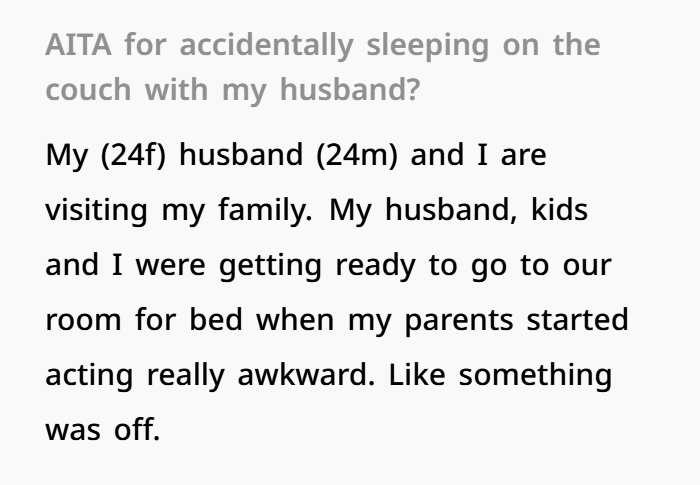
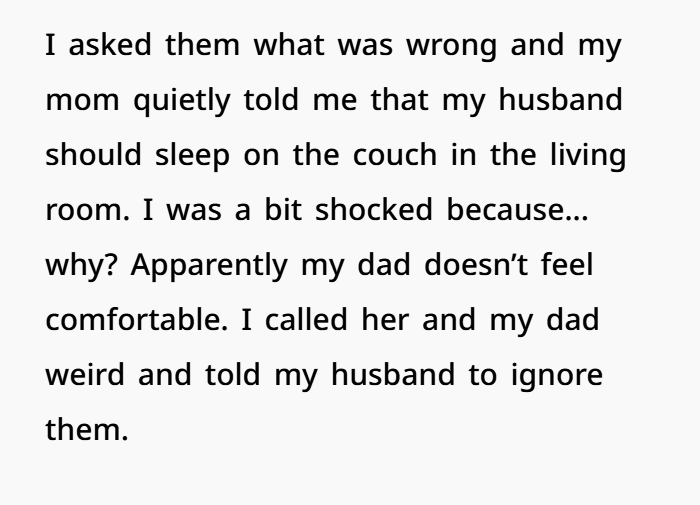
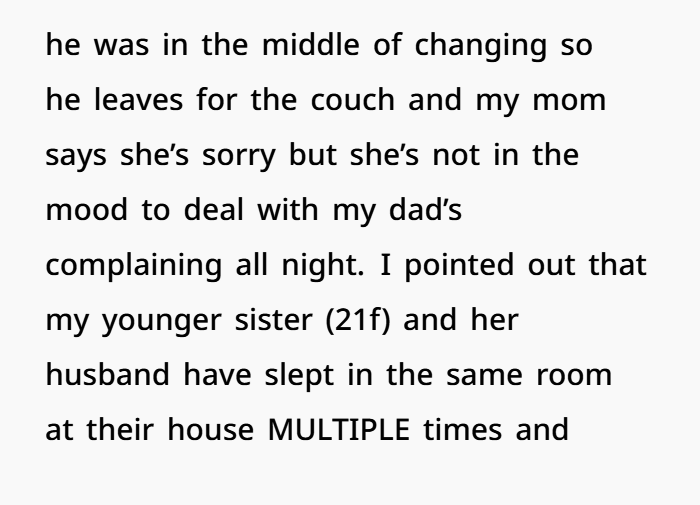
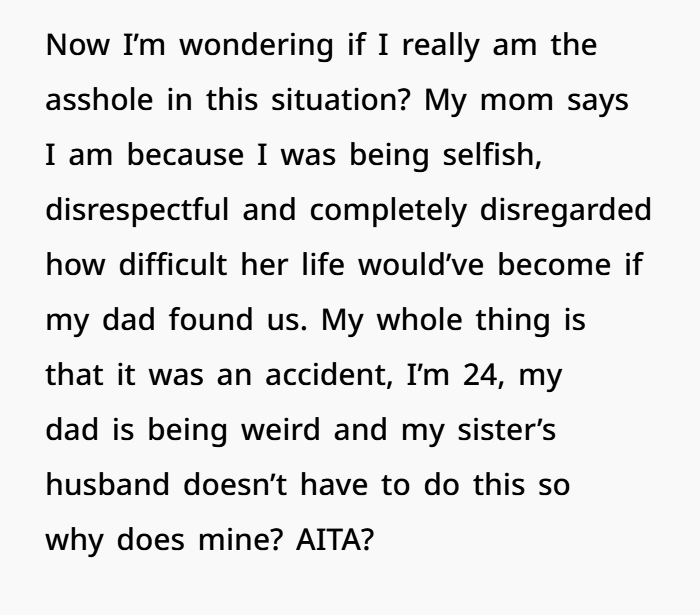
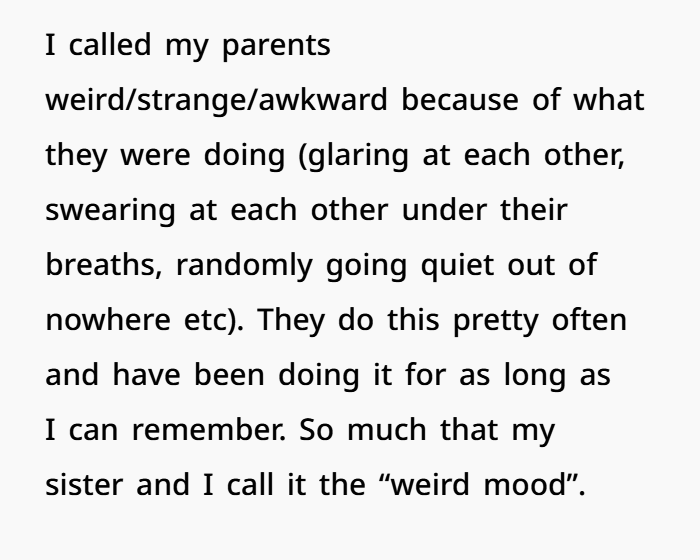
So this whole situation kicks off during what should’ve been a normal family visit. A young married couple, both 24, traveling with their kids to stay at her parents’ house. Nothing unusual there. But right from the start, something feels off. The parents are acting strange… quiet, tense, giving each other looks. That kind of energy you notice instantly but can’t quite explain. Then it finally comes out — the dad isn’t comfortable with her husband sleeping in the same room as her. Yeah… even though they’re literally married with kids.
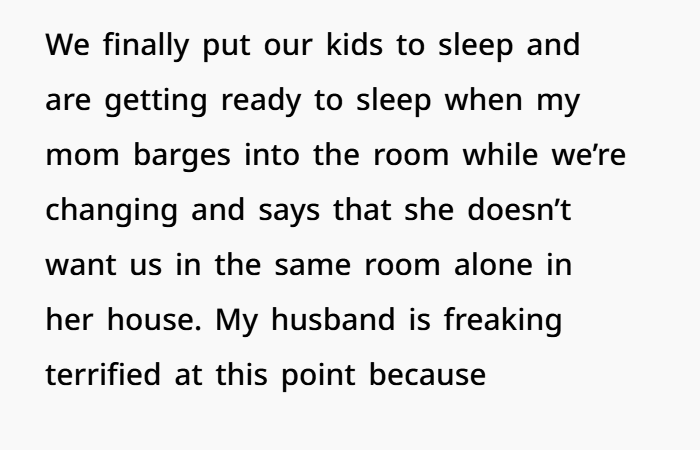
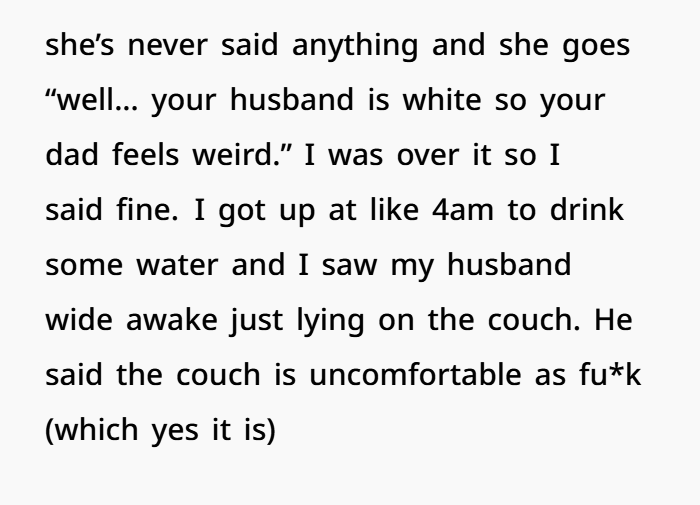
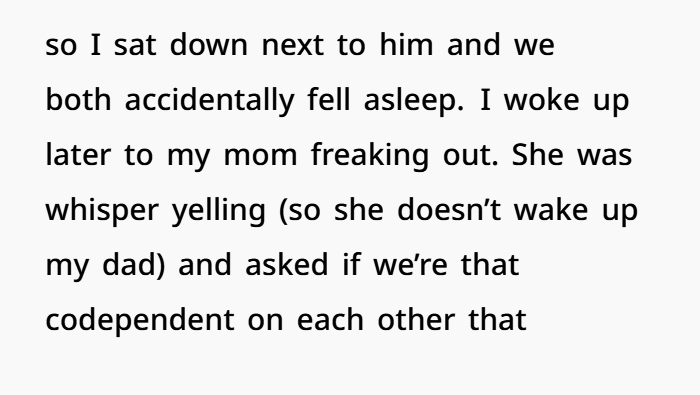
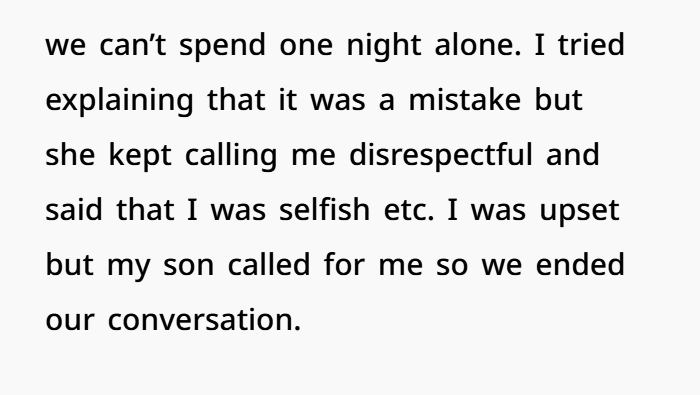
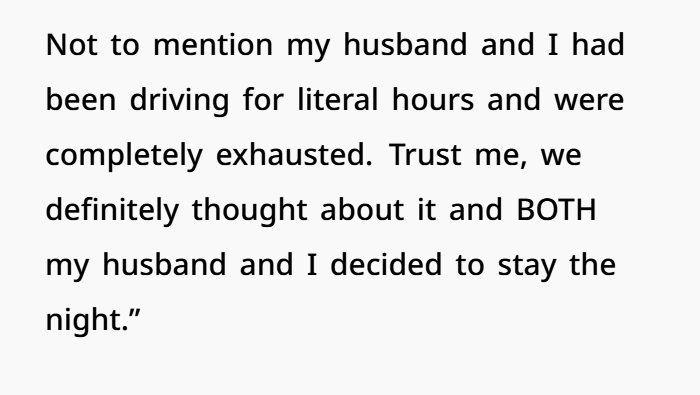
It gets worse. The mom doubles down and basically forces the husband out to sleep on the couch. The reason? He’s white, and the dad “feels weird” about it. That’s where things start shifting from just awkward to straight-up unfair. The couple tries to brush it off, but later that night, when she finds her husband awake and uncomfortable, she sits with him… and they both accidentally fall asleep. Seems harmless, right? Not according to her mom, who flips out the next morning and calls her disrespectful and selfish. Now she’s stuck wondering if she actually crossed a line… or if her parents did.





Alright, let’s unpack this properly because this isn’t just about “sleeping on the couch.” That’s just the surface. Underneath, there’s a mix of cultural expectations, racial bias, family power dynamics, and relationship boundaries. And honestly, situations like this are way more common than people talk about — especially in South Asian households.
First, the biggest thing here: control vs respect.
In many traditional families, especially South Asian ones, parents often feel like their house = their rules. And yeah, that’s fair to a point. But where it gets messy is when those rules ignore reality. This isn’t a teenage couple sneaking around. This is a legally married couple with kids. At that point, asking them to sleep separately isn’t about “respect,” it’s about control… or discomfort that hasn’t been properly addressed.
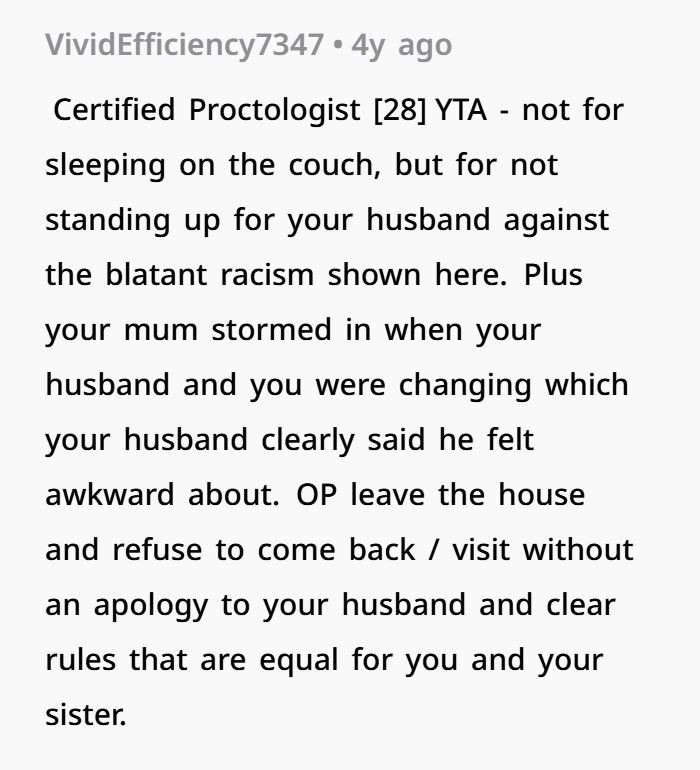
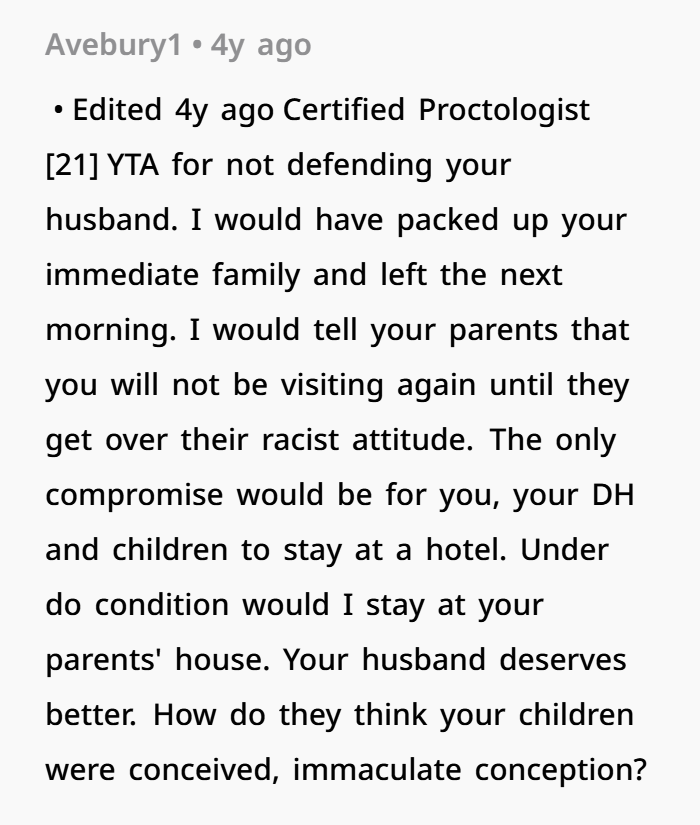
Now layer in the interracial aspect. The mom straight up admits the dad feels uncomfortable because the husband is white. That’s not subtle. That’s bias, plain and simple. Maybe not aggressive racism, but definitely prejudice. And in a lot of families, this kind of thing doesn’t come out openly. It shows up in small rules, weird behavior, or double standards — like how her sister’s husband didn’t have to deal with any of this.
And that double standard matters. A lot.
Because when rules only apply to one person, it’s not really about the rule anymore. It’s about who they’re applied to. That’s where people start feeling disrespected. Not just the husband, but her too. Because by extension, it’s like saying her marriage is less valid or less acceptable.
Now let’s talk about her “accidentally” falling asleep on the couch.
This part is actually important because her mom framed it as intentional disrespect. But realistically? It doesn’t sound like that at all. She woke up early, saw her husband uncomfortable, sat down with him, and they both passed out. That’s human. That’s what happens when you’re tired, especially after traveling, dealing with stress, and having your routine disrupted.
There’s also something deeper here — emotional partnership.
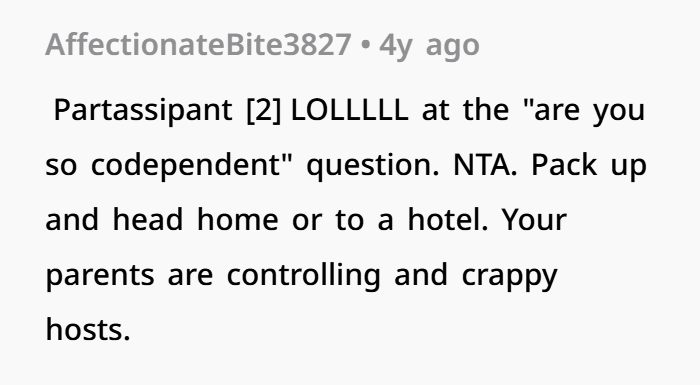
Her mom called them “codependent,” but honestly, that feels like a stretch. Sitting next to your spouse when they’re uncomfortable isn’t unhealthy attachment. It’s basic care. In healthy relationships, partners naturally gravitate toward each other for comfort. That’s not dependency, that’s connection.
And let’s be real… if roles were reversed, most people wouldn’t even question it.
Now, from a psychology angle, the parents’ reaction actually says more about them than about her.
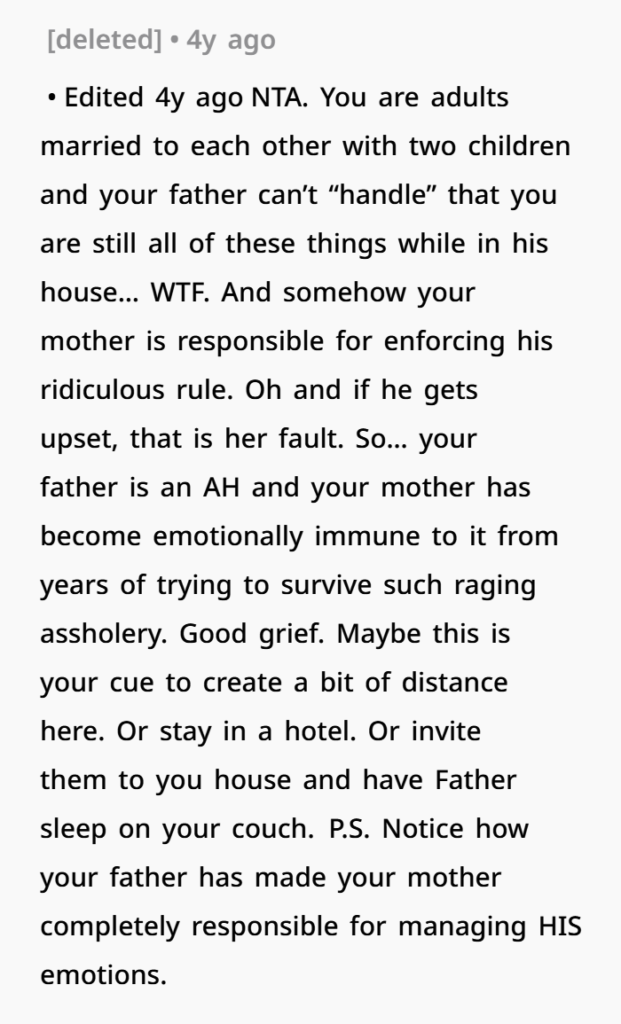
The dad’s discomfort likely isn’t really about sleeping arrangements. It’s probably tied to deeper beliefs — cultural expectations, maybe even internalized ideas about race or control over daughters. In some traditional mindsets, even after marriage, daughters are still seen as needing oversight, which clashes hard with modern relationship dynamics.
The mom, on the other hand, seems stuck in the middle. She even admits she just didn’t want to deal with the dad complaining all night. That’s a classic case of conflict avoidance. Instead of addressing the root issue (the dad’s discomfort), she shifts the burden onto her daughter and son-in-law.
And that’s where things become unfair.
Because now the couple has to adjust their behavior, not because they did anything wrong, but because someone else refuses to deal with their own feelings.
Let’s also talk about boundaries for a second — because this is where things really matter long-term.
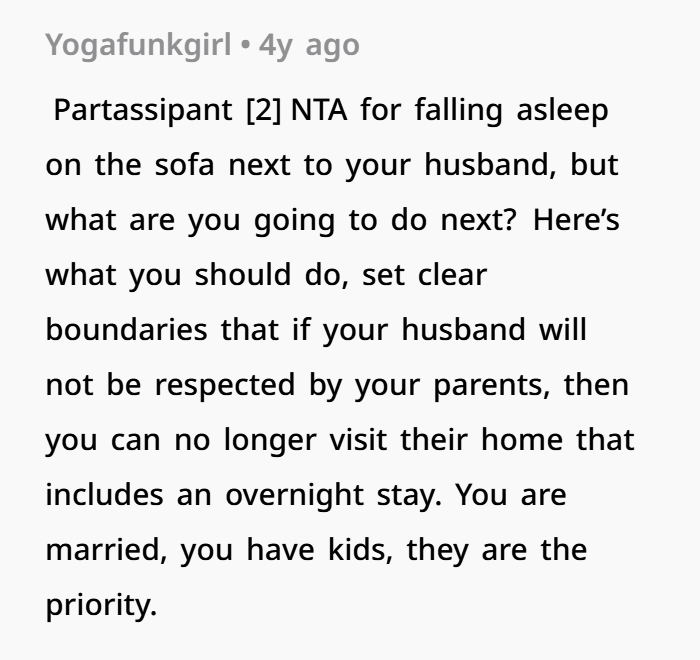
When you’re married, your primary family unit shifts. It’s no longer just parents and siblings. It’s your spouse and kids. That doesn’t mean you stop respecting your parents, but it does mean their authority has limits.
And in this case, those limits got crossed.
Asking a married couple to sleep separately — especially with no consistent rule applied to others — is already pushing it. But then getting angry over an accidental situation? That’s where it becomes unreasonable.
There’s also a safety and practicality angle that people overlook. She explained they arrived late, it was snowing heavily, roads were dangerous, kids were exhausted… leaving wasn’t really an option. So they stayed. That’s a responsible decision. But instead of acknowledging that, the parents focused on control.
And honestly, that kind of environment creates tension that sticks.
Because moments like this don’t just disappear. They shape how future visits feel. They affect trust. They make people hesitant to come back.
From a broader perspective, this situation highlights a really common struggle: balancing cultural respect with personal boundaries.
A lot of people from traditional backgrounds deal with this. You want to respect your parents, their home, their beliefs… but at the same time, you’re an adult with your own life, your own marriage, your own values.
And sometimes those two things don’t align.
When that happens, there’s no perfect solution. But one thing becomes clear — mutual respect has to go both ways.
Parents can’t expect full obedience while dismissing their child’s reality. And couples shouldn’t be made to feel like their relationship is something inappropriate or inconvenient.
At the end of the day, this wasn’t really about a couch.
It was about discomfort that wasn’t communicated properly. About bias that wasn’t addressed. About control being prioritized over understanding.
And the “accident” just became the easiest thing to blame.
If anything, this situation shows how quickly small actions can turn into big conflicts when there’s already tension underneath.
And honestly? That’s the part that sticks with you.
The Comments Are In