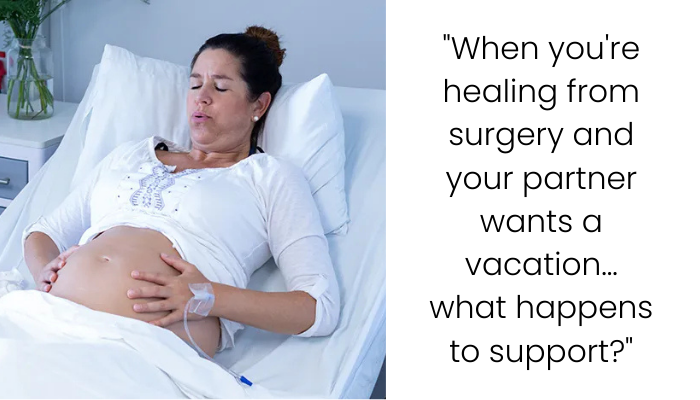
He Asked to Go on a Trip Weeks After My C-Section – I’m Still in Shock
A woman shared her concerns about her husband after a conversation about their upcoming New Year plans. She is currently expecting their second child, and the baby will be delivered through a scheduled C-section in December. She knows the recovery period will be difficult, especially since she will also need to care for a newborn baby and a toddler at the same time. Because of this, she mentioned she might only consider a short trip with friends if she feels physically ready.
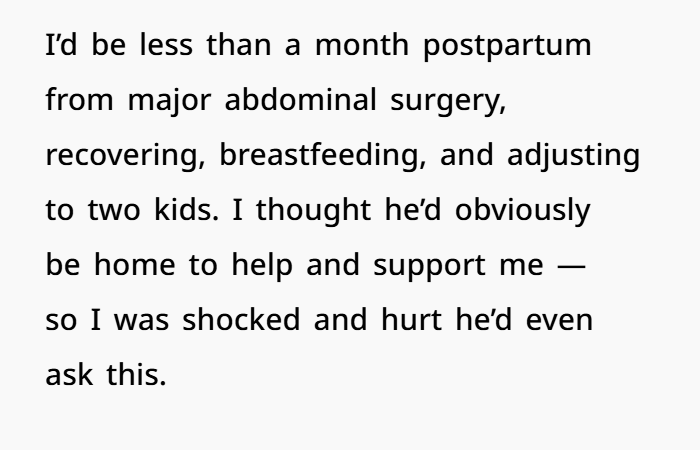
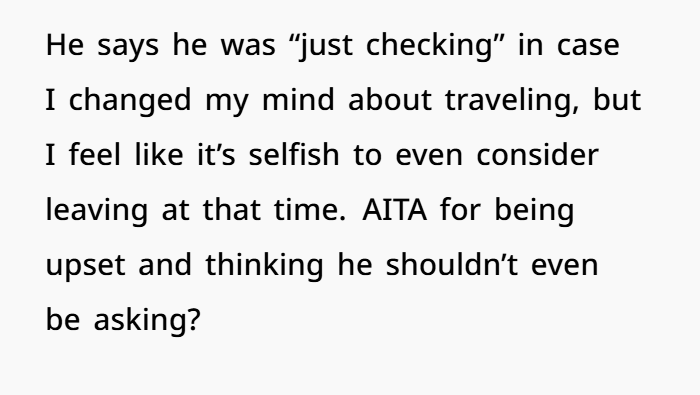
During that same conversation, her husband asked if he could still go on a trip with his friends if she decided not to join. This surprised her, since she expected the focus to be on postpartum recovery, newborn care, and family support after major surgery. She felt the timing was insensitive, especially with the physical demands of C-section recovery, breastfeeding, and managing a busy household with two young children.
The situation has led to tension between them, as she feels unsupported while her husband sees his question as harmless. Many couples face challenges around work-life balance, parenting responsibilities, and postpartum planning, especially during major life changes like childbirth. Clear communication, emotional support, and shared parenting responsibilities are often important in helping families adjust during the newborn stage and recovery period.
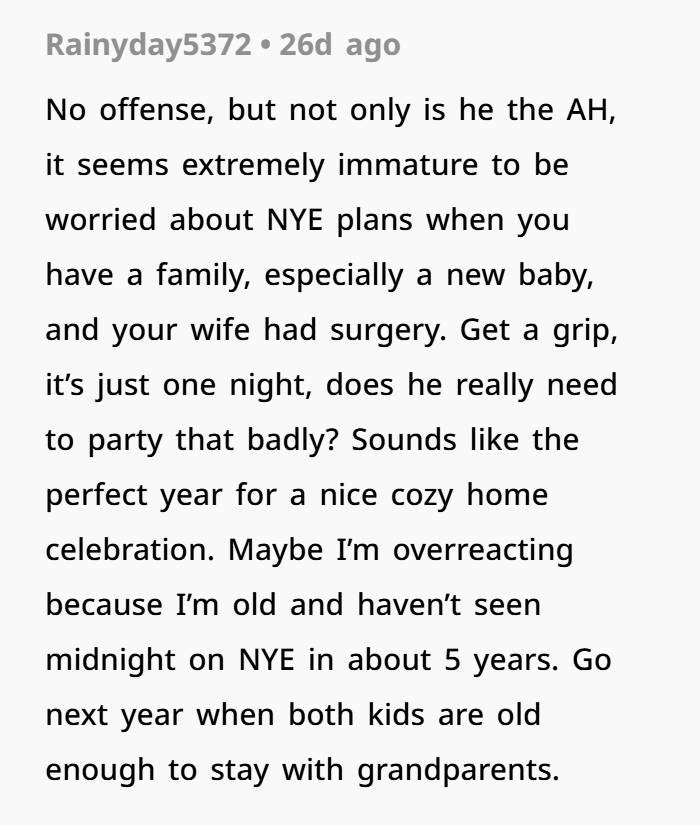
So when the woman heard her husband wanted to go on a trip just weeks after delivery, she was shocked
Recovery After a C-Section Is Hard and Slow
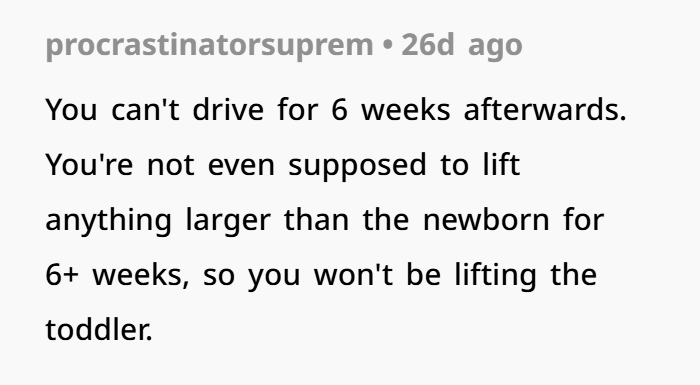
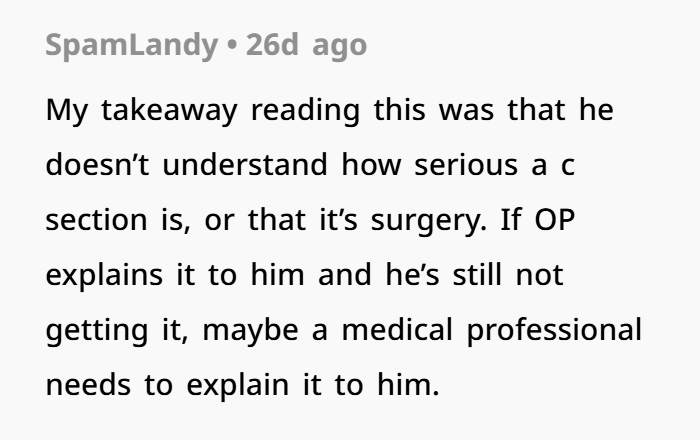
After a C-section delivery, a mother needs serious rest and care. This is not a normal recovery. It is major abdominal surgery, and the healing time is usually 6 to 8 weeks or more. During this period, daily life becomes very difficult, especially with a newborn baby.
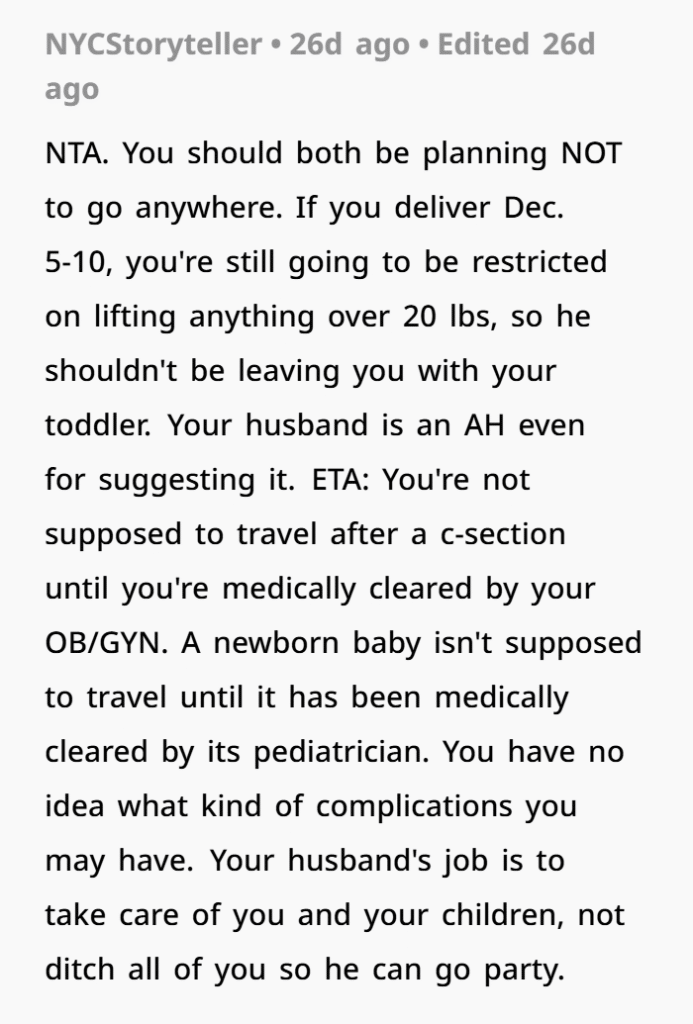
New mothers often deal with pain, weakness, hormonal changes, and lack of sleep. On top of that, they may also be caring for a toddler, which makes postpartum recovery even more challenging. Medical experts also advise avoiding heavy lifting and focusing on rest, healing, and newborn care support.
- Why Many People Feel This Situation Is Unfair
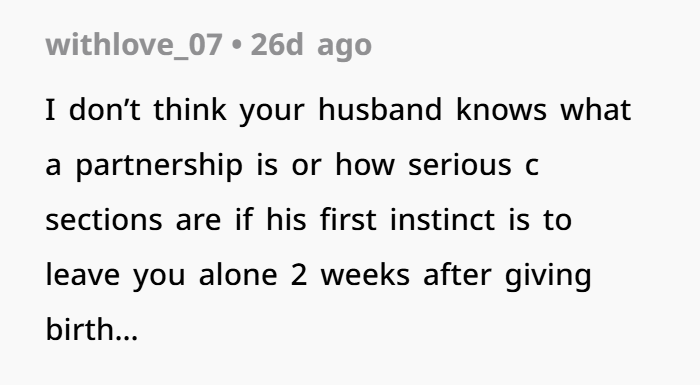
In situations like this, many people feel that it is unfair for a partner to leave during early postpartum recovery. Taking care of a newborn baby already means waking up every few hours, feeding, changing diapers, and managing constant care.
If the mother is still healing from surgery, the need for emotional support, physical help, and household support becomes even more important. This is why many people see leaving for a holiday or trip during this time as irresponsible or unsupportive.
- Medical Facts About C-Section Recovery
Doctors and health experts explain that C-section recovery requires extra care. Some important points include:
- No heavy lifting, including carrying older children
- Limited movement in the first few weeks
- Risk of infection if rest is not followed
- Need for help with daily tasks like cooking and cleaning
- Emotional changes due to postpartum hormones
Because of these factors, postpartum care is considered a very sensitive phase in maternal health.
- Why This Situation Causes Relationship Stress
This type of situation often creates tension in relationships. The reason is simple: one partner needs full support, while the other is thinking about personal plans.
Many people see this as a lack of priority and emotional support. In healthy relationships, especially during childbirth recovery, teamwork is very important. The focus should be on newborn care, maternal recovery, and family support—not travel plans or social trips.
- What a Supportive Partner Should Be Doing
During C-section recovery and early motherhood, a supportive partner should help in daily life. This includes:
- Taking care of the newborn at night
- Helping with diaper changes and feeding support
- Cooking meals and managing household chores
- Helping the mother move safely during recovery
- Taking care of other children if present
- Giving emotional support and rest time
This is a very important stage for maternal health and newborn care, and support can make a big difference.
- How to Communicate Feelings in a Calm Way
If someone is feeling hurt or ignored, it helps to speak clearly and calmly. A simple way to explain it could be:
“I am still recovering from surgery and taking care of a newborn. I really need your support right now. I feel overwhelmed and alone when you talk about traveling during this time.”
This kind of communication helps in relationship counseling situations because it focuses on feelings and needs instead of arguments.
- Final Thoughts: Is It Wrong to Feel Upset?
It is completely normal to feel upset in this situation. Postpartum recovery, especially after a C-section delivery, is physically and emotionally very demanding.
Most people would agree that this is a time when family support, emotional care, and shared responsibility are very important. Feeling hurt or unsupported does not mean someone is overreacting—it often reflects real stress during early motherhood and newborn care.
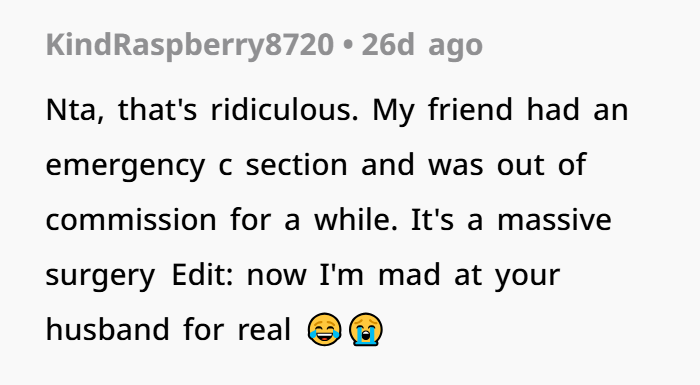
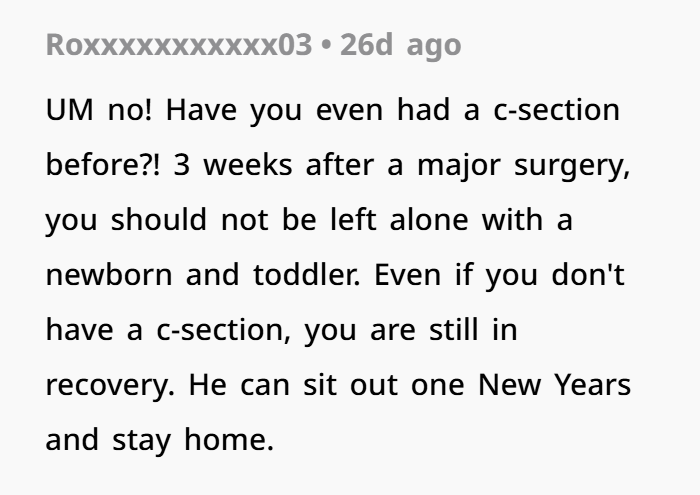
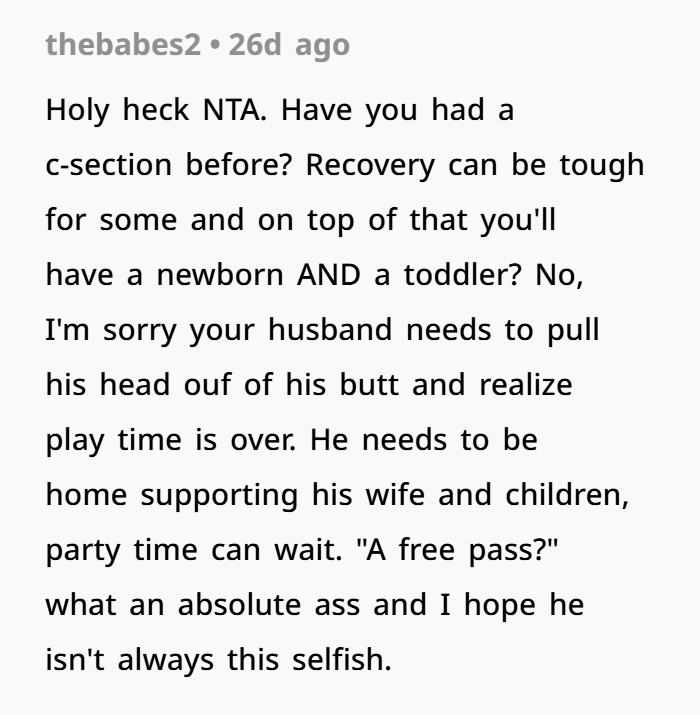
Many readers agreed it was foolish to even consider solo travel