
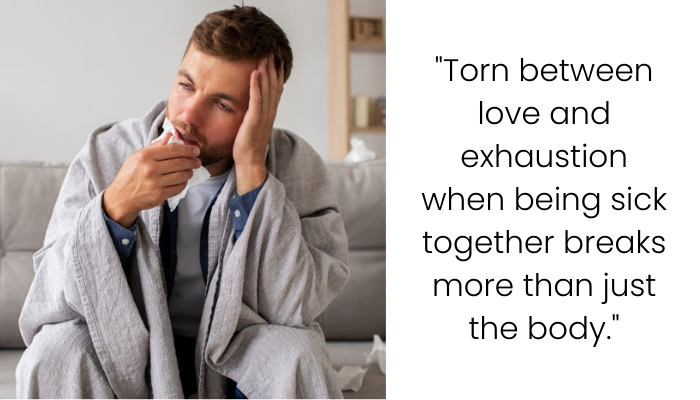
When Your Partner’s Illness Makes You Question Your Marriage
After 10 years of marriage and two young kids, the original poster (OP) finds herself fed up when her husband gets sick and basically stops functioning. She and both children caught the flu first. While she powered through the illness (juggling work, childcare, and chores), her husband took to the bed for two weeks once he got sick — not helping, not interacting with the kids, and not even seeing a doctor. This isn’t new behavior; it’s something he does every time he’s ill. The OP admits this latest bout has pushed her to fantasize about divorce, craving a life where she’s alone in the house (even if she’d still be doing all the work).
It’s a brutally honest post that taps into deep issues: emotional labor, partnership imbalance, resentment, and the burnout that comes from carrying the weight of a family largely on your own. She feels guilty for even thinking about divorce but can’t deny how negative and draining her husband’s behavior has made her feel. Underneath it all is a marriage that, even when he’s well, has its problems — and this latest illness might just be the straw that broke the camel’s back.
It can be frustrating for a person when their spouse doesn’t take the “in sickness and in health” marriage vow seriously

The poster’s whole family caught the flu from her daughter, but the mom juggled her own sickness, the sick kids, and work
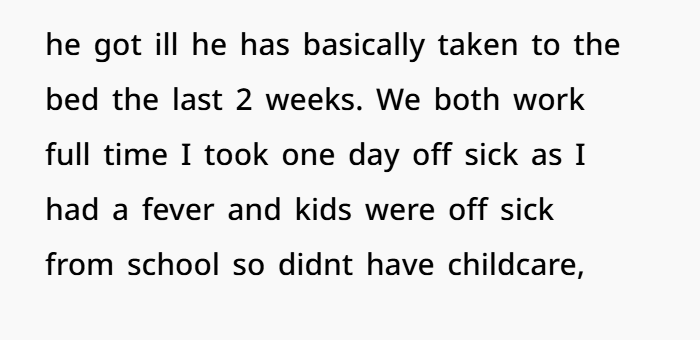
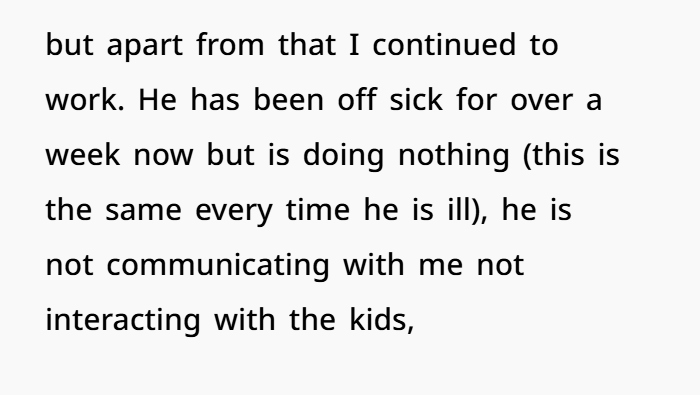
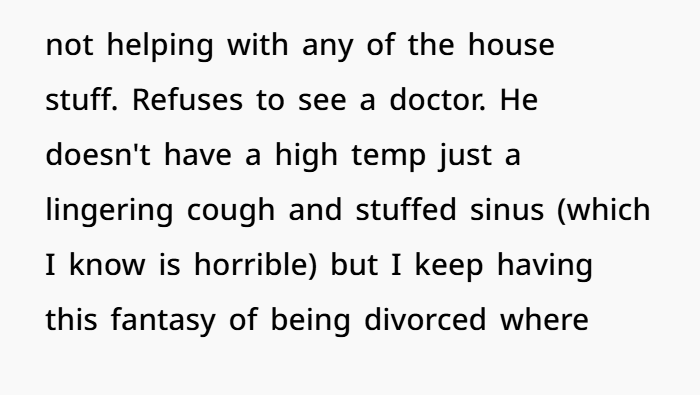
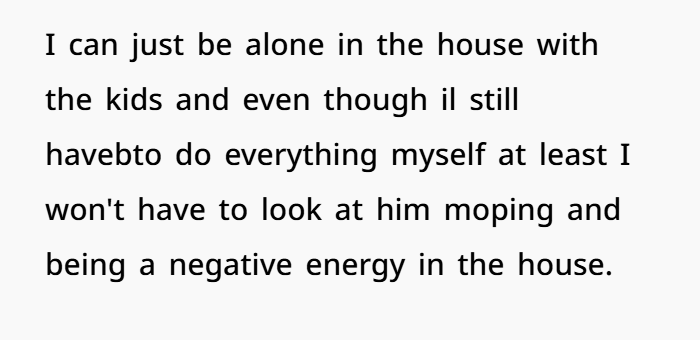
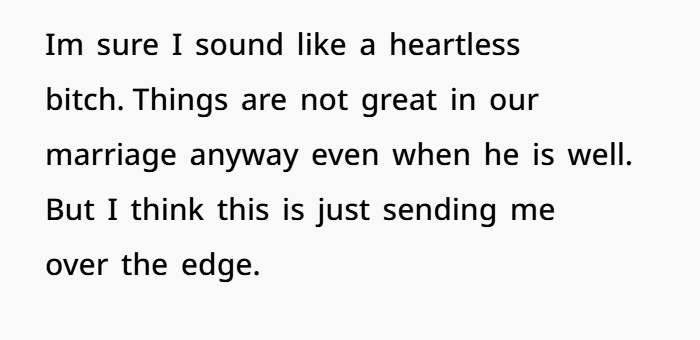
Let’s talk real life. What you’re feeling? It’s not “heartless,” it’s human. And there’s a huge difference. You’re not mad that he’s sick. You’re mad that his behavior around being sick shows a pattern — a pattern of not stepping up, not supporting you, and not contributing when it matters most.
You know, life throws sickness at all of us. Flu, colds, lingering coughs — they suck. But what makes a real partnership isn’t how you act when things are easy; it’s how you show up when someone’s struggling. And that’s where you feel like there’s a gap — a big one.
You’re tired. You’re worn out. You’ve been carrying emotional labor and the mental load of your household for way too long. Every night up with sick kids, balancing your job while also being mom and caregiver, only to come home to… nothing from your partner? That’s going to chip away at anyone’s patience and love.

Let’s break this into pieces — because what you’re dealing with is not just “he’s lazy when sick.” It’s deeper.
💢 Emotional Labor and Mental Load
Emotional labor and mental load — these aren’t buzzwords. They’re real experiences many people in relationships share, especially when one partner ends up doing the lion’s share of planning, organizing, remembering, feeling, and problem‑solving.
You’ve been juggling:
- Work responsibilities.
- Taking care of sick kids overnight.
- Household chores.
- Your own recovery from being ill.
- Keeping the family afloat.
Meanwhile, your husband is lying in bed with a cough and sinus issues. That’s not just physical exhaustion — that’s a big emotional disconnect.
Studies on mental load in relationships show that when one partner disproportionately carries the unseen work (scheduling, childcare, errands, worry), it creates resentment. It’s not because the other person is “bad” — but because balance is missing. You carrying everything while your partner checks out? That’s emotional burnout.
And burnout doesn’t just stay in your body — it moves straight into your heart and head.
💔 Why This Makes You Think of Divorce
You’re not talking abstractly. You’re picturing a life where, even if it means doing stuff on your own, you don’t have to emotionally engage with someone who withdraws.
That’s a big red flag in any relationship:
👉 You don’t want to just walk away…
👉 You want peace. You want support. You want a partner.
But when someone is constantly emotionally absent — especially when a family needs them — that drought becomes devastating.
In psychology, this is linked to something called withdrawal behavior. When someone withdraws during stress instead of engaging, it can make their partner feel abandoned, not cared about, and incredibly alone — even in the same house.
So, fantasizing about divorce isn’t about hating your husband. It’s about craving a peaceful household where you’re not draining emotionally every day.
And that’s understandable.
💭 What Your Fantasies Are Really Saying
Let’s unpack your fantasies — because they reveal something important:
- You want calm.
- You want predictability.
- You want a partner who shows up.
- You want less negativity and emotional weight around you.*
These are basic human needs in a marriage. They are not selfish. They are foundation level relationship needs.
But here’s the thing: your mind is crossing to divorce because your current reality isn’t giving you what you need. It’s reacting to stress, neglect, and exhaustion.
It doesn’t automatically mean divorce is the only answer — but it’s a signal that your emotional tank is running on empty.
🧠 Relationship Burnout Is Real
There’s a term for what you might be going through: relationship burnout. It’s when you repeatedly give more than you receive emotionally, physically, and mentally. It wears you down. It changes how you think.
When someone is always the one helping — with kids, with chores, with emotional support — and their partner defaults to passivity, it throws the relationship out of balance. Over time, that imbalance can make you question the future of the relationship.
Feeling burnout doesn’t make you heartless — it makes you tired.
🗣️ Communication Gaps and Lack of Support
One big thing here? Communication.
You mentioned he’s “not communicating” when he’s sick.
When people don’t communicate — especially during stress — it creates a vacuum. That vacuum gets filled with frustration, assumptions, resentment, and negative thoughts.

You might be thinking:
- Does he even care?
- Does he see how hard I’m working?
- Does he value our family?
And that silence hurts more than the illness itself.
Counseling isn’t about fixing one person. It’s about building tools for both.
🧑⚕️ Patterns Don’t Disappear on Their Own
Here’s the tough part: if this always happens when he’s ill, then it’s not just “the flu.” It’s a pattern.
Patterns don’t disappear just because you hope they will.
If he’s historically withdrawn and expects you to pick up everything — that’s not just sickness. That’s default behavior. And unless he acknowledges that behavior and wants to change, it’s likely to keep repeating.
You may need to ask yourself:
- Has he ever apologized for this?
- Has he ever tried to step up?
- Has he acknowledged how his behavior affects you?
If the answer is no, then your feelings of frustration make more sense.
🧩 What You Might Need (Not Just What You Think You Want)
Right now, you think you want:
🍃 A peaceful house
🍃 Less negativity
🍃 A partner who shows up
But what you really need is:
❤️ Emotional reciprocity
❤️ Shared responsibility
❤️ Respect and appreciation
And those things aren’t guaranteed in divorce — they’re guaranteed only when both partners commit to change.

So it’s not “love vs divorce.” It’s:
Can this marriage be nurtured into something where you feel supported?
💬 A Gentle Nudge Toward What Comes Next
You mentioned things aren’t great even when he’s healthy. That’s important.
You might consider:
🟡 Asking for honest conversation — not when you’re exhausted, but when you’re calm.
🟡 Setting boundaries around housework and childcare.
🟡 Talking about emotional support and partnership.
🟡 Suggesting couples counseling— even if he balks at first.
If he refuses every effort you make toward repair, that says something different than one bad illness episode.
Divorce shouldn’t be the first idea — but it also shouldn’t be ignored if there’s a pattern of neglect.
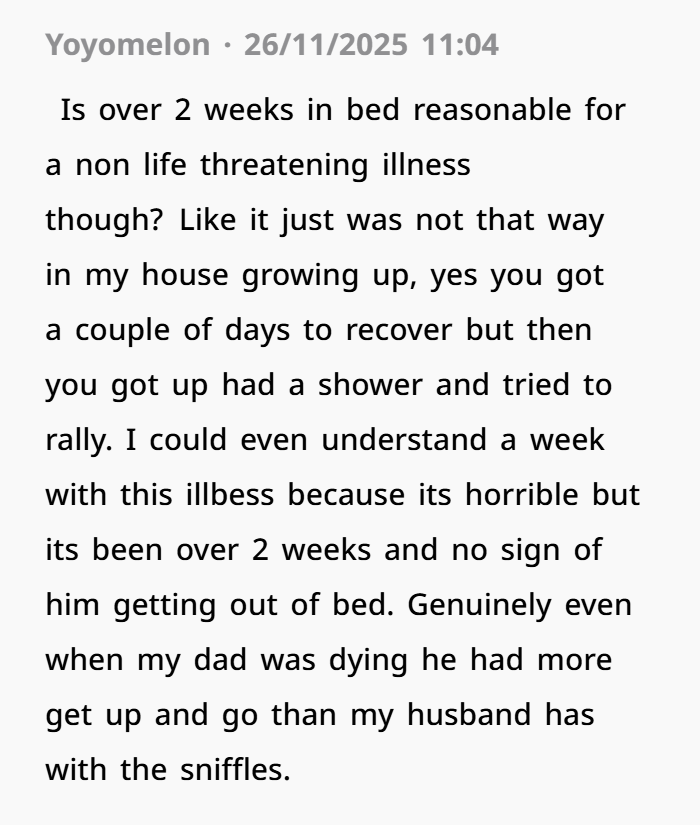
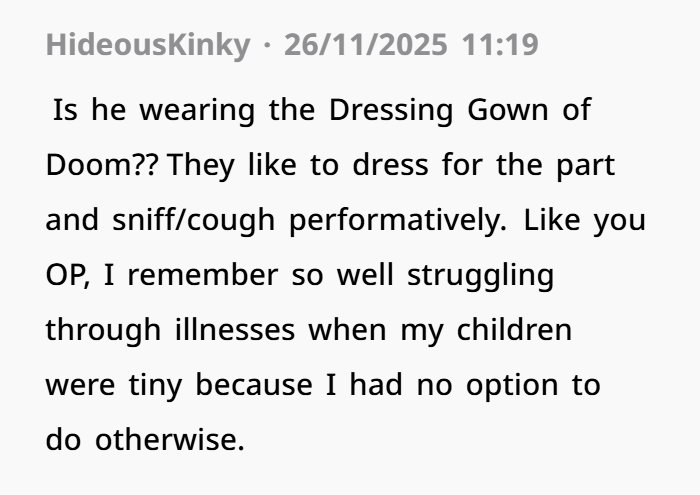
Netizens were horrified that the woman had tolerated this man for so many years, and suggested that divorce was the way to go

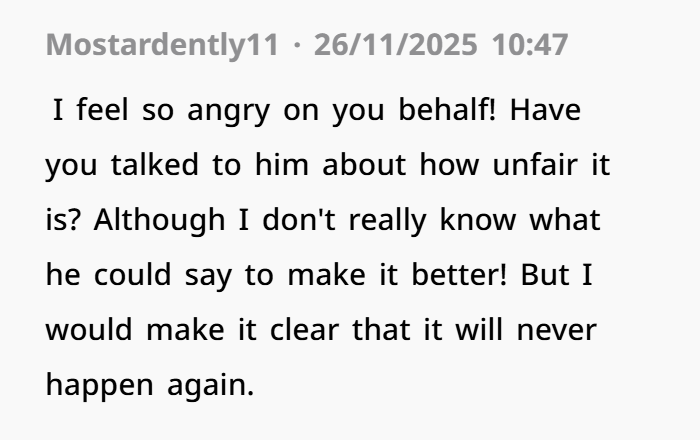
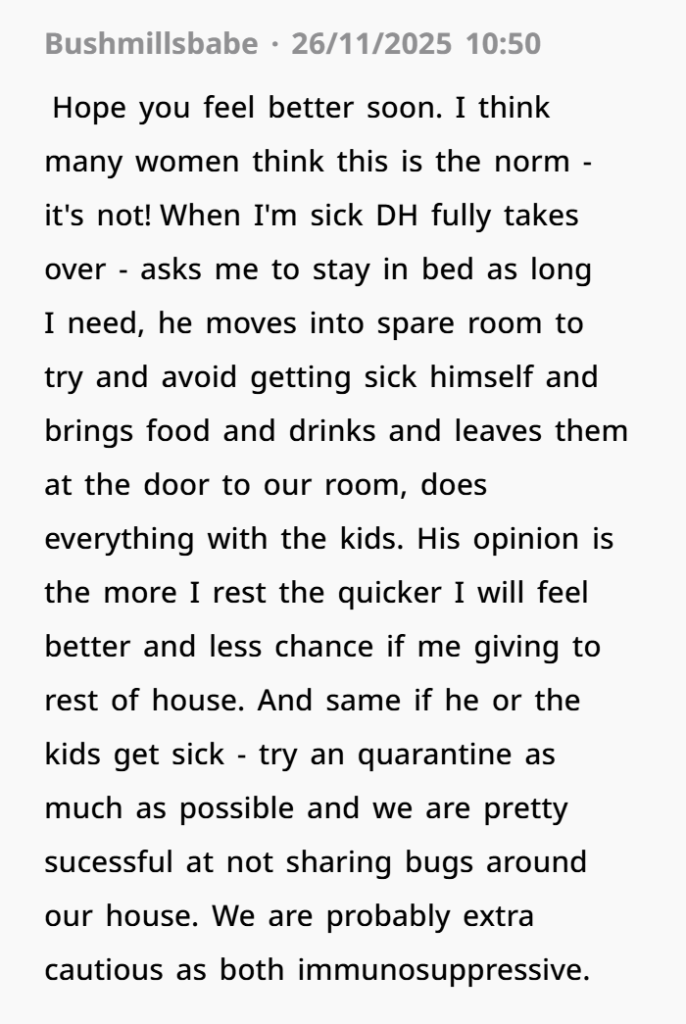
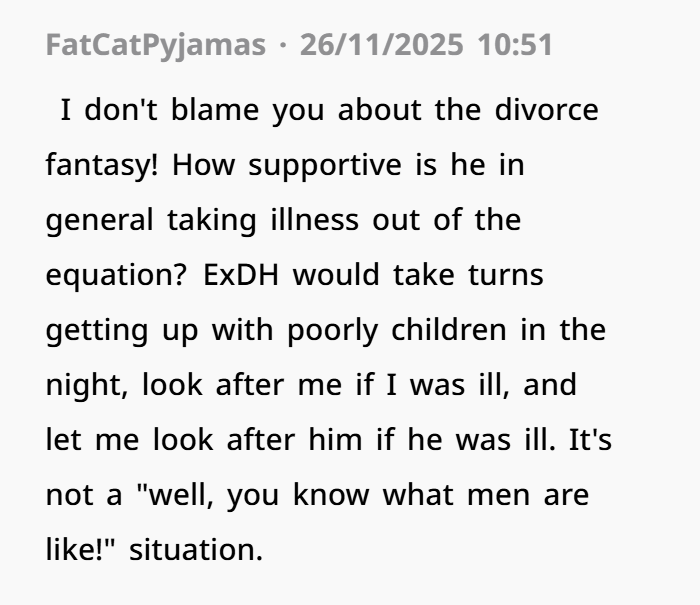

What you’re feeling is serious. It’s valid. You’re not a “heartless bitch.” You’re a tired, overwhelmed partner trying to survive emotionally and physically in a partnership that feels unequal.
Whatever happens next — with communication, counseling, or choices about your future — your feelings deserve respect. You’re not asking for perfection. You’re asking for partnership.
And that’s human.