My In-Laws Skipped Their Only Son’s Wedding Because We Refused to Invite Them to Our Romantic Dinner—They Didn’t Even Congratulate Us!
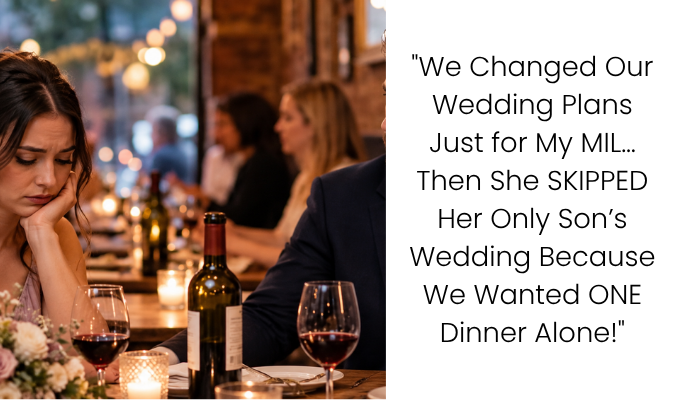
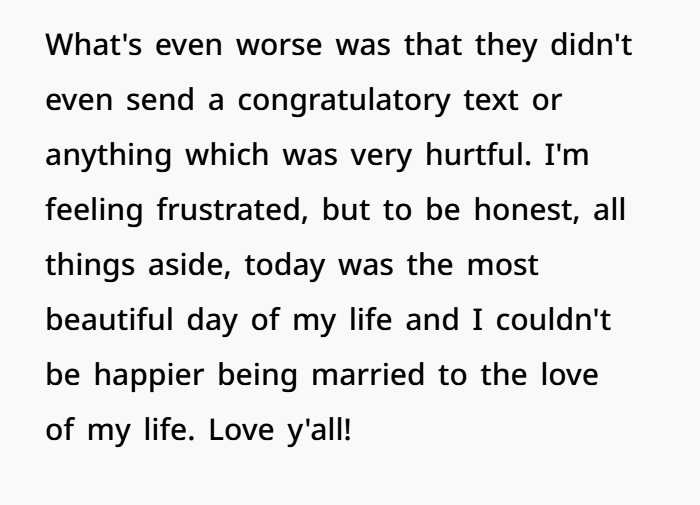
A newly married woman was heartbroken when her husband’s parents refused to attend their only son’s wedding. The trouble had started during the wedding planning. Her future mother-in-law wanted to wear an off-white dress and even suggested that the bride did not need to wear white. She also sent the bride several wedding dress ideas that were nothing like what she wanted. The bride decided to wear a beautiful white dress anyway. At first, the couple had planned to elope and enjoy a small, private wedding without the stress of a big celebration. But when the groom’s mother said she wanted to see her son get married, they changed their plans to include their families.
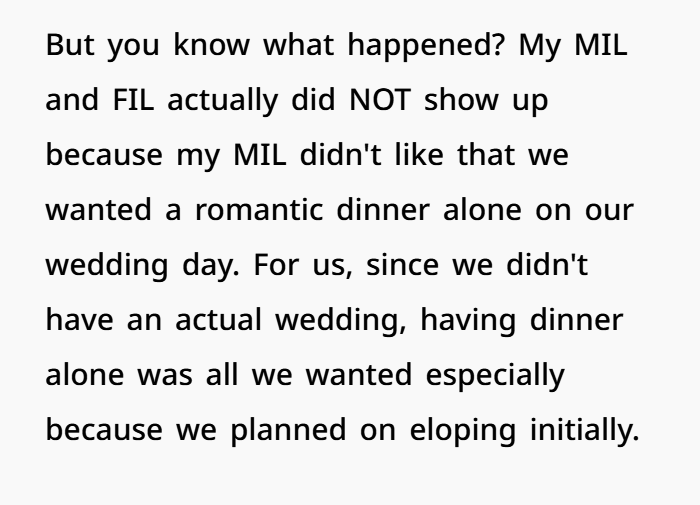
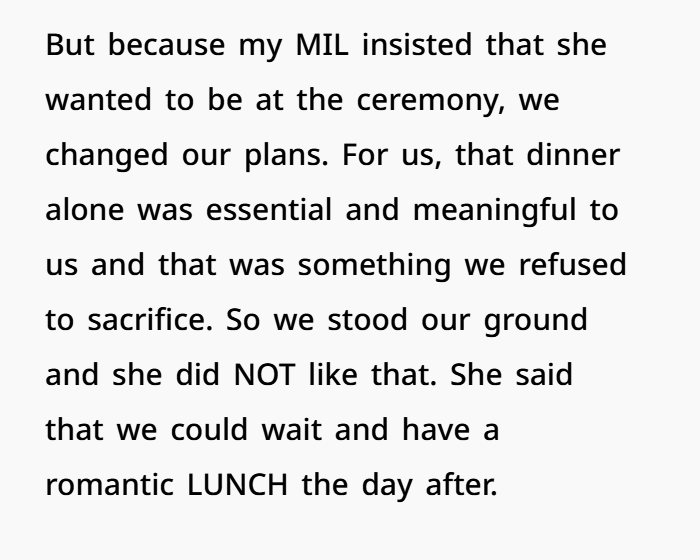
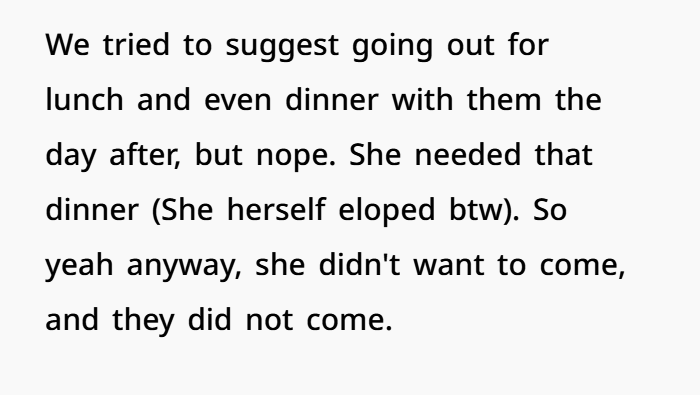
The couple decided to keep their wedding simple and affordable. They planned a small city hall wedding ceremony, followed by a gathering at the bride’s mother’s house. After celebrating with family, they wanted to enjoy a romantic dinner alone as newlyweds. This private meal was important to them because they had originally wanted an intimate wedding experience. However, the groom’s mother was unhappy when she learned that she and her husband were not invited to dinner. She wanted to join them and suggested that the couple could have a romantic lunch the next day instead. The bride and groom offered to meet his parents for lunch or dinner the following day, but she refused.
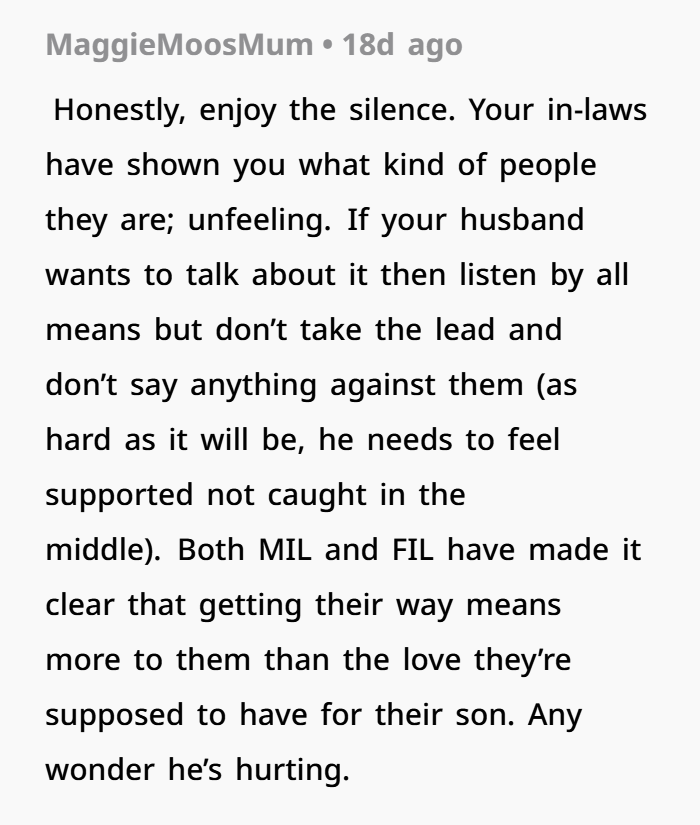
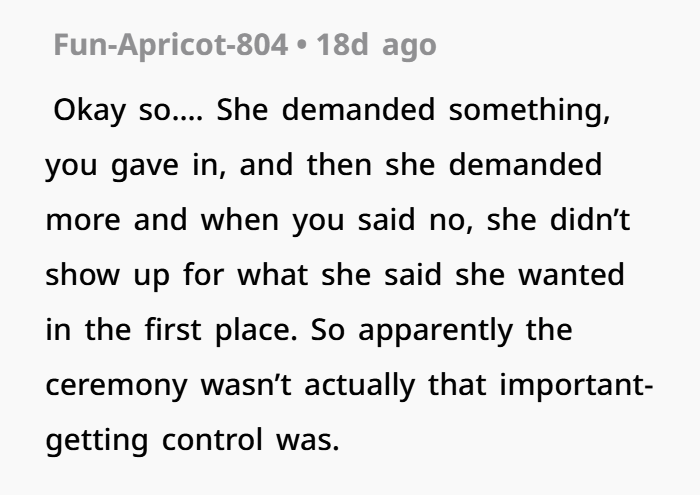
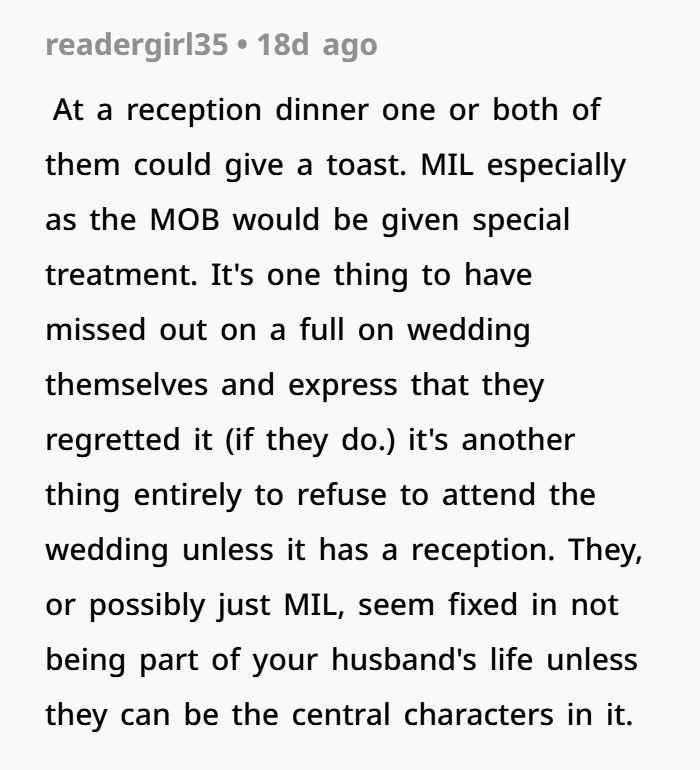
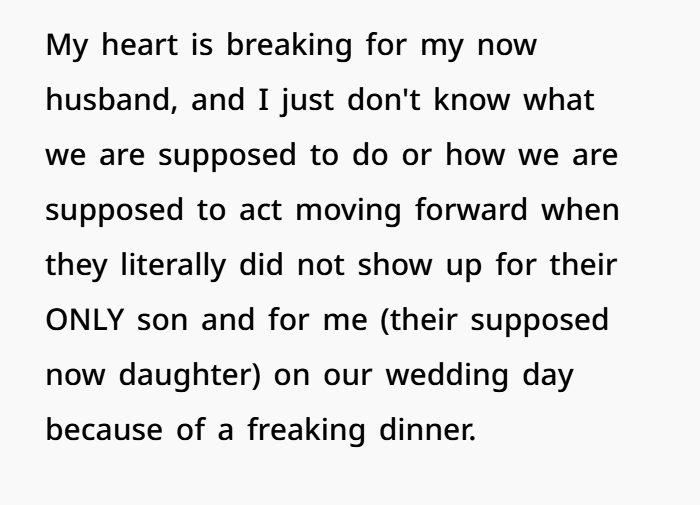
Things became worse when the groom’s parents decided not to attend the wedding at all. They missed the city hall ceremony even though the couple had changed their original elopement plans just so family members could be there. Neither parent sent a message to congratulate the newlyweds afterward. The bride felt terrible for her husband because his parents had missed such an important moment in his life. She also found it strange that her mother-in-law, who had eloped for her own wedding, could not understand why they wanted one private evening together. What should have been a happy family celebration had turned into an upsetting disagreement over dinner plans.
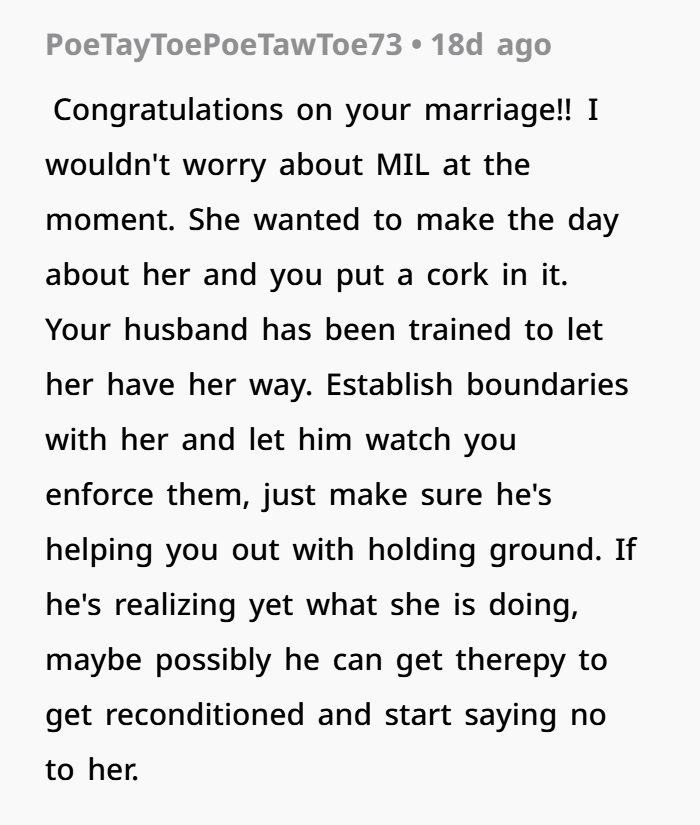
Despite everything, the couple went ahead with their wedding. They exchanged vows, celebrated with the people who came to support them, and enjoyed the romantic dinner they had planned. The bride was happy to be married but still felt sad about how her husband’s parents had behaved. She had hoped that keeping their wedding small would make the day easier and less stressful. Instead, a simple wedding decision had created a serious family problem. Now that they are starting their married life, she is unsure how to handle their relationship with his parents. She wonders whether they should try to repair things or keep some distance for a while.
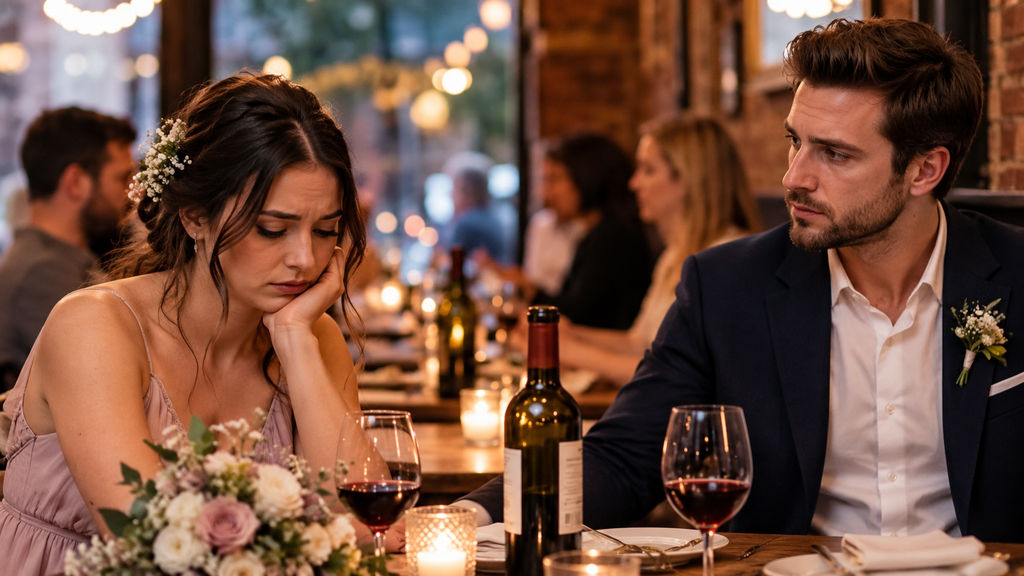
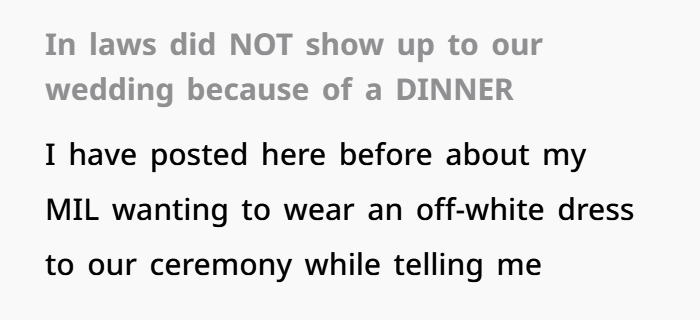
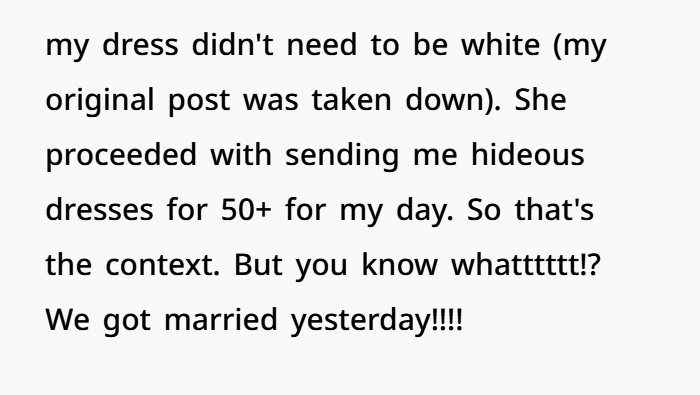
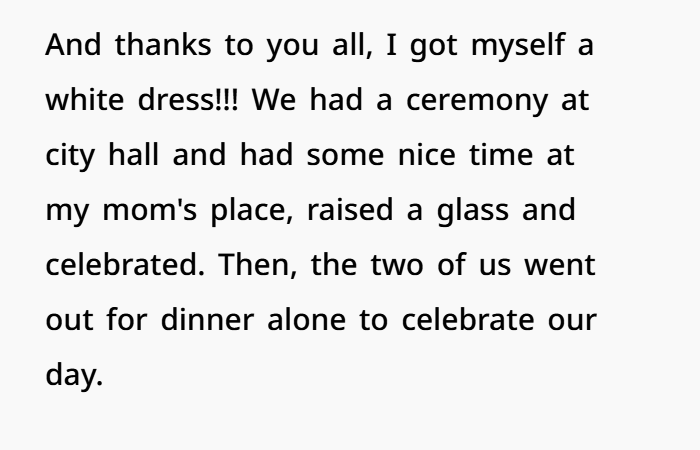
Groom’s Parents Skipped His Wedding After the Couple Refused to Change Their Dinner Plans
A wedding is supposed to be one of the happiest days in a couple’s life.
There are dresses to choose, wedding photos to plan, and family members who want to be part of the celebration.
But sometimes, even a small disagreement can turn into a big family problem.
One bride and groom found themselves in this situation when the groom’s parents became upset about their wedding-night dinner plans.
The couple wanted to enjoy a private, romantic dinner after getting married.
The groom’s mother wanted the whole family to eat together instead.
When the couple said no, the disagreement took an unexpected turn.
The groom’s parents decided not to attend the wedding at all.
The Couple Originally Wanted to Elope
The bride and groom had planned to keep their wedding simple.
They originally wanted to elope.
That meant getting married privately instead of organizing a traditional wedding with lots of guests.
For many couples, eloping is a way to avoid the stress and expense of a large wedding.
Wedding venues, catering services, decorations, photography, and other costs can add up quickly.
A smaller ceremony can make the day feel more personal and relaxed.
But the groom’s mother wanted to be there when her son got married.
The couple understood that this was important to her.
So they changed their original plans and agreed to have a ceremony that family members could attend.
It was a meaningful compromise.
They were willing to share their special moment with loved ones, even though they had first imagined getting married alone.
They Wanted One Part of the Day Just for Themselves
Although the couple agreed to include family in the ceremony, they still wanted some private time.
Their plan was to have a romantic dinner together after the wedding.
Just the two of them.
They wanted to sit down, enjoy a nice meal, and celebrate their first evening as husband and wife.
It wasn’t about avoiding family members.
It was simply how they wanted to spend that part of their wedding day.
The couple had already made room for family celebrations.
They planned to spend time with relatives at the bride’s mother’s home.
They were also open to having lunch or dinner with the groom’s parents the following day.
But the private wedding-night dinner was something they wanted to keep.
The Groom’s Mother Wasn’t Happy With That Plan
The groom’s mother wanted the family to have dinner together on the wedding night.
She seemed disappointed when she learned that the couple had made other plans.
The bride and groom explained that they wanted a private meal.
They also offered another time to celebrate together.
But the groom’s parents were not satisfied with those options.
They wanted dinner on the same evening as the ceremony.
The couple did not change their minds.
And that was when the disagreement became much more serious.
His Parents Decided Not to Attend the Wedding
Instead of attending the ceremony and celebrating another time, the groom’s parents chose not to come.
That was a major decision.
The couple had already changed their original elopement plans so the groom’s mother could witness the wedding.
Now, because of a disagreement about dinner, both of his parents were going to miss the ceremony.
The situation was especially painful because the groom was their only son.
For many families, watching a child get married is an important life event.
It is a moment that parents and children may remember for years.
The groom’s parents had been invited to share that moment.
But they decided not to attend.
According to the story, they also did not send a simple congratulatory message afterward.
That made the situation even more upsetting.
The Bride Had Already Felt Uncomfortable With Her Mother-in-Law
The dinner disagreement was not the first time the bride had felt uncomfortable with her future mother-in-law.
Earlier, there had been another issue involving wedding clothes.
The groom’s mother had reportedly considered wearing an off-white dress to the ceremony.
She had also questioned whether the bride needed to wear white.
For some families, wedding clothing traditions are very important.
In many Western weddings, white is traditionally associated with the bride.
Guests may choose other colors to avoid confusion or unwanted attention.
Of course, not every couple follows the same wedding dress traditions.
Some brides wear colorful dresses, while others prefer simple outfits.
But the bride should be able to decide what she wants to wear on her own wedding day.
The mother-in-law’s clothing comments had already made the bride feel that her choices were being questioned.
So when the dinner disagreement happened, it felt like another situation where someone else wanted to make decisions for the couple.
A Wedding Can Bring Family Expectations to the Surface
Weddings are about more than flowers, invitations, and wedding reception plans.
They can also bring strong emotions into family relationships.
Parents may feel excited, proud, or even a little sad when their adult child gets married.
They may realize that their son or daughter is starting a new chapter of life.
The couple, meanwhile, is learning how to make decisions together.
That change can sometimes be difficult for everyone.
Family therapist Murray Bowen studied how relationships within families affect one another.
His work on family systems helps explain why major life changes can create tension.
When an adult child gets married, parents may need time to adjust to a different role.
They are still important family members.
But they are no longer responsible for making every decision in their child’s life.
In this story, the couple wanted to include the groom’s parents while keeping some choices for themselves.
The disagreement happened because the parents wanted something different.
The Groom’s Mother Had Eloped Herself
One detail made the situation even more surprising.
The groom’s mother had reportedly eloped when she got married.
In other words, she had once chosen a private wedding experience for herself.
But when her son wanted something similar, she was unhappy.
People can change their opinions over time.
A person may enjoy having a private wedding but later dream of attending their child’s ceremony.
There is nothing wrong with that.
However, wanting to be involved does not mean every wedding decision has to go your way.
The bride and groom had already agreed to share the ceremony with family.
They simply wanted a private dinner afterward.
Missing the Wedding May Have Lasting Effects
The groom’s parents were free to decide whether they wanted to attend.
But their choice had consequences.
A wedding ceremony happens once.
The couple may celebrate anniversaries, host family dinners, or take wedding photos later.
But they cannot recreate the exact moment they exchanged vows.
That is why missing an important family event can leave lasting hurt feelings.
The groom may have wanted his parents there, even if he supported the private dinner plans.
The bride may also have felt disappointed that their compromise was not enough.
And the lack of a congratulatory message afterward could make the distance between them feel even greater.
This does not mean the family relationship is permanently damaged.
But repairing it may take time.
Wedding Planning Should Include the Couple’s Wishes
Family members often want to help with wedding planning.
Some offer money toward wedding expenses.
Others help choose decorations, arrange catering, or find a wedding photographer.
That support can be valuable.
But problems can happen when help turns into pressure.
For example, someone who contributes to the wedding budget may feel they should get to choose the guest list or reception venue.
Another relative may have strong opinions about the dress, food, or ceremony.
These situations can become stressful if the couple feels they cannot make their own choices.
A wedding budget is important, but so is deciding what kind of celebration feels right.
Some couples want a large wedding reception.
Others prefer a small ceremony, a private dinner, or a simple elopement.
There is no single wedding plan that works for everyone.
Could the Family Work Things Out Later?
Even though the groom’s parents missed the wedding, the family may still be able to repair the relationship.
But it would help if everyone understood why the situation was hurtful.
The couple had not refused to include the parents in the ceremony.
They had actually changed their plans to make that possible.
The only thing they wanted to keep private was dinner afterward.
The parents may have felt left out.
Those feelings can be discussed.
But the couple also has a reason to feel disappointed that the parents chose not to attend.
A calm conversation could help both sides explain what happened.
The groom should have an important voice in deciding when he is ready to talk with his parents.
After all, they were the ones who missed his wedding.
The bride can support him without feeling responsible for fixing the entire disagreement herself.
A New Marriage Needs Room to Grow
Getting married means starting a new life together.
Couples begin making shared decisions about their home, finances, work schedules, holidays, and family plans.
They may also discuss household budgets, savings goals, insurance coverage, and future housing expenses.
These choices are part of building a life as a married couple.
Family advice can be helpful, especially when parents have years of experience.
But the final decisions still belong to the couple.
That includes how they want to celebrate their wedding.
A private dinner after the ceremony does not mean they love their families any less.
It simply means they want some time together.
Final Thoughts
This couple originally wanted to elope, but they changed their plans because the groom’s mother wanted to attend the wedding.
They agreed to include family in the ceremony and offered other chances to celebrate together.
But they wanted to keep their wedding-night dinner private.
When the groom’s parents refused to accept that plan, they chose not to attend the wedding.
What started as a disagreement about one meal became a painful family memory.
Parents can have hopes and expectations for their child’s wedding, but the couple should still be able to decide how they want to celebrate their marriage.
Family relationships matter, and so do personal boundaries.
Sometimes, respecting a loved one’s decision is the best way to show support, even when their plans are different from what you imagined.
The Most Honest Comments