
AIO for Walking Out of My Mom’s House on Thanksgiving After She Kept Insulting Me?
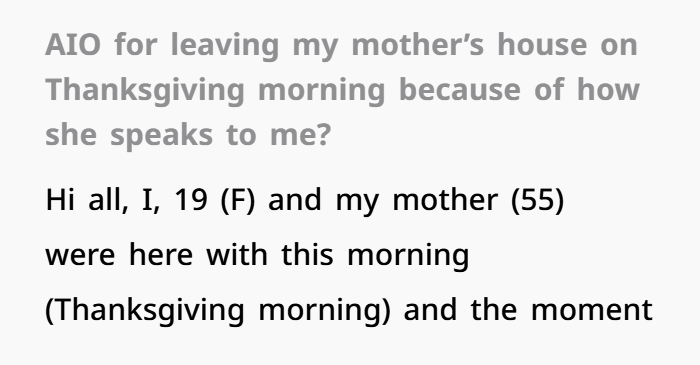
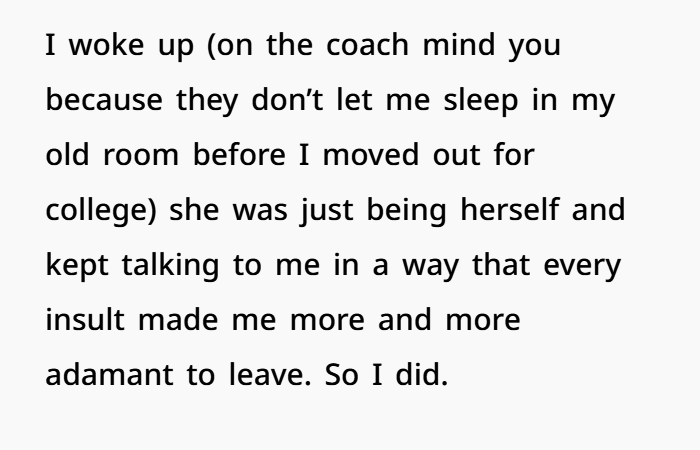
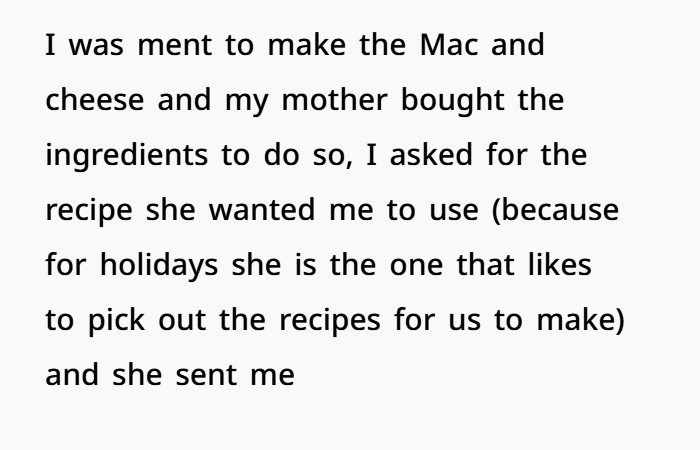
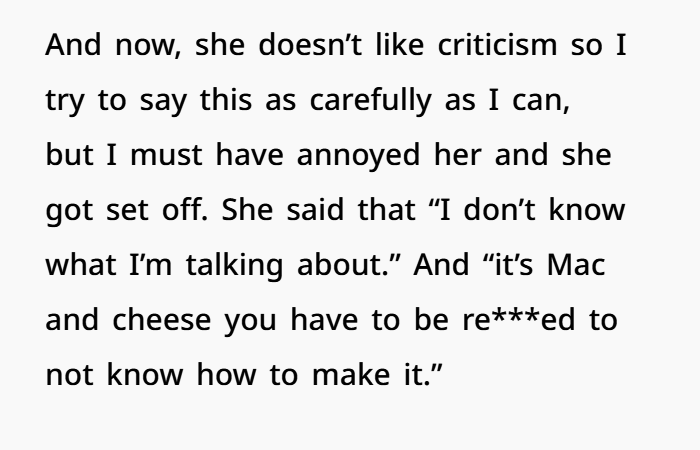
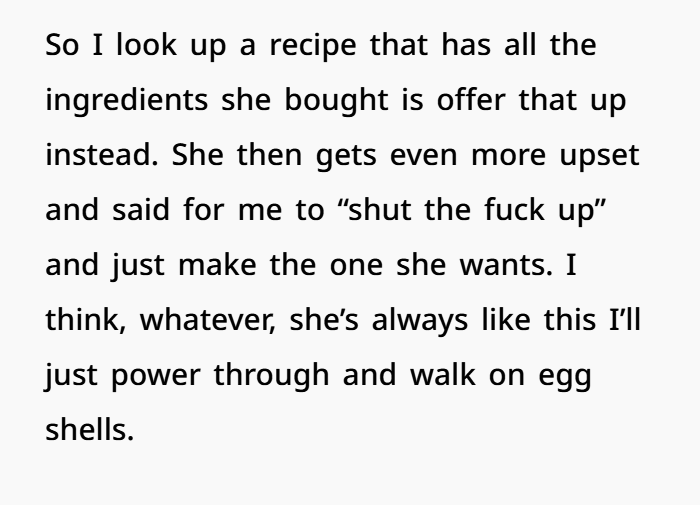
Thanksgiving was supposed to be a happy family gathering, but things did not go as planned for one 19-year-old college student. She returned to her parents’ home for the holiday, only to find that she had to sleep on the couch instead of her old bedroom. Her family also expected her to help prepare the holiday meal, including making macaroni and cheese. Before starting, she asked her mother which recipe she wanted her to follow. Her mother sent her an AI-generated recipe, but the young woman suggested using a recipe from a professional cook because AI recipes are not always accurate. Her mother became upset and responded with rude comments.
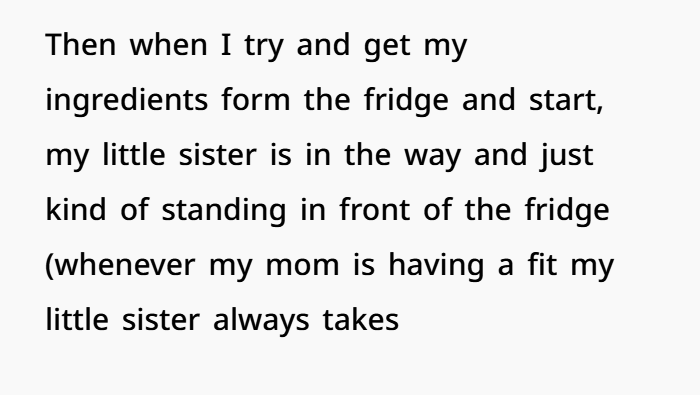
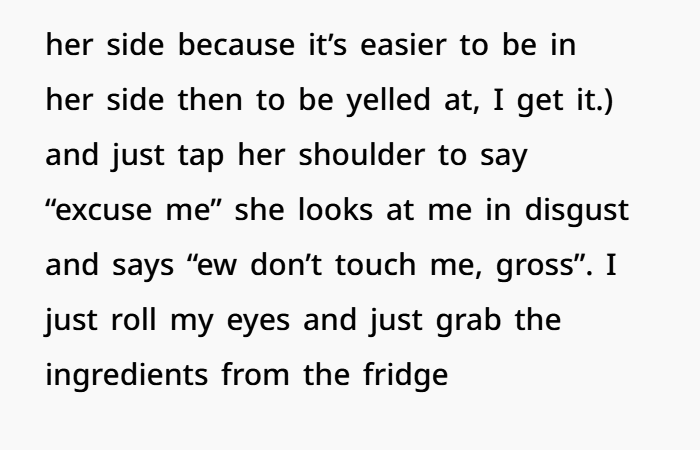
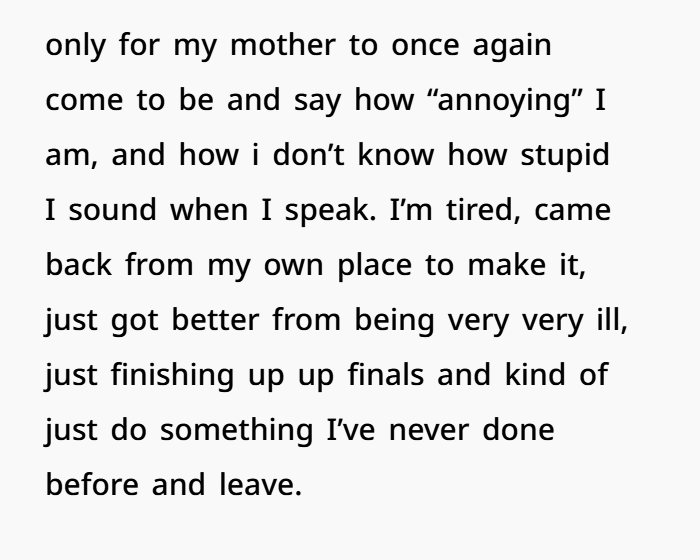
At first, the young woman decided not to argue and continued helping with the meal. But things became uncomfortable again when she went to the refrigerator to get the ingredients. Her younger sister reacted badly when she gently tapped her shoulder and asked her to move. Her mother then joined the conversation and made more hurtful comments. The young woman had already been through a difficult time. She had recently recovered from an illness, finished her college exams, and driven an hour from her own apartment to help with Thanksgiving preparations.
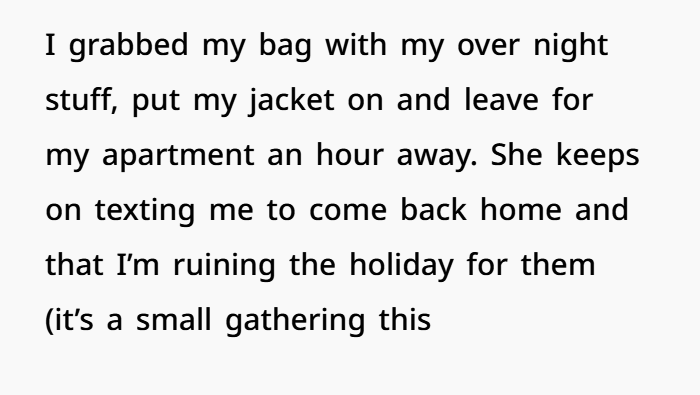
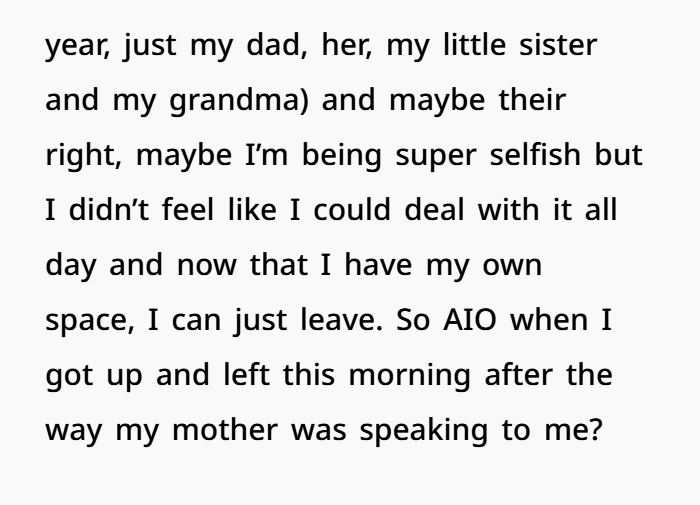
Finally, she decided she had enough. She packed her overnight bag, put on her jacket, and drove back to her apartment. After she left, her mother started sending her several messages, blaming her for ruining the family holiday. However, the gathering was only supposed to include her parents, younger sister, and grandmother. The young woman now feels confused about whether leaving was the right decision or if she should have stayed to avoid more family tension.
She understands that leaving during a holiday meal was not ideal, but she also believes that everyone deserves to be treated with respect. Having her own apartment gives her the choice to leave situations that affect her peace of mind. The story raises an important question about family relationships and personal boundaries. Parents and adult children may not always agree, but respectful communication should remain important. Family celebrations should be about spending time together, not making someone feel unwanted or uncomfortable.


The Real Issues Behind This Family Disagreement
When Family Arguments Turn Into Hurtful Words
The biggest problem in this story is not the disagreement about macaroni and cheese. It is the way the mother speaks to her daughter when they do not agree.
Family members will not always have the same opinions. Parents and adult children can disagree about food, household tasks, family plans, and many other everyday things.
That is completely normal.
However, there is a difference between having a disagreement and making personal attacks.
Calling someone stupid, telling them to shut up, or using hurtful words is not a healthy way to communicate.
When this behavior happens repeatedly, it can make family relationships stressful and emotionally exhausting.
The National Domestic Violence Hotline explains that emotional and verbal abuse can include insults, humiliation, intimidation, and behavior that affects another person’s confidence.
One argument does not automatically mean a relationship is abusive. However, repeated name-calling and disrespect should not be ignored.
In this situation, the daughter was only trying to help with the Thanksgiving meal.
She asked her mother which recipe she wanted to use. She also shared her concerns about using AI-generated cooking instructions and offered another idea using the ingredients they already had.
Her mother could have simply explained what she wanted.
Instead, the discussion became personal.
This is where the real problem started.
Healthy family communication means people can share different opinions without insulting each other.
Why Adult Children Sometimes Need Space From Their Parents
Another important part of this story is that the young woman already lives in her own apartment.
At 19, she is starting to build an independent life. She is learning to make her own decisions and understand what works best for her.
However, moving out does not always change the way parents and children communicate.
Some parents find it difficult when their children start making independent choices. They may still expect the same level of control they had when their children were younger.
But becoming an adult means learning to have your own opinions.
Family systems theory, developed by psychiatrist Dr. Murray Bowen, explains how people can maintain their own identity while staying connected to their families.
This includes something called differentiation of self.
In simple words, it means being able to think for yourself without losing your connection with the people you love.
An adult daughter can love her parents, visit them, and enjoy family holidays without agreeing with everything they say.
She can also decide when a conversation has become too uncomfortable.
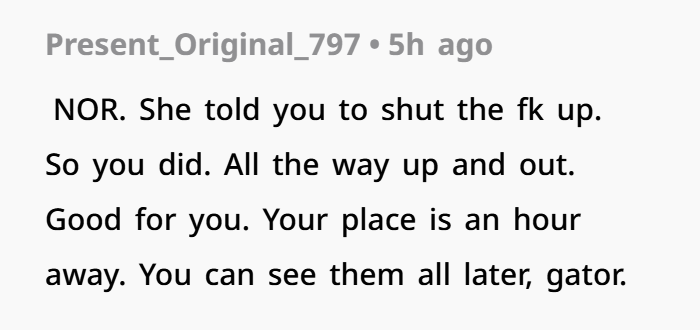
In this situation, the young woman chose to leave instead of spending the rest of Thanksgiving listening to more insults.
Having her own apartment gave her a place where she could take a break and enjoy some peace.
Setting Boundaries Does Not Mean Punishing Your Family
Some people believe that walking away from an argument means being dramatic or trying to punish someone.
But that is not always true.
Healthy personal boundaries are about understanding what behavior you are willing to accept.
For example:
- You can stop a conversation when someone starts insulting you.
- You can leave a family gathering when the situation becomes too stressful.
- You can choose shorter family visits if long visits often lead to arguments.
- You can explain that you are happy to talk, but only when everyone speaks respectfully.
The American Psychological Association provides information about healthy communication, managing conflict, and building positive relationships.
Being assertive means expressing your feelings and limits clearly without attacking someone else.
The young woman could explain to her mother that she wants to have a good relationship with her, but she does not want to continue conversations where she is called names.
She does not need to shout or start another argument to make her point.
Sometimes, calmly leaving is enough.
How Family Arguments Can Affect Younger Siblings
The younger sister’s reaction also adds another part to this situation.
According to the older sister, the younger girl usually agrees with their mother during arguments because it helps her avoid being yelled at.
If this is a regular pattern, the younger sister may simply be trying to avoid conflict.
Children and younger family members sometimes learn to stay quiet or agree with someone when they believe speaking up will lead to another argument.
However, we cannot know exactly why the younger sister behaves this way from one story.
What matters is that she should not feel responsible for choosing sides.
Family systems theory also discusses how disagreements between two family members can involve other relatives.
This can make an already difficult situation even more stressful.
The older sister may feel hurt because she wanted support from her sibling. At the same time, the younger sister may be trying to keep things peaceful.
Both feelings can exist at the same time.
The best approach would be for the mother and daughter to handle their disagreement directly rather than involving the younger sister.
She should not have to choose between her mother and her sister.
Stress and Tiredness Can Make Arguments Harder
The young woman’s situation is also worth considering.
She had recently recovered from a serious illness, was finishing her college exams, and had traveled about an hour to help prepare the Thanksgiving meal.
That is a lot to manage in a short period.
Physical recovery, college pressure, and lack of rest can make everyday stress feel much harder.
The American Psychological Association explains that ongoing stress can affect sleep, concentration, mood, and general well-being.
This does not mean that being tired makes every reaction acceptable.
But it helps explain why someone may have less patience when dealing with repeated arguments.
The daughter was not upset only because of a cooking disagreement.
She was already dealing with several responsibilities and then faced more hurtful comments during a family gathering.
Sometimes, one small disagreement becomes the final problem after a long period of stress.
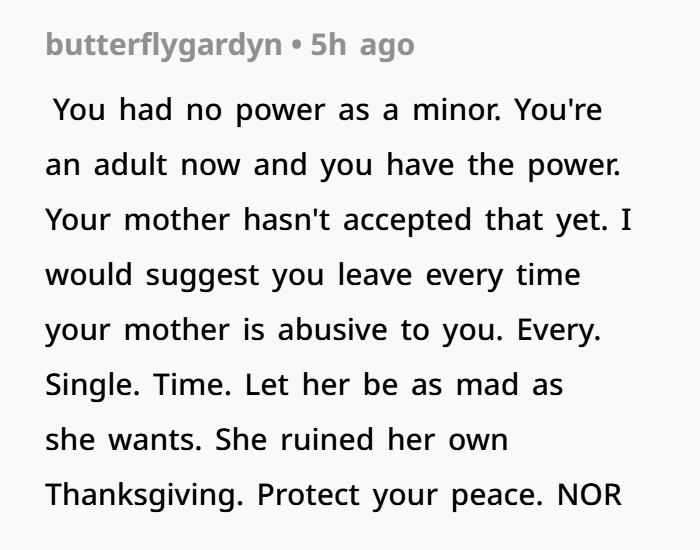
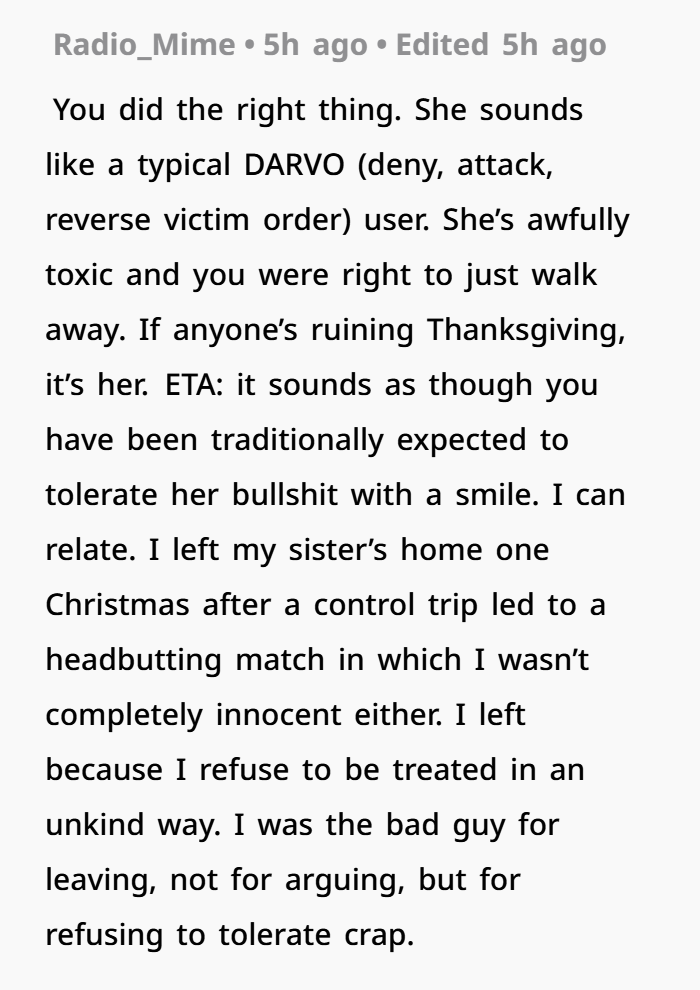
Did She Really Ruin Thanksgiving?
The mother blamed her daughter for ruining the holiday.
But leaving a family gathering does not automatically mean someone has done something wrong.
It is understandable that other family members may feel disappointed when someone leaves early.
Plans may change, and the atmosphere may become uncomfortable.
However, the daughter did not force her mother to use hurtful language.
She also did not create the problem by suggesting another recipe.
She simply decided that she did not want to stay in an uncomfortable situation.
Other family members, including her father and grandmother, were still present. The entire holiday did not have to depend on her staying.
If the mother wanted everyone to enjoy Thanksgiving, speaking respectfully would have been a better way to handle the disagreement.
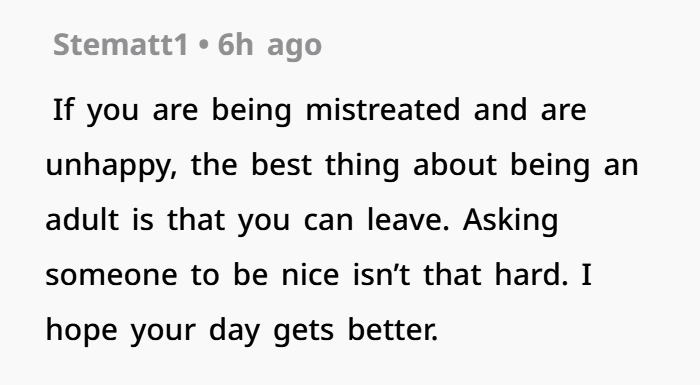
Do Adult Children Have to Accept Disrespect to Keep Family Relationships?
One of the biggest lessons in this story is that becoming an adult gives people more freedom to make their own decisions.
When children are younger, they often depend on their parents for housing, financial support, and daily needs.
As they grow older, they begin making more choices for themselves.
This also means they can decide what kind of behavior they are comfortable accepting in their relationships.
Being someone’s daughter does not mean you must accept every hurtful comment.
Parents and adult children will sometimes disagree. They may become frustrated or misunderstand each other. But respect should still be part of the relationship.
There is also a difference between ending a family relationship and taking a break from an argument.
The young woman did not say she would never celebrate Thanksgiving with her family again.
She simply decided that she had reached her limit and wanted to spend the rest of the day in her own apartment.
Once everyone feels calmer, they may be able to discuss what happened and how future visits can be better.
The daughter can explain that the insults hurt her and that she wants disagreements to be handled differently.
Her mother may or may not agree, but the daughter can still maintain her personal boundaries.
Family should be a place where people feel respected and comfortable.
Nobody should have to accept repeated insults just to remain part of a family gathering.
Sometimes, walking away is simply a way to protect your peace and give yourself time to recover from a stressful situation.
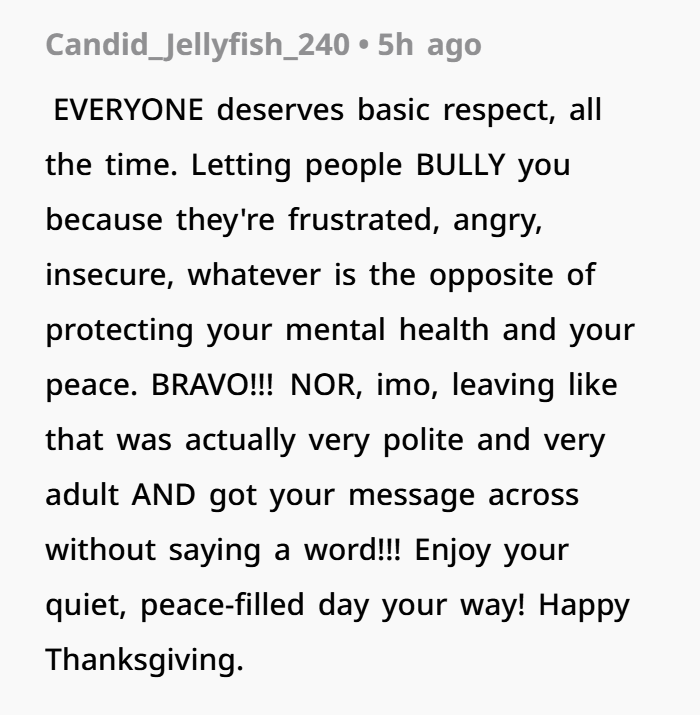
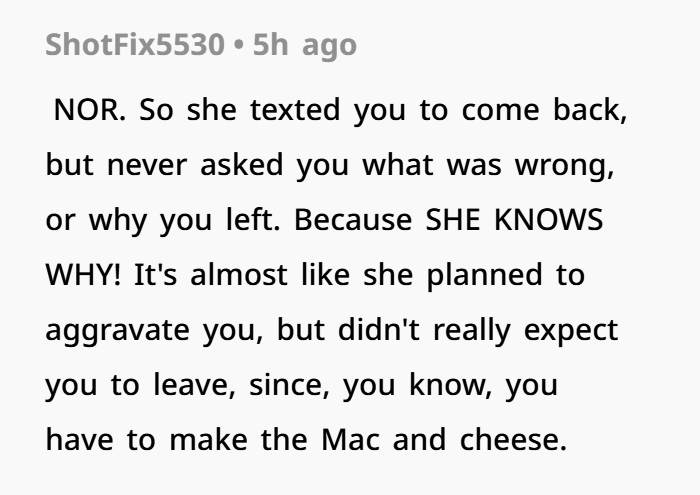
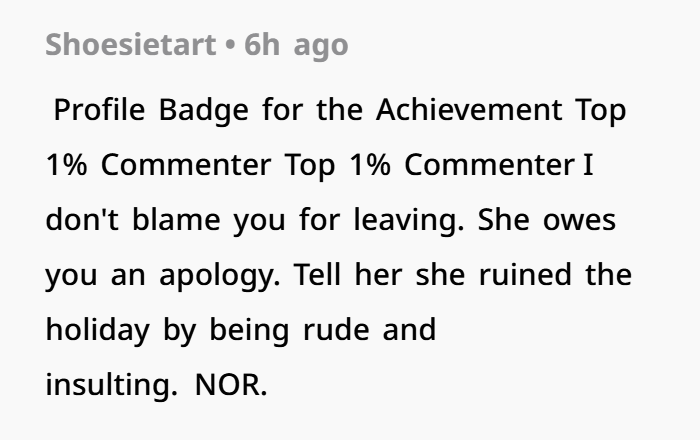
The Comments Are In