My In-Laws Threatened to Call CPS Because My House Isn’t “Up to Their Standards”
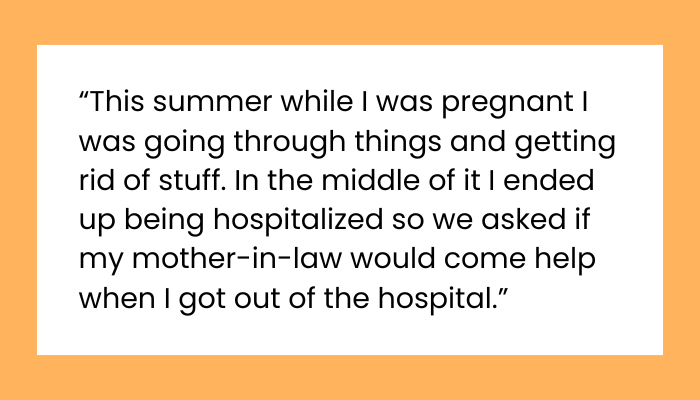
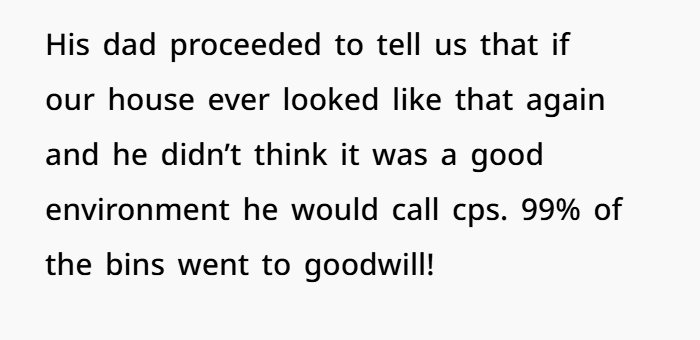
This all started when I was pregnant and nesting like crazy. Sorting everything. Donation bins stacked in the living room. Boxes for Goodwill. Stuff labeled for storage. It looked messy because it was mid-organization, not because we were living in unsafe conditions. There’s a huge difference between clutter in progress and actual neglect. Then I got hospitalized unexpectedly. When I came home, we asked my mother-in-law to help. She walked in, saw the bins, and completely spiraled. Said it looked like a hoarder house. Called my father-in-law. Next thing we know, we’re being sat down and threatened with a CPS report if our home “ever looked like that again.” That’s not a casual comment. That’s a child protective services threat. Almost everything in those bins left the house after that. It turned into a panic purge. Not because we had a problem. Because we were scared of a false CPS allegation hanging over us.
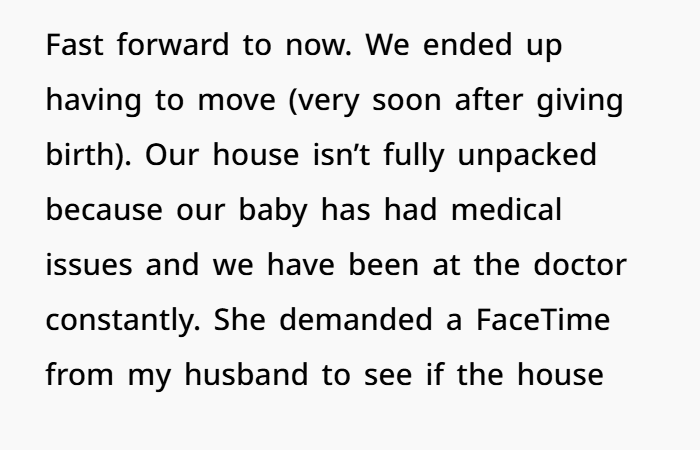
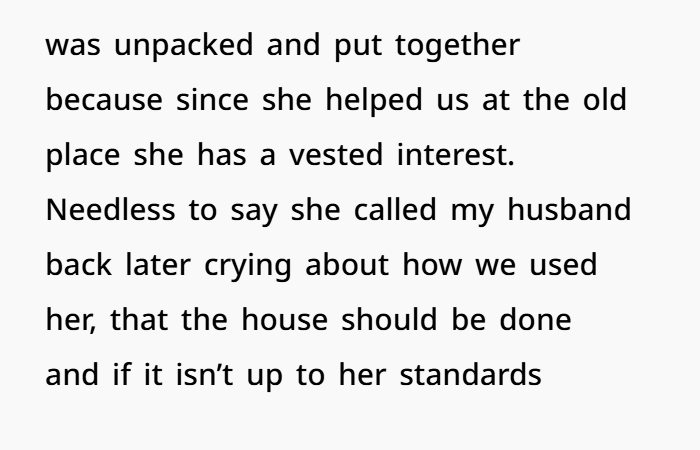
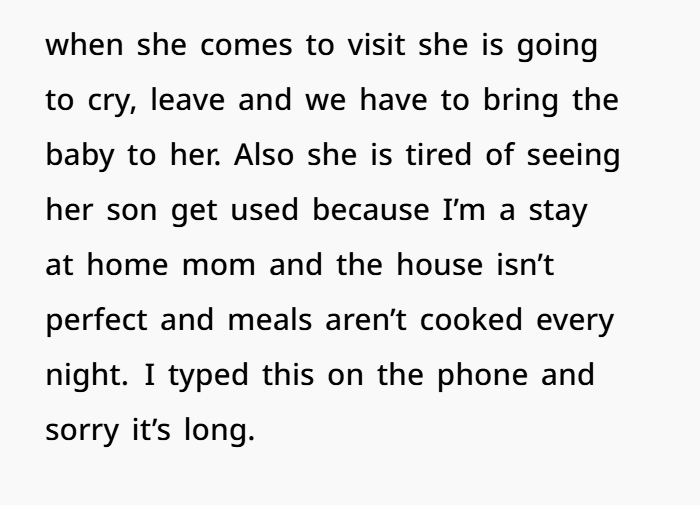
Then we had the baby. And shortly after, we had to move. On top of that, our newborn has medical issues, so we’re constantly at pediatric appointments, specialist visits, dealing with health insurance claims and hospital follow-ups. The new house isn’t fully unpacked yet because we’re surviving, not staging a home for inspection. My MIL demanded a FaceTime house tour to “check” on things. Not to see the baby. To check the house. Later she calls crying, says we used her, says if the house isn’t perfect when she visits she’ll leave and we’ll have to bring the baby to her instead. She says I’m financially using my husband because I’m a stay-at-home mom and dinner isn’t cooked every night. And all of this sits under that earlier CPS threat. Once someone weaponizes child protective services, every unpacked box feels like evidence. Every normal mess feels like a custody risk. And I’m just tired. Like deep, bone-level exhausted.
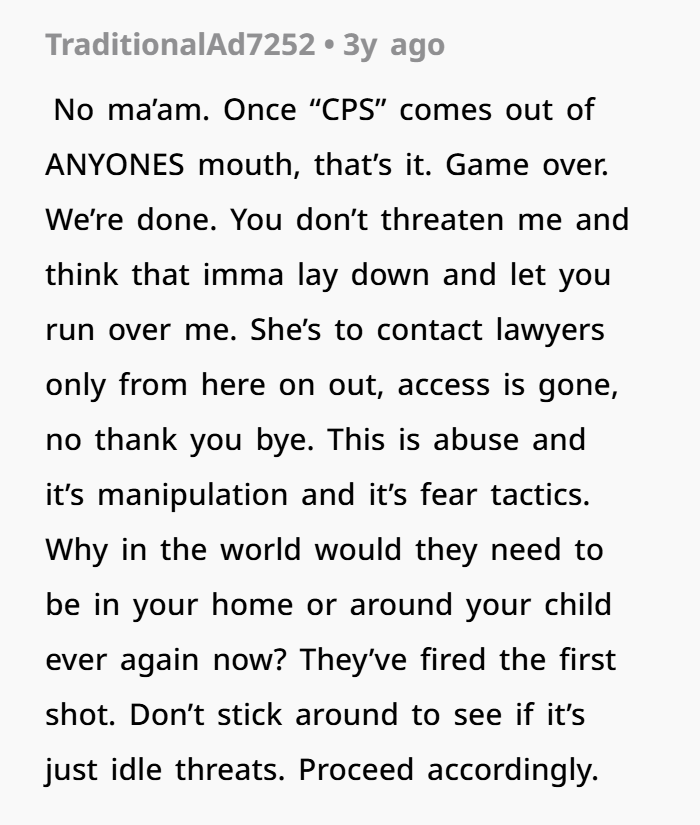
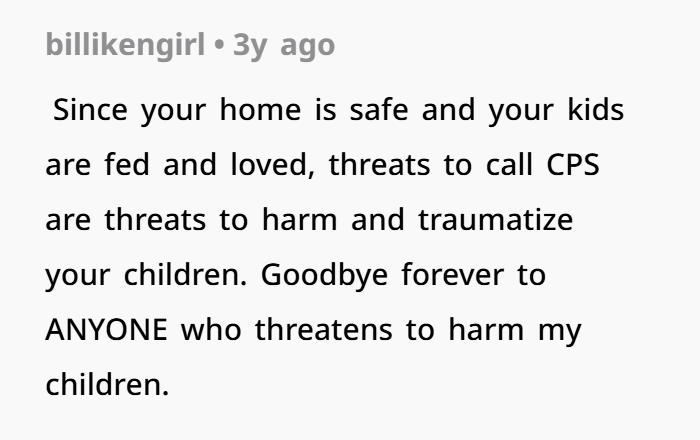
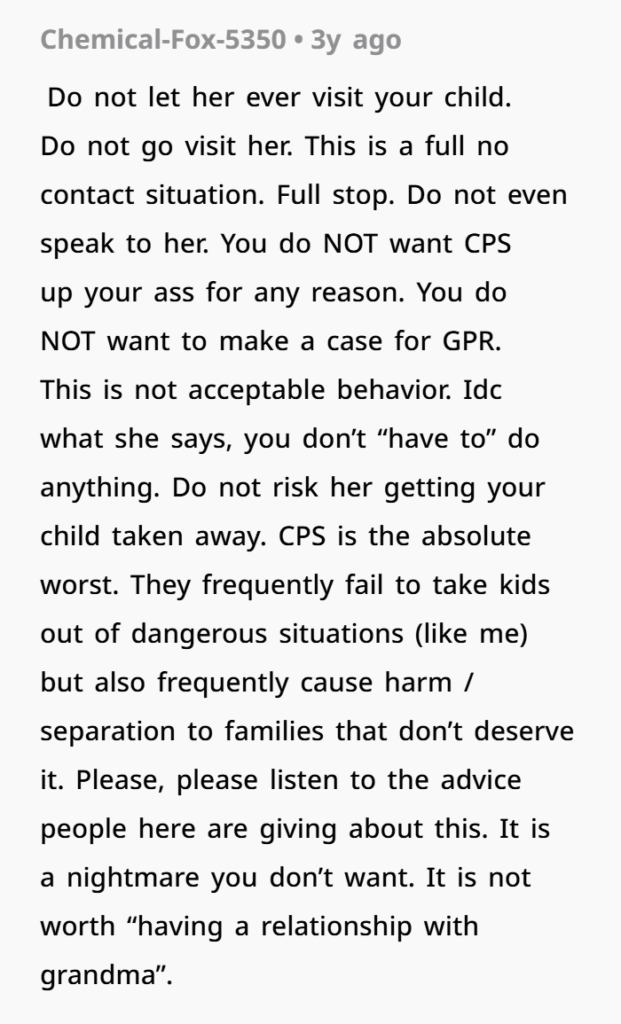
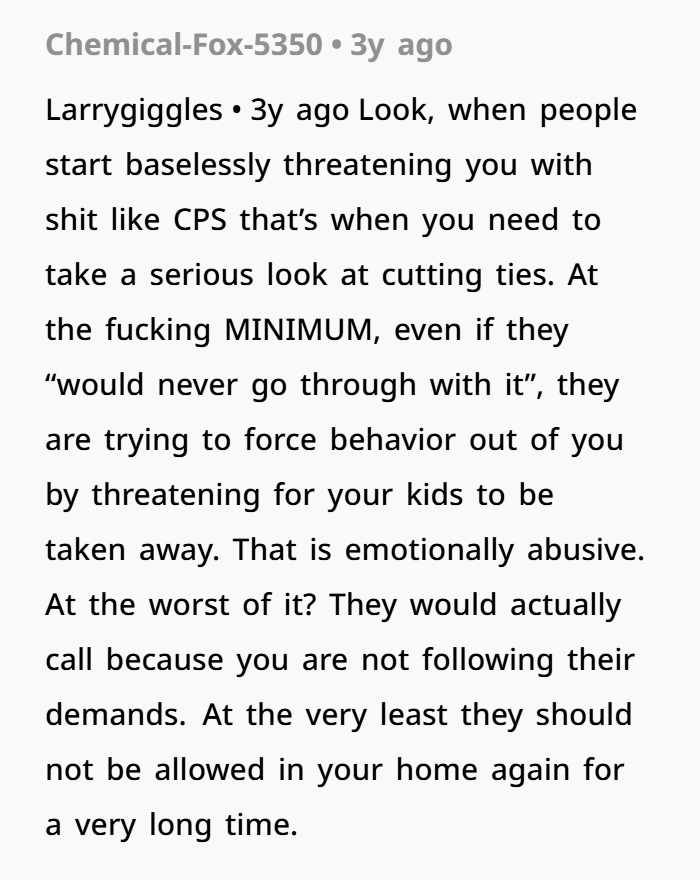
In-laws threatened a couple with calling CPS if they didn’t get their messy house under control

The couple wondered whether the in-laws were right or straight-up manipulative
Let’s slow this down for a minute. Because when someone says “I’ll call CPS,” it hits your nervous system hard. It feels like a custody nightmare waiting to happen. Like your parental rights are one phone call away from disappearing. That fear is real. But here’s what most people don’t know — Child Protective Services does not remove children over unpacked boxes.
CPS gets involved for serious issues. Abuse. Neglect. Unsafe living conditions. We’re talking exposed wiring, no running water, no electricity, animal waste everywhere, no food in the house, drug activity, physical harm. That’s what triggers a CPS investigation process. Not organized donation bins. Not a house mid-move. Not clutter during postpartum recovery. There’s a massive difference between “not Pinterest perfect” and “unsafe living environment.”
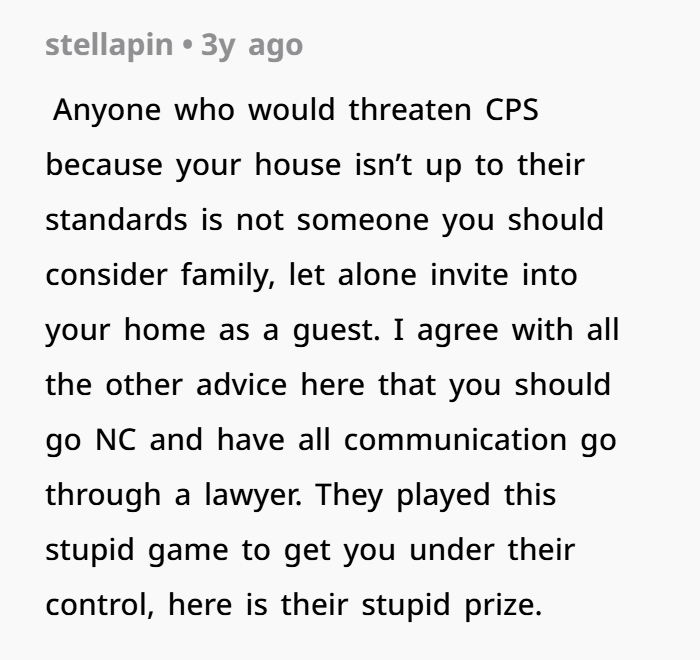
There’s a reason high search terms like CPS investigation process, child neglect lawyer, family law attorney consultation, and parental rights defense exist. Those cases involve real danger and real legal risk. What you’re describing doesn’t sound like child endangerment. It sounds like control. Threatening to call CPS over temporary mess during pregnancy nesting or relocation can be a form of intimidation. And intimidation is not the same as legitimate concern.
Now about the hoarding comment. Clinical hoarding disorder is a recognized mental health condition. It involves persistent inability to discard items, extreme clutter that blocks functional living space, and serious impairment in daily life. Organized bins labeled for donation and storage do not meet that criteria. In fact, actively sorting and purging items is the opposite of hoarding behavior. You were reducing clutter. Preparing for a baby. That’s nesting. Not neglect.
Now about CPS investigations. If someone files a report, here’s generally what happens:
- Intake screens the complaint. If it doesn’t meet statutory definitions of abuse or neglect, it’s screened out.
- If it moves forward, a caseworker may visit the home.
- They look for safety threats. Is there food? Is there running water? Is the baby medically cared for? Are there hazards?
A house mid-move with boxes? Not grounds for removal.

Courts require clear and convincing evidence before removing a child in most states. That’s a high legal bar. Judges don’t remove infants because grandma doesn’t like the kitchen counters. The CPS investigation process is built around safety threats, not personal standards. An unpacked house after a move doesn’t meet the threshold for child neglect removal. It just doesn’t.
And yes, false or malicious CPS reporting is a real thing. Some states even have penalties for knowingly filing a false report. Proving intent can be tricky, sure. But the law recognizes that weaponizing child protective services is harmful. It clogs the system and creates trauma for families who aren’t actually unsafe. The fact that those statutes exist tells you something.
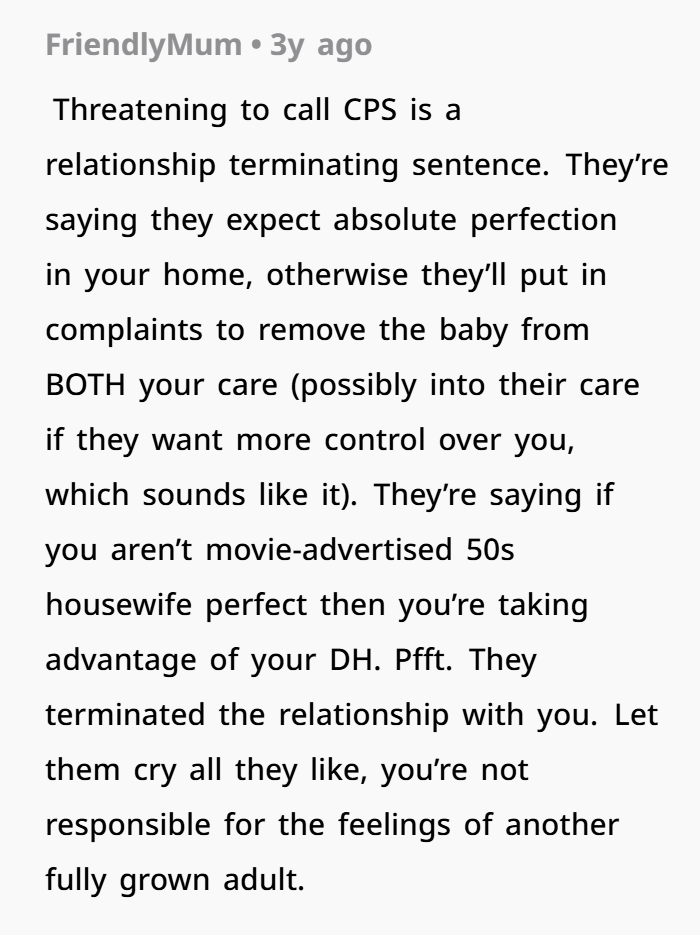
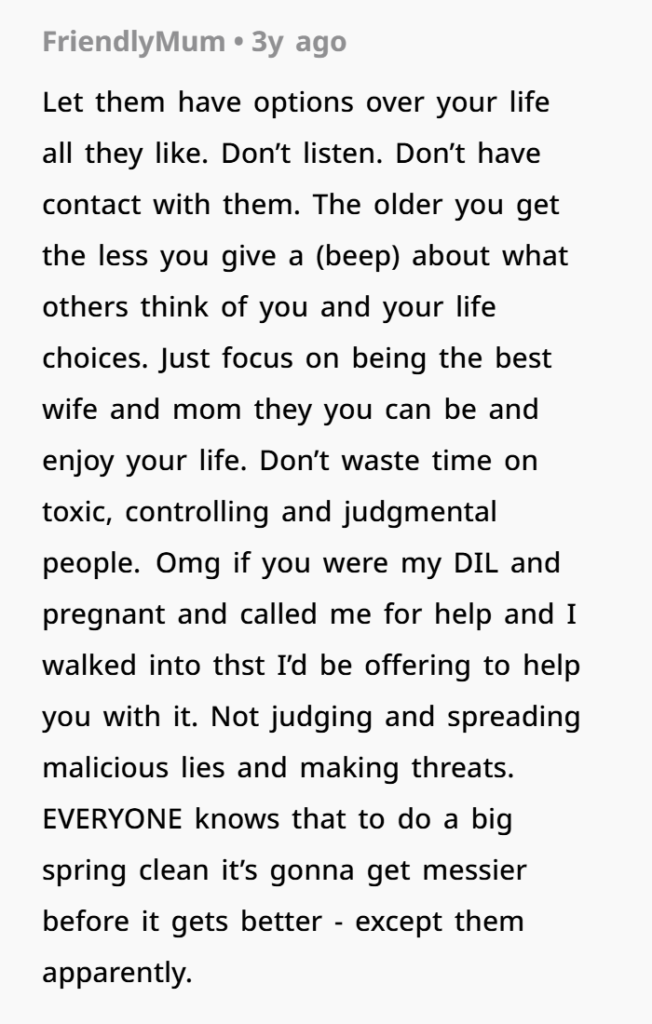
What stands out more than the legal threat though is the pattern. Demanding FaceTime house inspections. Claiming a “vested interest” because she helped once. Saying she’ll cry and leave unless the house meets her standards. Insisting you bring the baby to her instead. Criticizing you for being a stay-at-home mom. That’s not concern. That’s control behavior.
Family therapists often call this boundary overreach. When adult children create their own households, some parents struggle with the shift from authority to advisory. They’re no longer in charge. And not everyone handles that transition well. So they try to regain control in subtle ways. Sometimes not so subtle.
There’s also the postpartum reality here. You just had a baby. A baby with medical issues. Postpartum recovery alone can take months. Add sleep deprivation. Hormone shifts. Anxiety over specialist appointments. Insurance calls. A move on top of that. That’s a heavy load. Expecting a spotless home and nightly home-cooked meals in that season isn’t realistic. It’s disconnected from reality.
And let’s be honest. Being a stay-at-home mom is labor. Unpaid, yes. But labor. If you ran the numbers using something like a childcare cost calculator or looked at stay-at-home mom financial value estimates, the annual market value of childcare, cooking, cleaning, household management, and medical scheduling easily reaches tens of thousands of dollars. Household labor statistics back that up. It’s not lounging. It’s operational management of a small human with medical needs.
The “you’re using my son” comment says a lot. It frames your marriage like a transaction. Like income is the only valid contribution. It dismisses domestic labor. Recovery. Emotional load. The full-time job of caring for a medically fragile newborn. That narrative isn’t about dishes or dinner. It’s about power and control.
Now let’s address strategy. Because fear changes how you move.
If you’re worried about CPS being weaponized, here are practical steps:
– Keep pediatric appointment records organized.
– Maintain basic safety standards: clear walking paths, safe sleep setup, working smoke detectors.
– Take timestamped photos periodically showing the home is safe.
– Avoid giving unnecessary virtual tours to people who are critical.
Documentation protects peace of mind.
You are not legally required to FaceTime tour your home for extended family approval. Grandparents don’t have oversight authority. They don’t have supervisory rights. They have access by relationship, not power by law. Unless there’s an active CPS investigation or court order, no one gets to demand a virtual home inspection. That’s not how parental rights work.
And here’s something important. CPS threats are often used as leverage. It’s a pressure tactic. Once you set firm boundaries, one of two things usually happens — they escalate, or they back off. The threat only works if it produces fear. When it stops producing fear, it often loses power.
The “if it’s not perfect I’ll cry and leave” comment? That’s emotional manipulation. That’s guilt as a control strategy. Same with “you used us.” Helping once does not create lifetime inspection rights. That’s not how family support works. That’s how transactional control works.
And the part about you having to bring the baby to her if she disapproves? That flips the burden onto you as punishment. It’s not about the baby’s welfare. It’s about shifting inconvenience and asserting dominance. It sends the message: comply or compensate.
Legally speaking, grandparents’ rights are limited in most states. Outside of divorce, death of a parent, or documented harm to the child, grandparents typically do not have automatic visitation rights, let alone authority over household management. A family law attorney consultation would confirm that parental authority rests with the parents. Housekeeping style is not grounds for legal interference. Disliking clutter does not override custody rights.
What you’re describing isn’t about safety. It’s about control dressed up as concern. And those are two very different things.

Let’s zoom out. Ask yourself: if CPS showed up tomorrow, what would they see?
A baby with medical care.
Parents present.
Food in the house.
Boxes mid-unpack.
That’s not a removal case.
And here’s something important. CPS workers are overburdened. They focus on serious abuse cases. They do not have the time or interest to police decorative standards.
The bigger issue may be protecting your mental health. Constant criticism postpartum increases risk of anxiety and depression. Words matter. Especially right now.
Your husband plays a key role here. Boundaries land stronger when they come from the adult child, not the in-law. Something like:
“We understand you have opinions. Threatening CPS is not okay. Our home is safe. If you continue to question our parenting, visits will pause.”
Short. Clear. Calm.
Because once someone uses a system designed to protect abused kids as a scare tactic, trust shifts.
You’re not describing neglect. You’re describing pressure.
And unpacked boxes don’t equal danger.
They equal transition.
Big difference.
The in-laws had a pattern of overstepping boundaries: “What they do isn’t okay”