
AITA for Kicking My Dad Out After He Woke Up My Teen Daughter to Make Him Food?
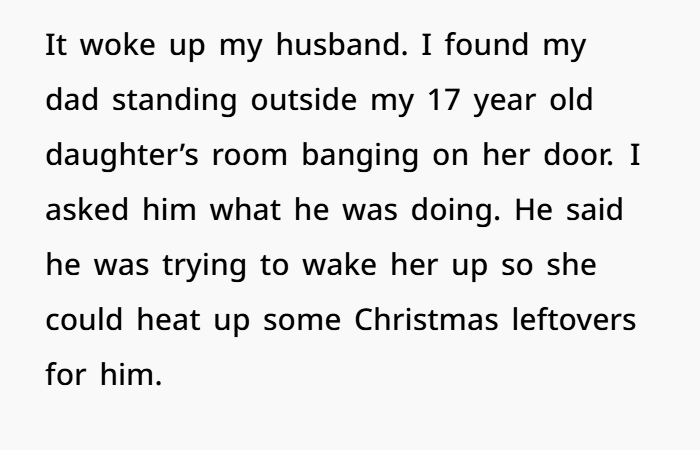
Being family doesn’t mean you get a free pass to disrespect the people you live with—especially when you’re a guest. That’s the core of this story from a mom of three who let her elderly father stay in her home while his subsidized senior apartment was being repaired. Everything seemed to be going okay… until one night, at 1 a.m., she found her dad banging on her 17-year-old daughter’s bedroom door.
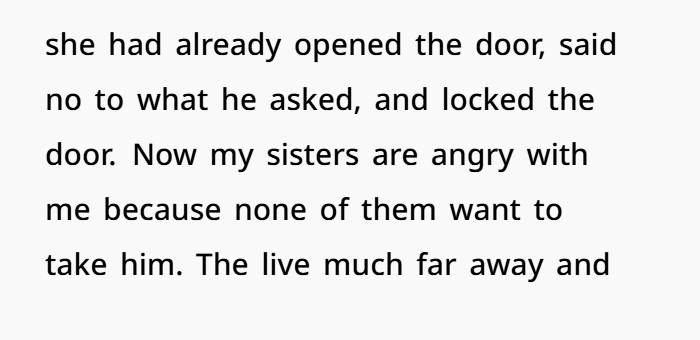
Why? He wanted her to get up and heat up leftovers for him.
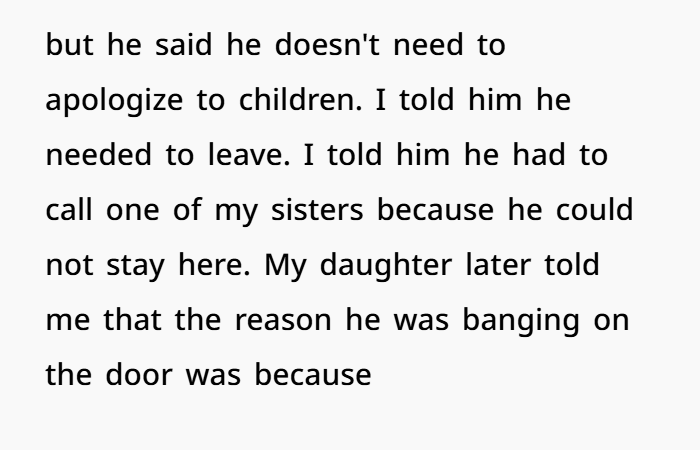
After confronting him and finding out her daughter had already said “no” and locked her door, the mom made a tough call—she told her dad to leave. What followed was family drama, angry siblings, a disappearing dad, and a big emotional mess.
So is she overreacting, or was this a justified move to protect her daughter and set boundaries?
Entitled people often tend to consider only their own feelings and expect others to be at their beck and call

The poster explained that she had let her dad stay at her house for a couple of months, and that even though it was tough, her kids enjoyed his company

Let’s get into the real meat of this.
Because on the surface, it sounds like a typical case of family conflict—but once you dig into it, it’s about so much more. It’s about boundaries, generational expectations, emotional labor, and the long-term effects of enabling entitled behavior.
When Family Becomes the House Guest From Hell
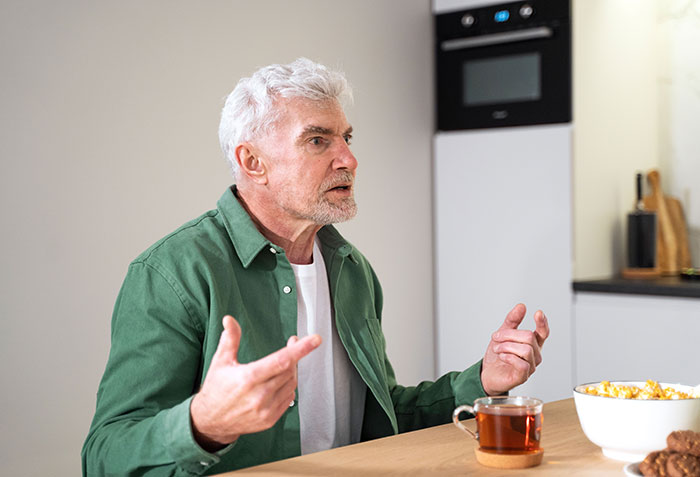
We’ve all heard the saying, “Fish and visitors stink after three days.” But when it’s your dad and he’s technically homeless due to apartment issues, it’s a lot harder to just tell them to go. You did the right thing at first—opened your home, tried to make it work, and even got through the holidays with a few warm moments. That’s huge.
But your dad’s behavior? It crosses a serious line.
Waking up a teenager in the middle of the night to make you food isn’t just old-school—it’s borderline inappropriate. Add the banging on the door, and it quickly goes from rude to intrusive and unsettling. And let’s not forget, your daughter had already answered him and said no. She locked the door because she felt the need to protect her space. That’s not something you just brush off.
Generational Gaps and Toxic Masculinity
Your dad sounds like he’s from the “real men don’t cook” era. A time where certain gender roles were law, not just tradition. That mindset can create major friction in a modern household, especially when it disrespects women’s autonomy and independence—including young women like your daughter.
The belief that women—no matter their age—should always serve the men in the family is rooted in outdated, patriarchal thinking. And while it may have been normal in his house growing up, that doesn’t make it acceptable today.
There’s also the toxic masculinity angle here—refusing to apologize to “children,” expecting to be waited on, and getting angry when told no. These behaviors aren’t just old-fashioned—they’re controlling, dismissive, and create unsafe emotional dynamics in the home.
Protecting Your Kids Is Never the Wrong Choice
Here’s where the real keywords come in: child safety, teen boundaries, emotional well-being, and parenting priorities.
As a parent, your number one job is to protect your children—physically, emotionally, and psychologically. That includes protecting them from family members who overstep. Your daughter shouldn’t be afraid to sleep in her own room. She shouldn’t have to lock her door because her grandfather doesn’t respect her no.
By telling your father to leave, you sent a clear message: My children’s comfort and safety come first. That’s not dramatic. That’s just good parenting.
The Burden of Being the “Responsible One”
Now, let’s talk about your siblings.
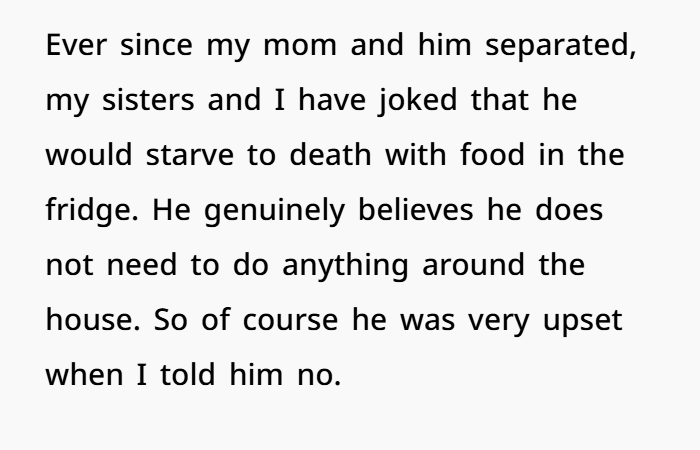
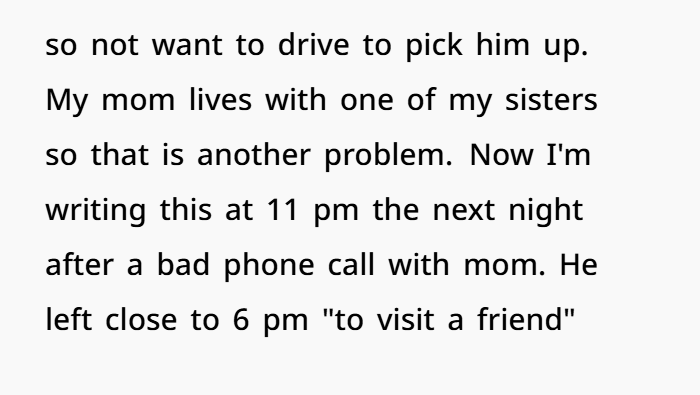
You mentioned your sisters don’t want to take him in. They live far, one already houses your mom, and now they’re mad at you for kicking him out. Classic example of family scapegoating. They’re trying to guilt you into cleaning up the mess because it’s more convenient for them.
But here’s the thing—they’re not stepping up, so they don’t get to criticize. It’s easy to judge when you’re not the one living with a demanding, boundary-crossing relative.
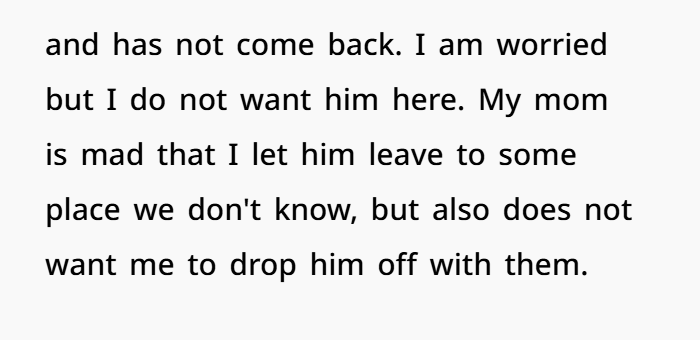
And don’t even get started on your mom being mad. She doesn’t want to deal with him either—but she expects you to do it? That’s emotional manipulation. You’re being punished for enforcing healthy limits, while the people enabling his behavior avoid responsibility.
Should You Bring Him Back?
Let’s address the emotional part now. He left at 6 p.m. to visit a friend and hasn’t returned. It’s 11 p.m., and you’re worried.
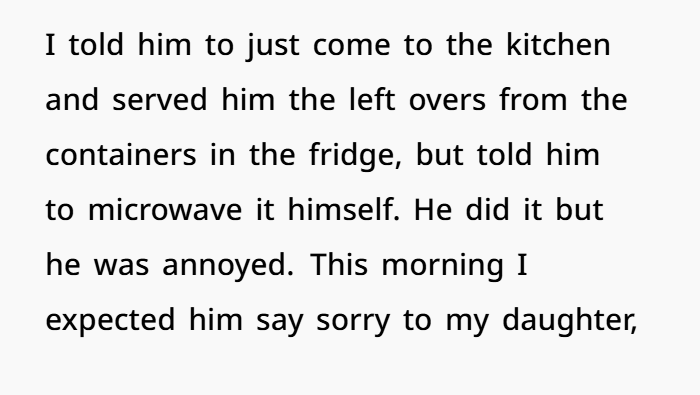
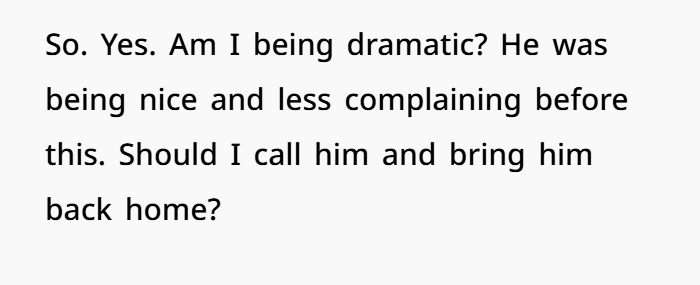
That’s normal. You love your dad, despite all the baggage. But don’t confuse worry with guilt. You didn’t throw him into the street. He’s an adult. He made the choice to leave. You didn’t yell, insult, or cut him off without warning. You asked him to take accountability, and he refused.
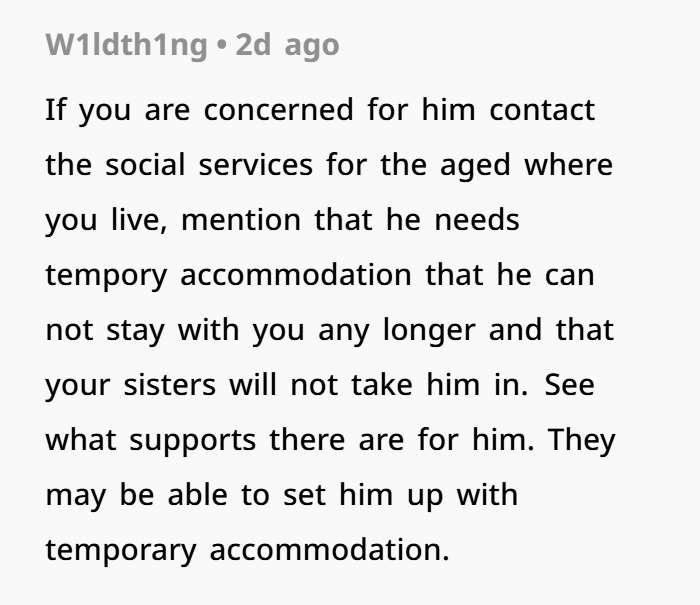
Yes, check in. Call him. Make sure he’s okay. But you don’t have to bring him back into your home to do that. If he needs temporary shelter, offer to help him find a hotel, call senior services, or involve your sisters in the solution.
Just remember: Being concerned doesn’t mean you need to undo your boundaries.
Setting Healthy Boundaries With Elderly Parents

This is where things get really real.
It’s hard to set boundaries with elderly parents. We’re raised to believe they “deserve” our help, no matter what. But here’s the truth: Respect goes both ways.
- Your dad disrespected your daughter.
- He refused to apologize.
- He expected unpaid, middle-of-the-night labor from a child.
- He got angry when asked to be self-sufficient for 5 minutes.
These aren’t just quirks of age. They’re patterns that cause harm. And if nobody ever calls it out, it just keeps getting passed down. You’re trying to break that cycle—and yes, it’s uncomfortable, but it’s also necessary.
You’re Not Alone
This whole story taps into a much larger issue many adults face—caring for aging parents while raising kids, aka the sandwich generation. You’re not alone in this, and it doesn’t make you heartless to say “enough.”
There are support groups, elder care services, and mental health resources for exactly this kind of situation. You’re doing something hard, and that doesn’t make you an AH.
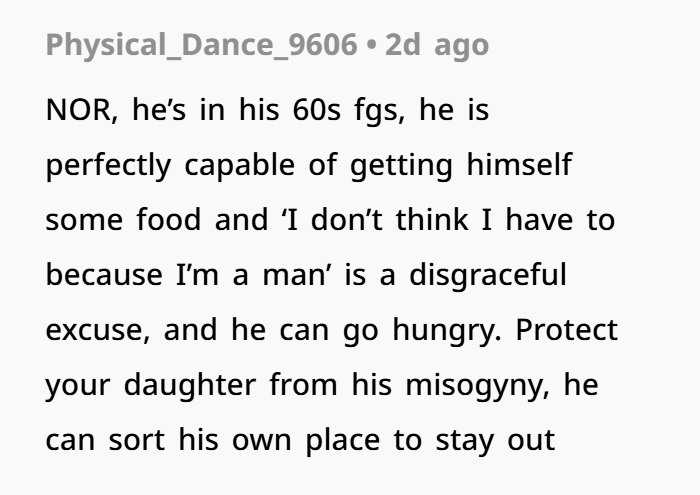
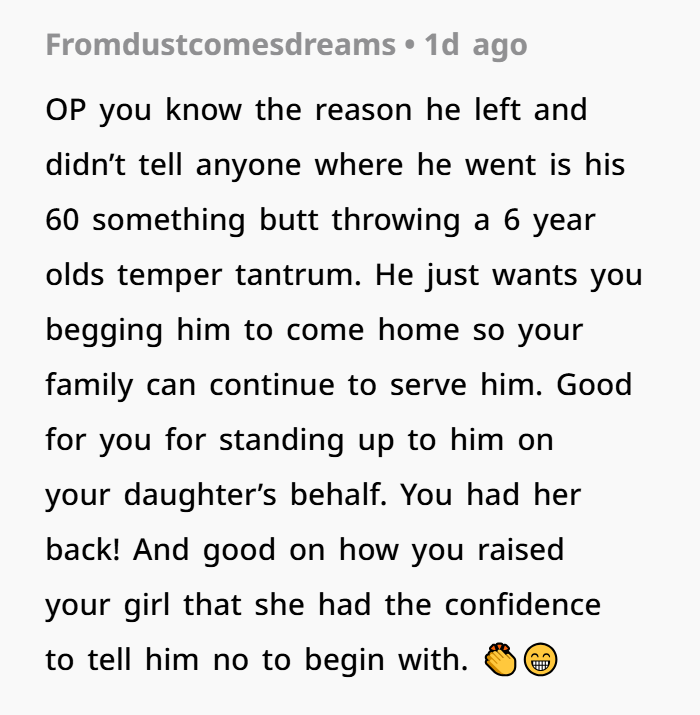
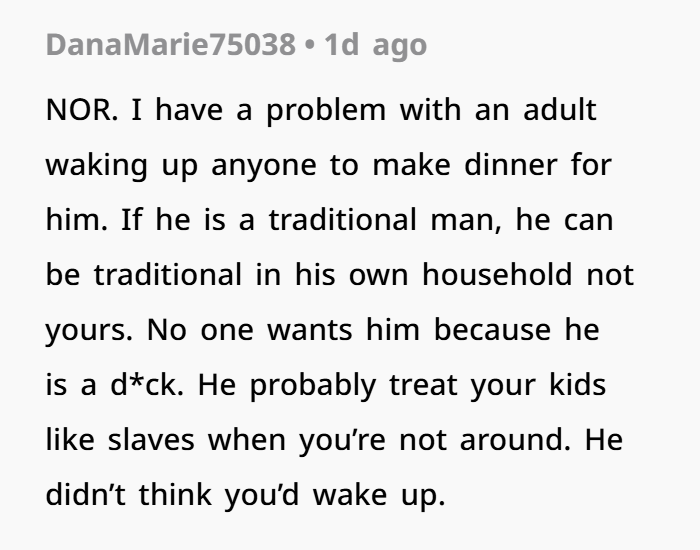
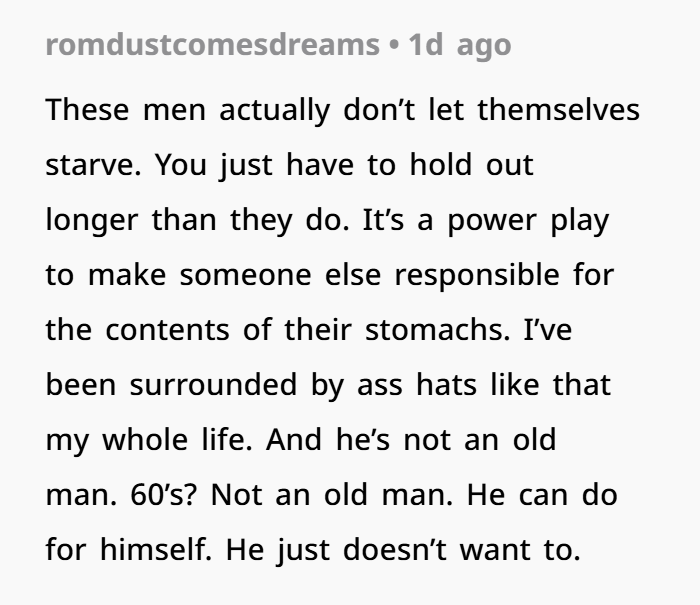
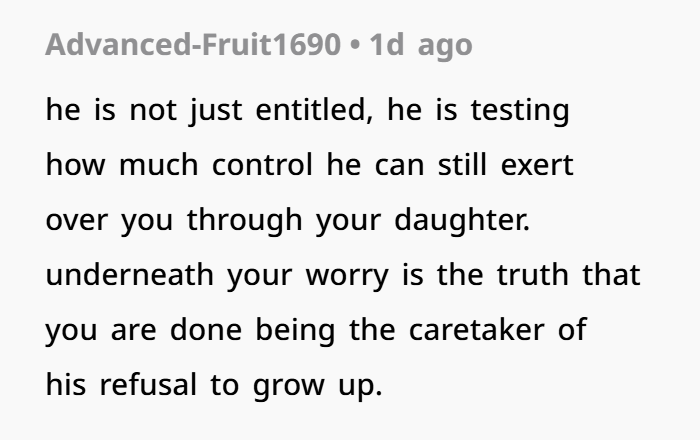
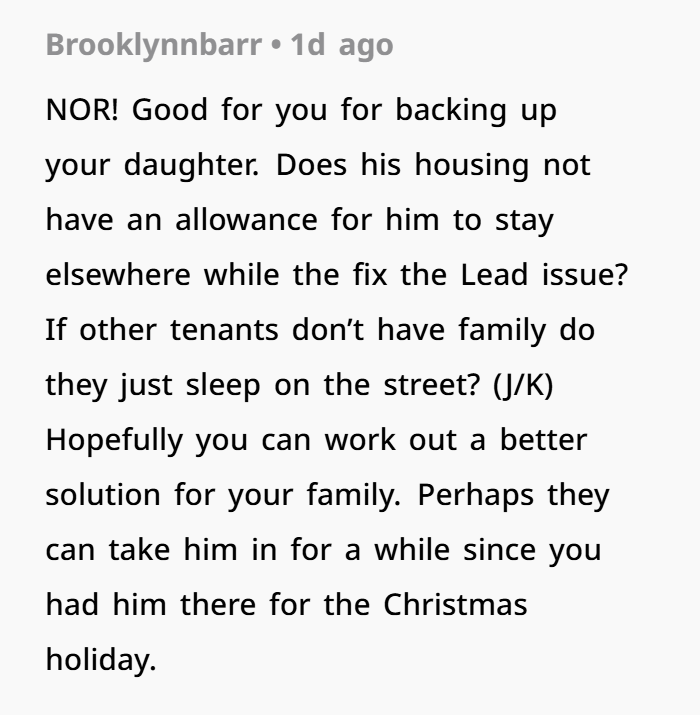
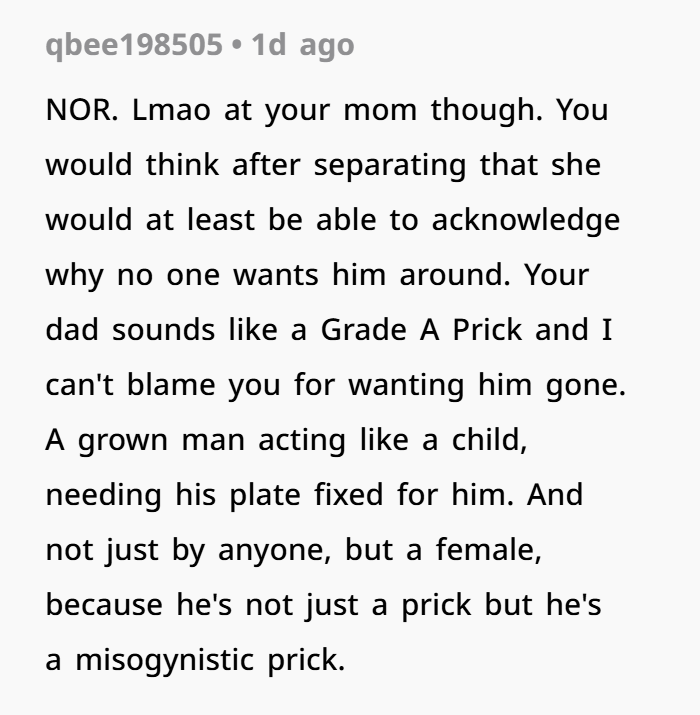
Folks sided with the poster and felt that she was completely right to kick her dad out because of his behavior
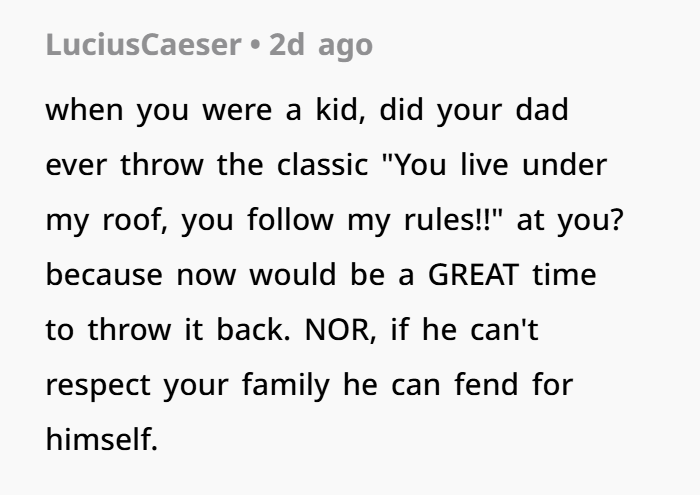
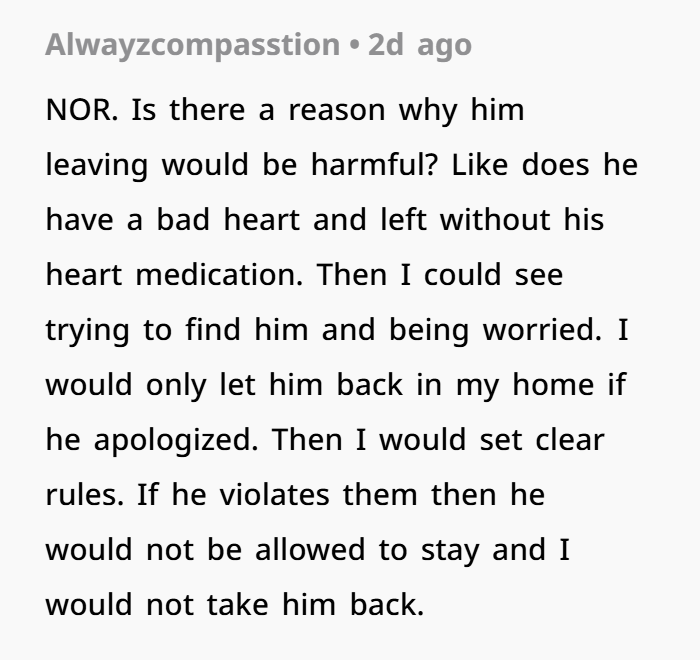
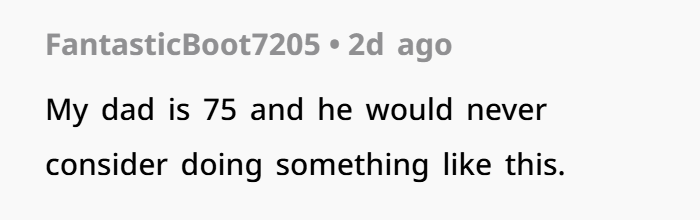
No. You’re not being dramatic. You’re not being cold. You’re being a parent. And while it sucks that it’s come to this, sometimes the kindest thing you can do for your kids is to show them what firm boundaries look like—even when it’s with your own parents.
Call him. Make sure he’s safe. But don’t undo the progress you’ve made. Protect your peace and your family’s emotional safety. That’s not being the bad guy. That’s being the grown-up in the room.