
He Had a Girlfriend… But Kissed Me Anyway — Was I Wrong?
This situation lives in that messy gray area where emotions, attraction, and ethics all collide. You met a guy during a work event, hit it off instantly, and naturally started spending more time together. From the start, you knew he had a girlfriend, and to your credit, you didn’t push anything forward or flirt openly. Still, the connection grew. Long conversations, shared breaks, and eventually deeper emotional talks about his relationship created a kind of closeness that felt more than casual.
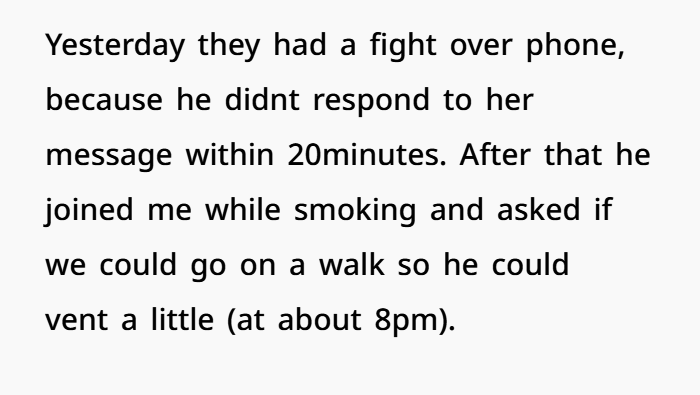
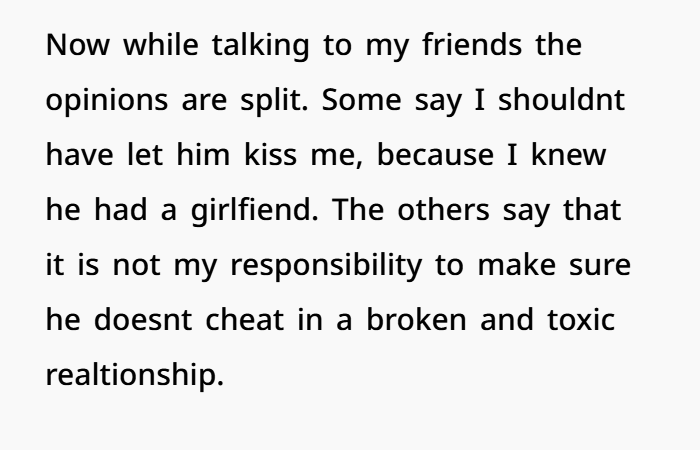
The turning point came after he vented to you about his toxic relationship—cheating, control, constant arguments—and during a quiet moment, he leaned in and kissed you. You didn’t initiate it, but you also didn’t stop it. Now you’re stuck wondering if that makes you equally responsible. Some friends say you crossed a line, others say it wasn’t your job to manage his relationship. And honestly, that’s exactly why this feels so complicated—because both sides have a point.

Let’s break this down in a real, honest way—because this isn’t just about a kiss. It’s about boundaries, emotional responsibility, and what happens when someone pulls you into the middle of their messy relationship.
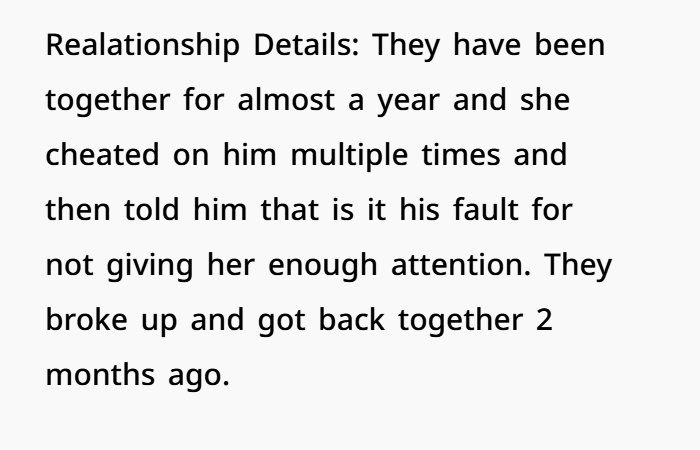
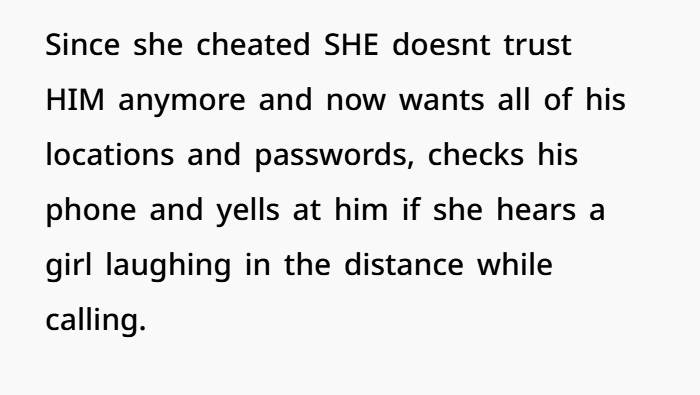
First, let’s talk about him. This guy is clearly in what most people would call a toxic relationship dynamic. His girlfriend cheated multiple times, blamed him for it, and now—ironically—she’s the one being controlling and suspicious. That kind of behavior lines up with patterns seen in unhealthy relationships: blame-shifting, control, emotional volatility. Anyone in that situation is probably drained, confused, and looking for some kind of emotional escape.
And that’s where you come in.
Whether intentional or not, you became that safe space. You listened. You gave him attention he wasn’t getting. You didn’t judge him. That kind of emotional connection builds fast, especially in intense or temporary environments like work events. Psychologically, this is often called emotional displacement—when someone starts redirecting unmet needs from their relationship onto someone else.
Now here’s the important part: emotional closeness like that can feel harmless, but it often leads exactly where this went.
The walk. The venting. The quiet moment. The kiss.
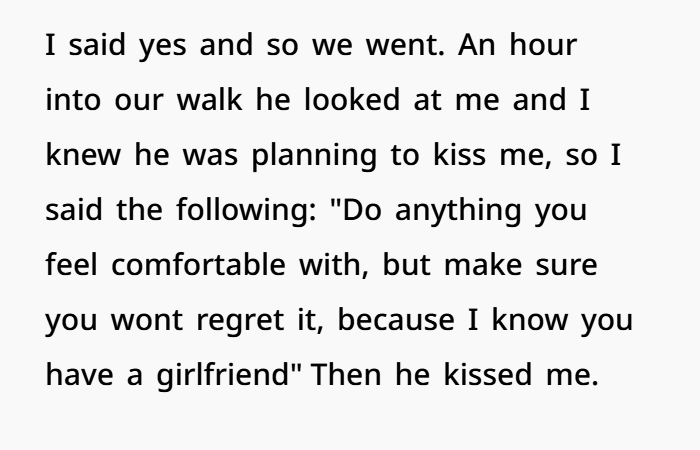
And to be fair—you didn’t exactly green-light it. What you said actually shows awareness: “Make sure you won’t regret it.” That’s you acknowledging the boundary. But at the same time, you didn’t set a firm stop either. You left the door open.
That’s where your responsibility comes in—not equal to his, but not zero either.
Because here’s the truth:
You knew he had a girlfriend.
You knew he was emotionally vulnerable.
You knew he was leaning toward something crossing a line.
And instead of shutting it down clearly, you allowed it to happen.
That doesn’t make you a terrible person. It makes you human. Attraction plus emotional closeness is a powerful mix. But it does mean you had some level of agency in that moment.
Now let’s flip it—because a lot of people will say: “It’s not your relationship, not your responsibility.”
And yeah… that’s partially true.
He is the one who made a commitment. He is the one who chose to kiss you. He is the one responsible for cheating. Even if his relationship is a complete disaster, the correct move on his end would have been to end it first before getting involved with someone else.
So in terms of primary responsibility?
That’s on him. No question.
But socially and ethically, there’s also something called respecting relational boundaries. Even if you’re not the one in the relationship, knowingly participating in crossing those boundaries can still feel… off. Not illegal, not unforgivable—but not totally clean either.
That’s why you feel guilty. Not because you did something horrible, but because part of you knows it wasn’t fully aligned with your values.
Another layer here is the “he’s in a toxic relationship” justification. This is where things can get tricky. It’s easy to think: “Well, his relationship is already broken, so this doesn’t really matter.” But in reality, that’s often how emotional affairs begin. People use a bad relationship as a stepping stone instead of properly ending it.
And that rarely ends well.
Because if he’s willing to cross a boundary before ending things with her, there’s always a question of what he might do in future situations too. Not guaranteed—but it’s a pattern worth noticing.
Also, consider this: you’re currently in a shared work environment for weeks. That adds another layer of risk—awkwardness, tension, potential drama if things escalate or if his girlfriend finds out. Workplace-adjacent situations can get messy fast, especially when emotions are involved.
Now let’s talk about your guilt.
Guilt isn’t always a sign you did something wrong—it’s often a sign that your actions and your values didn’t fully line up. And that’s actually useful. It helps you figure out where your boundaries are for next time.
So instead of asking “Am I the asshole?” a better question might be:
“Did I act in a way I’d feel fully comfortable repeating?”
If the answer is no, then that’s your takeaway.
Not shame. Not overthinking. Just clarity.
Comments From The Community
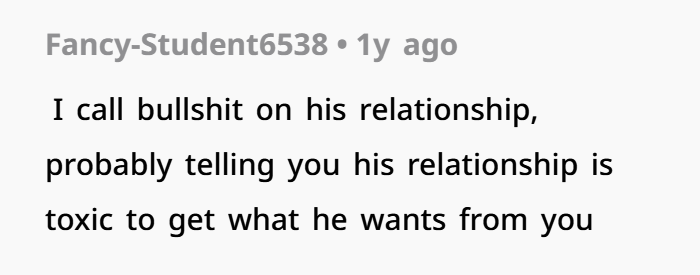
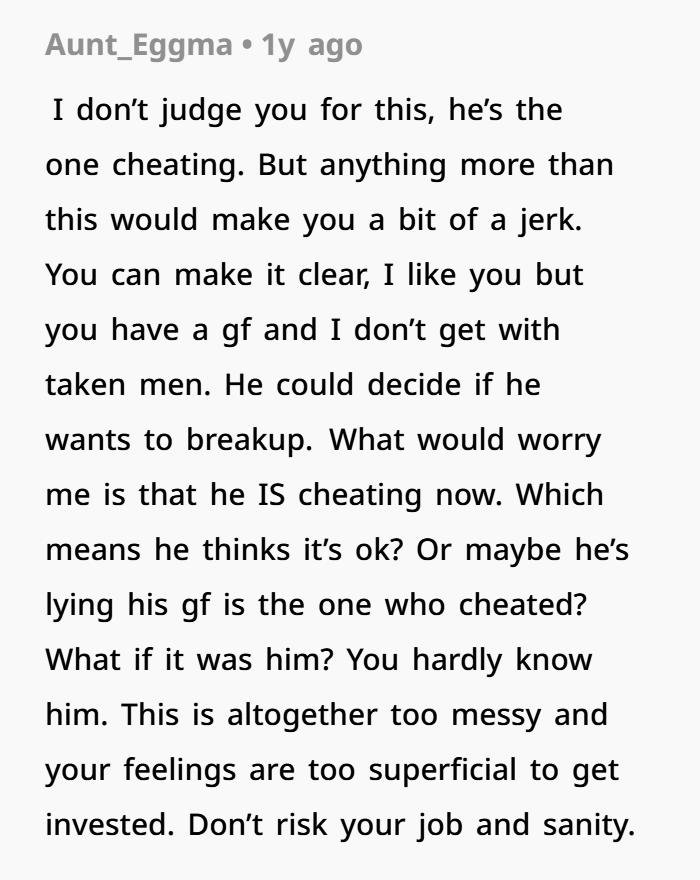
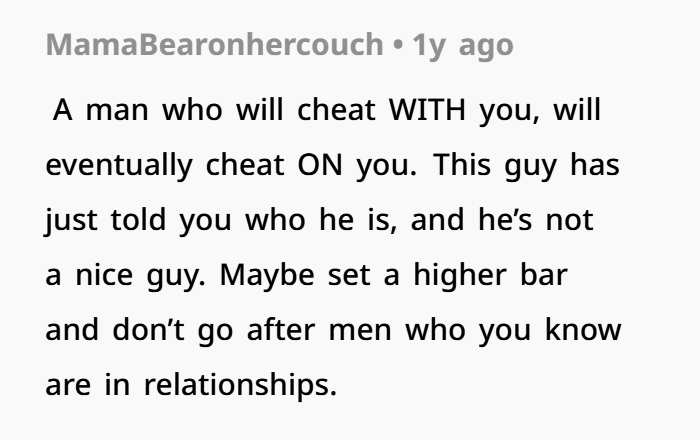
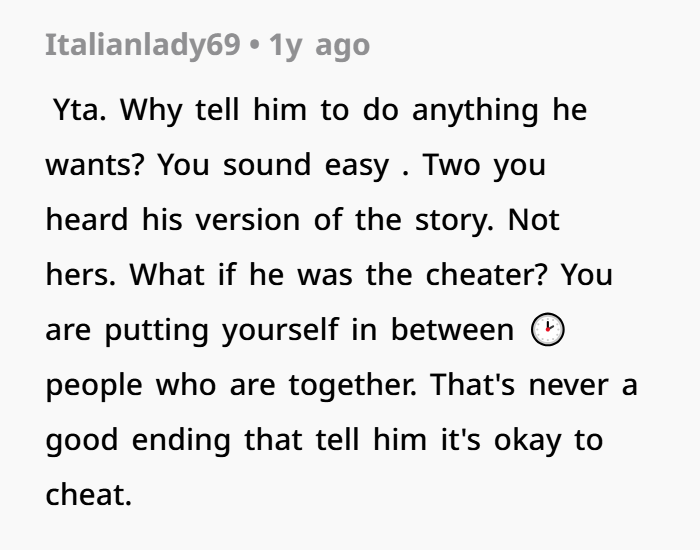
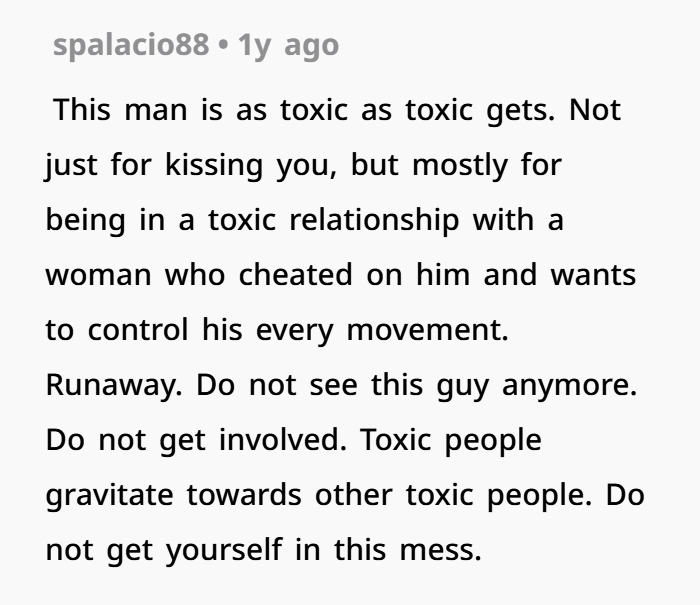
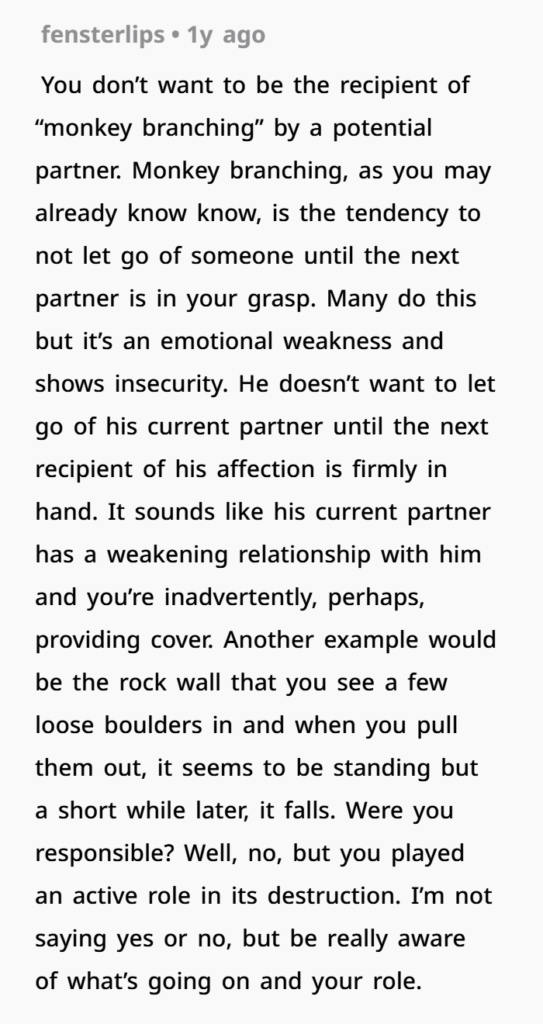
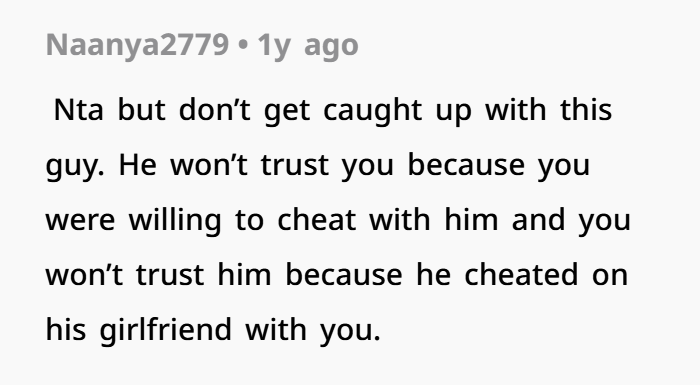
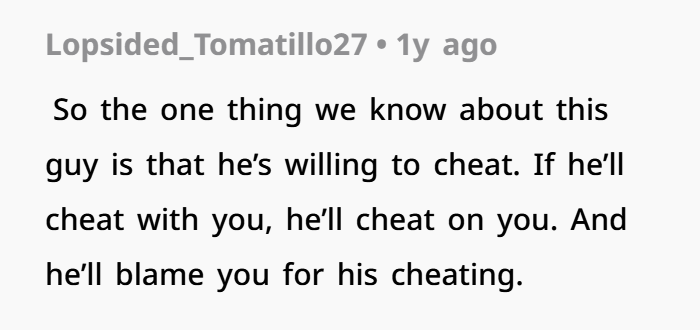
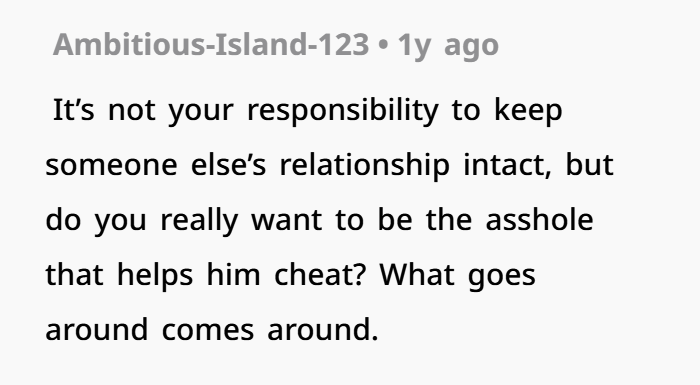
You’re not the asshole—but you’re not completely in the clear either.
He carries the bigger responsibility. It’s his relationship, his choice, his boundary to maintain.
But you did see it coming… and you didn’t stop it.
So this sits in that honest middle ground:
A human moment, a blurred boundary, and a lesson for the future.
If anything, the real move now is deciding what you do next—because that matters more than the kiss itself.