
My Coworker Returned From Maternity Leave and Refused Night Shifts—Now I’m Expected to Work 24 Hours With Almost No Sleep
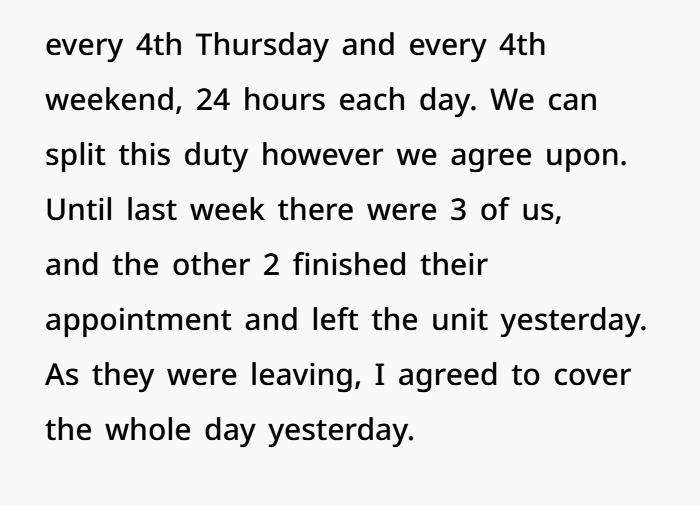
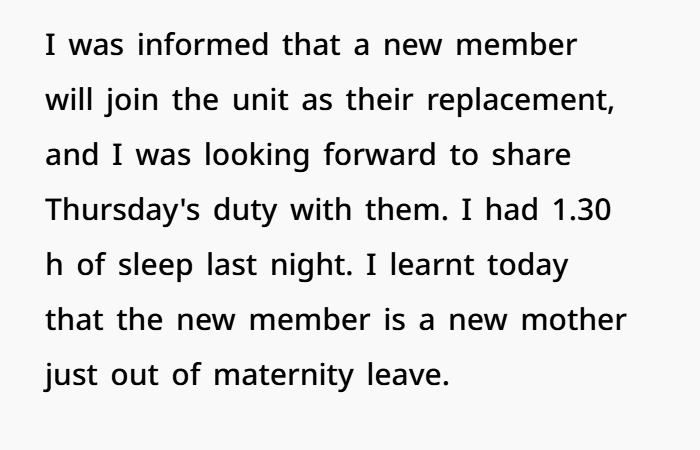
A 31-year-old healthcare worker is dealing with a stressful situation at work. His hospital unit has been short on staff since two coworkers left their jobs. Because of this, he has been handling long 24-hour on-call shifts almost by himself. During one shift, he managed to get only an hour and a half of sleep. He was happy to hear that another employee would soon join the team and help with the workload. However, the new coworker was returning from maternity leave and had a young baby at home. He soon learned that her working hours would be much shorter than he expected.
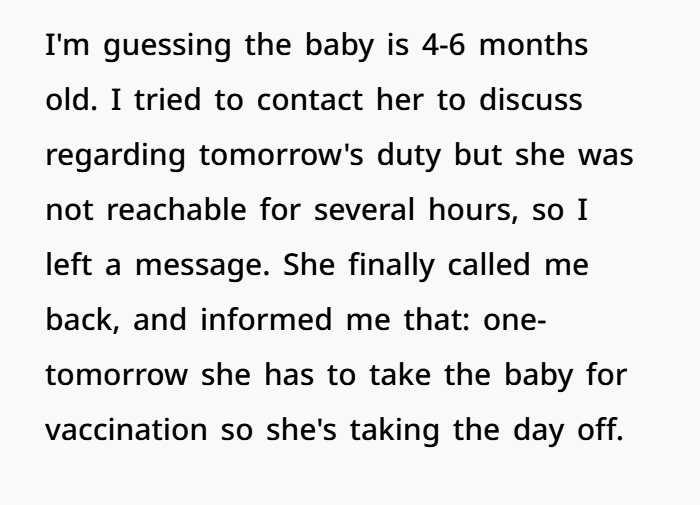
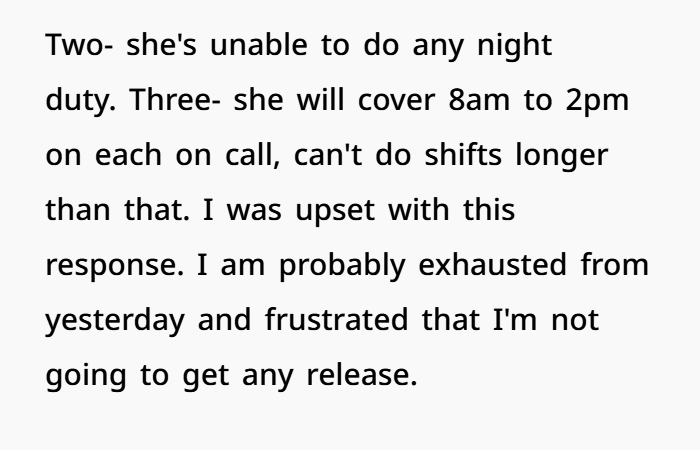
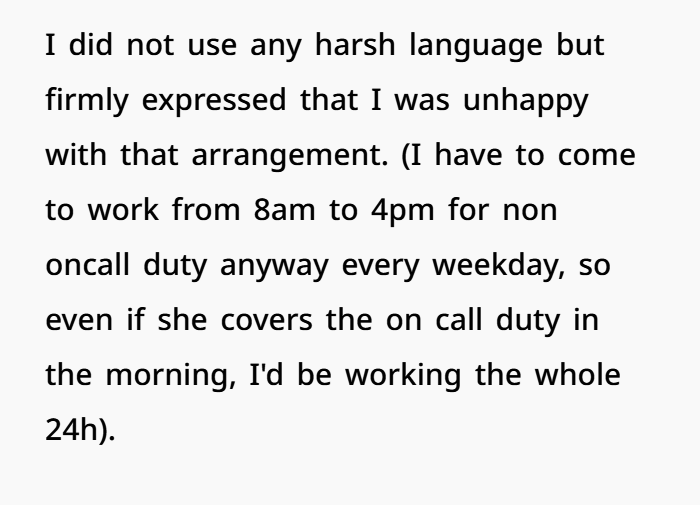
When he contacted his new coworker to discuss the work schedule, she explained that she needed a day off to take her baby for vaccinations. She also said she could not work overnight shifts because of her childcare responsibilities. Instead, she could only work from 8 a.m. to 2 p.m. during on-call days. The man understood that returning to work after maternity leave could be difficult. However, his regular hospital schedule was already from 8 a.m. to 4 p.m. This meant her morning hours would not provide much help with the extra shifts he needed covered.
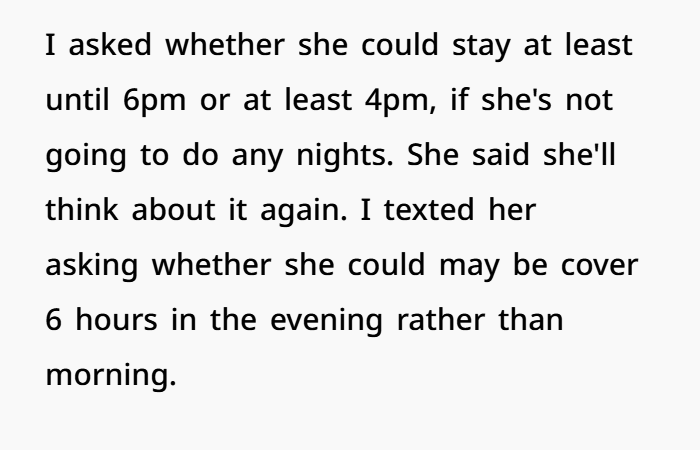
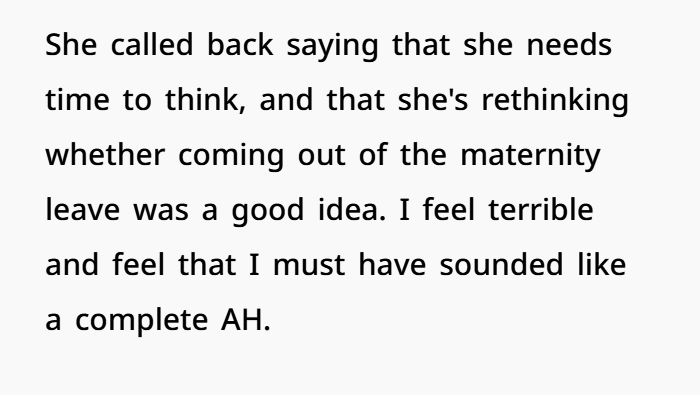
He politely asked whether she could stay until 4 p.m. or 6 p.m. He also suggested working six hours in the evening as another option. His goal was to create a fair employee work schedule so neither person had to handle all the difficult hours alone. However, the conversation made his coworker uncomfortable. She became upset and said it made her question whether returning to work so soon was a good idea. The man felt bad about the situation and later apologized in case his words had sounded insensitive. He said he never meant to make her feel guilty about being a working mother.
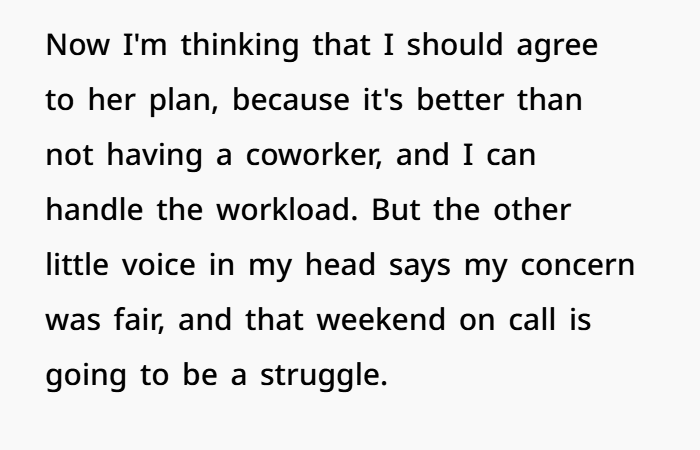
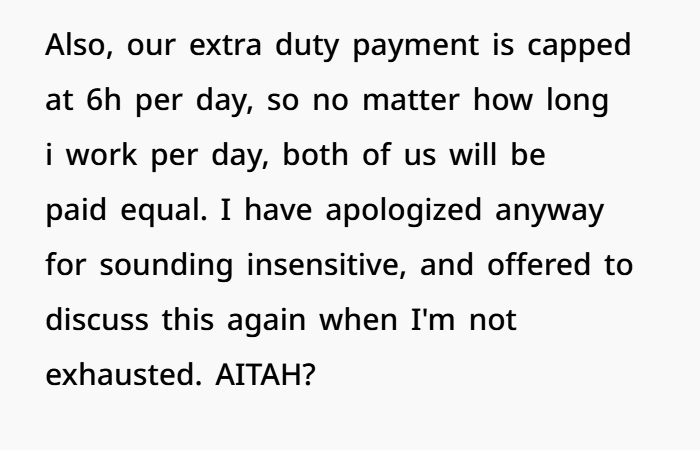
Now he is worried about how the hospital will manage its staffing shortage. If his coworker can only work mornings, he may have to cover most night shifts and weekends. Another concern is overtime pay. Their extra-duty compensation is limited to six hours per day, even if someone works much longer. This means he could spend more time at work without receiving additional pay. He wants to respect his coworker’s family responsibilities, but he also believes that fair shift scheduling and employee well-being matter. He is now wondering whether asking for longer hours was unfair or whether the hospital should find a better staffing solution.


He Asked a New Mom to Work Longer Shifts, but She Said He Was Being Unfair
Working long hours is hard enough. But when you are covering extra shifts because your workplace is short on staff, even a normal workday can feel exhausting.
One healthcare worker found himself in this situation after two coworkers left his department.
He was already working extra hours, including nights and weekends, to keep things running.
Then he learned that a new coworker would be joining the team after maternity leave.
He hoped she would help reduce his workload.
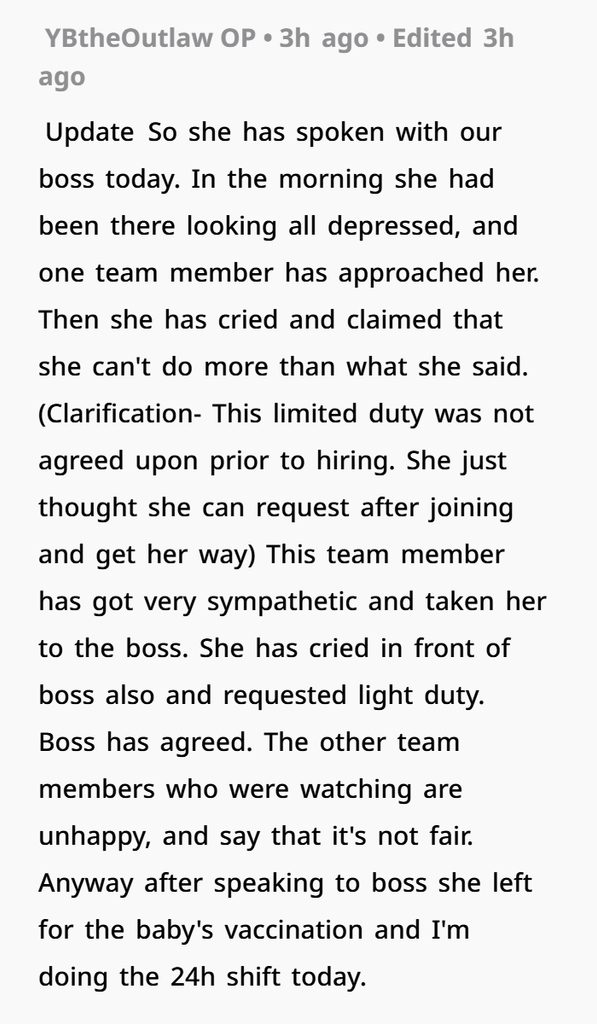
But when they discussed the schedule, she explained that she could only work certain daytime hours because of her baby.
He asked whether she could stay a little longer or work different hours.
She became upset and felt that he was not being understanding about her situation.
Now he is wondering whether he was wrong for asking.
He Was Already Working Too Many Hours
The healthcare worker had been dealing with a serious staffing problem.
Two people had left his department, leaving fewer employees to cover the same amount of work.
He had taken on extra shifts to help keep the department running.
That included overnight duty and weekend coverage.
At one point, he said he had only managed to get about 90 minutes of sleep after an extended period of work.
That is not much rest for anyone.
It is especially concerning in healthcare, where workers often need to make important decisions and stay focused.
Long shifts can affect concentration, energy, and judgment.
A tired employee may also find it harder to manage stress or communicate calmly.
The worker was not simply upset about having a busy schedule.
He was worried that the amount of work had become too much for one person.
He needed help.
And he hoped the new coworker would make the schedule more manageable.
The New Coworker Was Returning From Maternity Leave
The new employee was preparing to return to work after having a baby.
That is a big change for many parents.
Returning to work with an infant at home can involve childcare arrangements, feeding schedules, interrupted sleep, and changes to everyday routines.
Some parents also need time to recover physically after childbirth.
It is understandable that she wanted a schedule that worked for her family.
She explained that she could not take overnight shifts.
She also said she could only cover six daytime hours during each on-call period.
Her proposed schedule was from 8 a.m. to 2 p.m.
The healthcare worker understood that she had a young baby.
But he was concerned that those hours would not give him the help he needed.
That is where the disagreement began.
Her Proposed Hours Did Not Reduce His Workload Much
The worker’s regular weekday schedule was from 8 a.m. to 4 p.m.
The new coworker wanted to cover on-call duty from 8 a.m. to 2 p.m.
Those hours were almost entirely within his normal workday.
That meant he would still be responsible for much of the difficult coverage outside regular hours.
He could end up handling evenings, nights, and weekends while she worked only during the day.
Here is how the schedules compared:
| Schedule detail | Hours |
|---|---|
| Required on-call coverage | 24 hours |
| New coworker’s proposed hours | 8 a.m. to 2 p.m. |
| His regular weekday hours | 8 a.m. to 4 p.m. |
| Other hours he suggested | Until 4 p.m., until 6 p.m., or a six-hour evening shift |
| Extra-duty pay limit | 6 hours per day |
The problem was not that she wanted shorter hours.
It was that her proposed schedule did not meaningfully reduce his overnight and weekend responsibilities.
He needed someone to share those difficult shifts.
Otherwise, the staffing problem would continue.
He Asked Whether She Could Work Different Hours
Instead of immediately demanding that she work overnight, the man tried to discuss other options.
He asked whether she could stay until 4 p.m. or 6 p.m.
He also suggested that she could work six hours in the evening.
He hoped they could find a schedule that worked for both of them.
These were questions about availability, not orders.
Still, the conversation became uncomfortable.
The coworker felt that he was not being considerate of her situation as a new mother.
She was already facing the challenge of returning to work while caring for an infant.
Being asked to change her hours may have added to that pressure.
But the man was also under pressure.
He had been working extra shifts with very little rest.
Both employees had real concerns.
The problem was that they were being asked to solve a staffing issue without enough support.
Being a Parent Does Not Make Workplace Scheduling Easy
It is important to understand the new mother’s side of the story.
A baby needs regular care, and parents may have limited childcare options.
Evening and overnight childcare can be difficult to arrange.
Some employees may also qualify for workplace accommodations after childbirth.
Depending on the location and employment rules, those may include breastfeeding accommodations, medical restrictions, or other protections.
The man did not know whether his coworker’s schedule was based on an approved accommodation or a personal childcare need.
That matters.
If her employer has formally approved certain working hours, she should not be pressured to ignore that arrangement.
But even if she has a valid reason for avoiding night duty, someone still needs to cover those hours.
That responsibility should not automatically fall on one exhausted coworker.
The employer needs to find a workable solution.
The Extra Pay Rules Made the Situation Worse
Another issue was the department’s overtime compensation policy.
According to the worker, employees could receive additional-duty pay for only six hours per day.
They would not receive more extra-duty pay for working beyond that limit.
That created a frustrating situation.
One person might work six extra hours while another worked much longer.
But the additional payment could still be the same.
The worker felt this was unfair.
It is easy to understand why.
When employees work long hours, they usually expect their compensation and rest time to reflect the work they are doing.
However, overtime pay rules depend on the country, employment contract, job classification, and local labor laws.
Healthcare employees may also have special scheduling or compensation arrangements.
The worker would need to review his contract and workplace policy to understand his rights.
If he believes the payment system is incorrect, an HR representative or employment law professional may be able to explain the available options.
The larger concern is that the current system appears to place a heavy workload on one employee without giving him much relief.
Working With Almost No Sleep Is a Serious Concern
The man said he had only slept for about 90 minutes after an extended period of duty.
That is a warning sign.
Healthcare workers need enough rest to stay alert and perform their jobs safely.
Research has linked very long work shifts with a higher risk of mistakes in certain medical settings.
Lack of sleep can affect memory, concentration, and decision-making.
It can also make everyday conversations more difficult.
Someone who is exhausted may sound frustrated even when they are trying to be reasonable.
That may have happened during the discussion with his coworker.
But the solution is not for him to keep working without enough sleep.
His employer needs to take his workload seriously.
A safe staffing plan should include enough employees, reasonable shift lengths, and proper rest periods.
Those are workplace safety concerns, not simply personal preferences.
The Coworker Became Upset After Their Conversation
The new mother was unhappy with the discussion.
She reportedly said she was reconsidering whether she should return to work.
That suggests the conversation was stressful for her.
The man did not want to make her feel unwelcome.
After thinking about what happened, he apologized for possibly sounding insensitive.
He also suggested that they talk again after he had gotten some rest.
That was a reasonable response.
He recognized that his exhaustion may have affected how he spoke.
But apologizing for his tone does not mean he has to accept an unfair workload.
He can be respectful of her family needs while still explaining that the schedule is not working.
Both things can be true.
The Real Problem Is the Staffing Shortage
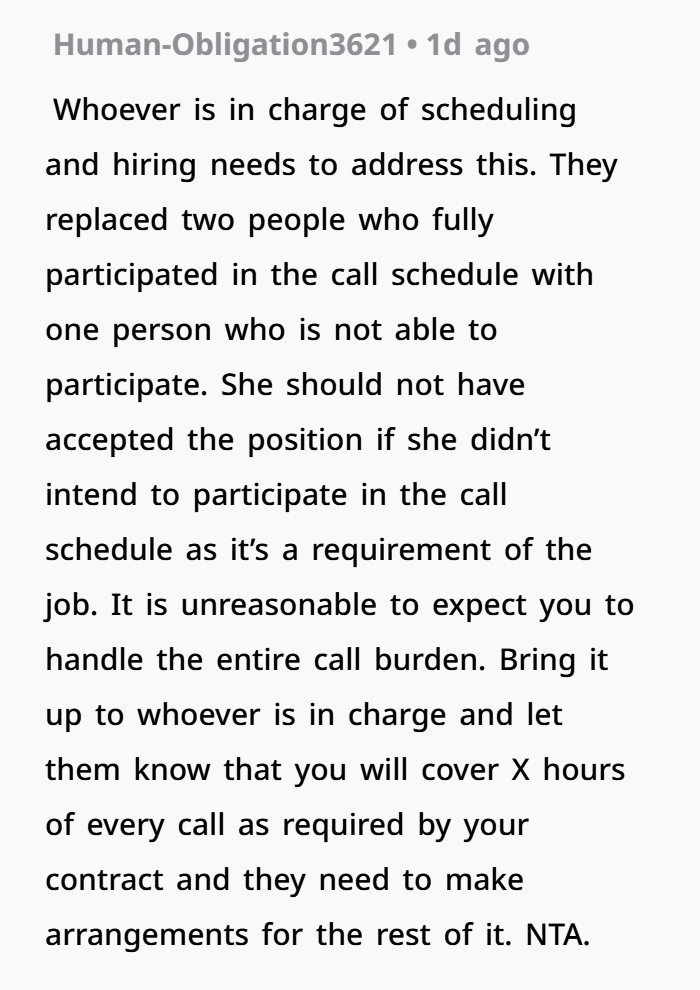
The biggest issue in this story is not the new mother.
It is the lack of enough employees.
Two workers left the department, and only one replacement was expected to arrive.
The remaining worker had already been covering extra shifts.
Now, the replacement had limits on when she could work.
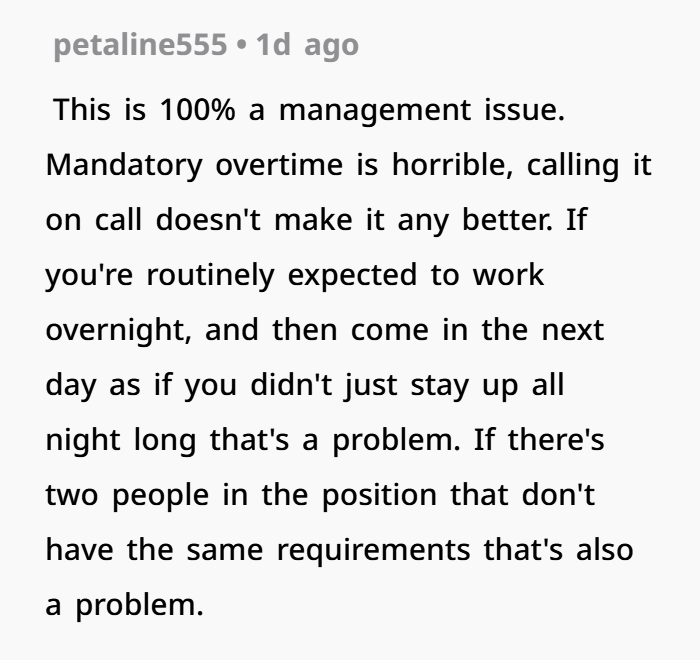
That should have been handled by management before the schedule became a problem.
Instead, the two employees were left trying to work it out themselves.
That put them in an uncomfortable position.
The new mother felt pressured to work hours that might not fit her childcare needs.
The man felt pressured to keep covering nights and weekends without enough rest.
Neither employee created the staffing shortage.
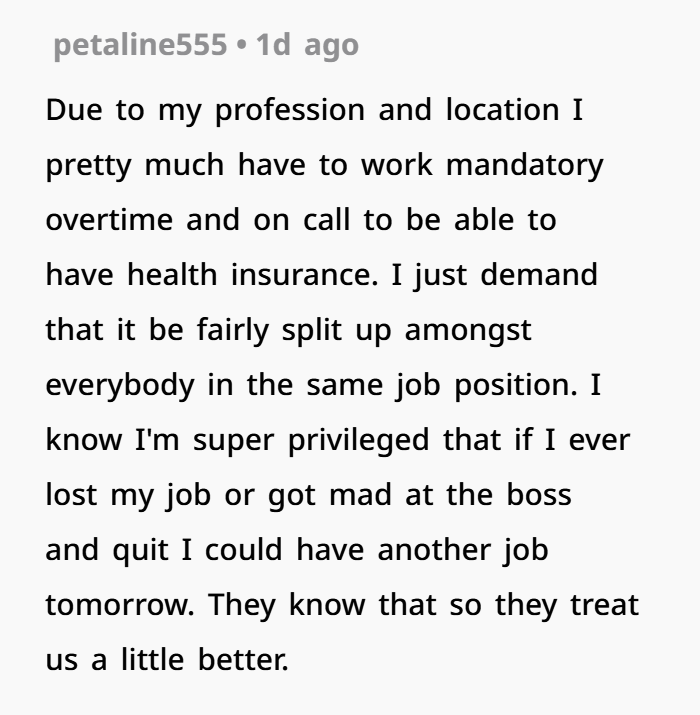
That is why the supervisor or scheduling manager needs to get involved.
Management Should Create a Fair Work Schedule
A manager should review the department’s staffing needs and decide how to cover the required hours safely.
The first step is understanding which shifts need coverage.
Then management can review employee availability, approved accommodations, and workplace policies.
Possible solutions could include hiring temporary staff, using an on-call rotation, or bringing in additional employees for evenings and weekends.
Management could also adjust regular daytime duties so that the person covering overnight work has enough time to rest.
The right solution depends on the department’s needs and available staff.
But one thing is clear.
The man should not be expected to cover every difficult shift simply because he has been doing it already.
And the new mother should not have to explain private medical information to a coworker.
Management can handle any formal accommodations while keeping personal details confidential.
The employees only need to know the schedule they are expected to follow.
He Should Keep a Record of His Working Hours
The healthcare worker would also benefit from documenting his schedule.
He could keep a simple record of his regular hours, additional shifts, overnight duty, and rest periods.
This would help him explain the problem clearly to management.
Instead of saying he feels overworked, he could show exactly how many hours he has been covering.
He could also review his pay records to see how additional-duty compensation is being calculated.
If there are questions about overtime pay, employee benefits, or workplace safety rules, HR may be able to provide guidance.
Depending on the situation, an employment attorney or other qualified professional may also be helpful.
The goal is not to create a conflict with his coworker.
It is to make sure the department has a safe and fair staffing plan.
He Can Respect Her Family Needs Without Taking Every Shift
One important lesson from this situation is that understanding another person’s needs does not mean ignoring your own.
The new mother has responsibilities at home.
The man also needs sleep, rest, and time away from work.
His personal life matters even if he does not have a baby to care for.
Employees should not have to prove that their personal responsibilities are more important than someone else’s.
A fair workplace should consider everyone’s needs.
That may mean giving one employee a temporary accommodation while arranging extra coverage for the remaining shifts.
It should not mean quietly giving all the difficult hours to another person.
If the current schedule cannot work safely, management needs to change it.
Final Verdict: NTA — Not the Asshole
The healthcare worker is not wrong for asking his coworker whether she could work longer or different hours.
He was trying to find a way to share the workload after a difficult period of understaffing.
His concerns about overnight shifts, weekend work, lack of sleep, and limited extra pay are reasonable.
At the same time, the new mother is not wrong for explaining that she has limits on her availability.
She may have childcare needs or approved workplace accommodations that her colleague does not know about.
The man did the right thing by apologizing for possibly sounding insensitive.
But he should not feel that he must accept every extra shift to make up for it.
The next step should be a conversation with management about safe staffing, reasonable working hours, and fair compensation.
Being understanding of a coworker’s family responsibilities should not mean putting your own health and well-being at risk.
The fairest solution is one that respects the new mother’s needs while making sure her colleague is not left carrying an exhausting schedule.
In the end, this is not really a story about one difficult employee.
It is a story about what happens when a workplace does not have enough staff and expects employees to solve the problem on their own.
See The Comments Below