
AITA for Not Wanting a Relationship with My Dad’s New Family?
A 17-year-old shares his struggles with the aftermath of an absent father who never took responsibility. After learning about his dad’s new family, he’s now faced with pressure to connect with half-siblings and a stepmother who insists they are “family.” He wonders if he’s wrong for refusing to engage with people he feels no bond to, especially when his dad hasn’t been involved in his life for over a decade.
In this post, the teen vents his frustration about being pushed to form a relationship with people he doesn’t want to. He’s come to terms with his dad’s absence and is being questioned by his father’s new family, his step-sister, and even his school counselor. Is he wrong to prioritize his emotional well-being over these new family connections?
Children are so vulnerable that sometimes, they can remember every hurt that their parents cause them

When the poster was 5, his dad got a DUI while he was in the car, after which, the man abandoned him and got his own family
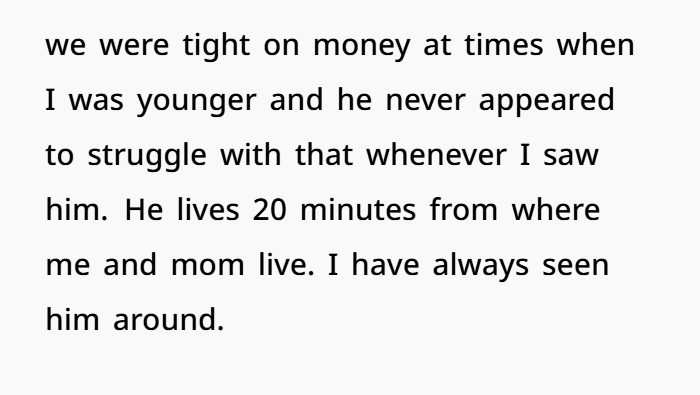
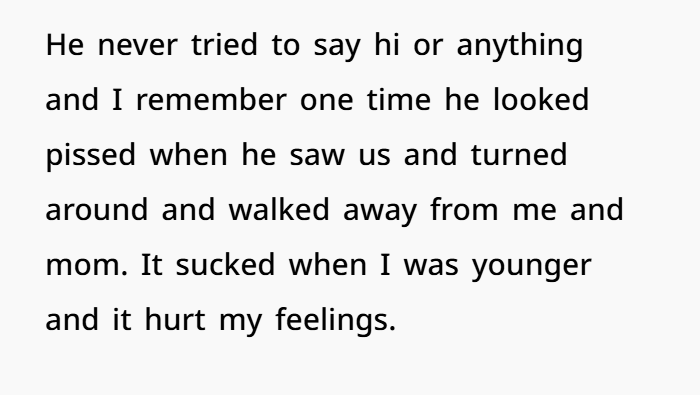
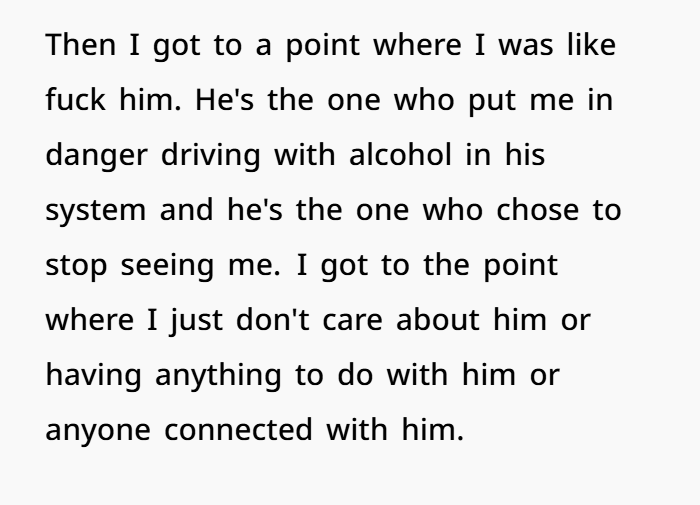
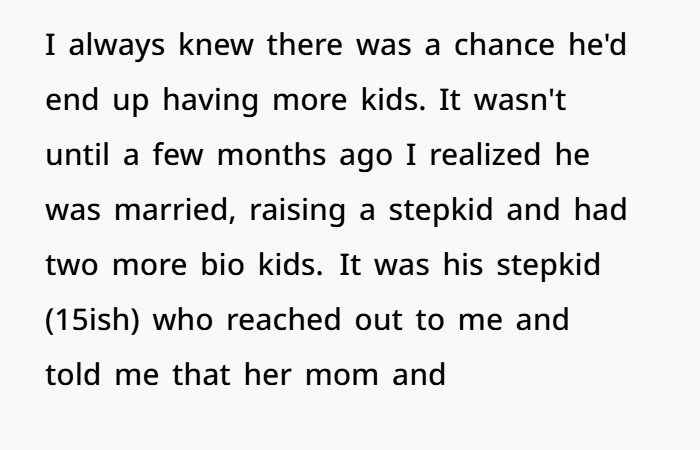

The situation this 17-year-old is facing isn’t uncommon for children of estranged parents. In this case, the father, who had a major role in his life up until the age of 5, has been absent for more than a decade. The teen’s memories of his dad involve neglect, danger (thanks to the DUI incident), and abandonment when the father didn’t fulfill his parental duties, like showing up for supervised visits or paying child support.
As a result, the teenager has grown up without his father’s presence, dealing with emotional pain, and growing up in a single-parent household. He’s learned over the years to survive without him. And, quite frankly, he’s had no reason to even think about his dad’s life for a long time. His anger is understandable, especially when his dad turned his back on him during such formative years.
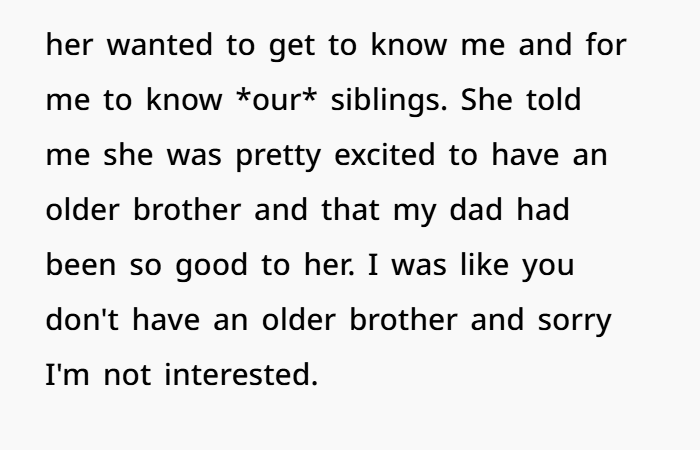
But recently, the situation has become more complicated. The dad, now married and with two biological children, reached out to him through his stepdaughter. This teen’s step-sister, who’s about 15 years old, reached out to him, excited to meet her “older brother” and meet her blood relatives. She even tried several times to convince him to connect with her and the other siblings. The teen, however, wasn’t interested. He made it clear that he had no desire to form any kind of relationship with them.
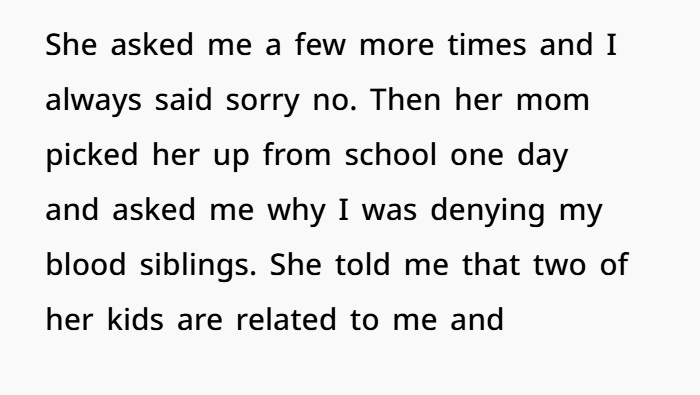
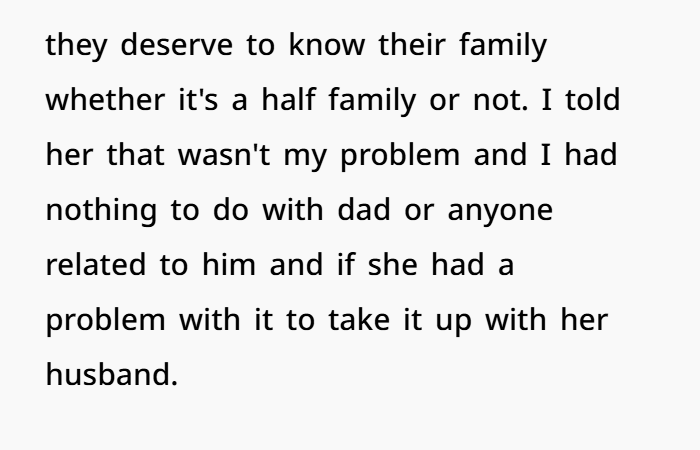
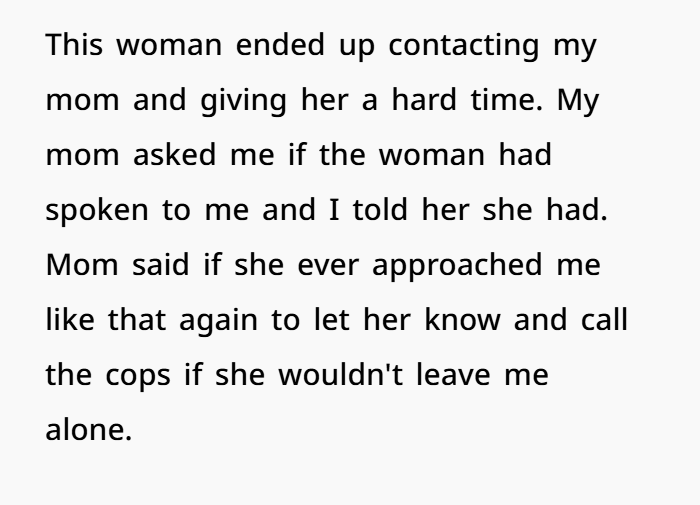
To make matters more complicated, the stepmother took it upon herself to get involved, calling out the teenager for denying his “siblings” and telling him that they deserve to know their family, blood or not. She took it further by contacting his mother, causing even more tension in the household. This only heightened the discomfort the teen was feeling, especially since his mother already warned him that if they didn’t stop, he should call the cops.

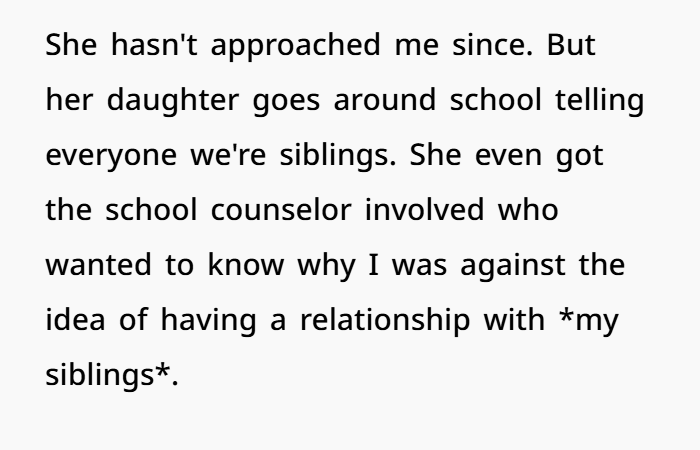
Adding to the frustration, the step-sister went to school and began telling people that they were siblings. The situation escalated when the school counselor intervened, asking why the teen refused to have a relationship with his “siblings.” At this point, the teen’s boundaries were being severely crossed, and his feelings were completely disregarded. All of this pressure—coming from his father’s new family and even the school staff—has left him feeling even more distant and angry.
So, is the teen in the wrong for refusing to form a relationship with his father’s new family?
1. The Past Doesn’t Just Disappear
First off, the teen’s emotions and decisions are valid. He’s been raised in a situation where his biological father didn’t show up for him when he needed him most. From the DUI incident to the failure to pay child support, his father didn’t live up to the role of a parent. It’s not as if this teen has had the chance to form a bond with his dad. He’s had no role model to look up to, and his formative years were spent trying to navigate life without him.
The absence of a father figure has likely impacted this teen emotionally, and these kinds of scars don’t heal easily. For someone to then show up and say, “Hey, let’s be family,” without ever considering the past, can feel like a betrayal. This doesn’t mean the teen is being stubborn or difficult—it simply means that, emotionally, he’s closed off to the idea of rebuilding relationships with people who weren’t part of his life before.
2. Why Should He Care?
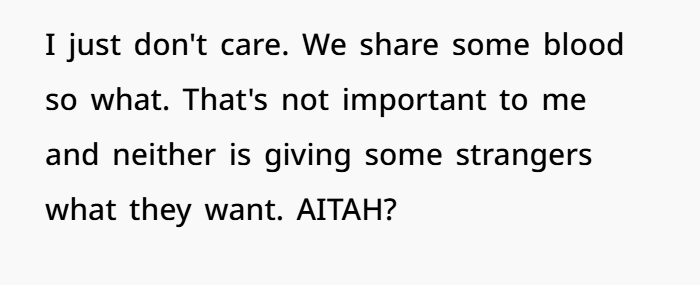
The big question here is, why should this teen suddenly care about his father’s new family? Just because they share the same blood doesn’t mean they automatically become family. The father hasn’t made any effort to be there for him, so why should this teen bend over backward to form relationships with people who were never part of his life until recently? The step-sister, despite being enthusiastic, is essentially a stranger. The siblings he shares blood with might be family on paper, but they’re not family in his heart.
Blood connection does not automatically mean emotional connection. It’s clear that the teen doesn’t owe anything to anyone connected to his father, especially after how his father has treated him. Forcing a relationship just because of genetics is unrealistic and unfair to the teen, who’s already gone through enough emotional hardship due to his father’s absence.
3. Setting Boundaries with the New Family
The push from the stepmother and step-sister is an aggressive overreach. This teen has already made his feelings clear. He doesn’t want a relationship, and he’s not obligated to just because they’re related by blood. The stepmother’s actions—pressuring him and even involving his mother—show a complete lack of respect for his boundaries.
When the step-sister goes around telling people at school about their supposed sibling bond, that’s also a boundary violation. The teen should be allowed to decide when or if he wants to connect with his biological family. Pushing him into a relationship will only make him more resistant and cause further resentment. These new relatives have no idea what the teen’s been through, and they shouldn’t expect him to just jump into a relationship with them without considering his emotional state.

4. What About the Teen’s Mother?
The teen’s mother has been his main support throughout his life, and it’s clear she understands the pain her son has been through with his dad. Her intervention—telling the stepmother to back off—was appropriate. This mother is protecting her son, and that’s what any parent would do in this situation. She recognizes that her son has a right to his feelings and doesn’t have to be dragged into a relationship with people who weren’t there for him.
5. The Bigger Picture: Emotional Well-Being Over Bloodlines
This teen has every right to prioritize his emotional well-being over his biological connections. He’s not just a name on a family tree—he’s a person who has experienced a lot of hurt. The insistence of the new family to force a bond is just adding to his distress. Instead of accepting his decision and respecting his boundaries, they’re pushing him into something that feels like an obligation rather than a choice.
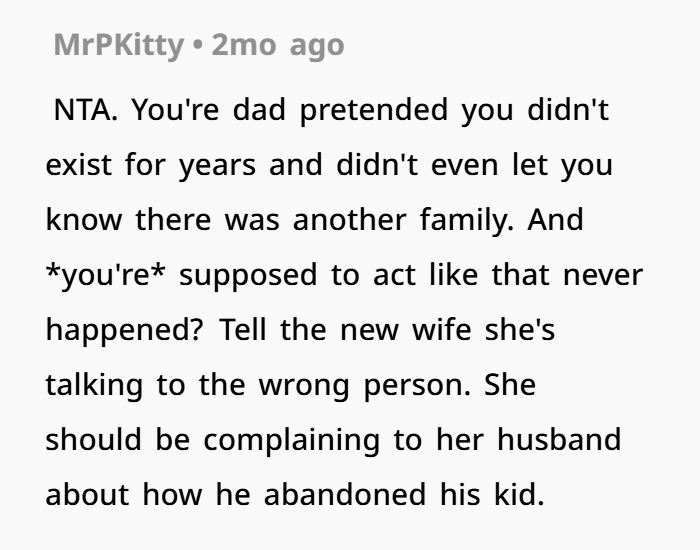
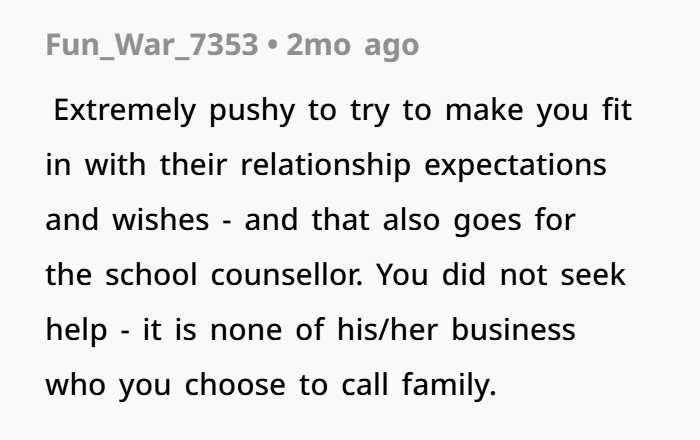
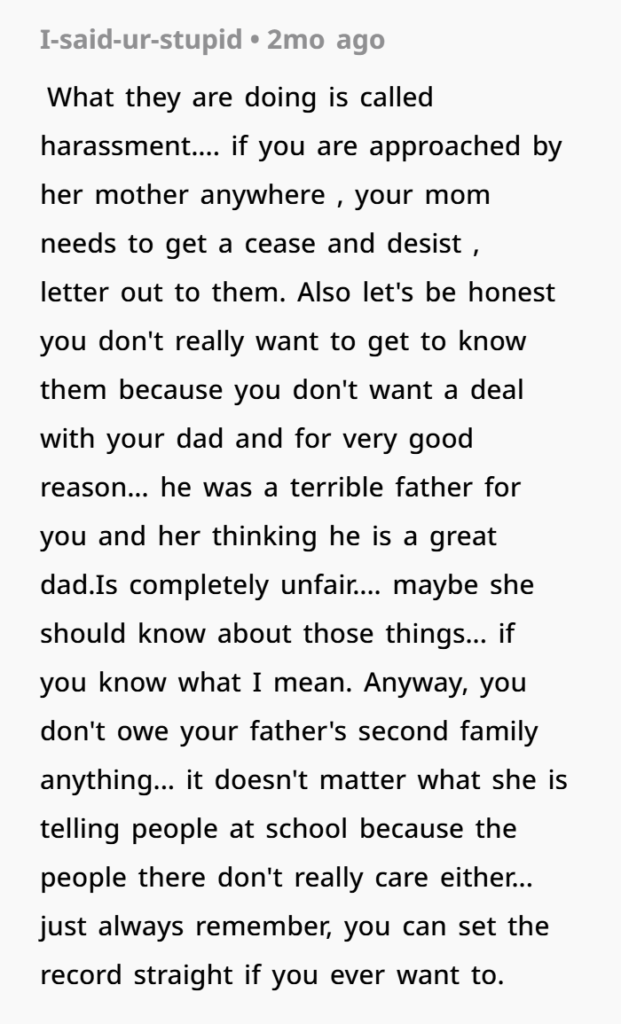
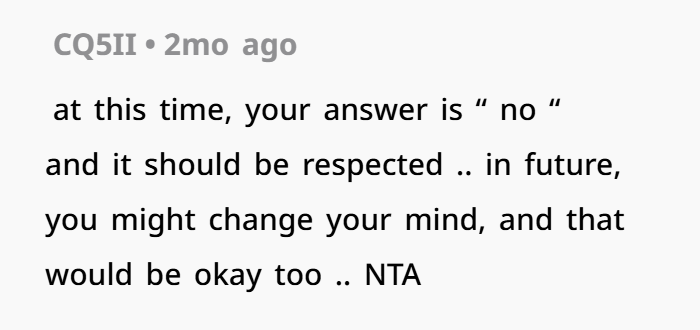
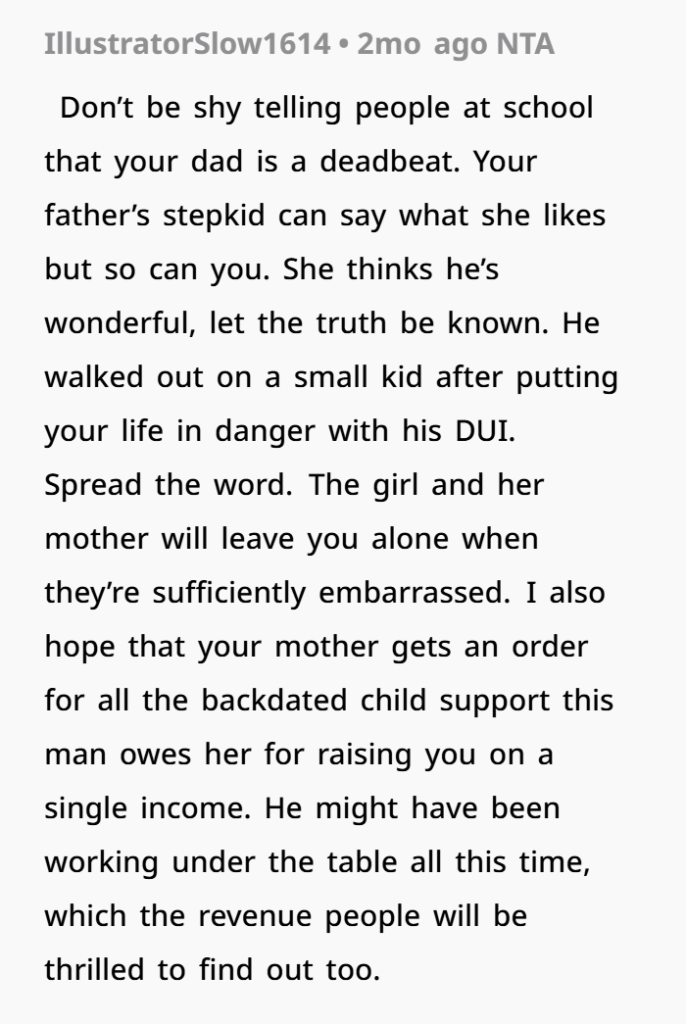
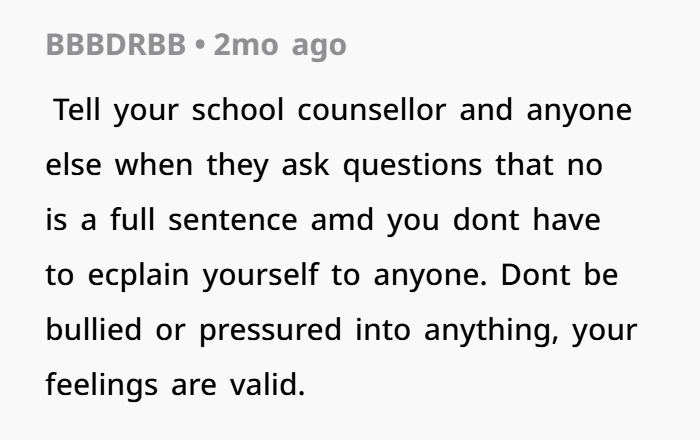
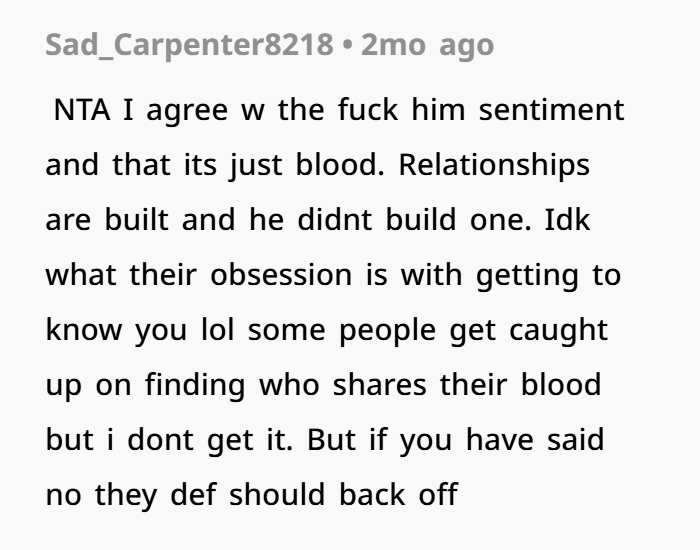
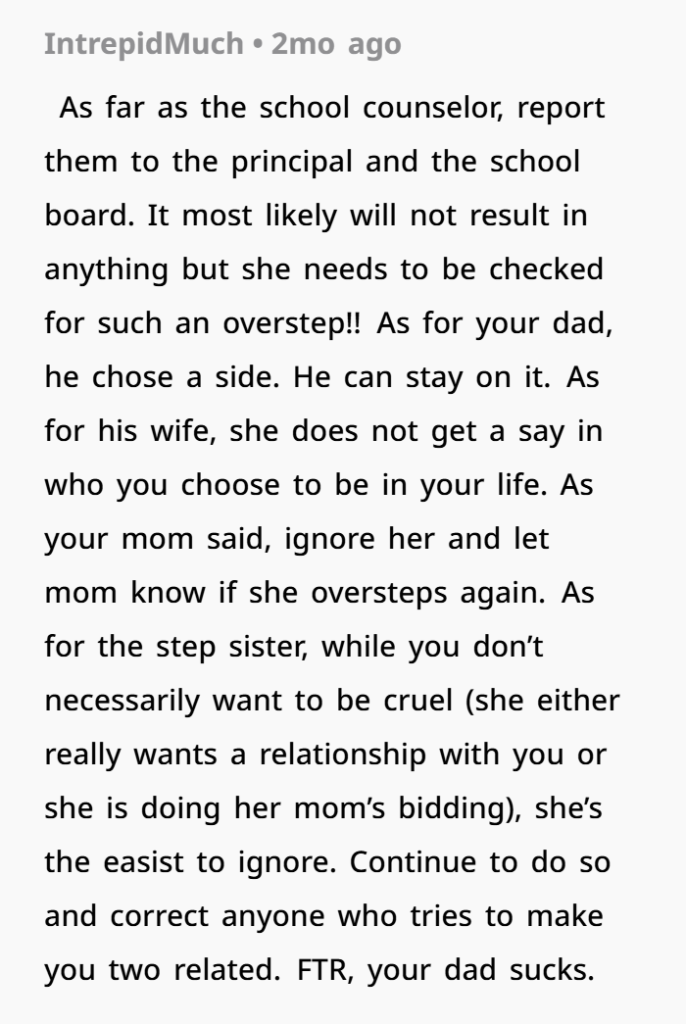
Netizens were aghast that the stepkid even got their school counselor to harass the poster to form a relationship with his dad’s family
No, the teen is not in the wrong. He doesn’t owe anyone a relationship, especially when his father never stepped up to the plate. Emotional ties take time, and they shouldn’t be forced, especially when they come with a painful past. The teen’s boundaries should be respected, and his decision to stay away from his father’s new family is completely valid.