

AITAH for Not Interacting With Women in My Office Like My Predecessor Did?
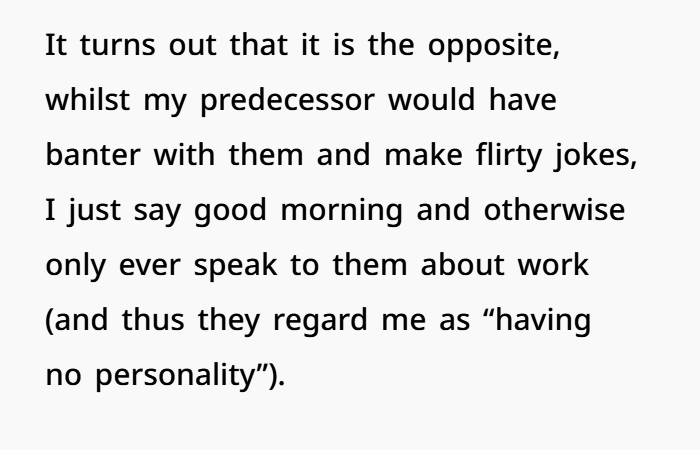
Starting a new role after a well-liked coworker leaves can be challenging, especially in a workplace where people are used to a certain style of communication. One employee noticed that some coworkers seemed disappointed after he took over a position from someone who was known for being very outgoing and friendly. While everyone agrees that he does his job well, some people feel he is less social because he prefers to keep conversations professional and focused on work.
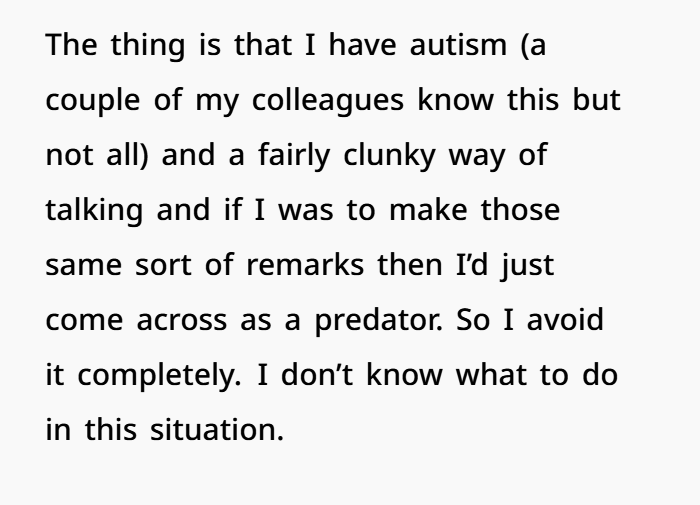
The situation is not about job performance or poor workplace behavior. It is simply a difference in communication styles. The employee, who is on the autism spectrum, chooses to avoid casual jokes because he wants to maintain a respectful and professional work environment. Instead, he focuses on teamwork, productivity, and clear communication. Now, he is wondering whether he should try to be more social to fit in with coworkers or continue using the professional approach that helps him feel comfortable and confident. The situation highlights important topics such as workplace communication, career development, employee well-being, professional relationships, and creating a positive work environment.

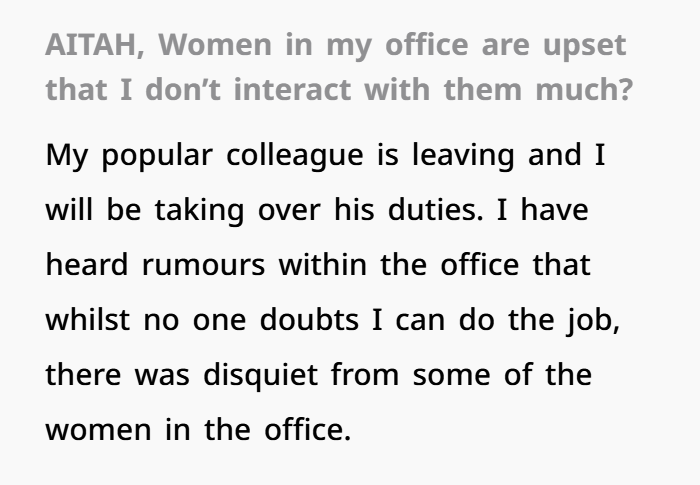
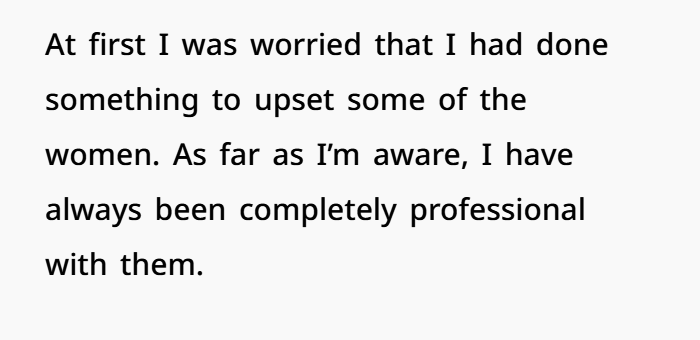
This situation is a common example of different workplace expectations and personal boundaries. Some offices enjoy casual conversations and friendly jokes, while others focus more on work. Not everyone communicates in the same way, and trying to copy another person’s style may not always work well.
People on the autism spectrum may experience social situations differently. Some types of humor, sarcasm, or casual comments can be more difficult to understand or use comfortably. Because of this, many employees choose to keep conversations professional and respectful. This approach can help avoid misunderstandings and support a positive workplace environment. It can also help maintain strong workplace communication and professional relationships.
It is understandable that the employee is concerned about how coworkers view him. In many workplaces, people value social connections as well as job performance. Employees who speak less or avoid casual conversations may sometimes be seen as distant. However, this does not mean they are less skilled or less valuable. Many successful professionals focus on their work, maintain healthy boundaries, and build strong careers.
One challenge is being compared to the person who previously held the role. When a popular employee leaves, coworkers may expect the next person to have a similar personality. In this case, the former employee enjoyed casual conversations and playful interactions. While those qualities may have made them well-liked, they were not necessarily the reason for their professional success. Popularity and job performance are not always the same thing.
One possible solution is to find simple ways to connect with coworkers without stepping outside personal comfort zones. Asking someone about their weekend, congratulating a teammate on a project, or recognizing small achievements can help create positive workplace relationships. These small actions show friendliness while maintaining professional boundaries.
Communication training can also be helpful. Many companies offer programs focused on communication skills, employee development, and workplace inclusion. These resources can help employees feel more comfortable in social situations while staying true to their own communication style. The goal is not to copy someone else but to build confidence and positive connections.
It is also important to remember that coworkers often react based on what they are used to. Some people may expect the same communication style they experienced with the previous employee. While those expectations may not always be fair, understanding them can help explain the situation. Different personalities and communication styles can all contribute to a healthy workplace culture.
Being open about communication preferences can sometimes help as well. If the employee feels comfortable, sharing information with human resources or trusted coworkers may provide useful context. Many organizations now support workplace diversity and recognize that employees communicate in different ways.
Leadership also plays an important role. Managers can help create a workplace culture that respects different personalities and communication styles. A positive work environment focuses on teamwork, collaboration, employee well-being, and performance rather than popularity or social habits.
In the end, there is nothing wrong with maintaining professional boundaries. Employees do not need to copy a previous coworker’s personality to succeed. A balance of professionalism, respect, and simple friendly interactions is often enough to build strong workplace relationships and support long-term career growth.
Some practical strategies can help employees feel more comfortable in social situations at work.
Safe ways to connect include talking about shared work achievements, discussing neutral topics such as the weather or weekend activities, and taking part in team celebrations when appropriate.
Active listening is another useful skill. Paying attention, showing interest, and giving simple responses can help coworkers feel respected and valued during conversations.
If comfortable, employees may also choose to share relevant information about their communication style with human resources or trusted coworkers. This can help reduce misunderstandings and create a more supportive workplace environment.
Finally, observing simple social habits, such as greeting coworkers, smiling, or asking basic questions, can help build positive relationships. These small actions support workplace communication, employee well-being, professional development, and career success while respecting personal boundaries and individual comfort levels.
See The Comments Below
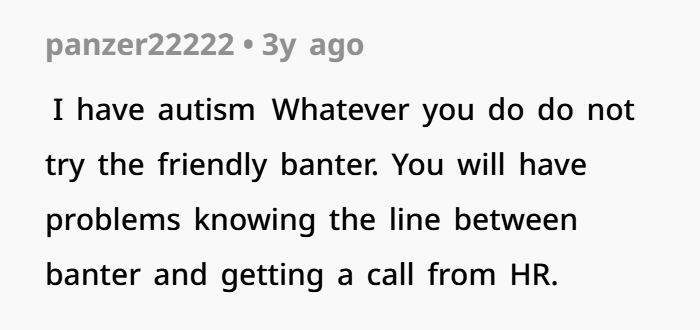
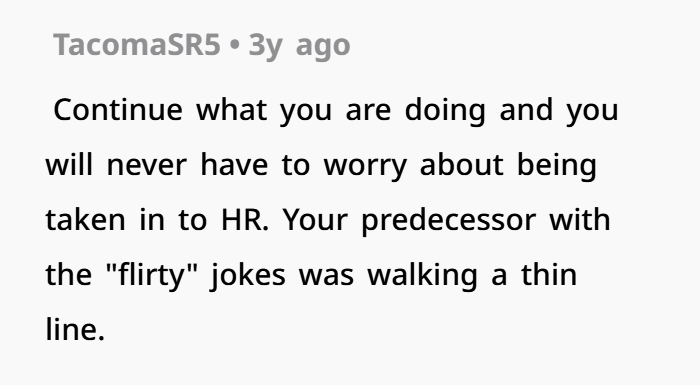
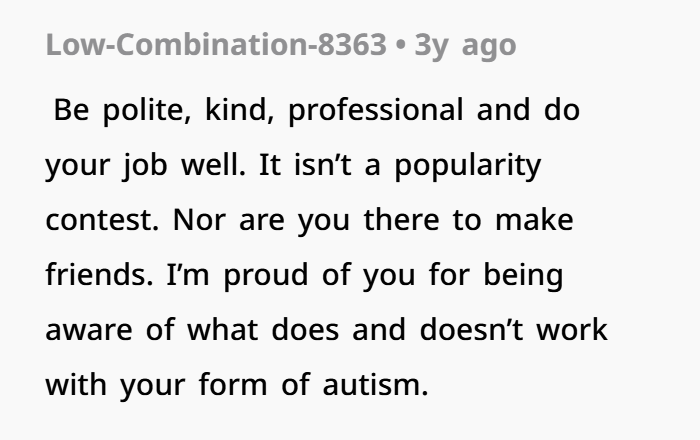
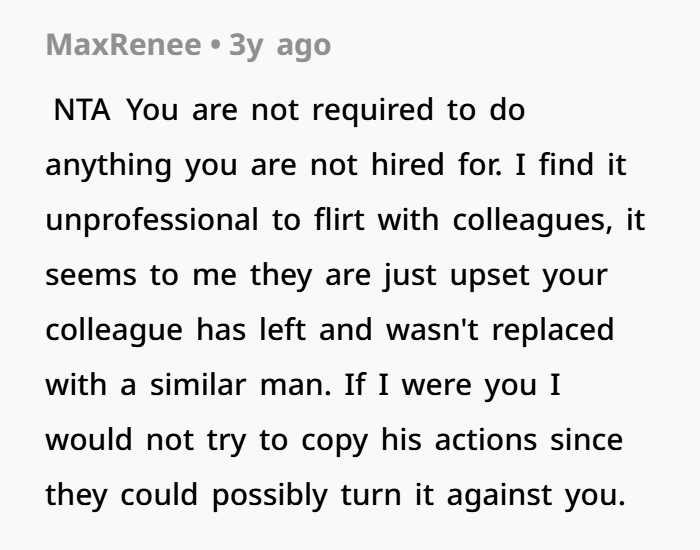
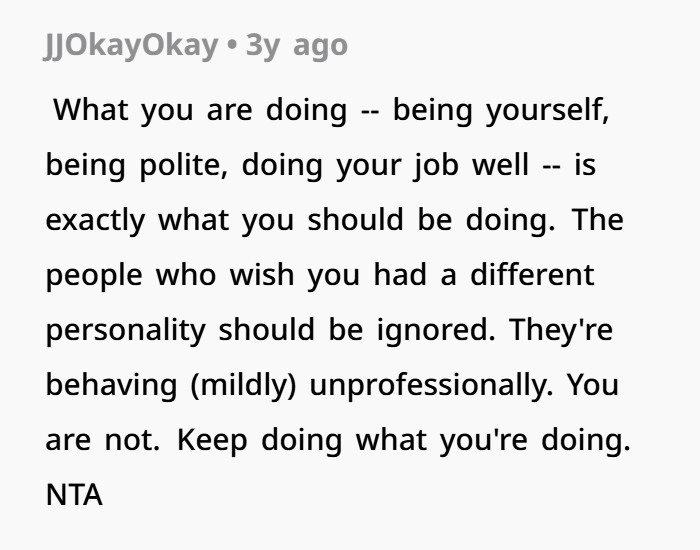
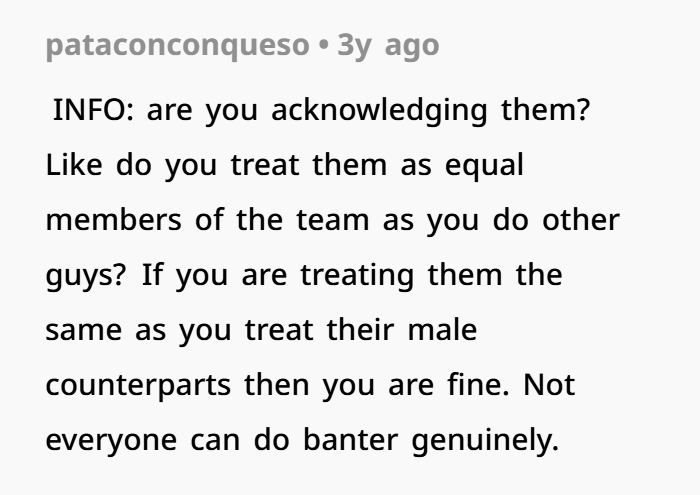
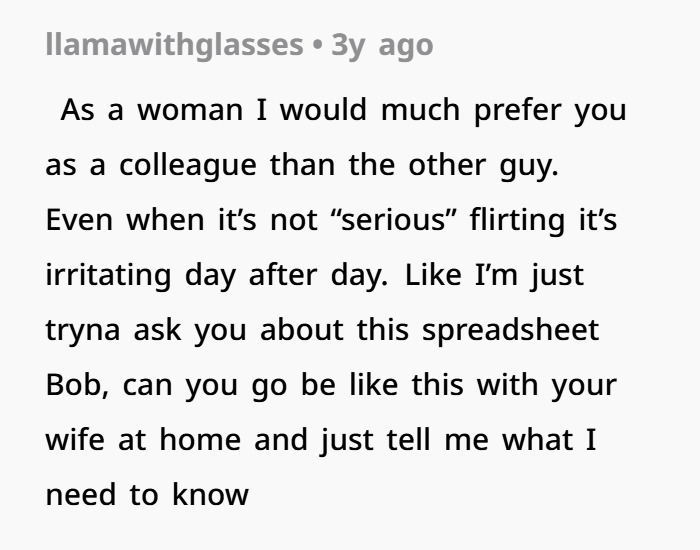
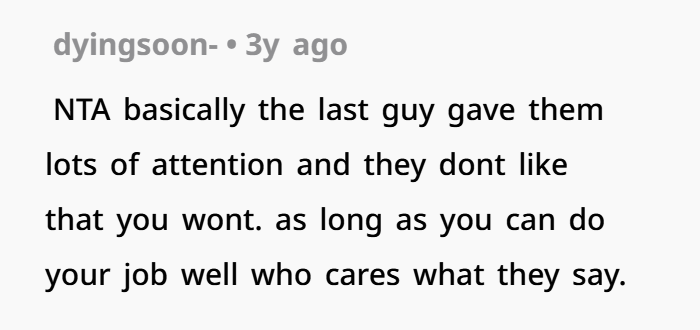
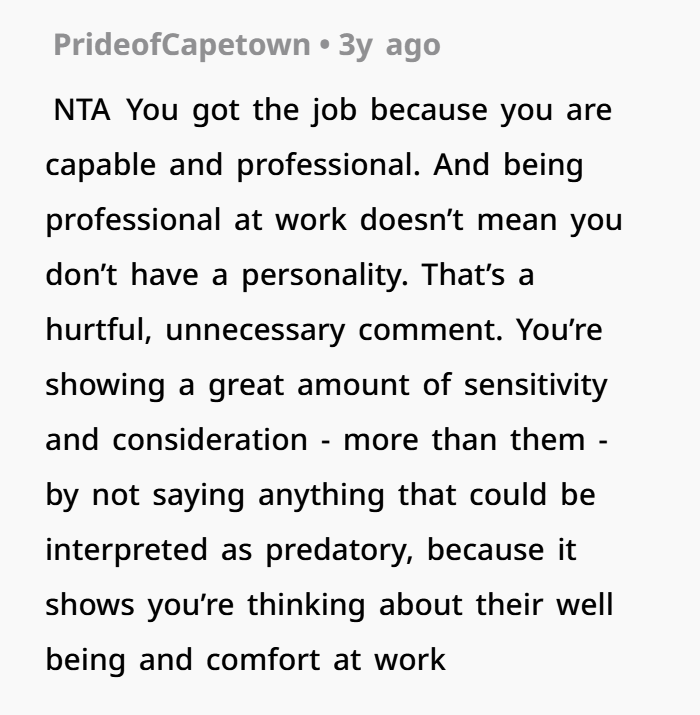
NTA (Not The Asshole).
You are not required to imitate someone else’s personality to fit in, especially when doing so could put you or others in an uncomfortable situation. Keeping interactions professional and focusing on work is entirely reasonable, particularly for someone on the autism spectrum. Minimal, safe social gestures can be added if desired, but there is no obligation to mirror flirty banter or humor from a predecessor. Your boundaries and safety come first.