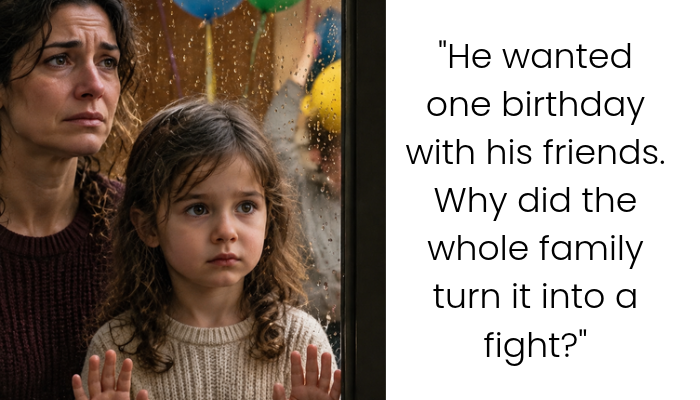
AITA for Refusing to Invite My Sister’s Kids to My Son’s Birthday After He Asked for a Friends-Only Party?
A mother planned a small birthday party for her son’s ninth birthday. Her son wanted to celebrate with a few close friends from school and his football team. Instead of having a large family gathering, he asked for a fun day at a ninja park. He also wanted to spend time with his extended family the next day at his grandmother’s house. His mother agreed because she wanted him to enjoy his special day the way he had planned.
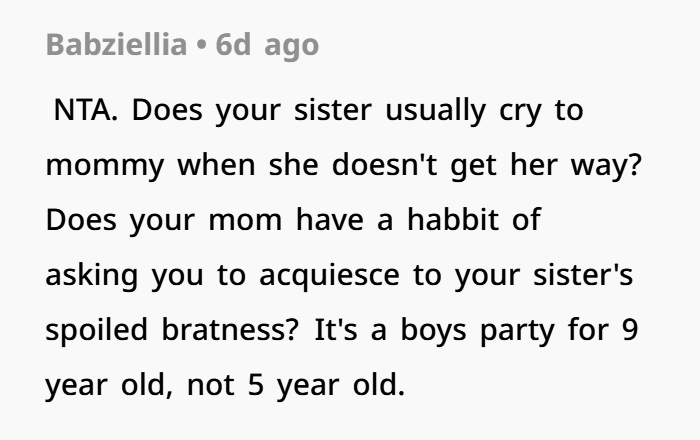
However, there was one family detail that made the decision a little difficult. His five-year-old cousin sometimes had trouble behaving in public and could become upset around other children. The birthday boy was worried that this might make him uncomfortable in front of his friends. His mother understood his feelings and decided not to invite his cousin or younger sister. She also chose not to share the personal reason with her sister to avoid hurting her feelings.
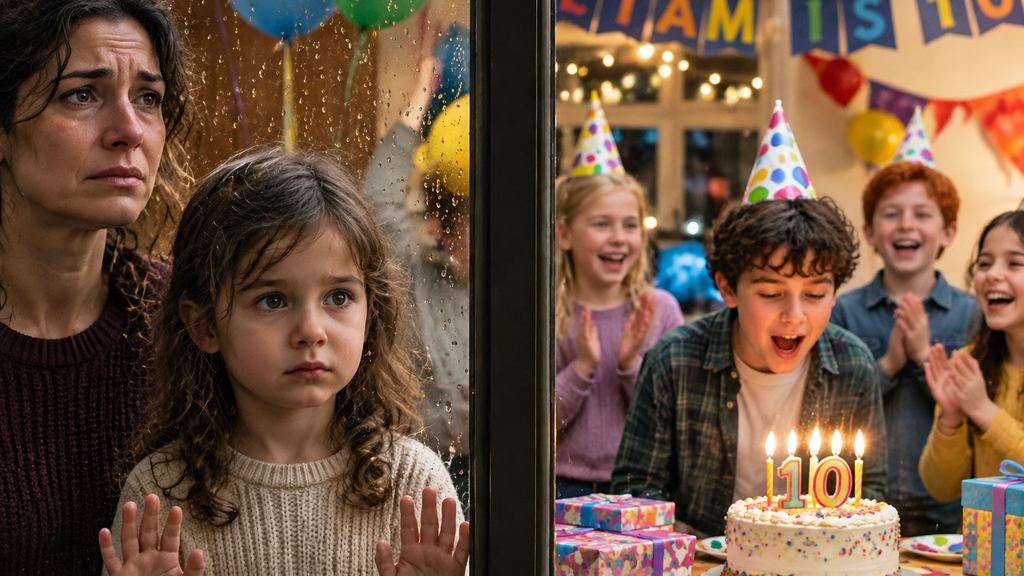
The mother did not think this would become a family problem. Her sister had also planned girls-only birthday parties for her daughter in the past, so the mother believed they both understood that children could have different birthday plans. But things changed on the boy’s birthday when his aunt called their mother in tears. Their grandmother also asked the mother to invite the two children at the last minute. She refused because the birthday plans had already been made around her son’s wishes.
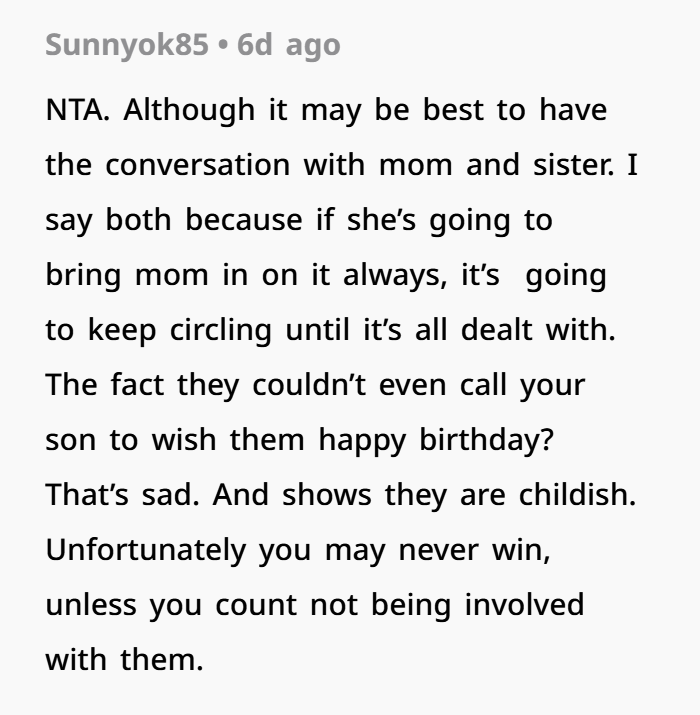
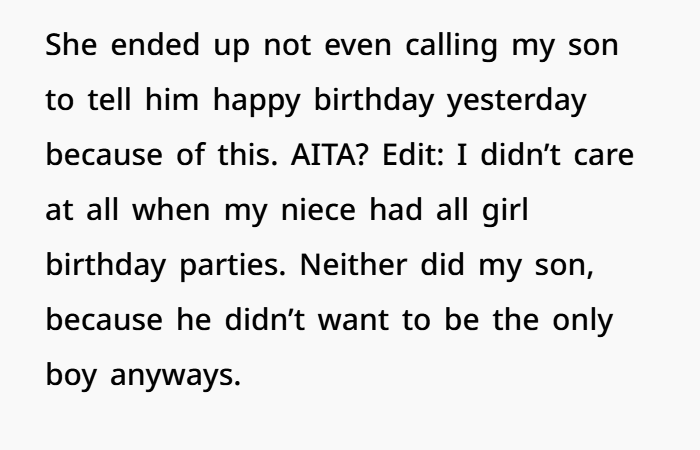
What hurt the mother most was that her own mother did not call her grandson to wish him a happy ninth birthday. Now, she is wondering if she made the right choice or should have invited her sister’s children to keep everyone happy. She believes her son deserved to enjoy his birthday with his friends, but she also understands that family feelings can be difficult to manage. The situation has left her thinking about family relationships, parenting choices, and setting healthy boundaries.
7. The Younger Cousin’s Behavior: Why Child Safety Matters
One important part of this situation is the mother’s concern about her five-year-old nephew’s behavior.
Young children are still learning how to control their emotions. Sometimes, they may hit, bite, or struggle to share with others. These behaviors can happen during early childhood. However, when a child regularly hurts other children, parents should take the situation seriously.
According to the American Academy of Child and Adolescent Psychiatry (AACAP), occasional aggressive behavior can be part of childhood development. However, frequent or serious hitting and biting may need professional attention.
This does not mean the younger child is bad or should be treated differently. Children develop at different speeds, and some need extra help learning how to manage their feelings.
At the same time, parents have a responsibility to keep all children safe.
The mother has a right to think about her son’s comfort and safety when planning a birthday party. A birthday celebration should be a happy experience for the birthday child. He should be able to enjoy his special day without worrying about another child’s behavior.
This is where healthy parenting boundaries become important. Parents can care about their relatives while also making decisions that protect their own children.
8. Was the Sister Entitled to an Invitation?
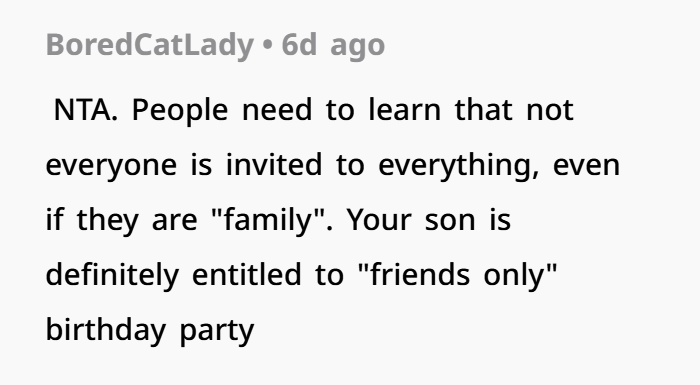
Family birthday parties can sometimes create difficult situations. Some relatives believe that every child in the family should be invited to every birthday celebration.
But is that always fair or realistic?
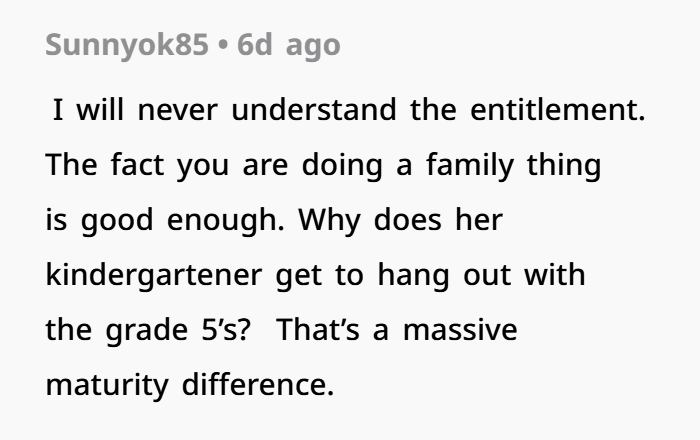
Not every birthday party needs to include the entire family. Some children want to celebrate with school friends, classmates, or sports teammates. Others may prefer a small party based on their favorite activities.
PBS KIDS for Parents offers guidance on birthday party etiquette and explains that parents do not have to invite everyone. It is also important to help children understand kindness and consideration when making guest lists.
There is another detail worth considering in this situation.
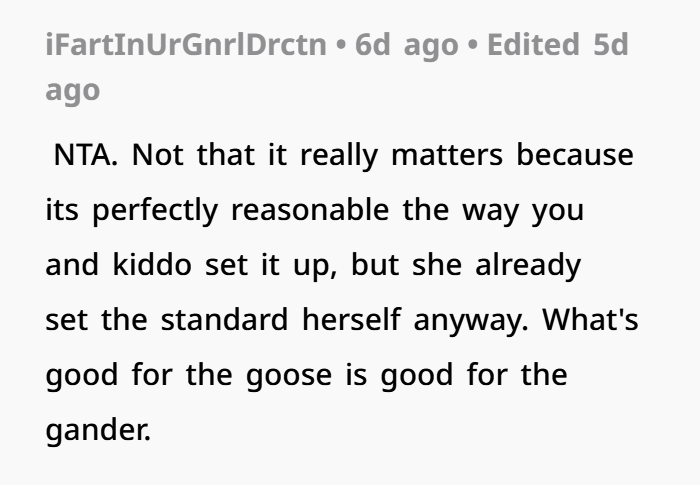
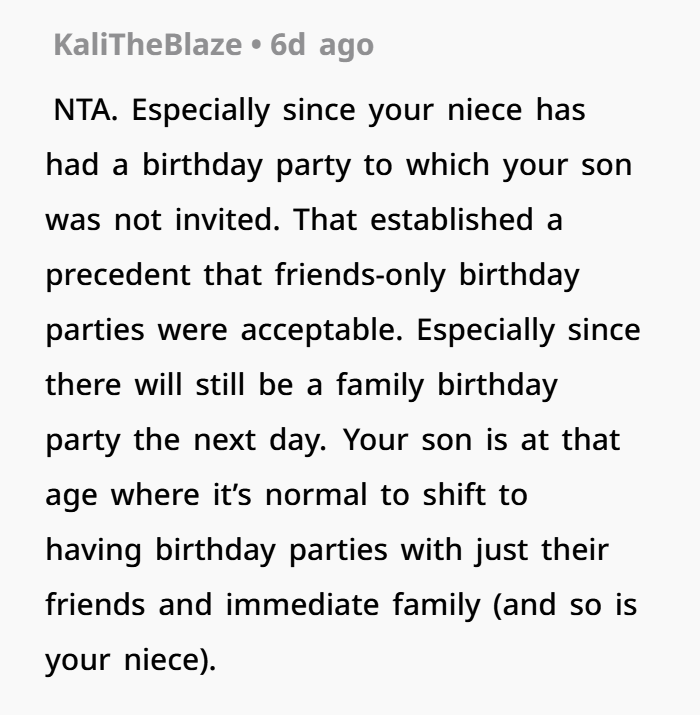
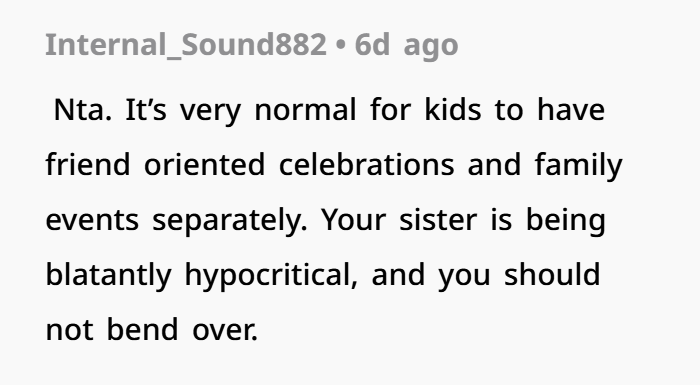
The sister had previously arranged girls-only birthday parties for her daughter. Her nephew was not invited to those celebrations, and the mother accepted that decision.
This raises a reasonable question: If one child can have a birthday party with only her friends, why can’t another child do the same?
Fairness does not mean every child must attend every family event. It means respecting each child’s preferences and allowing families to make reasonable choices.
Of course, the sister may have felt hurt because her children were not included. Those feelings are understandable.
However, being disappointed does not automatically mean that the birthday boy’s mother made the wrong decision.
Families can have different types of celebrations without turning every guest list into a family disagreement.
9. The Grandmother’s Reaction: When Family Pressure Goes Too Far
The grandmother’s reaction is another important part of this family situation.
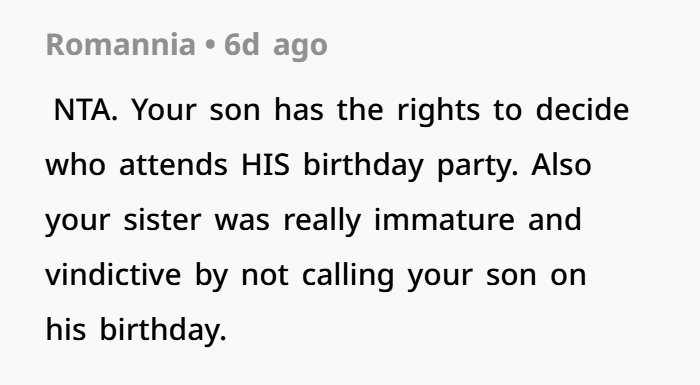
Instead of accepting the birthday arrangements, she tried to convince the mother to change the guest list. When the mother did not agree, the grandmother reportedly chose not to call her grandson on his birthday.
This brings up an important issue about family relationships and emotional boundaries.
Adults can disagree. They can feel disappointed, upset, or left out. But children should not have to deal with the emotional consequences of disagreements between adults.
A child’s birthday should be a happy occasion, not a reason to create tension between family members.
Research on friendships among children aged 7 to 11, published in the British Journal of Developmental Psychology, has found positive links between friendships and children’s self-worth.
This is one reason why children’s friendships matter. Spending time with classmates and friends helps children build social skills, confidence, and a sense of belonging.
The grandmother’s decision not to call her grandson could make him feel that he did something wrong, even though the birthday arrangements were made by his mother.
A better approach would have been to respect the mother’s decision and celebrate with the family the following day.
If the grandmother or aunt felt hurt, they could have discussed their feelings privately with the mother.
Healthy family relationships require understanding, respect, and clear communication. They should not depend on pressuring someone to change a reasonable parenting decision.
10. Final Thoughts: Who Should Make Things Right?
This situation is not really about legal rights or formal rules. It is about parenting choices, family expectations, and respecting personal boundaries.
The mother planned a birthday party based on what her nine-year-old son wanted. She considered his interests, his friendships, and the type of celebration he would enjoy.
She also planned a separate family gathering for the following day, giving the cousins another chance to spend time together.
Her sister had every right to feel disappointed. It can be difficult when children in the family are not included in a celebration.
However, feeling hurt does not mean someone else must change their plans.
The mother could have explained the arrangements more carefully to avoid misunderstandings. Still, she was not required to invite every relative to a small birthday activity.
She also did not have to share private concerns about her nephew’s behavior with the entire family.
Parents have to make many decisions while raising children. Sometimes, those decisions may not make every relative happy. That does not automatically make them wrong.
The most important thing is to consider the child’s needs while treating other family members with kindness and respect.
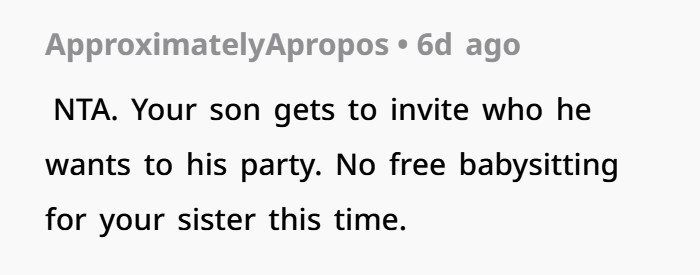
In this case, the mother respected her son’s wishes and made plans for a separate family celebration. That seems like a reasonable way to balance children’s independence with family time.
The bigger problem began when other adults turned a simple birthday invitation into a disagreement about family loyalty.
At the end of the day, the question is not whether the sister’s feelings matter. They do. The real question is whether those feelings should be more important than the birthday boy’s wishes for his own special day.
Children deserve the chance to build friendships, enjoy age-appropriate activities, and have their own experiences. Respecting those needs is an important part of positive parenting and healthy family relationships.
Comments You Can’t Miss