
After She Died, So Did My Role: A Stepfather’s Choice to Walk Away
This is a deeply emotional and layered situation about love, loss, and letting go. The original poster (OP) shares a heartfelt story of his lifelong friendship with Katherine, a woman who was more than a friend—she was family. From childhood to old age, they were constants in each other’s lives. Eventually, their bond became a marriage—not out of romance, but out of mutual love and practical necessity, especially after Katherine needed health insurance. Despite their closeness, Katherine’s adult children never accepted OP in this role, despite his presence in their lives since birth.
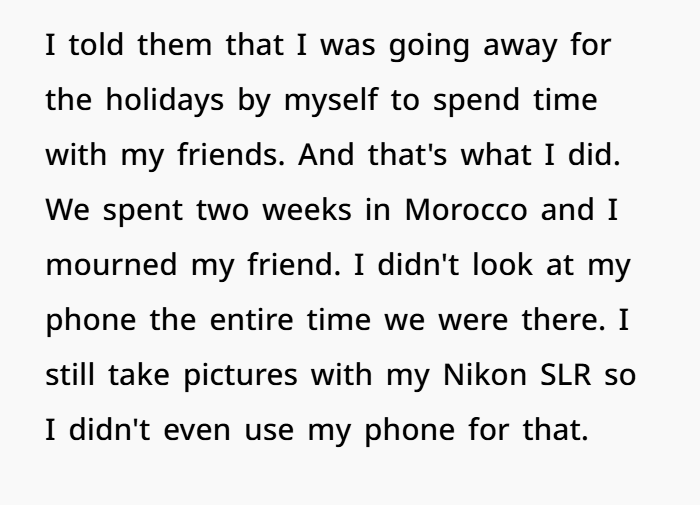
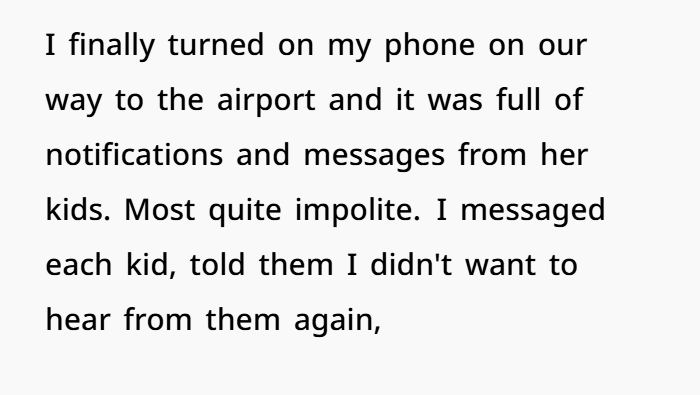
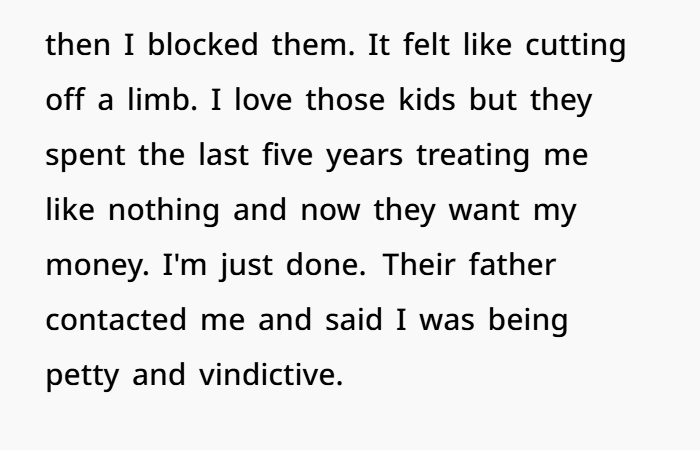
For years, OP financially supported Katherine, especially during her final days, even covering her trips to see her estranged children. While he gave without hesitation, the children seemed indifferent to his sacrifices. After Katherine passed away, OP expected space to mourn—but her kids reached out, seemingly expecting more gifts and support, especially after OP had generously treated them to a luxurious ski trip the year prior. Disheartened by their attitude, OP made a tough call: he blocked them, choosing peace over people who had treated him like a wallet, not family.
When dealing with toxic or entitled people, it can help to create some distance so that they can no longer cause you pain anymore

The poster had gotten married to their best friend, Katherine, so that she could get health insurance, even though her kids didn’t approve

Let’s talk about something messy and emotional: grief, family estrangement, and financial boundaries—especially when it comes to step-relations after a spouse passes away. It’s a complicated cocktail of love, loss, and expectations. And it’s something more people go through than we care to admit.
Stepparents and Inheritance: The Legal and Emotional Landscape
Legally, the picture is pretty straightforward: stepchildren have no automatic right to inherit from a stepparent, unless explicitly stated in a will. According to Nolo.com, unless you’ve legally adopted them or written them into your estate plans, stepchildren are legally like strangers. That means even if you raised them, financially supported them, or loved them like your own, the law doesn’t care. Emotionally though? That’s where it gets thorny.
In this story, OP didn’t just know the kids—he knew them from birth. That’s decades of birthday parties, holidays, scraped knees, and big life events. But love needs reciprocity. If you’re constantly treated like an outsider, even after putting in time, money, and emotional investment, it wears you down. And eventually, even the most patient person breaks.
The Unseen Cost of Emotional Labor
A big point that resonates here is the emotional labor OP put in for Katherine and her kids. Emotional labor isn’t just about being there physically—it’s showing up financially, mentally, and spiritually even when you get nothing back. According to Psychology Today, one-sided emotional labor can lead to burnout, resentment, and emotional detachment.
OP didn’t just support Katherine emotionally during her last years—he funded her ability to be close to her kids. He paid for flights, gifts, and even a luxury holiday to bring the family together. That’s not petty; that’s generosity on a level many wouldn’t match. So when those same kids come knocking not with grief, but with expectations? That’s a breaking point.
Entitlement After Death: A Harsh Reality

This story also digs deep into something many people experience after a loved one dies: entitlement. It’s not uncommon for adult children—or estranged family members—to suddenly come around when they suspect there’s an inheritance. It’s uncomfortable, but it’s true.
A 2023 survey from Caring.com revealed that nearly 70% of Americans haven’t made a will. When people pass without clear instructions, or when they leave behind only sentimental assets, it can cause disappointment, confusion, or even legal battles. But in this case, Katherine left clear sentimental items and no money. Still, her kids reached out, not with compassion, but with a question: “What’s in it for us?”
That hurts. Especially when you’ve spent years giving, only to realize that’s all they ever saw you as—a source of stuff, not a person grieving the same loss.
The Right to Choose Peace
So, is OP an a**hole for walking away? No. Setting boundaries—especially when it comes to toxic or one-sided relationships—isn’t petty. It’s healthy. According to therapists like Nedra Glover Tawwab, author of Set Boundaries, Find Peace, boundaries are a form of self-respect. If people continually disrespect you, use you, or treat you like you’re disposable, you are not obligated to keep the door open.
When OP blocked the kids, he described it as “cutting off a limb.” That’s not the language of someone being vindictive. That’s someone who loved deeply and got hurt badly. Choosing to step away wasn’t about revenge. It was about survival.
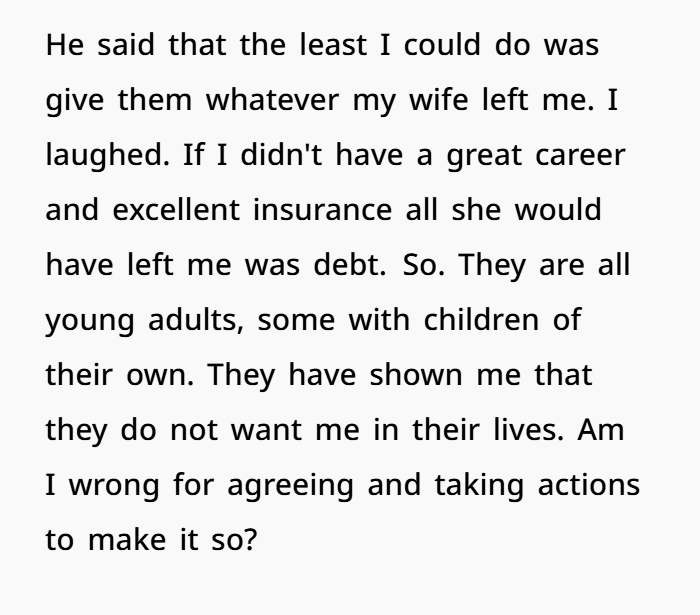
And let’s talk about the father’s reaction—the ex-husband calling OP “petty” and demanding he hand over “whatever Katherine left him.” That’s bold, considering OP was the one paying for everything, including the funeral and her final years. It reeks of entitlement masked as moral superiority.
Mourning Alone Doesn’t Mean Mourning Wrong
There’s a common misconception that grief has to look a certain way—especially when you’re not a blood relative. But grief is personal. OP spent the holidays in Morocco with friends, away from reminders, obligations, and drama. That doesn’t make his grief less real. In fact, it might’ve been the healthiest way to mourn. Taking that time for himself? That’s self-care, not selfishness.
Many queer individuals—especially older generations—create chosen families when biological ones let them down. OP and Katherine were that for each other. Losing that connection is massive. No one has the right to dictate how someone should process that kind of loss.
Financial Generosity vs. Emotional Obligation
If you’re in a situation like this—where you feel used, disrespected, or overlooked—it’s okay to take a step back. You don’t have to burn bridges with fireworks. A simple “no more” is enough.
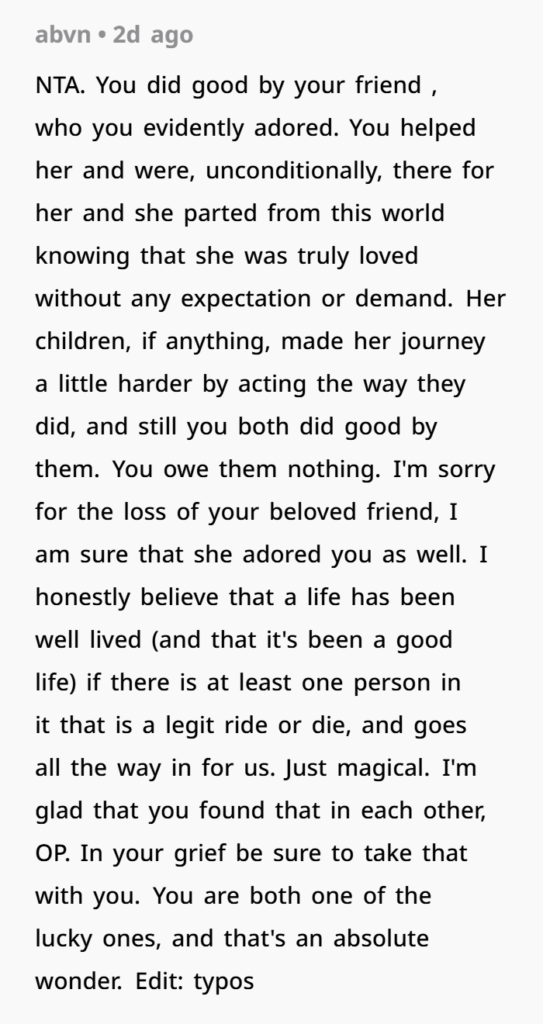
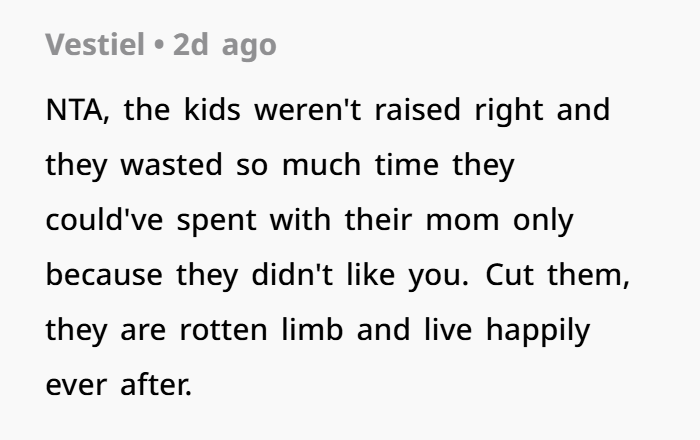
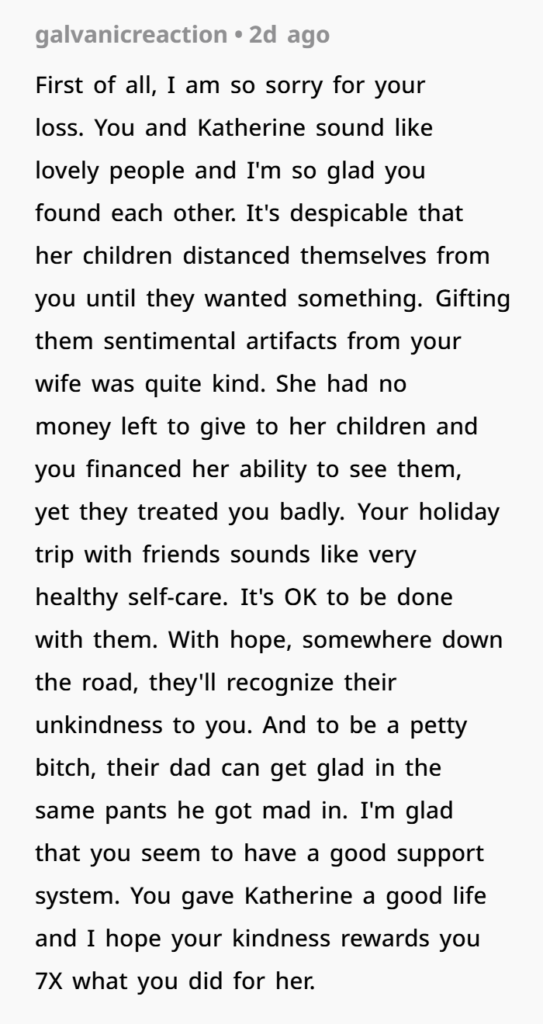
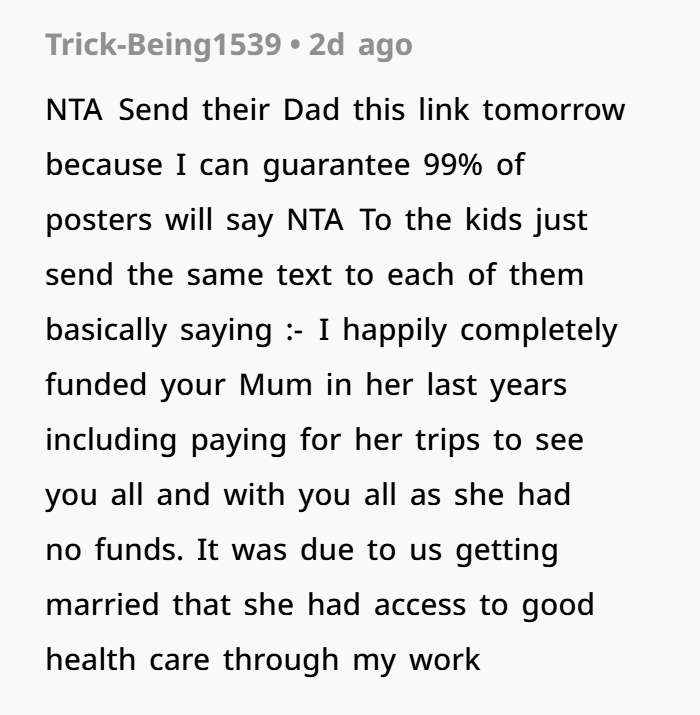
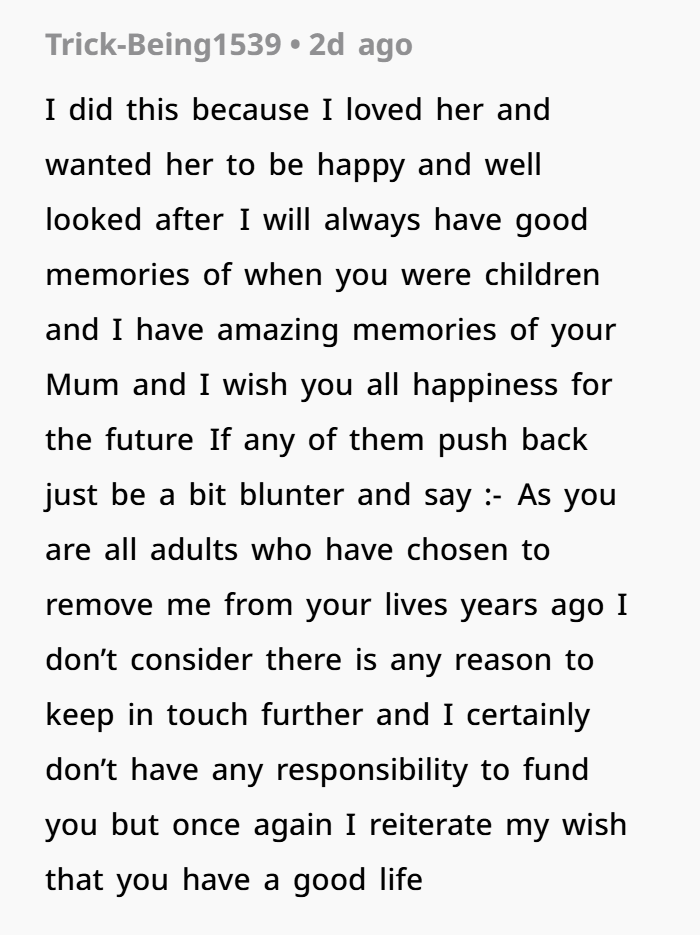
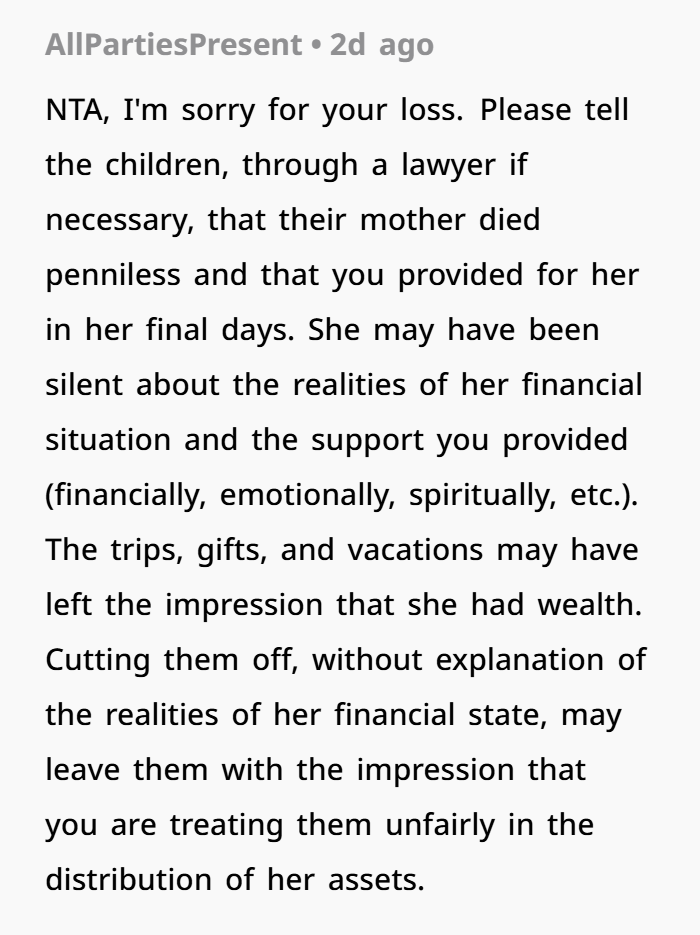
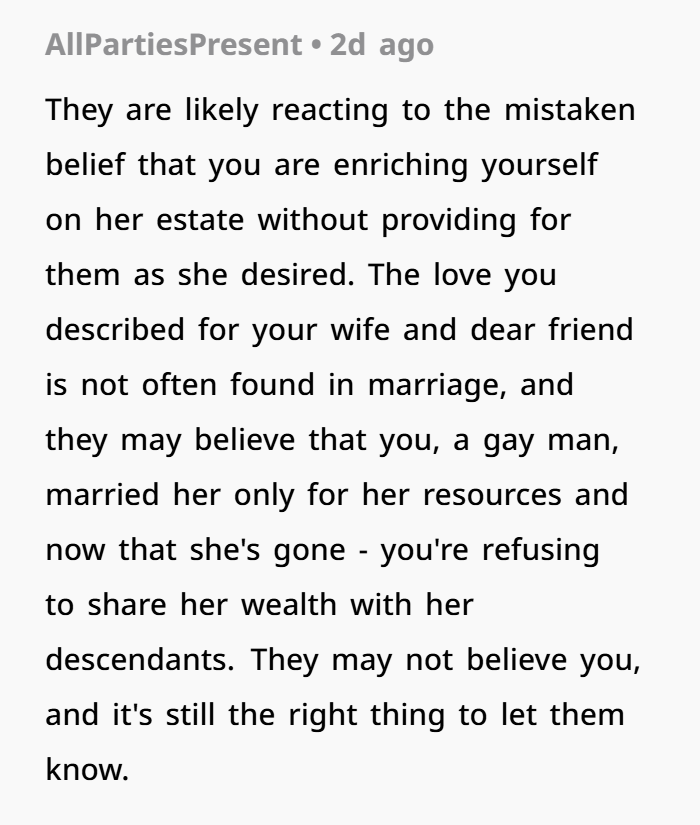
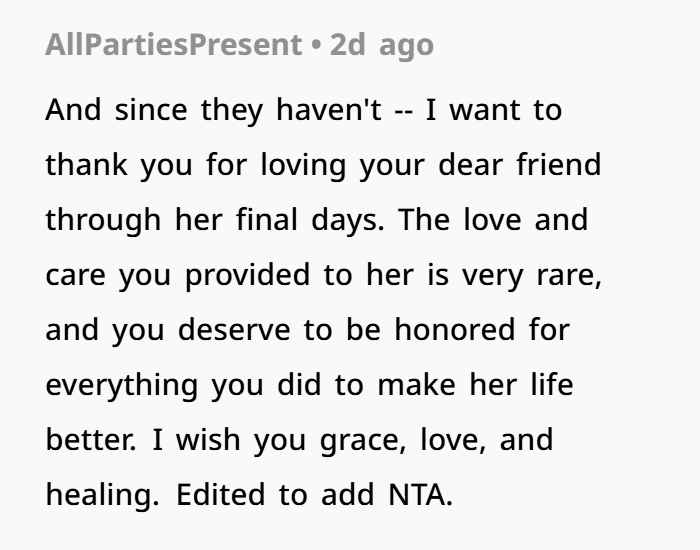
Folks sided with the poster and felt that they should let the stepkids know exactly how much their mom had been supported financially
To anyone reading this and thinking, “Was it heartless to walk away?”—just remember this: love without respect is exploitation. OP gave everything he could: his time, his heart, his wallet. And when he finally said “enough”? That was the first time he chose himself.
It’s not petty. It’s not vindictive. It’s necessary.