
Struggling to Accept My Dad’s New Family After the Divorce
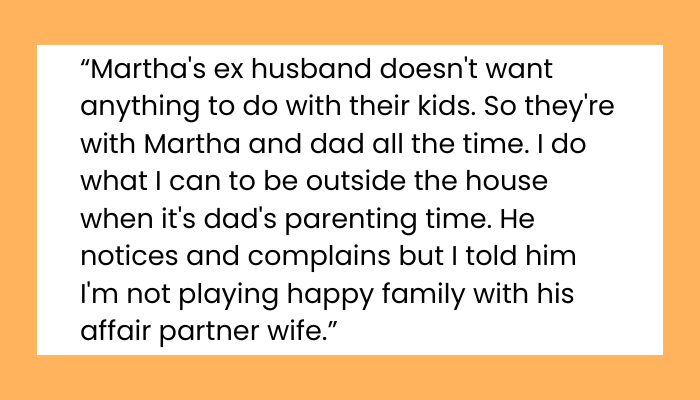
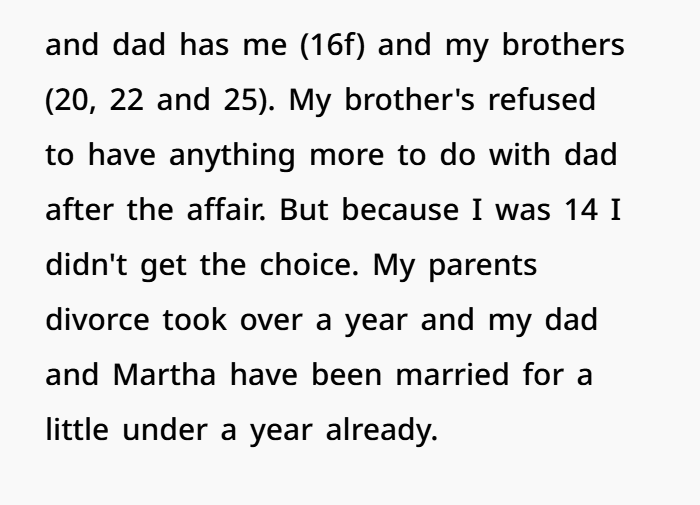
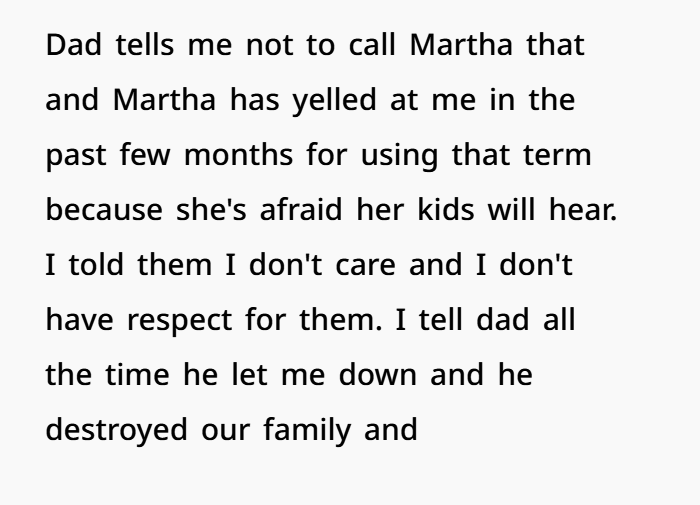
This story is about a 16-year-old girl dealing with the challenges of family changes after her parents’ divorce. Two years earlier, her father left the marriage and later started a new life with Martha, who also had children from a previous relationship. The situation was difficult for the entire family. While her older brothers decided to distance themselves from their father, she was still required to spend time with him because of custody arrangements. As a result, she found herself adjusting to a blended family environment that she never expected and struggled to feel comfortable in. The experience has affected her emotional well-being, family relationships, and overall sense of stability.
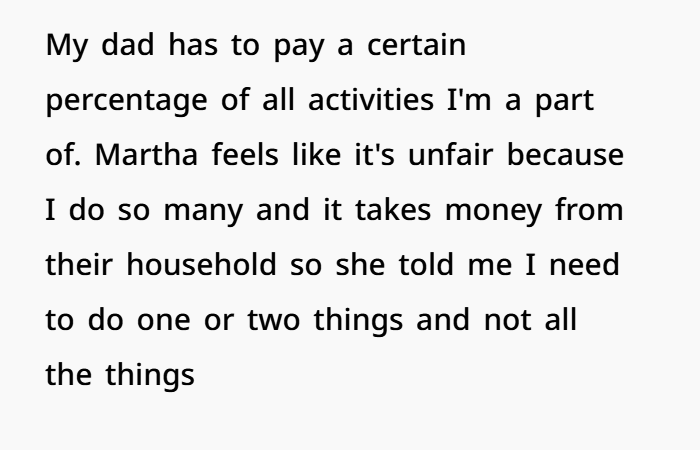
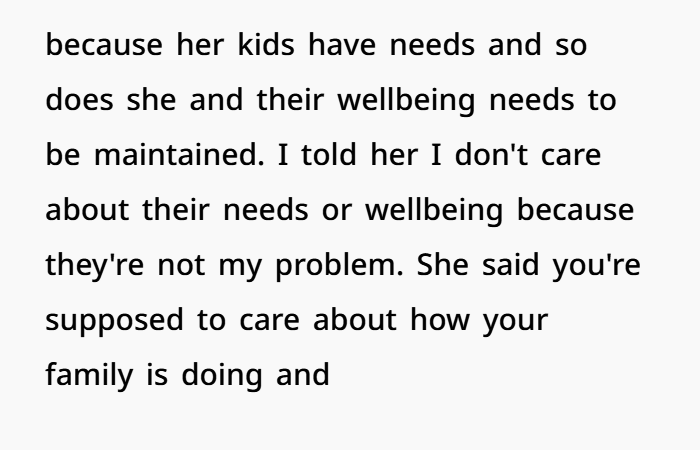
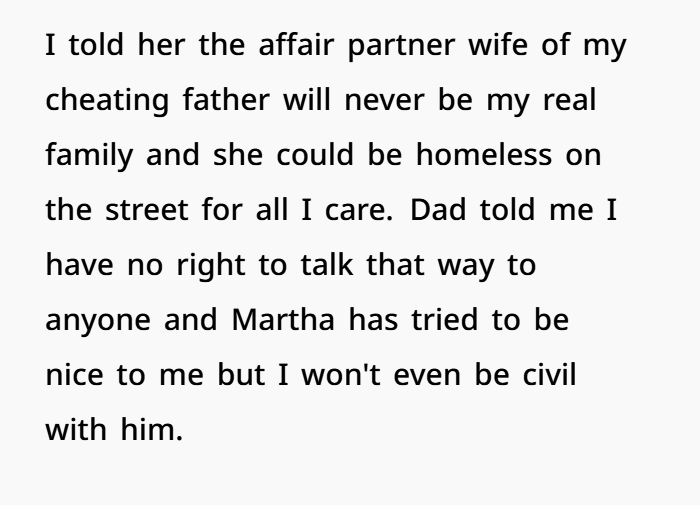
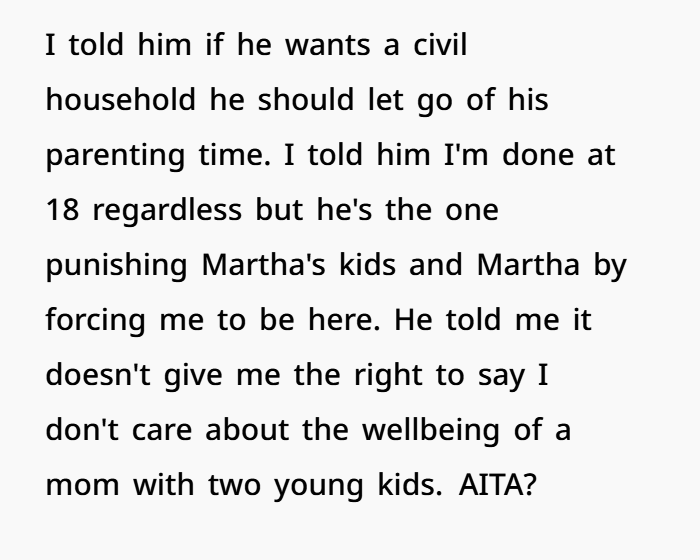
Over time, tensions continued to grow. The most recent disagreement happened when Martha raised concerns about money. The girl’s father is responsible for helping pay for her extracurricular activities, which are part of her education and personal development. Martha felt those expenses placed pressure on her household budget and asked the teenager if she would consider reducing some activities for the benefit of the family. Feeling frustrated and overwhelmed, the teen responded that she did not feel connected to Martha or her children and did not see them as her family. She also made it clear that she did not believe she should be responsible for decisions involving their household finances. Since then, her father has criticized her response as disrespectful, while she feels that her own feelings and concerns have not been fully acknowledged. The situation highlights the challenges of co-parenting, blended families, family communication, emotional health, and finding healthy boundaries during major life transitions.



This situation is about much more than a teenager being upset. At its heart, it involves family changes, emotional health, trust, and the challenges that often follow a difficult divorce. When parents separate, children can experience strong feelings such as sadness, anger, confusion, and disappointment. These emotions can become even stronger when a child feels that their family life changed in a way they did not choose or control.
For this teenager, the situation has been especially difficult. She watched her parents’ marriage end and then had to adjust to a completely new family dynamic. While adults may move forward with new relationships, children often need much more time to process what happened. Building trust again can be challenging, especially when there are unresolved feelings and ongoing family tension.
Another major issue is the challenge of blending families. Healthy blended families usually develop through patience, communication, and mutual respect. Strong relationships cannot be forced. Children often need time to feel comfortable with new family members, and it is normal for them to have mixed emotions. Respecting personal boundaries is an important part of creating a positive family environment.
The disagreement about money added another layer to an already stressful situation. The father’s financial support for his daughter’s extracurricular activities is intended to help with her education, personal growth, and future opportunities. When concerns about household finances entered the conversation, the teenager may have felt that her needs were being questioned or placed behind the needs of others. Financial discussions can be sensitive, especially for young people who are already dealing with family changes.
At the same time, the teenager’s response reflected years of frustration and hurt feelings. When people feel ignored or misunderstood, they sometimes express themselves in ways that sound harsher than they intend. That does not necessarily mean their feelings are invalid, but it does highlight the importance of healthy communication and emotional intelligence during difficult conversations.
It is also important to remember that children often struggle when they feel caught between different households. Family counselors frequently discuss the importance of giving children space to express their emotions without pressure. Feeling heard and respected can make a significant difference in a child’s emotional wellness and ability to adapt to change.
The father’s role is equally important. Strong co-parenting and family leadership require listening, understanding, and acknowledging a child’s concerns. When young people feel that their emotions are dismissed, resentment can grow over time. Open communication and empathy are often key to rebuilding trust and improving family relationships.
At the center of this story is a teenager who wants her feelings to be recognized. She is dealing with major life changes, complicated family relationships, and challenges that many adults would find difficult. While some of her words may have been hurtful, the deeper issue is her desire for fairness, respect, and a sense of control over her own life.
In the end, this situation highlights the importance of family communication, emotional wellness, co-parenting, personal boundaries, and healthy conflict resolution. Strong family relationships are built when everyone feels heard, respected, and supported, even during difficult transitions. Understanding the emotions behind the conflict can often be more helpful than focusing only on the words that were spoken.
Top Comments From Readers