
She Kissed My Boyfriend for a Play… Then Crossed the Line
A 19-year-old drama student was happily dating a fellow student in her course. Her boyfriend was attractive and popular, but he never seemed interested in the extra attention he received. Their relationship was strong, and she generally trusted him.
Things started to feel uncomfortable when a classmate named Victoria began showing a lot of interest in him. At first, her actions seemed small but noticeable. She often arranged group activities so she could work with him, frequently commented on how attractive he was, and even chose a smaller role in a play so she could be cast as his romantic partner on stage.
While this behavior raised a few concerns, nothing had crossed a serious line.
The situation changed after the play ended. During a small celebration with classmates, Victoria began talking about the on-stage kiss she had shared with him during the performance. What started as casual conversation soon felt more personal, as she suggested there may have been a real connection behind the scene.
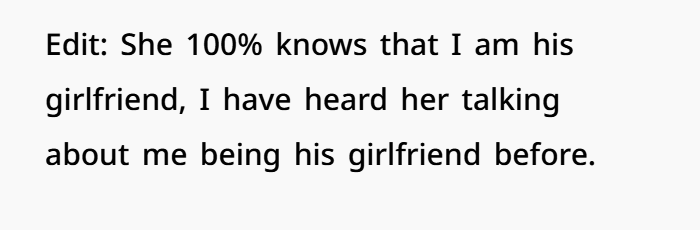
Later, she approached him directly and talked about the “chemistry” they shared, even complimenting him while his girlfriend was standing nearby. The comments made the situation awkward and uncomfortable for everyone involved.
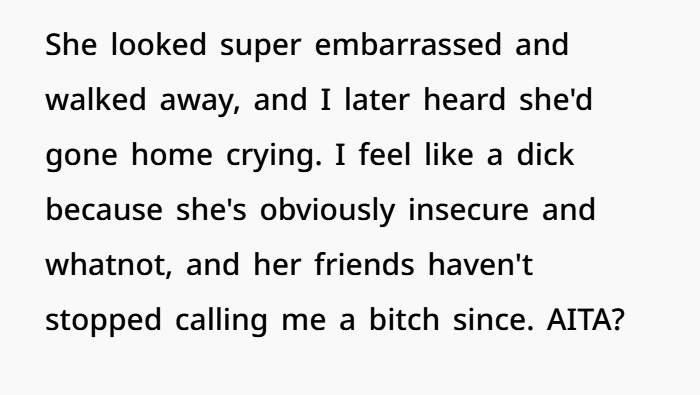
Feeling frustrated, the girlfriend finally spoke up. She openly expressed that Victoria’s behavior was inappropriate and disrespectful toward their relationship. The conversation quickly became the center of attention at the gathering, creating tension among the group.
The incident became a reminder of how important it is to respect personal boundaries and existing relationships, especially in social and professional environments where people work closely together.
Understanding the Situation: More Than Just One Moment
This situation was not about a single argument. It was the result of several events that happened over time.
The girlfriend noticed that Victoria seemed very interested in her boyfriend. She often tried to work with him, spent time around him, and openly mentioned that she found him attractive. While each action may have seemed small by itself, together they created a pattern that was hard to ignore.
In many social settings, especially at college or in creative programs, people sometimes test personal boundaries in subtle ways. This can include finding reasons to spend extra time with someone, making personal comments, or creating opportunities to be close to them.
Because of this, it is understandable why the girlfriend started feeling uncomfortable.
Why the Play Role Raised Concerns
One detail that stood out was Victoria’s decision to change roles in the play.
She gave up a larger role so she could play the romantic interest of the boyfriend. While there could be different reasons for that choice, it naturally caught people’s attention because it allowed her to spend more time working closely with him.
This does not automatically mean she had bad intentions, but it added to the growing concerns about her behavior.
The Impact of Acting and Emotions
Acting can sometimes create strong emotions.
When performers take part in romantic scenes, emotional conversations, or stage kisses, they may experience feelings that seem very real in the moment. This is a normal part of performing and connecting with a character.
However, there is an important difference between having feelings and acting on those feelings.
People cannot always control how they feel, but they can control how they respond. Respecting personal boundaries and existing relationships is an important part of emotional maturity and healthy communication.
What Happened at the Afterparty
The situation became more serious during a small celebration after the play.
Victoria spoke about the stage kiss and suggested there may have been a special connection between them. Later, she directly talked to him about the chemistry they shared, even though his girlfriend was nearby.
This made the situation uncomfortable and created tension within the group.
Alcohol may have played a role by lowering inhibitions, but it does not fully explain the behavior. Sometimes alcohol makes people more willing to express thoughts they were already having.
Because of that, the girlfriend viewed the comments as crossing a personal boundary.
Why the Girlfriend Reacted Strongly
The girlfriend’s reaction did not happen in isolation.
She had already seen several situations that made her uncomfortable:
- Repeated attempts to spend time with her boyfriend
- Comments about his appearance
- The role change in the play
- Discussions about the stage kiss
By the time the conversation happened at the party, her frustration had built up over time.
Experts often describe this as a “threshold response.” People may stay quiet through several uncomfortable situations, but eventually reach a point where they feel the need to speak up.
That does not mean every word spoken in the moment is perfect, but it helps explain why emotions were running high.
The Importance of Respectful Communication
In an ideal situation, conflicts are handled calmly and privately.
Clear communication is often the best way to solve relationship issues and avoid misunderstandings. Setting personal boundaries respectfully can be more effective than using hurtful language.
At the same time, real-life situations are emotional, and people do not always react perfectly when they feel hurt or disrespected.
The most important lesson is that healthy relationships depend on respect, honesty, and clear communication.
Understanding Insecurity and Self-Confidence
Another part of this story involves self-confidence.
Victoria was described as someone who struggled with her self-image. People who feel insecure sometimes look for validation from others to improve their self-esteem.
This can help explain why someone might make choices that are not always appropriate.
However, personal insecurity does not remove responsibility for one’s actions. Everyone is responsible for respecting boundaries and treating others fairly.
Understanding someone’s struggles can create empathy, but it does not mean inappropriate behavior should be ignored.
The Social Fallout
After the argument, emotions remained high.
Victoria felt embarrassed and upset, while her friends supported her. At the same time, the girlfriend felt she was standing up for her relationship.
This type of social conflict is common because different people often see the same situation from different perspectives.
In the end, the situation highlights the importance of emotional intelligence, conflict resolution, personal boundaries, and respectful communication. These skills help people build stronger relationships, avoid misunderstandings, and handle difficult situations in a healthier way.
See The Comments Below
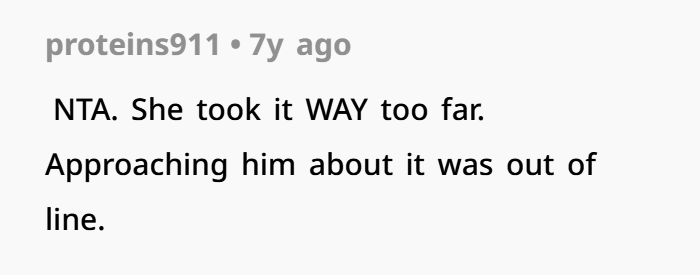
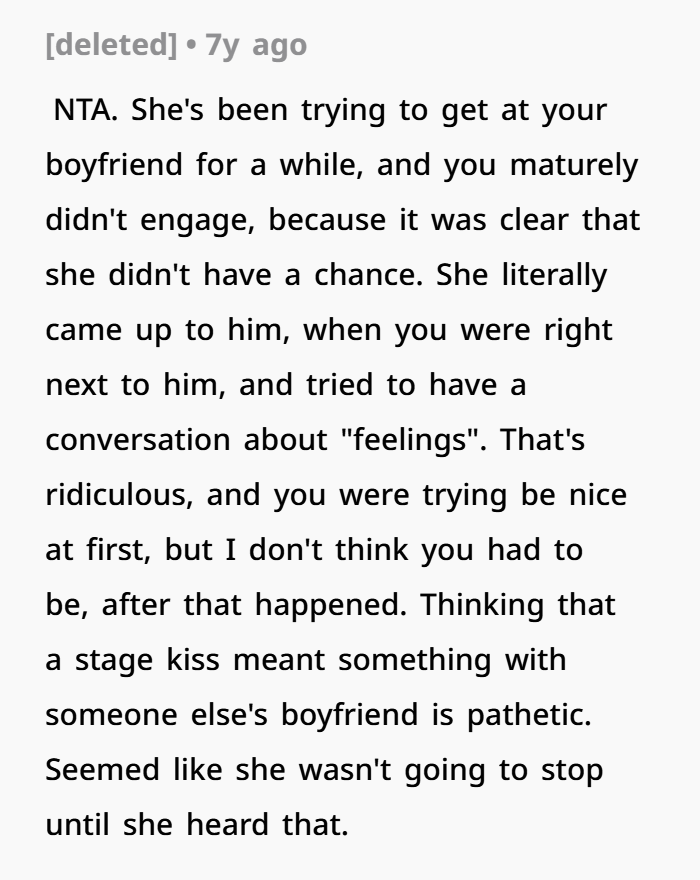
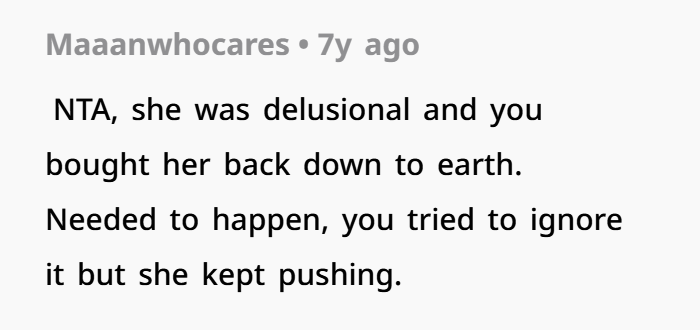
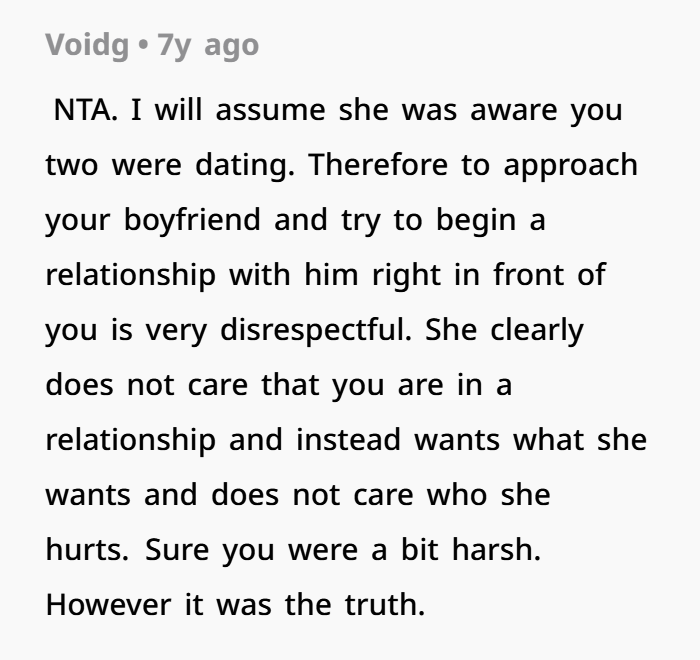
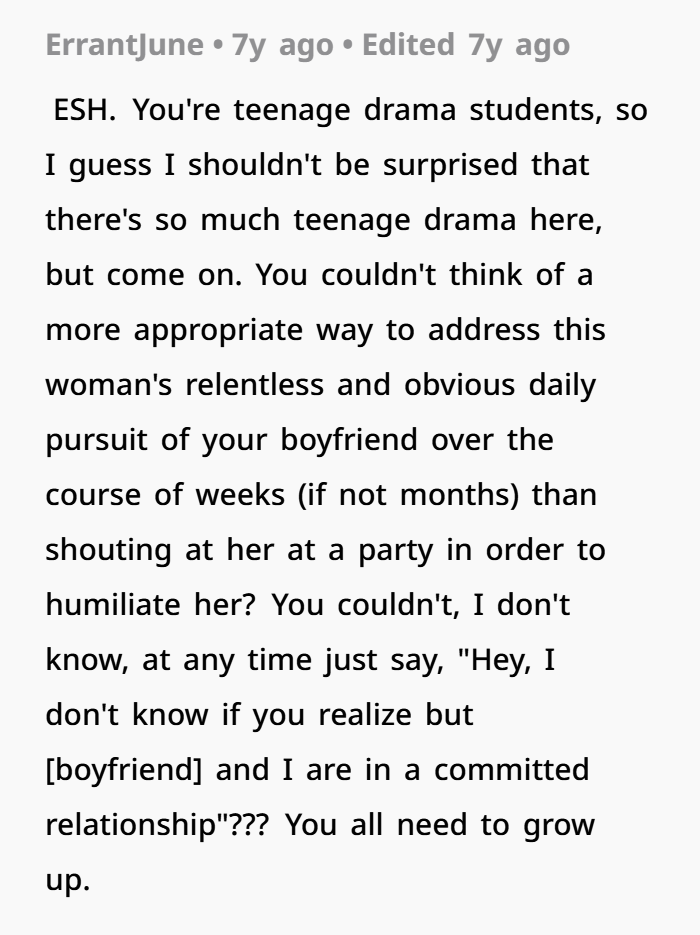
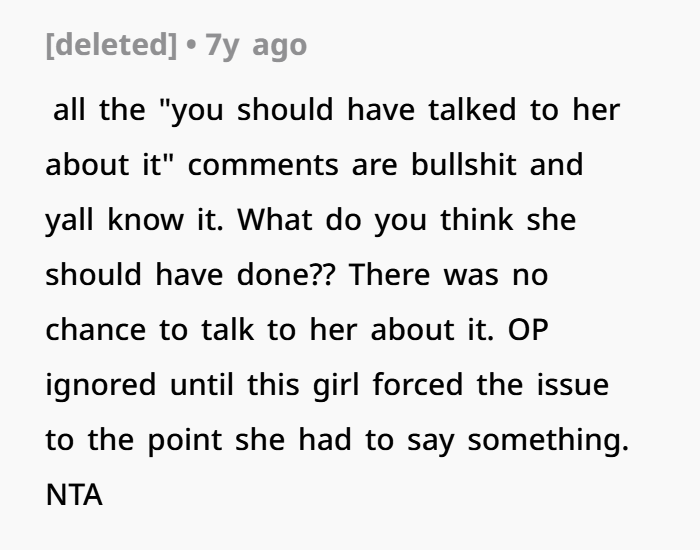
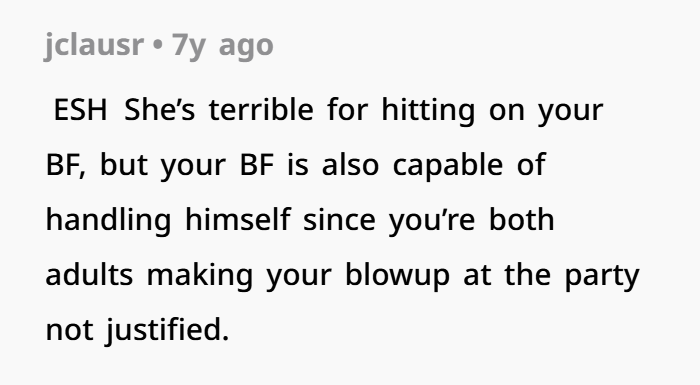
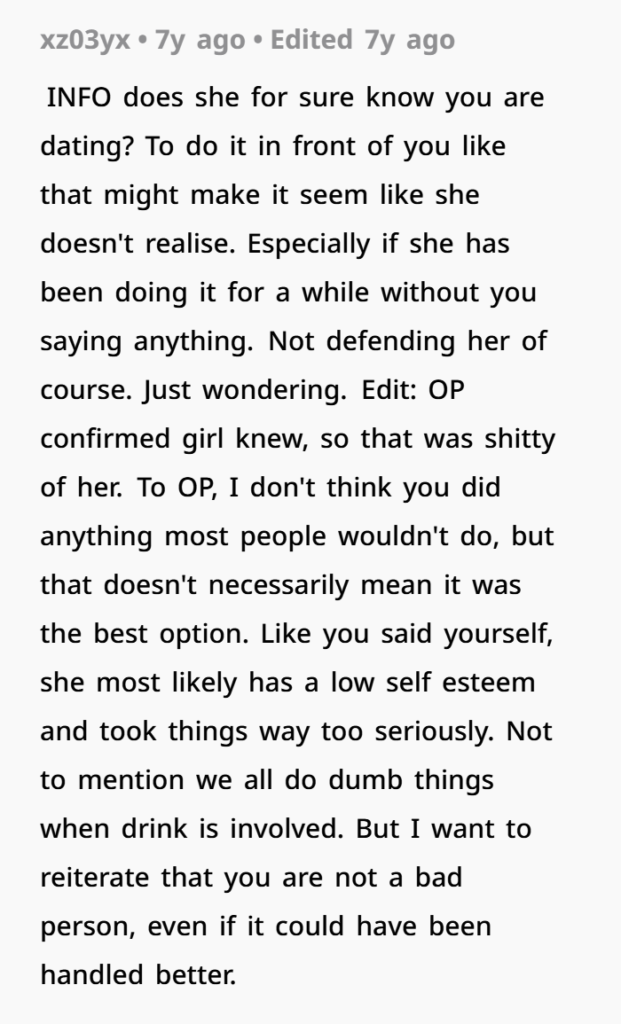
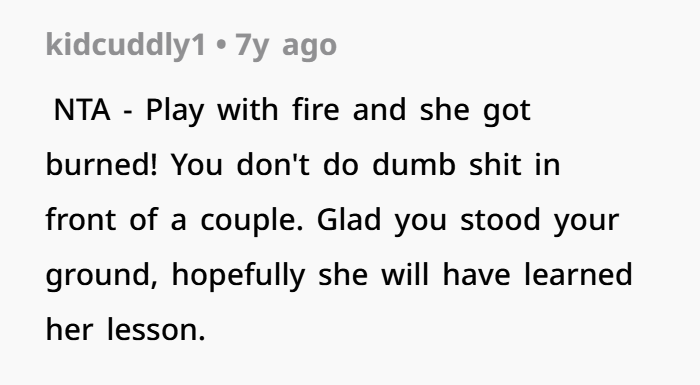
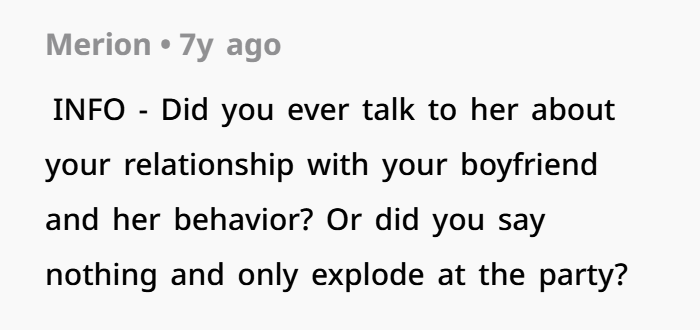
You’re not the asshole for calling out behavior that crossed a clear line. She knew he was taken, and she pushed anyway—that’s on her.
But the way you said it? Yeah, it was harsh. Understandable in the moment, but still harsher than it needed to be.
So overall: Not the A-hole for the message, just a bit for the delivery.