
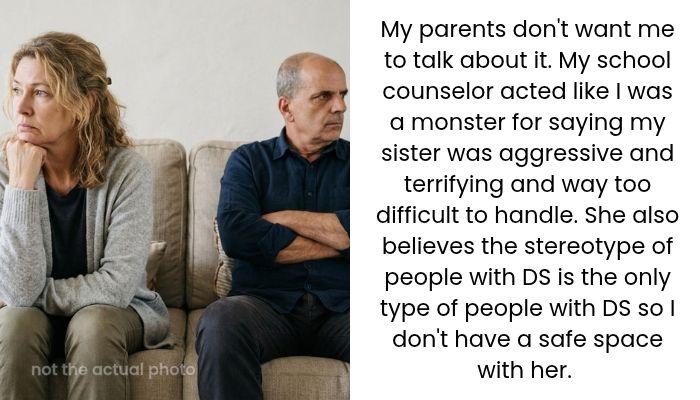
Parents Expect Their 17-Year-Old Son to Become His Disabled Sister’s Caregiver, but He Refuses to Give Up His Future
A 17-year-old boy is facing a heartbreaking family problem. His parents expect him to spend his adult life caring for his 20-year-old sister, who has Down syndrome and several serious health problems.
But the teenager has made it clear that he does not want that responsibility.
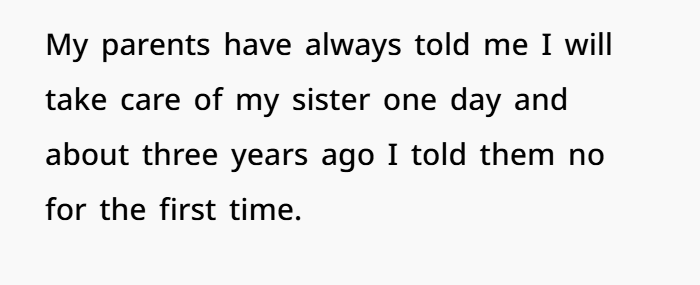
According to his Reddit post in r/Advice, his parents had him partly because they wanted someone to look after his older sister when they became too old or passed away.
For years, he has watched his parents struggle with her medical needs and aggressive behavior. He says his sister has physically hurt him many times, leaving him frightened of what his future might look like.
Despite telling his parents no several times, they continue to act as though he has already agreed to become her full-time caregiver. Now, with his 18th birthday approaching, the teenager is thinking about leaving home and possibly cutting off contact with his family.
His story raises difficult questions about family responsibilities, caregiver burnout, disability care services, and whether parents should expect one child to give up their own future to care for another.



His Parents Had Him With a Caregiving Plan Already in Mind
The teenager explained that his parents were already in their 40s when they started their family. His mother and father were both 40 when his older sister was born. By the time he arrived, they were 43 and 44.
His sister, now 20, was born with Down syndrome and later faced several serious medical problems.
According to the teenager, she has a heart condition, a weak immune system, and lung problems. Every year, from October through April, she struggles with breathing difficulties.
These are not small health concerns. The Centers for Disease Control and Prevention explains that people with Down syndrome can have other medical conditions, including heart defects and sleep-related breathing problems. Still, every person’s health needs are different.
As his parents began to understand how much care their daughter would need, they made a decision that would shape their son’s entire childhood.
The teenager claims his parents had him so someone would be there to care for his sister when they could no longer do it themselves.
For him, that meant growing up knowing his parents had already chosen a major part of his future.
And as he got older, the responsibility they expected him to take on became even more frightening.
His Parents Are Getting Older, and Their Health Is Already Declining
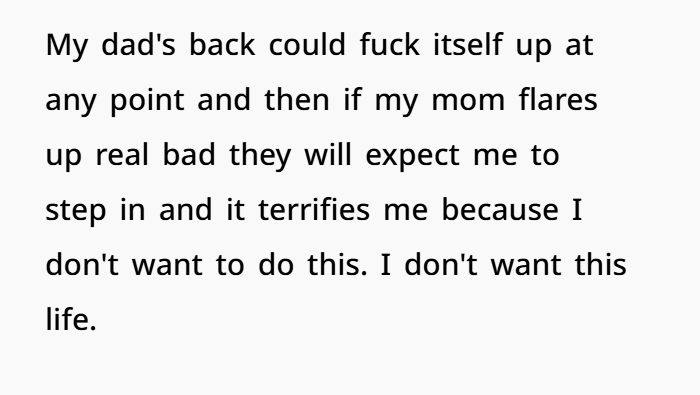
His father has ongoing back problems, while his mother suffers from arthritis. Both conditions make caring for their daughter more difficult.
The teenager says his parents already struggle to manage his sister’s daily needs.
He worries that his father’s back could suddenly become worse. If his mother also has a serious arthritis flare-up, he believes they will expect him to take over.
That possibility scares him.
His parents have also refused to consider moving his sister into an assisted living facility or another medical care setting.
For families caring for adults with complex disabilities, long-term care planning can involve difficult decisions about housing, family support, health needs, and what happens when parents can no longer provide care.
Research on adults with intellectual and developmental disabilities has explored these exact concerns. Parents and siblings may have different ideas about who should provide care and what kind of support is needed.
In this family, however, the teenager says his parents are unwilling to consider another arrangement.
That leaves him feeling as though he is their only backup plan.
His Sister’s Aggressive Behavior Has Frightened Him Since Childhood
The teenager also shared another part of his family life that he says people often misunderstand.
His sister has struggled with anger and aggressive behavior since she was around four years old.
According to him, her behavior has become more difficult with each passing year. He says she has physically hurt him and their parents countless times.
As a young child, he was frightened of her outbursts.
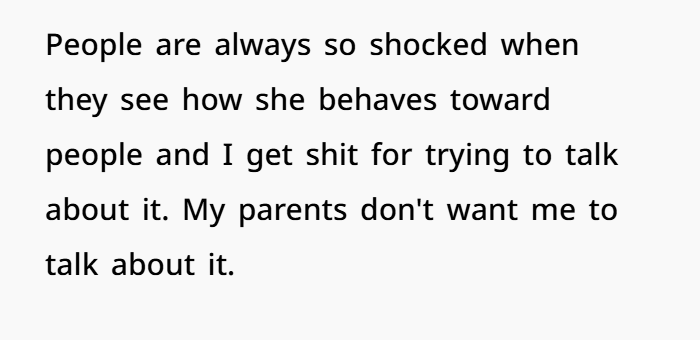
He also feels frustrated by the way other people react when he talks about his experiences.
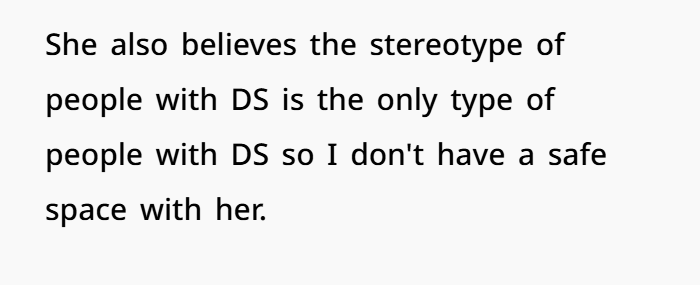
Some people expect everyone with Down syndrome to be gentle, cheerful, and affectionate. When he describes his sister’s behavior, he says people often seem shocked or treat him as though he is being cruel.
But Down syndrome does not mean everyone has the same personality.
The National Down Syndrome Society explains that people with Down syndrome experience a full range of emotions, just like anyone else. Some may also face mental health or behavior-related challenges.
Aggressive behavior can have different causes, including communication difficulties, emotional stress, pain, or other medical concerns. It should not be seen as something that defines all people with Down syndrome.
The society’s guide to understanding behavior also explains that challenging behavior can sometimes put a person’s safety or the safety of others at risk.
For this teenager, though, the problem is deeply personal.
He has spent years feeling afraid in his own home. And when he tries to explain why, he says people refuse to listen.
Even His School Counselors Made Him Feel Like He Was Wrong
One of the saddest parts of the story is that the teenager has tried asking adults for help.
Unfortunately, those experiences left him feeling even more alone.
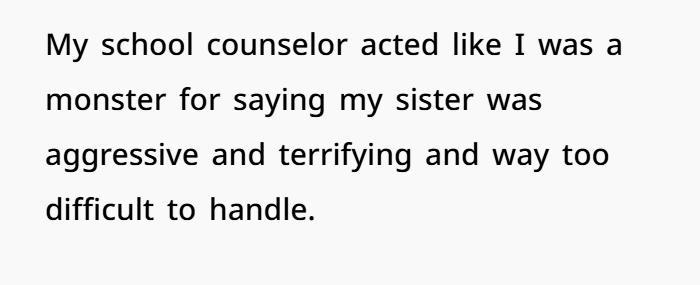
He said he once opened up to his school counselor about his sister’s aggression and how frightening it was to live with.
Instead of feeling supported, he felt judged.
According to his account, the counselor reacted as though he was a terrible person for describing his disabled sister as aggressive and difficult to manage.
He believes she had a fixed idea of how people with Down syndrome behave and could not accept that his family’s experience was different.
It was not the first time he had faced that reaction.
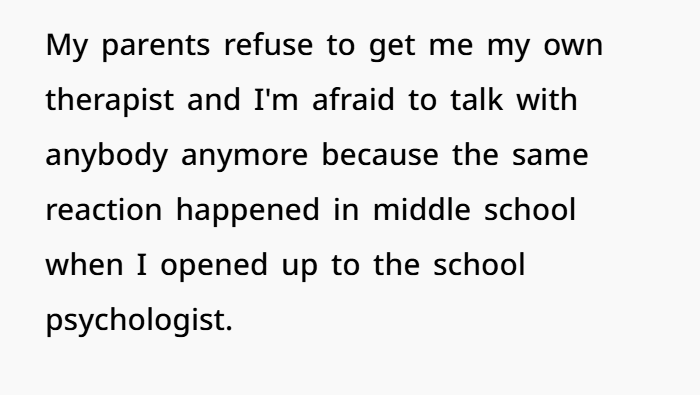
He said something similar happened in middle school when he spoke with a school psychologist.
After being disappointed twice, he became afraid to share his feelings with other people.
His parents also refuse to arrange individual therapy for him.
That means he has no therapist of his own and does not feel safe discussing his home life with the school professionals he has already approached.
Access to mental health counseling and family support can be valuable when families are dealing with difficult caregiving responsibilities and ongoing conflict.
Yet the teenager says the support he has asked for has not been available to him.
He Has Told His Parents No Seven Times, but They Keep Ignoring Him
For most of his childhood, his parents spoke about his future caregiving role as though it had already been decided.
Around three years ago, when he was about 14, he finally told them he would not become his sister’s caregiver.
It was the first time he openly rejected their plan.
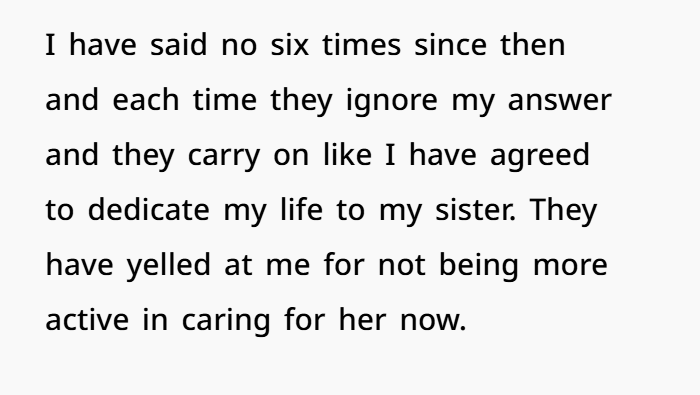
Since then, he says he has repeated his answer six more times.
Each time, his parents have ignored him.
Instead of discussing other options for their daughter’s future care, they continue talking as though their son has agreed to take responsibility.
He says they have also yelled at him for not helping enough with his sister’s care right now.
The arguments do not stop there.
His parents become upset when he prevents his sister from touching him. They believe he acts as though she has some kind of contagious illness.
But he says that is not why he avoids physical contact.
He is trying to protect himself from being hurt. He also does not want his sister grabbing him or pulling him around whenever she wants.
To him, keeping that distance is about feeling safe and having control over his own body.
His parents, however, see his actions differently.
This disagreement has made the family conflict even harder to handle.
Why Being a Full-Time Caregiver Is Such a Serious Responsibility
Caring for a family member with complex medical needs can involve much more than helping with meals or household tasks.
Depending on the person’s condition, it may require medical appointments, daily supervision, help with personal care, and support during health emergencies.
Families may need to explore professional home care, disability support services, residential care, or other forms of long-term assistance.
These options depend on the person’s needs and the services available where they live.
Research published in the Journal of Applied Research in Intellectual Disabilities looked at how parents and siblings plan for the future care of adults with disabilities.
The research highlights questions families face when an aging parent can no longer provide care. These include who will help, what support is available, and whether existing arrangements can continue.
In the teenager’s case, there is another serious concern.
He does not feel physically safe around his sister, and he has repeatedly said he does not want to become her caregiver.
His parents’ desire to protect their daughter is understandable. She has significant medical needs and will need reliable support.
But their son’s fears and wishes are also part of the situation.
A long-term care plan affects everyone involved, especially the person expected to provide that care.
He Is Now Thinking About Leaving Home and Cutting Contact
As the teenager gets closer to adulthood, his worries are growing.
He knows his parents are getting older. He also knows their health problems could make caring for his sister harder at any time.
What frightens him most is the thought of being forced into a role he has never agreed to accept.
He does not want to spend his adult life managing his sister’s medical needs and aggressive behavior.
He wants the chance to make his own decisions about his future.
But after years of having his concerns dismissed, he is no longer sure he can convince his parents to listen.
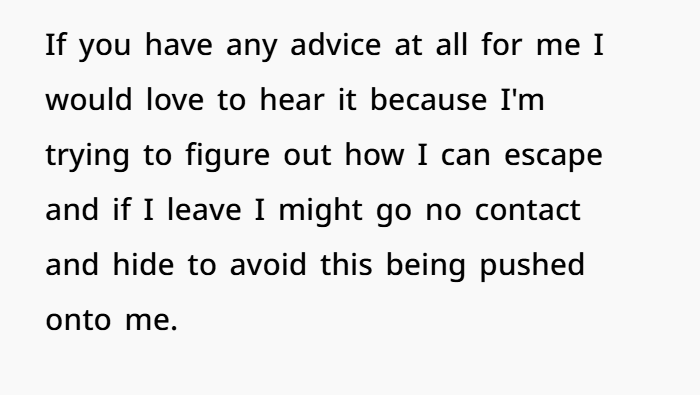
He has started thinking about leaving home.
He is even considering going no contact and keeping his location private so his family cannot continue pressuring him to take responsibility.
That is a painful possibility for a teenager who is still trying to figure out his next steps.
His Reddit post was not simply about refusing to help his family. It was a request for advice from someone who feels trapped between his parents’ expectations and his own need for safety and independence.
He wants to know how he can build a life outside the caregiving role his parents have planned for him.
The Difficult Question at the Heart of His Story
This family is facing two very real needs.
The older sister requires care and support because of her health conditions. Her parents are worried about what will happen to her when they are no longer able to look after her.
At the same time, their younger son has grown up with fear, family pressure, and the belief that his future has already been decided without his agreement.
His account shows why planning for disability care is about more than finding someone willing to help.
It also means thinking about professional support, safety, family relationships, and the needs of everyone involved.
The teenager has made his feelings clear several times. What he is still waiting for is for his parents to take his answer seriously.
For now, he is left with a difficult choice: continue living under the weight of their expectations or begin planning a future away from the family.
And at just 17, that is a lot for anyone to carry.
See the comments to know what people said

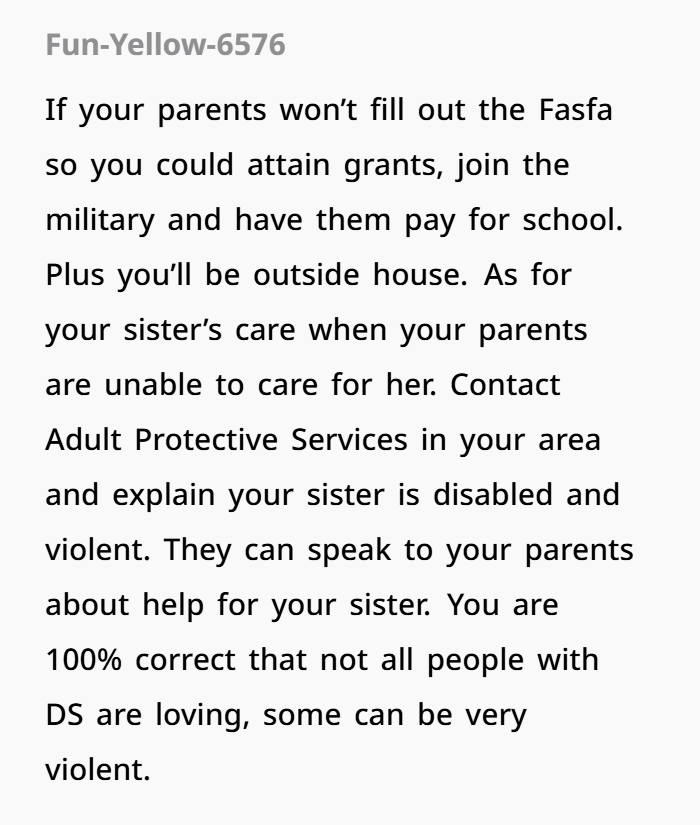
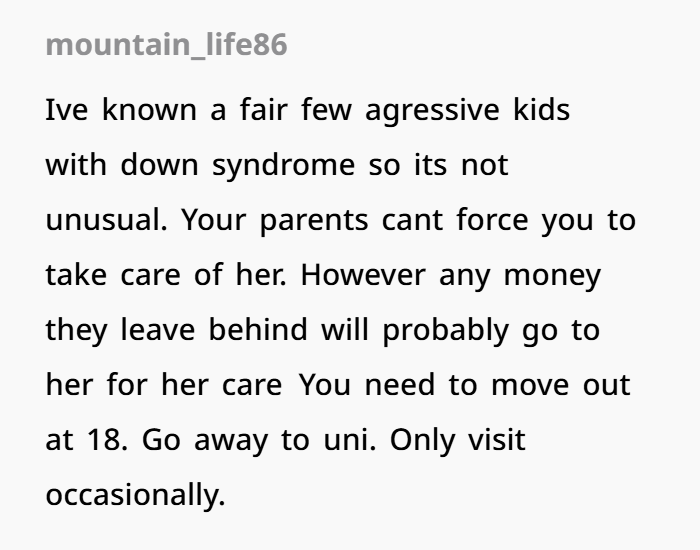
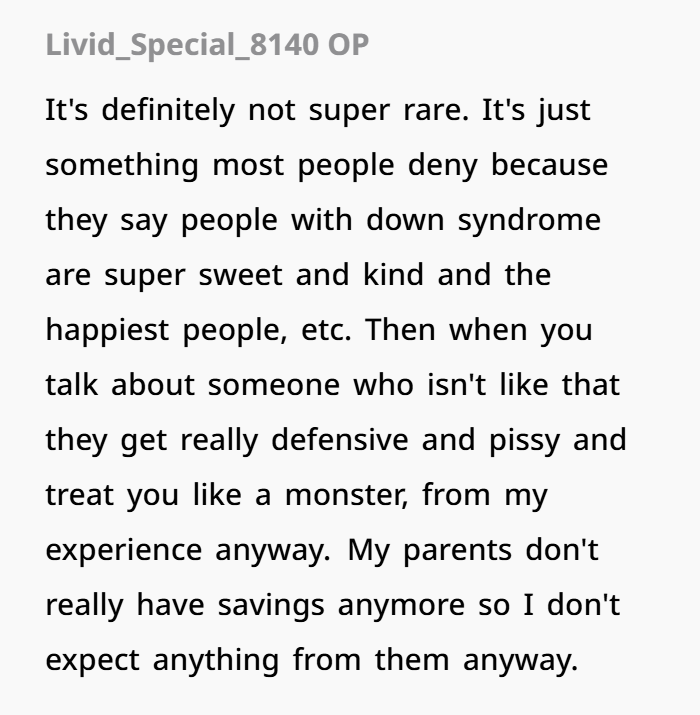
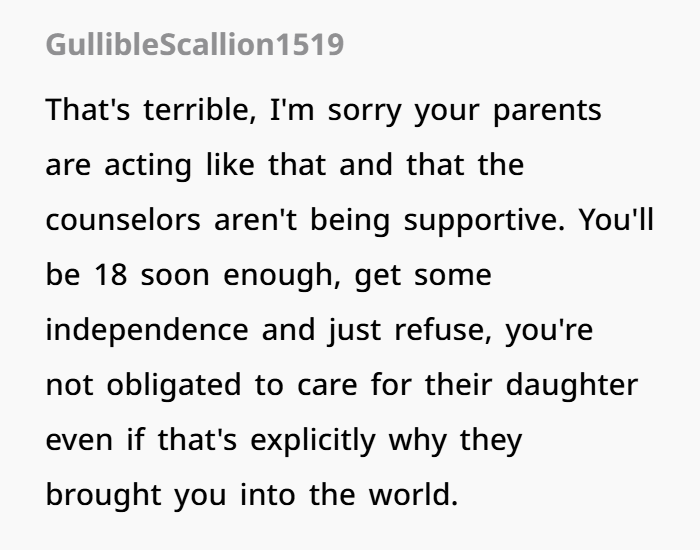

At just 17, this teenager is carrying a responsibility he never agreed to take on. His parents want him to become his disabled sister’s full-time caregiver, but he has made it clear that this is not the life he wants.
He understands that his sister needs care and that his parents are worried about her future. But after years of dealing with her aggressive behavior, feeling unsafe at home, and having his concerns ignored, he is exhausted and frightened.
His story shows how difficult family caregiving expectations can become when one person’s needs are placed above everyone else’s. His sister deserves proper medical care and support, but he also deserves safety, independence, and the chance to build his own life.
Now, he is considering leaving home and possibly cutting contact with his family. It is not an easy decision, but he feels he may have no other way to escape the pressure.
The biggest question is whether his parents will finally respect his decision and explore other long-term care options before their health gets worse.
After all, loving a family member and becoming their lifelong caregiver are not the same thing.