“Invite My New Wife or I Won’t Come!”—Bride Refuses Dad’s Wedding Ultimatum After Stepmom Disrespects Her Mother
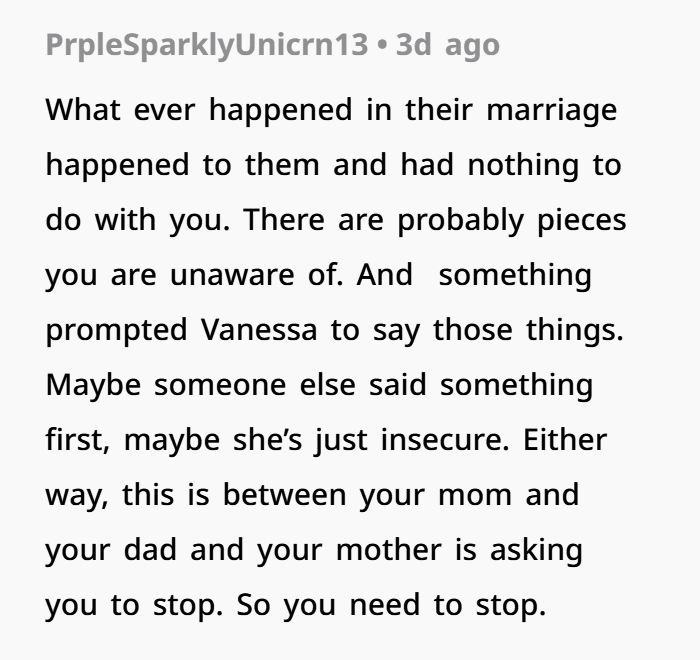
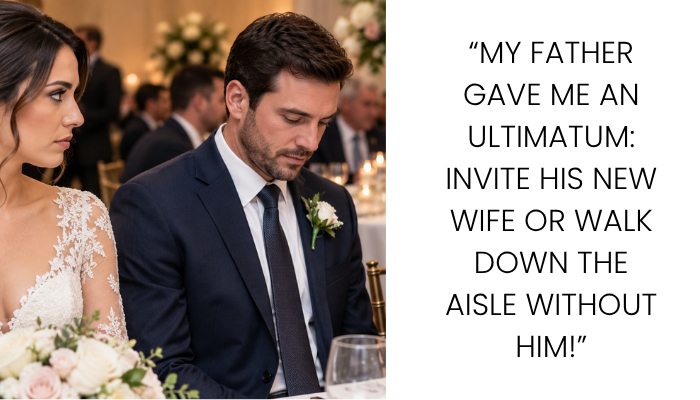
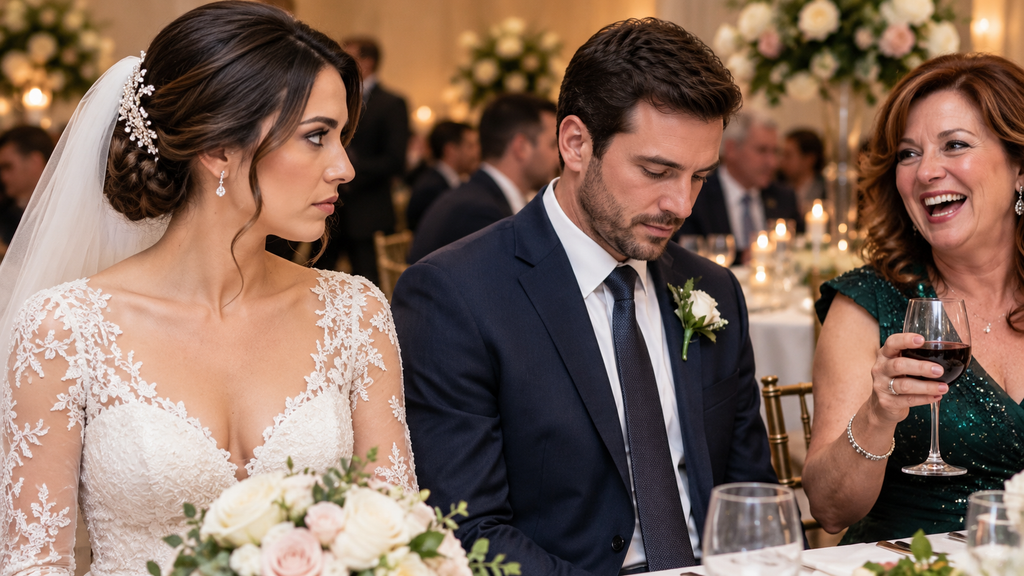
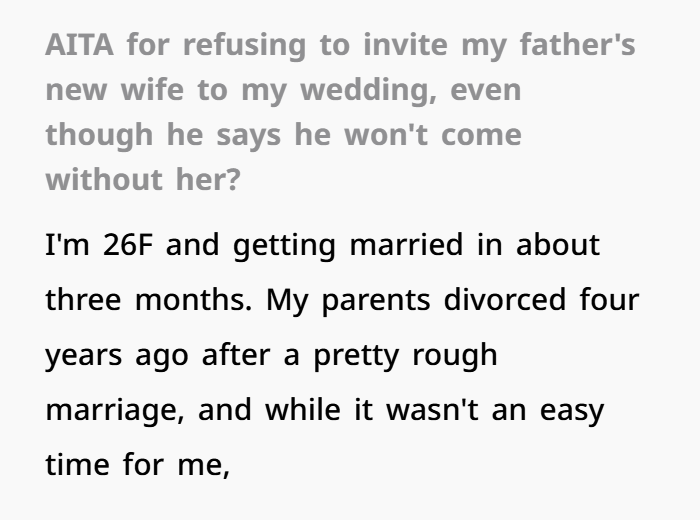
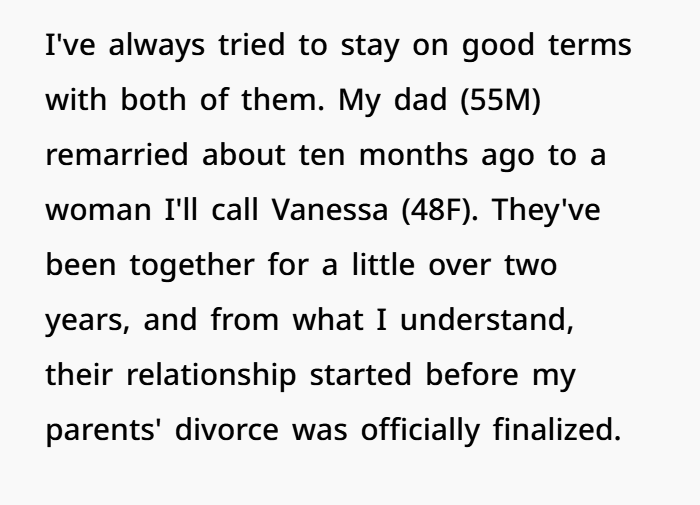
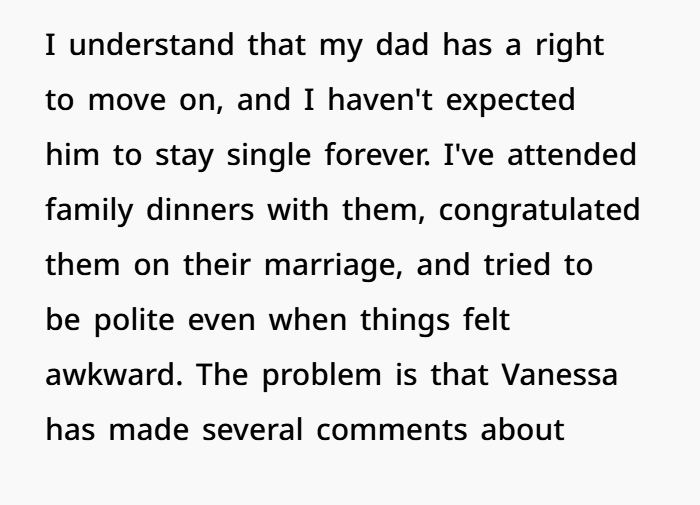
A 26-year-old bride is dealing with a difficult family problem just three months before her wedding. Her father, who is 55, says he will not attend the wedding unless she invites his new wife, Vanessa. Her parents divorced four years ago after having problems in their marriage. Her father married 48-year-old Vanessa ten months ago after dating her for more than two years. According to the bride, their relationship started before her parents’ divorce was final. This made her uncomfortable, but she still tried to be polite and respectful toward Vanessa.
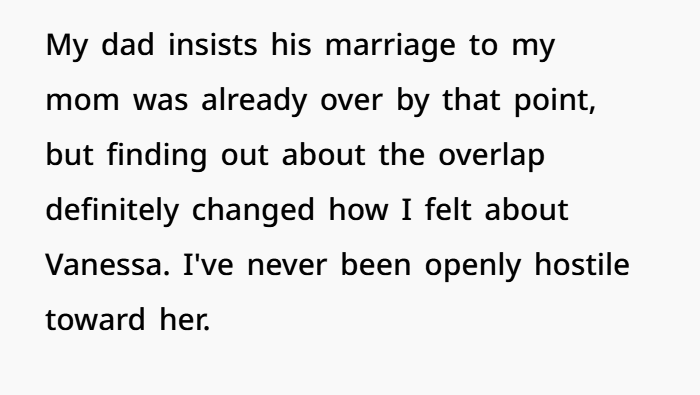
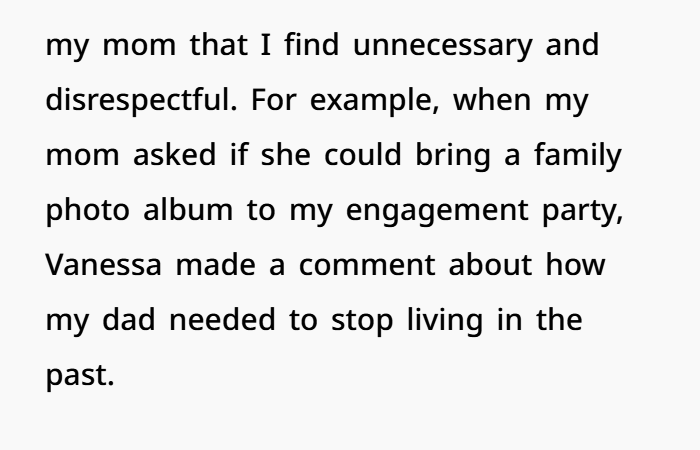
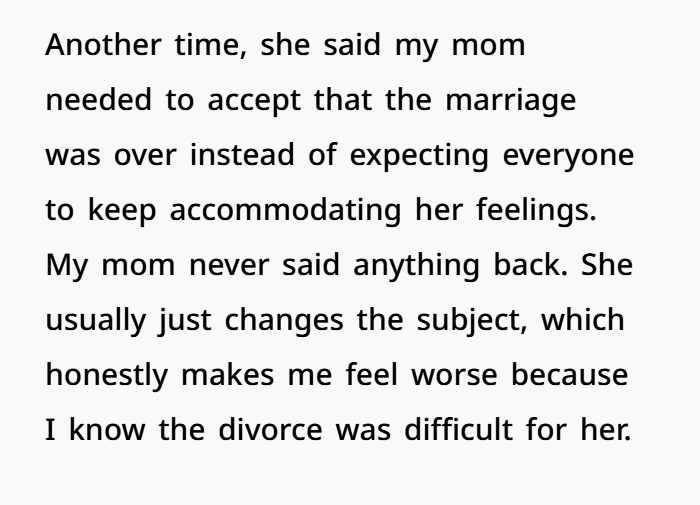
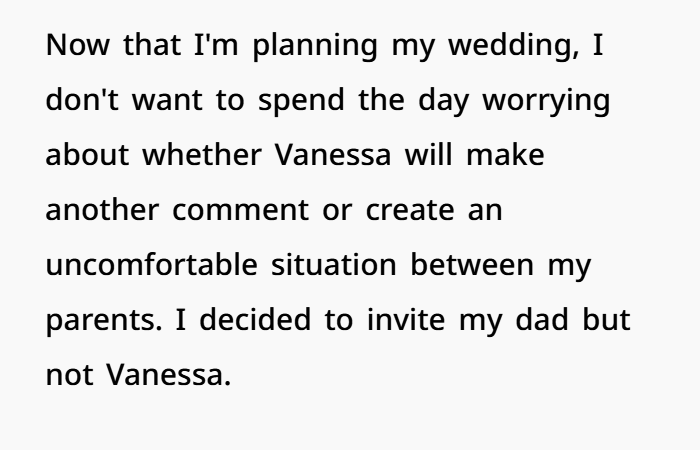
Things became harder when Vanessa started making comments about the bride’s mother. During family events related to the wedding, Vanessa reportedly said that the bride’s father needed to move on from his past. She also suggested that the bride’s mother should accept the divorce and stop expecting special treatment. The bride felt hurt by these comments because her mother usually stayed quiet to avoid arguments. While working on her wedding guest list and invitations, she decided it would be better to invite only her father.
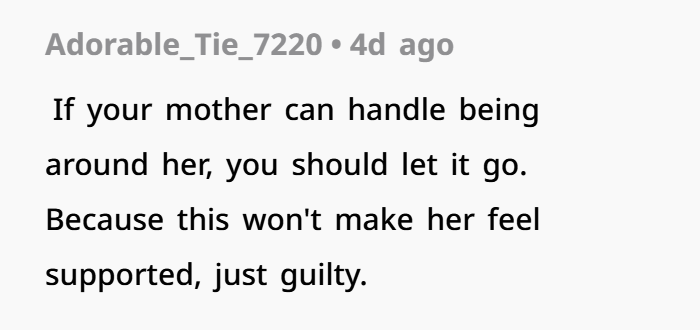
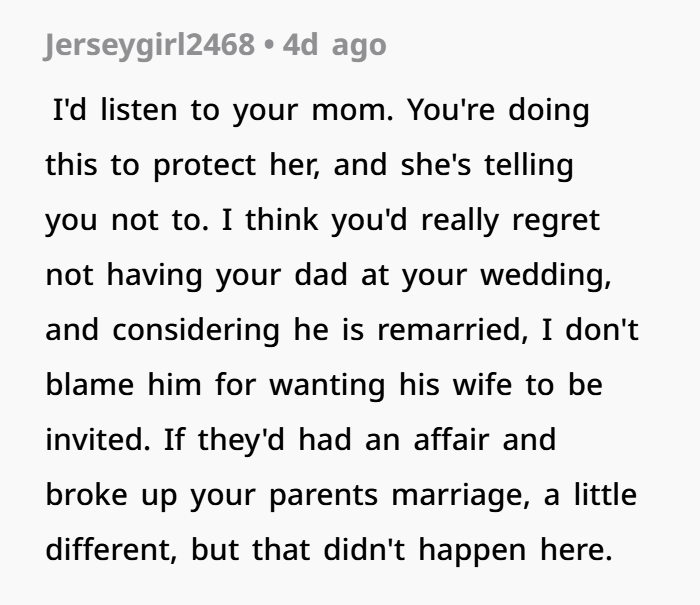
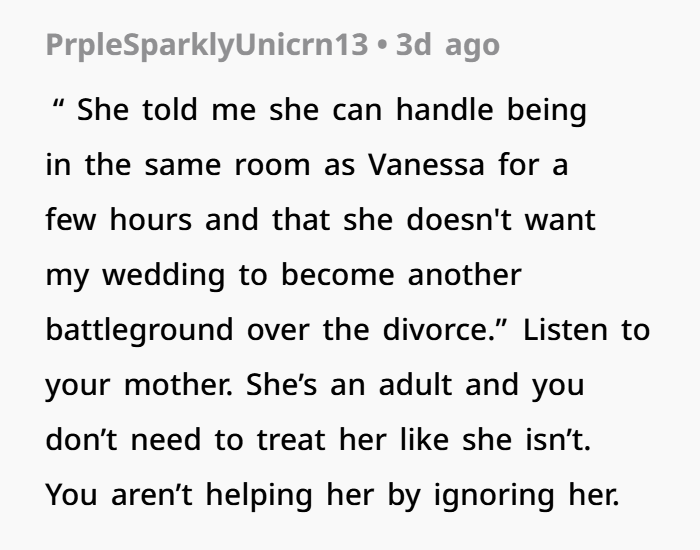
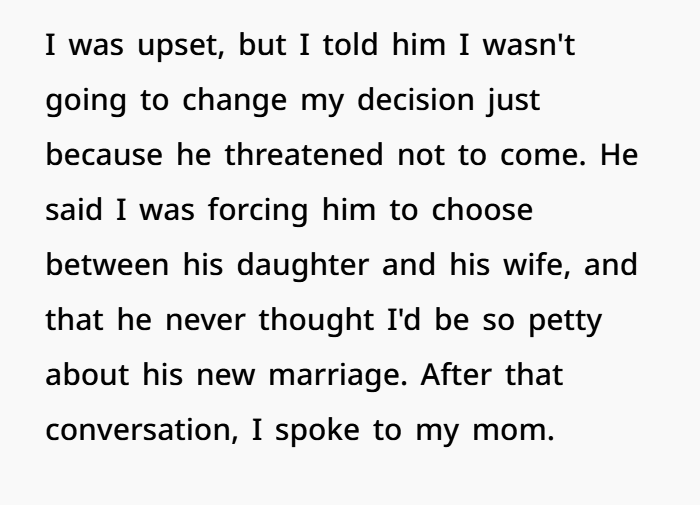
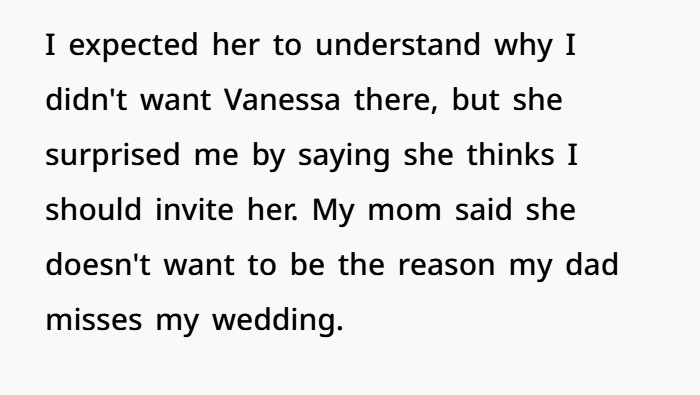
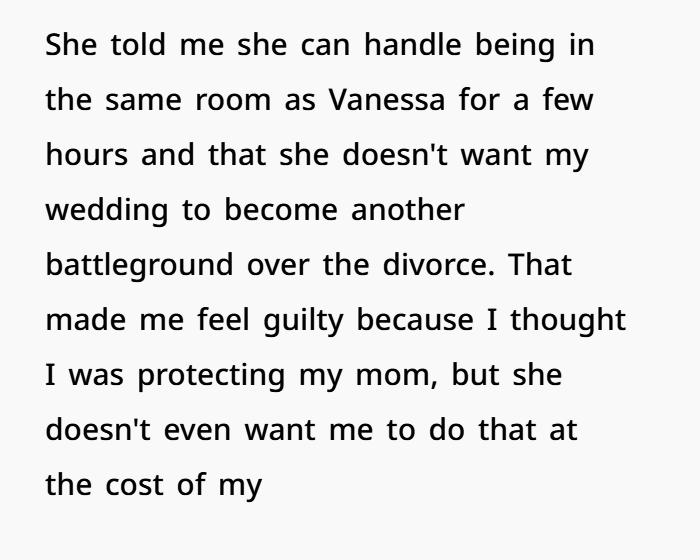
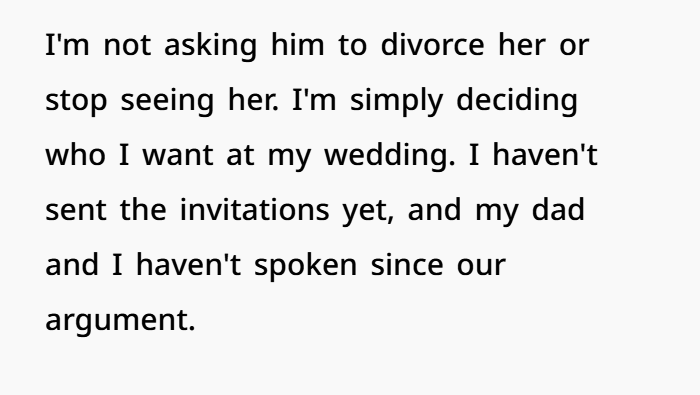
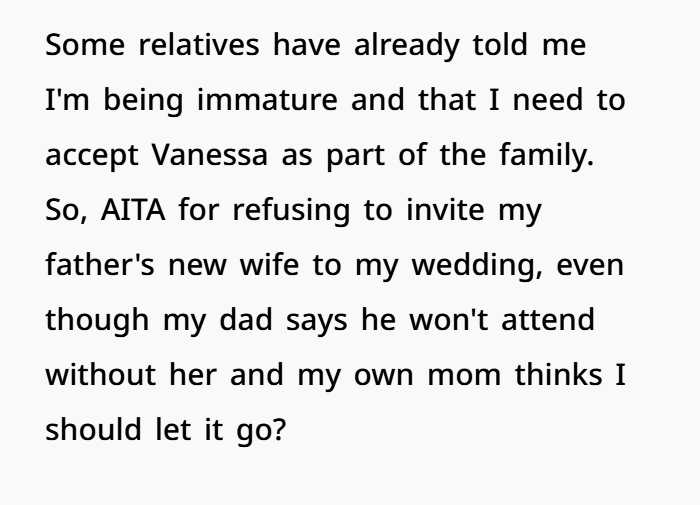
Before sending the wedding invitations, the bride called her father to explain her decision. She told him that she was worried about Vanessa’s behavior at the wedding ceremony. But her father became upset and said she was disrespecting his wife. He then told her that if Vanessa was not invited, he would not attend either. The bride was surprised when her mother suggested inviting Vanessa anyway. Her mother said she could handle a few uncomfortable hours and did not want her daughter to miss having her father at the wedding.
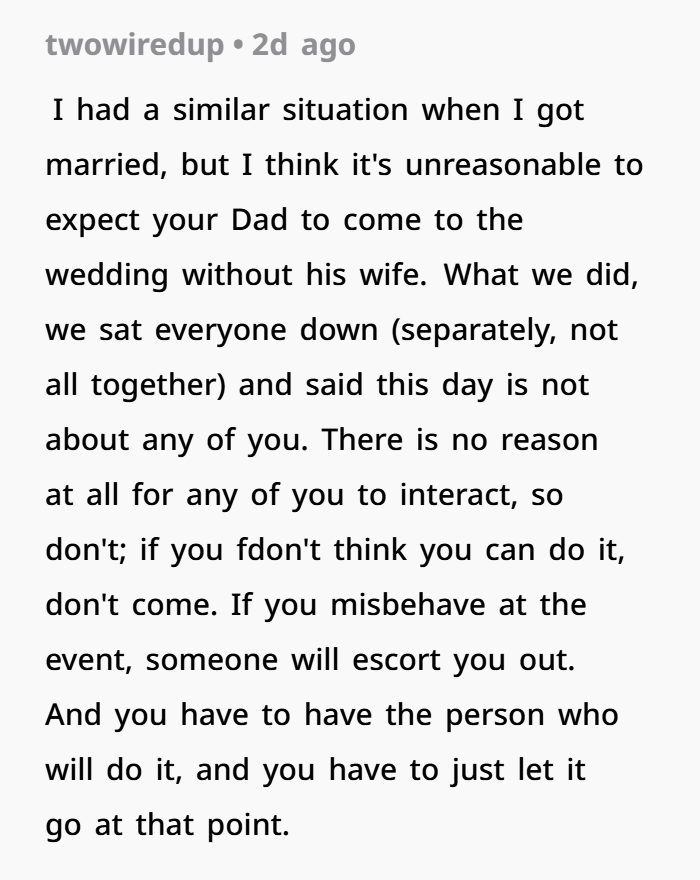
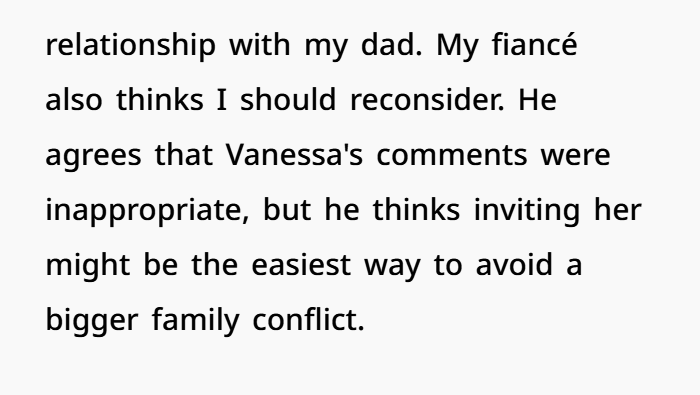
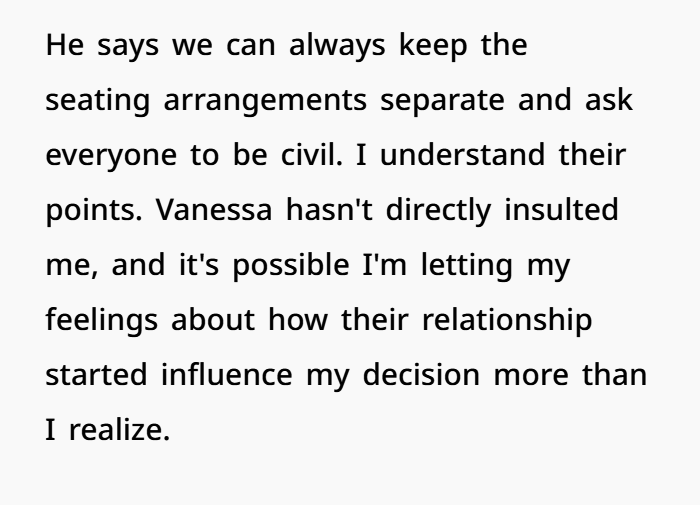
The bride’s fiancé also thought inviting Vanessa might be the easier choice. He suggested separate wedding seating arrangements to help everyone feel comfortable. But the bride still feels unsure. She wants her father to be part of her special day, but she also wants a peaceful wedding celebration without family arguments. Some relatives think she is being unfair, while her father refuses to change his mind. Now, she must decide whether to keep her original wedding plans or make a change to protect her family relationships.
When a Parent’s New Marriage Creates a Wedding-Day Loyalty Conflict
A wedding should be a happy day filled with love, family, and beautiful memories.
But sometimes, family problems can make wedding planning much harder than expected.
That’s what happened to one bride who didn’t want to invite her father’s new wife, Vanessa, to her wedding.
According to the bride, Vanessa had made hurtful comments about her mother in the past.
The bride didn’t want that kind of negativity at her wedding.
But her father wasn’t happy with the decision. He told her that if Vanessa wasn’t invited, he wouldn’t attend either.
Now the bride has to make a difficult choice.
Should she invite someone who makes her uncomfortable, or risk having her father miss one of the biggest days of her life?
Why Divorce Can Make Family Weddings Complicated
When parents get divorced and later remarry, family relationships can become complicated.
Adult children may feel caught between their parents, especially when a new spouse doesn’t get along with someone in the family.
In this story, the bride wants to protect her mother from Vanessa’s comments.
But she also wants her father to be part of her wedding day.
That puts her in an uncomfortable position.
Family systems theory, linked to psychiatrist Murray Bowen, explains how problems between two people can sometimes pull another family member into the disagreement.
This is sometimes called a family triangle.
In simple words, one person can end up feeling responsible for keeping everyone else happy.
And that’s exactly the kind of pressure this bride seems to be facing.
Family counseling can sometimes help people understand these situations and learn better ways to communicate.
But even without counseling, it’s important to remember that the bride shouldn’t have to solve every problem between her parents.
Does a Married Couple Have to Be Invited Together?
Wedding guest lists can be tricky, especially when divorced parents and stepparents are involved.
Traditional wedding etiquette usually suggests inviting married couples together.
The Emily Post Institute, known for its etiquette advice, generally recommends treating married couples as a pair when planning invitations.
But that doesn’t mean every person must be invited, no matter how they behave.
The bride and her fiancé have the right to decide who attends their wedding.
After all, they are the ones planning the celebration.
At the same time, her father can decide whether he wants to attend without his wife.
That is what makes the situation difficult.
The bride can choose not to invite Vanessa, but she cannot force her father to come alone.
And her father can choose to stay home, but he cannot force his daughter to change her wedding guest list.
Both decisions come with consequences.
Is the Father’s Decision Fair?
The father told his daughter that he wouldn’t attend the wedding unless Vanessa was invited.
It’s understandable that this upset the bride.
Most people want their parents to be there when they get married.
Missing such an important family event can leave lasting hurt feelings.
But the father may also feel that attending without his wife would be disrespectful to his marriage.
From his point of view, he may believe that he should stand by Vanessa.
Still, there’s another problem.
According to the bride, her father called her petty and disrespectful while defending Vanessa.
That doesn’t help solve anything.
A better approach would be to listen to his daughter’s concerns and understand why she feels uncomfortable.
He could also talk to Vanessa about her past comments and ask her to be respectful at the wedding.
Good family communication matters, especially during stressful events.
And a wedding is already expensive and emotional enough without adding unnecessary arguments.
The Bride’s Mother Had a Surprising Reaction
One of the most interesting parts of this story is how the bride’s mother responded.
You might expect her to be happy that Vanessa wasn’t invited.
After all, Vanessa had reportedly made rude comments about her.
But that wasn’t her reaction.
Instead, the mother worried that excluding Vanessa could hurt her daughter’s relationship with her father.
She didn’t want the bride to lose her father’s presence at the wedding because of an old family disagreement.
That says a lot about her priorities.
She seems more concerned about her daughter’s happiness than about avoiding Vanessa.
It also gives the bride something important to think about.
If her mother is willing to attend the wedding with Vanessa there, maybe the situation can be handled without leaving anyone out.
Of course, the bride’s own feelings still matter.
She doesn’t have to ignore Vanessa’s past behavior simply because her mother is willing to move on.
Could Old Family Feelings Be Making Things Harder?
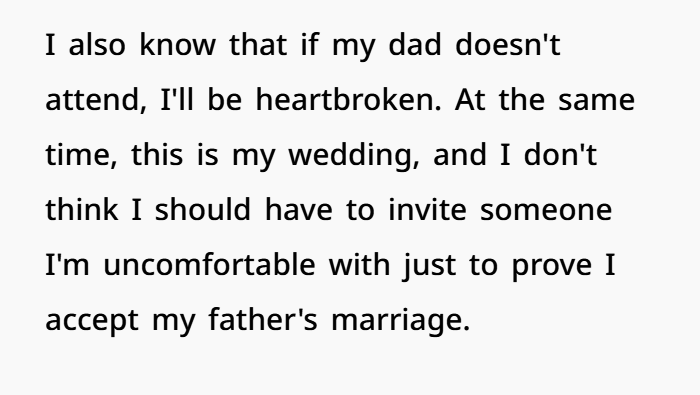
The bride also admitted that the timing of her father’s relationship with Vanessa may be affecting how she feels.
That is understandable.
When a parent remarries, adult children sometimes need time to adjust.
There may be old feelings about the divorce, the new relationship, or changes in family traditions.
Those feelings don’t always disappear just because everyone has moved forward with their lives.
A wedding can bring them back because both sides of the family are suddenly coming together again.
The bride may be upset about Vanessa’s comments.
But she may also still have feelings about how her father’s new marriage changed the family.
Both things can be true.
Understanding her own feelings may help her make a decision she is comfortable with.
Can a Wedding Planner Help Avoid Family Drama?
There may be a way to make everyone more comfortable without turning the wedding into another family argument.
A professional wedding planner or day-of wedding coordinator can help manage difficult family situations.
For example, the couple could arrange separate seating for the bride’s mother and Vanessa.
They could also make sure the wedding reception seating chart gives everyone enough personal space.
A trusted family member could help if an uncomfortable conversation starts.
These are small wedding planning details, but they can make a big difference.
The bride could also speak directly with Vanessa before making her final decision.
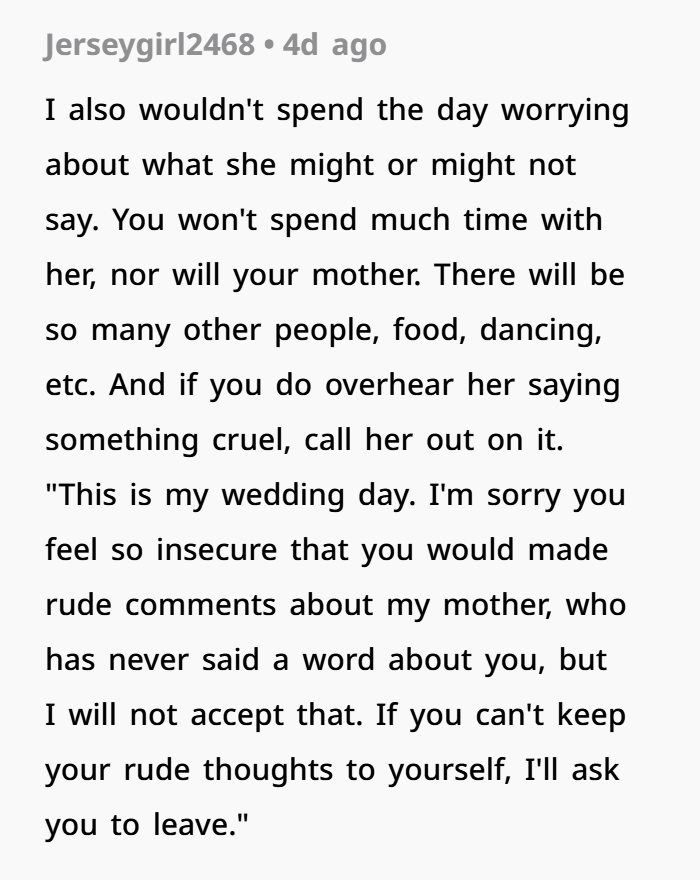
She could explain that the comments about her mother were hurtful and that she expects respectful behavior from everyone attending.
If Vanessa understands and agrees, the bride may feel more comfortable inviting her.
If Vanessa refuses to respect those expectations, the bride can decide what to do next.
The goal isn’t to make everyone best friends.
It’s simply to enjoy the wedding without unnecessary conflict.
Setting Wedding Boundaries Without Hurting Family Relationships
Healthy family boundaries are important, even during happy occasions.
The bride has every right to want a peaceful wedding day.
She also has the right to speak up when someone makes disrespectful comments about her family.
But setting boundaries doesn’t always mean excluding someone.
Sometimes, it means clearly explaining what behavior is acceptable.
For example, the bride could ask everyone to avoid negative comments about her parents, their past marriage, or other family members.
She could also make it clear that the wedding is not the place to discuss old disagreements.
A wedding coordinator or trusted relative could help keep things running smoothly if tensions arise.
Of course, no wedding plan can guarantee that every guest will behave perfectly.
But clear expectations can reduce the chance of problems.
Is the Bride Wrong for Not Inviting Vanessa?
Based on the bride’s account, she isn’t wrong for wanting boundaries.
Vanessa’s reported comments about her mother were hurtful, and the bride has a reason to feel uncomfortable.
But leaving Vanessa off the wedding guest list may not be the best way to handle the situation.
Her father and Vanessa are married, so excluding Vanessa could make her father feel that his relationship is being rejected.
And while the father shouldn’t pressure his daughter, he can decide whether to attend without his wife.
The bride also has two important people encouraging her to reconsider.
Her mother and her fiancé both seem to believe the situation could be managed without excluding Vanessa.
That doesn’t mean she has to change her mind.
But their opinions may be worth considering before making a final decision.
Final Thoughts: Whose Happiness Matters Most on the Wedding Day?
A wedding is about two people starting a new chapter together.
It’s not supposed to be a test of loyalty between divorced parents, stepparents, and adult children.
The bride deserves to feel happy and comfortable on her special day.
But she may also want to think about how she will feel if her father isn’t there.
A calm conversation with her father and Vanessa could help everyone understand each other better.
And if Vanessa is willing to respect the bride’s boundaries, there may be room for a peaceful compromise.
The bride doesn’t have to forget the past or pretend everyone gets along. She just has to decide what will bring her the most peace on her wedding day.
Because years from now, the most important memories should be about the wedding itself, not the family argument over the guest list.
See The Comments Below