What Is DNA Data Storage and Could It Replace Traditional Storage?
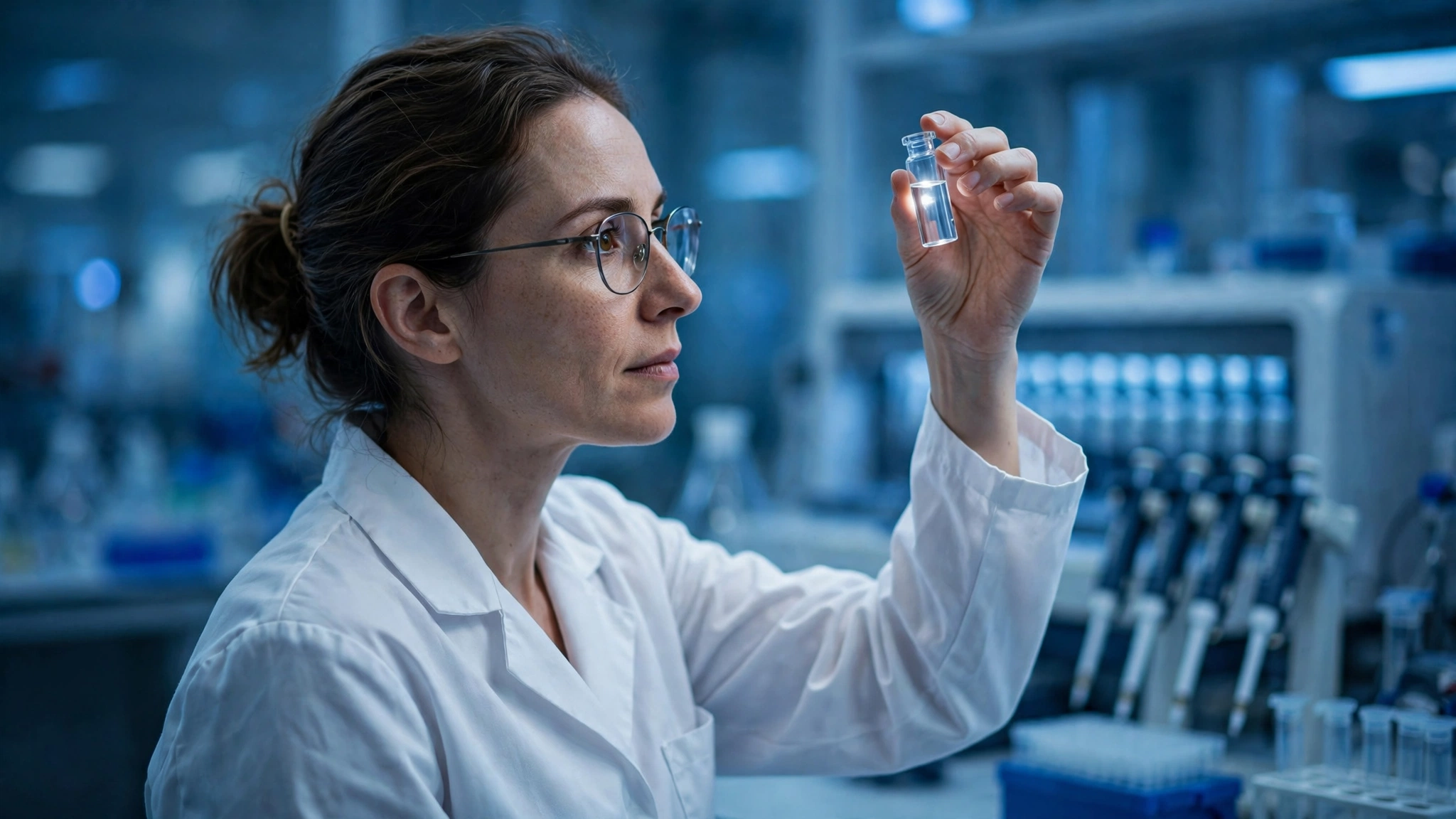
Every photo, video, and document you keep has to live somewhere, and the world is running out of cheap places to put it all. Hard drives fill up, tapes wear out, and data centers keep growing larger every year. DNA data storage offers a very different answer: the same molecule that carries genetic instructions can also hold digital files, packed far more tightly than any disk ever made.
Researchers have already stored books, images, and video clips in synthetic DNA and read them back without errors. The idea sounds like science fiction, yet the basic science has been demonstrated in labs for more than a decade. This article explains how DNA data storage works, why researchers are excited about it, where the technology stands in 2024, and whether it could ever replace the drives and tapes we use today.
How DNA Data Storage Works
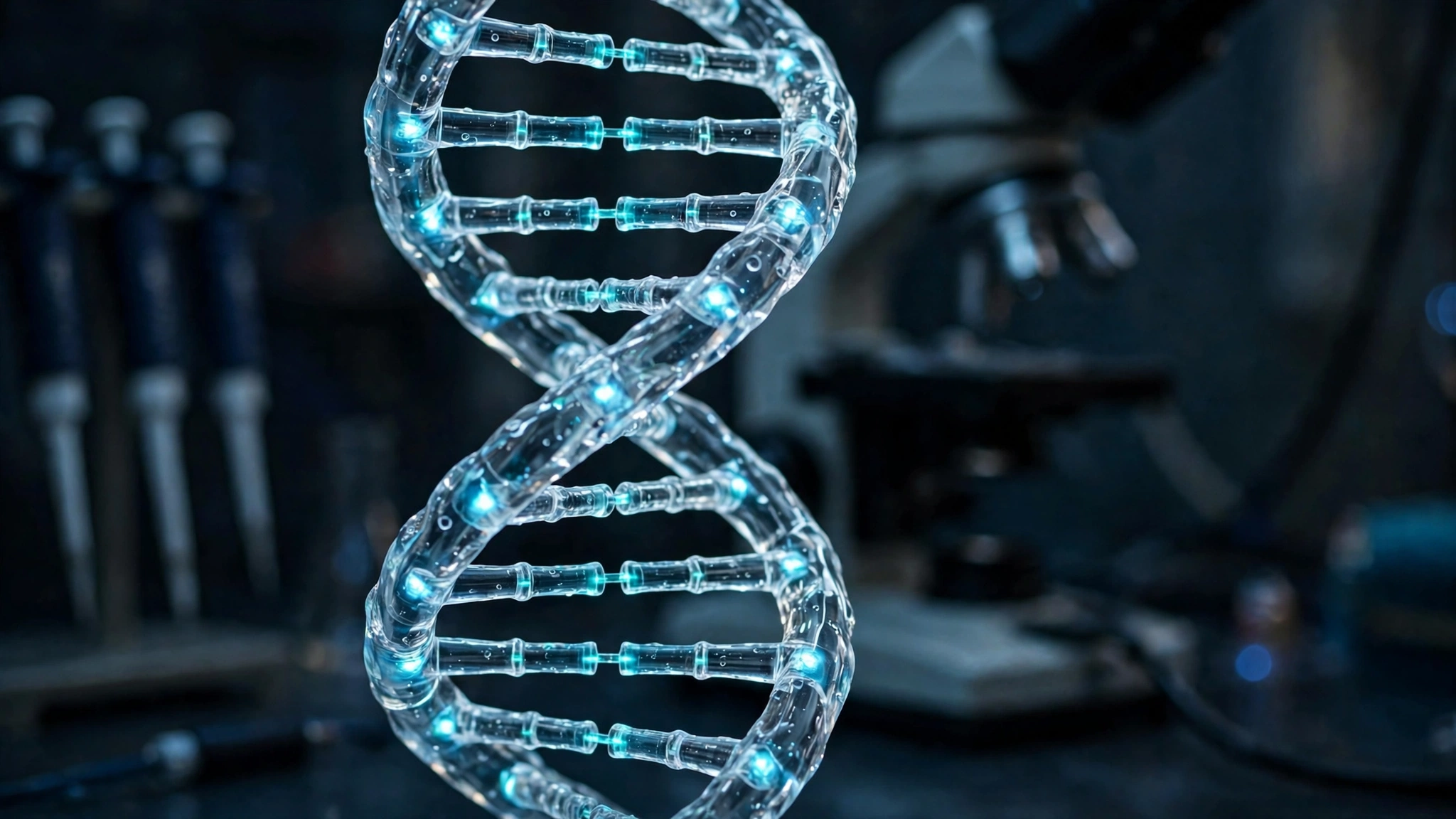
At its simplest, DNA data storage turns digital files into biology. A normal computer file is a long string of ones and zeros. In DNA storage, those bits are translated into the four chemical letters of DNA: A, C, G, and T. A short piece of software maps pairs of bits to DNA letters, so a file becomes a long sequence of genetic code.
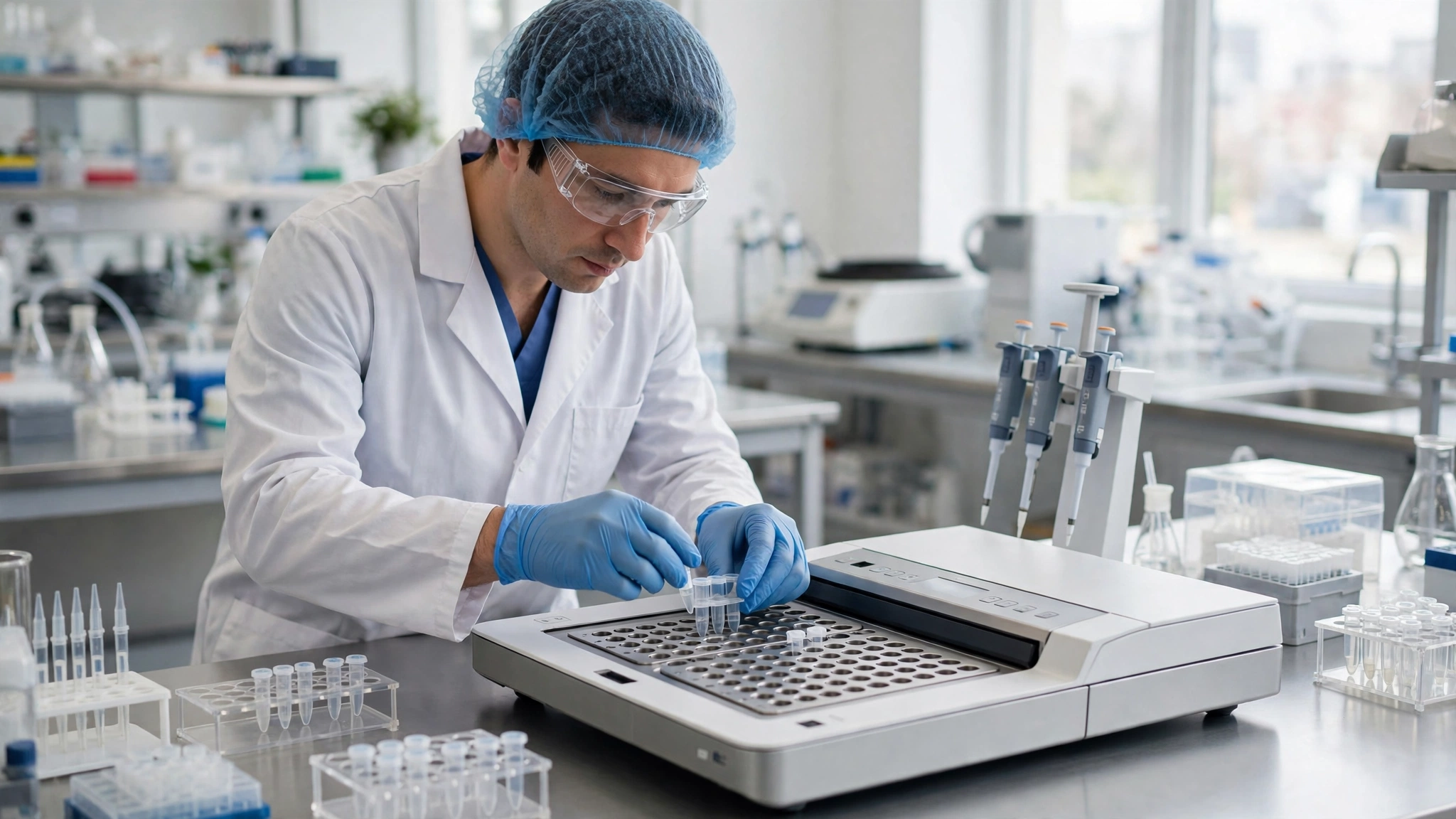
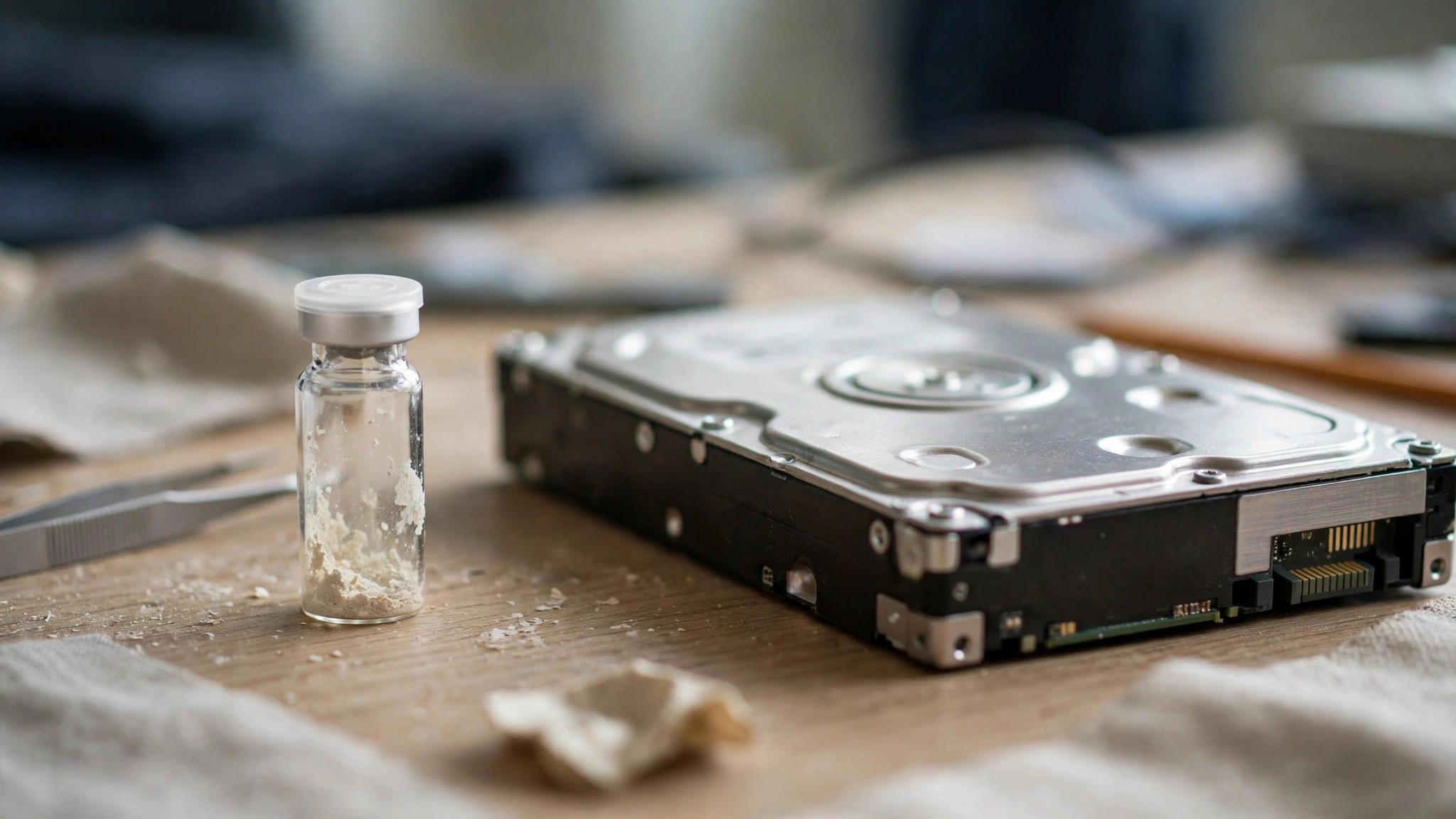
That sequence does not exist in nature. It is built from scratch by a DNA synthesizer, a machine that assembles short strands of synthetic DNA letter by letter. The finished strands are dried and stored in a tiny tube or capsule. Nothing needs power, cooling fans, or spinning disks while the data sits there. To read the file back, a sequencing machine reads the letters of the stored strands, and software translates them back into ones and zeros.
Writing Data Into DNA
Writing is the slow and expensive part of the process. DNA synthesizers build strands one letter at a time through a series of chemical steps, and a single file may need thousands of separate strands. Each strand carries a short address tag, similar to a page number, so the reading software knows the order the pieces belong in.
Copies matter, too. Researchers usually make many copies of every strand, because a few will contain small errors. Error-correction code, much like the kind used on a scratched DVD, lets the software rebuild the original file even when some strands are damaged or misread. The redundancy takes up space, but DNA is so dense that the extra copies barely matter.
Reading It Back Again
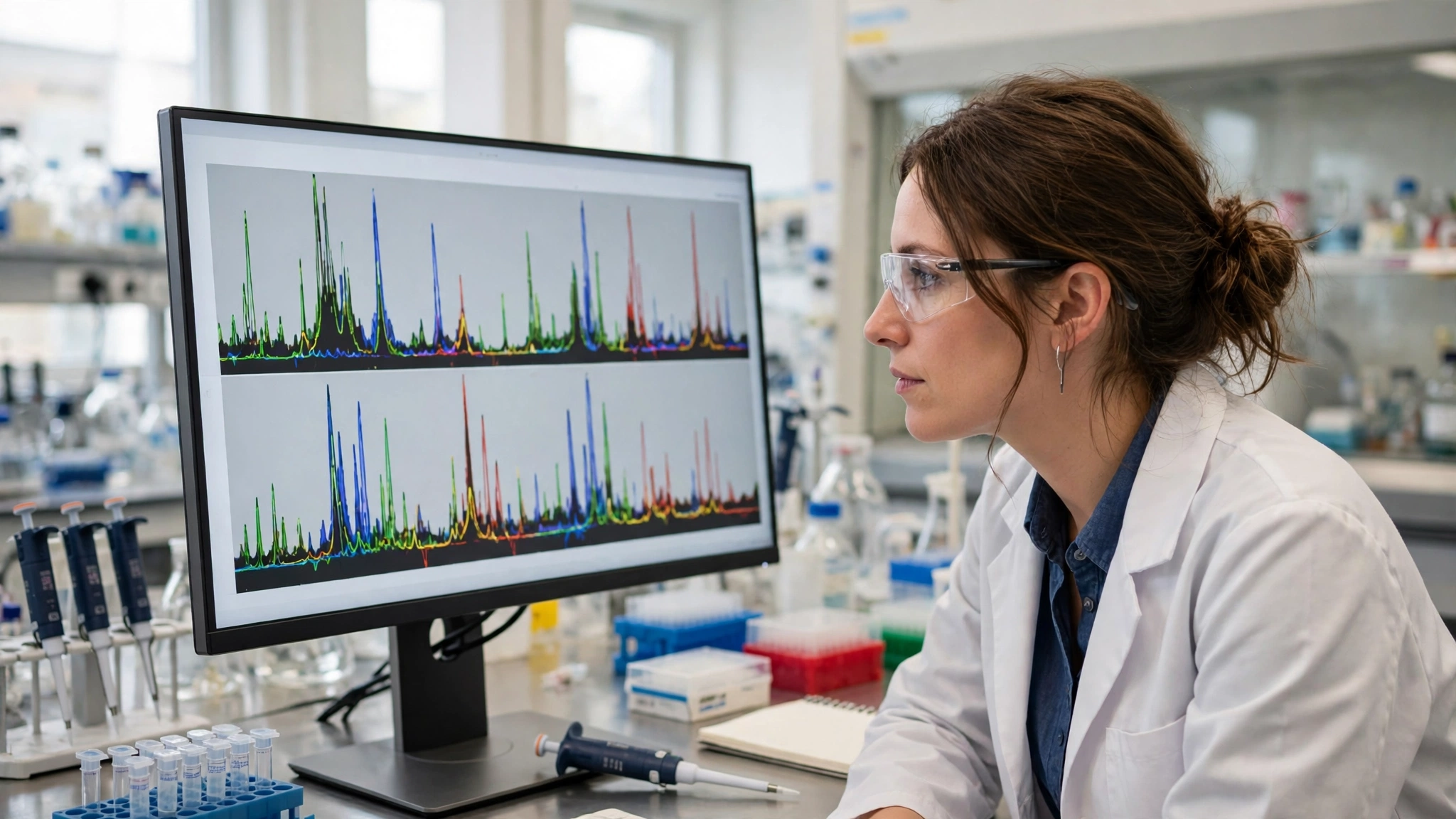
Reading starts with sequencing, the same technology used to read genomes in medical labs. A sequencing machine reads millions of short DNA strands in parallel and reports their letters. Software then sorts the strands by their address tags, corrects errors, and reassembles the original file.
Finding one file among many works differently than on a hard drive. Researchers attach a unique short sequence, sometimes called a primer, to each file. A chemical reaction called PCR can then copy only the strands carrying that file’s primer, pulling one file out of a mixed pool. The process works, but it takes hours rather than the milliseconds a hard drive needs.
Why DNA Attracts So Much Attention
Density is the headline advantage. In a widely reported 2017 study, researchers encoded 215 petabytes of data into a single gram of DNA, including an operating system, a movie, and a scientific paper. That figure came from a laboratory demonstration, not a commercial product, yet it shows the scale of what is possible. A shoebox of DNA could, in principle, hold the contents of a large data center.
Durability is the second draw. DNA recovered from fossils and ancient bones has survived for thousands of years under the right conditions. Stored dry, cool, and dark, synthetic DNA should keep data readable for centuries without any maintenance. Hard drives typically last a few years before they need replacing, and magnetic tape needs careful climate control and regular migration to new formats.
A third advantage is that DNA needs no electricity while it stores data. A data center spends much of its energy keeping disks spinning and rooms cool. A tube of dried DNA sits quietly on a shelf. For archives that are written once and rarely read, that difference matters.
There is also a quiet advantage in format stability. File formats and storage hardware change every decade, forcing archives to copy everything to new media on a regular schedule. DNA itself does not become obsolete in the same way: the molecule is the same one nature has used for billions of years, and reading it depends on sequencing, a technology that keeps improving rather than disappearing. The risk shifts from the storage medium to keeping the decoding software and the address system usable, which is a smaller and more manageable problem.
Where DNA Storage Stands in 2024
For all its promise, DNA data storage is still a laboratory technology in 2024. The main barrier is cost. Writing DNA remains expensive because synthesis is a slow chemical process, and reading it requires sequencing machines and skilled staff. Estimates vary, but storing a single megabyte still costs far more than writing the same data to a hard drive or tape.
A small group of companies is working to close that gap. Twist Bioscience builds high-throughput DNA synthesis equipment, Catalog is developing archival storage systems built around DNA, and Microsoft has run research projects on storing data in DNA for long-term archives. The DNA Data Storage Alliance, an industry group formed in 2020, brings companies and research labs together to work on shared standards, so that data written by one system can be read by another.
The realistic near-term use case is cold archival storage: material that must be kept for decades but is almost never read. National archives, scientific data sets, and cultural heritage collections fit that pattern. Genomics research itself is a good example of the problem, since a single project can generate terabytes of sequence data that must be preserved — a challenge discussed in our look at AI-powered scientific discovery. Everyday files, streaming video, and anything that needs quick access will stay on disks and flash memory for a long time to come.
Progress is steady rather than sudden. Each year brings faster synthesis, cheaper sequencing, and larger demonstrations, and each improvement lowers the cost of storing a megabyte. Researchers are also working on random access — reading one file without reading the whole archive — and on automation that would let a DNA archive run with far less hands-on work. None of this makes DNA storage a consumer product yet, but it is moving from pure research toward the first practical systems, much like the early days of other storage technologies that started in labs before reaching the market.
DNA Storage vs Hard Drives and Tape
The table below compares the three options on the points that matter most to anyone deciding where data should live.
| Feature | DNA Storage | Hard Drive | Magnetic Tape |
|---|---|---|---|
| Storage density | Extremely high — petabytes per gram in lab demonstrations | Moderate — terabytes per drive | High — hundreds of terabytes per cartridge |
| Durability | Centuries when stored dry and cool | A few years of regular use | Decades with careful climate control |
| Read speed | Hours to retrieve a file | Milliseconds | Minutes to load and seek |
| Write cost (2024) | Very high | Low | Low |
| Power while stored | None | Needed to stay online | None when shelved |
| Best use | Long-term archives | Everyday storage | Backup and archives |
The comparison makes the trade-off clear. DNA wins on density and durability and loses badly on speed and cost. That is why researchers describe it as a future archival medium rather than a replacement for the drive in your laptop.
Practical Tips / Examples / Things to Know
- Think archive, not everyday storage. DNA storage makes sense for data you need to keep for decades and read rarely, such as historical records, scientific data, or family archives meant to outlast a lifetime.
- Follow the cost of synthesis. The price of writing DNA is the number that decides when this technology becomes practical. Each improvement in synthesis speed and cost brings archival DNA storage closer to real use.
- Watch the standards work. Shared formats and error-correction methods matter more than any single company, because data stored for a century must be readable by systems that do not exist yet.
- Look for hybrid systems. The most likely future is a mix: fast disks for active data, tape for backups, and DNA for the small share of material that must survive the longest.
- Remember that reading is destructive in small ways. Each read consumes a little of the stored material, so archives keep many copies and read from a copy rather than the original.
- Keep expectations grounded. A working demonstration in a lab is not the same as a product you can buy, and the gap between the two is often measured in years.
Common Mistakes / Considerations / What to Avoid
- Assuming DNA storage will replace hard drives soon. The cost and speed gap is far too wide. DNA is a candidate for one specific job — long-term archiving — not a general replacement.
- Confusing storage DNA with living DNA. The DNA used for storage is synthetic and does not come from a living organism. It carries no genes and cannot create life.
- Ignoring the reading problem. Writing data into DNA is only half the job. If the sequencing technology or the file format becomes unavailable, the data is trapped, so long-term planning has to cover reading as well as writing.
- Treating lab figures as product specs. A density record achieved once in a research lab does not describe what a commercial system will deliver. Real systems add overhead for addressing, error correction, and packaging.
- Overlooking security and handling. DNA samples need careful labeling and storage. A mislabeled tube in a large archive is as useless as a mislabeled tape, so cataloging matters as much as chemistry.
- Forgetting that the field is young. Standards, suppliers, and best practices are still forming, and early adopters should expect change.
Final Thoughts
DNA data storage is one of those ideas that sounds impossible until you look at the numbers. A molecule that nature has used for billions of years can hold more information in a gram than a room full of hard drives, and it can keep that information for far longer than any disk. The obstacles are real — writing is slow, reading is slower, and both are expensive — but they are engineering problems, not mysteries.
The sensible way to watch this field is to track the cost of synthesis and the first real archival deployments. If those two curves keep moving in the right direction, the first commercial DNA archives could appear within the decade, holding the records we most want to keep. Your laptop will still have a solid-state drive. The archive that preserves the century’s research, records, and culture may well be written in DNA.