
What Is Swarm Robotics and Why Are Researchers Exploring It?
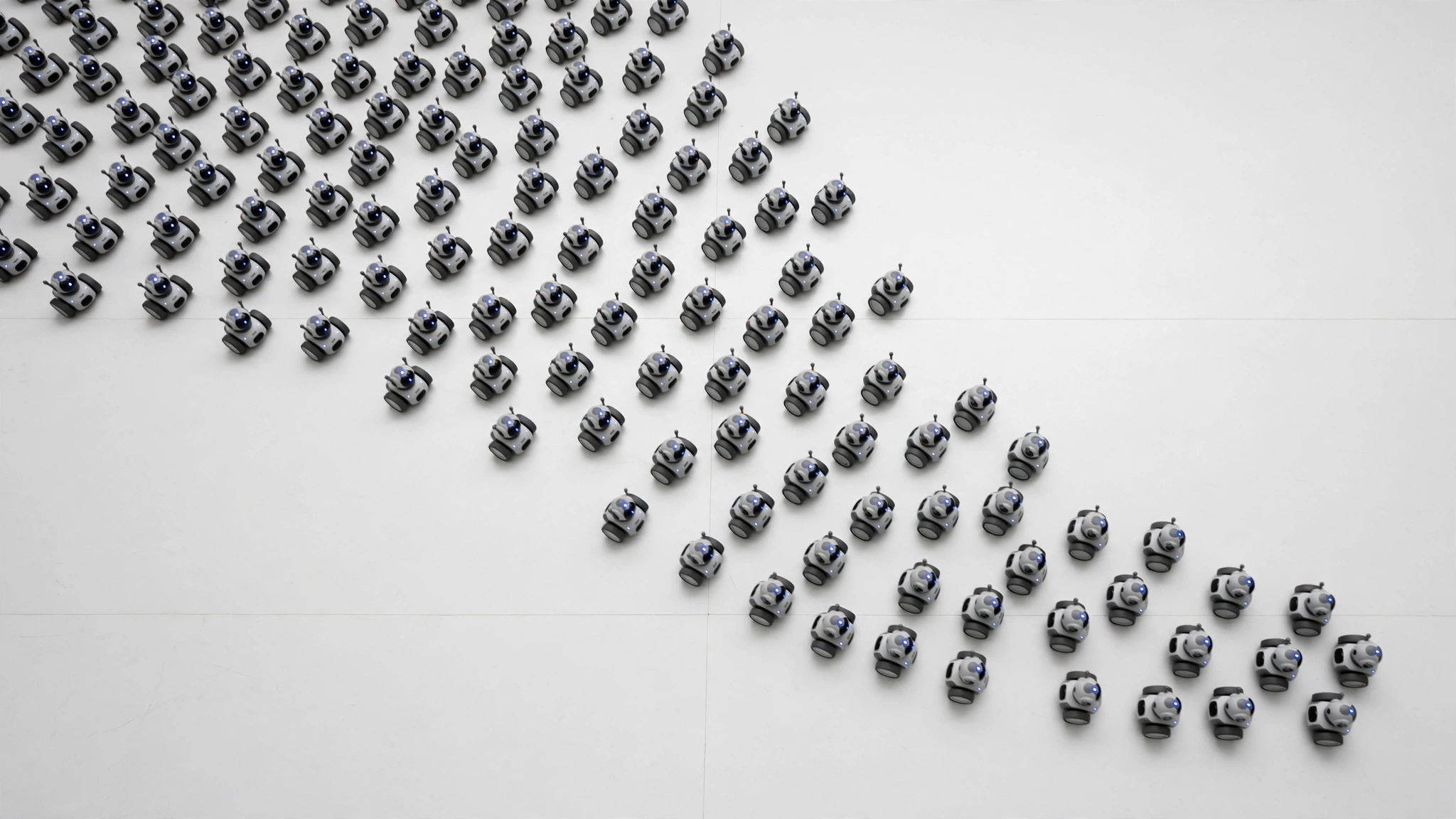
A single robot can only do so much. It has one set of sensors, one gripper, and one place it can be at a time. Swarm robotics takes the opposite approach: instead of building one complex machine, researchers build many simple robots that work together. No single robot is in charge, and no single robot understands the whole task. The group solves problems through simple local rules, much like a flock of birds or a colony of ants.
The idea has moved from biology textbooks into working demonstrations — warehouse fleets, drone displays, and research labs where hundreds of small robots cooperate. This article explains how swarm robotics works, why researchers are excited about it, where it is used in 2024, and what still stands in the way.
How a Swarm Works Without a Leader
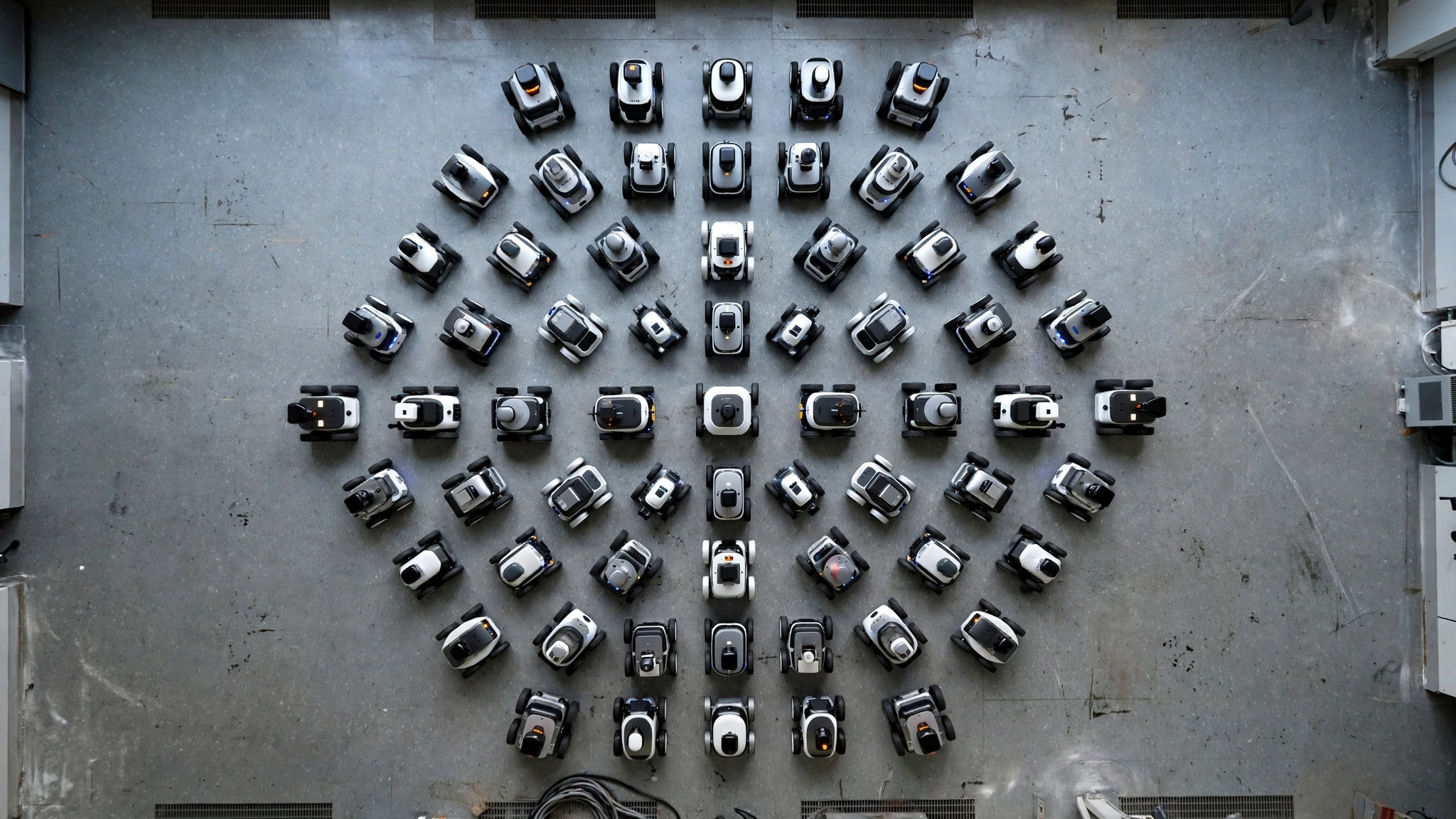
The central idea of swarm robotics is decentralisation. Each robot follows a small set of rules based on what it can sense nearby: stay close to neighbours, avoid collisions, move toward a target, follow a scent or signal. No robot holds a map of the whole task, and no central computer tells each one what to do. The useful behaviour — forming a shape, covering an area, carrying an object together — emerges from many small decisions.
This is directly borrowed from nature. Ants find the shortest path to food without any ant knowing the route: each ant leaves a chemical trail, and the trails that lead to food get stronger as more ants use them. Bees choose a new nest site through a kind of vote, with scouts dancing to advertise their preferred location. Swarm robotics copies these tricks in software, using radio signals, light, or simple sensors in place of chemicals and dances.
Simple Rules, Complex Results
The power of the approach is that simple rules can produce surprisingly capable behaviour. Give each robot the rule “move toward the average position of your neighbours while keeping a minimum distance,” and the group will form a loose, moving cluster that stays together without a leader. Add “move toward light” and the cluster will migrate. Add a rule for picking up and dropping objects, and the swarm can sort items into piles without anyone planning the layout.
Researchers test these rules first in simulation, where thousands of virtual robots can be run cheaply, then move to real hardware. The jump from simulation to reality is where many swarm ideas are tested hardest, because real robots have noisy sensors, weak radios, and batteries that run down — all things a simulation can gloss over.
Communication Between Robots
A swarm needs some way for robots to share information. The simplest method is indirect: robots change the environment and other robots react to the change, the way ants use scent trails. A robot might leave a marker, drop a token, or simply move, and its neighbours respond to what they see.
Direct communication uses short-range radio or infrared signals. Each robot broadcasts its position or state to nearby robots, and the group builds a picture of itself from these local messages. The range is deliberately short: if every robot talked to every other robot, the network would collapse under its own traffic. Local communication keeps the system scalable — adding more robots does not overload a central link, because there is no central link.
Why Researchers Are Exploring Swarms
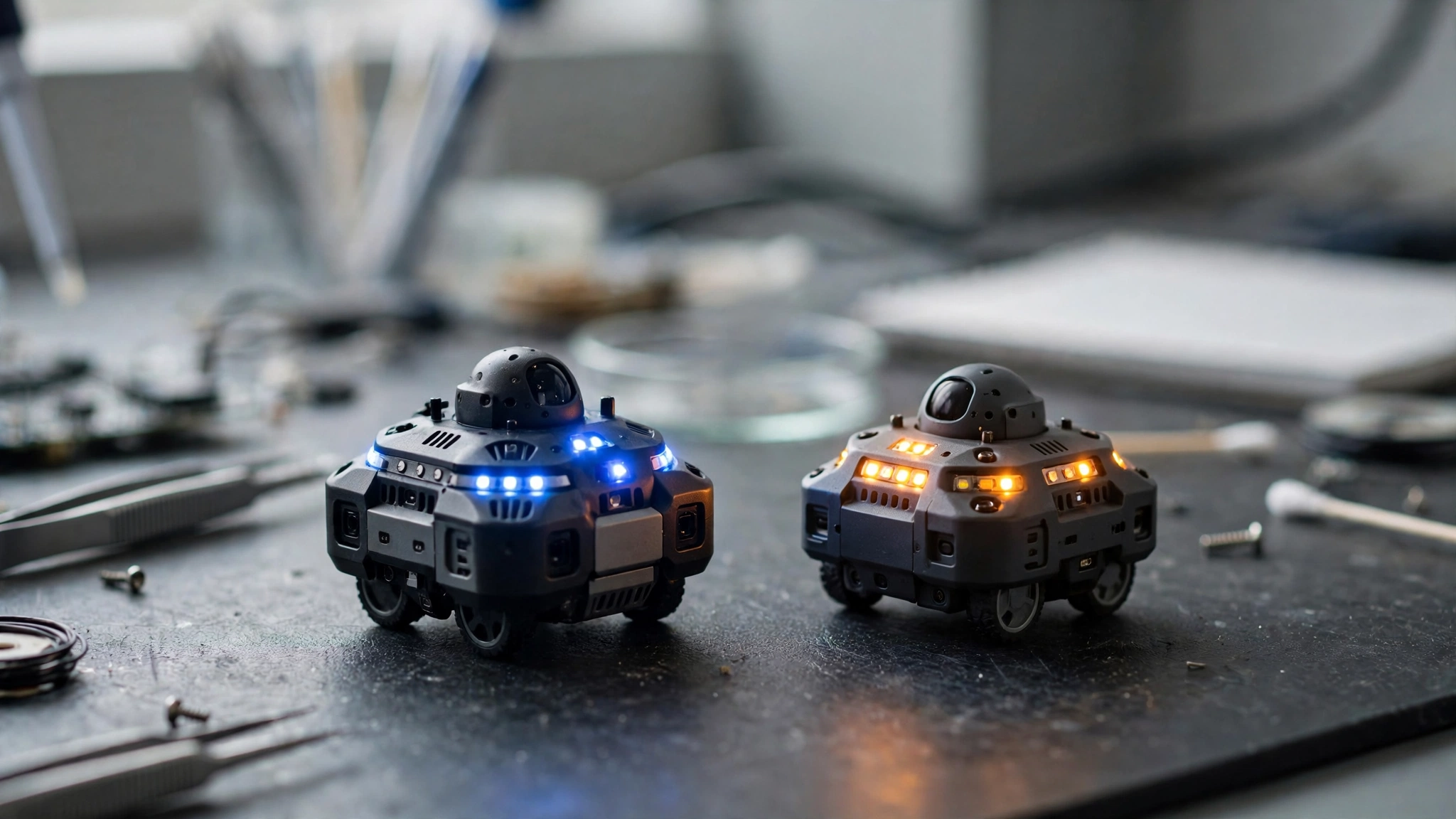
Robustness is the first reason. If one robot in a swarm fails, the rest carry on. The task may slow down, but it does not stop. Compare that with a single large robot, where one broken motor can end the mission. For jobs in dangerous or remote places — a disaster zone, a deep ocean survey, a damaged building — that resilience matters.
Scalability is the second. A swarm can grow by adding more cheap robots rather than building a bigger, more expensive machine. Need a larger area searched? Add robots. Need a heavier object moved? Add robots. The cost per robot stays low because each one is simple, with basic sensors and a small processor.
Flexibility is the third. The same swarm can be given different rules for different jobs: search one day, map an area the next, monitor a crop field after that. The hardware stays the same; the behaviour changes in software. This adaptability is one reason swarm ideas show up in so many fields, from farming to space exploration.
Where Swarm Robotics Is Used in 2024
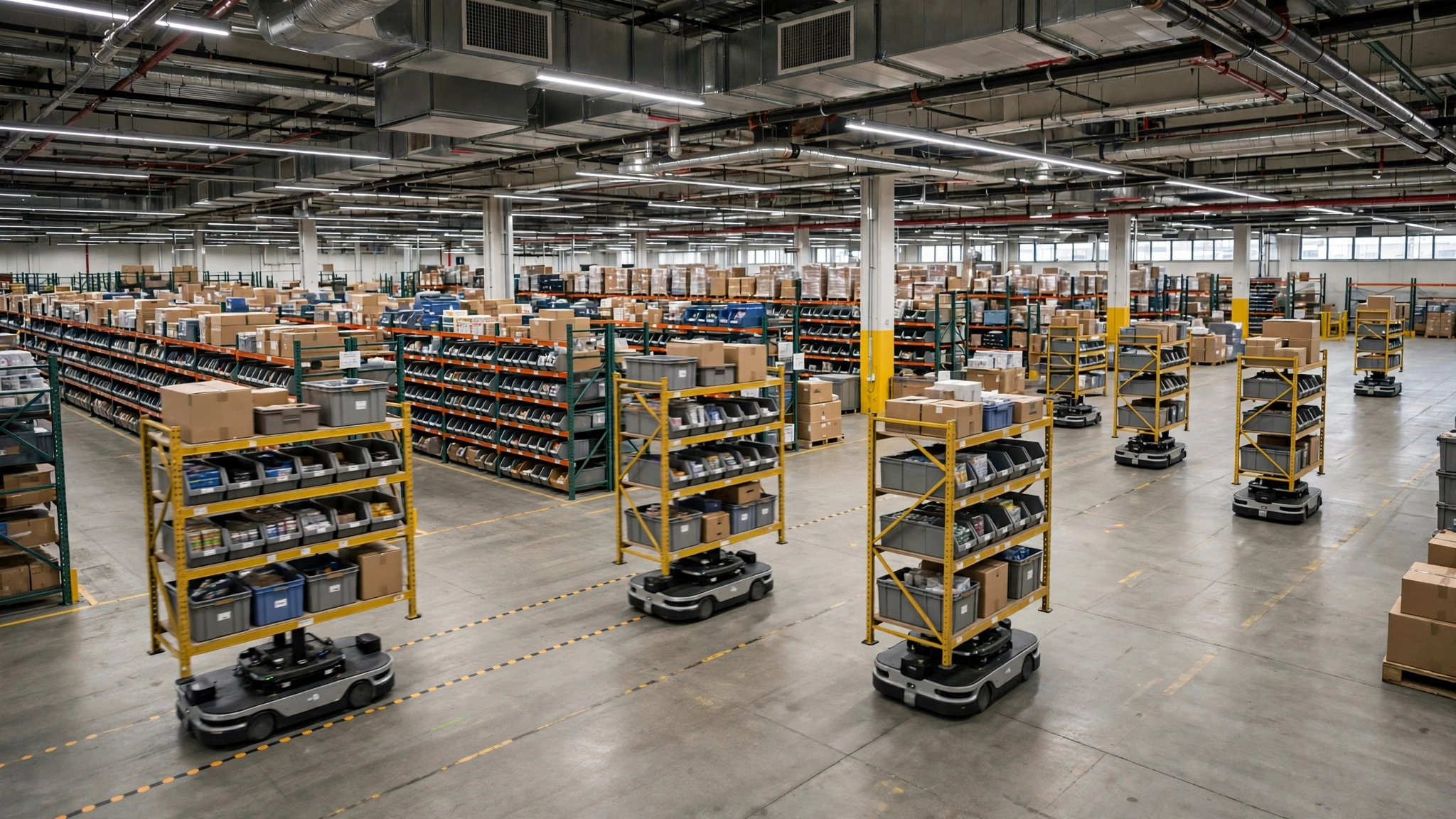
Warehouses are the closest thing to a working swarm in everyday use. Fleets of mobile robots move shelves and parcels through fulfilment centres, coordinating their routes so they do not collide and so the busiest paths stay clear. Each robot follows local rules and a shared map, and the fleet as a whole behaves like a swarm even though a central system assigns individual tasks.
Drone light shows are the most visible demonstration. Hundreds of small drones fly in formation, changing shape and colour in the sky above a stadium or a city celebration. Each drone knows its position relative to its neighbours and follows a pre-planned path, with enough local adjustment to stay safe if the wind shifts. The same coordination ideas are being tested for search and rescue, where a group of drones could cover a large area far faster than one aircraft.
Research labs are where the more ambitious ideas are tested. Harvard’s Kilobots — small, cheap robots that communicate with infrared light — have been used to demonstrate self-assembly, where a thousand robots arrange themselves into shapes without central control. Other labs test underwater swarms for monitoring reefs and pipelines, and agricultural swarms where small robots weed, inspect, and map fields together, sharing what each one finds.
Space agencies have studied swarm concepts for exploring planets and asteroids. A group of small rovers could spread out to map terrain, with each one reporting back, and the loss of one rover would not end the mission. These ideas remain mostly on paper and in simulation, but they show why the field attracts funding: a swarm is the natural way to explore a place where help is far away.
What Still Limits Swarm Robotics
Coordination is the hardest problem. Simple rules work well for simple tasks, but complex jobs need more sophisticated coordination, and that is where swarms struggle. Getting hundreds of robots to cooperate on a task with many steps — find, pick up, carry, assemble — requires communication and planning that simple local rules cannot provide.
Hardware limits matter too. Small, cheap robots have weak sensors, short battery life, and limited processing power. They cannot see far, cannot carry much, and cannot run complex software. Making each robot more capable raises the cost, which undermines the main advantage of the swarm approach.
Then there is the human factor. A swarm is harder to predict and harder to debug than a single robot. When something goes wrong, it is not always clear which robot, or which rule, caused the problem. Operators need new tools to watch a swarm’s behaviour and to intervene when it drifts off task. Safety certification is also more complex, because the behaviour of the group is not written down in one place — it emerges from interactions, which makes it harder to prove safe. These are not reasons to dismiss the approach, but they explain why the most reliable swarm deployments so far are the ones with clear boundaries, such as a warehouse floor or a fenced test field, rather than open and unpredictable places.

Practical Tips / Examples / Things to Know
- Think in rules, not in plans. Swarm behaviour comes from simple local rules. Design the rules carefully and test them in simulation before building hardware.
- Start small and scale up. A swarm of ten robots that works reliably teaches more than a swarm of a thousand that fails. Scale once the rules are proven.
- Test in the real environment early. Simulations hide sensor noise, radio dropouts, and battery limits. Real robots reveal them quickly, so test with hardware as soon as possible.
- Plan for failures. Individual robots will fail. Design the task so the swarm degrades gracefully rather than stopping when one robot drops out.
- Keep communication local. Short-range messages between neighbours scale better than a central hub. Design the system so that adding robots does not overload the network.
- Watch the group, not just the robots. Monitoring a swarm means watching patterns — coverage, spacing, progress — rather than tracking each robot individually.

Common Mistakes / Considerations / What to Avoid
- Assuming more robots always helps. Beyond a point, extra robots add congestion, communication traffic, and collisions. There is an optimal size for each task.
- Copying nature too literally. Ant and bee behaviours inspire swarm design, but robots are not insects. Rules that work for ants may fail on robots with different sensors and speeds.
- Ignoring battery life. A swarm of robots that all run down at the same time is a swarm that stops together. Stagger charging or rotate robots through the task.
- Underestimating the debugging problem. When a swarm misbehaves, finding the cause is hard. Build in logging and visualisation from the start, not as an afterthought.
- Overpromising autonomy. Most working swarms still need human supervision, task assignment, and safety limits. Full autonomy is a research goal, not a product feature in 2024.
- Forgetting the environment. Wind, water, dust, and uneven ground affect small robots far more than large ones. A swarm designed for a clean lab floor may fail outdoors.
Final Thoughts
Swarm robotics is a reminder that intelligence does not have to live in one place. A group of simple robots, each following a few rules, can search an area, move an object, or form a shape that no single robot could manage alone. The field is still young, and the gap between a laboratory demonstration and a reliable product is wide — but the warehouse fleets and drone shows of 2024 show that the core idea already works at scale.
The most interesting question is not whether swarms will replace single robots, but where they will complement them. The likely future is a mix: capable individual robots for precise work, as described in our guide to collaborative robots, and swarms for jobs that need coverage, redundancy, and numbers. Watch the research labs, and watch the warehouses. That is where the next step will appear first.