
Mother-in-Law Shows Up Unannounced for the Second Time, Bangs on Apartment Door for an Hour, and Even Gets Police Involved
A young couple is dealing with a stressful family situation after the husband’s mother showed up at their apartment without warning for the second time, despite being clearly told not to do so.
What started as an unwanted visit quickly turned into a frightening situation. The mother-in-law reportedly spent nearly an hour banging aggressively on the front and back doors, shouting that she knew someone was inside. She even asked her 9-year-old son to bang on the door and tried to open it with a card.
The couple chose not to answer. The woman was already exhausted after spending the night caring for her grandmother, who has Stage IV colon cancer. They also wanted to protect her grandmother from possible COVID-19 exposure.
Things became even more uncomfortable when the mother-in-law contacted the police, claiming something might be wrong. Officers arrived at the apartment and tried to get the couple to respond.
Although the situation eventually ended when the boyfriend showed his face through a window, the mother-in-law later sent messages pretending to be worried. The incident has left the couple questioning how to deal with her controlling behavior, repeated unwanted visits, and demands for access to their bank accounts.


The couple had been together for eight years and finally moved into their first apartment together in January 2020. It was a big step toward building an independent life.
However, the move did not go down well with the boyfriend’s mother.
According to the woman, her mother-in-law was unhappy about them moving out because she enjoyed having access to extra money. She also described her as controlling and manipulative, often acting innocent when her behavior caused problems.
The couple had already told her not to show up at their apartment without warning. Sadly, that boundary was ignored again.
An Unexpected Visit After a Sleepless Night
The morning of the incident was already difficult for the young woman.
Her grandmother had Stage IV colon cancer, and she was her grandmother’s sole caretaker. After staying awake all night to look after her, she finally went to bed around 8 a.m., hoping to get some much-needed rest.
But that rest did not last long.
At around 8:45 a.m., she woke up to someone violently banging on the front door. It was her mother-in-law, shouting that she knew someone was inside.
Things quickly got worse.
The mother-in-law reportedly brought her 9-year-old son into the situation, having him bang on the door as well. She even tried to open the door using a card.
For the couple, this was not just an annoying surprise visit. It was another clear violation of a boundary they had already discussed.
The Couple Refuses to Open the Door
Rather than answering, the couple decided to stay quiet.
They knew the mother-in-law was aware that unannounced visits were not welcome. They also did not want to reward the behavior by opening the door after she had ignored their wishes.
There was another serious concern.
The young woman was caring for a grandmother with advanced cancer, and the household wanted to avoid unnecessary COVID-19 exposure. An unexpected visitor was the last thing they needed during an already stressful time.
But the mother-in-law did not seem ready to leave.
She moved to the back door and started banging on it just as aggressively. After that, she reportedly went to a neighbor’s door and continued trying to get attention.
What should have been a simple visit that ended when nobody answered had now become a much bigger scene.
Police Arrive After the Mother-in-Law Raises Concerns
A little later, police officers appeared outside the apartment.
They started knocking, apparently after the mother-in-law told them that something might be wrong with the couple.
The couple did not want to come outside or get involved in a confrontation. The boyfriend believed his mother was using the situation to get a reaction from them.
The woman eventually called the police station herself to explain what was happening.
She told the officer that the mother-in-law had been banging on the doors for a long time, that unexpected visits were a recurring problem, and that everything was fine inside the apartment.
She also explained that the mother-in-law might have been looking for money, which she described as a familiar issue.
However, the officer reportedly asked whether they were anti-police and suggested that they show their faces through a window because the mother-in-law had said they were not okay.
The boyfriend was initially uncomfortable with this request. He did not want to give his mother another reason to continue the confrontation.
Eventually, though, he showed his face through the window.
As soon as the officers saw him, they reportedly walked away. The mother-in-law then left the property in tears.
The whole situation had finally come to an end, but the problems between the family members were far from over.
The Mother-in-Law Acts Concerned After the Incident
After leaving, the mother-in-law began sending messages to the young woman.
Her messages appeared to show concern, as if she had only been trying to make sure everyone was safe.
However, this was difficult for the couple to accept after what had happened at the door.
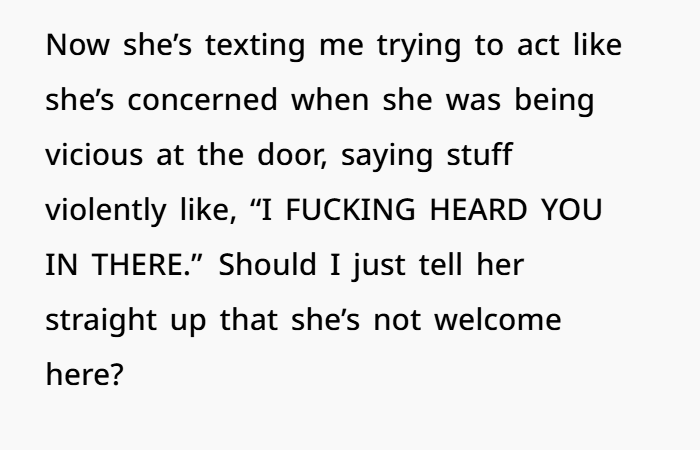
According to the woman, the mother-in-law had been shouting aggressively, including saying, “I FUCKING HEARD YOU IN THERE.”
The sudden change in attitude left the woman frustrated. From her point of view, the behavior at the door did not match the concerned messages that followed.
She felt that the mother-in-law was trying to make herself look innocent after creating a frightening and uncomfortable situation.
Demands for Bank Account Access Raise More Concerns
The unwanted visit was not the only reason the woman had problems with her mother-in-law.
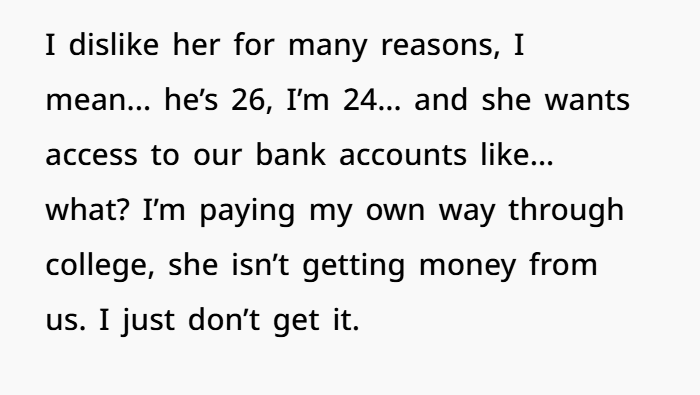
The boyfriend was 26, and his partner was 24. Both were adults trying to build their own lives, but his mother still appeared to want a level of control over their personal and financial decisions.
One issue that particularly bothered the woman was her mother-in-law’s desire to have access to their bank accounts.
She could not understand why someone outside their household needed access to their private finances.
The young woman was also paying her own way through college and did not want her money going to someone who had no right to control it.
For her, this was another example of the mother-in-law failing to respect their independence.
After the second unexpected visit, the woman began wondering if it was time to be completely direct and tell her mother-in-law that she was no longer welcome at their apartment.
A Closer Look: Why This Situation Raises Concerns
This story is about more than an uncomfortable family visit. It touches on personal boundaries, financial privacy, caregiving stress, and the challenges couples can face when a parent struggles to accept their adult children’s independence.
1. Repeatedly ignoring personal boundaries
The couple had already explained that unexpected visits were not acceptable. Showing up again, repeatedly banging on both doors, and trying to get inside made the situation much more serious.
Healthy family relationships require respect for personal space. Living separately means the couple gets to decide who visits their home and when.
2. The pressure of being a full-time caregiver
The woman was already dealing with the emotional and physical demands of caring for a grandmother with advanced cancer.
According to the National Institute on Aging, family caregiving can lead to exhaustion, sleep problems, anxiety, and emotional stress. Caregivers also need time to rest and look after their own health.
An aggressive and unexpected confrontation at the door was an added burden during an already difficult period.
3. Financial privacy is a reasonable boundary
The mother-in-law’s reported interest in accessing the couple’s bank accounts raises another important issue: financial independence.
The Consumer Financial Protection Bureau (CFPB) explains that giving someone access to a bank account can allow them to make withdrawals and other transactions, depending on the arrangement.
This is why people should think carefully before sharing account access or adding another person to a joint account.
Being related to someone does not automatically mean that person needs access to their private finances.
4. Police involvement can make family conflicts more stressful
The mother’s decision to contact the police added another layer to an already uncomfortable situation.
Police welfare checks are generally intended to establish whether someone is safe when concerns have been raised. The College of Policing’s guidance on safe and well checks explains the purpose of these checks.
However, police procedures and legal powers depend on the location and circumstances. A family member’s request does not, by itself, explain what officers are legally allowed to do.
In this case, the boyfriend eventually showed that he was safe, and the officers left.
5. The couple’s right to make their own decisions
Moving into a first apartment is a major step toward independence. It also means learning how to manage family relationships while creating a private life together.
Parents may struggle with changes in family roles, but that does not mean adult children must give up their privacy, financial independence, or control over their home.
The situation shows how difficult things can become when one family member refuses to accept those changes.
See the comments to know what people said
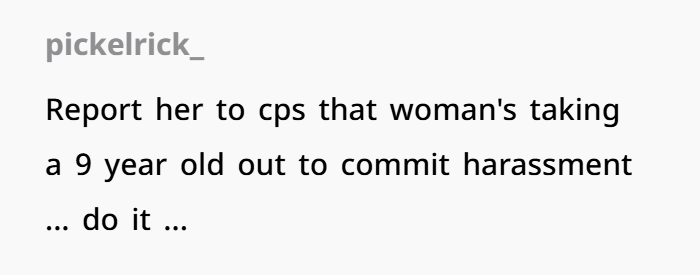
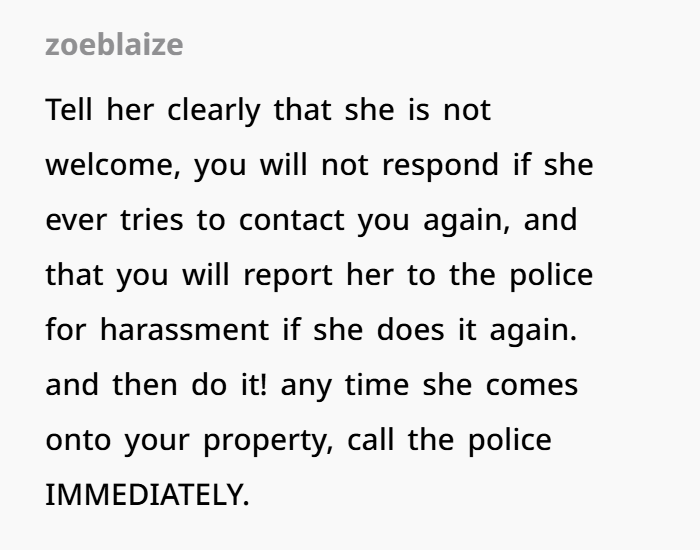

The most troubling part of this story is that the mother-in-law had already been told not to show up without warning, yet the same behavior happened again.
The couple was not asking for anything unreasonable. They wanted privacy, peace, and control over their own home.
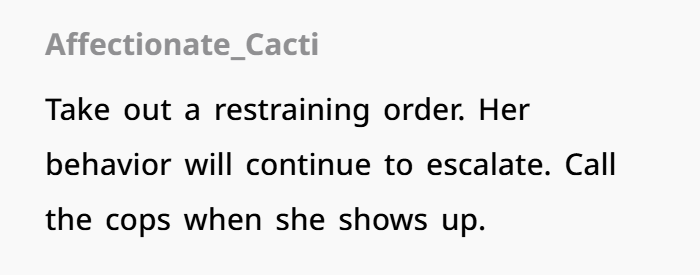
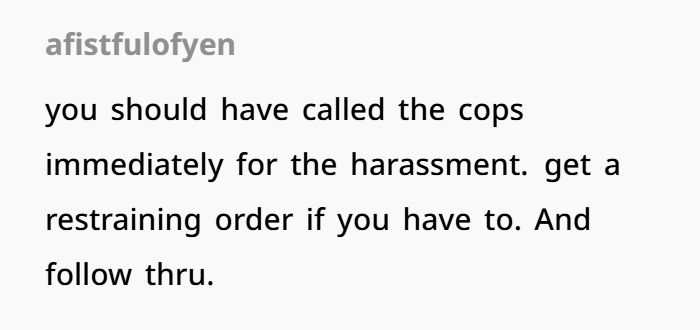
The woman’s question about telling her mother-in-law that she was no longer welcome is understandable. After two unwanted visits and an incident involving aggressive banging, an attempt to open the door, and police involvement, a clear written boundary may be necessary.
The couple also has every reason to keep their bank accounts and personal finances private.
Family relationships can be complicated, but being a parent does not give someone unlimited access to their adult children’s home or money. Respect needs to work both ways.