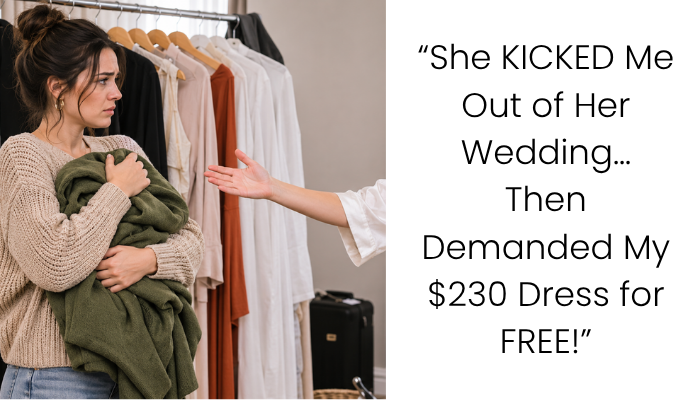
My SIL Kicked Me Out of Her Wedding, Then Demanded My $230 Bridesmaid Dress for Free—AITA?
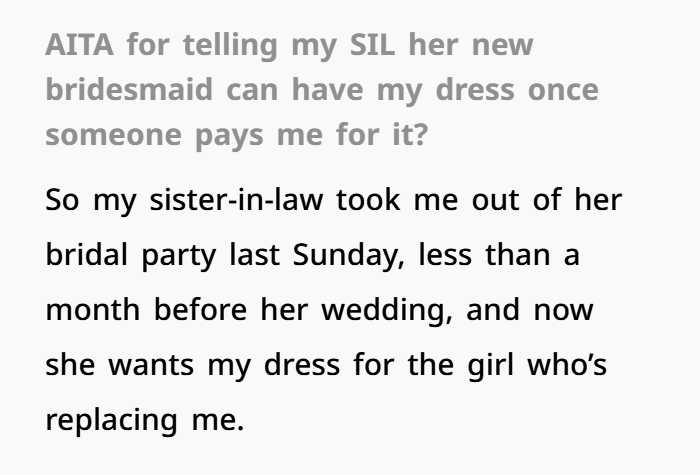
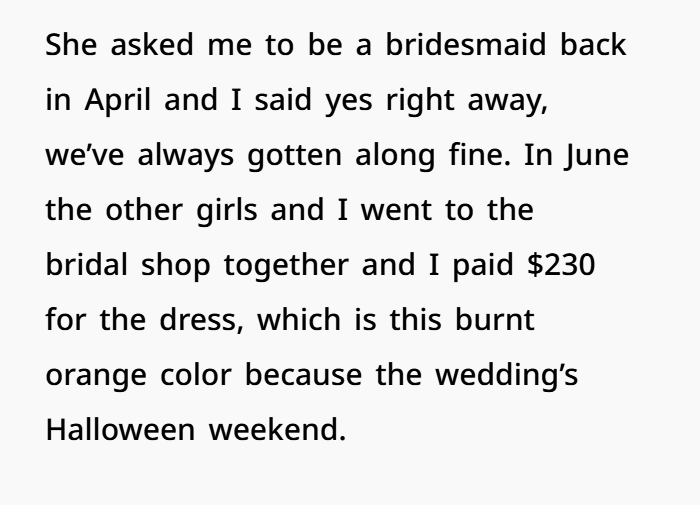
A woman was excited when her sister-in-law asked her to be a bridesmaid at her upcoming wedding. She happily agreed and started getting ready for the big day. In June, she went to a bridal boutique with the other bridesmaids and bought a burnt-orange dress for $230. The bride had chosen the color for her Halloween weekend wedding. The woman paid for the dress herself and attended the fittings to make sure everything looked right. She thought everything was going well until the bride called her less than a month before the wedding with some unexpected news.
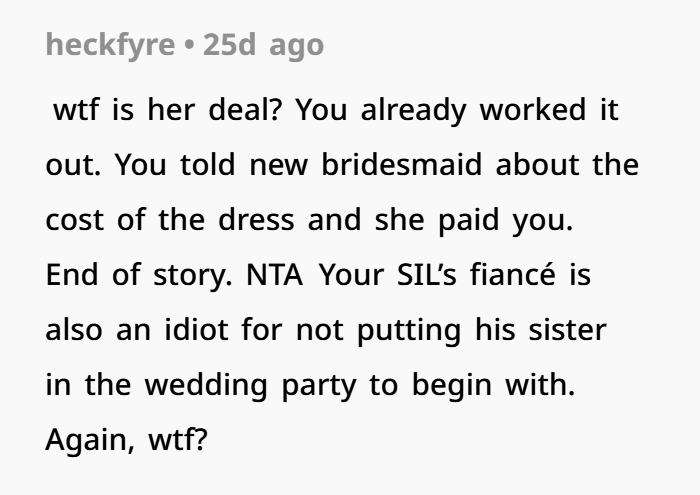
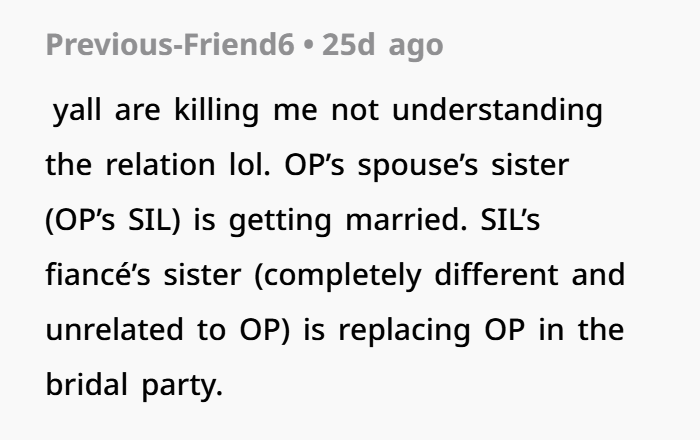
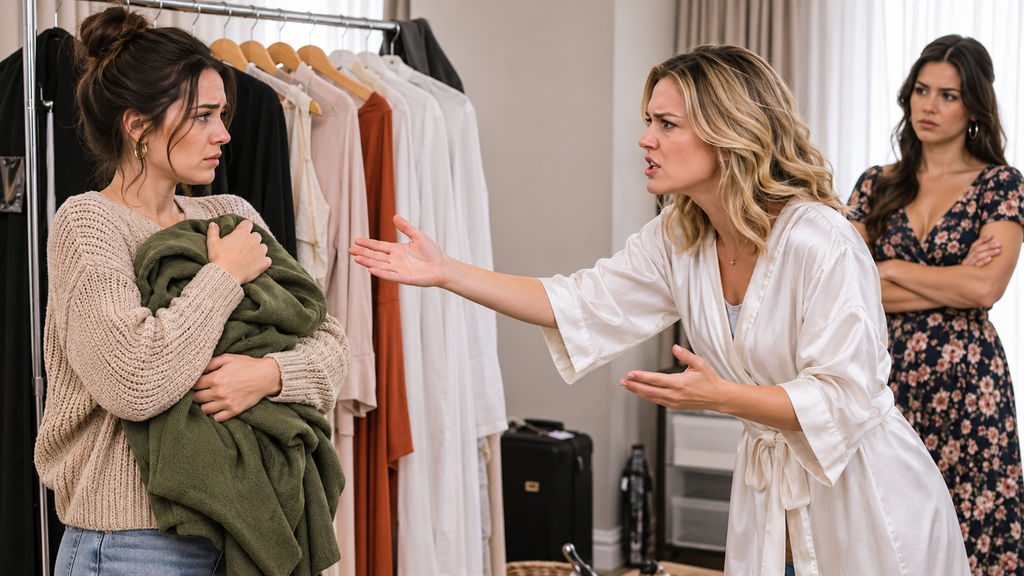
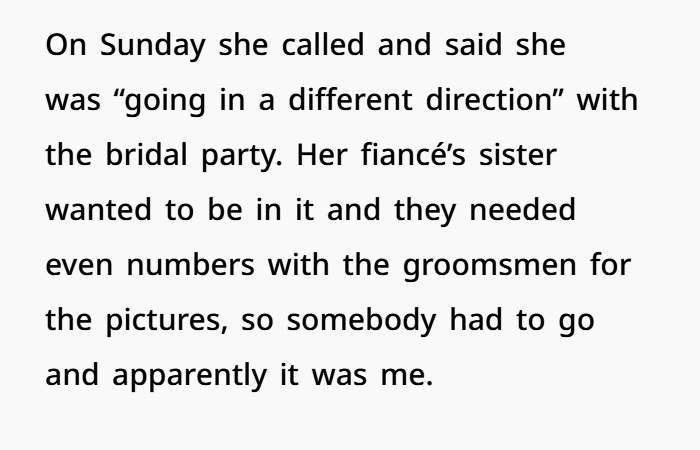
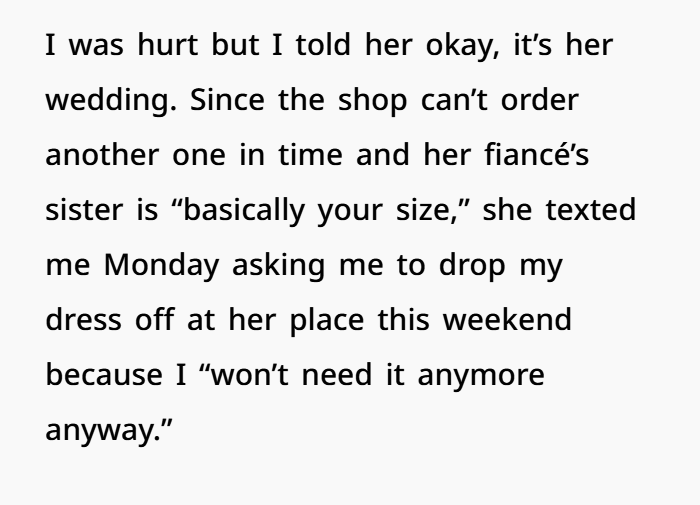
The bride explained that she wanted to make changes to her wedding party. Her fiancé’s sister now wanted to be a bridesmaid, and the couple wanted the same number of bridesmaids and groomsmen for their wedding photos. Because of this, the bride decided to remove her sister-in-law from the bridal party. The woman was hurt but accepted the decision without arguing. However, the next day, the bride asked her to give the $230 dress to the new bridesmaid. She said there was not enough time to order another dress and that the two women were about the same size. The bride also felt the woman no longer needed the dress.
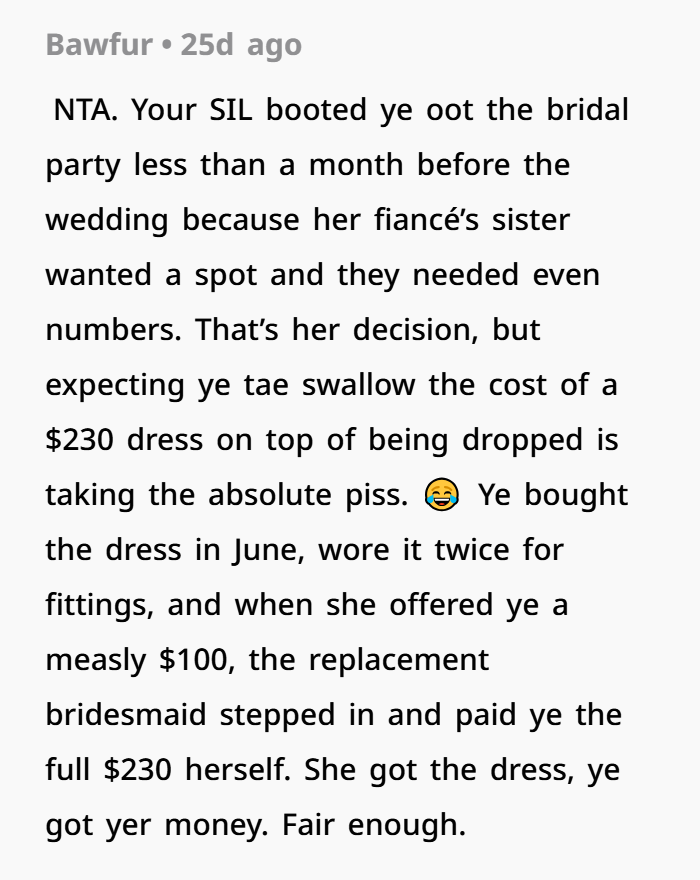
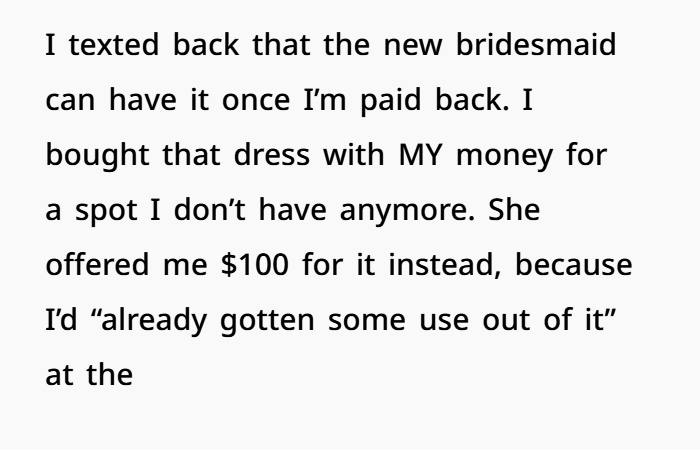
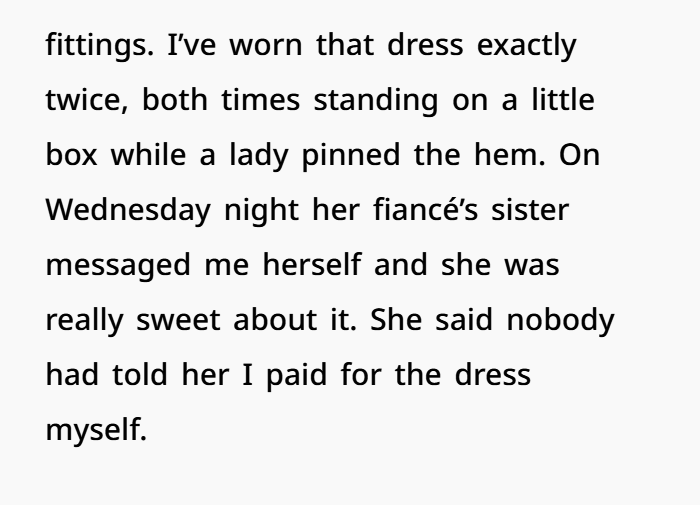
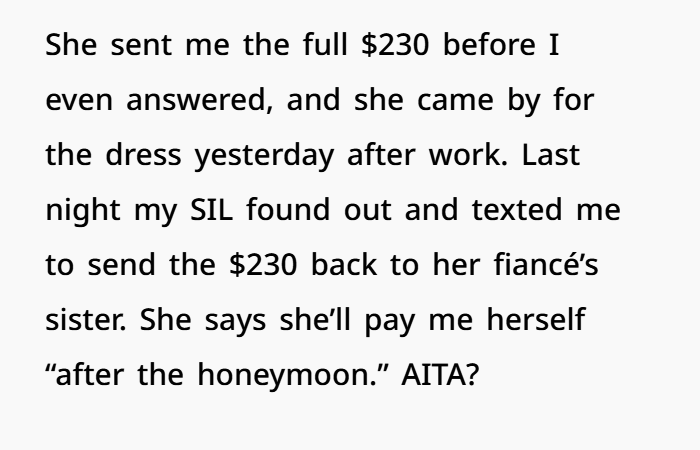
The woman did not think it was fair to give away a dress she had purchased with her own money. She asked the bride to pay her back, but the bride offered only $100. She said the dress had already been worn during fittings. The woman explained that she had only tried it on twice for dress alterations and had never worn it to an event. Later, the replacement bridesmaid contacted her directly. She explained that she did not know the woman had paid for the dress herself. After learning what happened, she sent the full $230 and picked up the dress after work.
The problem seemed solved until the bride found out about the payment. She became upset and asked the former bridesmaid to return the money. The bride promised to pay her back after the honeymoon instead. The woman did not understand why this was necessary when both sides had already agreed to the exchange. She had received her money, and the new bridesmaid had the dress she needed. What started as a simple wedding planning change had now become a disagreement about wedding expenses and personal responsibility. The woman is wondering whether accepting the payment was wrong or whether the bride is making the situation more difficult than it needs to be.
Bride Demands Bridesmaid Return $230 After Selling Her Dress to Her Replacement
Weddings can be expensive, especially when you’re part of the bridal party.
Between bridesmaid dresses, shoes, travel, and other wedding expenses, the costs can add up quickly.
But what happens when you spend $230 on a bridesmaid dress and then get removed from the wedding?
That is exactly what happened to one woman in a Reddit story.
She had already purchased her bridesmaid dress and attended fittings when the bride decided to replace her with the groom’s sister.
The bride then wanted the original bridesmaid to hand over her dress to the replacement.
There was just one problem.
The original bridesmaid had paid $230 for the dress herself.
She didn’t want to give it away for free.
The bride offered her only $100, claiming the dress had already been used during fittings.
But when the replacement bridesmaid learned what had happened, she paid the full $230 without arguing.
The dress was handed over, and everything seemed settled.
Then the bride demanded that the original bridesmaid return the money.
Now, the question is whether the woman was wrong for refusing.
Who Really Owned the $230 Bridesmaid Dress?
This is the most important part of the story.
The original bridesmaid bought the dress with her own money.
She paid $230 for it.
Even though the bride had chosen the dress for her wedding, that did not automatically make it the bride’s property.
In general, when you purchase clothing, you own it unless you have agreed to something different.
The same idea applies to bridesmaid dresses.
A bride may choose the color, style, or fabric, but that does not mean she owns a dress someone else purchased.
The original bridesmaid was no longer part of the wedding party.
However, she still owned the dress.
Being removed from a wedding does not mean you have to give away something you paid for.
The bride could ask to buy the dress.
She could also ask whether the original bridesmaid was willing to sell it to someone else.
But expecting her to hand it over without fair payment was unreasonable.
This is where personal property rights and financial boundaries become important.
Why Did the Bride Offer Only $100?
According to the story, the bride offered $100 for a dress that originally cost $230.
Her reason was that the dress had already been used during fittings.
But there is a difference between trying on a dress and wearing it to an event.
Bridesmaid dresses often need fittings before the wedding.
Some dresses need adjustments to the length, waist, or shoulders.
Trying on formalwear during these appointments is normal.
It does not automatically mean the dress has lost most of its value.
Of course, a dress that has been damaged, heavily altered, or worn to an event may have a lower resale value.
But the story does not mention any damage.
It also does not say that the dress was worn to a wedding or another special occasion.
The bride simply wanted the dress for her replacement bridesmaid.
And because the wedding was getting close, finding another matching dress may have been difficult.
That made the original dress especially useful.
If the bride needed that exact dress, paying the owner a fair amount was the simplest solution.
Wedding Expenses Can Become a Big Problem
Anyone who has helped plan a wedding knows how quickly the costs can grow.
Bridesmaids may need to pay for dresses, shoes, accessories, travel, and parties.
Some also spend money on hair appointments, makeup, or hotel stays.
That is why wedding budgeting and financial planning are important for both couples and their wedding parties.
Before agreeing to be a bridesmaid, it helps to understand what expenses are expected.
But even with careful planning, wedding arrangements can change.
A bride may decide to add or remove someone from the bridal party.
That is her choice.
However, changing the wedding party can create unexpected expenses for other people.
In this story, the original bridesmaid had already spent $230 on a dress she no longer needed for the ceremony.
She was not asking the bride to pay her simply because she was upset about being removed.
She only wanted payment when the bride asked her to give the dress to someone else.
That is a reasonable financial boundary.
She had paid for an item, and someone else wanted to use it.
Asking for payment was not the same as trying to cause wedding drama.
The Replacement Bridesmaid Handled Things Differently
One of the most interesting parts of the story is how the groom’s sister responded.
She was the replacement bridesmaid.
When she learned that the original bridesmaid had purchased the dress herself, she immediately paid the full $230.
She did not argue about the price.
She did not ask for a discount because the dress had been tried on.
She also did not expect the original owner to give it away.
Instead, she treated the situation like a normal purchase.
She needed the dress.
The original bridesmaid owned it.
So she paid for it.
The original bridesmaid received her money, and the replacement bridesmaid got the dress she needed.
Both women agreed to the deal, and both received what they wanted.
That should have solved the problem.
There was no need for another disagreement.
But the bride was unhappy when she found out the groom’s sister had paid the full amount.
Why Did the Bride Want the Money Returned?
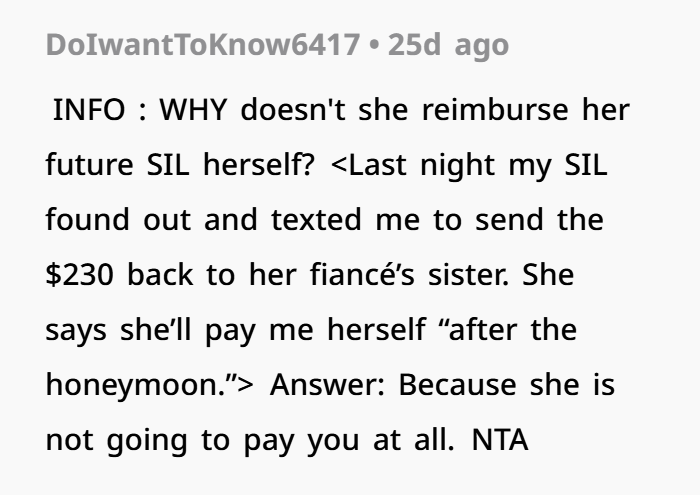
After the replacement bridesmaid paid $230, the bride reportedly told the original bridesmaid to return the money.
She said she would pay her instead.
But there was a catch.
The bride wanted to wait until after the honeymoon to reimburse her.
That created a new problem.
The original bridesmaid had already sold the dress.
The replacement had already paid for it.
And the dress had already been handed over.
The transaction was complete.
If the original bridesmaid returned the money, she would no longer have the dress or the payment.
She would have to trust that the bride would send the money later.
That is a lot to ask, especially after the bride had already argued that the dress was worth only $100.
The story does not explain exactly why the bride wanted the payment reversed.
Maybe she felt that the groom’s sister should not have to pay.
Maybe she wanted to cover the cost herself.
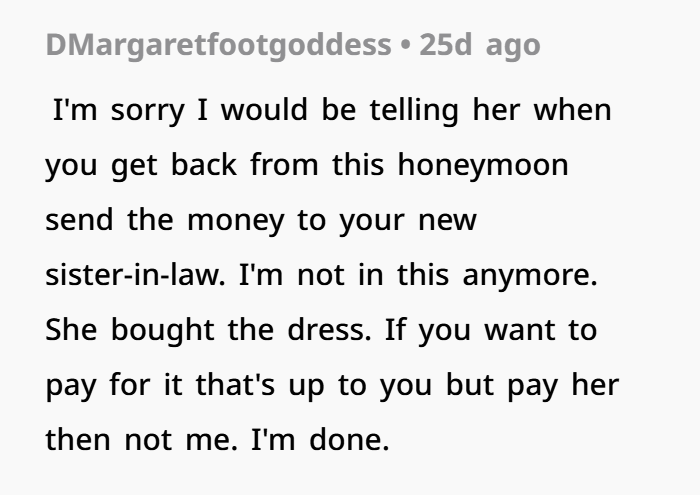
But if that was her goal, there was a much easier solution.
The bride could simply reimburse the groom’s sister directly.
There was no need to involve the original bridesmaid again.
Why Paying After the Honeymoon Wasn’t a Good Deal
The bride’s promise to pay after the honeymoon might sound reasonable at first.
But think about what she was asking.
The original bridesmaid would have to return $230 even though she had already given away the dress.
She would then be waiting for payment from someone who had previously offered her less than half the original price.
That creates unnecessary financial risk.
In personal budgeting, it is usually better to avoid giving up money you are already owed in exchange for an uncertain promise.
This is especially true when there has already been a disagreement about the amount.
The original bridesmaid did not need to lend the bride $230.
She also did not need to help rearrange payments between the bride and the groom’s sister.
The replacement bridesmaid had voluntarily paid the full price.
If the bride wanted to take responsibility for the expense, she could settle that directly with her future sister-in-law.
That would be fair to everyone.
Was the Original Bridesmaid Being Difficult?
Some people might think the original bridesmaid should have given the dress away to avoid conflict.
After all, weddings can be stressful.
The bride was trying to organize her bridal party, and the ceremony was getting close.
But avoiding conflict should not mean giving away expensive personal belongings.
The original bridesmaid had already accepted that she was no longer part of the wedding.
According to the story, she did not demand to be added back.
She did not try to stop the wedding.
She simply wanted to be paid for something she owned.
That is not an unreasonable request.
Setting a financial boundary does not mean someone is being selfish.
Sometimes, it simply means protecting your money.
The bride’s wedding plans were important, but so was the original bridesmaid’s $230.
Both things could matter at the same time.
What Is the Fair Way to Handle Bridesmaid Dress Costs?
This story highlights a common problem in wedding planning.
Bridesmaids often spend money based on the understanding that they will be part of the wedding.
When plans change, someone may be left with clothing or other expenses they no longer need.
There is no single rule that covers every wedding.
Different couples and wedding parties may have different agreements.
But clear communication can prevent many problems.
For example, couples can discuss bridesmaid expenses before anyone makes a purchase.
They can also explain what will happen if the wedding plans change.
If a bride removes someone from the bridal party after that person has purchased a nonreturnable dress, offering reimbursement may be a considerate choice.
And if the bride wants the dress for someone else, she should discuss a fair purchase price with the owner.
These simple steps can help avoid arguments about wedding costs, bridesmaid dress expenses, and personal finances.
It is also helpful to check store return policies before purchasing formalwear.
Some wedding dresses and bridesmaid dresses are made to order and may not be returnable.
Knowing the refund policy ahead of time can make wedding budgeting easier.
Could the Bride Have Avoided the Whole Argument?
Yes.
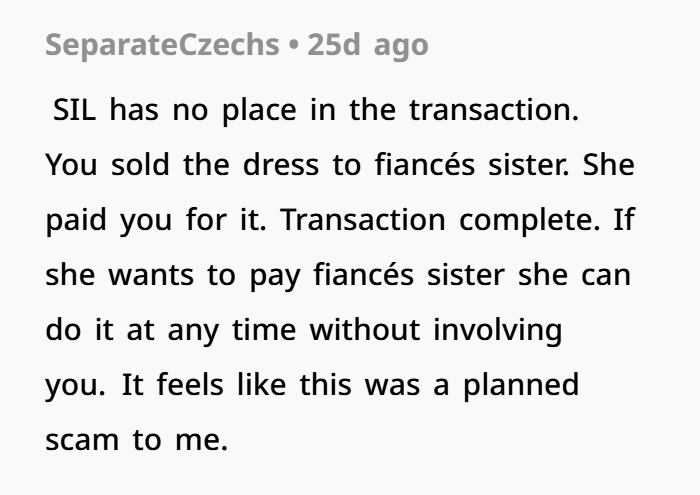
Once the groom’s sister paid the full $230, the dress issue was settled.
The original bridesmaid had her money back.
The replacement bridesmaid had the dress.
The bride had a matching dress ready for her wedding.
Everyone had what they needed.
The bride could have thanked both women for handling the situation.
If she felt bad that the groom’s sister had paid for the dress, she could have reimbursed her privately.
That would have been a simple and respectful solution.
Instead, asking the original bridesmaid to return the money created another disagreement.
It also put financial pressure on someone who had already been removed from the wedding.
Wedding planning can be stressful, but it does not have to become a reason to ignore other people’s financial boundaries.
Final Verdict: NTA — She Paid for the Dress, So She Deserved the Money
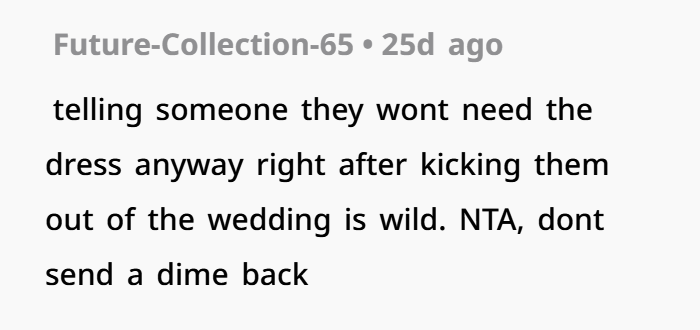
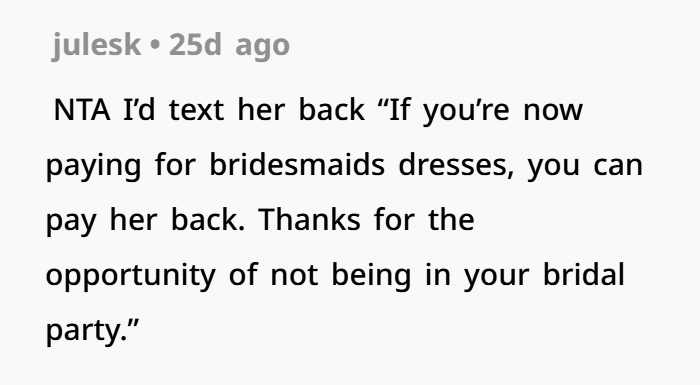
Based on the Reddit story, the original bridesmaid was NTA (Not the Asshole).
She bought the dress for $230 using her own money.
Then the bride removed her from the wedding party and wanted the dress for her replacement.
The original bridesmaid asked for payment.
The replacement bridesmaid agreed and sent the full $230.
The dress was handed over, and the deal was complete.
There was nothing unfair about that.
The bride’s later request to return the money did not make much sense.
If she wanted to cover the cost, she could reimburse the groom’s sister herself.
The original bridesmaid had no reason to return money from a completed sale and wait until after the honeymoon for another payment.
The bride had the right to choose who would stand beside her at the wedding.
But that did not give her the right to decide what happened to a dress someone else had purchased.
The most surprising part of the story is that the replacement bridesmaid handled the situation so calmly.
She understood that the dress belonged to someone else and paid for it without making things difficult.
In the end, the original bridesmaid was not asking for special treatment.
She was simply asking to be paid for something she owned.
And that is a reasonable request, whether a wedding is involved or not.
What would you do?
If a bride removed you from her wedding party after you spent $230 on a dress, would you give it to your replacement for free, accept a discount, or ask for the full amount back?
Comments From The Community