
How Drone Delivery Systems Are Moving Beyond Experimental Projects
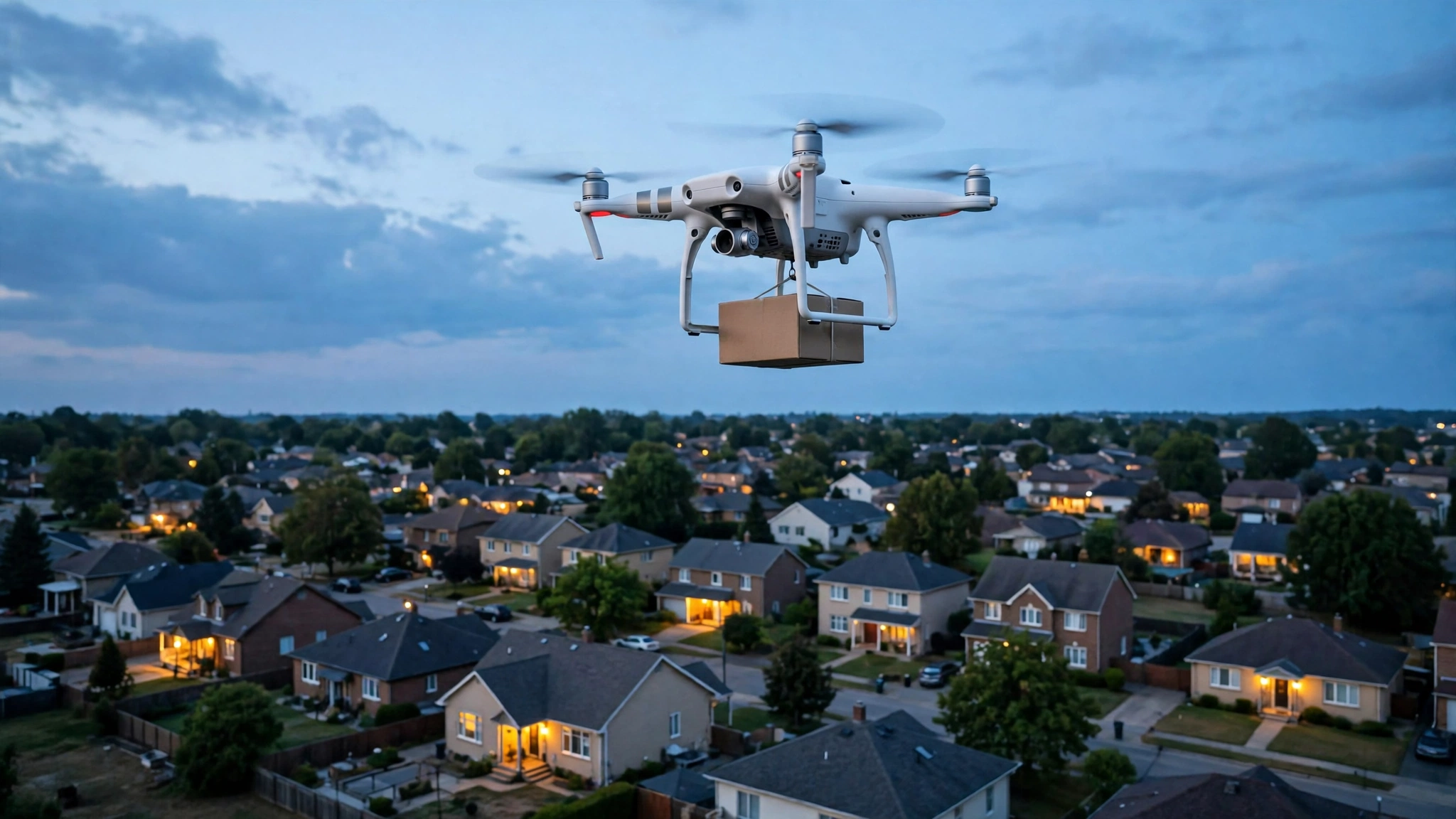
A small aircraft lifts off from a warehouse roof and, a few minutes later, lowers a parcel onto a driveway. No driver, no van, no doorbell. For years, scenes like this belonged to company test videos. In 2025, they are part of regular service in a growing number of places.
Drone delivery systems now carry groceries, prescriptions, and medical supplies on scheduled routes in the United States, Europe, Africa, and Australia. The flights are short, the loads are light, and the rules are still strict. But the shift from experiment to operation is real, and it is happening in plain sight.
This article explains how drone delivery works, who is running real services, where it works best, and what still stands in the way of wider use.
What Drone Delivery Systems Actually Are
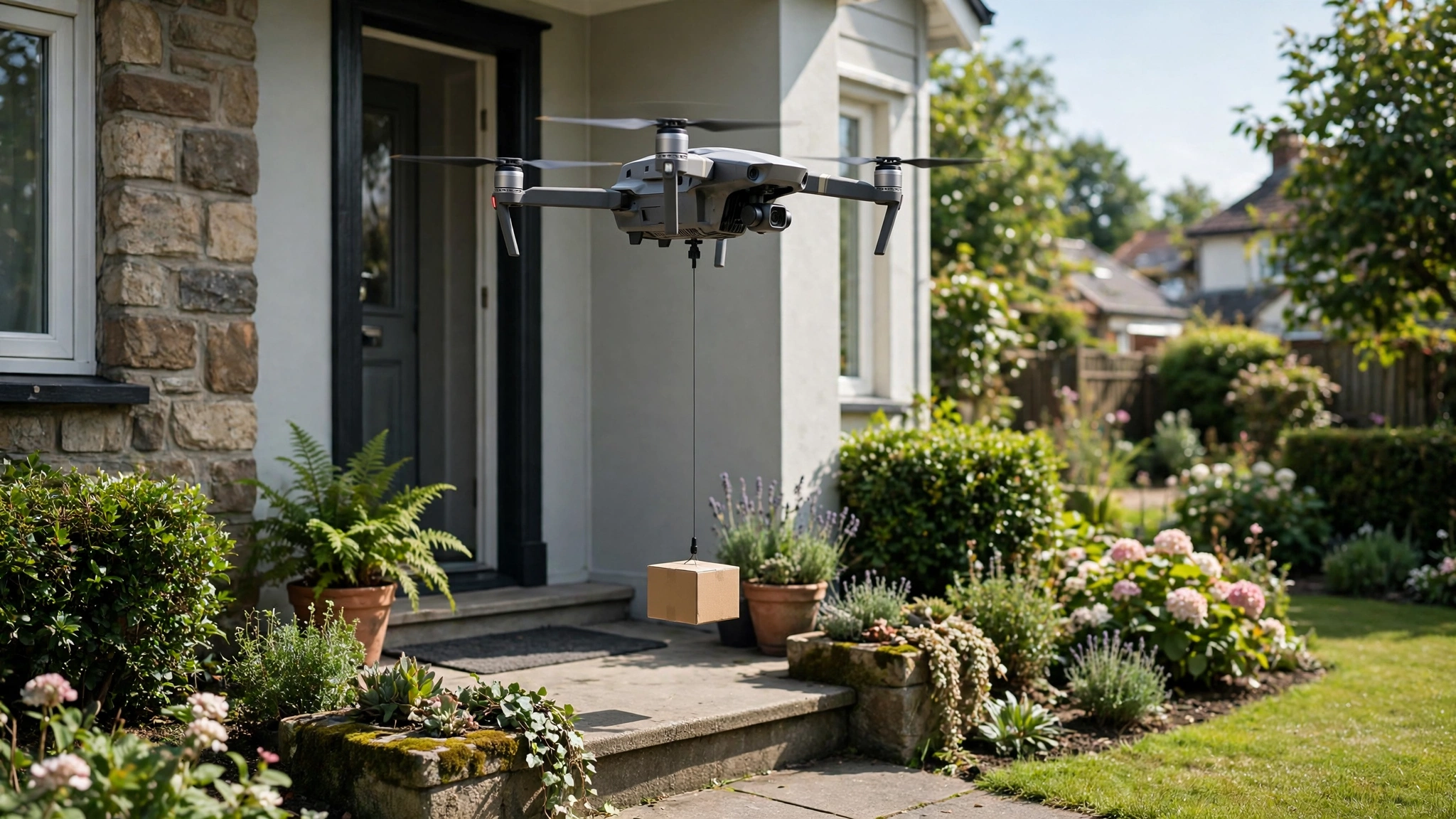
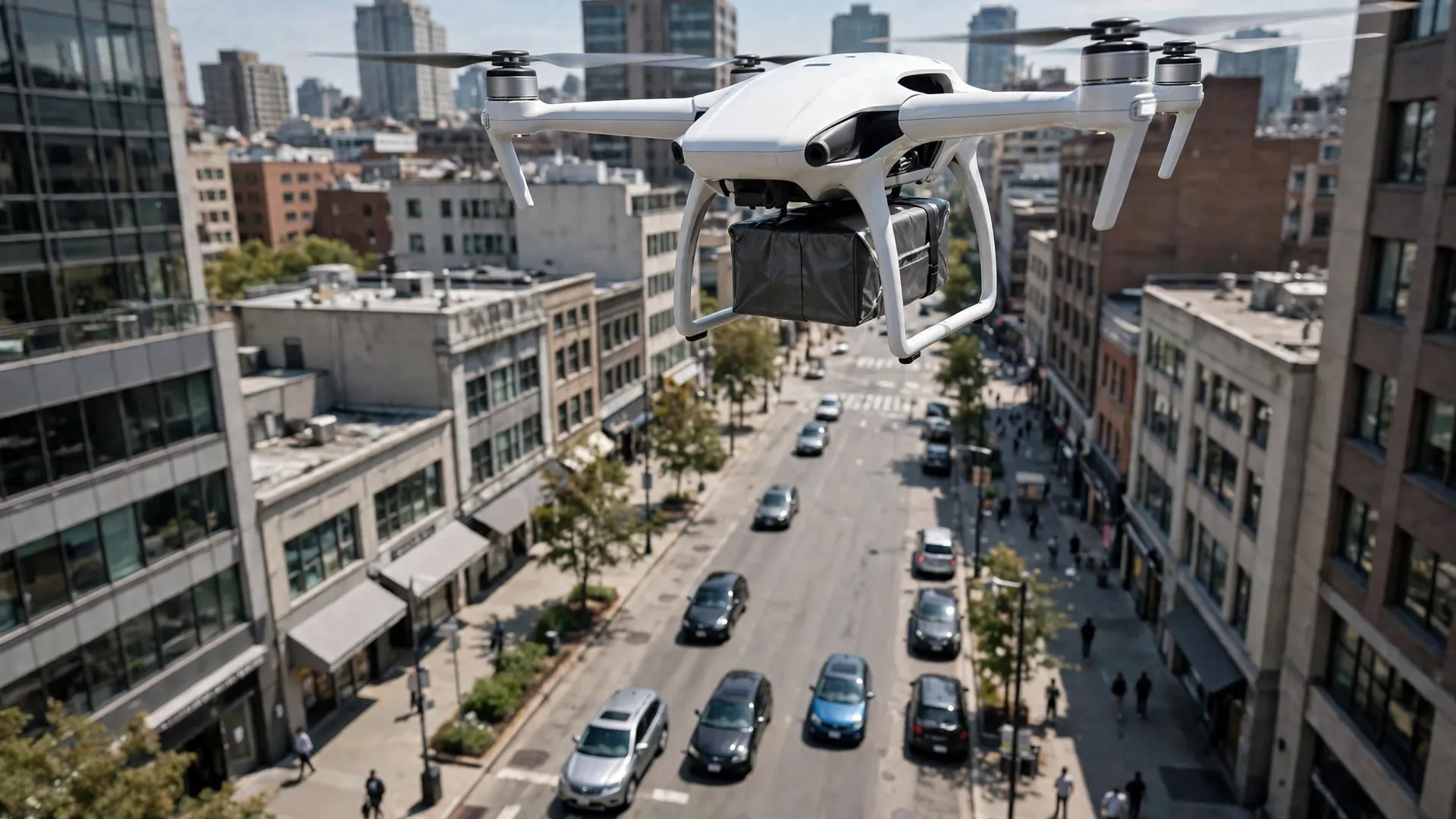
A drone delivery system carries small parcels by uncrewed aircraft, from a shop, pharmacy, warehouse, or hospital to a customer’s door. The aircraft flies itself along a planned route, while a trained operator watches from a control centre and can step in if something goes wrong.
Most delivery drones fall into two broad designs. Multirotor drones, with four or more spinning rotors, can take off vertically, hover, and lower a package to the ground. Fixed-wing drones look like small aeroplanes and fly faster and further, but they need a runway or launch system unless they are hybrids.
The limits are physical. A delivery drone carries a small parcel, usually a few kilograms at most, and flies a short trip, often just a few kilometres from its base. That rules out furniture, weekly food shops, and heavy goods, and suits a single bag of groceries, a prescription, or a box of medical supplies.
That focus on the final stretch is shared with ground robots, as our article on autonomous delivery robots describes. Both are solving the same problem, often called last-mile delivery: the short, expensive final leg between a local hub and the customer’s door.

How a Delivery Flight Works
A delivery flight starts before the drone leaves the ground. Staff at a local hub pack the item into a standard container, weigh it, and load it onto the drone. Software plans a route that avoids schools, airports, and other restricted areas, and checks the weather.
Once cleared, the drone takes off vertically, climbs to its cruising height, and follows the planned route. Most commercial delivery flights fly beyond visual line of sight (BVLOS), which means the operator cannot see the aircraft. That needs a specific approval, and it is one of the main reasons drone delivery took so long to move past testing.
To do that safely, delivery drones carry detect-and-avoid systems. Cameras, radar, and other sensors scan for other aircraft, buildings, and power lines, and the drone changes course if something gets in the way. Much of that processing happens on the aircraft itself, a pattern we explored in our article on what is edge AI.
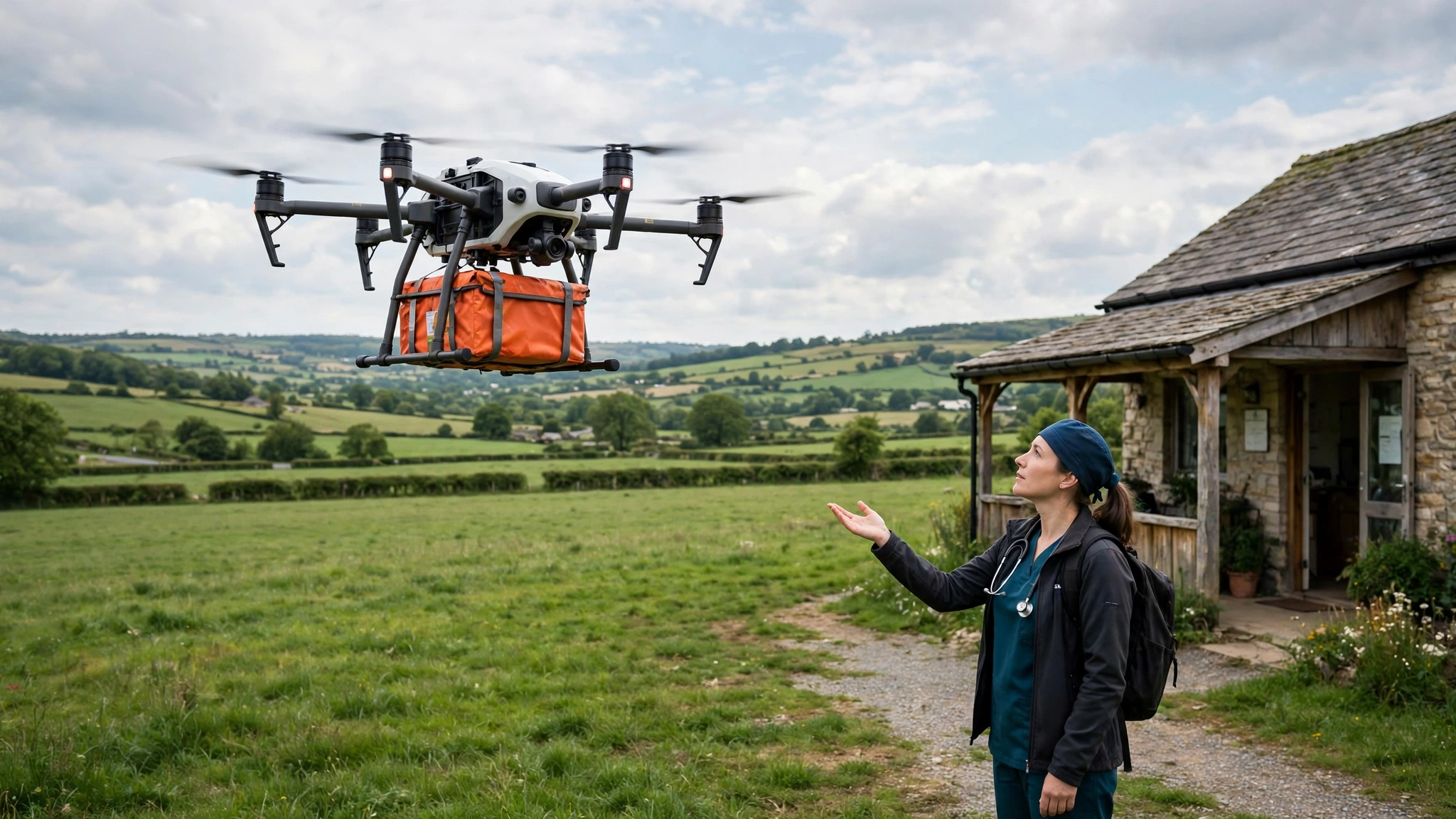
The drop-off is where the designs differ most. Some drones land in a garden or driveway and release the parcel. Others hover above the delivery point and lower the package on a tether. A third method uses a small parachute. Landing needs clear space, a tethered drop-off keeps the drone clear of people and fences, and a parachute drop suits fixed-wing drones.
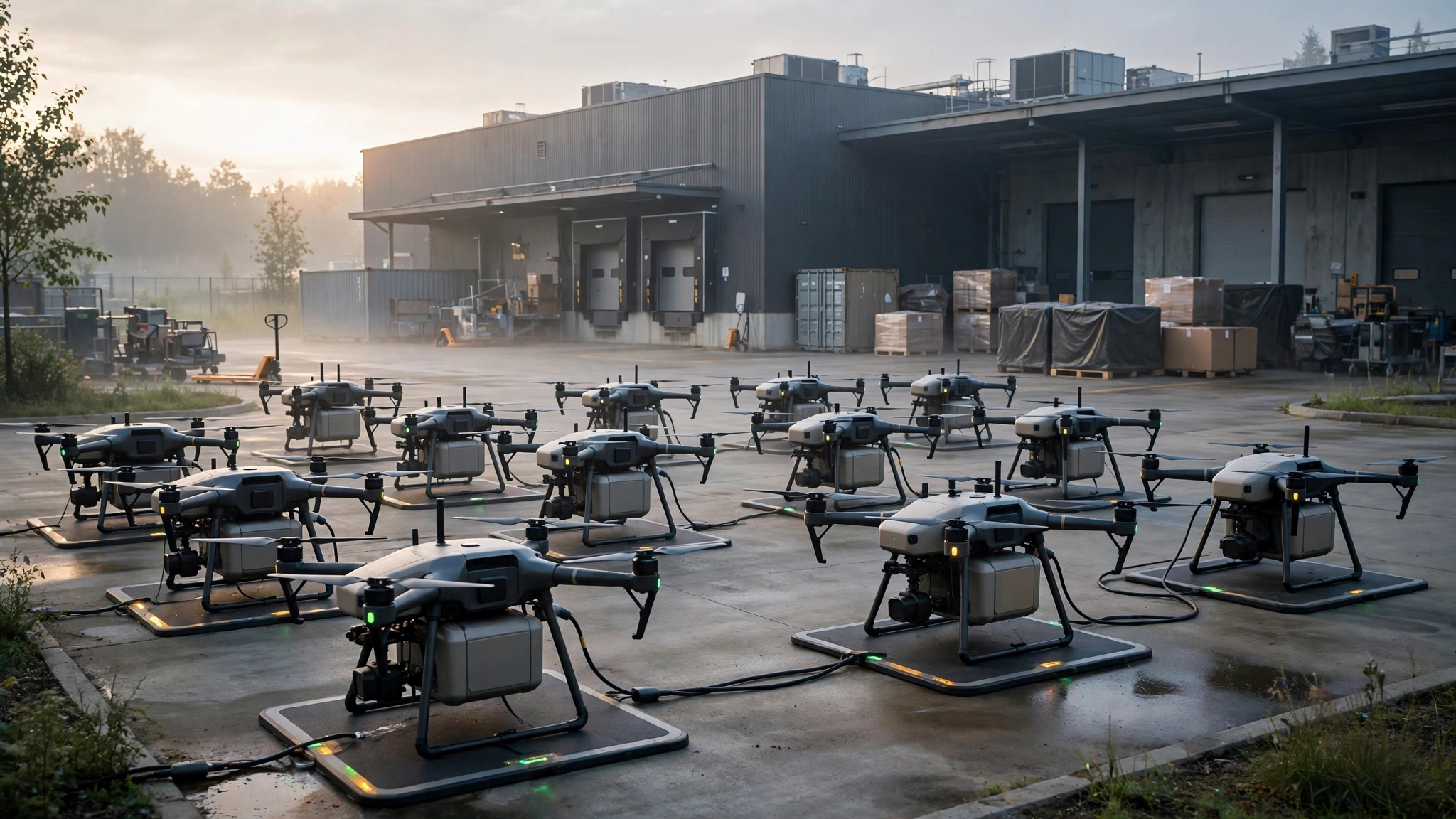
After the drop, the drone returns to its hub, where its battery is swapped or recharged. In the United States, operators fly under a Part 135 air carrier certificate from the Federal Aviation Administration. In August 2025, the FAA published a proposed rule that would set standard requirements for BVLOS flights, while in Europe the European Union Aviation Safety Agency sets the rules.
Who Is Flying Real Services in 2025
Wing, a company owned by Alphabet, runs one of the most established services. Its drones carry groceries, takeaway food, and pharmacy items to homes in parts of the United States, Australia, and Ireland, lowering each parcel on a tether without landing. Wing has flown commercial deliveries for several years, and its service now runs on regular schedules.
Zipline works mostly in healthcare. Its fixed-wing drones carry blood, vaccines, and medical supplies to hospitals and clinics in Rwanda and Ghana, where road journeys can be slow, and it also flies in the United States. The aircraft drops the parcel by parachute. For a rural clinic waiting on blood, a flight of minutes can matter more than a road trip of hours.
Amazon Prime Air operates in selected communities in the United States, delivering pharmacy items and household goods with its MK30 drone. The service has moved sites and changed aircraft designs as it has learned from operations. Its flights are short and its delivery areas are small, but they are real paid deliveries.
Manna, based in Ireland, flies food and pharmacy orders to homes in suburban towns, dropping each order by tether into a garden. UPS Flight Forward flies healthcare deliveries between hospital campuses and laboratories, where a drone can move a sample faster than a courier in traffic, under a Part 135 certificate.
What these services share is narrow focus: a small area, a small set of goods, and a route pattern that fits the aircraft. That is the difference between an experiment and a working service.
Drone Delivery vs Van Delivery
| Feature | Drone delivery | Van delivery |
|---|---|---|
| Typical parcel | Small and light, a few kilograms | Any size and weight |
| Speed over short distances | Fast, direct route through the air | Slower, follows roads and traffic |
| Range | Short, a few kilometres from a hub | Long, hundreds of kilometres |
| Weather sensitivity | High, grounded by strong wind and storms | Low, runs in most weather |
| Best for | Urgent, light items in suburbs and rural areas | Bulk, heavy, and everyday goods |
| Running cost per trip | Low energy use per trip, high setup cost | Higher fuel and labour cost per trip |
| Maturity | Early commercial service in limited areas | Established worldwide |
A van can carry a week’s shopping for a family, in any weather, to any address. A drone can carry one small order, in fair weather, to an address within a few kilometres of its hub. The drone wins on speed for that one order, and the van wins on almost everything else, which is why the two are more likely to work side by side.
Where Drone Delivery Works Best
Medical deliveries are the clearest case. Blood, vaccines, and lab samples are light, valuable, and often urgent. A hospital that needs a blood unit does not need a large vehicle. It needs a fast one. Zipline’s work in Rwanda and Ghana showed this early.
Rural areas are a second strong fit. When homes are far apart and roads are slow, a drone can cross in minutes a distance that takes a van much longer. The low population density that makes van routes expensive matters less to a drone, which flies straight to the delivery point.
Suburbs are a third fit, because houses there often have gardens or driveways where a parcel can be lowered safely. Time-sensitive orders are a fourth fit: a prescription needed today, a spare part a technician is waiting for, or a meal that should arrive hot.
Challenges and Limits to Keep in Mind
Weather is the most obvious limit. Delivery drones are light aircraft, and strong wind, heavy rain, and storms can ground them. Operators set wind limits for each aircraft type, and flights are cancelled when the weather goes past them.
Battery life and range are a second limit. A drone carrying a parcel uses more energy than one flying empty, and the return trip counts too, so range is short and the hub must sit close to its customers. Payload is a third limit: most delivery drones carry a single small order, so the cost per parcel is higher than a van carrying dozens.
Noise affects neighbours more than customers. A drone hovering over a garden is louder than a van passing on the street, and repeated flights over the same houses can become a nuisance. Privacy is a related concern: delivery drones carry cameras for navigation, and people worry about what those cameras record as they fly over homes. Clear rules about what is recorded and who can see it will matter as flights become more common.
Airspace is a further challenge. The sky above a town is shared with other aircraft, and as more drones fly, they need a way to stay apart. Sharing low-altitude airspace with other new aircraft is part of the challenge, as our article on electric vertical takeoff aircraft explains. Cost and regulation are the final limits: each country has its own rules, so a service that works in one country cannot simply be copied into another.
Practical Tips / Examples / Things to Know
- Check whether drone delivery is available in your area first, since services cover small areas around their hubs.
- If you order by drone, clear a patch of ground in your garden or driveway, and keep pets and children inside during the drop-off window.
- Read the weight and size limits before you order, because a drone can only carry a small parcel.
- Expect weather delays: strong wind and storms ground delivery drones, so have a backup plan when you need something urgently.
- For a pharmacy or medical order, check the delivery time and storage instructions, since some items need to stay cool.
- Follow the operator’s tracking messages, which show when the drone takes off and when the parcel has been dropped.
- If you run a small business, ask local drone operators whether your area is covered and what kinds of goods they carry.
Common Mistakes / Considerations / What to Avoid
- Assuming drone delivery is available everywhere, when in 2025 it covers only selected areas around a small number of hubs.
- Expecting a drone to carry a large or heavy order, when most delivery drones are limited to a single small parcel.
- Ordering by drone in bad weather and expecting the flight to go ahead, when strong wind and storms will ground it.
- Thinking a drone delivery is instant, when packing, loading, and route checks still take time.
- Ignoring the noise and privacy concerns of neighbours, which can turn a useful service into a local dispute.
- Believing a drone service can replace van delivery entirely, when the two suit different kinds of orders.
- Taking a company’s test video as proof of a regular service, without checking whether it flies on a schedule to real customers.
Final Thoughts
Drone delivery systems have moved past the stage where the question was whether they could fly. The question now is where they make sense, and the answer in 2025 is narrower than the early promises suggested. They work well for light, urgent items over short distances, and best in suburbs and rural areas, but not yet for heavy goods, long distances, bad weather, or dense city centres.
That is still real progress. A service that flies on a schedule, to real customers, under a proper certificate, is a different thing from a test flight. The operators that last will pick the right routes and the right goods, and take noise, privacy, and safety seriously. The van will keep carrying the weekly shop, and the drone will carry the order that cannot wait.