
How Autonomous Delivery Robots Are Changing Last-Mile Logistics
The last part of a delivery is the hardest part. A parcel may travel thousands of miles by plane, train, and truck, yet the final few miles to a customer’s door take the most time and the most money. Delivery companies call this stretch the last mile, where most of the cost of shipping a parcel sits.
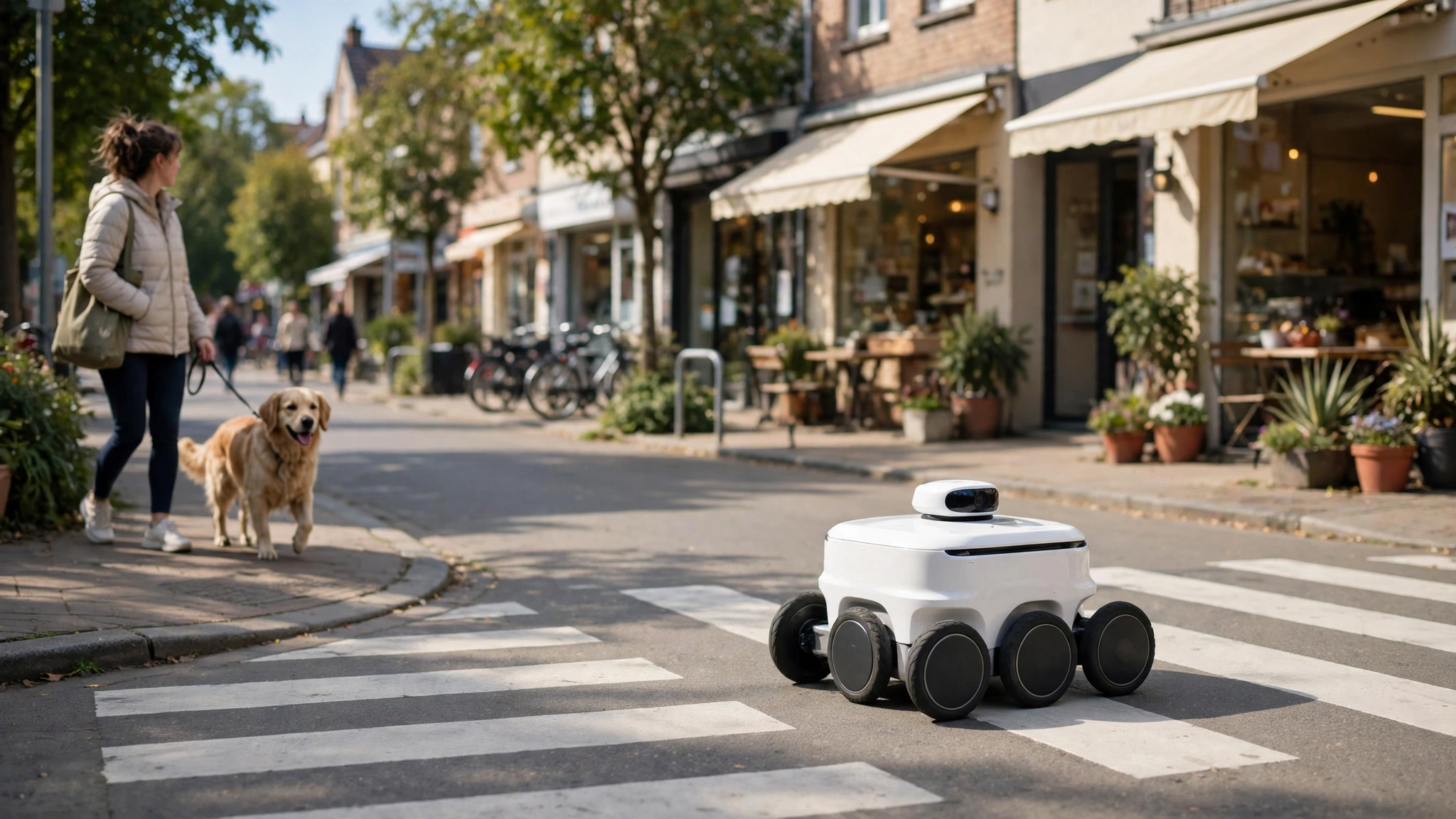
Autonomous delivery robots are machines built to take on that final stretch. They are small, slow-moving vehicles that carry groceries, takeaway food, and parcels along pavements or quiet roads, without a driver on board. Some look like coolers on wheels, others like small vans, and a few fly.
These robots are no longer a lab experiment. In May 2025, Starship sidewalk robots are carrying food and groceries on campuses and in towns in the United States, the United Kingdom, and Estonia. Serve Robotics machines deliver takeaway in Los Angeles, and Nuro’s small road vehicles have run grocery and pizza pilots. This article explains how they work, where they are used, and what holds them back.
What Last-Mile Delivery Means
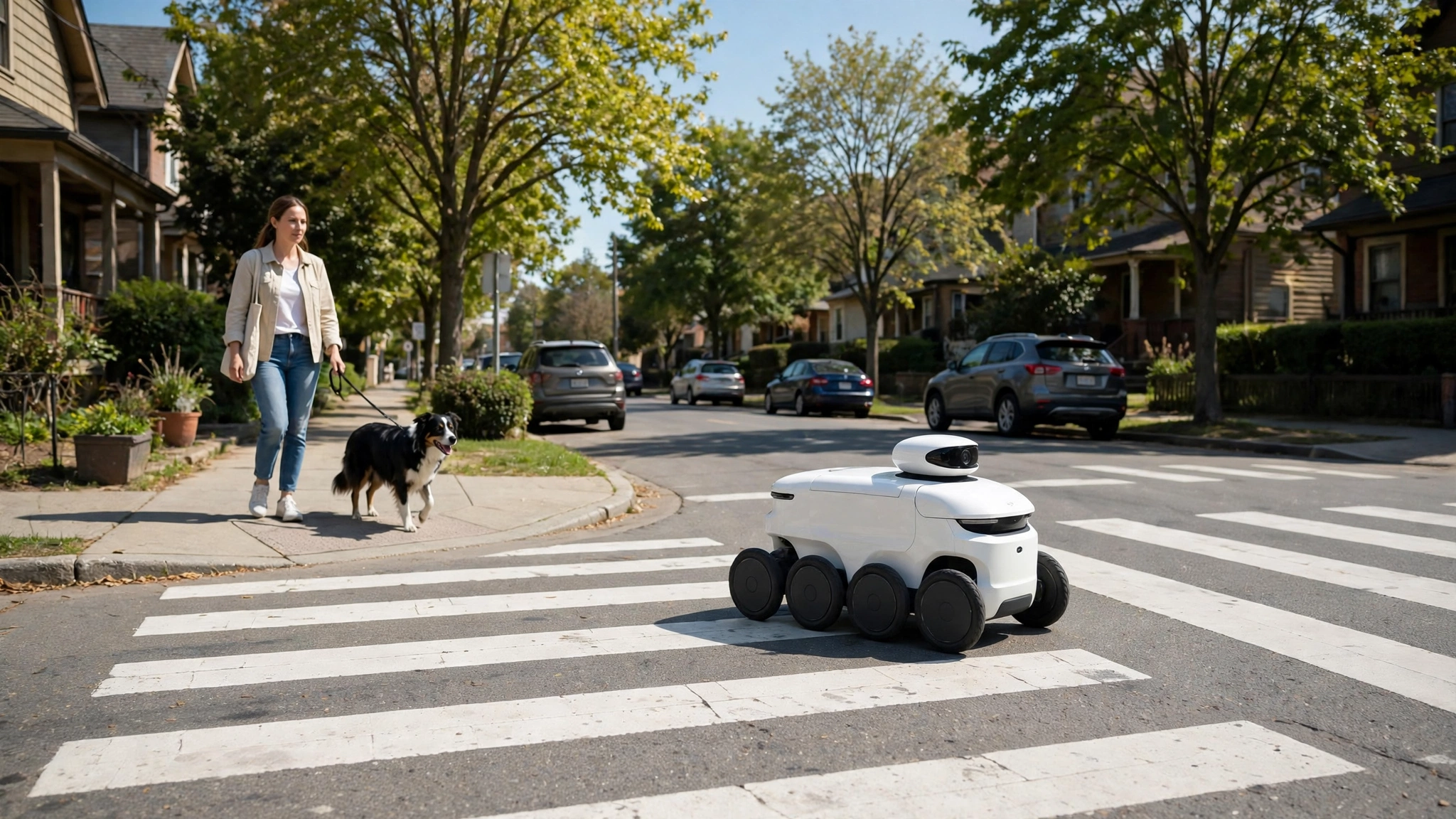
The last mile is the final leg of a delivery journey, from a local hub, shop, or restaurant to the customer’s door. It sounds simple, but it is the most expensive part of shipping. A van may make dozens of stops in a day and drive through traffic, yet this stretch often accounts for more than half of the total cost of shipping a parcel.
That cost is one reason companies are looking for new ways to finish the journey. A robot that can make short trips on its own, without a driver’s wages or a van’s fuel bill, could make small local deliveries cheaper. It could also run when human couriers are scarce, such as late at night.
The idea is not new, and several early projects have already come and gone. Amazon tested its Scout sidewalk robot in a few American towns before ending the programme in 2022, and FedEx wound down its Roxo robot the same year. Those endings show that a robot must also work in real streets, follow local rules, and make business sense.
How Autonomous Delivery Robots Navigate
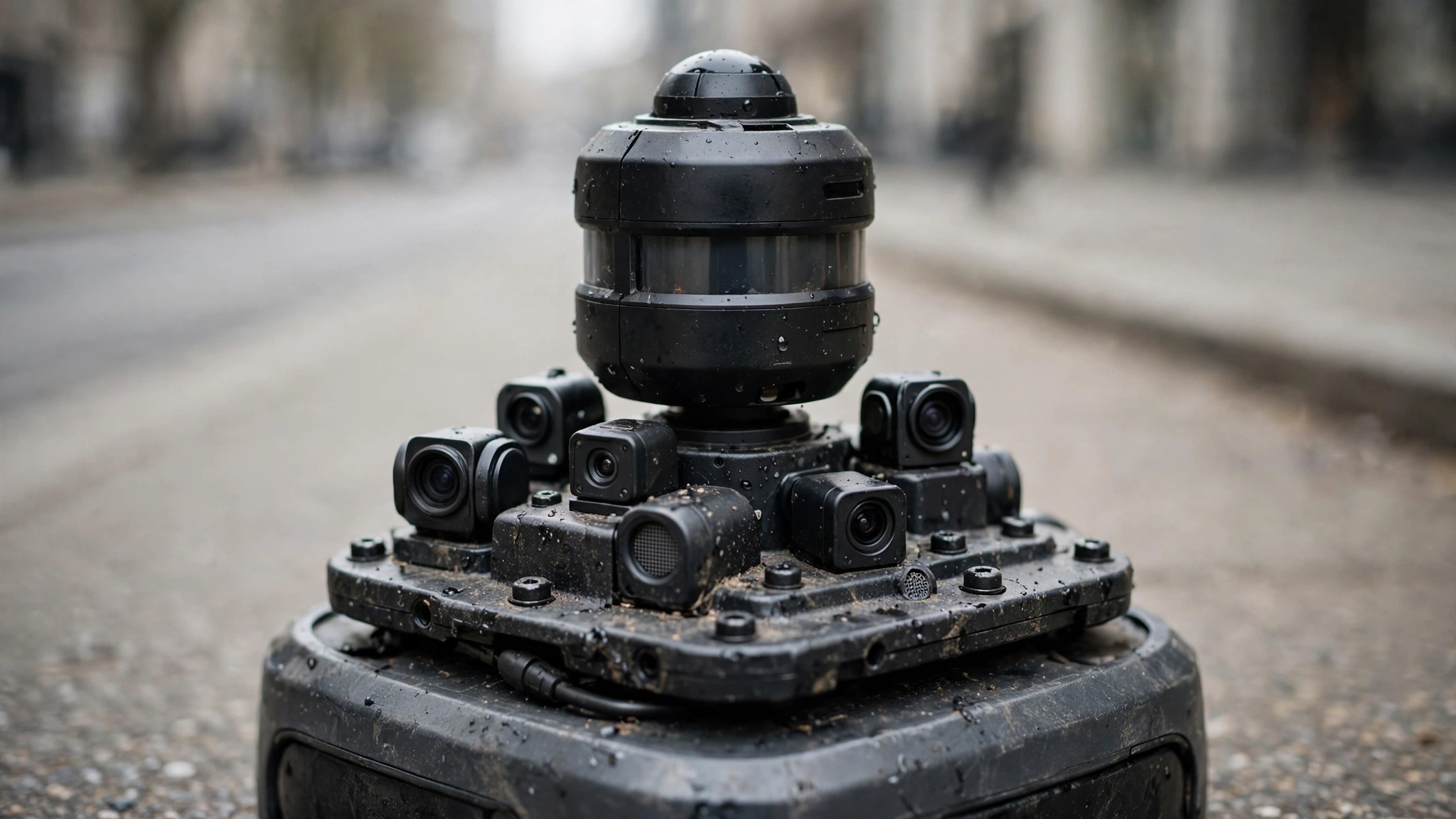
A delivery robot has to do three things at once: know where it is, see what is around it, and decide where to go next. Cameras give it a view of the street, lidar builds a three-dimensional map of nearby objects, and radar helps in rain or poor light. GPS and detailed street maps fill in the gaps.
Before a robot starts work in a new area, the operator maps the streets it will use. The robot records kerbs, crossings, and obstacles to map its route in detail. When it later drives the same route, it compares what its sensors see with that stored map.
The robot’s software works in a geofenced area, meaning it only operates inside a mapped boundary. Most operators also keep a remote team watching the fleet. When a robot meets something it cannot handle, a remote operator takes over and steers it through.
A sidewalk robot usually travels at walking speed, around 4 to 6 miles per hour. It uses lights and sounds to show where it is going, and it is programmed to yield to pedestrians. That slow speed is a feature: a robot moving at walking pace is far less dangerous than a van. These systems rely on the same computer vision described in our article on AI vision systems.
The Main Types of Delivery Robot
The main split is between sidewalk robots, road vehicles, and flying drones. Each type suits a different kind of trip.
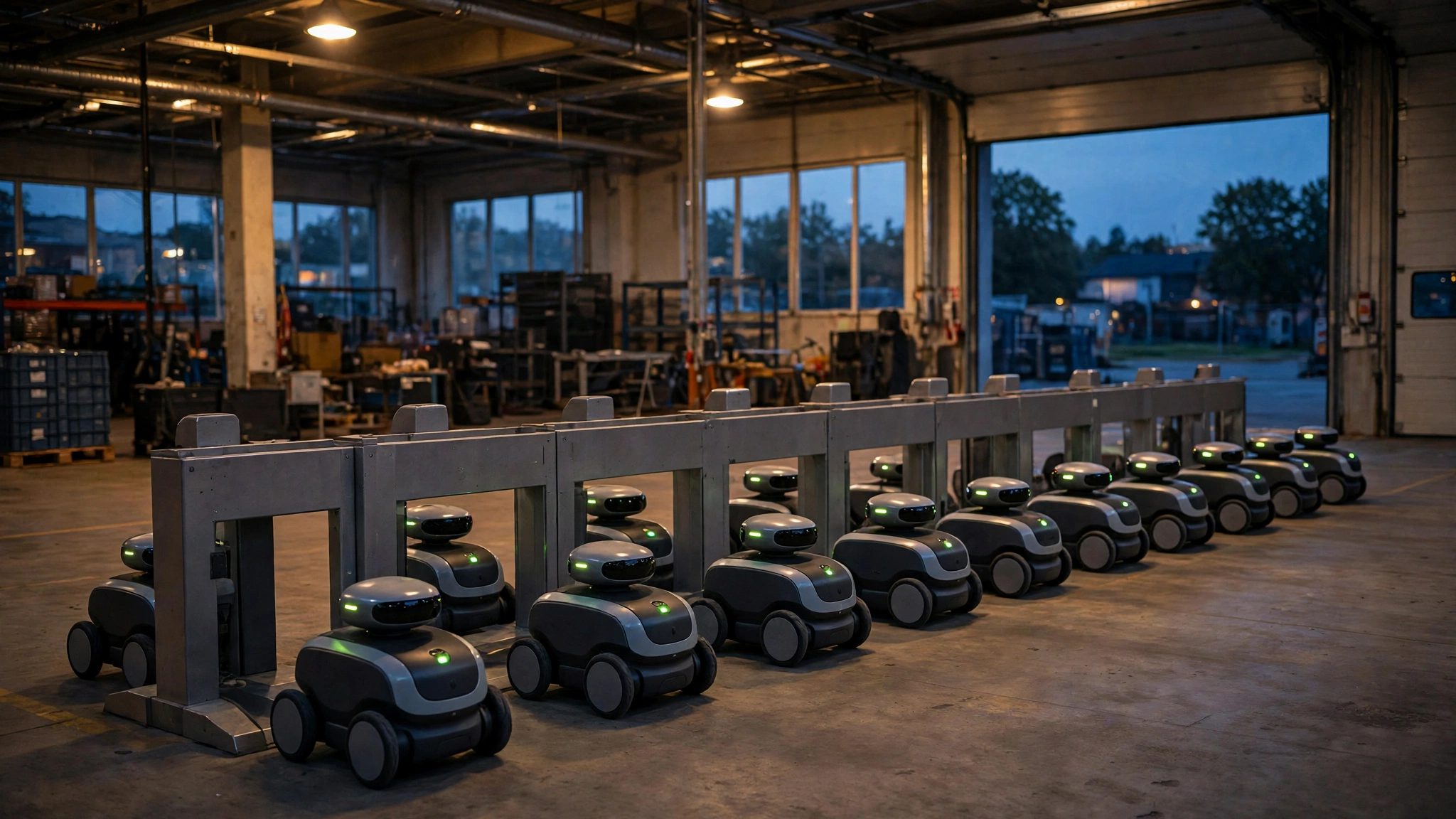
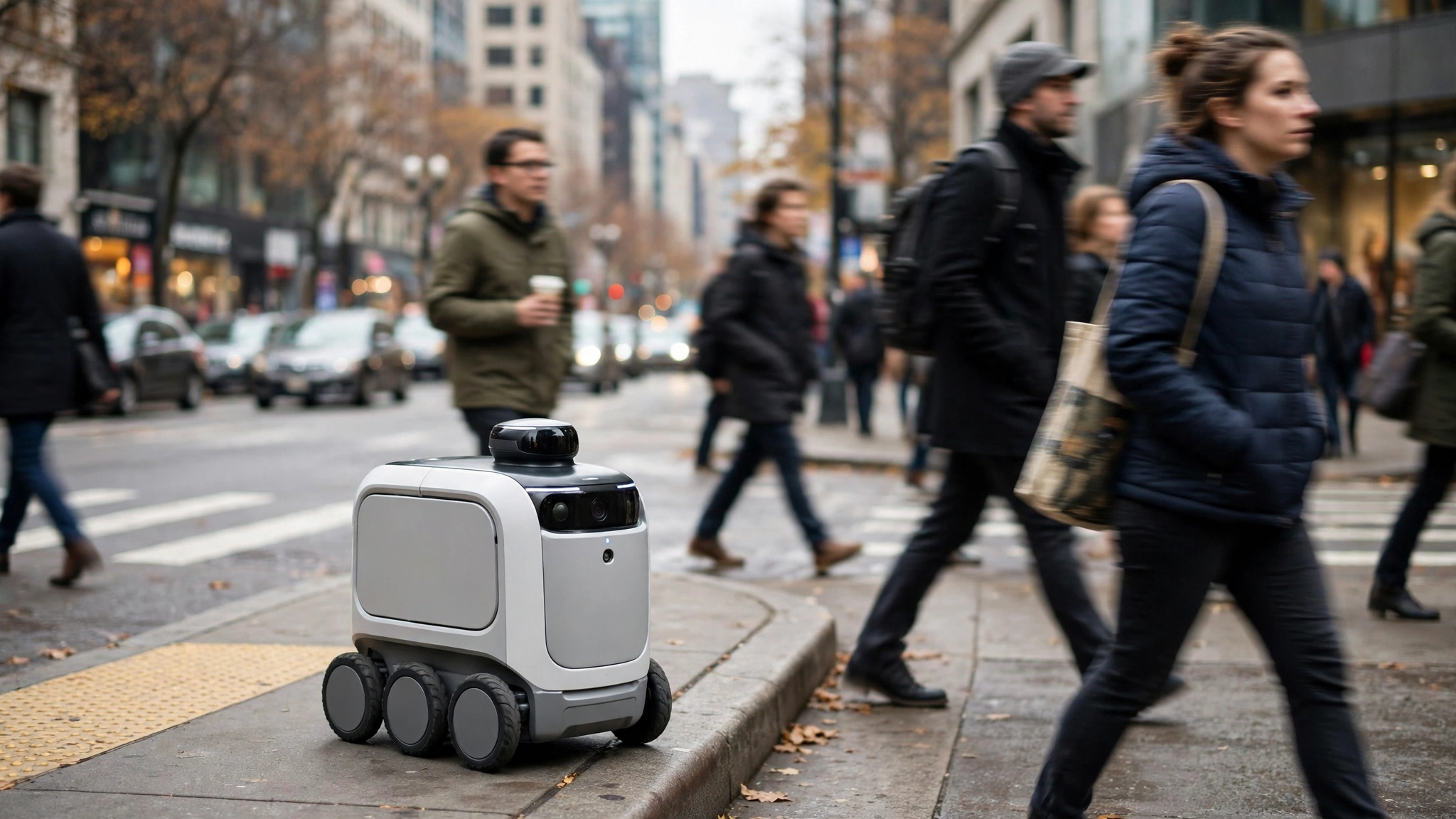
Sidewalk robots are the most common today. They are small, about the size of a cooler box, with six wheels and a locked cargo compartment. They travel on pavements at walking speed, with one or two orders at a time. Starship Technologies builds the best-known example, and Serve Robotics and Coco Robotics run similar machines in American cities.
Road vehicles are larger. Nuro’s R2 and its newer R3 are small self-driving vehicles that drive on the road and carry more cargo than a sidewalk robot. They have delivered groceries for Kroger and pizza for Domino’s. Because they share the road with cars, they face stricter safety rules.
Drones are the third type. Companies such as Wing and Zipline fly small packages by air, which suits rural areas and places where roads are slow. But drones carry small loads and face their own aviation rules.
| Robot type | Where it travels | Typical load | Best for |
|---|---|---|---|
| Sidewalk robot | Pavements and paths | One or two orders | Short trips in towns and campuses |
| Road vehicle | Public roads | Several grocery bags or parcels | Longer local trips, grocery delivery |
| Drone | Air | One small package | Rural areas, urgent small items |
The trade-off is clear. Sidewalk robots are cheap and simple but slow and small. Road vehicles carry more but need road approval. Drones are fast but carry little.
Where Delivery Robots Are Already Working
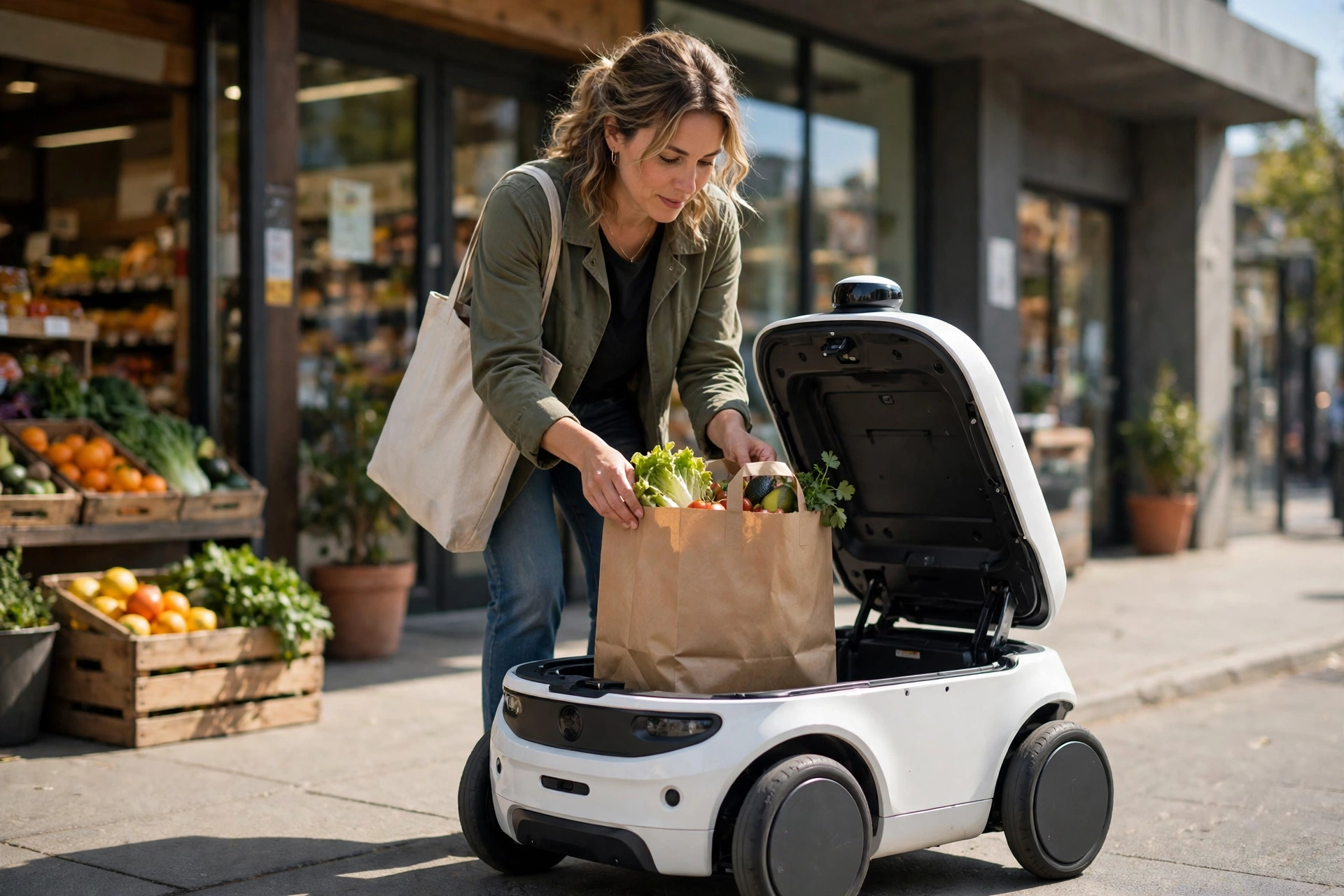
Starship Technologies is the most visible operator. The Estonian company started with campus deliveries in the United States and has since spread to towns in the United Kingdom, including Milton Keynes. Starship says its robots have completed several million deliveries, mostly food and groceries ordered through an app. Customers track the robot on a map and unlock it with a code when it arrives.
Serve Robotics is another operator to watch. The company grew out of Uber’s Postmates arm and runs sidewalk robots in Los Angeles, delivering takeaway ordered through Uber Eats. In 2024 it became a publicly listed company and began expanding its fleet.
Nuro has taken a different path. Its vehicles drive on roads rather than pavements, and it has run pilots with Kroger for groceries and with Domino’s for pizza. In 2024, Nuro shifted towards licensing its self-driving technology, called the Nuro Driver, to car makers and other companies. Its newer R3 vehicle, unveiled in 2024, carries more cargo.
Coco Robotics runs sidewalk robots in Los Angeles, Chicago, and Miami, mostly carrying takeaway orders.
Why Companies Are Trying Them
Cost is the first reason. A delivery robot needs no wage, no break, and no fuel tank. Once the fleet is running, each delivery costs far less than sending a van or a courier. For a low-value order such as a coffee, that difference can decide whether the delivery is worth doing.
Labour is the second reason. Delivery companies often struggle to hire enough couriers at busy times. A robot fleet can keep running when couriers are scarce, and it can handle the short trips that human couriers find least attractive.
Emissions are the third reason. Most delivery robots run on batteries and are far smaller than a van, so they use much less energy. Cities that want fewer vans and cleaner air see robots as part of the answer.
Speed matters too. A robot can be sent out the moment an order is ready, and a grocery order from a shop a mile away can be at the door in minutes. These robots also fit the wider shift towards machines that work in the physical world — see our article on physical AI.
Safety, Rules, and Public Reaction
Rules are the biggest barrier to wider use. A sidewalk robot needs permission to use pavements, and those rules differ from place to place. Some American states have passed laws that treat delivery robots as pedestrians, with limits on speed and weight. In the United Kingdom, delivery robots operate under trial rules, and each new area needs local approval.
Safety is closely watched. Robots must stop for pedestrians and handle crossings safely. So far, the record is encouraging: sidewalk robots move slowly, weigh less than an adult, and are designed to stop when they detect an obstacle. But a robot can still block a pavement or get stuck in a crowd, so operators must show their robots behave well in real streets.
Public reaction is mixed. Many people enjoy seeing a robot trundle past with their lunch inside. Others worry about crowded pavements, lost jobs, or vandalism. Some robots have been tipped over or had cargo stolen, so operators have added locks, cameras, and alarms.
Road vehicles face a harder test. They share the road with cars, cyclists, and pedestrians and must meet vehicle safety rules. Regulators in the United States have allowed limited trials, but a full rollout needs proof that they are as safe as a human driver. Robots also need to talk to the world around them, as explained in our article on vehicle-to-everything technology.
Challenges and Limits to Keep in Mind
Weather is a real problem. A sidewalk robot that works well on a dry day may struggle in snow, heavy rain, or icy pavements. Wheels slip, cameras fog up, and snow can confuse lidar. Operators often limit their robots in bad weather.
Range and load are limited too. A sidewalk robot carries one or two orders and must return to base to recharge. It cannot carry heavy or bulky items, and a road vehicle that carries more costs far more to build and needs more approval.
The business case is still unproven at scale. Robots are expensive to buy, and running a fleet needs charging, maintenance, remote operators, and insurance. The savings per delivery are real, but only if the robots run often enough to repay their cost. Early projects such as Amazon Scout and FedEx Roxo were closed because the numbers did not work.
Finally, robots depend on good maps and good connectivity. A robot that loses its signal or enters an unmapped street needs help. Cities change constantly, and keeping maps up to date is a constant job. Until robots can handle new streets as well as familiar ones, they will stay where they know best.
Practical Tips / Examples / Things to Know
- Order from a shop or restaurant close to home, because robots work best on short trips of a mile or two.
- Track the robot on the app and be ready at the door, since it waits only a few minutes.
- Use the code in the app to unlock the cargo compartment and close the lid afterwards.
- Give the robot space on the pavement, as you would a person with a pram.
- Check whether robot delivery is available in your area, because coverage is still limited.
- For a business, start with a small trial in one neighbourhood and measure delivery times.
Common Mistakes / Considerations / What to Avoid
- Expecting a robot to deliver a large weekly shop, when it can only carry one or two bags.
- Assuming robots work everywhere, when most operate only inside a small mapped area.
- Ordering robot delivery to a flat in a tall building, since the robot cannot climb stairs.
- Blocking a robot’s path, which can delay the delivery and damage the machine.
- Judging the technology by early failures such as Amazon Scout, without looking at the robots running today.
- Ignoring local rules, and assuming a robot can use pavements or roads without permission.
Final Thoughts
Autonomous delivery robots are not about to replace every courier and van. They are slower, smaller, and more limited than the delivery system we already have. But on the short trips that make up so much of local delivery, they are already doing real work, more cheaply and more cleanly than a van.
The next few years will decide how far they go. Better sensors and smarter software will help robots handle bad weather and unfamiliar streets, and clearer rules will let them work in more towns. And as more people get used to sharing a pavement with a small machine carrying their lunch, the idea will feel less strange. The last mile has always been the hardest part of delivery, and robots are already changing how it works — one short, slow trip at a time.