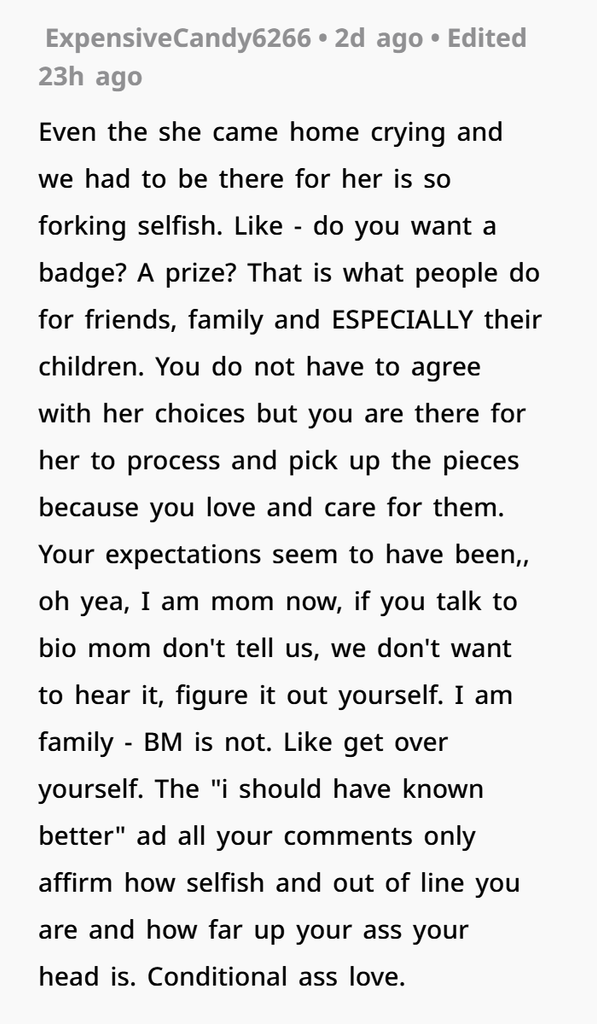
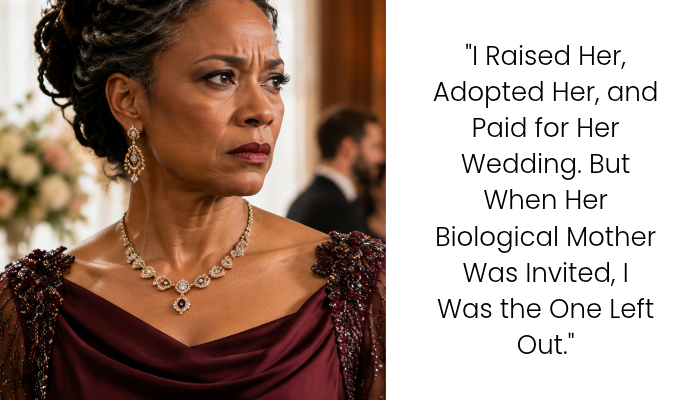
AITA for Skipping My Adopted Daughter’s Wedding After She Invited the Mother Who Treated Her Like Garbage?
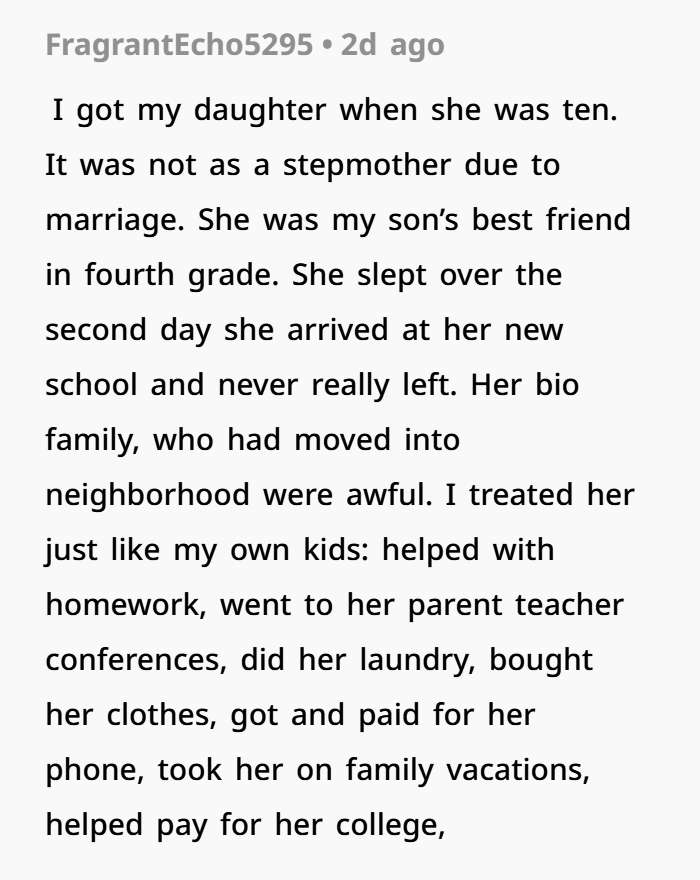
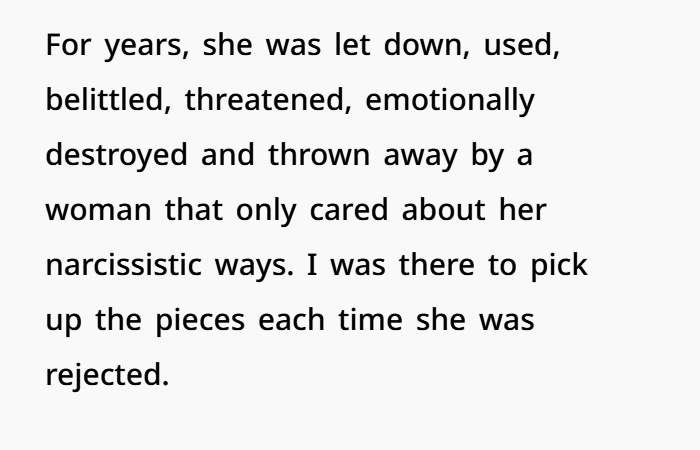
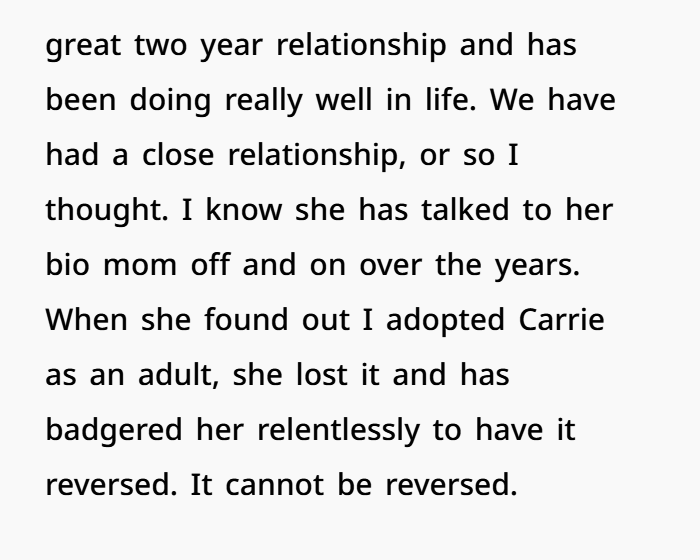
A woman is questioning her decision not to attend her stepdaughter’s wedding after spending many years raising her as her own child. Her stepdaughter, Carrie, asked to be legally adopted by her stepmother when she turned 18. At that time, they had shared a close bond for five years. Carrie had faced many difficult experiences with her biological mother and found love, care, and support in her stepmother. After the adoption was completed, the family believed their relationship would remain strong for years to come.
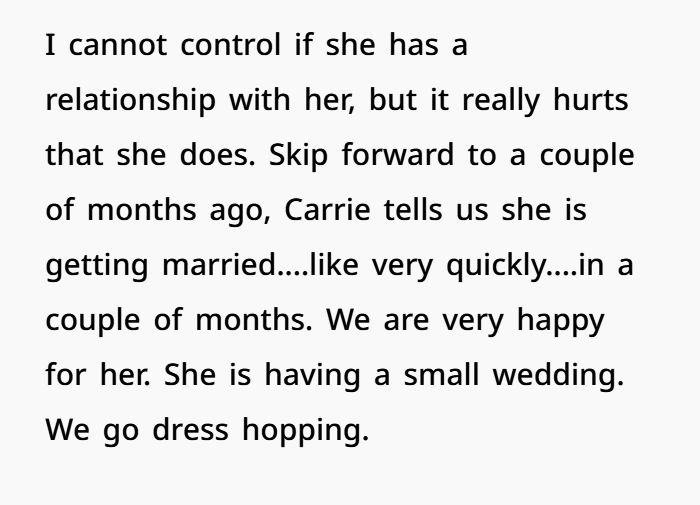
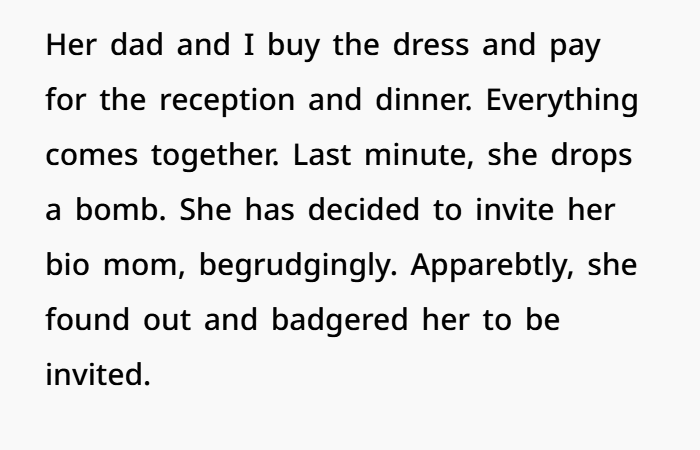
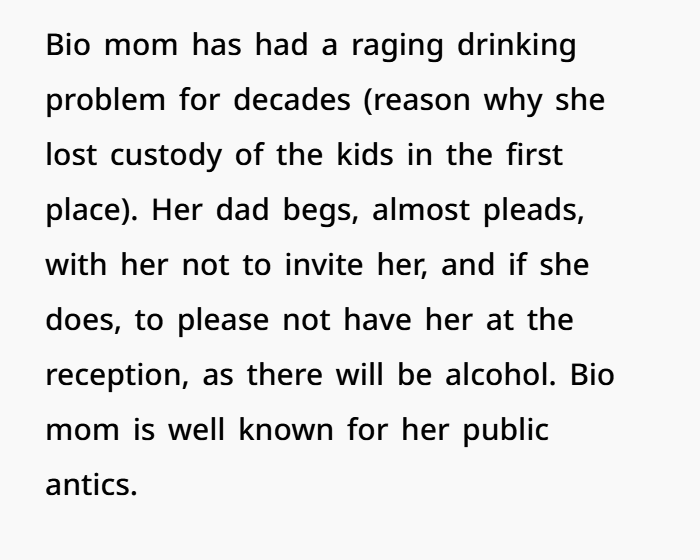
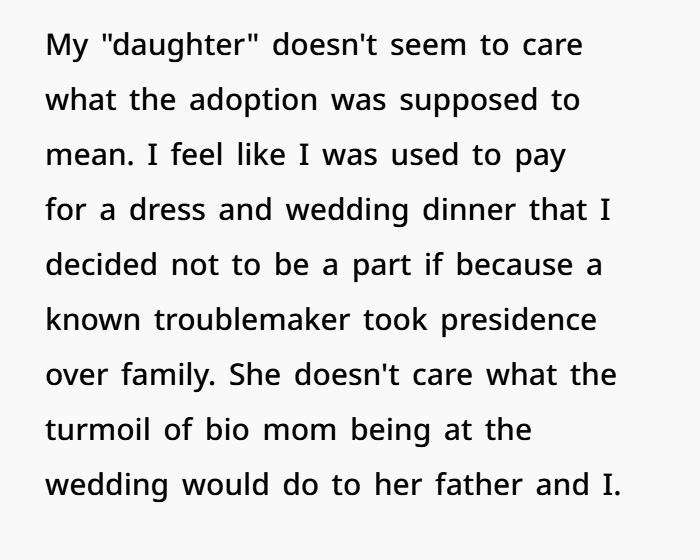
Carrie’s father and stepmother continued to support her as she moved into adulthood. They helped her through college and were happy when she announced her engagement. They even offered financial help with her wedding dress, reception, and dinner. However, things became difficult when Carrie decided to invite her biological mother to the wedding. Her biological mother had a history of alcohol problems and difficult behavior, which made the family worried about possible problems during the celebration.
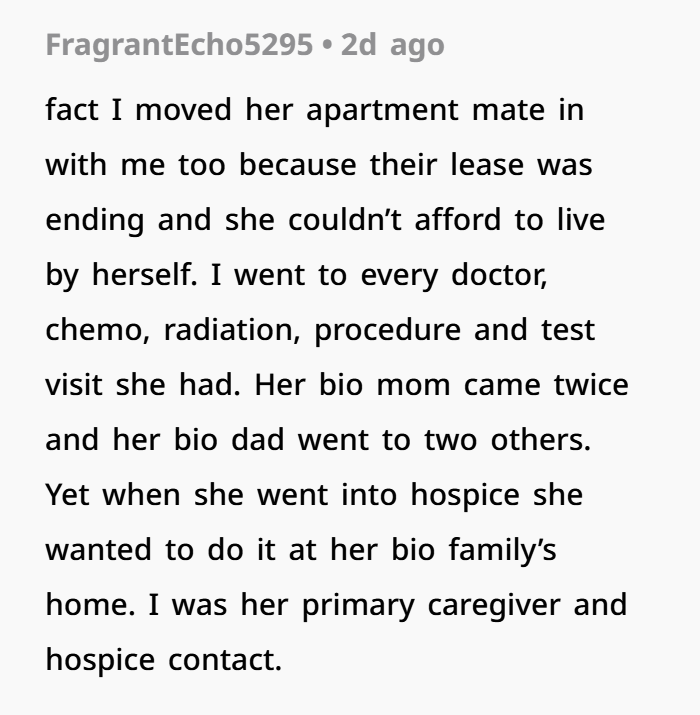
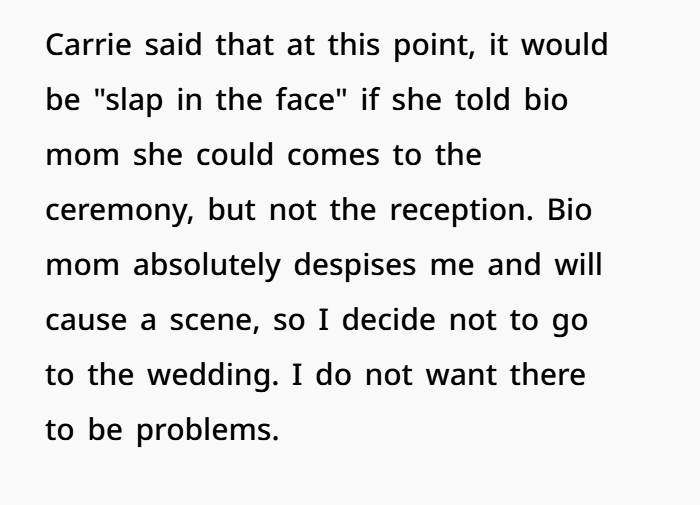
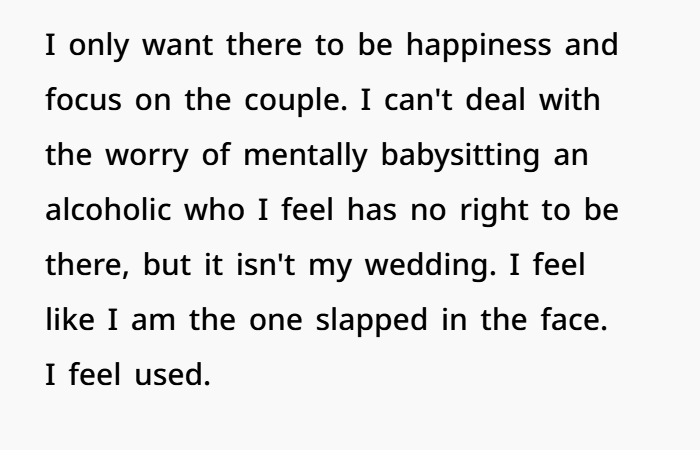
Carrie’s father did not agree with the decision, especially because alcohol would be served at the wedding reception. Her adoptive mother also worried that the biological mother might create an uncomfortable situation. Feeling hurt after years of love and support, she decided not to attend the wedding. Her husband made a different choice and went to the ceremony, where he walked Carrie down the aisle.
Later, the woman shared an update about the wedding. She said the celebration was beautiful, and no major problems happened while her husband was there. However, she noticed that Carrie’s biological mother kept trying to appear in pictures with the newly married couple. This brought back many old memories and feelings of disappointment. Now, she is wondering what the adoption means to Carrie and whether she still has the same important place in her stepdaughter’s life. Her experience raises questions about family bonds, parenting, adoption, and the challenges of blended families.



Adoption, Family Relationships, and the Challenges of Blended Families
One of the most difficult parts of this story is understanding the difference between being a legal parent and being a parent in a child’s heart.
Adoption is a big decision. It often comes from love, care, and a desire to give a child a safe and stable home. For an adoptive parent, it can be a way to make an existing family relationship official.
However, adoption does not always remove a child’s connection to their birth family. Even after adoption, a person may still have questions, memories, and feelings about their biological parents.
This can make family relationships more complicated, especially when a child has experienced difficult situations in the past.
Children Can Have Feelings for Both Biological and Adoptive Parents
Children who grow up in blended or adoptive families may have mixed feelings about their parents.
Even when a biological parent has made mistakes, a child may still want their love and attention. They may hope that things will get better or wish to have a better relationship with them.
These feelings can continue even when the child becomes an adult.
Carrie choosing to stay in contact with her biological mother does not automatically mean she loves her adoptive mother any less. However, the way she handled the wedding situation understandably hurt her adoptive mother.
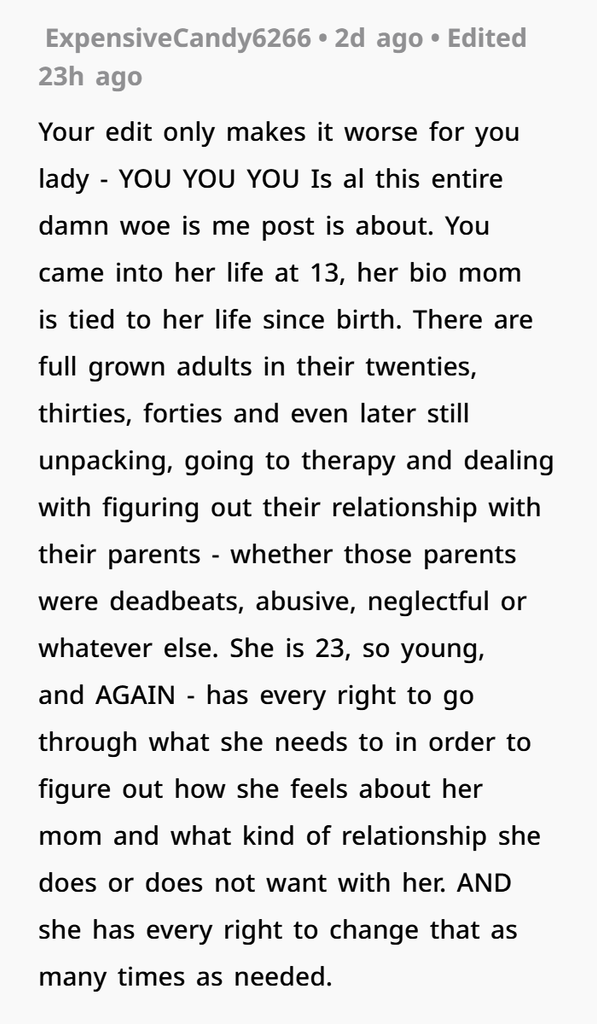
Family relationships are not always simple. A person can love two parents in different ways while still having unresolved feelings about their past.
This is why children should be given space to understand their family history without feeling forced to choose one parent over another.
Setting Boundaries Is Important in Family Relationships
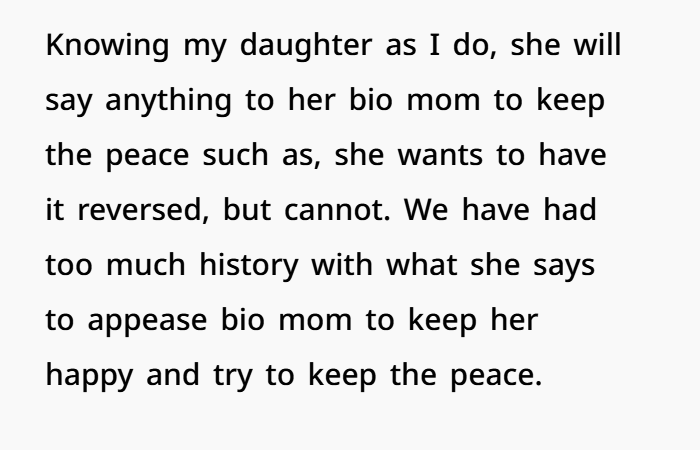
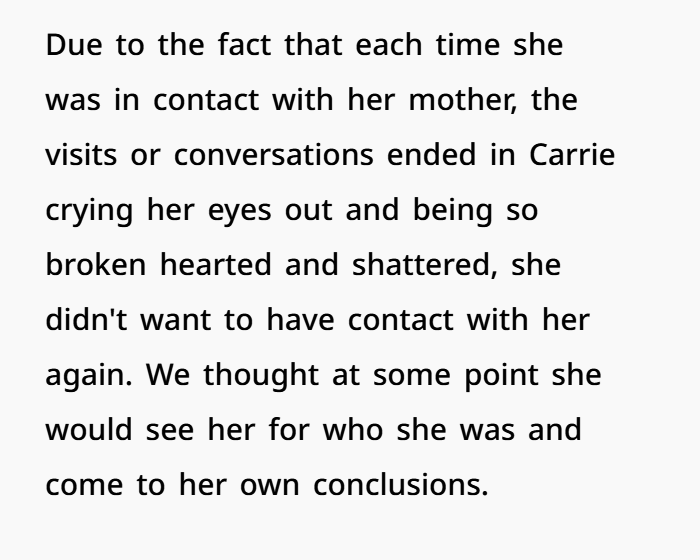
The adoptive mother explained that she had advised Carrie to stop talking to her biological mother because their conversations often left Carrie feeling upset.
Her concern may have come from a place of love. She did not want to see Carrie getting hurt again.
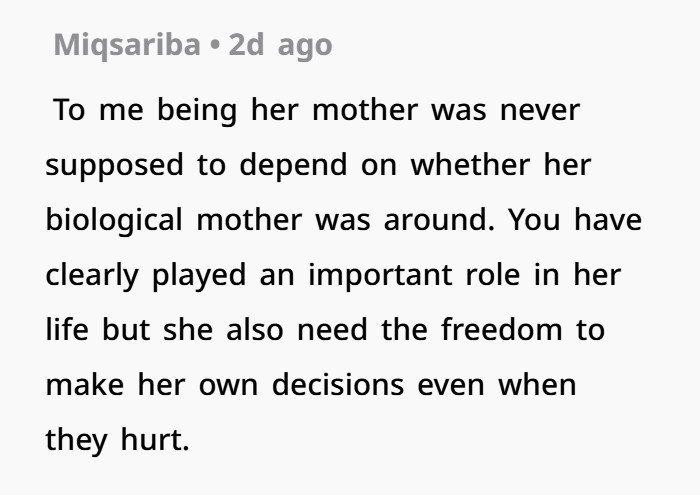
However, asking an adult child to completely end contact with a biological parent can be difficult. Carrie has the right to make her own decisions about her relationships.
There is a difference between setting personal boundaries and trying to control someone else’s choices.
A healthier approach is to explain concerns honestly while allowing adult children to make their own decisions.
For example, the adoptive mother can decide what kind of behavior she is comfortable accepting at family events. She can also choose to limit contact if certain situations affect her emotional health.
Good communication and mutual respect can help families handle these difficult situations without creating more conflict.
How Alcohol Addiction Can Affect Family Life
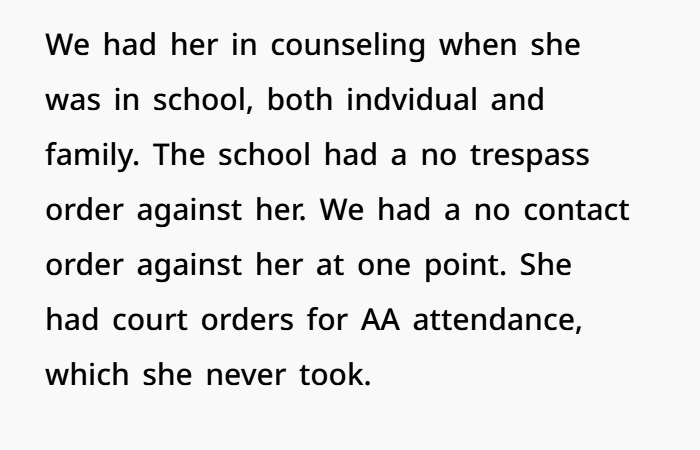
Another important part of this story is the biological mother’s reported history of alcohol problems.
Alcohol use disorder is a medical condition that can affect a person’s health, behavior, and family relationships.
Families dealing with addiction may experience stress, disappointment, and trust issues. In some cases, past experiences can make relatives worried about future family gatherings.
However, having a history of alcohol problems does not mean someone will always behave badly. Recovery is possible, and people with alcohol use disorder can receive professional treatment and support.
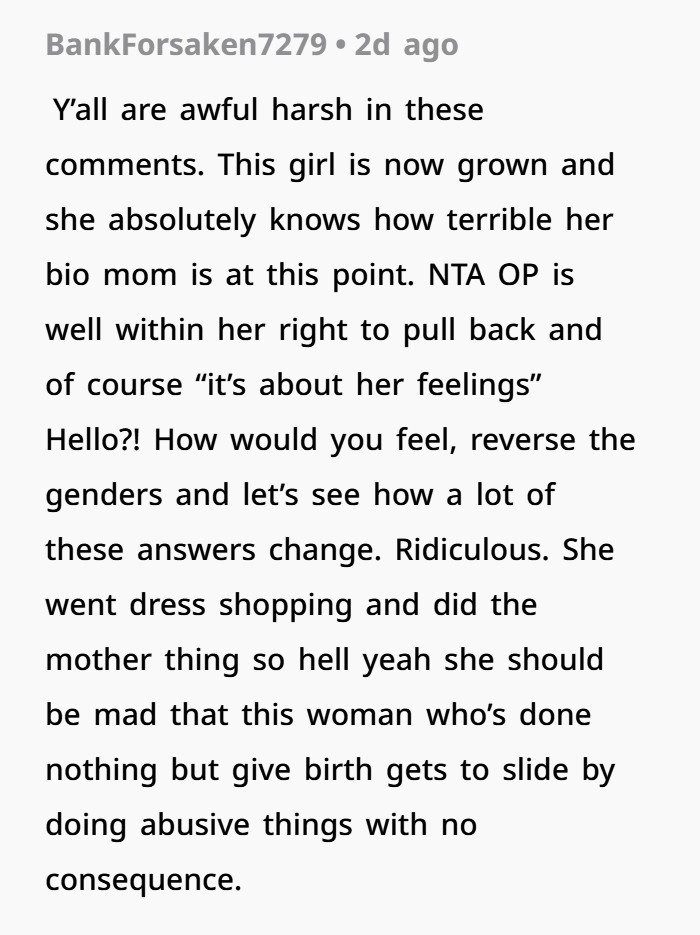
In this situation, the family had concerns because of previous experiences. Since alcohol would be available at the wedding, it was understandable that they wanted to discuss possible problems before the event.
Carrie had the right to decide whom she wanted to invite to her wedding. At the same time, her father and adoptive mother also had the right to decide whether they felt comfortable attending.
Family events should be planned in a way that helps everyone feel respected and safe.
Small Actions Can Create Bigger Emotional Hurt
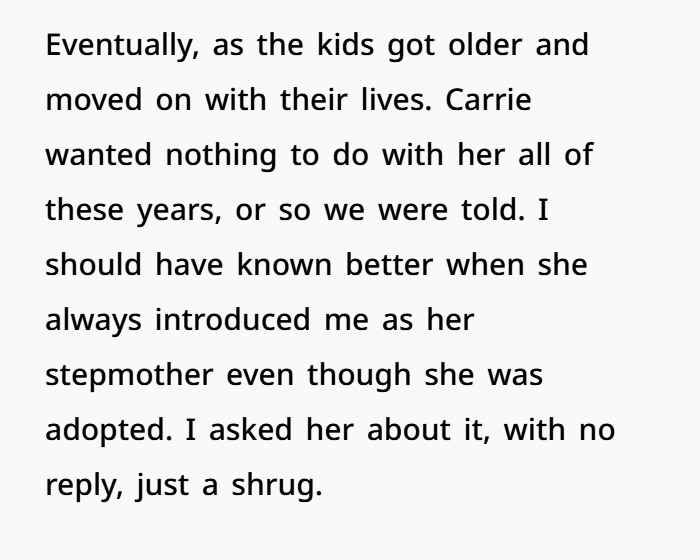
The adoptive mother’s update shows that her disappointment did not begin with the wedding.
She shared that Carrie once gave her a small rock with the words “you rock” written on it as a Christmas gift. She also mentioned that Carrie regularly bought Mother’s Day gifts for her boyfriend’s mother and stepmother.
These may seem like small things, but they clearly meant a lot to her.
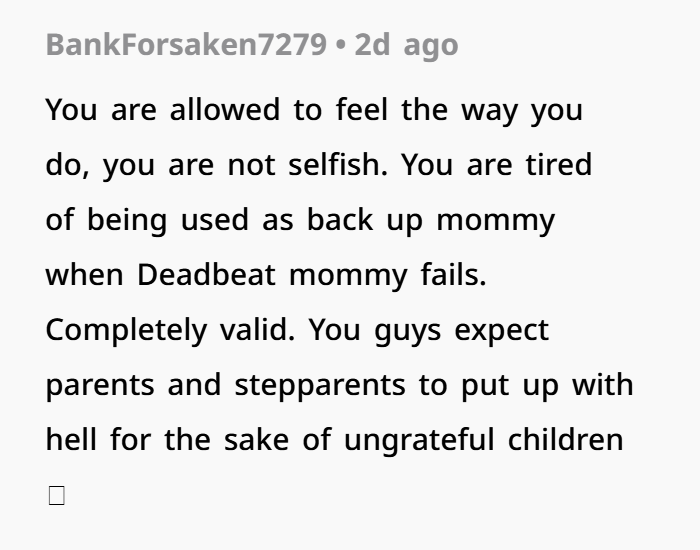
When someone spends years caring for a child, they may hope to feel loved and appreciated in return. Small gestures can become important when a person already feels overlooked.
However, people do not always express love in the same way.
Some people show appreciation through gifts, while others show it through time, conversations, or simple acts of kindness.
This is why it is important to talk about feelings instead of allowing disappointment to build up over the years.
Honest communication can help family members understand what each person needs from the relationship.
Family Conflict Can Affect Important Life Events
A wedding is usually a special day that couples want to enjoy with their loved ones.
But family disagreements can make such events stressful for everyone involved.
In this story, the family was already worried about possible problems involving the biological mother. Although she reportedly did not create a major scene while Carrie’s father was present, her attempts to appear in photographs with the couple suggest that some family tension remained.
Carrie’s father still attended the wedding and walked his daughter down the aisle.
This was an important moment because it showed that he wanted to maintain his relationship with his daughter, even though he may not have agreed with every decision made about the event.
Family members do not always have to agree on everything to remain connected.
Sometimes, respecting each other’s choices is the first step toward improving a difficult relationship.
Understanding Each Other’s Feelings After Adoption
The biggest question in this story is whether the adoptive mother and Carrie had the same understanding of their relationship.
The adoptive mother may have seen Carrie as her own daughter after years of love, care, and support.
Carrie may have had a different experience. She might have seen adoption as a way to create a more stable family life while still wanting a connection with her biological mother.
Neither person’s feelings should be dismissed.
Adoption creates a legal parent-child relationship, but building a close emotional connection also takes time, trust, and understanding.
A family counselor or qualified mental health professional may help both sides discuss their feelings in a healthy way.
Family counseling can also help people talk about past experiences, personal boundaries, and expectations without turning every conversation into an argument.
Love, Respect, and Understanding Matter in Every Family
Being a parent is about much more than legal documents or the number of years spent raising a child.
It also means understanding that children grow up and develop their own thoughts, feelings, and relationships.
Adoptive parents deserve love and appreciation for the care they provide. At the same time, adult children should have the freedom to understand their past and decide what kind of relationship they want with their biological family.
Both sides need to respect each other’s feelings.
The adoptive mother may feel hurt because she expected a closer relationship, while Carrie may not fully understand how her choices affected her.
A calm and honest conversation could help them understand each other better.
In the end, strong family relationships are built through love, patience, trust, and mutual respect. Adoption can bring people together, but keeping that emotional connection strong requires effort from everyone involved.
See The Comments Below