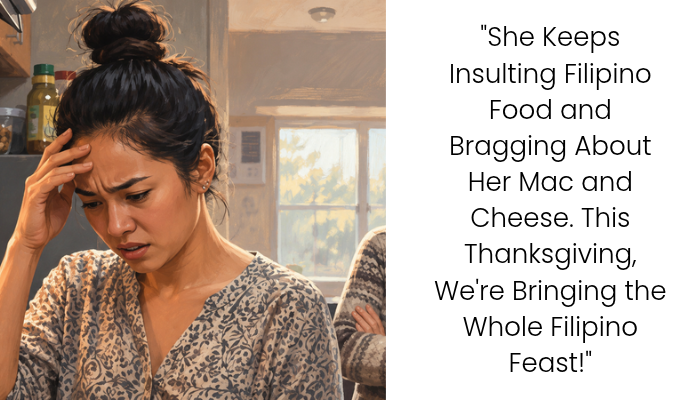
AITA for Helping My Cousin Prepare Filipino Dishes to Prove Her MIL Wrong at Thanksgiving?
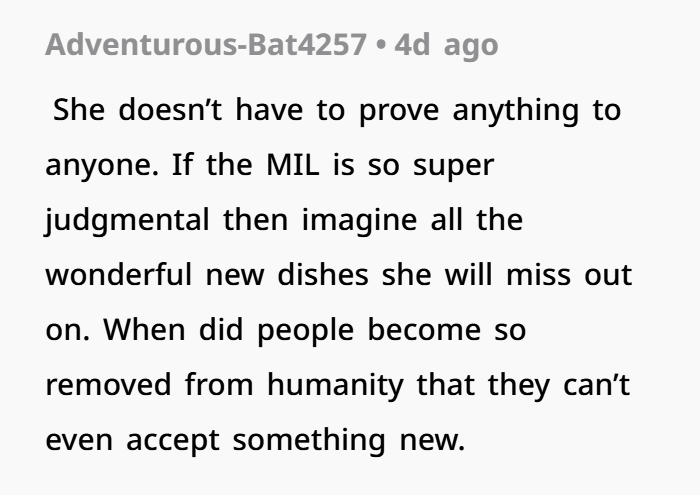
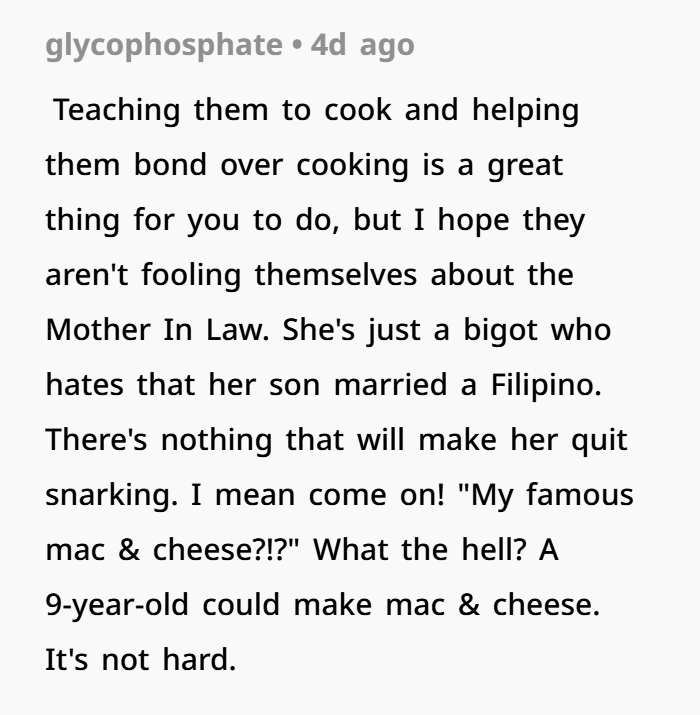
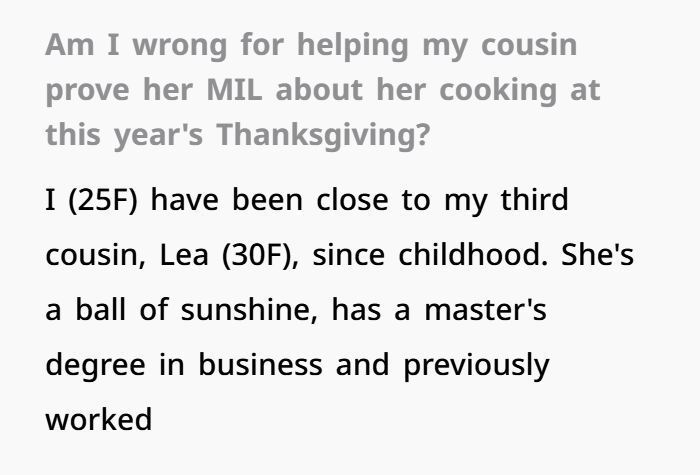
A 25-year-old woman is worried that she may have created an uncomfortable situation for her cousin Lea, who is 30. Lea recently married Dan, 35, and moved from the Philippines to the United States. She enjoys cooking and knows how to make a few simple Filipino dishes, but she wants to learn more traditional recipes. The problem is that her mother-in-law, Karen, often makes unkind comments about her and Dan’s cooking skills. Karen believes she is a great cook and regularly talks about her famous mac and cheese. She has even made unfair comments about Filipino food, calling it plain and simple. Dan usually stands up for his wife, while Lea prefers to avoid arguments and keep family gatherings peaceful.
With Thanksgiving coming up, Dan has an idea. He wants his family to try traditional Filipino food and hopes they will enjoy something new. He asks his cousin’s wife, the original poster, to help him and Lea learn a few popular recipes. She agrees and starts giving them cooking lessons through video calls. Over four weeks, they learn how to make lechon kawali, pancit bihon, lumpiang shanghai, and mango graham float. These cooking lessons become a fun activity for the couple, giving them a chance to spend time together and learn more about Filipino food and culture.
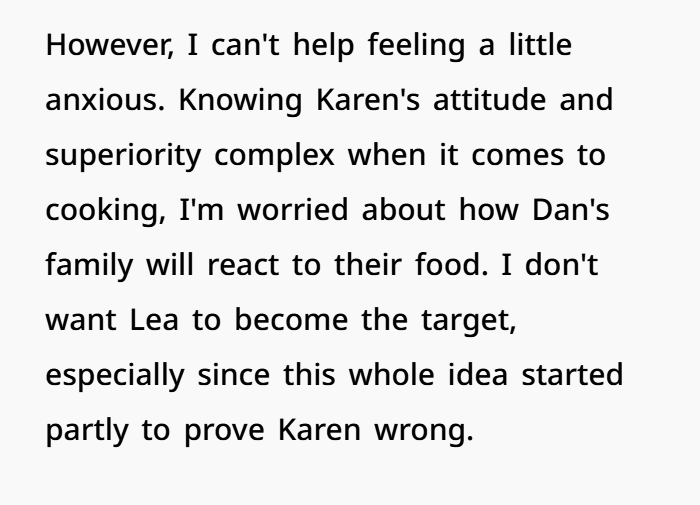
As the Thanksgiving holiday gets closer, the woman starts feeling nervous about the family dinner. She knows Karen has a habit of comparing her cooking with other people’s meals and making comments that can hurt feelings. She worries that Karen may not appreciate the Filipino dishes or may turn the dinner into a cooking competition. What started as a fun way to share family traditions could become an uncomfortable experience for Lea.
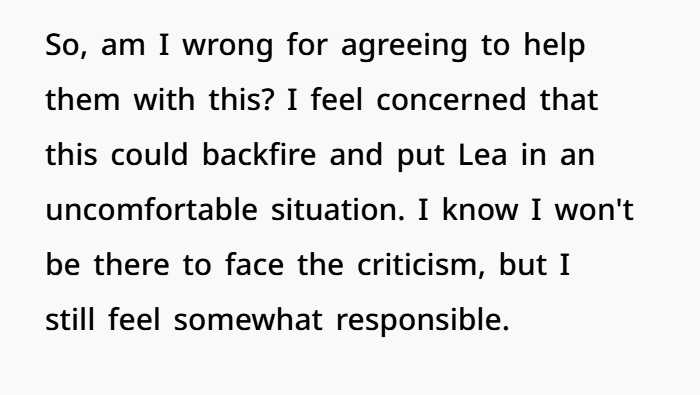
The woman only wanted to help Lea and Dan prepare a special meal and share a part of their Filipino culture with the family. She also wanted Lea to feel proud of her cooking skills and enjoy the holiday. However, she is now wondering if she should have stayed out of the situation. She does not want Lea to feel embarrassed or upset during Thanksgiving. She hopes the family will enjoy the homemade food and understand that sharing different cultures through cooking can make a family gathering more special.

When Food Becomes a Problem in Family Relationships
Food is more than something we eat. It brings back memories, connects us to our culture, and helps families stay close.
For many people, traditional dishes are an important part of their family history. They remind us of home, childhood, and special celebrations.
But in some families, food can also become a reason for arguments. This can happen when people have different cultural backgrounds and do not understand each other’s traditions.
In multicultural families, sharing traditional food can be a lovely way to learn about another culture. However, things can become uncomfortable when someone makes negative comments about the food or the people who prepare it.
This situation shows why food, culture, and family relationships should be treated with care and respect.
1. Food Is an Important Part of Culture
For many families, traditional cooking is a way to stay connected to their roots.
This is especially true for people who have moved to another country. Preparing food from their home country can bring back happy memories and help them feel close to their culture.
Filipino food is a great example. Filipino cooking includes many different flavors, ingredients, and cooking styles.
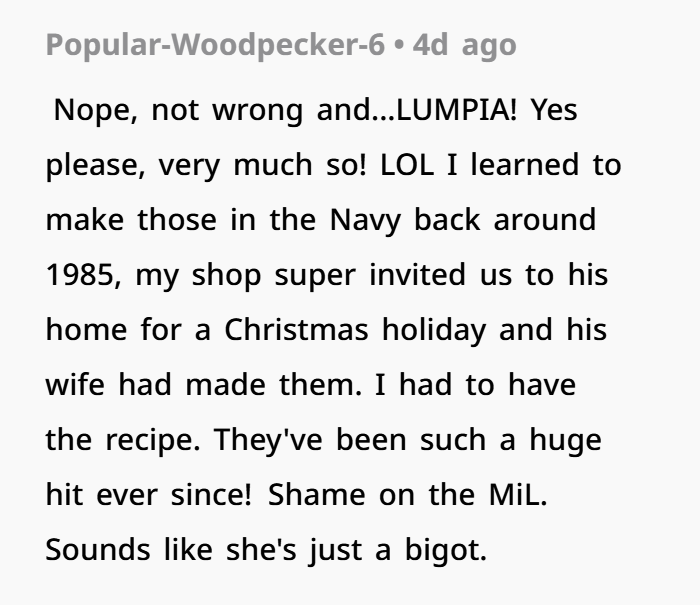
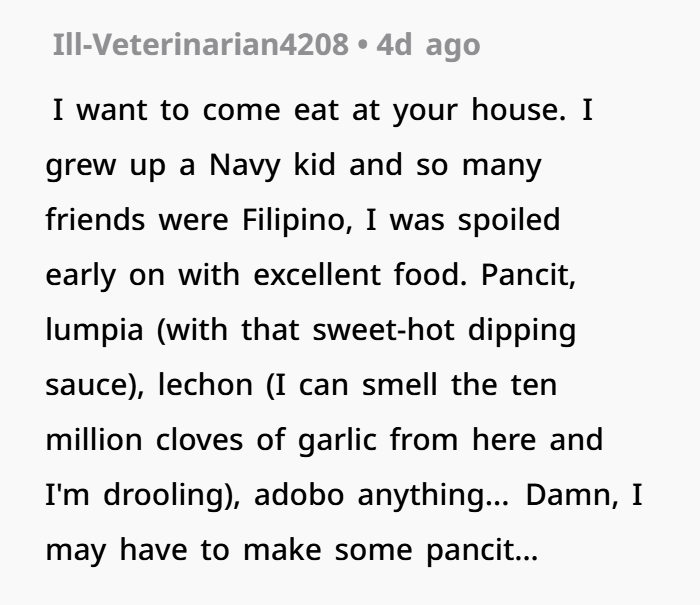
Popular dishes such as lumpiang shanghai, pancit bihon, and lechon kawali are often served during family gatherings, holidays, and special celebrations.
For Lea and Dan, bringing Filipino food to Thanksgiving is more than preparing a different meal. It is a way for Lea to share her background with her husband’s family.
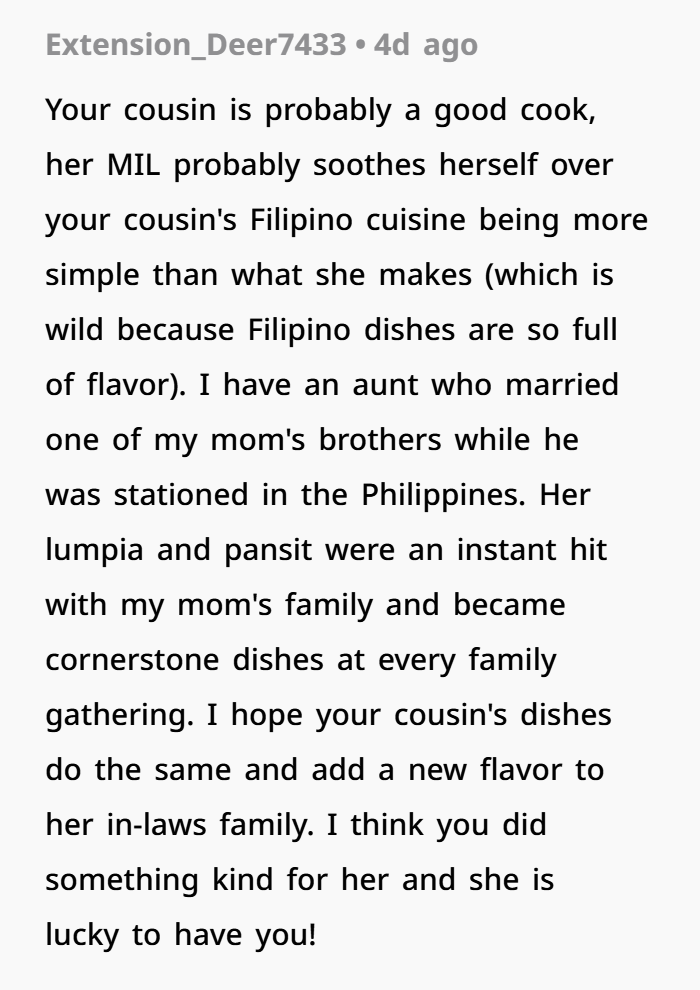
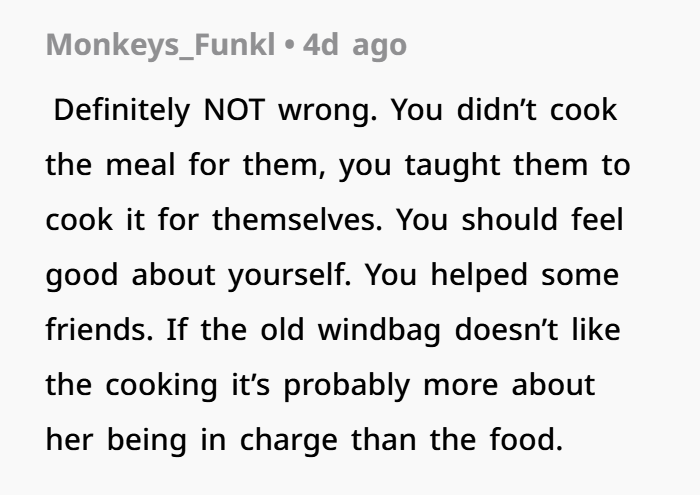
However, Karen does not seem interested in appreciating these dishes. She often talks about Filipino food in a negative way and compares it with her own cooking.
There is nothing wrong with having personal food preferences. Not everyone enjoys the same dishes.
But there is a difference between saying you do not like a particular food and making negative comments about an entire culture.
Every food tradition deserves basic respect.
2. Cultural Differences Can Affect Family Relationships
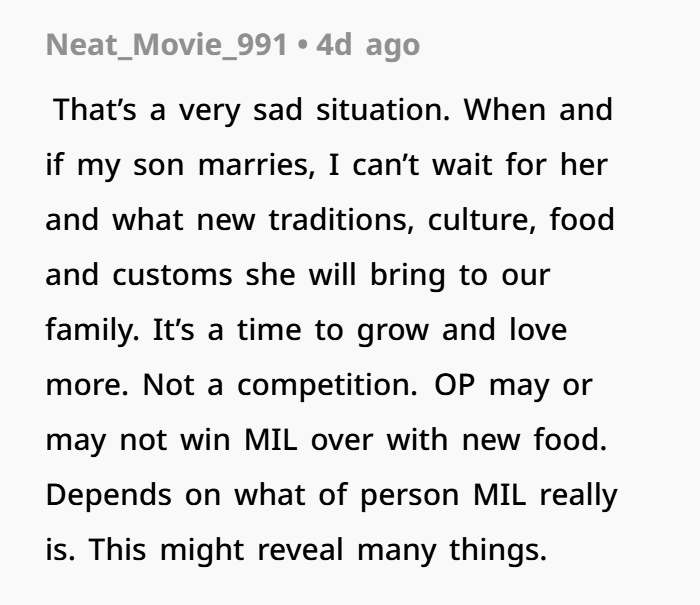
When two people from different backgrounds get married, they often bring different traditions into their new family.
They may have different holiday celebrations, cooking habits, family values, and ways of communicating.
These differences can make family life more interesting, but they can also create misunderstandings.
For immigrants, keeping their cultural traditions alive can be especially important.
Psychologist John W. Berry studied how people adjust to a new culture while maintaining connections to their original traditions. His research on acculturation helps explain why cultural identity can remain an important part of everyday life.
Food is one simple way people keep that connection.
For Lea, cooking Filipino dishes may be a way to share something meaningful with her new family.
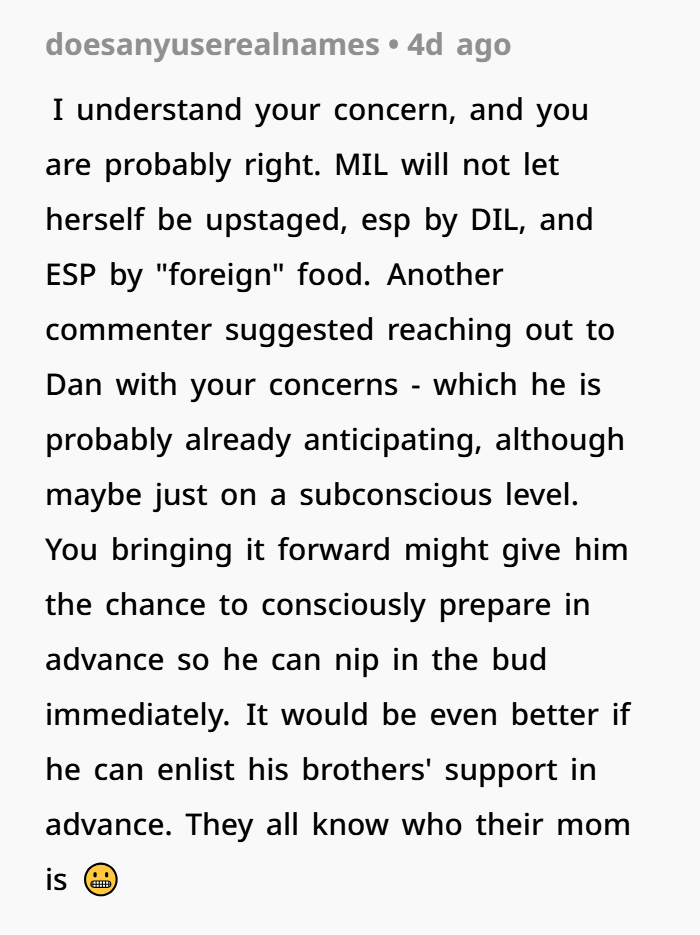
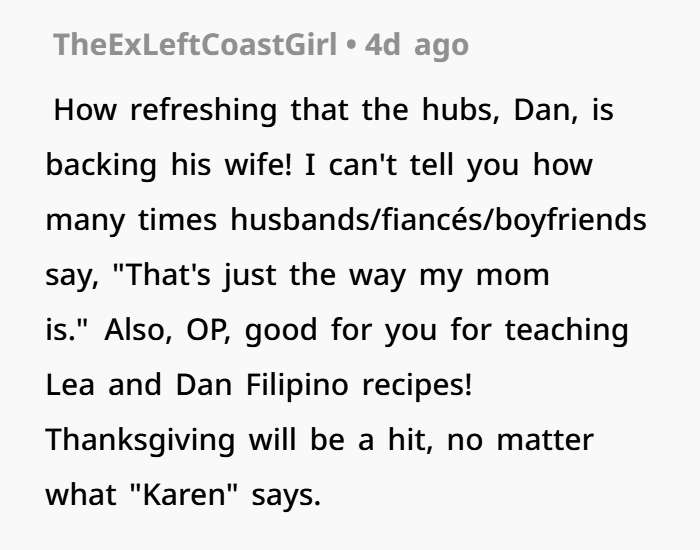
Dan’s support also matters. Instead of asking Lea to change her traditions, he is learning about Filipino cooking and helping her introduce it to his relatives.
This is a positive step toward building a welcoming multicultural family.
3. Thanksgiving Should Be About Sharing Food
Thanksgiving is a time for family, gratitude, and enjoying a meal together.
Many families have special dishes that they prepare every year. Some people are proud of their cooking, and that is perfectly fine.
However, a family dinner should not turn into a cooking competition.
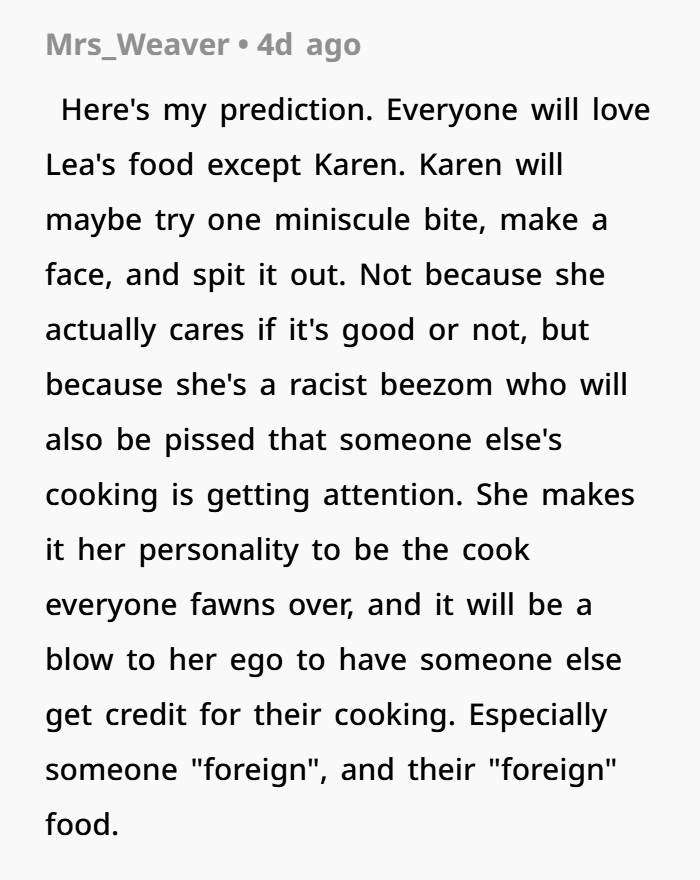
Karen often talks about how good her mac and cheese is. She seems to enjoy being known as the best cook in the family.
But Lea and Dan do not need to prove that their Filipino dishes are better.
They are simply sharing food that is important to them.
A good Thanksgiving dinner can include different flavors, family recipes, and new dishes that everyone gets to try.
The best part of holiday meal planning is bringing people together, not deciding whose recipe deserves the most attention.
Everyone should have a chance to share something special.
4. Negative Comments Can Hurt Family Relationships
Food is personal, especially when it is connected to someone’s culture.
When a family member repeatedly makes negative comments about traditional dishes, it can hurt the person who prepared them.
Lea already knows that Karen does not always appreciate her cooking. She usually avoids arguments and tries to keep things peaceful.
While avoiding conflict can sometimes help, it does not mean that someone should accept disrespectful comments all the time.
This is where Dan’s support becomes important.
He does not need to argue with his mother or turn Thanksgiving into an uncomfortable situation.
He can simply make it clear that making fun of his wife’s culture is not acceptable.
If Karen does not like a particular dish, she can politely choose something else.
Everyone has different food preferences, and that is normal.
But being respectful costs nothing.
5. Is It a Good Idea to Introduce New Food to a Critical Family?
The original poster has spent several weeks helping Lea and Dan learn how to prepare Filipino dishes.
She wants their hard work to be appreciated, and she is worried that Karen may make negative comments again.
These concerns are understandable.
Teaching someone new recipes takes time and effort. It can be disappointing when people do not appreciate the work behind a homemade meal.
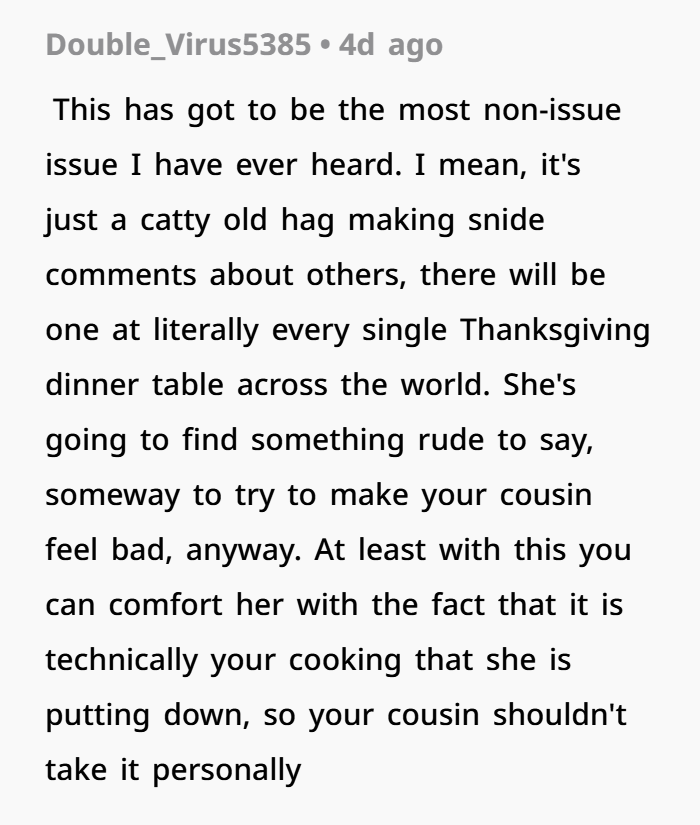
However, the original poster should remember that she cannot control how every family member reacts.
Lea and Dan are adults. They understand the family situation and have chosen to bring these dishes to Thanksgiving.
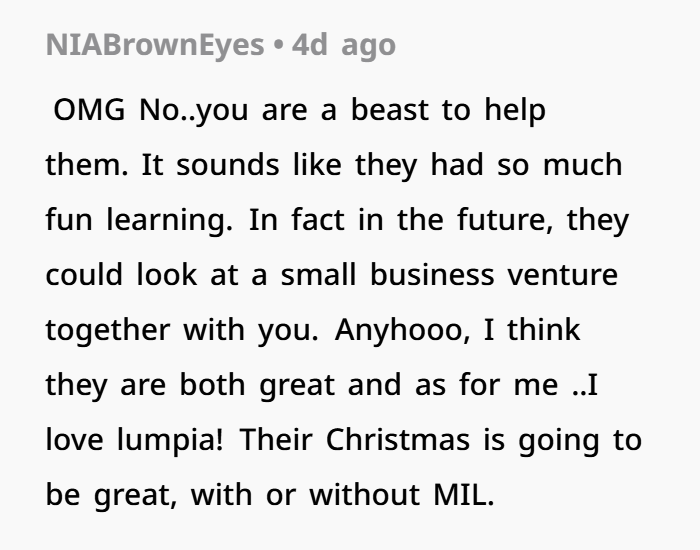
The best thing she can do is encourage them, help them feel confident, and remind them to enjoy the experience.
Cooking should be something people enjoy, especially when they are preparing food for loved ones.
They do not need everyone’s approval to feel proud of their work.
Final Thoughts: Food Should Bring Families Together
This situation is about more than Thanksgiving recipes.
It is about respecting different cultures, supporting family members, and making everyone feel welcome.
Lea and Dan are learning new recipes together and sharing an important part of Lea’s Filipino background.
That is something worth celebrating.
They do not need to prove that Filipino food is better than anyone else’s cooking. They simply need to enjoy the meal and give their relatives a chance to experience something new.
Family gatherings are more enjoyable when people focus on sharing, learning, and spending time together.
The real goal is not to make someone admit that Filipino food is delicious. It is to make sure Lea feels proud of her culture and comfortable sharing it with her family.
People Couldn’t Stay Silent