
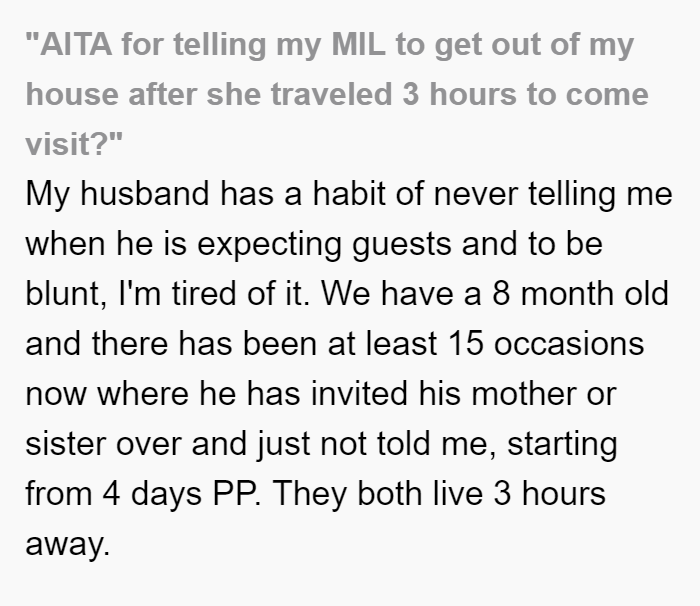
“AITA for telling my MIL to get out of my house after she traveled 3 hours to come visit?”
The woman became frustrated after her mother-in-law arrived at her home without any advance notice while she was trying to take a nap with her 8-month-old daughter.
This was not the first time something like this had happened. According to the woman, her husband often invites family members over without telling her beforehand. She has discussed this issue with him several times and has explained that she prefers to know about visitors in advance, especially when caring for a young child.
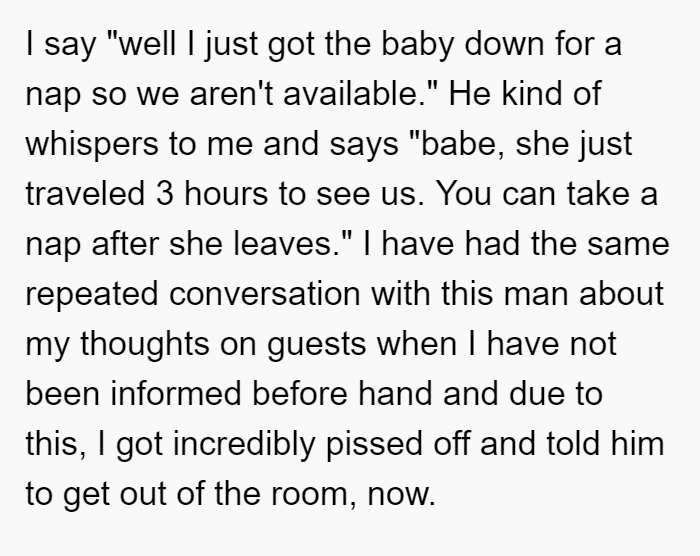
On this particular day, both the woman and her baby were asleep when her husband woke her up to greet his mother. Feeling tired and caught off guard, she told them that she and the baby were unavailable because it was nap time.
Her husband argued that his mother had traveled a long distance to visit and hoped she would spend some time with her. However, the woman felt that the lack of notice was disrespectful and ignored the boundaries she had repeatedly tried to establish.
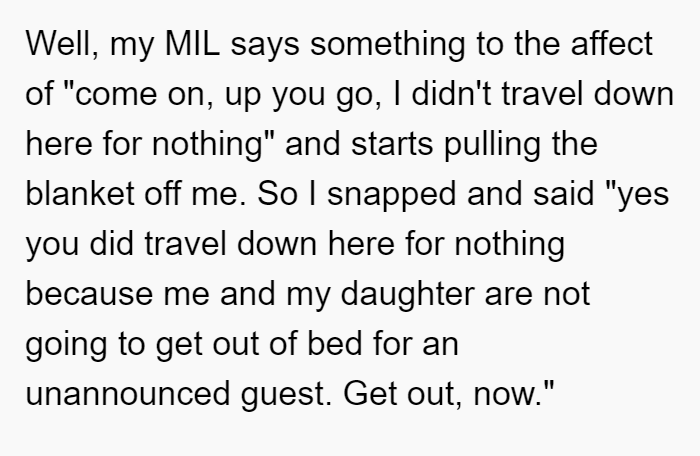
As the conversation continued, tensions grew. The woman stood by her decision and made it clear that she was not willing to host visitors without prior notice. Eventually, her mother-in-law left, leaving both the husband and wife upset.
Afterward, the husband told his wife that he felt embarrassed by the situation. He believed she could have spent a short amount of time with his mother despite the inconvenience. The woman disagreed and explained that the issue was not the visit itself but the ongoing pattern of poor communication.
She maintained that she had not been informed about the visit in advance and felt that her concerns had been repeatedly ignored. From her perspective, the situation was about respect, communication, and consideration within the household.
Looking at the situation from the outside, the disagreement appears to be less about the mother-in-law’s visit and more about an ongoing communication problem between the couple. When expectations are not clearly discussed or respected, even small situations can quickly become larger conflicts.
Moving forward, better communication and mutual respect for household boundaries could help prevent similar disagreements. Creating a shared understanding about guests, schedules, and family visits may help both partners feel heard and supported while maintaining positive family relationships.



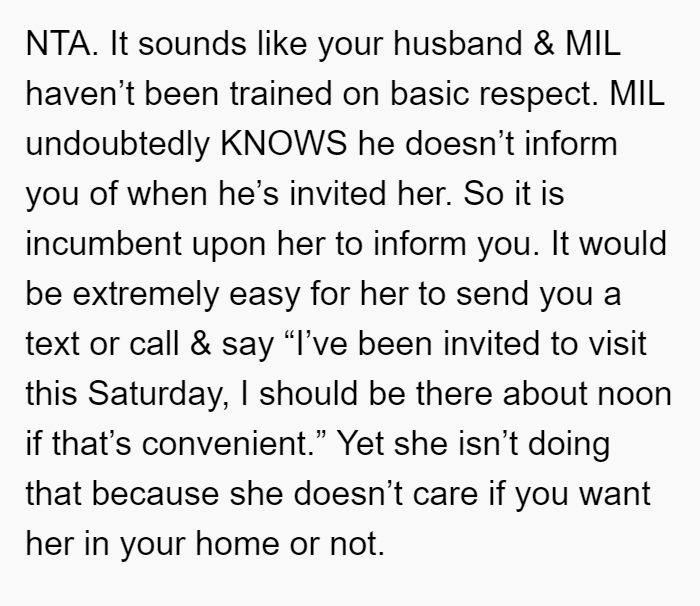
Here’s what top commenters had to say about this one:
ApprehensiveArt3046 said:

MyHairs0nFire2023 said: