
AITAH for “Mansplaining” Breastfeeding? I Just Corrected My Sister’s Baby Food Beliefs
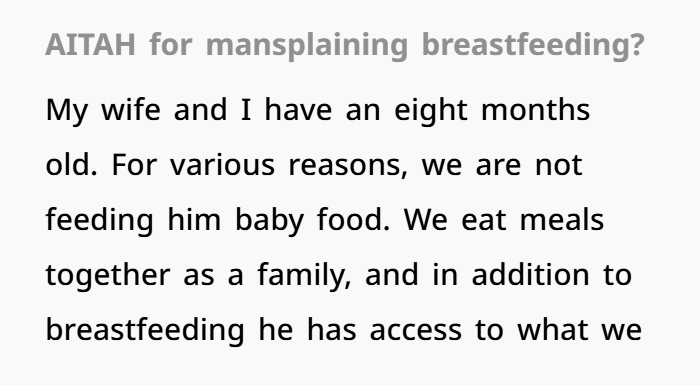
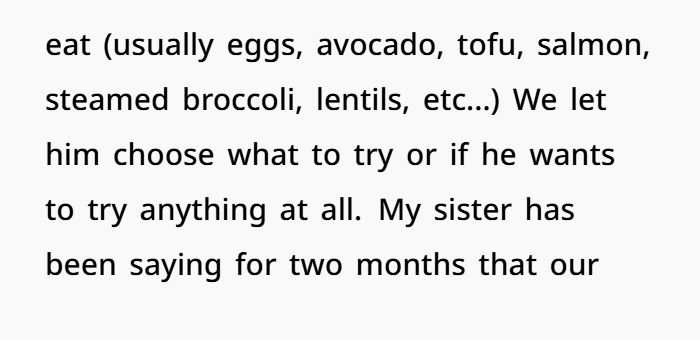
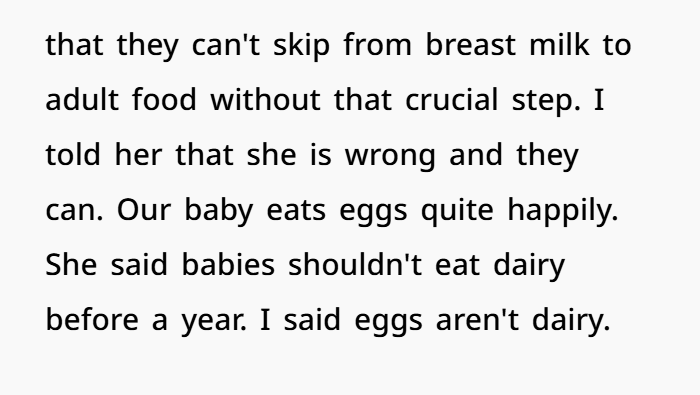
This story dives into the delicate world of parenting advice, unsolicited opinions, and that ever-loaded accusation: mansplaining. A first-time dad, who’s been supporting his wife and breastfeeding journey for eight months, finds himself in a heated argument with his sister about baby food and weaning. Their baby, according to their pediatrician, is thriving on breast milk and soft table foods like eggs, lentils, and tofu. The parents practice baby-led weaning—no purées, no jars—just letting the baby explore real food at his pace alongside continued breastfeeding.
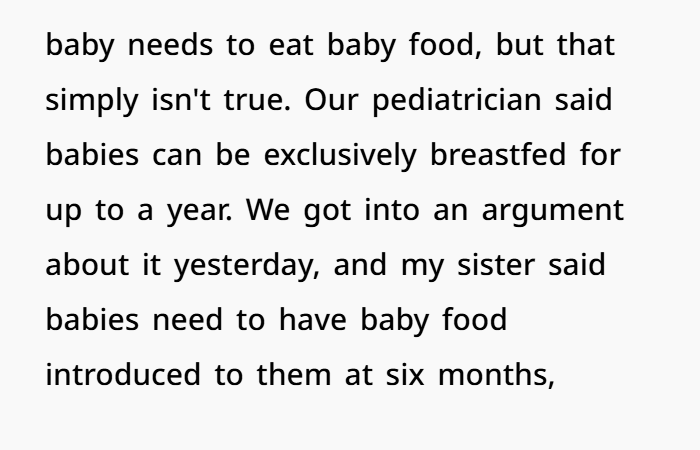
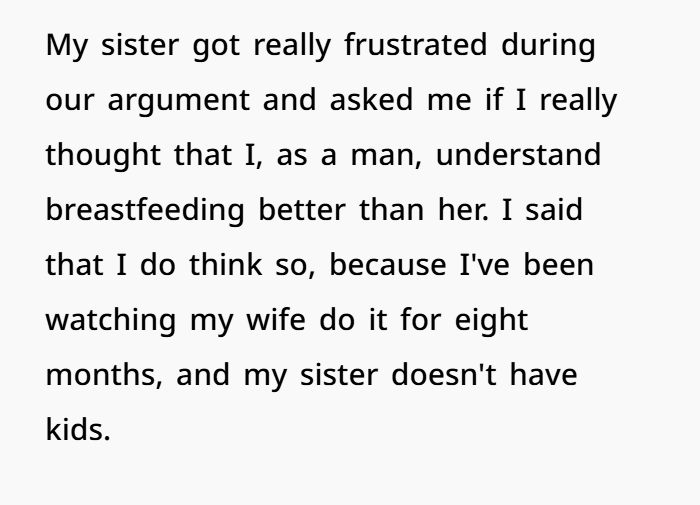
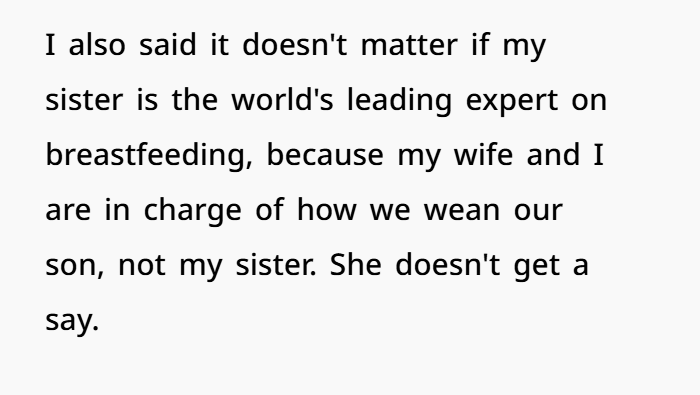
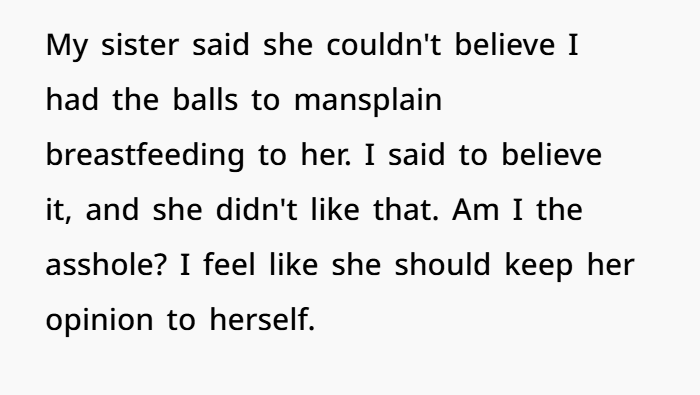
But here’s the catch: his sister (who doesn’t have kids) insists that babies need to eat traditional baby food starting at six months, and anything else is dangerous. Things escalate when she accuses him of “mansplaining breastfeeding,” even though the conversation wasn’t about how to breastfeed, but rather what a baby should be eating. He claps back, defending his role as an informed parent and doubling down that, expert or not, his sister doesn’t get a say in how they raise their son. Now he’s wondering—did he go too far? Or was he just shutting down bad advice?
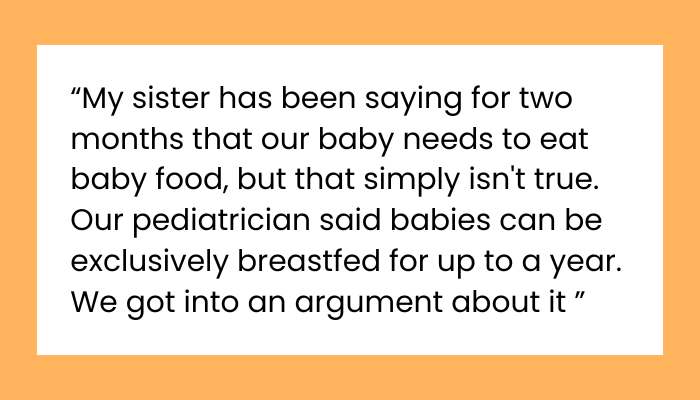
A dad’s childless sister had been insisting for two months that he was feeding his baby all wrong
Alright, so let’s unpack what’s going on here—because this story isn’t just about baby food. It touches on modern parenting choices, gender roles, family dynamics, and communication breakdowns. Let’s walk through it.
1. The Facts on Breastfeeding and Baby Food
Let’s start with the actual baby care part: Was the dad right? Surprisingly to some, yes—he was on point.
The World Health Organization (WHO) and the American Academy of Pediatrics (AAP) both recommend exclusive breastfeeding for the first six months, and continuing breastfeeding for at least one year, with the addition of complementary foods introduced around the 6-month mark.
But here’s the key: that doesn’t have to be baby food. Many parents are now turning to baby-led weaning (BLW)—a method where babies feed themselves finger-sized pieces of soft, nutritious food instead of spoon-fed purées. It’s totally safe when done correctly and even endorsed by many pediatricians. Studies show that BLW can help babies develop better motor skills, reduce picky eating, and make mealtimes more engaging for the whole family (Rapley & Murkett, 2010).
Eggs, avocado, lentils, tofu, and steamed veggies? All totally acceptable BLW foods. The only no-nos at this stage are honey (botulism risk), high-sodium foods, whole nuts (choking hazard), and excessive dairy. But eggs? Not dairy. They’re protein, and unless the baby has an allergy, they’re actually great.
So, in terms of pure parenting facts—the dad knew what he was talking about.
2. Who Gets to Have an Opinion?
This is where things get murky. The sister felt shut down, maybe even embarrassed. She offered strong opinions about how the baby should be fed—and when corrected, she called it mansplaining.
Let’s talk about that word.
Mansplaining is when a man explains something—often to a woman—in a condescending way, assuming she doesn’t know it, usually about a topic she may already be familiar with (or more qualified to speak on). It’s annoying, and it happens way too often, especially in professional or academic spaces.
But was this that?
Here, the dad wasn’t explaining breastfeeding to a lactation consultant or mom of three. He was clarifying weaning and feeding practices to his sister, who doesn’t have kids, and who (based on the story) was sharing outdated or incorrect info. It wasn’t about breast anatomy, lactation science, or anything gender-specific. It was about pediatric feeding guidelines.
Correcting misinformation—especially when it affects your own child’s health—isn’t automatically mansplaining. It’s parenting. Passionate, informed parenting.
3. Gender Dynamics and Emotional Triggers
But that doesn’t mean the sister’s reaction came out of nowhere. In many families, especially those with strong gender norms, dads who take active roles in parenting can unintentionally trigger insecurities.
The sister might have felt:
- Dismissed: Like her voice didn’t matter.
- Embarrassed: Being corrected publicly can sting.
- Undermined: Especially if she prides herself on being nurturing or knowledgeable.
And maybe, just maybe, she’s dealing with her own feelings around not having children, being single, or not being “in the club” of parenthood yet. Sometimes these debates are less about food and more about identity.
So while the dad’s tone may have been justified, a softer approach—“Actually, our pediatrician gave us the green light to do it this way”—might have helped prevent that emotional spiral.
4. Communication Lessons for the Modern Parent
Parenting brings out all the opinions. From “You’re holding the baby wrong” to “I didn’t do it that way and my kids turned out fine,” every family has their peanut gallery. Here’s how to navigate it:
- Stick to the facts: “Our pediatrician supports this” shuts down 90% of nonsense.
- Use “we” language: Emphasize that decisions are made as a parenting team.
- Acknowledge their intent: “I know you care about him and want what’s best.”
- Set boundaries: “But this is working for us, and we’re comfortable with it.”
Shutting down a know-it-all doesn’t have to feel like a courtroom cross-examination. It can be kind, firm, and still deliver the message: You don’t get a vote here.
5. The Real MVP: Supportive Dads
Let’s take a moment to appreciate how involved this dad is. He’s not just showing up—he’s learning, supporting, and advocating. In a world where many moms still shoulder the bulk of parenting duties, having a dad who actually reads the pediatric guidelines and defends the family’s choices? That’s gold.
Research from the National Fatherhood Initiative shows that children with actively involved fathers perform better academically, emotionally, and socially. Supportive co-parenting also improves maternal mental health and strengthens the marital bond.
So no, being a man doesn’t disqualify him from talking about breastfeeding, baby food, or weaning. Being a dad qualifies him.
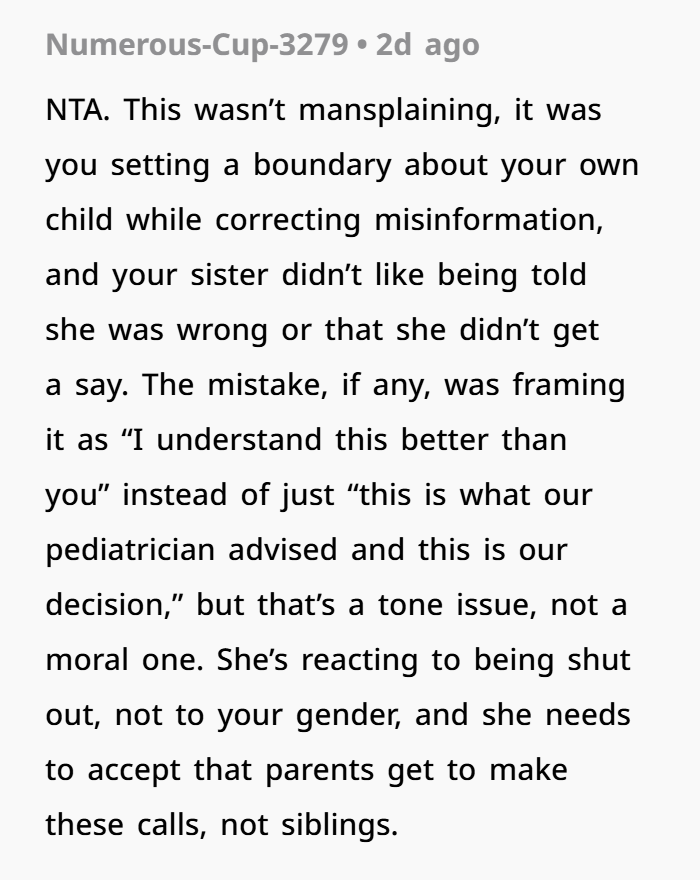
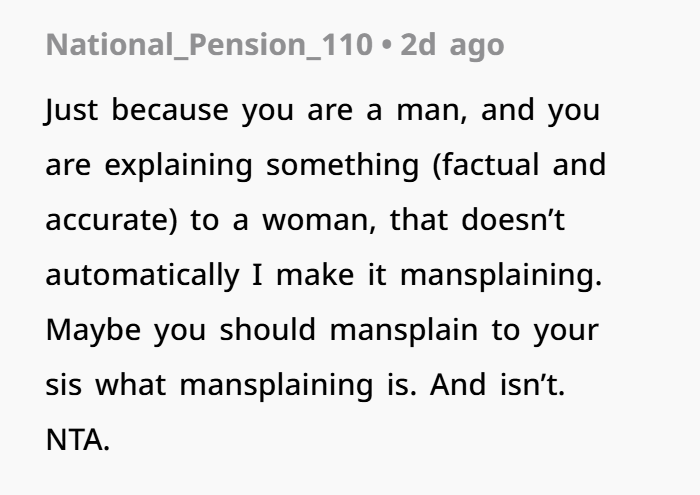
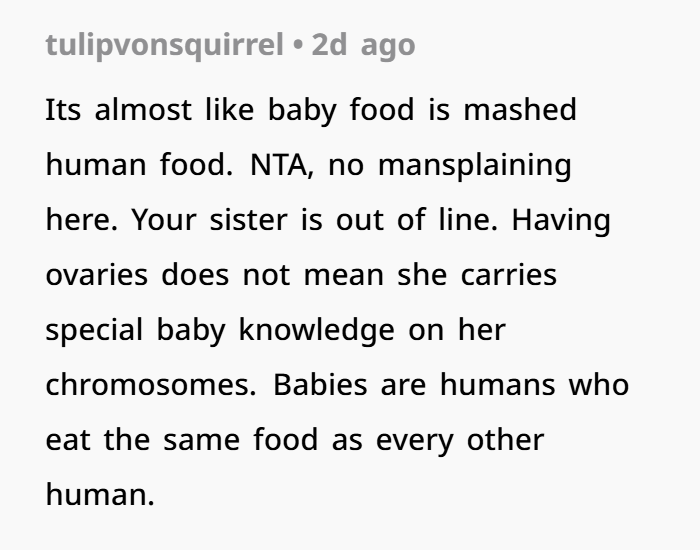
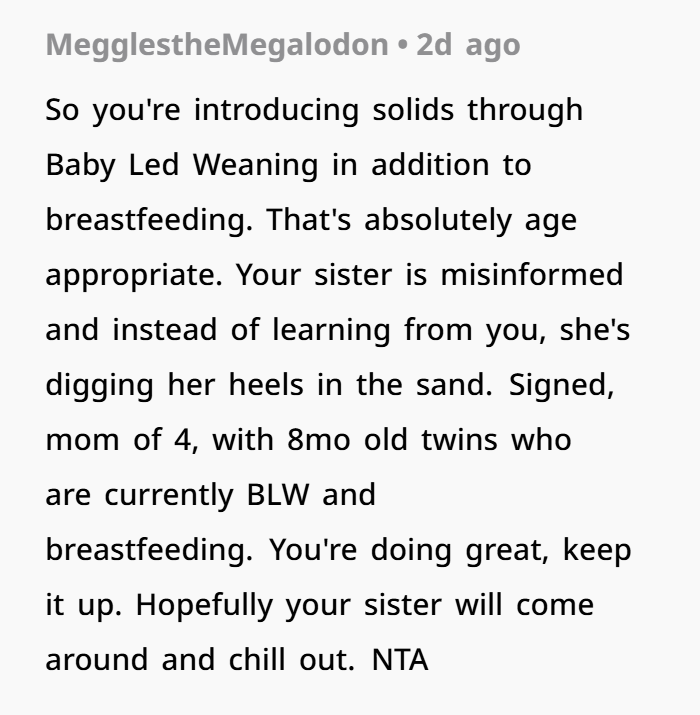
The internet overwhelmingly sided with the dad, declaring it wasn’t mansplaining, just parenting
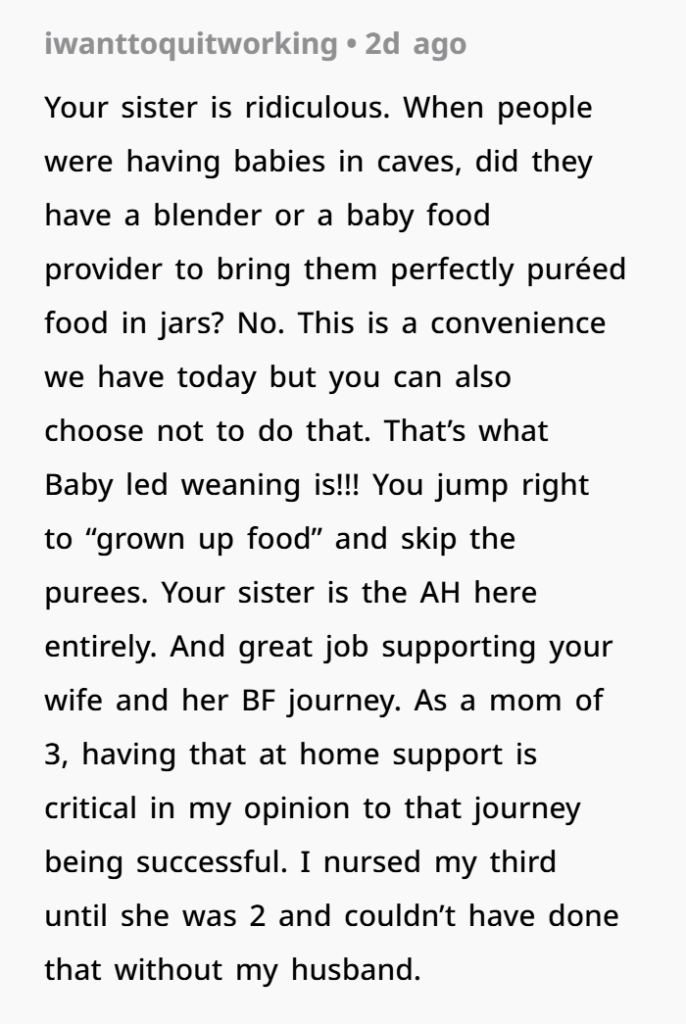
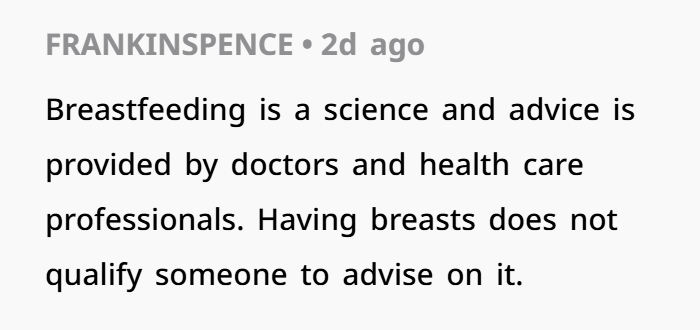
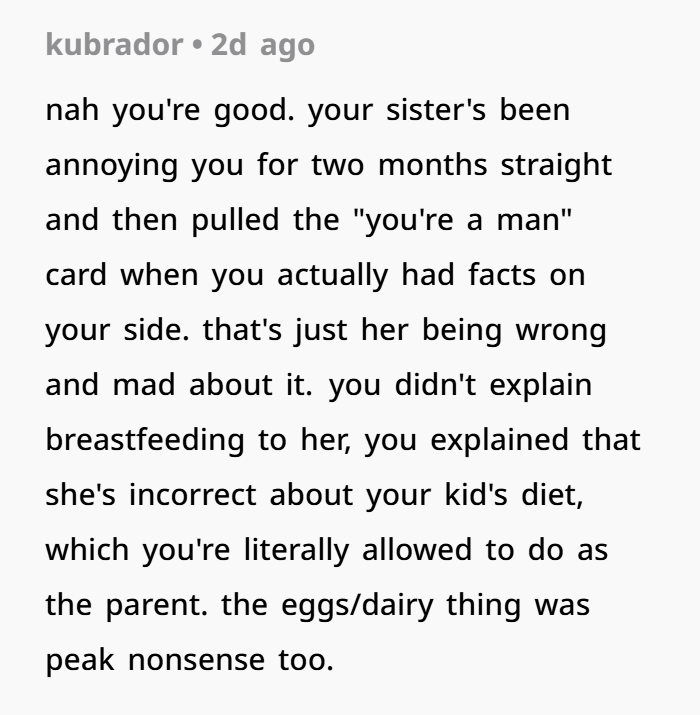
So, AITAH for “mansplaining” breastfeeding? Nah, not in this case. You weren’t patronizing—you were protecting your kid, your partner, and your parenting style. Your sister might’ve felt brushed off, sure. But she also crossed a boundary and got upset when you pushed back.
Sometimes parenting means smiling through unsolicited advice. Other times, it means drawing a clear line and saying, “This is our call.” And if that line gets labeled mansplaining? So be it.
Just maybe skip the “believe it” mic-drop next time—it kinda made you sound like a WWE villain.
Want this turned into a TikTok script, reel voiceover, or Reddit graphic post? Just holler.