
Walking Away From My Family After My Daughter Helped Cover My Wife’s Affair?
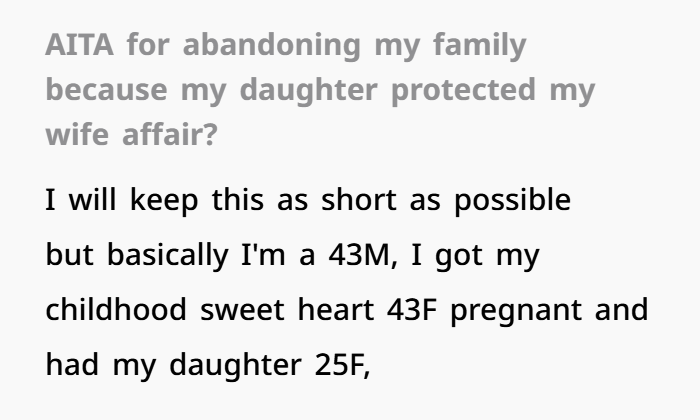
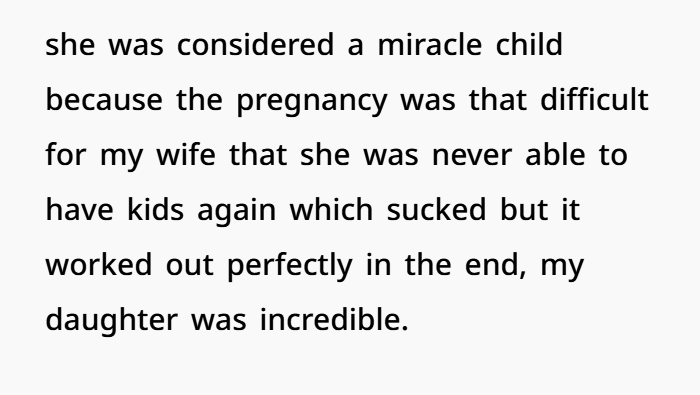
This story is about a 43-year-old father whose long marriage fell apart after he discovered his wife had been having an affair with a wealthy acquaintance. They had been together since they were teenagers, and their only daughter is now 25. After a difficult pregnancy, the wife was unable to have more children. The man believed they were building a stable family life together and had even focused on saving money and planning for early retirement.
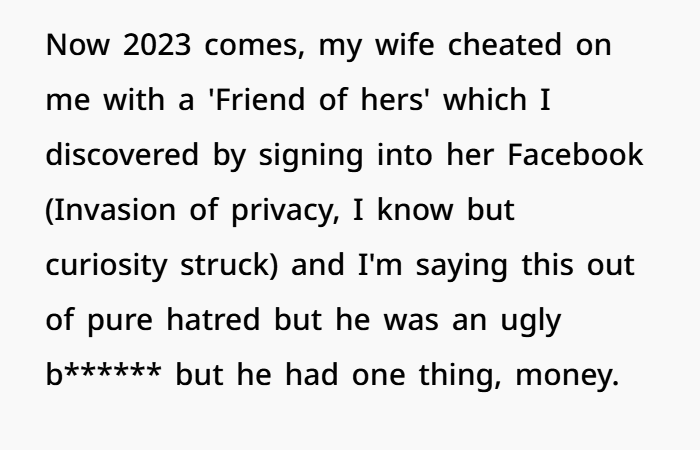
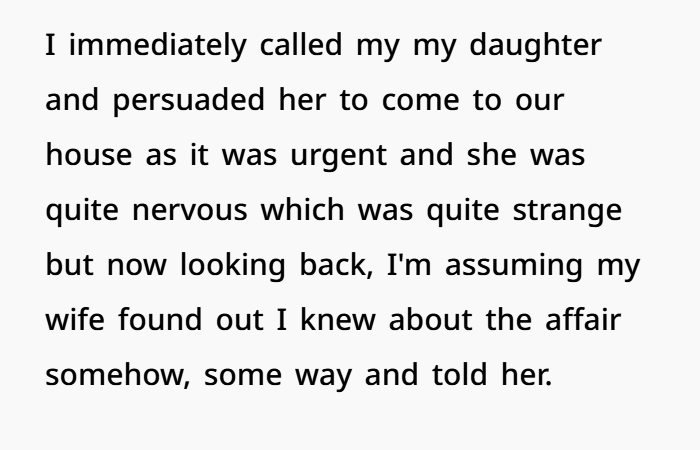
In 2023, everything changed when he checked his wife’s social media account and found messages that confirmed the affair. When he confronted her, she did not deny it. Instead, she said the emotional distance in the marriage and lack of affection pushed her toward someone else. The situation became even more painful when more details came out. His daughter, who first blamed her mother for cheating, was also involved in the situation. It was revealed that she had known about the affair for years and, according to the wife, had been paid by the affair partner to stay silent.
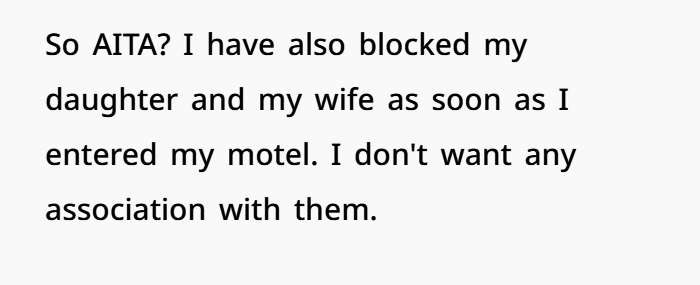
Feeling deeply betrayed by both his wife and daughter, the father felt completely broken and unable to trust them anymore. That same night, he left the family home, packed his belongings, and cut contact with both of them. Now he is left dealing with emotional trauma, trust issues, and the painful end of a long-term marriage and family breakdown.


Situations like this feel very painful because they involve two types of betrayal at the same time: cheating in marriage and broken trust inside the family. Finding out a spouse has been unfaithful is already very hard. But learning that a child also knew about it and helped hide it can make the emotional pain even deeper. This kind of situation is often discussed in relationship counseling, family therapy, and divorce recovery cases.
First, let’s look at the marriage betrayal.
Infidelity is one of the most common reasons for divorce around the world. Many relationship studies show that cheating can cause serious emotional stress and trauma for the betrayed partner. It often feels like the whole relationship was not real, which can lead to shock, sadness, anger, and loss of trust.
In this case, the husband also faced blame from his wife. She said he was not showing enough love or intimacy because he was focused on saving money and planning early retirement. This is something that happens in many long-term marriages. When couples focus too much on work, savings, or financial planning, emotional connection can slowly become weaker.
Experts sometimes call this “emotional distance in marriage” or relationship neglect caused by life goals. However, even if there are emotional problems in a marriage, cheating is not seen as a healthy solution. Relationship counselors usually suggest communication, honesty, or therapy instead of infidelity.
Now, the second and more painful part is the daughter’s role.
The parent-child relationship is based on strong trust and emotional safety. When a child hides something serious like an affair, it can feel like a deep family betrayal. In psychology, this is sometimes called family betrayal trauma. It happens when someone in the family breaks trust or hides important truth.
In this situation, the daughter accepted money from the affair partner and did not tell her father. She was a university student and was facing financial stress. Many students in financial pressure situations struggle with money for tuition, rent, and daily needs. In such cases, people may sometimes make short-term decisions to solve money problems quickly, even if those decisions are not emotionally or morally healthy.
This is sometimes explained in behavioral economics as “financial pressure decision-making,” where stress can lead people to focus only on immediate relief instead of long-term consequences.
For the father, this was very painful. He believed his daughter would come to him if she needed help. So when he learned she accepted money from someone else, he felt hurt and rejected. It made him question their trust and bond as father and daughter.
This kind of misunderstanding is common in families. Young adults often avoid asking parents for money because they do not want to be a burden or cause stress. But this can sometimes lead to secrecy and broken trust later.
After discovering everything, the father left the house and cut contact with both his wife and daughter. This reaction is known in psychology as emotional withdrawal. When people feel deep betrayal, they sometimes distance themselves to protect their mental health and reduce emotional pain.
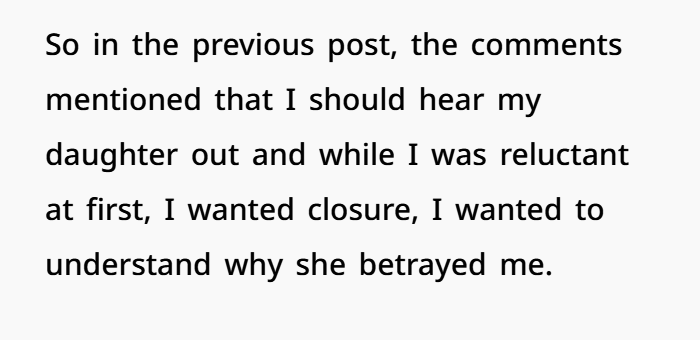
However, cutting off family contact can also create long-term emotional stress. Research on family separation shows that even when distance helps in the short term, people often feel unresolved emotions later and may want closure in the future.
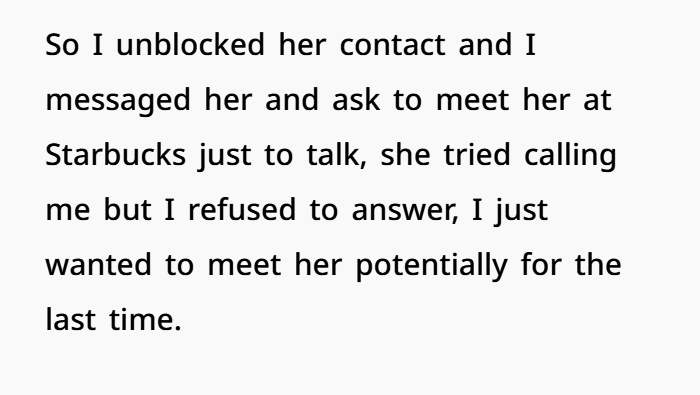
That is what happened when the father later agreed to meet his daughter for coffee.
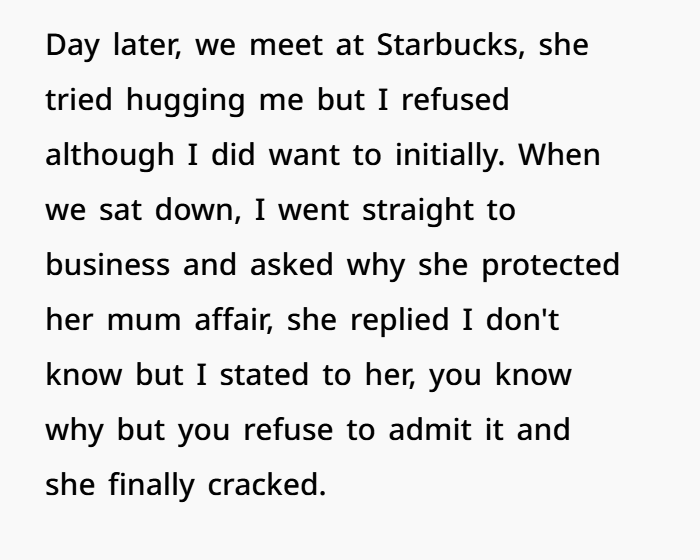
This meeting shows that even after strong conflict, people may still want answers and understanding. He was not ready to forgive her, but he wanted to know why she made that decision.
The daughter saying she is not fully sure why she did it is also realistic. People under stress often make decisions they later struggle to explain clearly. What feels like the only option at the time can look very different later.
When she asked if their relationship could ever improve, his answer—“not for a long time”—shows how trust works in relationships.
Trust rebuilding after betrayal is very slow. In marriage counseling and family therapy, experts say it can take years to rebuild trust. It requires honesty, responsibility, and consistent effort from the person who caused the harm.
But forgiveness does not always mean going back to the same relationship. Sometimes people forgive emotionally but still keep distance to protect themselves.
At the end, the father giving his daughter an old photo frame is a very emotional moment. It shows that he is thinking about the past and what their family used to be like before everything changed.
It is not just about the affair or the money. It is about losing the trust and bond he once had with his family.
Whether their relationship improves in the future will depend on time, healing, honesty, and whether both sides truly want to rebuild trust.
Because in cases like this, the hardest part is not deciding who is right or wrong.
The hardest part is deciding whether broken trust in marriage and family can ever be repaired again.
Here Are The Comments