
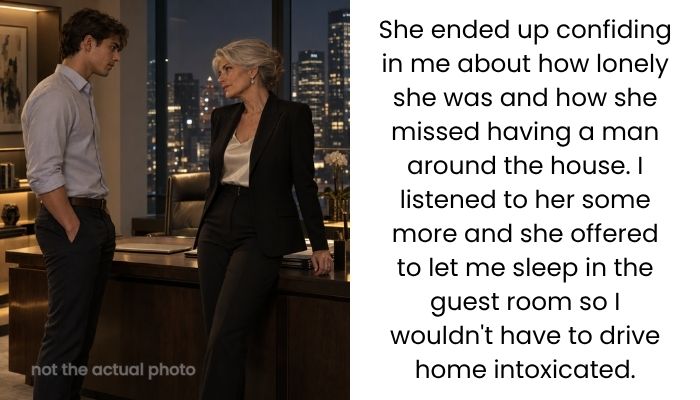
I slept with my boss for a promotion and I’m happy with my decision
Workplace relationships can already get complicated. When one person is the boss and the other is hoping to move up the career ladder, things can become much more difficult.
That is what happened to one 25-year-old employee. His boss, a 60-year-old woman named Maria, offered him an unusual deal. If he slept with her, she would put in a good word with senior people at the company and help him get better workplace benefits.
There was no promise of a promotion. She also told him that saying no would not hurt his job.
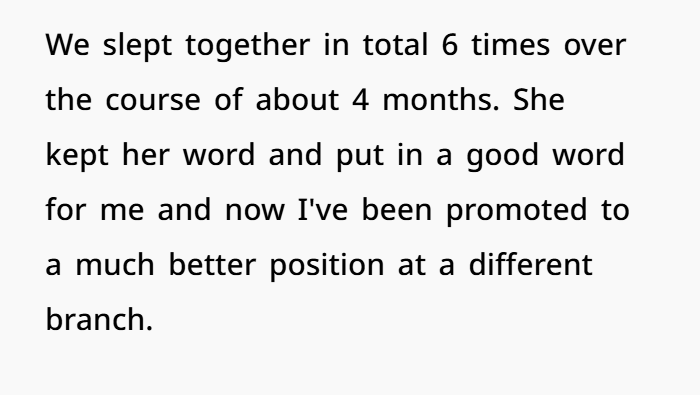
He spent several days thinking about the offer before accepting it. Over the next four months, the two slept together six times.
Maria later kept her side of the agreement. She recommended him to higher-ups, and he eventually received a promotion to a much better position at another branch.
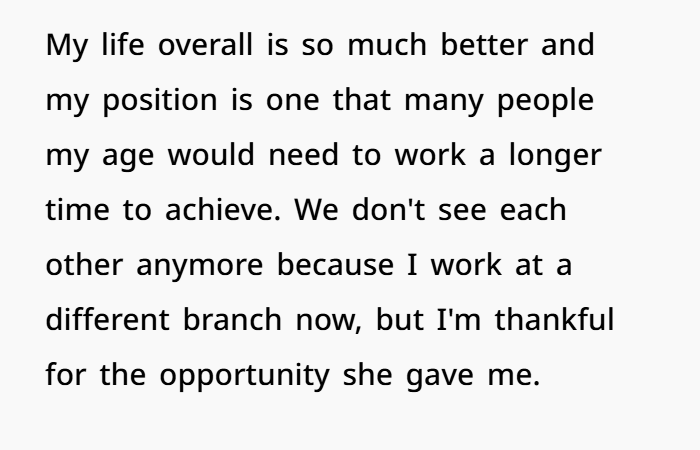
Looking back, he says his career and life improved because of what happened. He knows the arrangement crossed an ethical line, but he remains thankful for the opportunity.
Still, the story raises some uncomfortable questions about workplace relationships, employee benefits, promotions, conflicts of interest, and what happens when a manager has power over someone’s career.

The employee joined the company at 22, shortly after graduating from college. He worked at one of the company’s regional branches, where Maria was his boss.
Maria had already been with the company for many years.
They were not especially close outside work, but their jobs meant they spent plenty of time working together. Maria also seemed to have a soft spot for him.
There was a personal reason for that.
She often told him that he looked almost exactly like her husband had looked at the same age. Maria and her husband had been college sweethearts, so the resemblance clearly meant something to her.
Two years after the young employee joined the company, Maria’s husband died following an illness.
She was devastated.
As far as the employee knew, she never really moved on from the loss.
About a year later, when he was 25, the two attended a work party. As they were leaving that night, Maria asked if he could drive her home.
He agreed because her house was on his way.
When they arrived, Maria invited him inside for a drink. Turning down his boss felt awkward, so he accepted.
One drink soon became several.
During their conversation, Maria opened up about her personal life. She talked about how lonely she had become since losing her husband and how much she missed having a man around the house.
He listened while she talked.
Because he had been drinking, Maria eventually offered him the guest room instead of letting him drive home intoxicated. He accepted and went to bed.
Nothing happened between them that night.
The surprising part came the following morning.
The Offer That Changed His Career
Maria made breakfast and then sat down with him for a serious conversation.
She told him she had spent a lot of time thinking after he went to bed. Then she made her proposal.
Maria asked him to sleep with her.
In return, she said she would put in a good word for him with higher-ranking people at the company.
She did not promise that he would receive a promotion. However, she said she could potentially help him receive other employment benefits, including additional paid time off and access to company offerings.
Maria also made one thing clear: he could refuse.
According to his account, she told him that nothing bad would happen to his career if he said no. They could simply forget the conversation had ever happened.
He didn’t give her an immediate answer.
Instead, he spent the next few days thinking about the offer.
Eventually, he accepted.
He did not find Maria unattractive, and he later described the experience as decent. Their arrangement continued for roughly four months, during which they slept together six times.
Then Maria followed through.
She spoke positively about him to people higher up in the company. He later landed a much better position at another branch.
For him, the result was life-changing.
He believes he reached a career position that many people his age would normally need much longer to achieve. Since transferring branches, he and Maria no longer see each other.
Despite knowing the arrangement was ethically questionable, he says he is happy with his choice and thankful for the opportunity she gave him.
Why a Boss-Employee Arrangement Like This Gets Complicated
The employee may be comfortable with what happened, but from an HR and employment-law point of view, this kind of arrangement can create serious questions.
The biggest issue is the connection between sex and workplace benefits.
The U.S. Equal Employment Opportunity Commission’s sexual harassment guidance says sexual harassment can include unwelcome sexual advances and requests for sexual favors. Federal rules can become especially relevant when sexual conduct affects a person’s employment.
There is even a term often connected with situations where sexual conduct and job benefits become linked: quid pro quo sexual harassment.
The EEOC’s guidance on sexual favoritism and Title VII describes quid pro quo situations as cases where accepting or rejecting unwelcome sexual conduct becomes a basis for employment decisions.
That distinction matters here.
Based only on the employee’s account, Maria told him that refusing would have no negative effect on his job. He also says he considered the proposal for several days and willingly decided to accept it.
That does not automatically settle every legal or ethical question, though. Whether conduct is legally considered harassment depends on the facts and applicable law, including whether the conduct was actually unwelcome.
There is another issue: workplace favoritism.
Maria was not simply another employee. She was his boss and had the ability to influence his career.
The EEOC has specifically addressed situations involving sexual favoritism. Its guidance explains that workplace problems can arise when employment opportunities or benefits are connected to sexual relationships. In some circumstances, favoritism may also affect other workers who were competing for the same opportunities.
Imagine another employee at the branch had spent years trying to earn the same promotion.
That person might understandably be frustrated if a manager’s private sexual relationship helped someone else move ahead.
This is one reason many companies have workplace relationship policies, particularly when a manager becomes involved with someone below them.
The Society for Human Resource Management’s guidance on workplace relationships explains that these policies can help protect employees and companies from concerns involving favoritism, retaliation, and sexual harassment.
Some employers may require a relationship to be disclosed to HR. Others may move one employee to a different reporting structure so that one partner cannot control the other’s pay, promotion, performance reviews, paid time off, or other job benefits.
The power difference is what makes this story particularly uncomfortable.
A 25-year-old employee and a 60-year-old manager can both be consenting adults. The age difference by itself does not explain the workplace problem.
The manager-employee relationship does.
Maria had influence over his professional future. She then connected a sexual request with possible career help.
Even though the employee says he wanted to accept the deal and remains happy with his decision, that power imbalance would still be a major concern for many HR departments.
SHRM notes that workplace romances involving managers and direct reports can be especially risky because of those workplace power dynamics. Questions about favoritism, pressure, conflicts of interest, and possible retaliation can quickly appear, even when both people initially describe the relationship as consensual.
Of course, this particular story did not end with an angry breakup or a workplace complaint.
Maria apparently kept her promise. The employee received her recommendation, moved to another branch, and ended up in a stronger position professionally.
He also does not describe himself as feeling pressured or harmed.
Instead, he sees the experience as a trade he willingly accepted.
That is perhaps what makes the story so complicated.
From his point of view, the decision worked. He got a major career opportunity, Maria got the companionship she wanted, and the two eventually went their separate ways.
From a workplace ethics and human resources perspective, however, tying sexual access to career opportunities creates a conflict that reaches beyond the two people involved.
A promotion is not just personal. Other employees may be competing for the same position, salary increase, paid time off, or career development opportunities.
That is why many workplace policies focus not only on whether two adults consent to a relationship, but also on whether one person can influence the other’s employment.
The employee may never regret his choice.
But his story shows exactly why a relationship between a boss and subordinate can become much more complicated the moment promotions, workplace benefits, and career advancement enter the conversation.
See the comments to know what people said





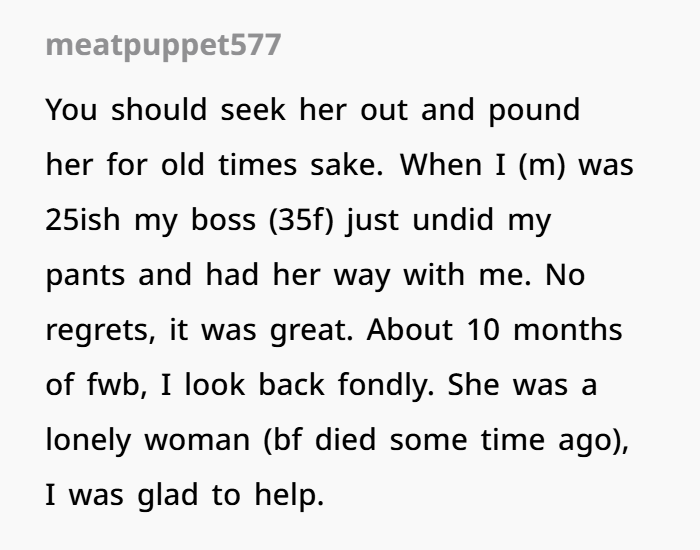
In the end, the employee does not regret what happened. He made the choice after thinking about it for several days, and he says the arrangement helped him reach a much better place in his career.
Maria also kept her promise. She put in a good word for him, and he eventually moved to another branch with a stronger position. Today, the two no longer see each other.
Still, the story shows why workplace relationships between managers and employees can get messy very quickly. Once promotions, paid time off, employee benefits, or other career opportunities are connected to a personal relationship, questions about favoritism and workplace ethics are hard to avoid.
For him, the decision worked out and he remains happy with it. But another employee in the same situation could have a very different experience.
That is what makes this story so unusual. He knew the arrangement crossed an ethical line, made his choice anyway, and walked away feeling that it changed his life for the better.