
How AI Is Helping Scientists Design New Materials Faster
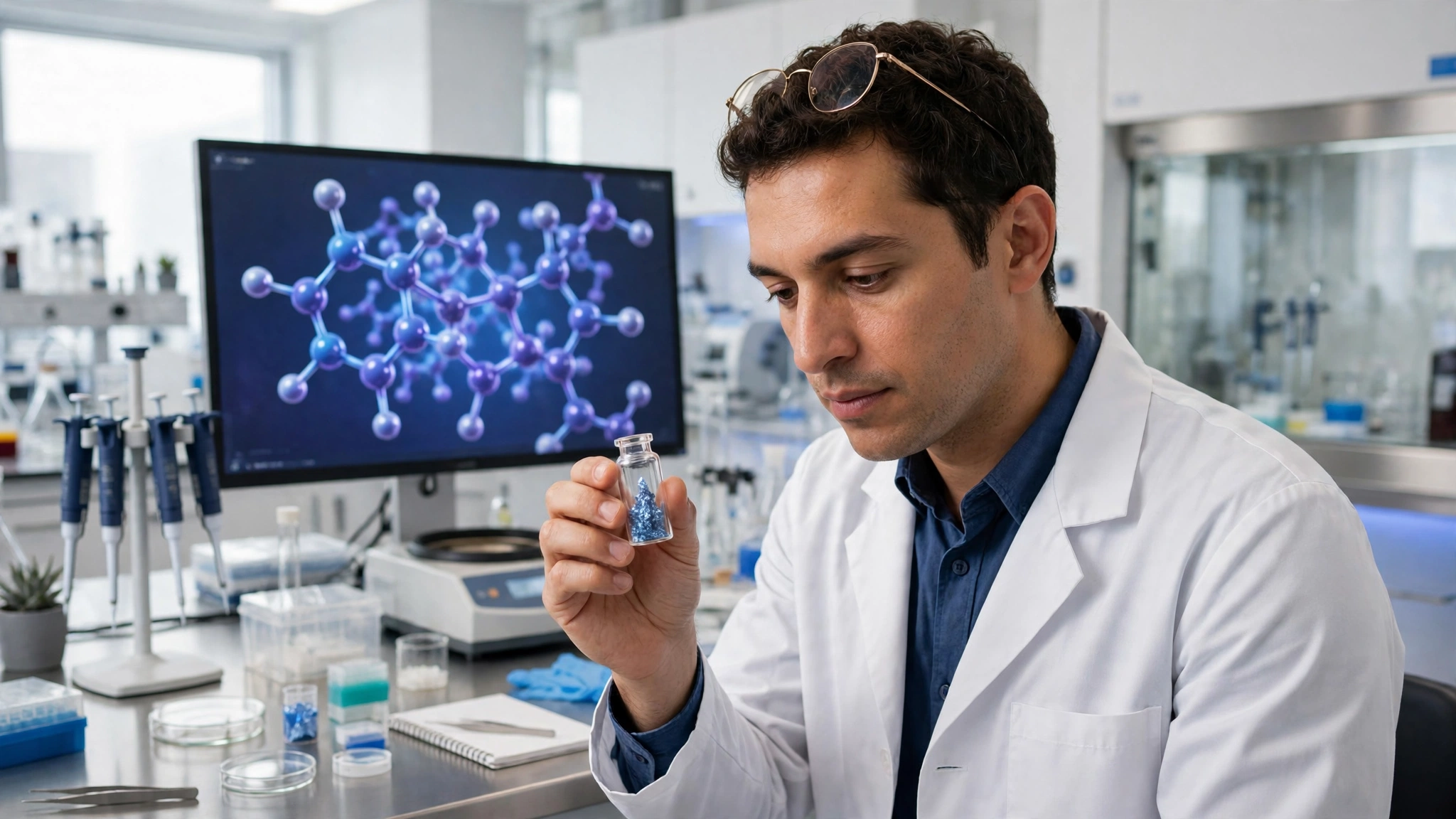
AI designing new materials is changing one of the slowest jobs in science. Finding a new material used to take years of trial and error in a lab. A researcher would mix, heat, and test one sample at a time, hoping to find a combination with the right properties. AI now lets scientists search through millions of possible materials on a computer before they make a single sample.
The results have been striking. In November 2023, Google DeepMind announced GNoME, an AI system that predicted more than two million new crystal structures. In early 2024, Microsoft and the Pacific Northwest National Laboratory used AI to find a new battery material in weeks, a job that would normally take years. This article explains how AI is speeding up materials science, where it is already working, and what it means for batteries, electronics, and medicine.
Why Finding New Materials Is Hard
A material is defined by its atoms and how they are arranged. Change the arrangement, and you change the properties: how strong it is, how well it conducts electricity, how it reacts to heat. The problem is the number of possibilities. Even a simple mix of a few elements can be arranged in millions of ways, and each arrangement has different properties. Testing them all by hand is impossible.
Traditionally, scientists worked from experience and theory. They would guess a promising combination, make it in the lab, test it, and then adjust. Each round took days or weeks. A new battery material or a better solar cell could take a decade to move from an idea to a working product. That slow pace limited how fast clean energy, electronics, and medicine could improve.
AI changes the search. Instead of testing one material at a time, a model can predict the properties of millions of candidates in hours. The scientist then makes and tests only the most promising ones. The lab work is still essential, because a prediction is not a proof, but the number of wasted experiments falls sharply.
How AI Designs Materials
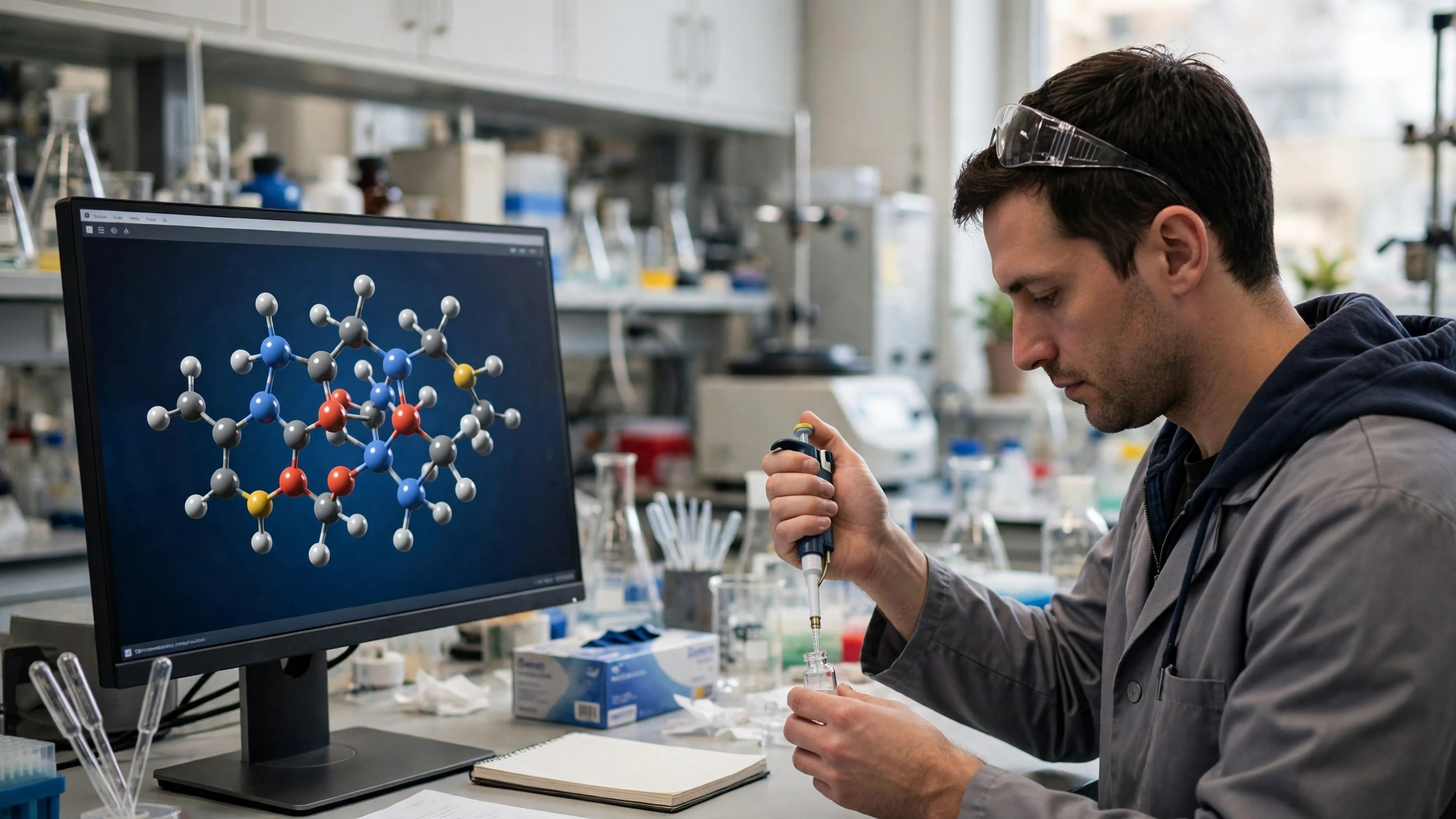
The process usually starts with data. AI models are trained on large databases of known materials, such as the Materials Project, which holds information on tens of thousands of crystal structures and their properties. The model learns the patterns: which atomic arrangements make a good conductor, which make a stable crystal, which make a material that bends without breaking.
One approach is prediction. Given a structure, the model predicts its properties, such as stability, energy, and conductivity. This lets scientists screen huge lists of candidates quickly. DeepMind’s GNoME used this approach to predict 2.2 million new crystal structures, of which about 380,000 were judged stable enough to be worth making. Before GNoME, researchers had found only a fraction of that number over decades of work.
A second approach is generation. Instead of screening a list, the model creates new structures that meet a target, such as a material that conducts lithium ions well but uses no rare metals. This is a harder problem, and it is where the newest models are heading. The scientist states the goal, and the model proposes candidates that fit it.
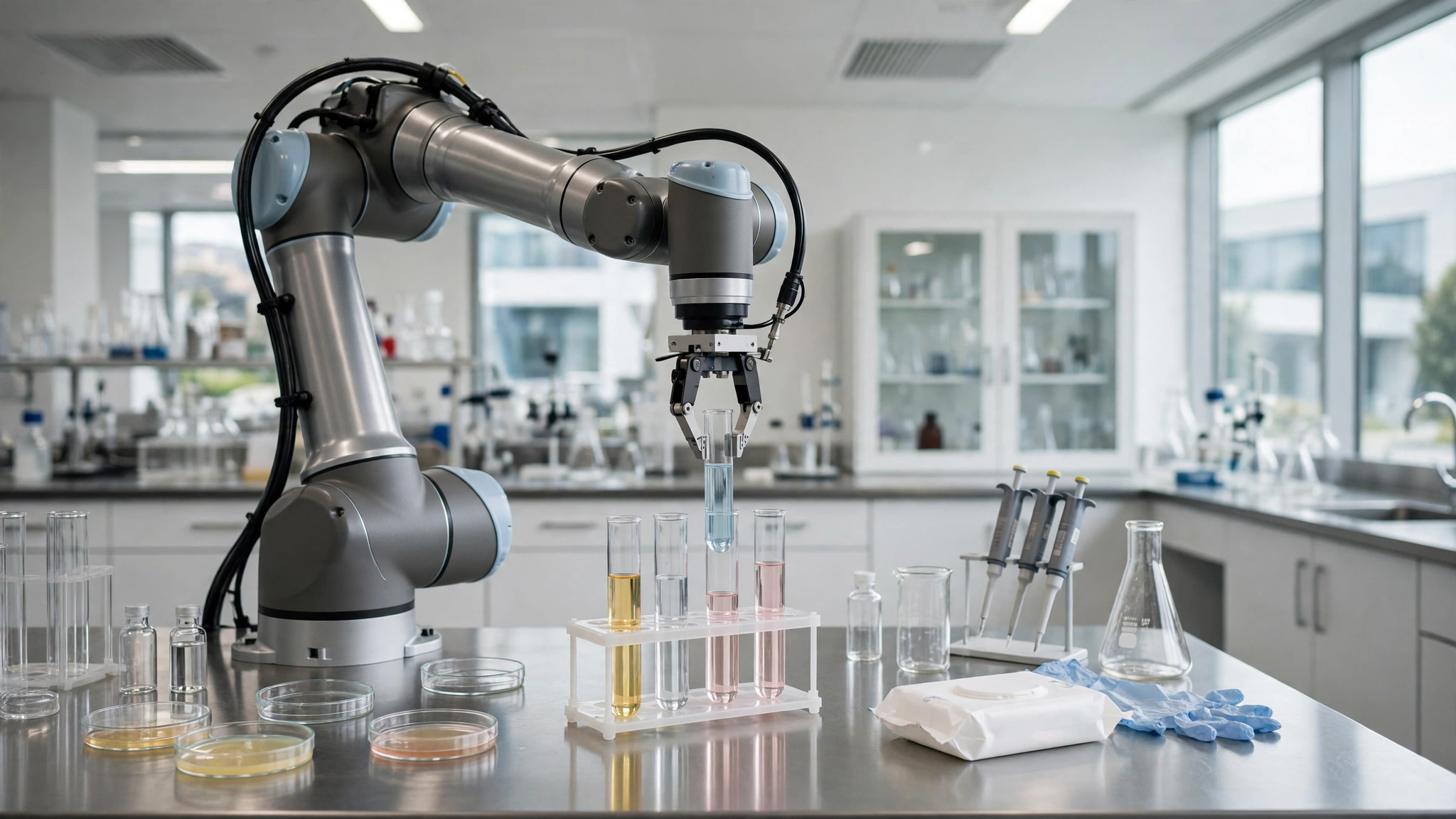
A third piece is the autonomous lab. At Lawrence Berkeley National Laboratory, the A-Lab is a robotic system that can make and test new materials on its own, guided by AI. It mixes ingredients, heats them, checks the result, and decides what to try next. The human scientist sets the goal and reviews the results, while the robot does the repetitive work. This is the same agent pattern described in our guide to agentic AI, applied to a laboratory instead of an office.
Simulation plays a supporting role too. Before a material is made, scientists can test it in a computer model of the physical world. These models, related to the AI world models used in robotics, predict how a material will behave under heat, pressure, or stress. The better the simulation, the fewer lab tests are needed.
| Method | What it does | Example |
|---|---|---|
| Property prediction | Predicts how a known structure will behave | GNoME screening of crystal structures |
| Generative design | Creates new structures that meet a target | Models proposing battery materials |
| Autonomous labs | Makes and tests materials without constant human input | Berkeley A-Lab |
| Simulation | Tests a material in a computer before making it | Molecular dynamics, density functional theory |
The table above shows the four ways AI helps in materials science. Prediction and generation find the candidates, autonomous labs test them, and simulation checks them before they are made.
Where AI-Designed Materials Are Already Making a Difference
Batteries are the clearest success. In January 2024, Microsoft and the Pacific Northwest National Laboratory announced that AI had screened 32 million candidate materials and found a new solid-state battery material that uses less lithium. The whole process, from screening to a working sample, took about 80 hours of lab work. A traditional search would have taken far longer. Better batteries matter for electric cars, phones, and storing energy from solar and wind power.
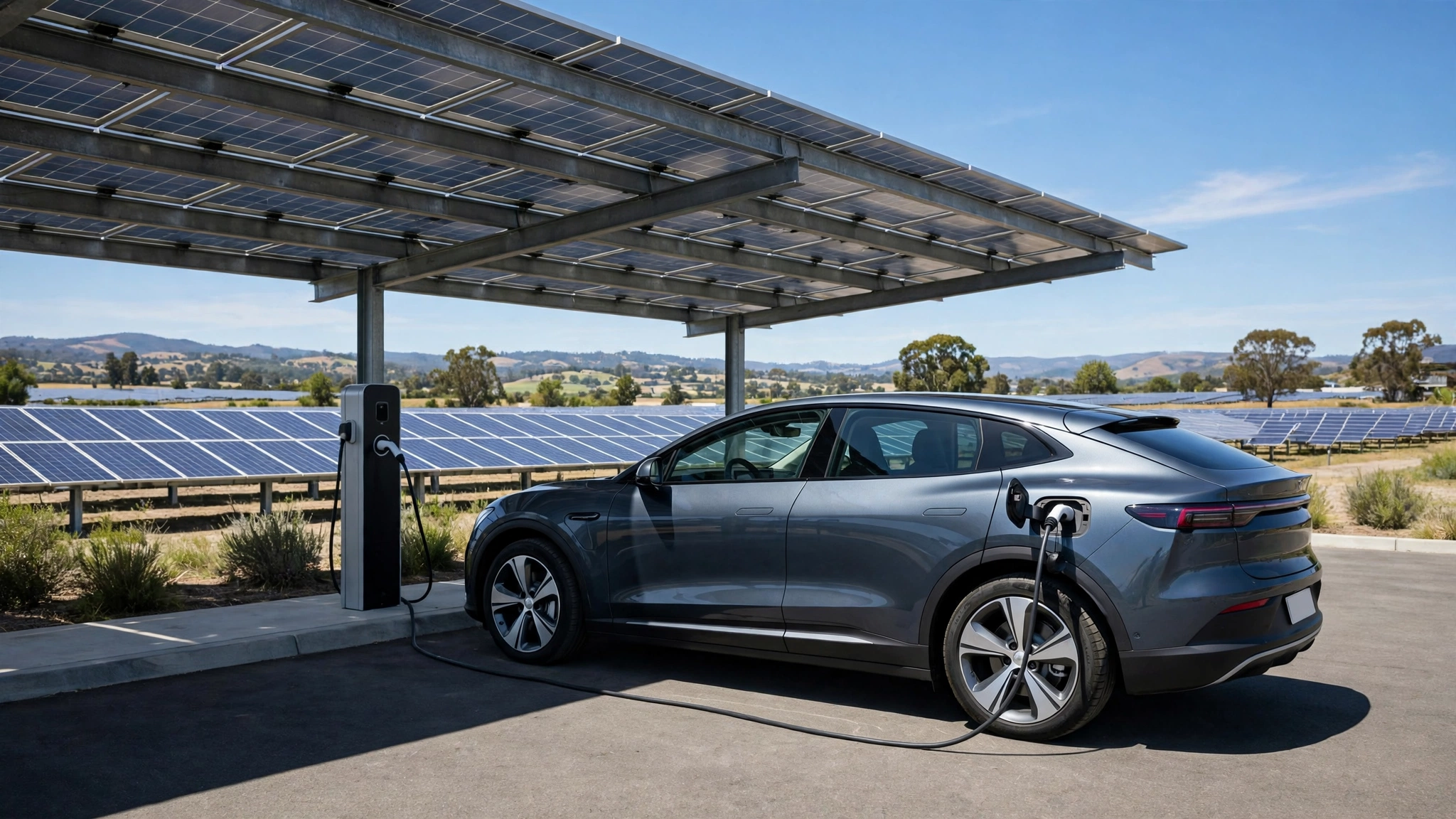
Solar cells are another area. AI is helping researchers find materials that capture more sunlight and last longer in the weather. Perovskites, a class of materials that can be printed like ink, are a leading example. AI models are screening perovskite mixes to find the ones that are both efficient and stable, two properties that are hard to get at the same time.
Medicine benefits as well. DeepMind’s AlphaFold 3, released in May 2024, can predict how proteins interact with other molecules, including drugs. That helps researchers design new medicines and understand how a drug will behave in the body. Materials science and drug discovery use different tools, but the pattern is the same: AI predicts, and the lab confirms.
Electronics and chips are a quieter use. As chips get smaller, the materials inside them matter more. AI is helping engineers find insulators, conductors, and semiconductors that work at tiny scales and high temperatures. This work is less visible than a new battery, but it shapes the computers and phones of the next decade.
Clean energy needs new catalysts, and AI is helping there too. A catalyst is a material that speeds up a chemical reaction without being used up, and better catalysts could make green hydrogen cheaper to produce and help capture carbon dioxide from industrial exhaust. Researchers are using AI to screen catalyst materials in the same way they screen battery materials: predict first, test second. The candidates that pass the screen go to the lab, where they are tested in real conditions. This is slow, careful work, but the payoff is large. A cheaper catalyst for hydrogen or carbon capture could change the economics of clean energy in the same way a better battery changes electric cars.
Challenges and Limits to Keep in Mind
A prediction is not a material. Many of the structures AI proposes are hard or impossible to make in a real lab. Some need extreme heat or pressure. Some fall apart when exposed to air. The gap between a computer prediction and a working sample is still the biggest bottleneck in the field, and closing it needs better models and better lab tools.
Data quality is a real problem too. AI models learn from published results, and published results are biased toward success. Failed experiments are rarely published, so the model sees far more wins than losses. That can make it overconfident about materials that will not work. Researchers are now building databases that include failures, so the models learn from both.
Cost and access matter as well. Training a large materials model needs computing power and clean data, and the best systems are built by large companies and national labs. Smaller universities and startups may not have the same resources. Open databases such as the Materials Project help, but the gap is real.
There is also the question of safety. A new material could be toxic, flammable, or harmful to the environment. AI can screen for some of these risks, but it cannot replace careful testing. Any new material that goes into a product needs to pass the same safety checks as one found the old way.
Practical Tips / Examples / Things to Know
- Start with a clear target, such as a battery that charges faster or a solar cell that lasts longer, before you ask AI to search.
- Use open databases such as the Materials Project to explore known materials before you run your own models.
- Treat AI predictions as a shortlist, and plan lab time to test the top candidates in the real world.
- Keep records of failed experiments too, because they make the models smarter.
- Combine AI screening with simulation, so a candidate is tested in a computer model before it is made in the lab.
- Work with a materials scientist when you use AI tools, because domain knowledge is what turns a prediction into a useful material.
- Check the safety and environmental impact of a new material early, not after it is already in a product.
Common Mistakes / Considerations / What to Avoid
- Treating an AI prediction as a finished material, when it still needs to be made and tested.
- Searching without a clear target, which produces a long list of candidates with no real use.
- Ignoring failed experiments, which leaves the model blind to what does not work.
- Trusting a model trained on one kind of material to predict a very different kind.
- Skipping safety checks because the AI said a material looks safe.
- Expecting AI to replace lab work, when it only makes the lab work faster and more focused.
- Using a model without checking where its training data came from and what it covers.
Final Thoughts
AI is making materials science faster, but it is not making the lab disappear. The best results come when AI and scientists work together: the model searches millions of candidates, and the scientist chooses, tests, and refines the best ones. Batteries, solar cells, medicines, and chips are already benefiting from that partnership. As the models improve and more labs automate their testing, the pace will only increase. The materials of the next decade, from longer-lasting batteries to cleaner energy, will likely be found first on a computer, and only then in a lab.