
What Are AI World Models and How Could They Transform Technology?
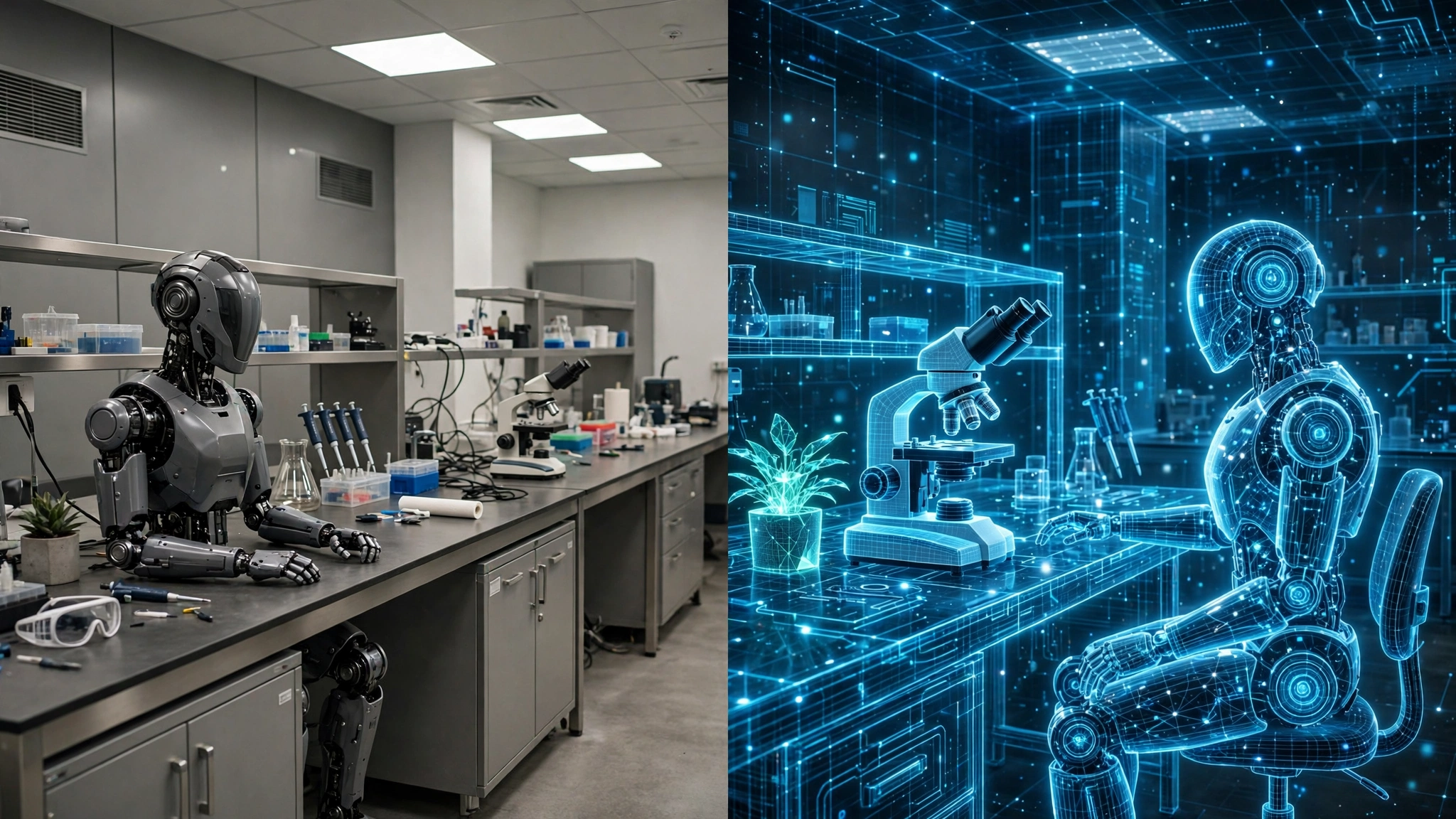
AI world models are a new kind of AI that learns how the world works. Instead of only predicting the next word in a sentence, a world model predicts what will happen next in a scene: a ball rolling, a door opening, a car turning. It builds an internal picture of cause and effect, and then uses that picture to plan, imagine, and act.
The idea moved from research papers into real products in 2024 and early 2025. Google DeepMind released Genie and then Genie 2, models that can generate playable virtual worlds. NVIDIA launched Cosmos in January 2025 to train robots in simulated worlds. Fei-Fei Li’s startup World Labs is building systems that generate three-dimensional worlds from a single image. This article explains what world models are, how they work, and how they could change technology.
What an AI World Model Actually Is
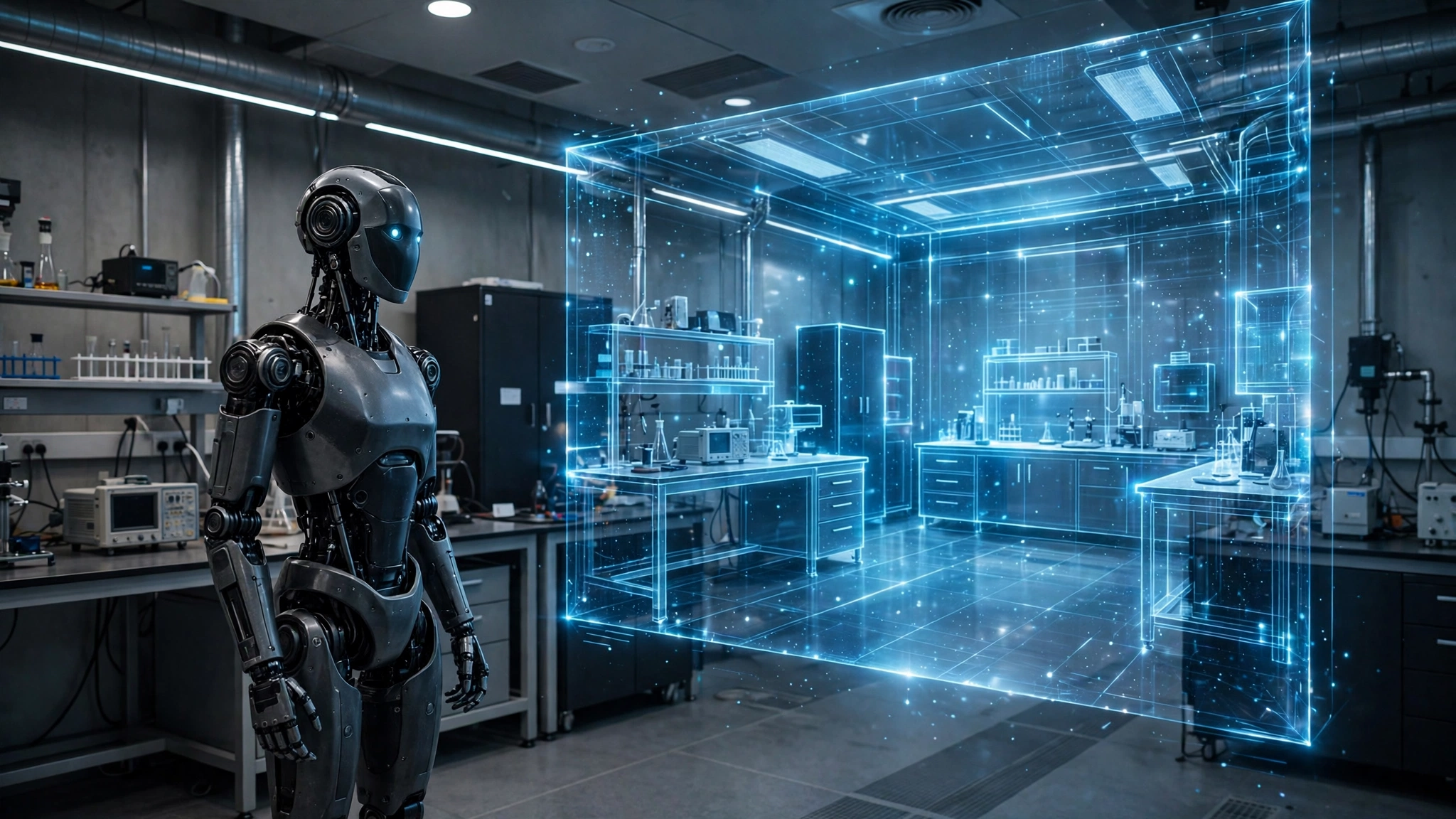
An AI world model is a system that learns the rules of the physical world from data, mostly video, and then uses those rules to predict what happens next. A language model learns from text that words follow patterns. A world model learns from video that objects follow physics. It learns that a cup falls when it is pushed off a table, that rain makes a road slippery, and that a person walking toward a door will probably open it.
The model does not store a list of rules written by a programmer. It learns them by watching huge amounts of video and sensor data. After training, it can take a starting scene and imagine how that scene will change over time. That imagined future can be a short video, a sequence of actions, or a plan for a robot to follow.
This is different from a video generator, though the two are related. A video generator such as OpenAI’s Sora, first shown in February 2024, creates video that looks real. A world model goes a step further: its predictions must stay consistent with physics, so a robot or a game can use them to make decisions. A pretty video that breaks the laws of physics is useless to a robot. A world model has to be right, not only realistic.

How World Models Work
Training starts with video. Models such as Genie 2 were trained on large collections of video, learning how scenes change frame by frame. The model learns patterns: how people move, how objects fall, how light changes when a camera moves. It also learns from data recorded by robots and cars, including depth and sensor readings that video alone cannot show.
Once trained, the model can be used in two ways. First, it can generate new scenes, creating a virtual world from a text prompt or a single image. World Labs showed this in late 2024, turning one photograph into a three-dimensional scene a user could move through. Second, it can predict the result of an action. A robot can ask the model, “If I push this box, where will it go?” and get an answer before it moves.
Simulation is where world models prove their value. A robot trained only in the real world learns slowly, because every mistake costs time and sometimes breaks things. Inside a world model, a robot can try thousands of actions in minutes. NVIDIA’s Cosmos, announced in January 2025, is built for exactly this job: it generates realistic training video so robots can practise tasks they have never done in the real world. This is the same simulation training described in our guide to physical AI.
Meta has taken a different path with V-JEPA, a model announced in early 2025 that learns by predicting video, not by generating it. The idea, promoted by Meta’s chief AI scientist Yann LeCun, is that a model which can predict what happens next in a video understands the world well enough to plan. Both approaches point in the same direction: AI that understands cause and effect, not only patterns in text.
| World model | Maker | What it does |
|---|---|---|
| Genie 2 | Google DeepMind | Generates playable virtual worlds from an image |
| Cosmos | NVIDIA | Generates realistic video to train robots |
| World Labs | Fei-Fei Li’s startup | Turns a single image into a 3D world |
| V-JEPA | Meta | Predicts video to learn how the world behaves |
| Sora | OpenAI | Generates realistic video from text prompts |
The table above shows that different teams are building world models in different ways. Some generate video, some predict it, but all of them aim at the same goal: a model that understands how the world works.
Where World Models Could Change Things
Robotics is the clearest use. A robot with a world model can plan its actions by imagining the result first. It can see a cluttered table, predict which object it can lift safely, and choose the best grip before it moves. That makes robots more reliable in places they have never seen before, such as a new warehouse or a person’s home. It also connects directly to the work of AI assistants that act in the physical world, as covered in our article on AI personal assistants.
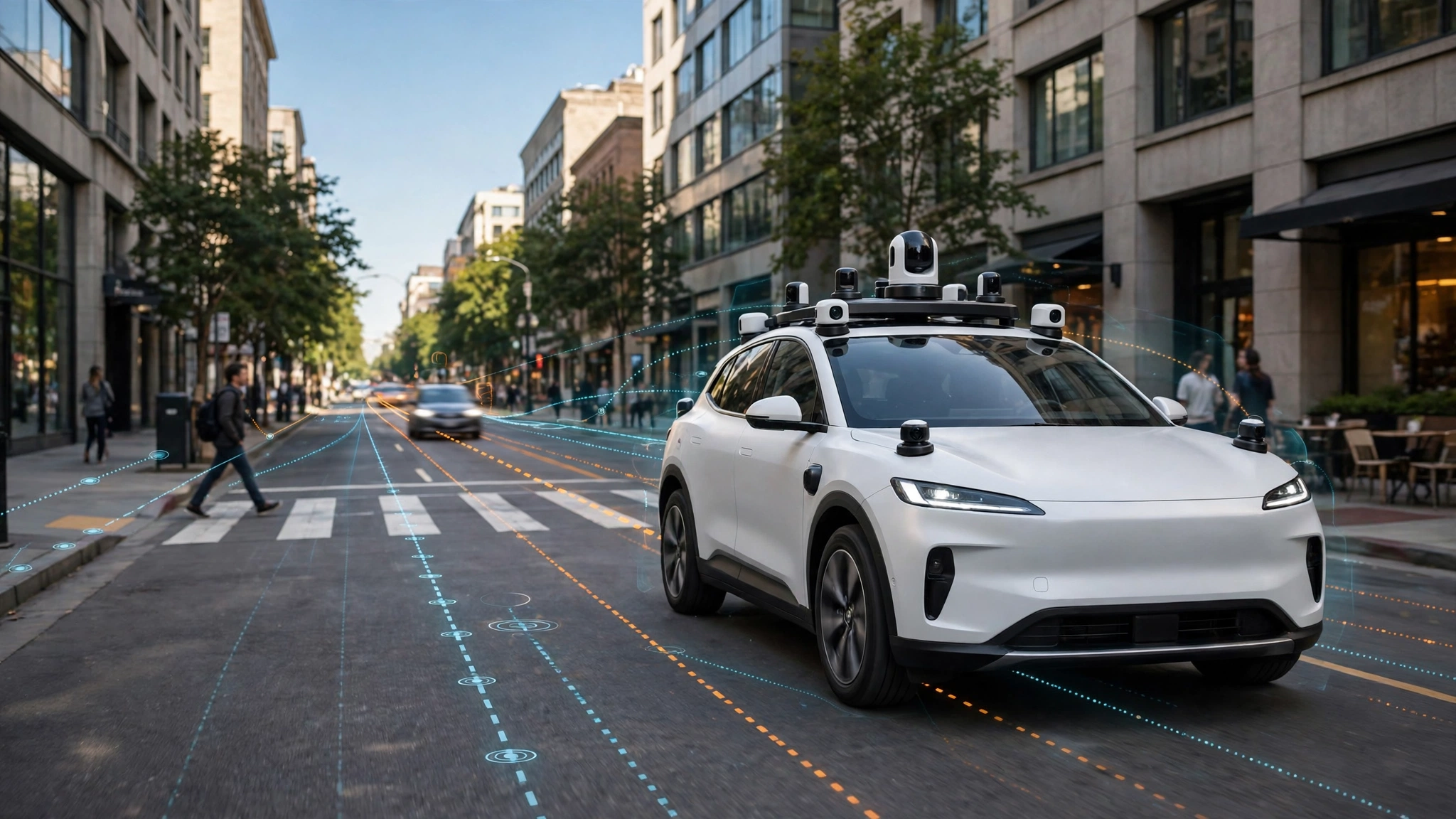
Self-driving cars are another use. A car already uses prediction to guess what other drivers will do. A world model makes that prediction richer, because it understands the whole scene: the cyclist in the bike lane, the child near the crossing, the wet road after rain. Companies working on self-driving systems are using world models to test their cars in simulated traffic before they drive on real roads.
Games and virtual worlds will change too. Today, game worlds are built by hand, object by object. A world model could generate a world from a description and keep it consistent as the player moves through it. Genie 2 already shows this in simple form, creating a playable scene from a single image. The worlds are still simple, but the direction is clear: less hand-building, more generation.
Filmmaking and design are also in scope. A director could describe a scene and see a moving version of it in minutes. An architect could walk through a building that does not exist yet. A product designer could test how a new chair looks in a real room before making it. In each case, the world model is a tool for imagining before building.
Science is a longer-term use. Researchers are exploring world models that simulate chemistry, weather, and biology, so experiments can be tried in a model before they are tried in a lab. This is still early work, but it follows the same pattern as the rest of the field: learn the rules of a system, then use the model to test ideas quickly and cheaply.
Challenges and Limits to Keep in Mind
World models are still young, and their predictions are not always right. A model can generate a scene where a ball rolls uphill or a person walks through a wall. Small errors like these matter little in a video, but they matter a lot when a robot acts on the prediction. Making world models physically accurate, not only visually convincing, is the field’s main challenge.
Computing power is another limit. Training a world model takes far more data and hardware than training a chatbot. Generating video is expensive, and running a world model in real time on a robot needs fast, efficient hardware. Costs will fall as the technology improves, but for now world models are mostly built by large companies with large budgets.
There are also questions about data. World models are trained on video, much of it collected from the internet. That raises questions about consent and copyright, and about bias in what the model learns. A model trained mostly on video from one part of the world may misunderstand scenes from another. Companies building these models are still working through those questions.
Finally, a world model is only as good as its training data. It can struggle with rare events, such as a car skidding on ice or a robot handling an object it has never seen. Real-world testing is still needed, and the model still needs a human to check its work before it is trusted with safety-critical decisions.
Practical Tips / Examples / Things to Know
- Think of a world model as a simulator, not a video maker: its value is in predicting what happens next, not only in looking real.
- If you work with robots, use simulation to test new tasks first, so the robot practises safely before it works in the real world.
- When you see a generated video, ask whether the physics is right, not only whether it looks good.
- Follow the work of DeepMind, NVIDIA, Meta, and World Labs if you want to see where world models are heading.
- Try a playable world model demo, such as Genie 2, to get a feel for what the technology can and cannot do yet.
- For business use, start with a narrow task, such as training a robot in one warehouse, before expanding to more sites.
- Keep a human in charge of safety decisions, even when a world model predicts a safe outcome.
Common Mistakes / Considerations / What to Avoid
- Treating a generated video as proof that a model understands the world, when the physics may be wrong.
- Trusting a world model’s prediction for a safety-critical decision without real-world testing.
- Assuming a world model works everywhere, when it may only be reliable in the kinds of scenes it was trained on.
- Ignoring the cost of computing when planning to train or run a world model.
- Using video data without checking the rights and consent behind it.
- Expecting a game or film made by a world model to be finished quality today, when the technology is still early.
- Confusing a world model with a language model: they learn different things and solve different problems.
Final Thoughts
AI world models are a step toward machines that understand the world the way people do, by learning how things behave and what happens next. The early models from DeepMind, NVIDIA, Meta, and World Labs already show what is possible: robots that practise in simulation, cars that predict traffic, and virtual worlds generated from a single image. The technology is still young, and its predictions are not always right. But the direction is clear. As world models get more accurate and cheaper to run, they will change how robots learn, how games are built, and how people test ideas before building them in the real world.