AITA for Refusing to Kiss My Girlfriend After She Ate Non-Veg?
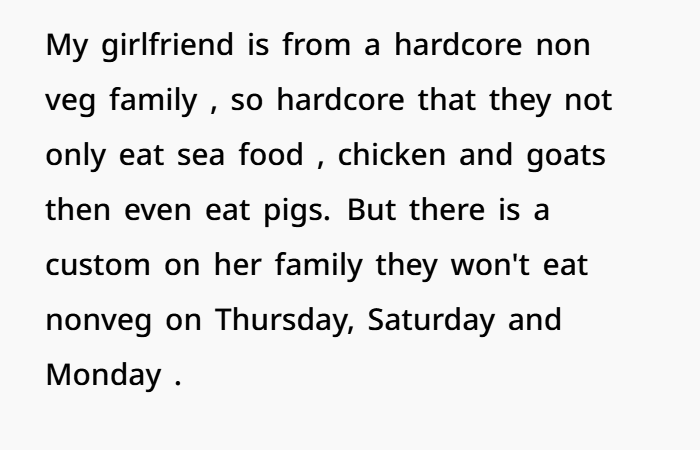
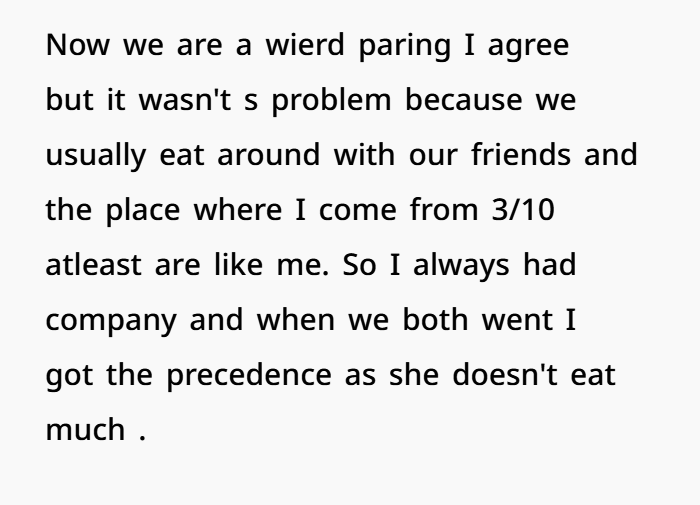
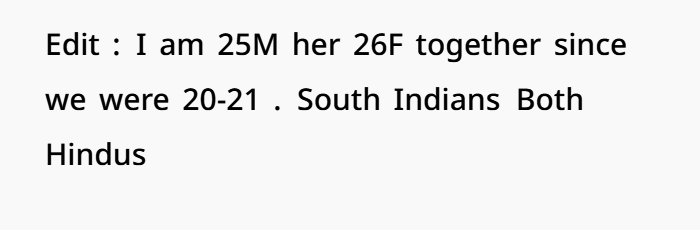
This story is about a couple who have different lifestyles and personal beliefs. The man has been a strict vegetarian his entire life. He does not eat meat, fish, eggs, or any food connected to animal products. For him, this is more than a food choice—it is an important part of his values and identity. His girlfriend comes from a family where eating meat is common and accepted. Even with these differences, they have managed to maintain a healthy relationship by respecting each other’s lifestyle choices. Most of the time, they either eat vegetarian meals together or spend time with friends who have different food preferences.
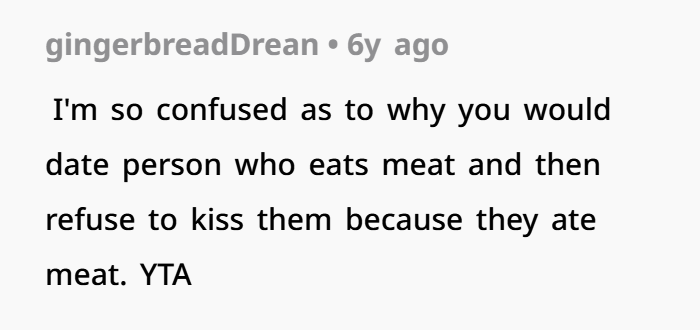
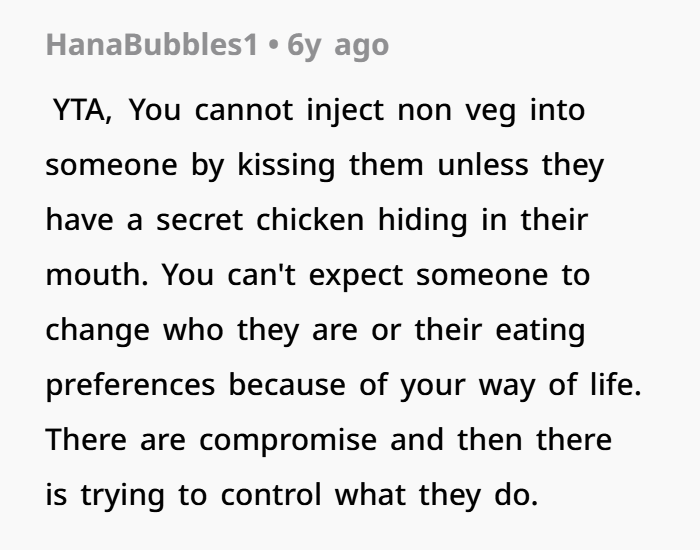
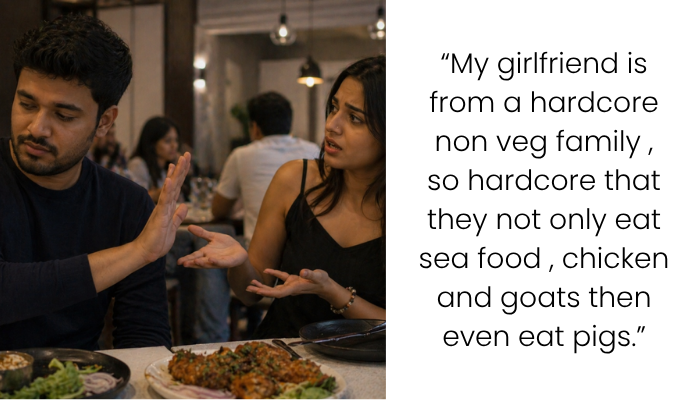
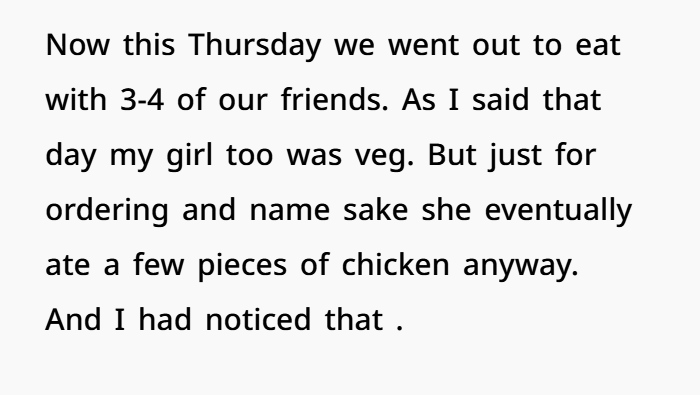
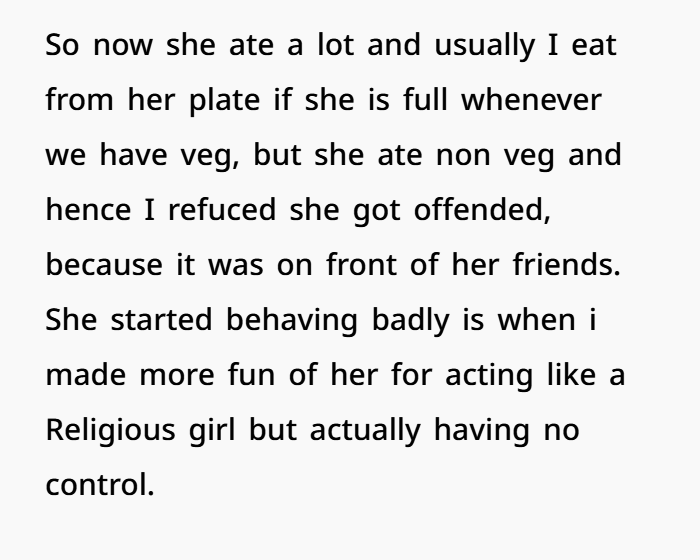
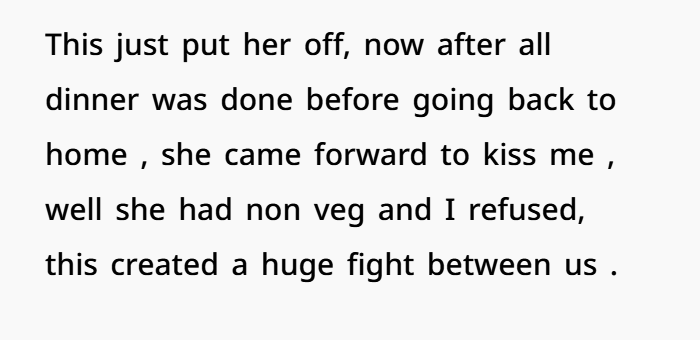
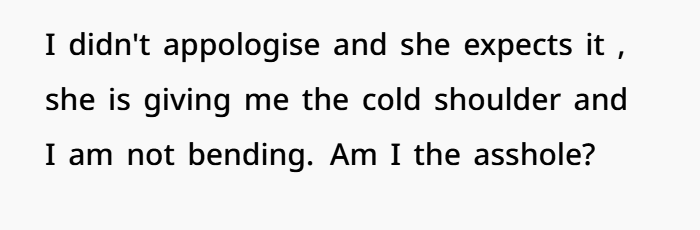
The situation changed during a dinner outing. On that day, his girlfriend normally avoids non-vegetarian food because of a family tradition, but she decided to eat chicken anyway. This made him uncomfortable because it went against his personal boundaries. As a result, he chose not to share food from her plate and later declined physical affection because he felt it conflicted with his beliefs. The problem became bigger when he made comments about her decision in front of their friends. That moment created hurt feelings and tension between them. Now, she feels upset and wonders if he values his dietary rules more than the relationship, while he believes he was simply following his personal principles. The situation highlights the importance of communication skills, mutual respect, conflict resolution, and understanding different lifestyle choices in healthy relationships.

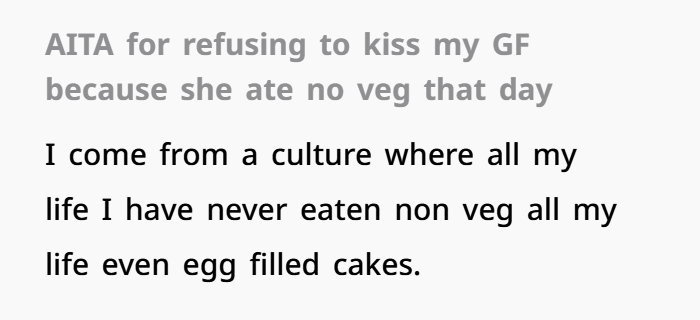

At first, this situation may seem like a disagreement about food, but it is really about values, respect, and compatibility in a relationship. The man has followed a strict vegetarian lifestyle his entire life. For him, it is not simply a dietary preference. It is connected to his personal beliefs, family values, and way of life. Because of that, he feels strongly about maintaining certain personal boundaries, and those boundaries are important to him.
Having personal boundaries is completely reasonable. If he feels uncomfortable sharing food that contains meat or participating in activities that conflict with his beliefs, he has the right to make those choices. Healthy relationships allow both people to maintain their values while respecting each other’s differences.
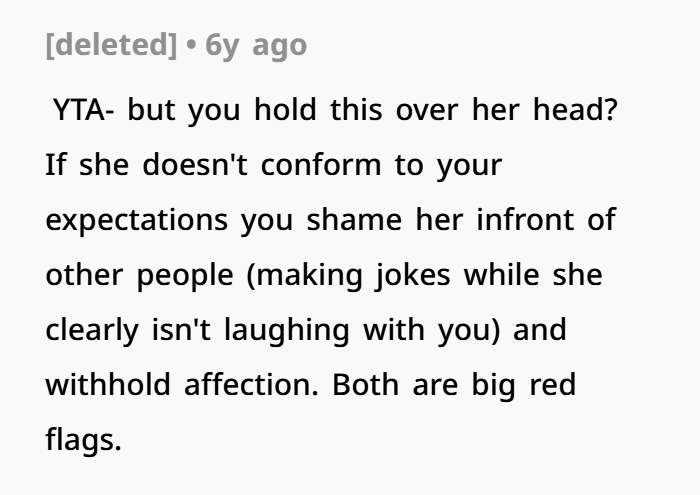
However, the situation became more difficult because of how the disagreement was handled. Instead of quietly maintaining his boundary, he reacted in front of other people. Public disagreements can often feel more painful because they may create embarrassment and hurt feelings. Relationship advice experts often point out that private conversations are usually more effective than discussing sensitive topics in front of friends or family.
From the girlfriend’s perspective, she already comes from a different background and has often adjusted her habits to support the relationship. She regularly chooses vegetarian meals when they spend time together and has shown a willingness to respect his lifestyle choices. Because of that, she may have felt hurt when her own choices were criticized publicly.
The disagreement was not really about a single meal. It became about how each person felt during the situation. One person wanted to maintain personal boundaries, while the other wanted understanding and respect. Both needs are important in healthy relationships.
Communication skills play a major role in situations like this. The same boundary can be expressed in different ways. A calm and respectful conversation often leads to better results than criticism or jokes that may feel personal. When people feel judged, they are more likely to become defensive and emotionally distant.
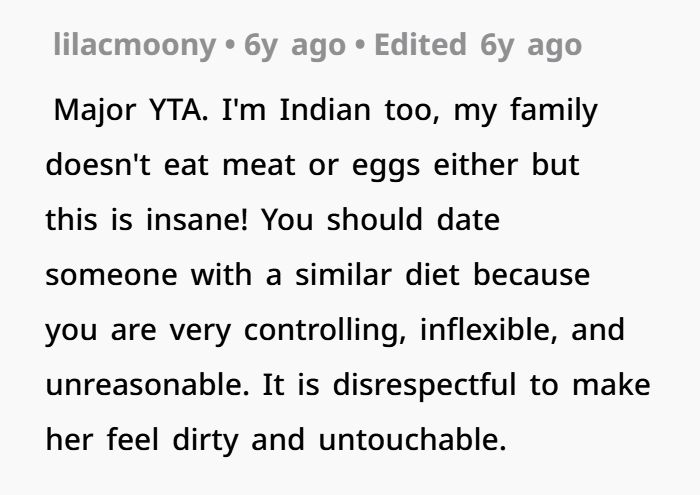
The issue also raises important questions about long-term compatibility. Couples with different lifestyle choices, cultural traditions, or family values can absolutely have successful relationships. However, those relationships usually require compromise, flexibility, and ongoing communication.
Future topics such as shared meals, family traditions, and parenting decisions may become important discussions. Talking openly about expectations can help both partners understand each other’s perspectives and avoid future misunderstandings.
One of the biggest lessons from this situation is that being right is not always enough. In relationships, the emotional impact of words and actions matters just as much as personal beliefs. A person can hold firm values while still treating their partner with kindness and respect.
A different approach could have reduced the tension. Instead of making comments in front of friends, he could have explained his feelings privately. A simple and respectful conversation would have allowed him to keep his personal boundaries while also protecting his partner’s feelings.
In the end, this situation is less about vegetarianism and more about healthy relationships, mutual respect, and conflict resolution. Strong relationships are built when both people feel heard, valued, and respected, even when they have very different beliefs and lifestyle choices. Right now, the main challenge is not the food itself—it is rebuilding trust, improving communication, and making sure both partners feel understood moving forward.
Readers’ Comments Speak Out