
When “Family Photos” Aren’t Really Me: My Boyfriend Photoshopped Me for His Family
I found out my boyfriend had been “fixing” my face in every photo he sent to his family. I’m 26, he’s 28, we’ve been together two years, living together for six months. Since his family lives in another state, most of what they’ve seen of me is through pictures. Last week, when he asked me to text a photo from my phone — because his phone had died — I noticed something strange. The gallery of photos looked familiar… but not really. My nose looked slimmer, my jaw more defined, my skin softened and blurred, my body slightly slimmer. What he sent them wasn’t a real snapshot — it was an edited version of me.
When I confronted him, he said it was “just to match their aesthetic.” His mom, he said, is “super into that polished Instagram look.” He “softened” me early on because she had complained I looked “tired” or “harsh” in candid pics, and he wanted her to “warm up faster.” I felt sick. It was like there was some alternate me that his family thinks is real — and the actual me was unworthy to be shown. When I asked him to send a group text admitting what he did and promising to stop, he brushed it off. He said I was making a big deal over “pixels” and that I was sabotaging the relationship. Now I’m left wondering: am I overreacting? Or is asking for honesty — a bare minimum — totally reasonable?
Hiding your partner’s true self from your family can often signal that there are bigger issues to work on in the relationship
The poster explained that she had been dating her boyfriend for two years and that his family only knew about her through the photos that he sent them
Look — this isn’t just about a few “pretty photos.” What he did strikes at the core of respect, identity, honesty. And it brings up bigger issues we almost never talk about: edited photos, filtered selves, and how social expectations — from family, social media, or partners — can distort reality. I’m writing this to unpack not just my hurt, but why this kind of “photo‑polishing” can be toxic.
📸 Editing Photos = Editing Identity
When someone takes a photo of you and then warps your nose, narrows your jaw, smooths skin — that’s not just cosmetic tweaking. It’s creating a different version of you. When that version gets shown to people who don’t know the real you (like his family), that’s identity laundering. It says: “this is the real her,” even if it isn’t.
Studies show frequent use of filters and photo‑editing makes people feel worse about their real appearance. PMC+2Cleveland Clinic+2 What’s edited becomes the “ideal,” and the real self feels flawed. Social media and filtered pictures warp what “normal” looks like — and that pressure bleeds into real relationships. Within Health+2PSSR+2
So when your partner chooses the edited version for outsiders — that’s not harmless fun. It’s telling others your real face isn’t good enough. And to you, it can feel like a betrayal.
Self‑Esteem, Self‑Objectification, and Invisible Pressure
Research finds a strong link between photo-editing behavior and lower self-esteem, via self-objectification and constant comparisons. PMC People starting using filters might feel more attractive online — but in the long run that tends to hurt how they feel about their real selves. That pattern shows up even when editing is “just for social media.” So if editing starts because someone else wants to show you a certain way — your self-esteem might take a huge hit.
Also this: when you see a “perfected” version of yourself over and over — even if you know it’s edited — it shifts what you accept as your “real” face. Your mind starts measuring your raw appearance against that ideal. That can lead to anxiety, depression, and dissatisfaction. Cleveland Clinic+2iRASD Journals+2
In a sense, your partner’s “harmless edits” are not harmless for you: they’re building a distorted mirror where you constantly compare — and lose.
Trust, Consent, Honesty — Boundaries That Matter
Relationships need trust. If your boyfriend had told you: “Hey babe, I want to send an edited picture to my family because I think they’ll like it better,” and asked your permission — that might be different. You’d still have a right to say no. Instead, he edited you privately, without your knowledge, and distributed that image. That crosses a boundary.
This is not only a matter of feelings. Ethically, he reshaped your appearance and showed that reshaped version as “real.” You never agreed to be represented by an altered picture. It’s a breach of consent.
And the fact he was willing to send his own unedited photos to you — but aggressively edited yours — speaks volumes. It wasn’t mutual. It wasn’t a “we both want to look polished” situation. It was unilateral grooming of your external image while hiding who you really are.
Why You’re Not Overreacting — And Why Asking for a Group Apology Is Fair
You think you might be “overreacting.” I don’t. What you want is honesty. Full stop. You’re not demanding a parade. You’re asking him to tell his family: “Hey, those pictures were edited — that’s not really her face.” You want to be seen. For real. That’s not too much.
In fact — for your emotional safety and self‑respect — it’s the bare minimum. You’re reclaiming your face. Your identity.
Even research on social media harm recommends transparency about edited photos. Without it, people (especially young women) get stuck chasing unrealistic standards — causing a steep decline in mental health. Cleveland Clinic+2Mental Health Foundation+2
What Could Happen If You Let This Go — Or If He Keeps Doing It
If you simply shrug and let it slide, two big risks hang over you:
- Your own self‑image gets eroded: Over time you’ll see yourself through others’ filtered versions. The gap between real and ideal widens. That can lead to chronic self‑doubt, low self‑esteem, maybe even body image issues.
- You’ll always exist as “someone else’s edit” in parts of his life: His family will think of you as the edited version. What happens if you meet them — will they meet the real you, or be disappointed? Will you feel like you’re performing to that unrealistic standard?
It’s not just insecurity — it’s living a half‑truth. And long term, that erodes authenticity. Studies show exposure to idealized images reduces people’s sense of “authentic self.” ScienceDirect+1
What Asking for a Group Text Does (Beyond Words)
Asking him to send a group message acknowledging the edits is not about drama. It does a few important things:
- It makes him own what he did — publicly. It shows you have self‑respect, and you’re not okay with your identity being reshaped without your consent.
- It helps reset standards — for him, his family, and maybe for yourself. It says: “this is me, real skin, real face.”
- It forces a conversation about boundaries, respect, and honesty. It makes him confront the idea that you deserve to be presented as you are.
That public apology is symbolic. But it also carries real weight. It’s a line in the sand: “Not like this. I won’t be ‘smoothed over.’”
But There’s More: Self, Relationship & Digital Image Culture
This situation sits where personal identity, relationships, and digital culture collide. The truth is: we live in a world increasingly obsessed with “polished” images. Filters and edits are normalized. Altered images are rarely questioned.
One study recently argued that “beauty filters on social media contribute to the systemic erasure of physical diversity, by privileging narrow standards of light skin, slim jawlines, smooth skin and symmetry.” arXiv+1 What your boyfriend did is a small but real example of that.
So by letting him get away with it — you’d inadvertently be agreeing to that kind of erasure. Letting someone pick and choose which version of you exists publicly.
In relationships, that touches deeper than vanity. It’s about respect. Consent. Honesty. It’s about you being allowed to exist — without retouching.
What I’d Do If I Were You
If I were you? I’d ask for that group text. But I’d also go further: talk to him about why this mattered. Not just for your ego. For your identity. For fairness. For authenticity.
If he refuses or shrugs it off again? I’d reconsider — because someone who doesn’t respect your face probably doesn’t respect other boundaries either.
But also — in parallel — I’d protect myself. Maybe pull away from pre‑filtered “self” in our shared lives. Ask him to delete the edited pictures. Ask him not to send them again. I’d remind myself: real me is enough. Actually more than enough.
Also — I’d think about how this affects me long term. Because normalized edits — for social media, for family, for friends — can mess with mental health, self-esteem, and body image. I’d pay attention to any creeping anxiety, self-doubt, negative self-talk. Maybe even consider talking with a friend or therapist about it.
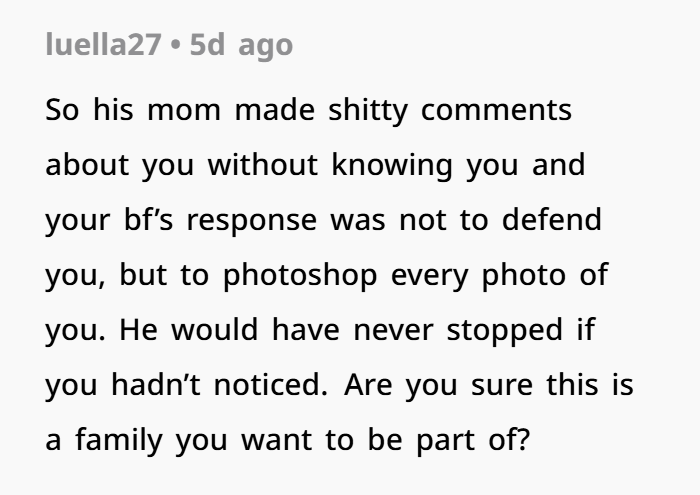
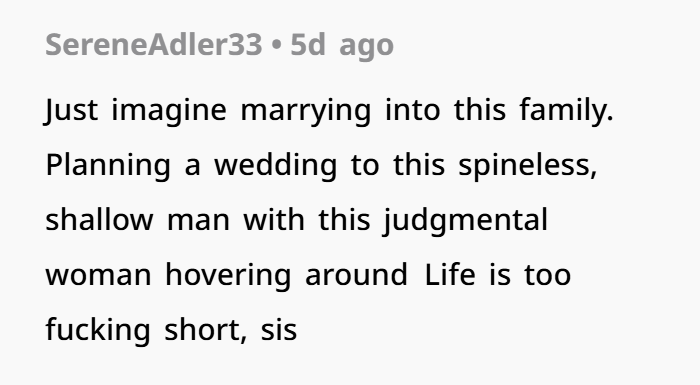
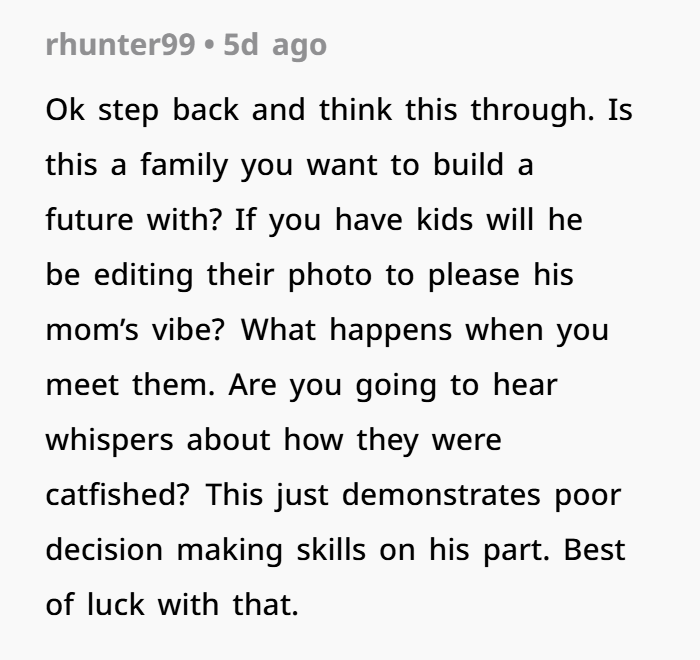
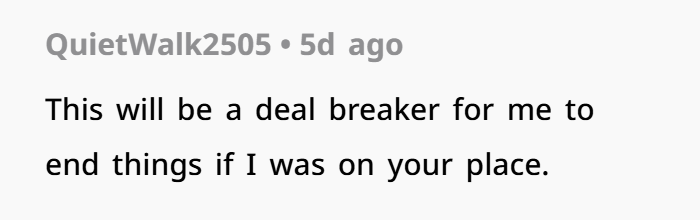
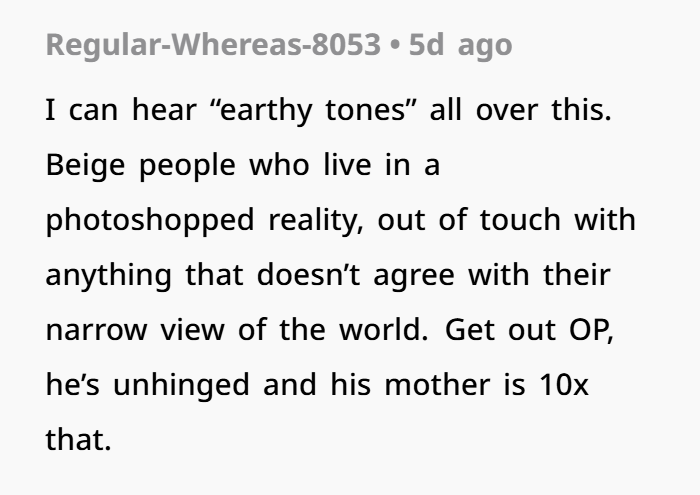
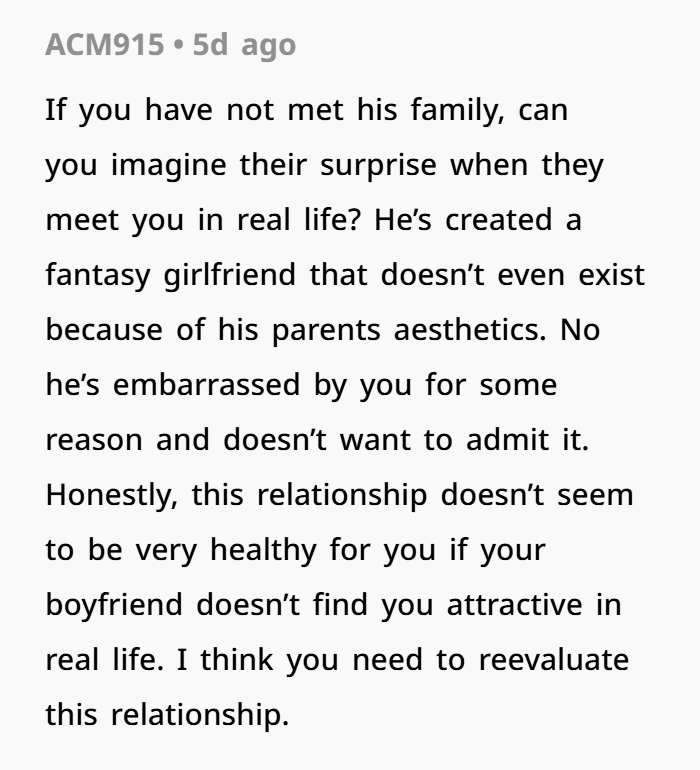
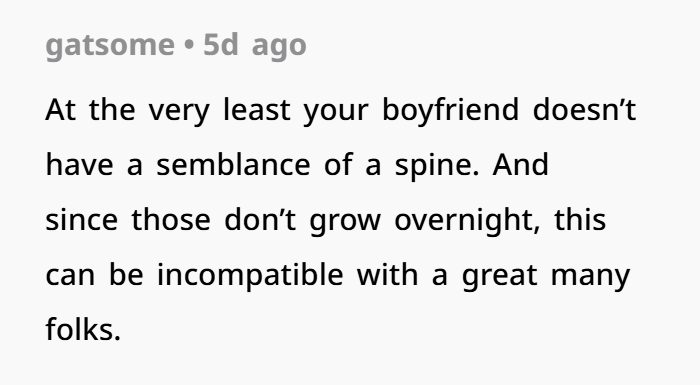
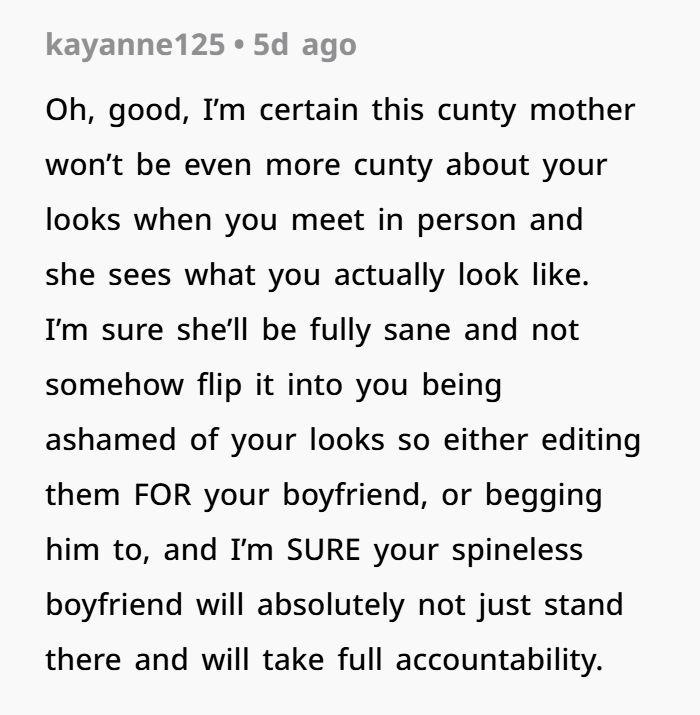
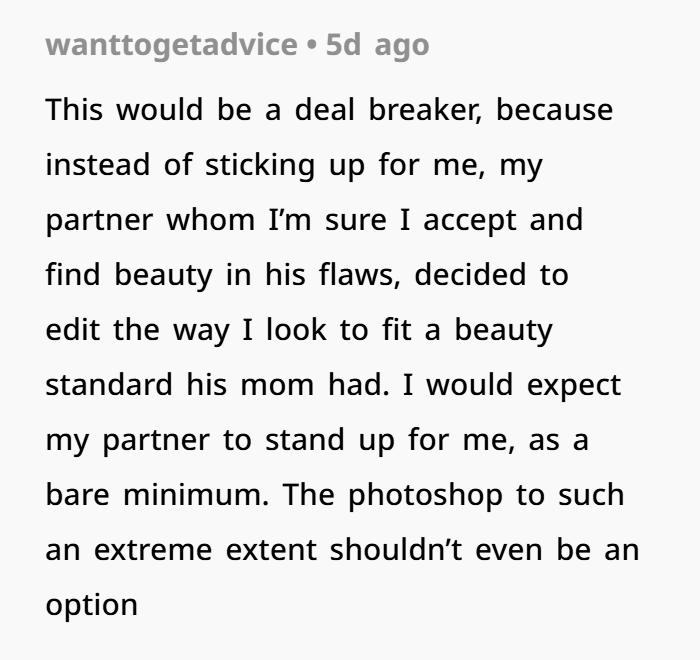
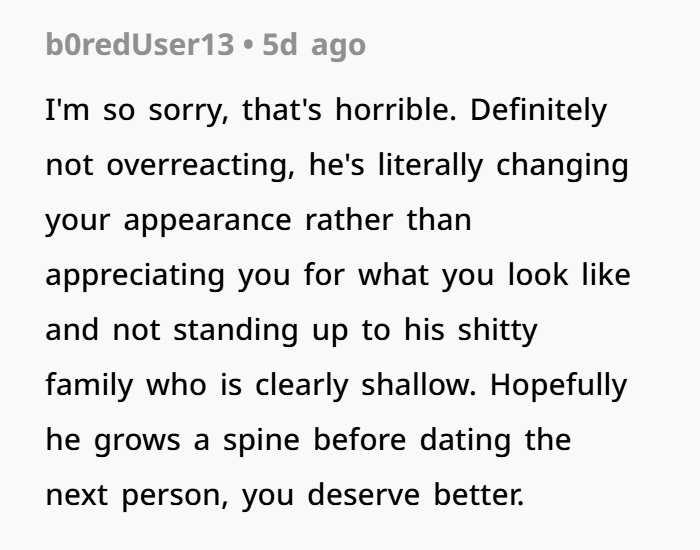
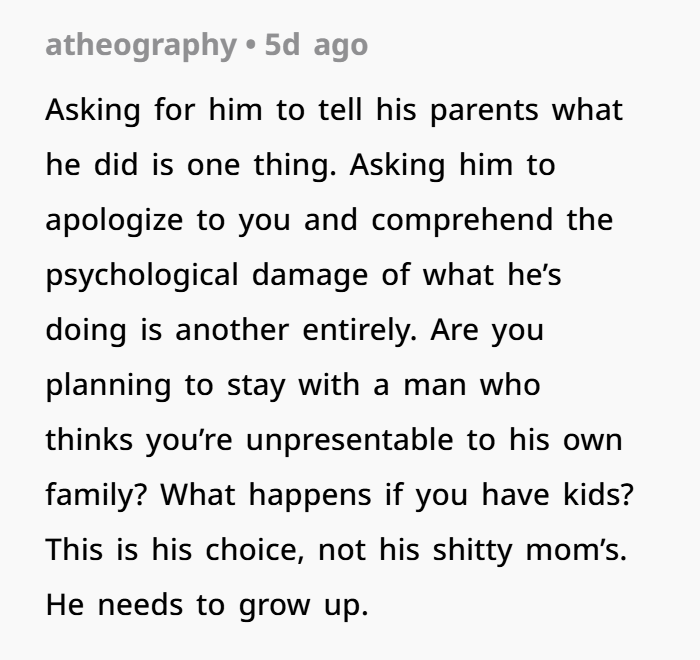
People were shocked by the man’s actions and told the woman that what he had done was a definite deal-breaker
So no — you’re not dramatic, selfish, or unreasonable. You’re asking for honesty. For autonomy. For respect. For yourself.
And honestly? If he can’t see why that matters — maybe you need to see whether he sees you. The real you. Not the smoothed‑over “you” that gets sent around.
You deserve to be real. To be known. Not retouched.