My Fiancée Wants Me to Cut Off My Parents Forever
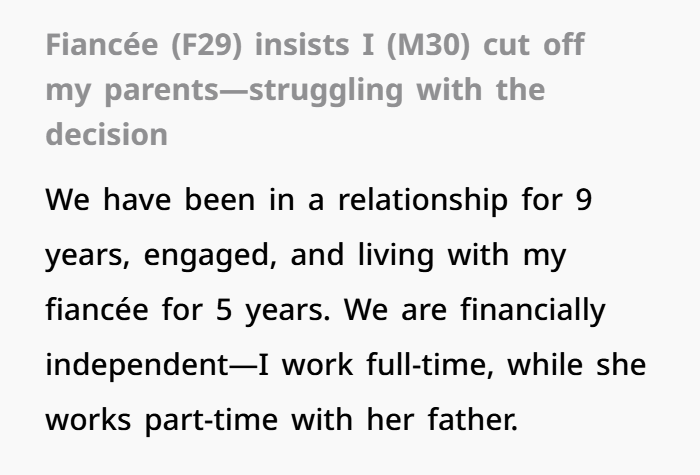
For almost ten years, this couple built a life together. They lived together, got engaged, shared holidays, created routines, and made plans for the future. From the outside, their relationship appeared stable and successful. However, one issue continued growing over time and eventually became impossible to ignore. The problem centered around the man’s relationship with his parents. What started as occasional concerns about family dynamics slowly developed into disagreements about boundaries, family involvement, and how much contact he should have with his parents. Over time, these disagreements became a major source of stress in the relationship.
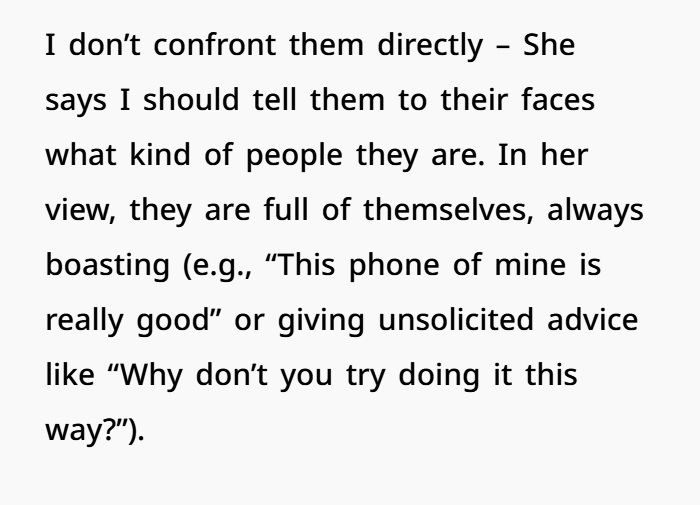
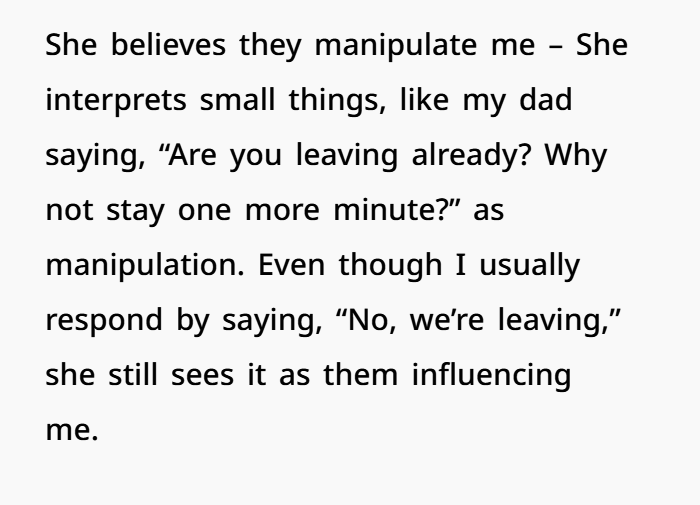
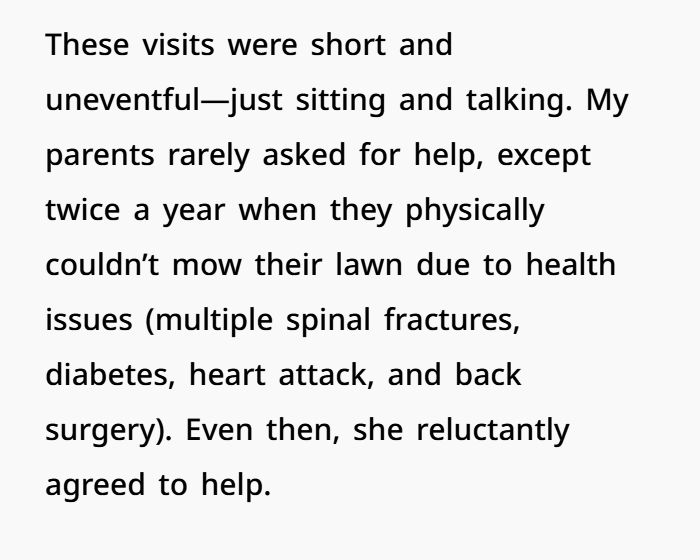
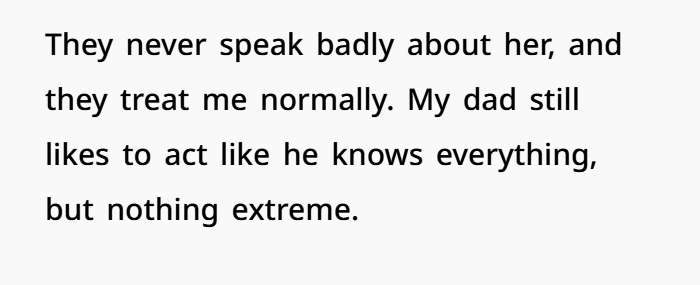
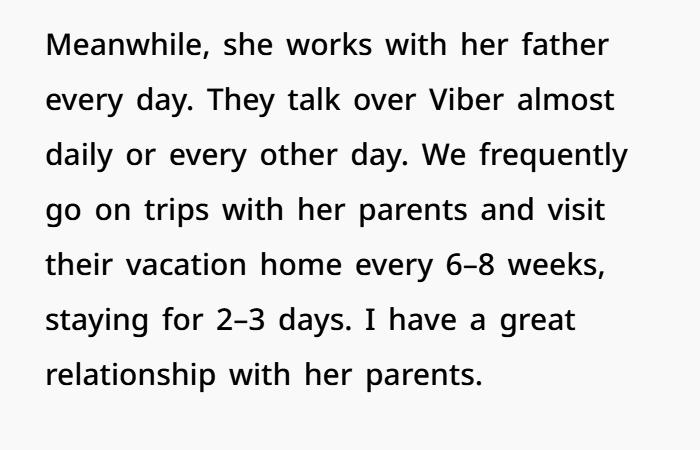
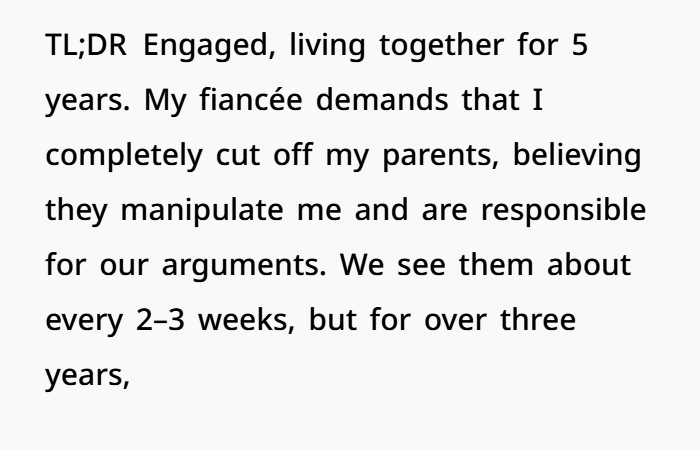
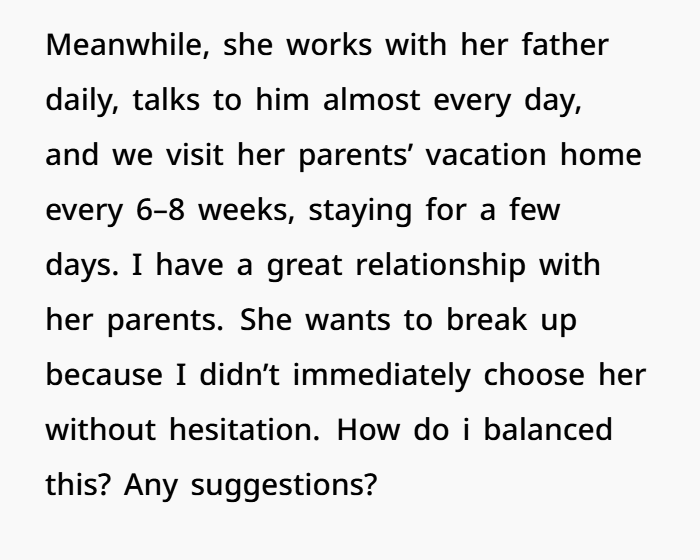
The situation became even more difficult because his parents do not appear to be openly harmful or overly difficult in the examples shared. His father may sometimes have strong opinions, but most of their interactions seem fairly normal, including family visits, birthday calls, and occasional help with health-related needs. At the same time, his fiancée remains very close to her own parents, working with her father and regularly spending time with her family. As a result, he feels caught between his commitment to his partner and his connection to his parents. The situation has created emotional pressure, uncertainty, and concern about the future of the relationship. Many people facing similar family relationships, marriage counseling challenges, and personal growth decisions understand how difficult these situations can become when expectations, loyalty, and family dynamics all collide at the same time.

This story connects with many people because it is not really just about parents. It is about relationships, boundaries, trust, and how couples handle family involvement over time.
Many people believe that a husband or wife should be the most important relationship in adulthood. In healthy marriages and long-term relationships, that is often true. However, there is a big difference between putting your partner first and completely cutting family members out of your life.
That is where this situation becomes difficult.
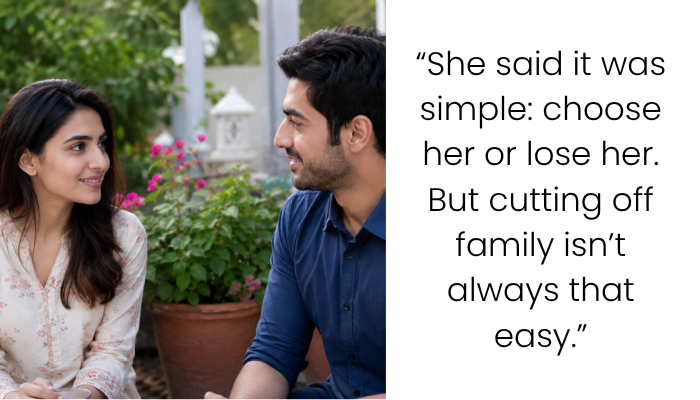
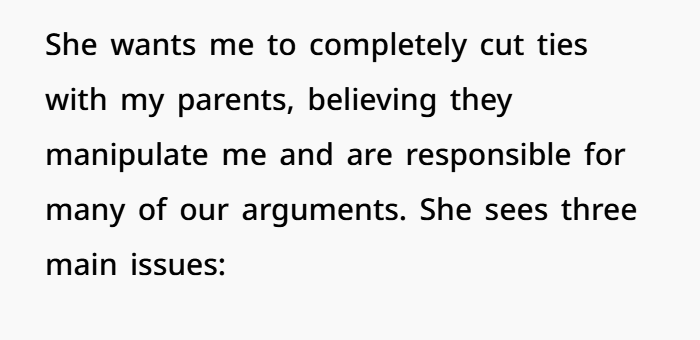
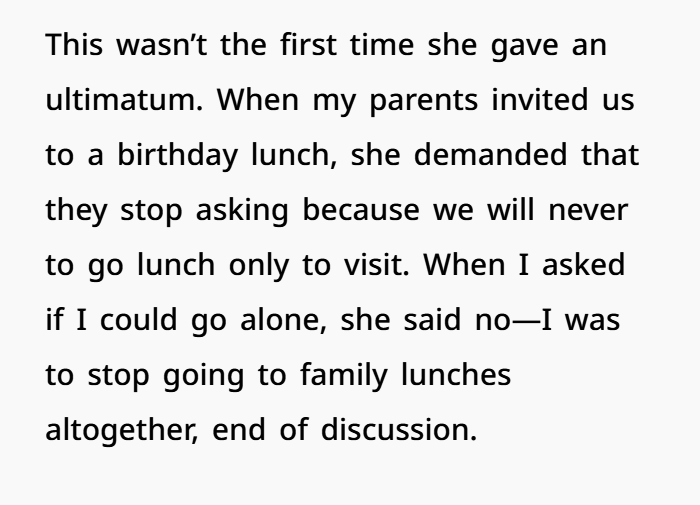
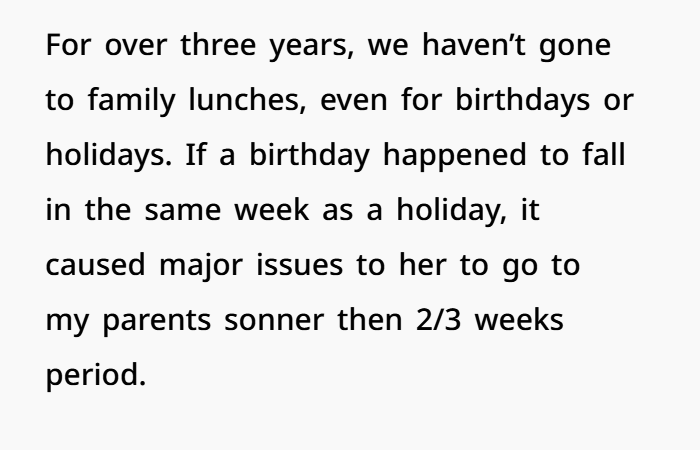
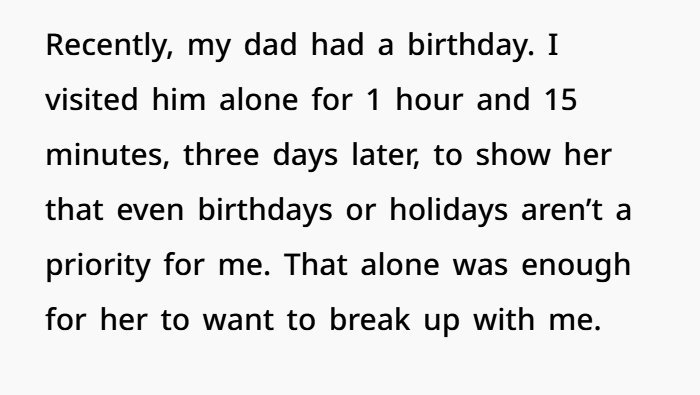
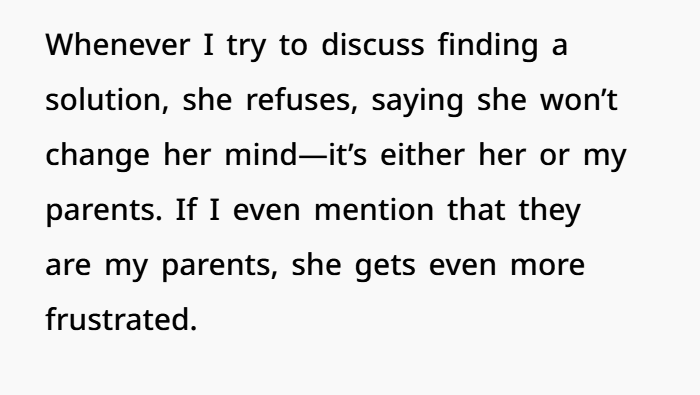
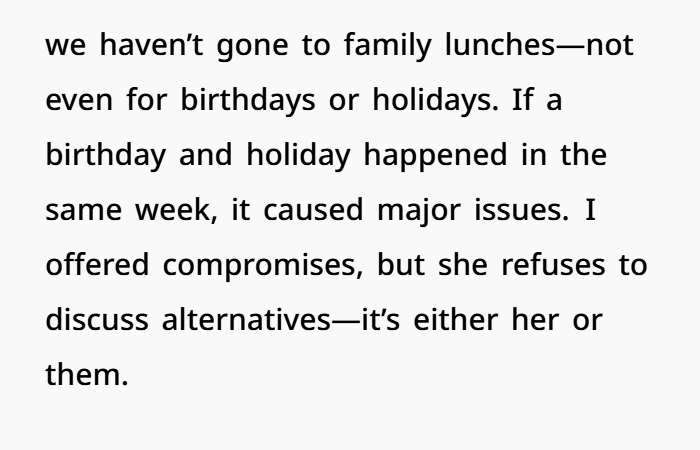
According to the story, the fiancée does not simply want fewer interactions with his parents. She wants complete separation. She does not want visits, family gatherings, birthdays, or regular contact. Even short visits with his parents seem to create conflict in the relationship.
Because of this, many people see the issue as being about more than family boundaries.
Healthy boundaries are important in every relationship. Sometimes people need distance from difficult family situations to protect their mental health and emotional wellness. Family relationships can be complicated, and not every parent-child relationship is healthy.
However, what stands out here is the difference between how each family is treated.
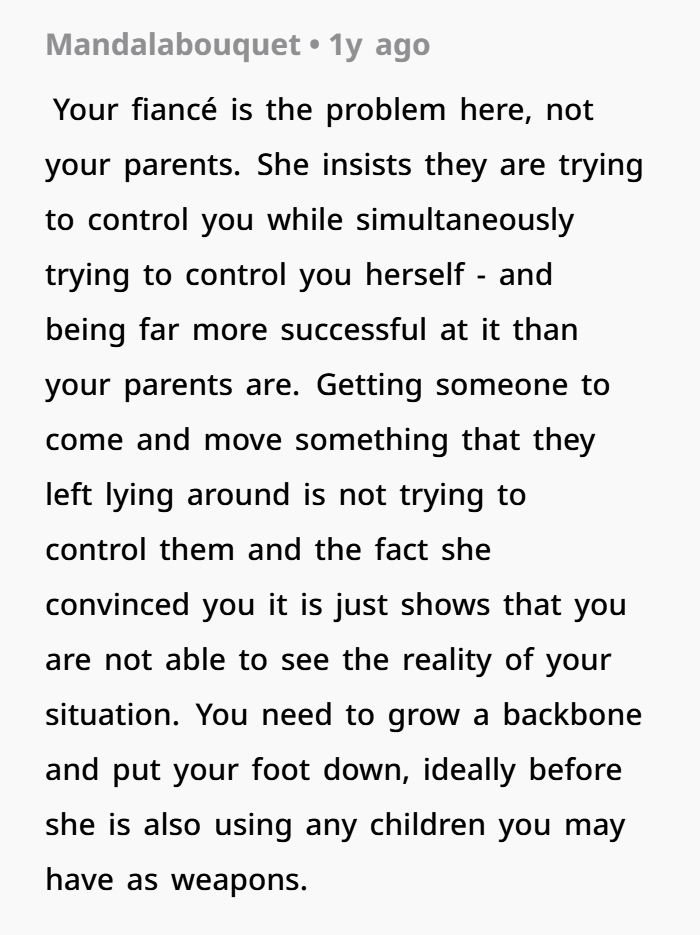
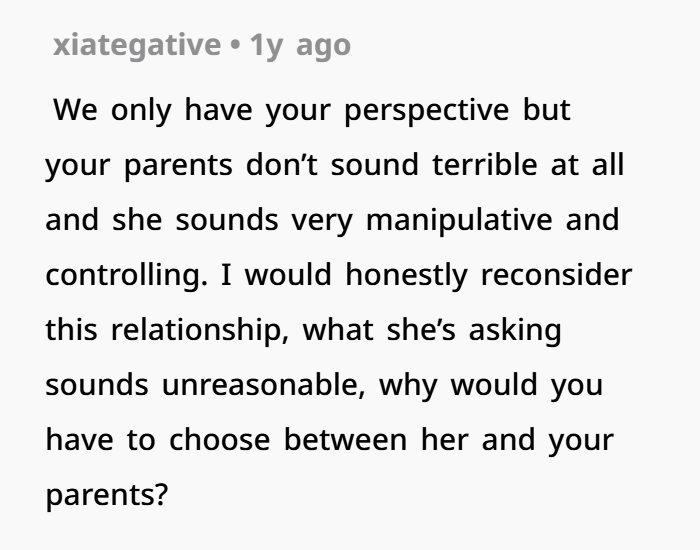
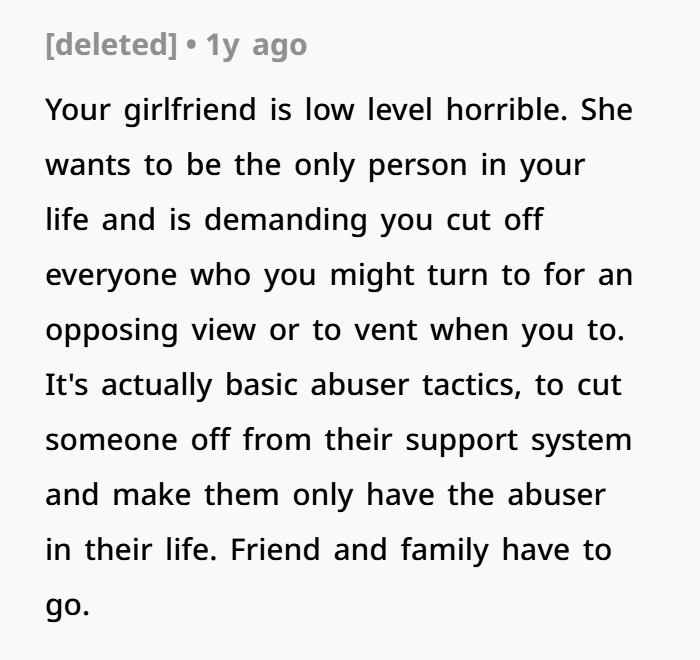
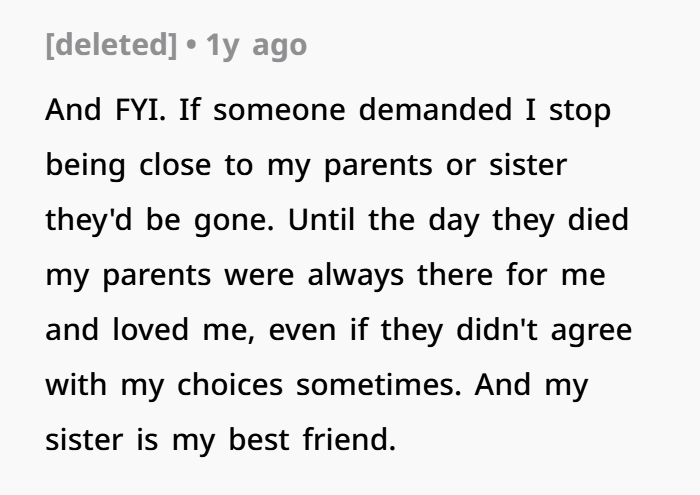
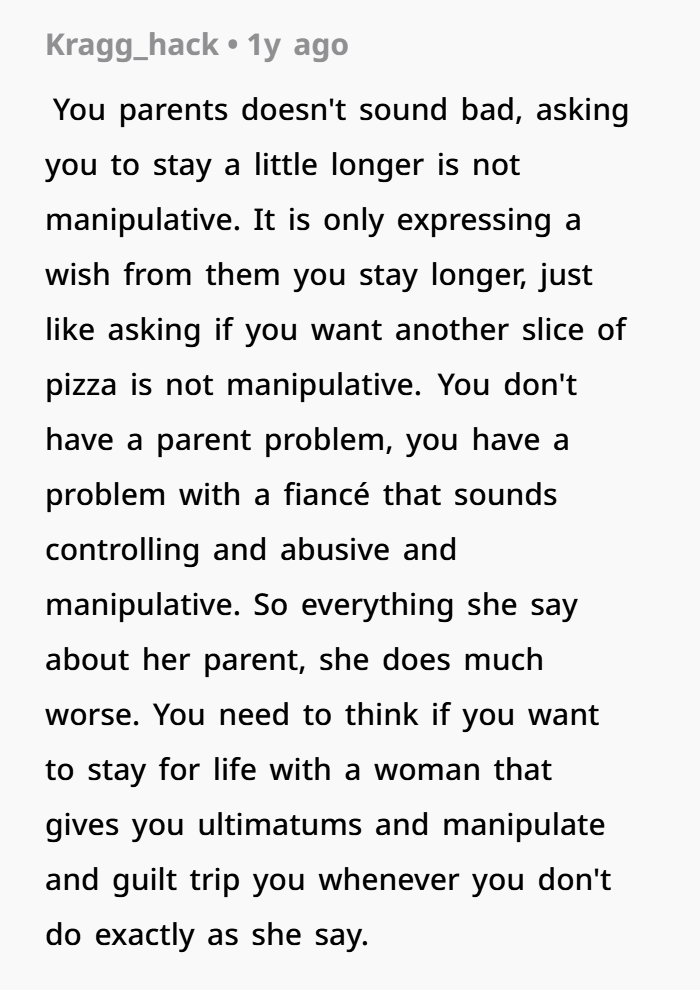
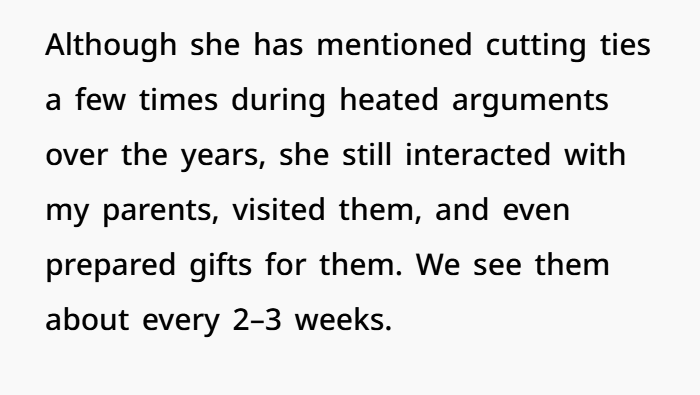
The fiancée remains very close to her own parents. She works with her father, speaks with family regularly, and spends time with them often. At the same time, she appears uncomfortable with her partner maintaining even limited contact with his own parents.
That difference is one reason many readers found the story concerning.
Relationship experts often say that healthy boundaries should be fair and balanced. When one partner is expected to make sacrifices that the other partner would never make, resentment can grow over time.
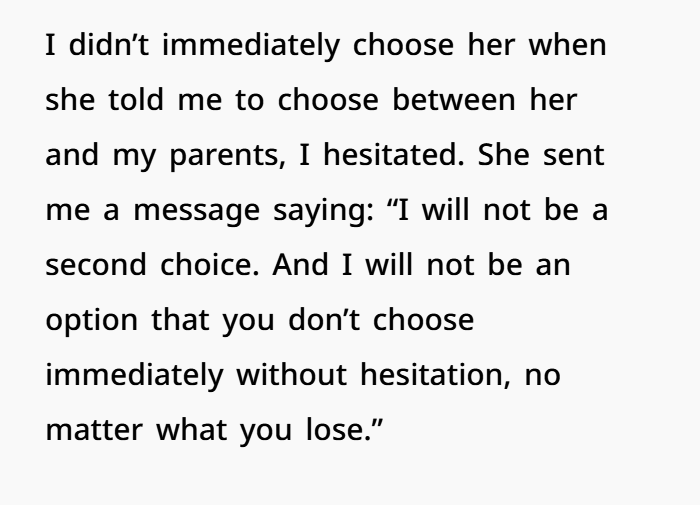
Another important part of the story is the use of ultimatums.
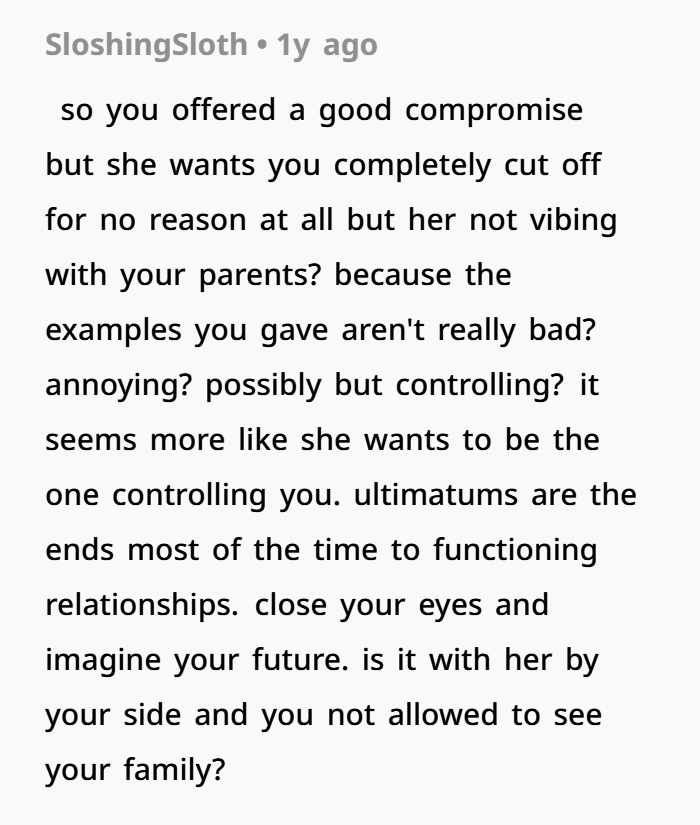
Statements such as “choose me or your family” can create significant pressure inside a relationship. Strong relationships are usually built through communication, compromise, and mutual understanding.
When only one outcome is considered acceptable, finding a solution becomes much harder.
This does not automatically mean the fiancée has bad intentions.
She may truly believe his parents have had a negative influence on his life. She may have concerns based on experiences she has witnessed over the years. She may also feel frustrated by situations that affected the relationship.
Those feelings can be real and important.
At the same time, completely ending contact with family members is a major decision.
Many people choose to reduce contact with relatives when relationships become unhealthy. In some situations, distance can improve mental health and reduce stress.
However, experts often recommend making these decisions carefully and based on personal choice rather than pressure from others.
Family relationships are rarely simple.
Another detail many readers noticed is that the man seems to have spent years adjusting his behavior to avoid conflict.
He appears to think carefully about family visits, conversations, and interactions because he worries about how they may affect his relationship.
Over time, constantly trying to avoid arguments can become emotionally exhausting.
Many people in similar situations describe feeling as though they must carefully manage every decision they make.
The examples involving his parents also seem relatively ordinary compared to some severe family conflicts people experience.
The story mentions occasional visits, birthday calls, and helping parents with health-related needs. While his father may have a strong personality, these interactions do not appear unusually extreme based on the information provided.
That distinction matters.
Family members can sometimes be difficult, opinionated, or frustrating without necessarily being harmful.
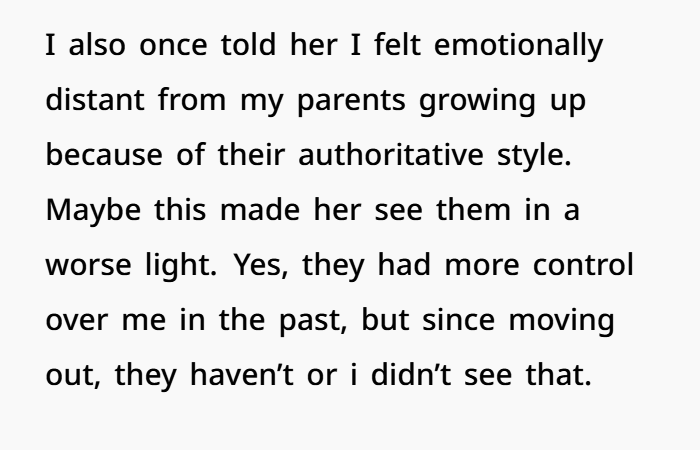
The man himself acknowledges that his parents were not perfect while he was growing up.
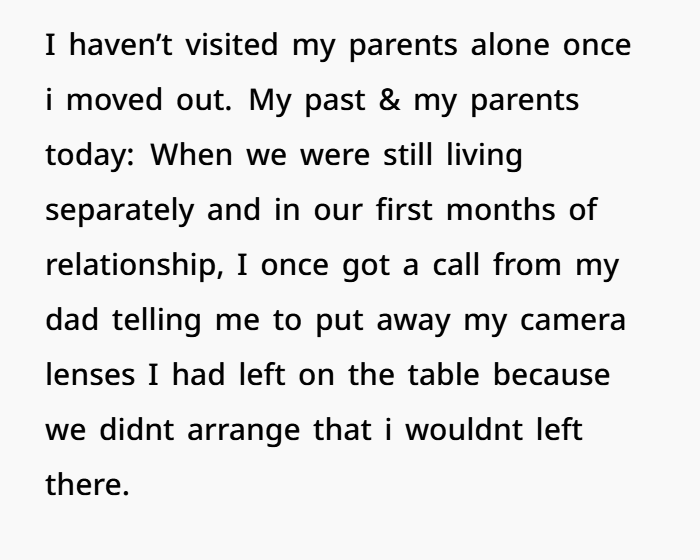
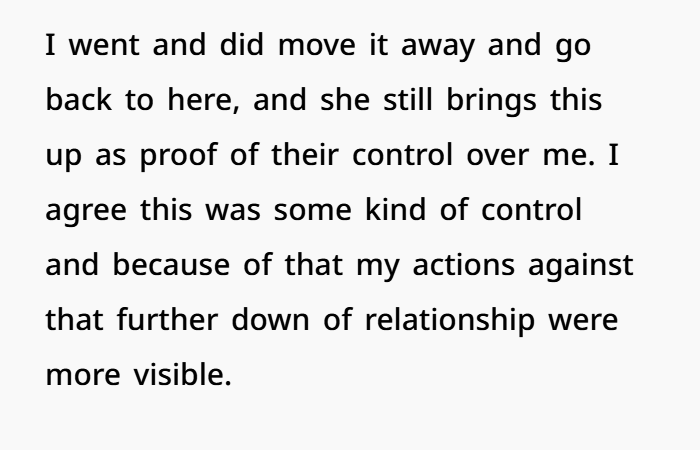
He describes his father as controlling at times and recognizes that there were challenges in the family dynamic.
At the same time, he seems to believe that the relationship has improved over the years and that limited contact is manageable.
Many adults find a balance like this.
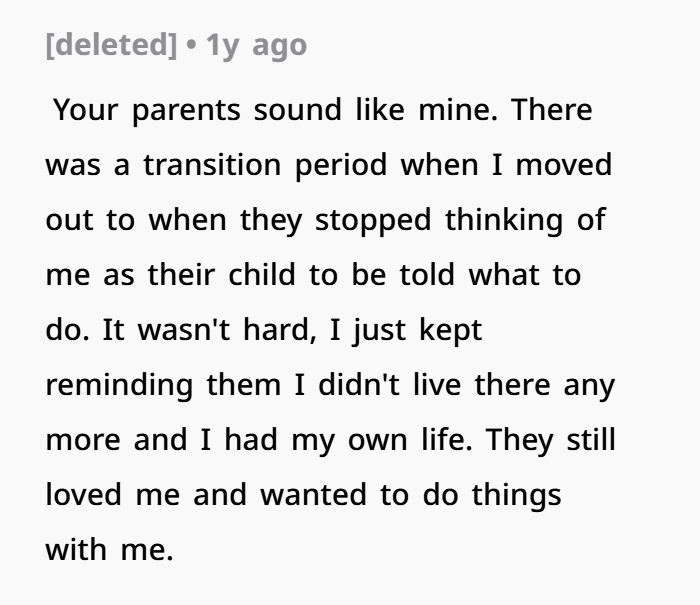
They maintain relationships with imperfect family members while creating healthy boundaries that protect their own well-being.
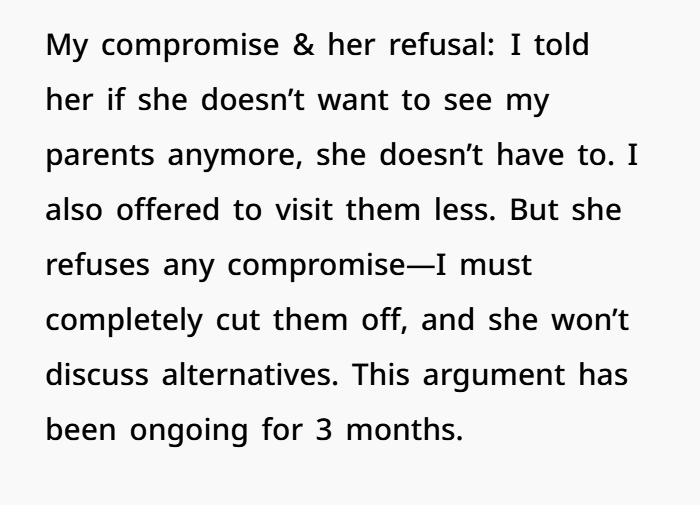
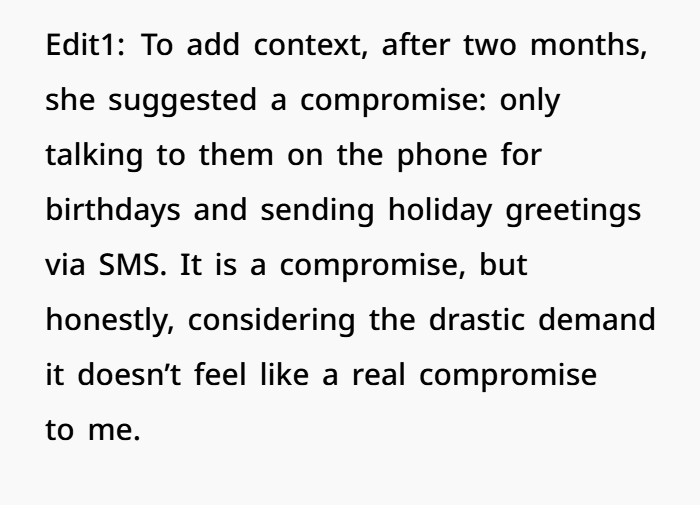
One reason readers sympathized with him is that he appears to have tried several compromises.
He reduced contact.
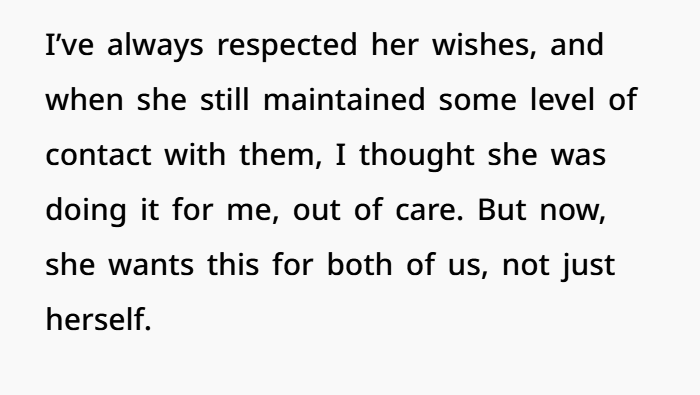
He respected his fiancée’s choice not to attend family events.
He offered limited visits and separate interactions.
Despite those efforts, the conflict continued because only complete separation seemed acceptable.
That left him feeling trapped between two important parts of his life.
Healthy relationships usually allow room for personal choices and independence.
Partners do not need to agree on every relationship, friendship, or family connection. What matters is communication, respect, and trust.
Many people believe someone should be able to visit a parent, attend a birthday gathering, or help a family member without fearing that the relationship will end because of it.
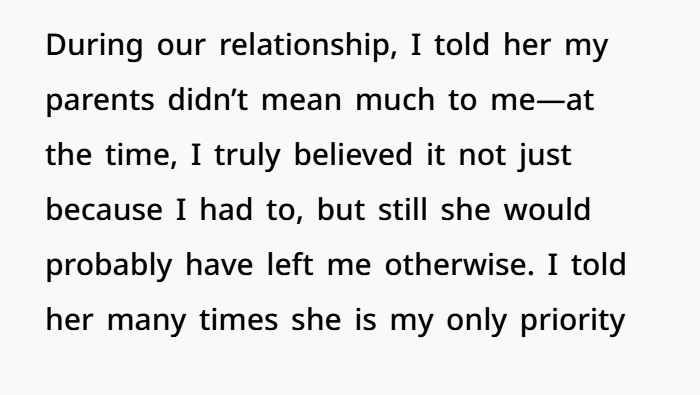
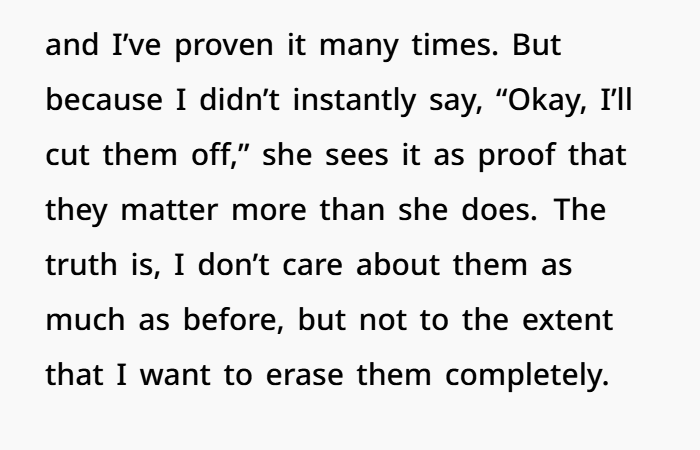
One of the most emotional parts of the story is when he admits that he is not as close to his parents as he once was, but he does not want to remove them from his life completely.
That statement suggests someone trying very hard to balance loyalty, family relationships, and the needs of a long-term partner.
Unfortunately, maintaining that balance becomes difficult when both sides feel strongly about the issue.
The larger concern now may not be the parents themselves.
The bigger question is whether the relationship can move forward without one person feeling forced to give up something that matters deeply to them.
Marriage counseling professionals often note that unresolved issues tend to become larger over time, especially after marriage.
Future challenges such as children, holidays, family emergencies, caregiving responsibilities, and major life events can place even more pressure on existing conflicts.
That is why many readers see this story as being about much more than difficult in-laws.
It is really about boundaries, emotional wellness, family dynamics, communication, and finding healthy ways to balance personal relationships.
In the end, successful relationships usually require understanding, compromise, and mutual respect from both partners.
Without those things, even long-term relationships can struggle under the weight of ongoing conflict and emotional pressure.
The Comments Are In