
College Student, 19, Opens a Secret Bank Account After Her Dad Keeps Tracking Her Spending and Taking Her Money
A 19-year-old college student found herself in a difficult situation after her father discovered she had opened a secret bank account without telling him. What started as a simple way to manage her own money soon turned into a serious family argument.
The young woman had been working since she was 15 and had spent years dealing with her father’s strict control over her finances. Even small purchases, like a cup of coffee or dinner with friends, often led to uncomfortable questions.
Things became more troubling when her father started taking money from her bank account without explaining why. Although he usually returned it a few days later, some withdrawals reached as much as $2,000.
Tired of having every purchase questioned, she opened a second bank account during her summer break. For the first time, she felt she could spend her hard-earned money without someone watching her every move.
But that feeling didn’t last long.
When her father found the new debit card in her wallet, he became furious. He demanded access to the account and even tried to cut up her card and take away her car keys.
The argument ended with the student leaving home and staying with her sister. Now, she is wondering if keeping her new bank account a secret was wrong or if she had every right to protect her financial privacy.






Her Family Had Money, but She Still Had to Pay for Her Own Things
The 19-year-old student was in her second year of college when she shared her story on Reddit’s r/AmItheAsshole community.
Her father, 52, had grown up with very little money. For most of his life, he knew what it was like to struggle financially.
But things changed when his daughter was 11. A family member passed away, leaving the family with an inheritance that made their financial situation much more comfortable.
Even with that extra money, the daughter began paying for many of her own expenses at just 15 years old.
She started working regularly while also keeping up with school and sports. Being a student athlete meant she could only work about once a week.
So, while she earned some money, she wasn’t making nearly as much as someone with a regular part-time job.
Her Father Could See Every Purchase She Made
When she turned 16, her father helped her open her first bank account.
At first, it seemed like a normal arrangement. He wanted to keep an eye on her spending, and she understood why a parent might want to monitor a teenager’s finances.
But his interest in her spending soon became uncomfortable.
Whenever she asked for gas money, he would open his banking app and go through her recent purchases.
If she had bought coffee or eaten at a restaurant after a ball game, he would bring it up.
Instead of simply discussing her budget, he seemed to question how she spent nearly every dollar.
It wasn’t just when she asked for money, either.
Her father started bringing up her purchases at random times. Sometimes it happened during family dinner. Other times, he would question her as soon as she returned home from practice.
He might ask if the coffee shop had raised its prices or demand to know why she had spent $30 at Target.
These comments may have sounded small, but they kept happening.
The daughter already felt her father didn’t respect her privacy. Now, even her personal spending had become something she couldn’t keep to herself.
She Started Hiding Cash in a Shoebox
Eventually, the student found a way to avoid the constant questions.
She stopped putting her earnings into her bank account.
Instead, she began carrying cash and keeping her extra money in a shoebox at the top of her closet.
It wasn’t the most convenient way to manage her savings, but it meant her father couldn’t check every purchase through his banking app.
For a while, that worked.
Things changed when she left for college. She didn’t feel comfortable leaving so much cash behind at home, so she decided to deposit it into her bank account.
The amount was a little over $1,000.
Her father noticed almost immediately.
Rather than being pleased that his daughter had saved money, he became upset and questioned where it had come from.
He accused her of hiding money and wanted to know what she had been buying with it.
For the student, even saving her own earnings had turned into another argument.
Then Her Father Started Taking Up to $2,000 From Her Account
The situation became even more troubling during her freshman year of college.
Although she was no longer living at home full-time, her father’s habit of checking her spending continued.
The only difference was that he now called her to question purchases instead of confronting her in person.
But something else started happening.
Her father began taking money out of her bank account.
Because he had been given access to the account when it was opened, he was able to make withdrawals. Sometimes, he took as much as $2,000.
He usually returned the money a few days later.
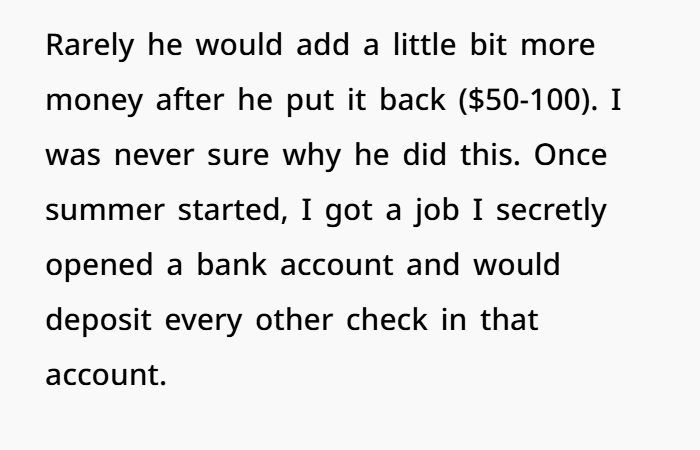
On rare occasions, he even put back an extra $50 to $100.
Still, his daughter had no idea why he was doing it.
She didn’t explain whether he needed the money temporarily or had another reason for moving it.
The unexplained withdrawals left her confused.
This also raises a question about joint bank account ownership.
According to the Consumer Financial Protection Bureau, joint account holders can generally withdraw money without getting permission from the other owner. The exact rules depend on the account agreement and state law. Consumer Financial Protection Bureau
However, the Reddit post doesn’t make clear whether her father was a joint owner or had another type of authorized access.
Either way, the student was becoming increasingly frustrated with having so little control over her own finances.
A Secret Bank Account Finally Gave Her Some Freedom
When summer arrived, she got a job and made a decision she had been thinking about for some time.
She opened a second bank account without telling her father.
This time, she didn’t give him access.
Instead of putting all her earnings into the original account, she started depositing every other paycheck into her new one.
The change made a huge difference.
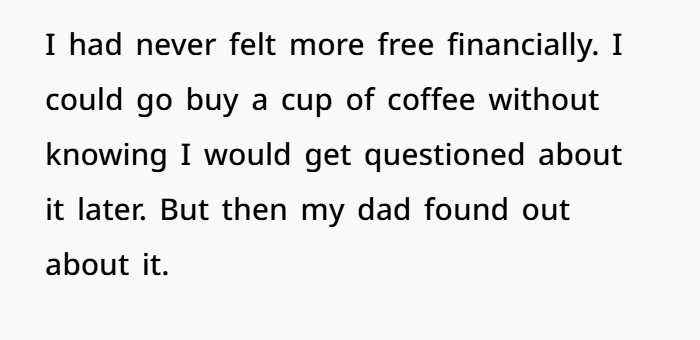
She could finally buy herself a coffee without worrying about an uncomfortable phone call later.
She could spend money she had earned without feeling like she needed to explain every little purchase.
For the first time in years, she felt financially free.
Opening a personal checking or savings account is a normal step toward financial independence for young adults. According to the Federal Deposit Insurance Corporation, people can open their own bank accounts at 18 in most parts of the United States. fdic.gov
At 19, the student was old enough to manage an individual account under those usual rules.
But there was one problem.
Her father still didn’t know the second account existed.
Her Father Found the Debit Card in Her Wallet
The secret eventually came out in a way she hadn’t expected.
Her father found the debit card for her second bank account inside her wallet.
She didn’t know why he had been looking through her wallet or what he was searching for.
But once he saw the card, he confronted her.
He wanted to know when she had opened the account.
Then he demanded that she add him to it.
His daughter refused.
She was almost 20 years old and felt she no longer needed a parent watching every dollar she spent.
After years of explaining coffee purchases, restaurant bills, and other small expenses, she wasn’t willing to give up her new financial privacy.
Her refusal made her father even angrier.
According to her account, he tried to cut up the debit card and take away her car keys.
At that point, the argument had gone far beyond a disagreement about banking.
She Left Home and Went to Stay With Her Sister
Rather than continue arguing, the student left the house.
She went to stay with her sister, where she was still living when she shared her story.
It was a difficult situation.
She had spent years trying to balance respect for her father with her growing need for independence.
She understood that he had experienced financial hardship when he was younger. She also understood why he might have wanted to teach her how to handle money when she was a teenager.
But now she was an adult.
She had a job, attended college, and earned her own income.
All she wanted was a bank account where she could save and spend her money without being questioned.
Still, after the argument, she began wondering if keeping the account secret had been the wrong decision.
That was what led her to ask Reddit whether she was the one at fault.
When Does Parental Concern Become Financial Control?
This story raises a bigger question about the difference between helping a young adult manage money and trying to control their finances.
Parents often help teenagers open their first bank accounts. They may also monitor spending to teach budgeting and responsible money habits.
But the situation can become unhealthy when that monitoring continues into adulthood without clear boundaries.
The U.S. Department of Justice describes economic abuse as behavior that controls someone’s ability to access, use, or keep their financial resources. Domestic Violence
The National Domestic Violence Hotline also explains how controlling access to money, questioning every purchase, and taking someone’s earnings can be warning signs of financial abuse. The Hotline
These resources don’t prove what motivated the father in this particular story. His reasons for taking and returning money remain unknown.
But they do help explain why the daughter’s concerns about financial privacy deserve to be taken seriously.
Her father may have believed he was protecting her from poor spending choices.
Yet his daughter described a very different experience. She felt watched, questioned, and unable to make ordinary decisions about money she had earned herself.
Why Having a Separate Bank Account Matters
For college students, learning to manage money is part of becoming independent.
That can mean setting up a personal checking account, building emergency savings, planning a monthly budget, and learning how to use a debit card responsibly.
It also means understanding who can access an account.
The Consumer Financial Protection Bureau advises people to be careful about adding another person to a bank account because doing so may give that person the power to withdraw funds. Consumer Financial Protection Bureau
For someone in the student’s position, practical steps could include speaking privately with the bank about the original account, checking who has withdrawal rights, and protecting online banking passwords.
Keeping records of unusual transactions could also help her understand what happened to her money.
Since she is staying with her sister, she may have some space to think about her next steps without another argument taking place.
The goal wouldn’t have to be cutting off her father. It could simply be finding a way to protect her finances while setting clearer boundaries.
Was She Wrong to Keep the Account Secret?
There are two sides to the family disagreement, although the Reddit story only gives the daughter’s version.
Her father helped her open her first bank account and may have believed that keeping track of her spending was part of being a responsible parent.
His difficult childhood may also have shaped the way he thought about money.
But the daughter had been earning her own income since she was 15.
She wasn’t asking him to pay for every coffee or restaurant visit. She wanted to use her earnings without having to defend each purchase.
More importantly, she had already tried to avoid conflict by keeping cash outside her bank account.
When that led to more questions, she eventually opened a separate account.
The decision to keep it secret wasn’t presented as a way to deceive him for financial gain. It was her attempt to have some privacy.
And when he discovered the account, his demand for access only seemed to confirm why she had wanted it in the first place.
Based on the facts she shared, opening her own bank account was a reasonable step toward independence.
The harder question is how she and her father can move forward after years of disagreement over money.
For now, the student is staying with her sister, and the story ends without a clear resolution.
What remains is a familiar family struggle: a parent who doesn’t want to give up control and a young adult who wants the freedom to make her own choices.
In this case, that struggle came down to something as simple as being able to buy a cup of coffee without having to explain it later.
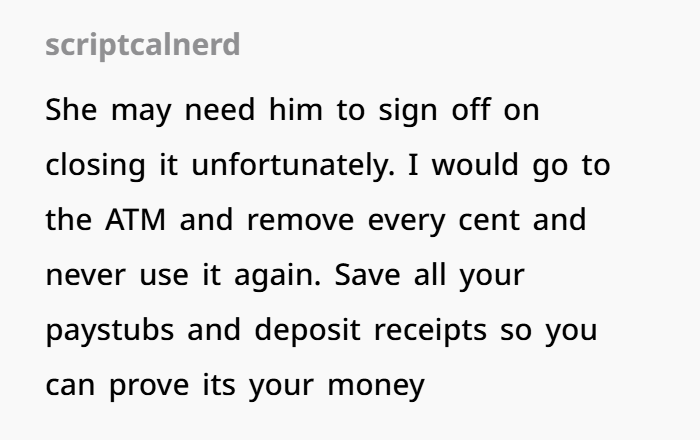
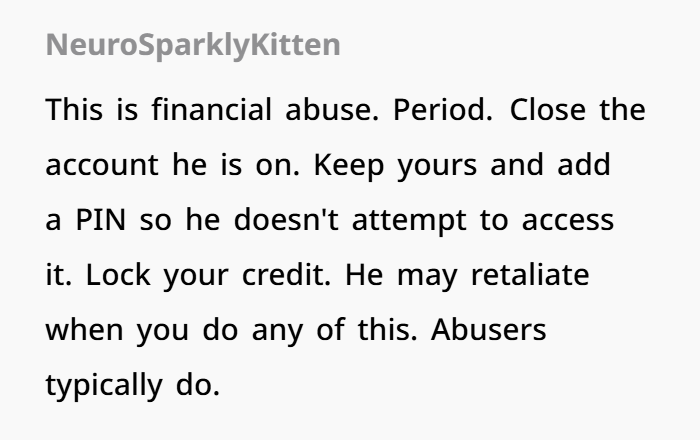
See the comments to know what people said
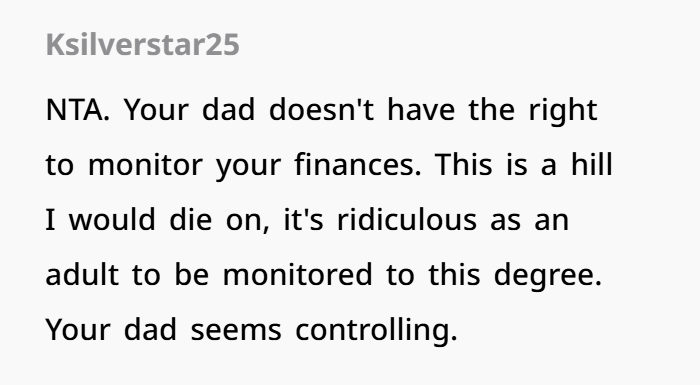


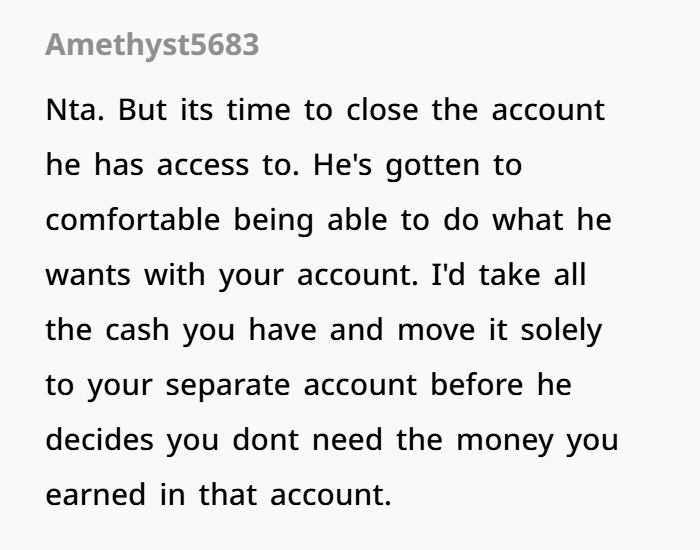
At the end of the day, the 19-year-old college student wasn’t asking for anything unreasonable. She simply wanted to manage the money she worked hard to earn without her father checking every purchase.
Her father may have had good intentions, especially after growing up with financial struggles. But questioning every expense, taking money from her account without explaining why, and demanding access to her new bank account went too far.
Opening a separate bank account wasn’t about disrespecting her father. It was about protecting her financial privacy and taking a step toward independence.
For now, staying with her sister gives her some space to decide what to do next. She may still want a good relationship with her dad, but that doesn’t mean giving him control over her finances.
So, was she wrong? Based on her side of the story, no. She’s an adult who earns her own money, and wanting a private bank account doesn’t make her selfish or ungrateful.