
What Is Biocomputing and How Could Living Cells Process Information?
Computers have always been built from dead matter. Silicon chips, copper wires, and plastic cases do the work, and living things have had no part in it.
Biocomputing asks what would happen if that changed. The idea is simple to state and hard to carry out: use living cells, or the molecules inside them, to store and process information.
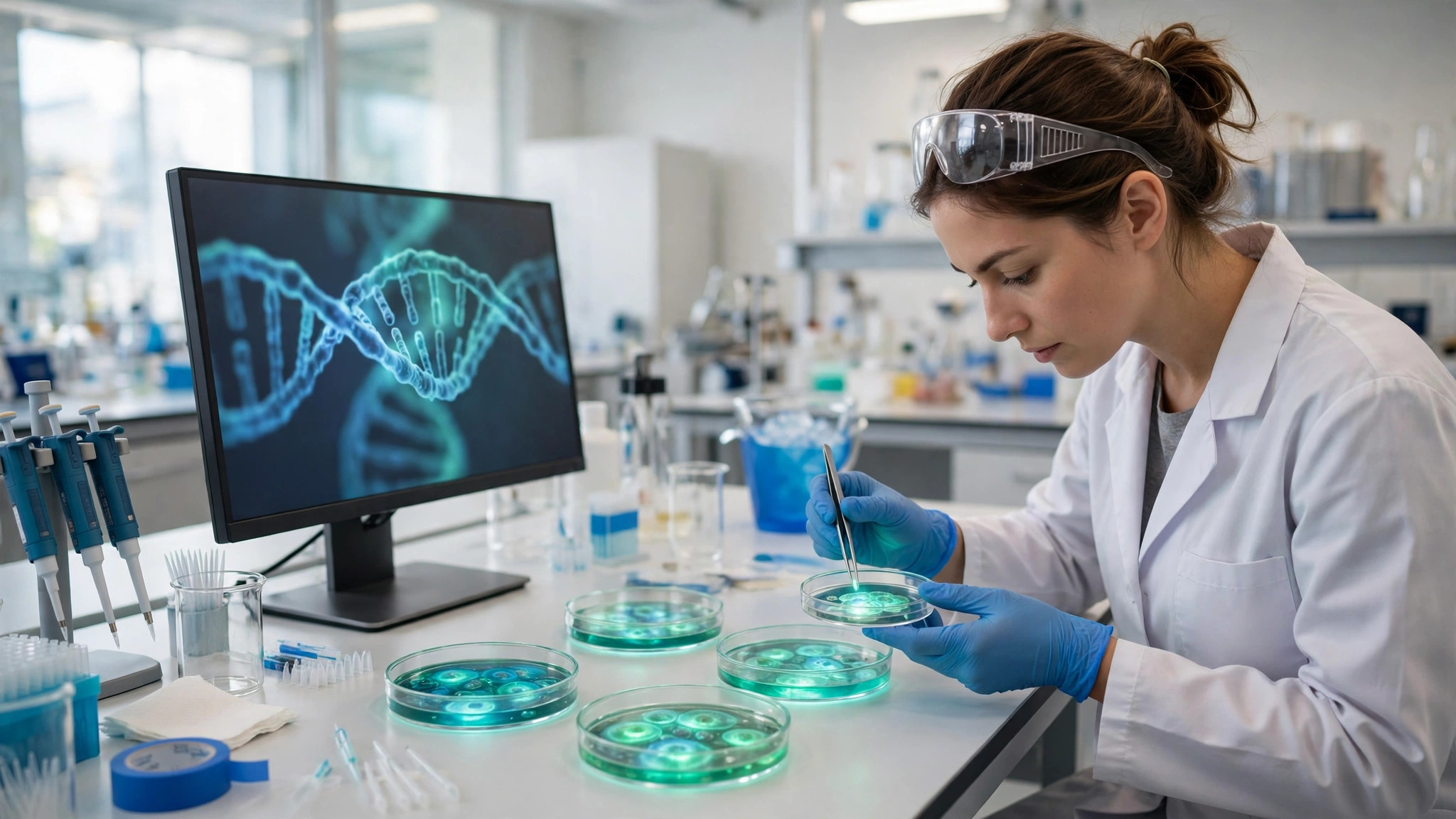
Instead of a transistor switching on or off, a cell could respond to a chemical signal. Instead of data stored as magnetic charges, information could be written into DNA. This article explains what biocomputing is, how cells could handle information, where the research stands in May 2026, and what it could be used for.
What Biocomputing Actually Is
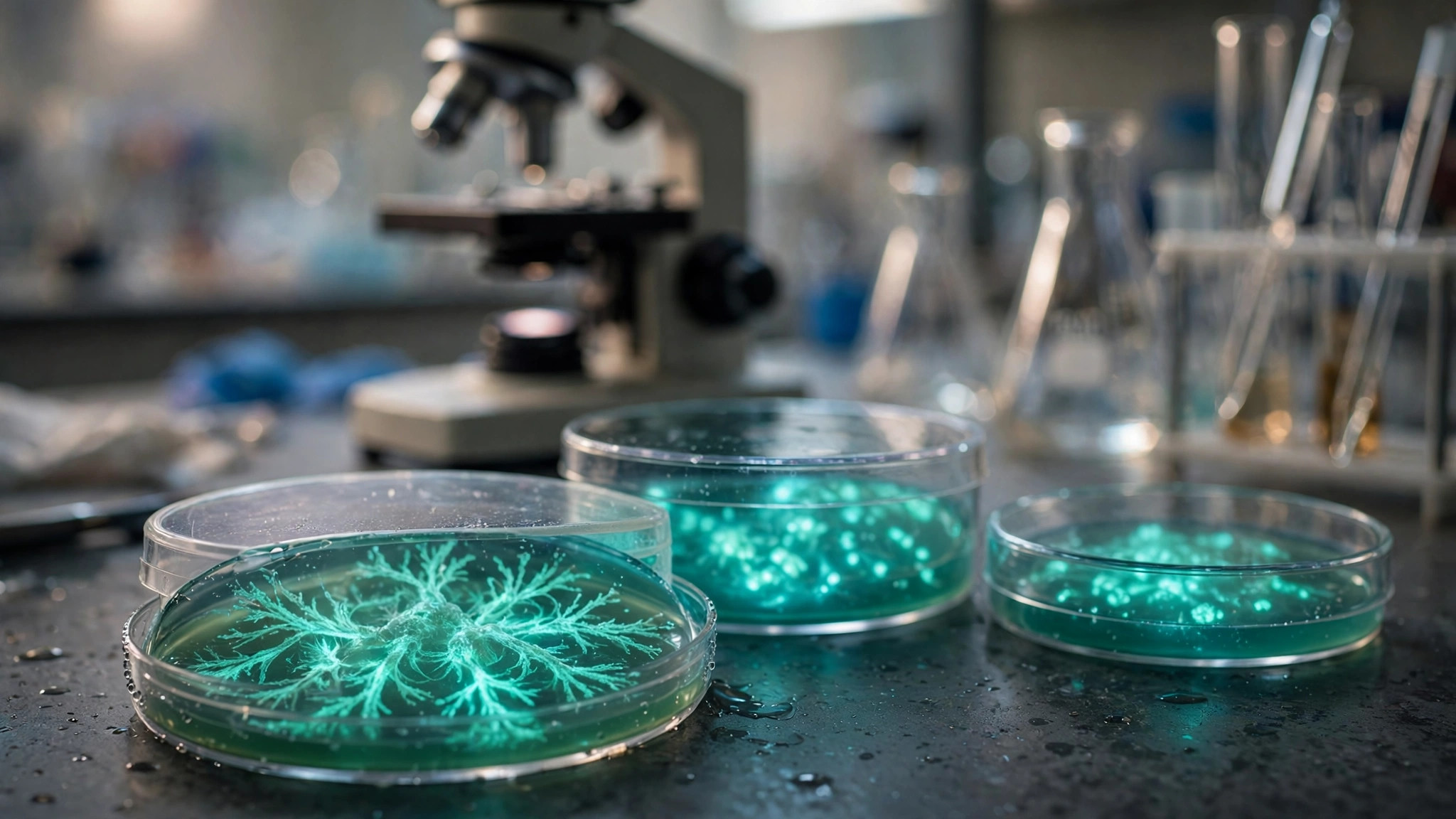
Biocomputing is the use of biological material to carry out computing tasks. The material can be a single molecule, such as a strand of DNA, or a whole living cell, or a small cluster of cells grown in a laboratory.
There are two broad approaches. The first works with molecules rather than living cells. DNA computing uses strands of DNA as both the data and the processor, because DNA can be cut, joined, and read in ways that resemble logical operations. DNA data storage writes digital files into sequences of the four DNA letters.
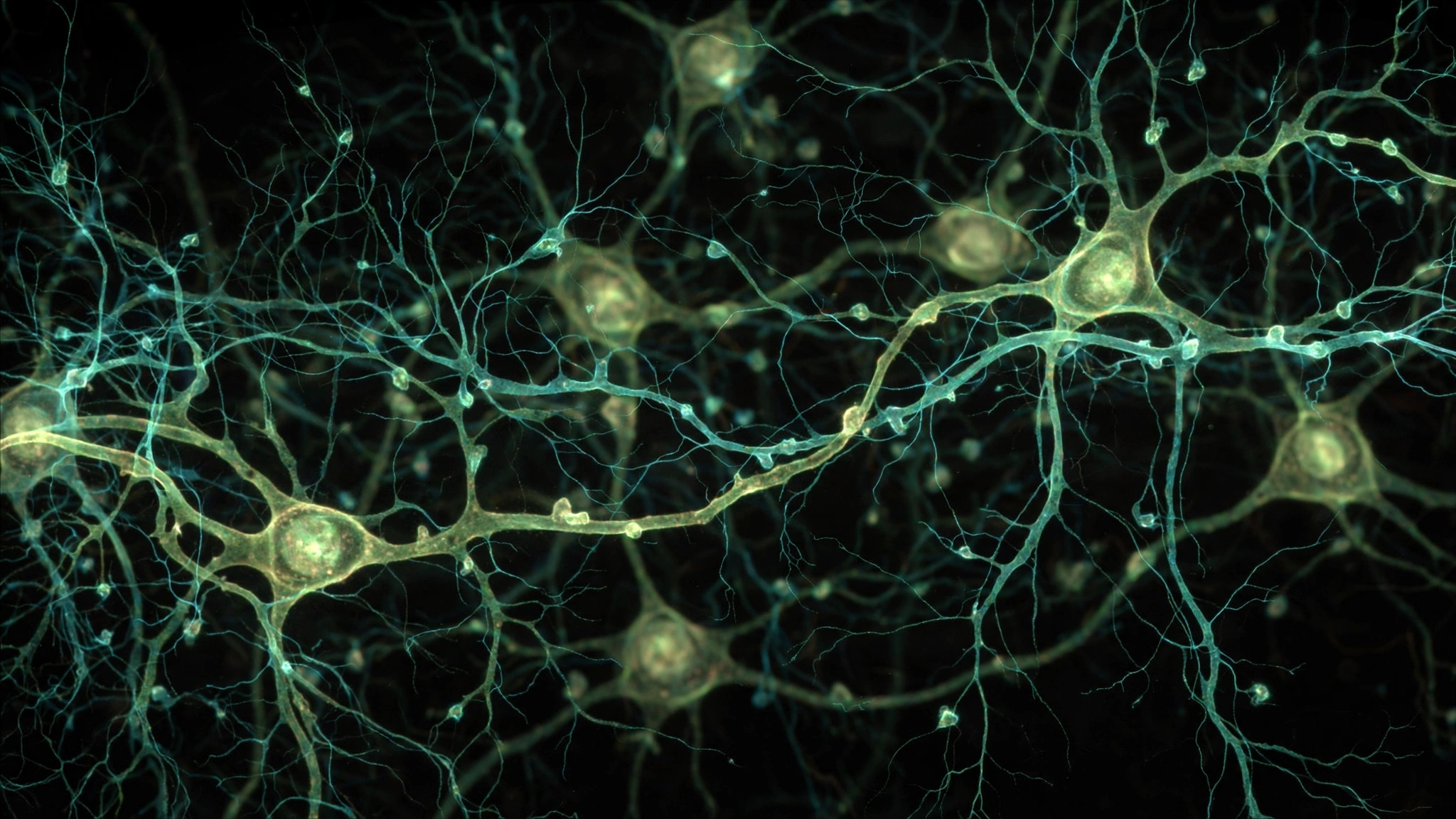
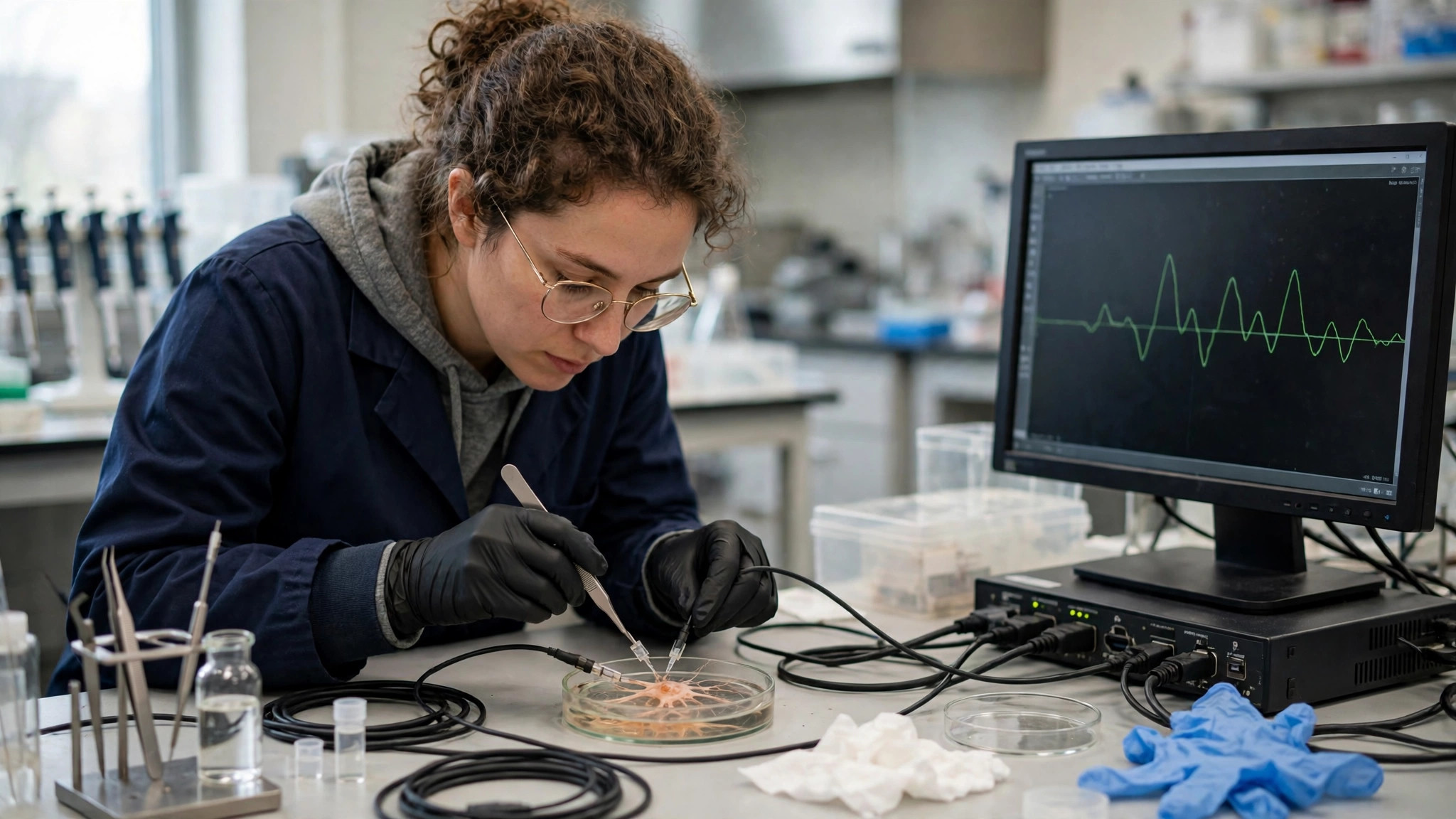
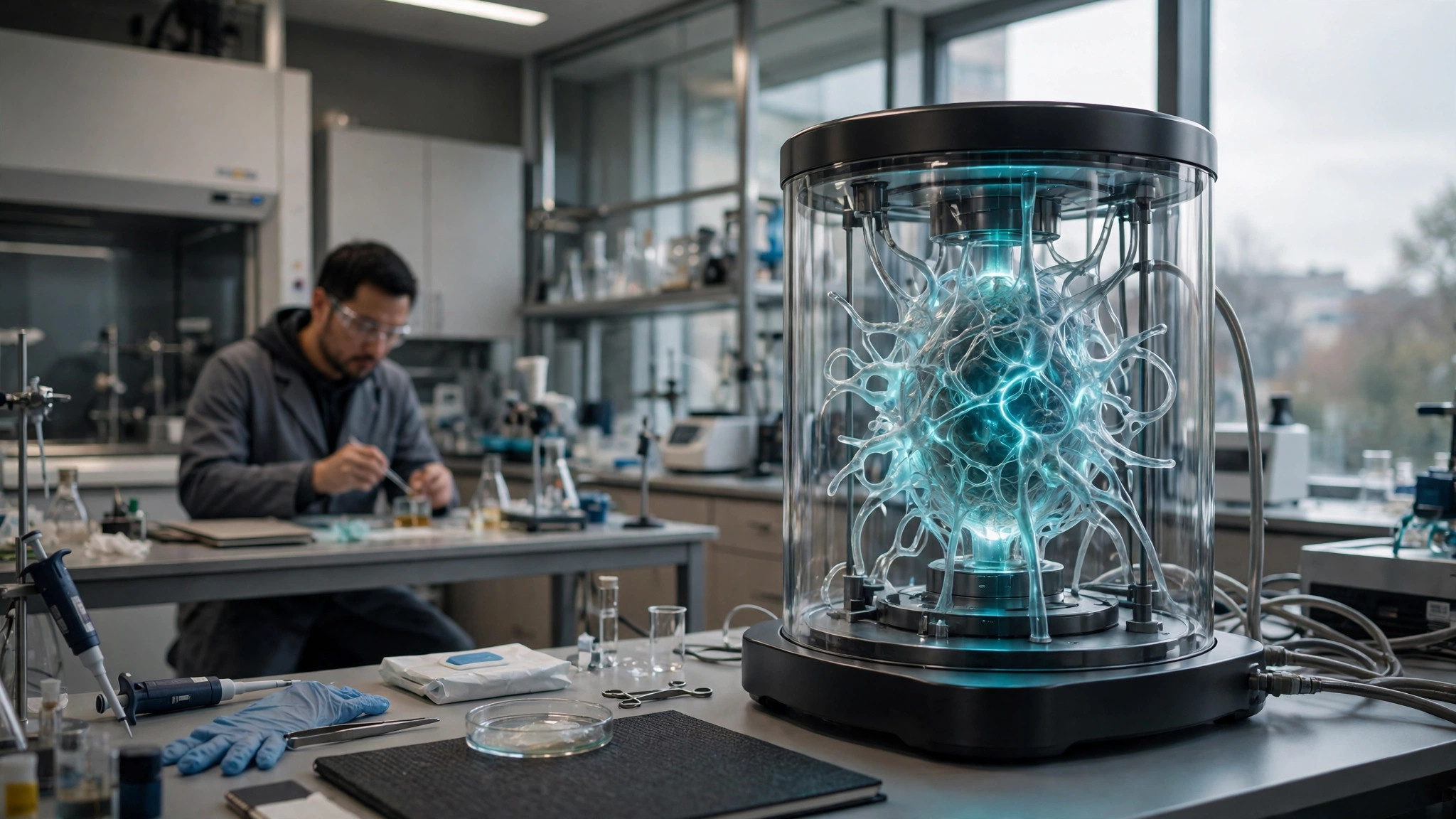
The second approach works with living cells. Researchers grow networks of neurons, the cells that carry signals in the brain, and train them to respond to patterns of electrical stimulation. These networks are sometimes called brain organoids when grown as small three-dimensional clusters, and they are the basis of what some researchers call wetware: computing hardware made from living tissue. Both approaches are research projects, not products. No one can buy a biocomputer in 2026.
How Living Cells Could Process Information
A cell already processes information, in a sense. It senses its surroundings, reads instructions from its DNA, and responds by making proteins or changing its behaviour. A bacterium that swims towards food is following a chemical signal, making a decision, and acting on it.
One way to harness this is to treat a chemical signal as an input and a cell’s response as an output. A cell can be engineered so that it glows only when two particular chemicals are present at the same time. That is the biological equivalent of an AND gate, one of the basic building blocks of digital logic.
Neurons offer a different route. A neuron receives electrical signals from other neurons, adds them up, and fires its own signal if the total passes a threshold. That is similar to how an artificial neuron works in a machine learning model, except that the biological version runs on chemistry and electricity in a living cell. In some experiments, a network of laboratory-grown neurons changes its firing in ways that resemble learning.
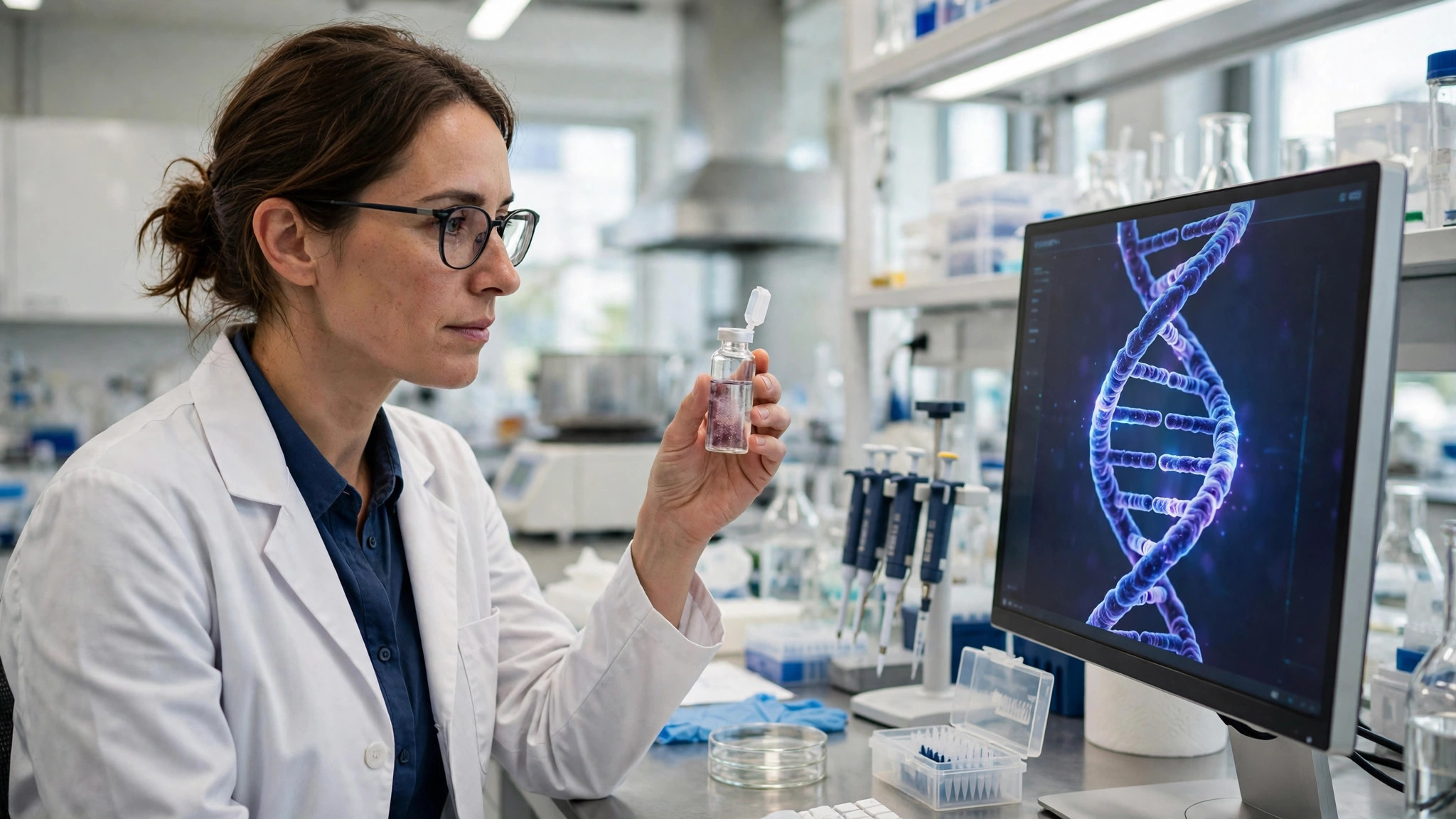
DNA works differently again. A single strand holds a great deal of information in a tiny space, because each of its four chemical letters can stand for two bits of data. Researchers have stored text, images, and video files in DNA and read them back. Reading and writing are slow and expensive compared with a hard drive, which is why DNA storage is talked about for archives that are rarely read. The promise of biocomputing is that it might do some things silicon does badly, such as recognising patterns with very little energy.
Biocomputing vs Silicon Computing
The table below compares the two approaches on the points that matter most.
| Feature | Silicon computing | Biocomputing |
|---|---|---|
| Basic unit | Transistor switching on or off | Cell, neuron, or DNA molecule responding to a signal |
| Speed | Very fast, billions of operations per second | Slow, limited by chemical reactions and cell biology |
| Energy use | High, especially for large AI models | Very low per operation, in principle |
| Storage density | High, and still improving | Extremely high for DNA, in a tiny physical volume |
| Durability | Hardware lasts years, data needs refreshing | DNA can survive for centuries if kept dry and cool; living cells need constant care |
| Precision | Exact and repeatable | Variable, because living cells differ from one another |
| Best suited to | General calculation, fast and reliable | Pattern recognition, long-term storage, problems biology already solves |
Silicon is fast, precise, and reliable. Biology is slow and variable, but it is also efficient and compact in ways that silicon is not. That is why researchers describe biocomputing as a complement to silicon, not a replacement for it.
Where the Research Stands in 2026
In 2022, researchers at Cortical Labs in Australia reported that a network of human neurons grown in a dish, connected to a computer, could learn to play a simple video game. The system, which they called DishBrain, received electrical signals representing the game and sent back signals that moved the paddle.
Since then, the field has grown more organised. In 2024, a Swiss company called FinalSpark opened remote access to its Neuroplatform, letting researchers elsewhere send signals to laboratory-grown networks of human neurons. In early 2025, Cortical Labs announced the CL1, a unit containing lab-grown neurons that researchers could buy and work with directly. These are tools for research, not consumer products.
DNA storage has followed a steadier path. Researchers have stored and retrieved files in DNA for several years, and the work now focuses on making the writing and reading faster and cheaper. The bottleneck is not the DNA itself, which stores information well, but the machines that write and read it.
It is important to be honest about how early all of this is. A laboratory network of neurons can learn a simple game, but it cannot run a spreadsheet, write an email, or recognise a face. A DNA archive can store a file, but reading it back takes far longer than reading a hard drive.
What Biocomputing Could Be Used For
The most discussed use is energy-efficient computing for artificial intelligence. Training and running large AI models uses a great deal of electricity, and the demand is growing fast enough that it has become a serious concern for data centres. The brain runs on far less power than a data centre, and it does pattern recognition well, so researchers wonder whether a system built from living neurons could handle some AI tasks with a fraction of the energy. It is the same question behind new optical chips, and it is shaping how modular data centres are being built.
A second use is long-term data storage. DNA is stable for a very long time when it is kept dry and cool, far longer than a hard drive or a tape. For archives that must survive for decades or centuries, such as scientific records or cultural heritage, DNA storage could one day offer a compact and durable option. The cost and the slow reading speed are the obstacles, but for information that is written once and read rarely, the trade-off may eventually make sense.
A third use is in medicine and drug testing. A laboratory-grown network of human neurons can be used to test how a drug affects brain cells, without testing on a person or an animal first. This is already a real use of brain organoids in research, and it is one of the areas where the technology is closest to practical value. The same approach could help researchers study brain diseases in a dish.
The Challenges: Keeping Cells Alive, and Keeping Control
The first challenge is the most basic. Living cells need food, warmth, and a stable environment, and they die if those conditions fail. A silicon chip can sit on a shelf for years and work when it is switched on. A dish of neurons needs a laboratory to keep it alive, with nutrients replaced regularly and temperature controlled.
The second challenge is variability. No two cells are identical, and no two networks of neurons grow in exactly the same way. A silicon chip is manufactured to a precise design, and a thousand chips of the same type behave in the same way. A thousand dishes of neurons will behave differently from one another.
The third challenge is speed and scale. Chemical reactions take time, and cells communicate slowly compared with electrons in a wire. A biocomputer will never match silicon for raw speed. It also has far fewer units to work with: a dish holds thousands or millions of neurons, while a chip holds billions of transistors.
The fourth challenge is ethics. Laboratory-grown networks of human neurons are not brains, and they are far too simple to be conscious in any sense that we understand. But as the networks grow larger, researchers and ethicists are asking where the line should be drawn, and what rules should govern how these systems are used.
What Biocomputing Means for Everyday Users
For most people, biocomputing will not change daily life in the near future. There is no biocomputer to buy, no app that runs on living cells, and no reason to wait for one before choosing a phone or a laptop.
What it does offer is a different way of thinking about computing. For decades, progress has meant smaller transistors and faster chips. But that approach is running into limits of energy and heat, and the demand from AI is making those limits harder to ignore. Biocomputing is one of several attempts to find a different path, alongside new kinds of chips and new ways of building data centres. It is part of the same wave of AI innovations reshaping technology.
Practical Tips / Examples / Things to Know
- Think of biocomputing as a research field, not a product: there is nothing to buy or install in 2026.
- Follow the laboratory demonstrations, not the headlines: a network of neurons learning a simple game is a real result, but it is a long way from a working computer.
- Keep the two approaches separate: DNA computing works with molecules, while wetware works with living cells, and they face different challenges.
- If you are a student or a researcher, the field sits between biology and computing, so it rewards people who are comfortable in both worlds.
- Remember the energy argument: the brain does complex work with very little power, and AI computing needs that efficiency.
- Watch the ethics discussion as closely as the engineering: the rules being written now will shape what this technology is allowed to become.
Common Mistakes / Considerations / What to Avoid
- Believing that a biocomputer exists now, or that living cells will replace silicon chips in the near future.
- Assuming that because a network of neurons can learn a simple game, it can learn anything, or that it understands what it is doing.
- Confusing a laboratory-grown cluster of neurons with a brain: it has no senses, no body, and no experience of the world.
- Expecting DNA storage to replace hard drives soon, when writing and reading DNA is still slow and expensive.
- Ignoring the practical problem of keeping cells alive: a biocomputer needs a laboratory, not just a power socket.
- Overlooking the ethical questions, including how large a network of human neurons should be allowed to grow and what it should be connected to.
Final Thoughts
Biocomputing is one of the most unusual ideas in technology today, because it asks us to build computers from the same material we are made of. The work so far has shown that the idea is not impossible: DNA can store information, engineered cells can carry out simple logic, and networks of living neurons can learn from feedback.
At the same time, the distance between a laboratory demonstration and a useful computer is very large. Cells are slow, fragile, and variable, and the systems built from them are tiny compared with the chips they would need to match. The field will be judged by whether it can solve the practical problems of keeping cells alive and doing something useful at a scale that matters.