
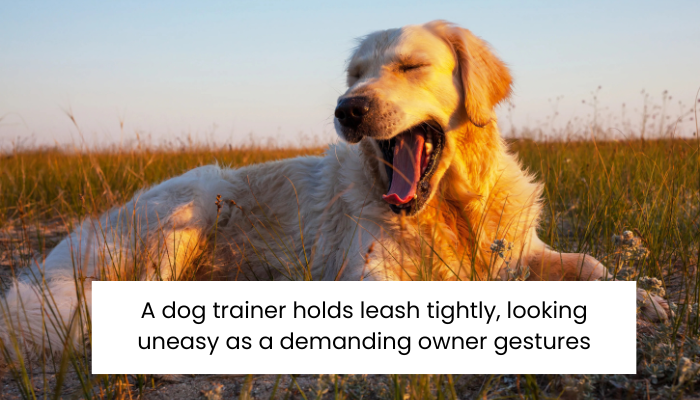
Am I Wrong for Turning Down a Client Who Chewed Me Out Before?
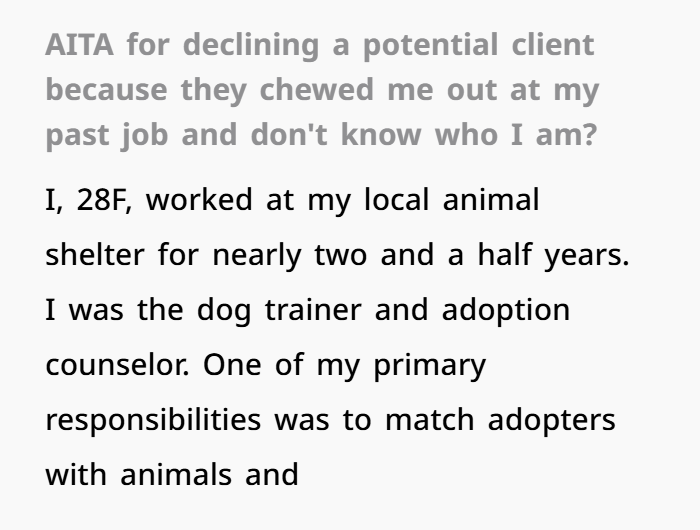
A 28-year-old woman works with dogs and has experience as a dog trainer and adoption counselor at a local animal shelter. Part of her job was helping people adopt pets and making sure they understood each dog’s behavior and needs before taking them home.
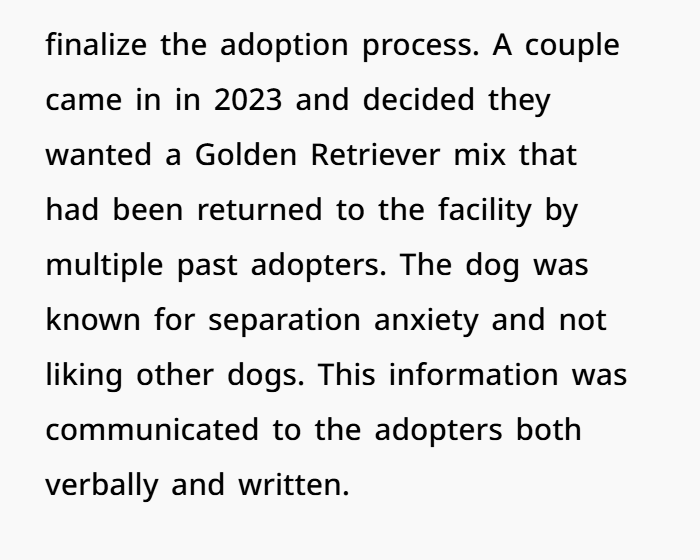
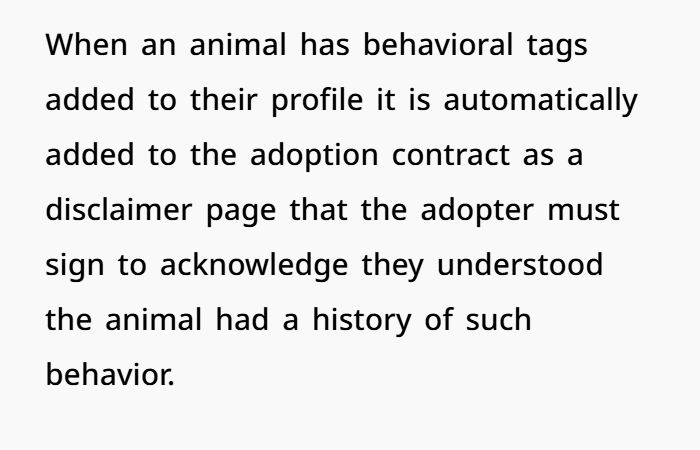
A couple once adopted a Golden Retriever mix that had already been returned by previous owners. The dog had known separation anxiety and did not get along well with other dogs. These behavior issues were clearly explained to the couple both verbally and in writing, and they also signed an adoption agreement that included this information.
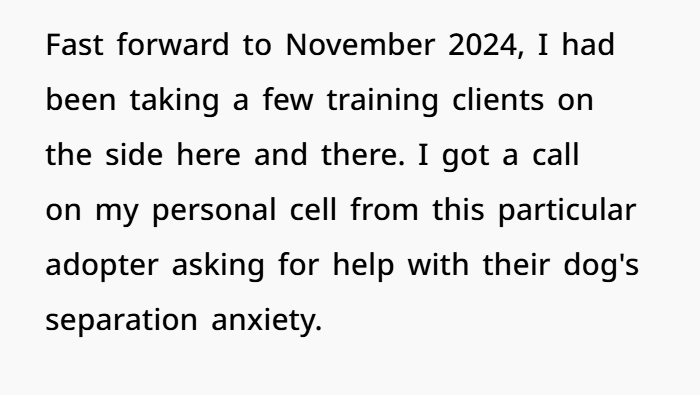
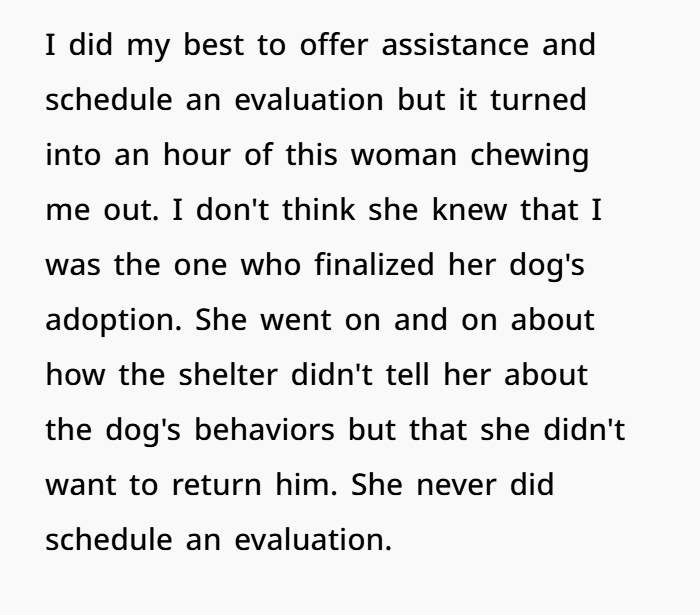
Later, the same couple contacted her for private dog training help because of separation anxiety problems. She tried to assist them and offered to schedule a proper evaluation, but the conversation turned negative. The couple became upset and blamed her, saying they were never informed about the dog’s behavior, even though all details had been disclosed. They never followed up to continue training.
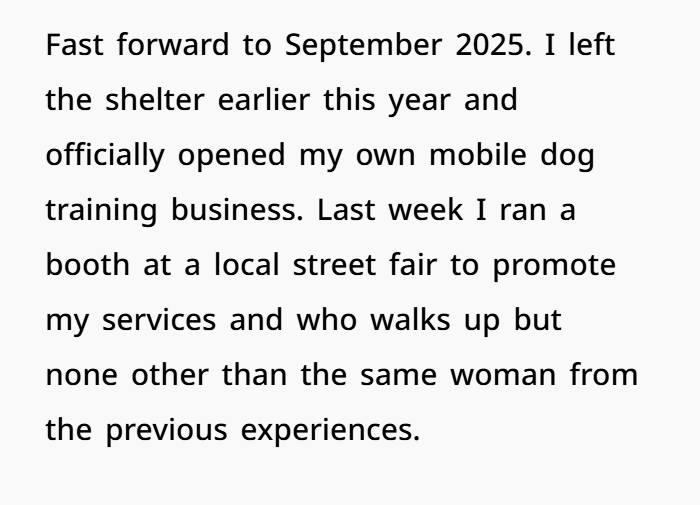
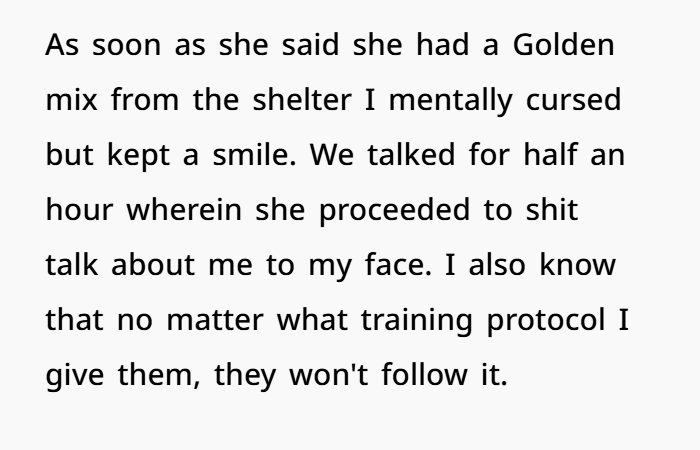
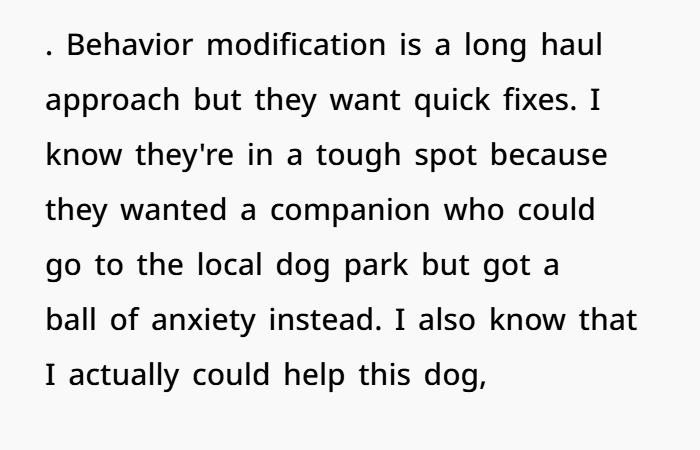
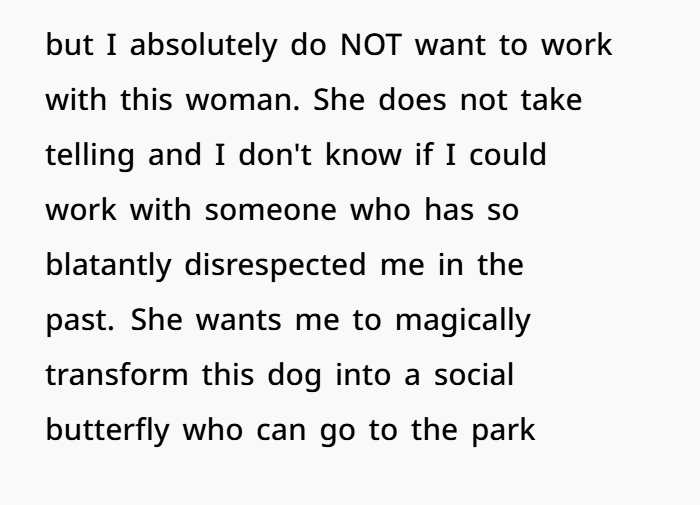
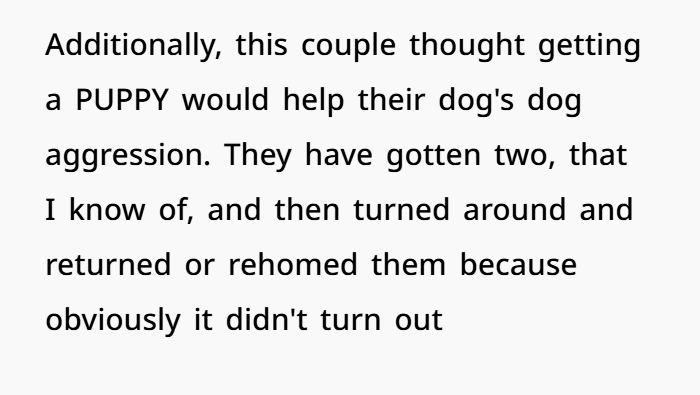
Some time later, the woman started her own mobile dog training business. At a street fair, the same couple approached her again. They spoke negatively about her work and expected quick results and a “miracle fix” for their dog’s behavior issues. Based on her experience, she felt they were not willing to follow proper training steps and had a history of rehoming pets.
Now she is wondering if she is wrong for refusing to take them on as clients, even though she knows she could help their dog through structured behavior training, but believes the working relationship would not be successful due to unrealistic expectations and past conflict.
One woman went against the advice of an animal shelter, and her decision has now come back to bite her

This situation is not just about dog training. It is also about clear expectations, business boundaries, and working with difficult clients in a professional way.
🐶 Understanding Dog Behavior: Aggression and Separation Anxiety
Dog behavior problems like separation anxiety and dog aggression are not simple issues. They take time, patience, and proper training methods.
Separation anxiety in dogs often needs:
- Step-by-step training
- Routine changes
- Gradual alone-time practice
- Sometimes vet support
It does not get fixed quickly or in one session.
Dog aggression toward other dogs is also complex. It can come from fear, lack of socialization, or past bad experiences. With proper dog training and behavior modification, many dogs improve, but results take time and effort.
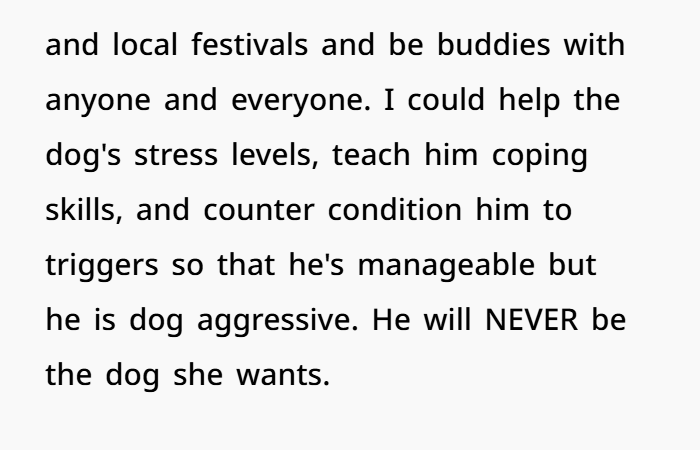
Expecting a dog with aggression issues to become friendly with every dog in parks or events is often not realistic. A better goal is safe behavior, better control, and reduced stress.
🧑💼 Client Expectations vs Reality in Dog Training Business
In dog training, client expectations are very important. Trainers must clearly explain what is possible and what is not.
If a client expects a “perfect social dog” quickly, that is often not realistic. Responsible trainers focus on:
- Safety
- Gradual improvement
- Long-term behavior change
Good dog trainer business practices include setting honest goals from the start so there is no confusion later.
⚠️ Difficult Clients and Lack of Follow-Through
This situation also shows signs of a difficult client.
If a client:
- Does not follow training steps
- Does not attend evaluations
- Disrespects the trainer
- Changes expectations often
then even the best dog behavior training plan will not work properly.
Dog training depends heavily on consistency at home. Without that, progress is very slow or may stop completely.
🧠 Stress, Burnout, and Professional Boundaries
Working with difficult clients can cause stress and burnout for dog trainers.
When a client is rude, unrealistic, or does not cooperate, it affects:
- Mental energy
- Work quality
- Confidence in the process
That is why business boundaries for dog trainers are very important. It is okay to say no when a case is not a good fit.
Protecting your mental health is part of running a professional service business.
📋 Why Saying No Can Be the Right Choice
Declining a client is not unprofessional if it is done respectfully.
In fact, sometimes it is the best decision when:
- Expectations are not realistic
- The client does not follow instructions
- There is repeated disrespect
A trainer can politely say something like:
“I don’t think I am the right fit for your dog’s needs. This type of behavior modification training requires full cooperation and consistency.”
Offering referrals to another trainer or a vet behavior specialist can also be helpful.
💼 Business Side: Reputation and Time Management
Dog trainers also need to think about their business.
Working with difficult clients can lead to:
- More time spent with less progress
- Higher stress levels
- Risk of bad reviews
- Lower overall job satisfaction
Good trainers often choose clients who are willing to follow guidance and commit to the process. This leads to better results in dog training services and stronger long-term success.
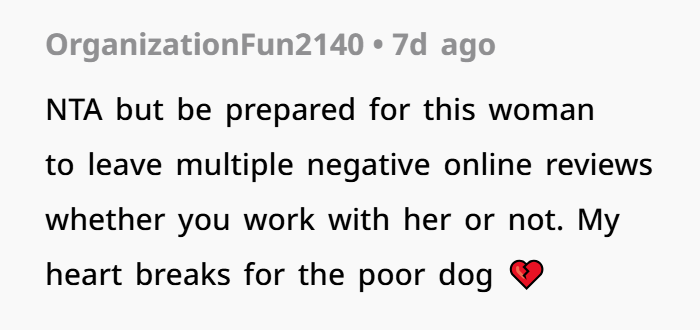
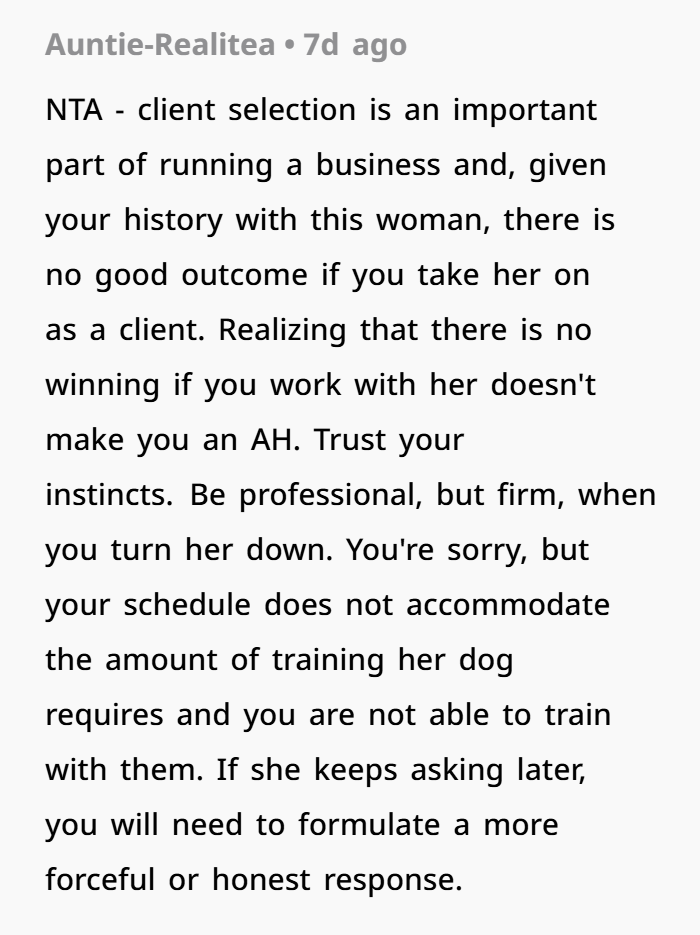
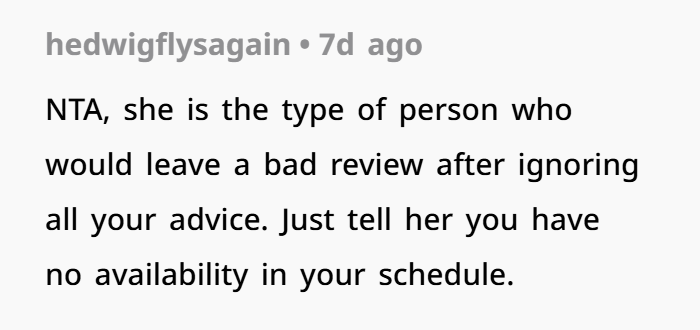
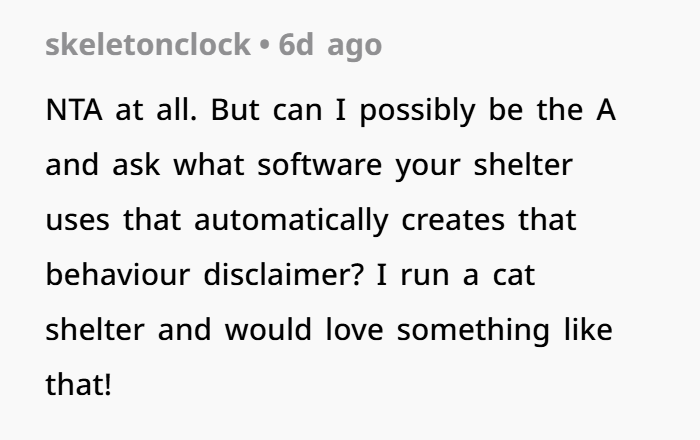
“Champagne dreams”: many agreed that the trainer should not work with the woman


🧩 Final Thoughts
This is not about giving up on a dog. It is about being honest about what is possible and protecting professional boundaries.
Dog behavior issues like aggression and separation anxiety can improve with time, but only when there is teamwork between trainer and client.
If a client is not willing to cooperate or respect the process, it is okay to step back.
Saying no can be a responsible choice for:
- The trainer’s mental health
- The client’s expectations
- And the dog’s well-being
In the end, good dog behavior training is about honesty, patience, and realistic goals—not pressure or unrealistic promises.