
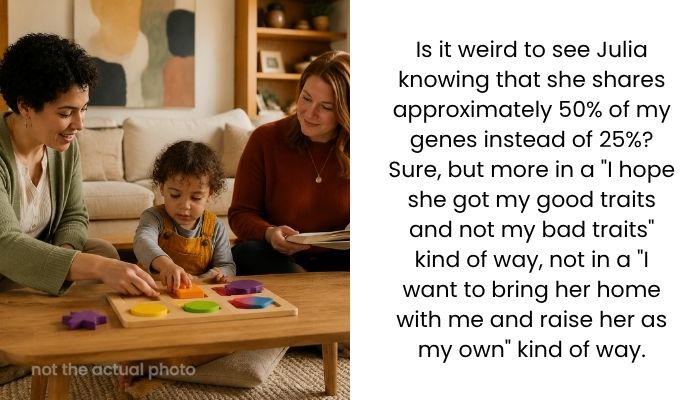
Woman Who Helped Her Sister Have a Baby Considers Leaving a Video for Her Niece’s Future
Infertility is a struggle faced by many people around the world. About 1 in 6 adults experience problems getting pregnant or having a child. For many couples, the journey to becoming parents can be stressful, emotional, and full of challenges.
Today, medical advances have created new options for families who need help. One option is called intra-family egg donation, where a family member donates eggs to help another loved one have a baby.
For some families, this can feel like a special way to build a family while keeping a genetic connection between relatives. It can also help couples avoid long waiting times that are common with some donor programs.
This was the hope of two sisters who made a very personal decision.
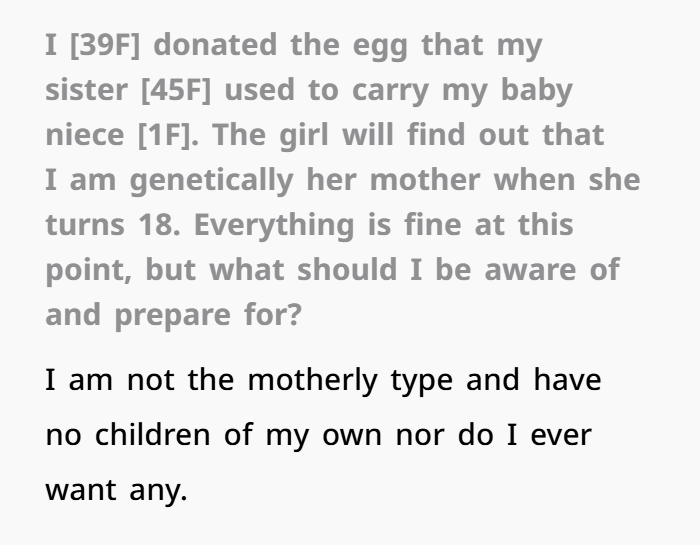
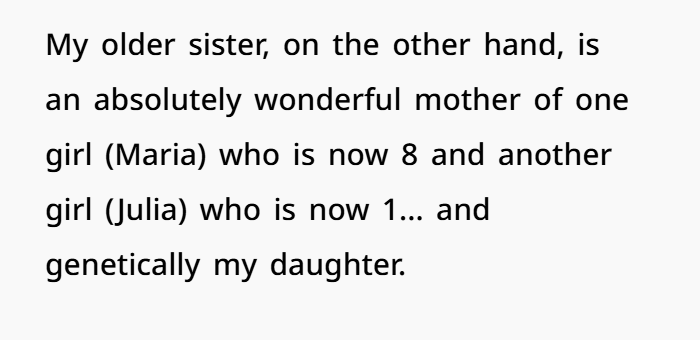
The younger sister watched as her older sister went through two heartbreaking pregnancy losses. Wanting to help, she decided to donate her eggs so her sister could have another chance at becoming a mother.
The treatment worked, and a healthy baby girl was born. The family was overjoyed to welcome her.
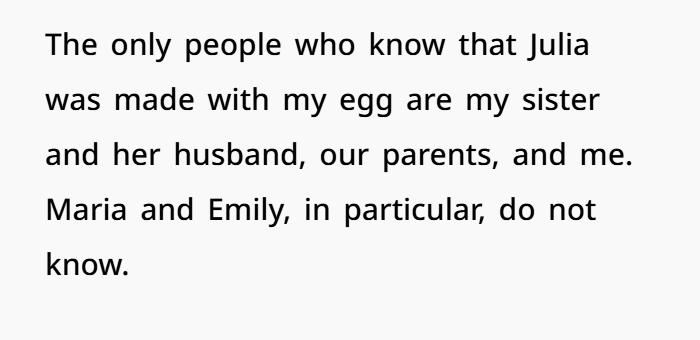
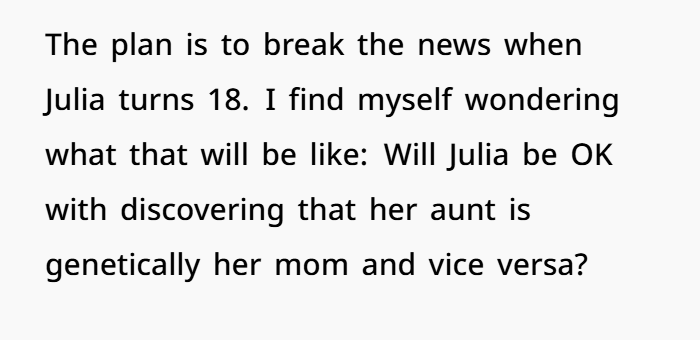
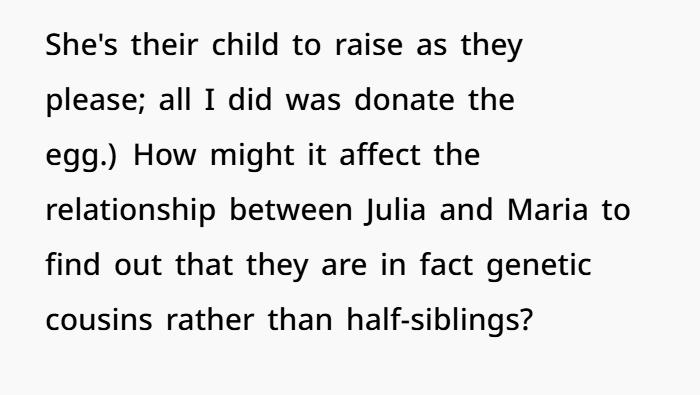
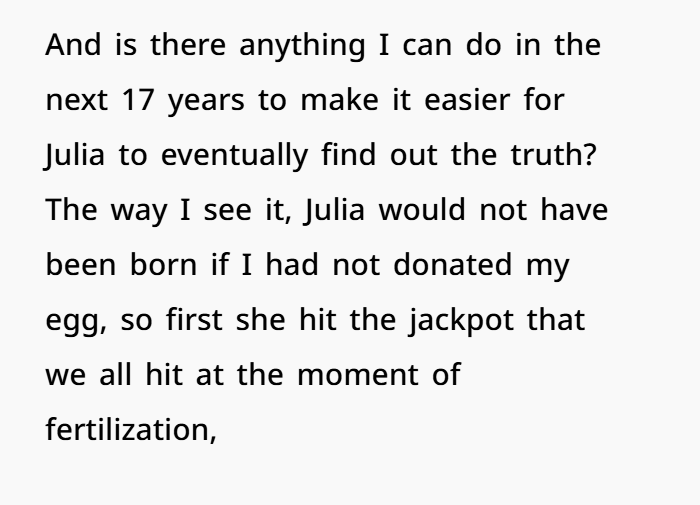
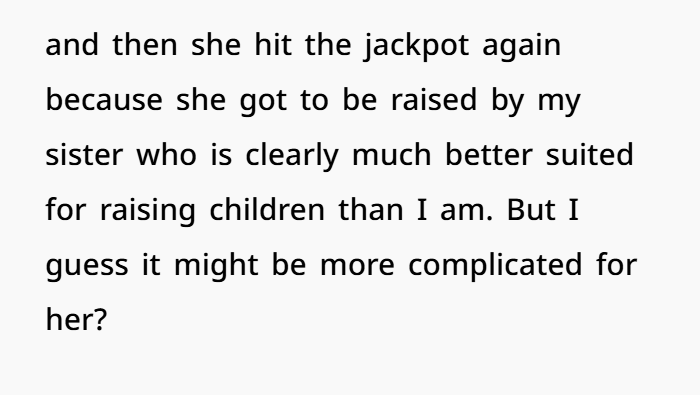
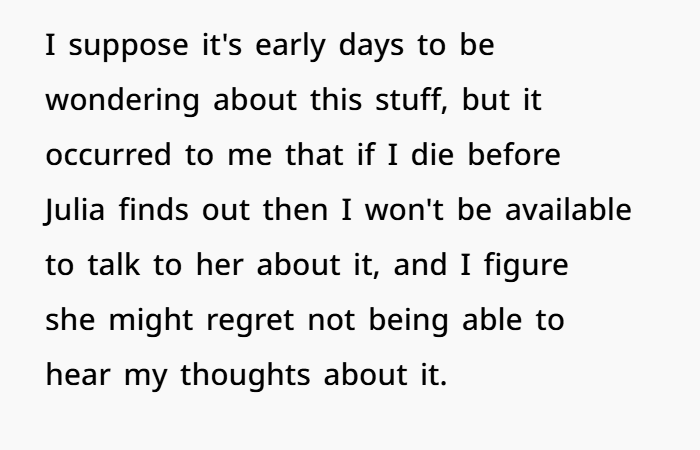
However, the sisters made a difficult choice. They decided they would not tell the child about the egg donation until she turns 18.
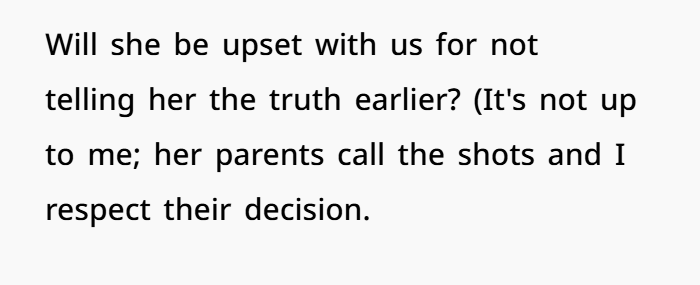
The egg donor later started worrying about whether keeping this secret for so many years could create problems in the future. She wanted to know if they were making the right decision.
Feeling unsure and looking for honest opinions, she shared her story online and asked others for advice about family, egg donation, and telling children about their origins.
When is the right time to tell a child about egg donation?
For many people dealing with infertility, family members can sometimes become part of the solution. One option is called intra-family egg donation or known donor conception. This happens when a relative, such as a sister, donates eggs or sperm to help someone have a baby.
In the UK, fertility clinics continue to receive requests for family donations. Sister-to-sister egg donation is one of the most common types because it allows the child to have a genetic connection with the family while helping couples avoid long waits for anonymous egg donors.
For many families, this feels like a meaningful choice. A sister may want to help after seeing her loved one struggle with infertility, pregnancy loss, or years of failed treatments.
Other family donation arrangements also happen, but they are much less common. Some involve parents and children or other relatives. These situations can bring extra questions, especially about making sure everyone involved is choosing freely and understands the emotional impact.
In many cases, donors say their decision comes from love. They want to support a family member who has been through a painful fertility journey.
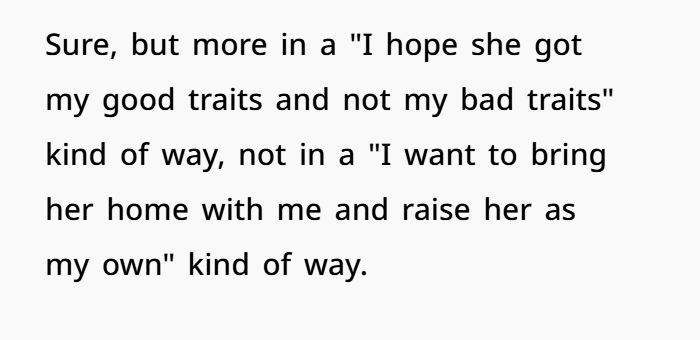
But some people wonder what happens later. Could sharing DNA create confusion? Could the egg donor feel like more than an aunt? Could the child have questions about their identity?
Research suggests that these families usually adjust well. Studies following families for several years have found that children often grow up in a happy and stable environment.
The woman who carries and gives birth to the baby is seen as the child’s mother, while the egg donor usually keeps the role of a loving aunt or relative. Clear boundaries often help everyone feel comfortable.
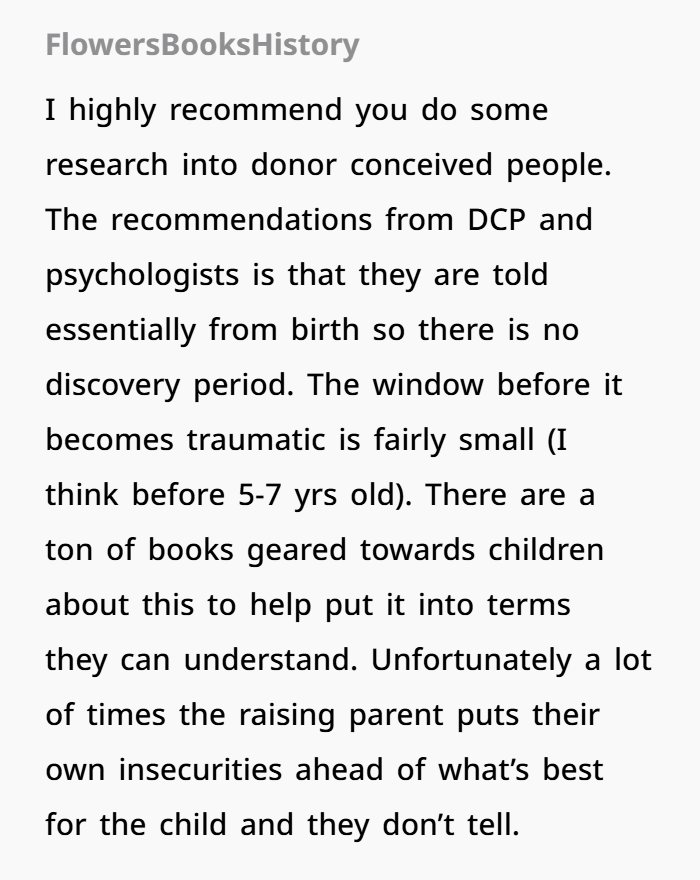
The biggest challenge for many families is not raising the child. It is deciding when to explain the truth about their birth story.
Unlike anonymous egg donation, family egg donation involves relatives who may already be part of the child’s life. Because of this, keeping the information secret forever can be very difficult.
Many parents who use a sister’s eggs say they plan to tell their child one day. Some families begin these conversations when children are still young, while others wait until they feel the child is ready.
Experts say there is no single perfect age to share this information. Every family is different.
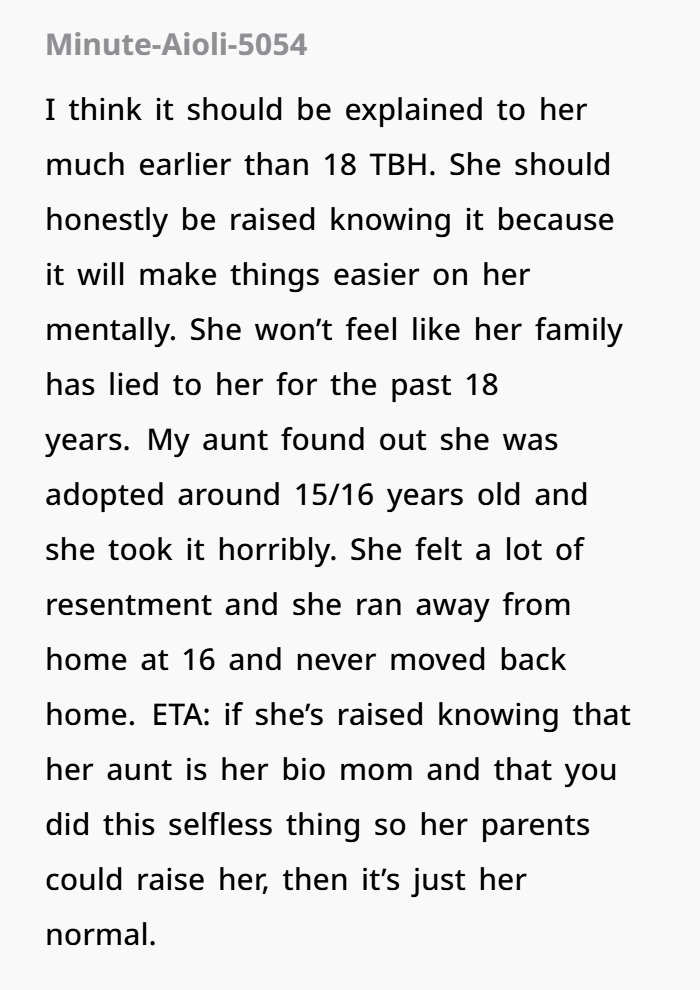
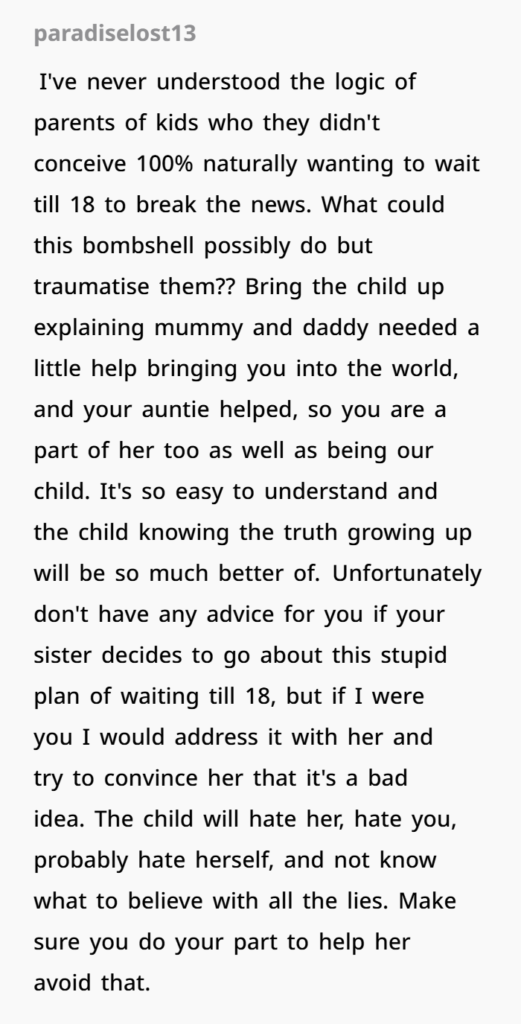
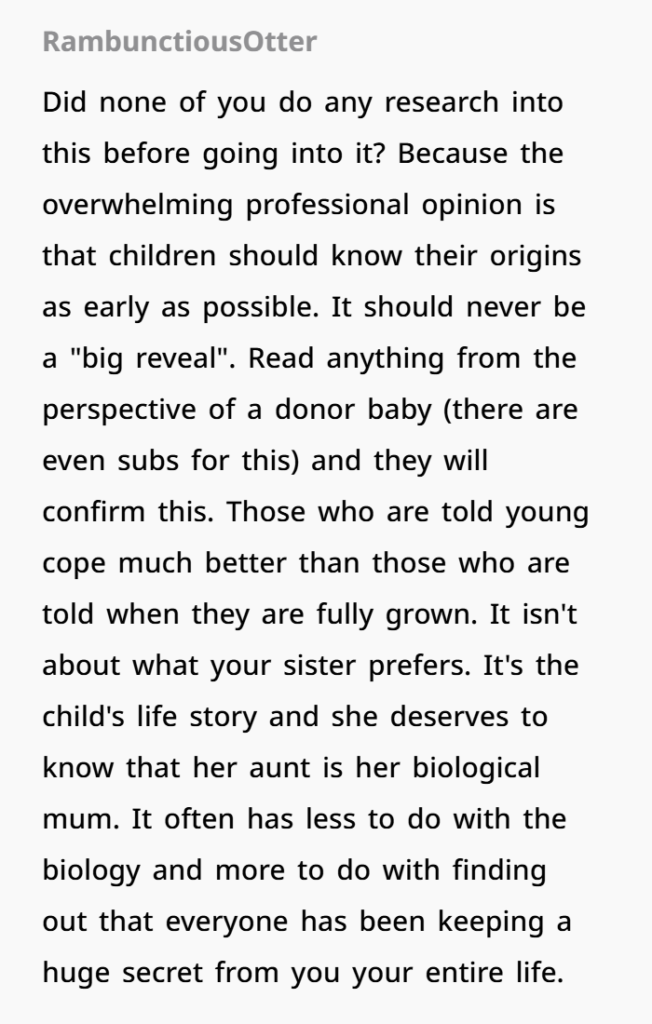
Psychologists believe that children who learn about donor conception in a caring and honest way often handle the news well. Many children are simply curious and want to understand their story.
The goal is usually not for the child to find a “new parent.” Instead, many donor-conceived adults say they want to learn more about their background and identity.
However, waiting too long can sometimes make the conversation harder. If a child discovers the truth by accident later in life, they may feel hurt that important information was kept from them.
Experts say that even older children and adults can handle the truth when families approach the conversation with love, patience, and support.
How egg donors handle family relationships and boundaries
Most egg donors say their main reason for donating is to help someone who cannot have a child without medical support.
Many donors feel positive about the idea that the child may want to contact them in the future. They usually see themselves as someone who helped create a life, not as the child’s parent.
Experts explain that donating an egg does not mean giving away a child. The baby is carried, born, and raised by the parents who planned and welcomed them into their family.
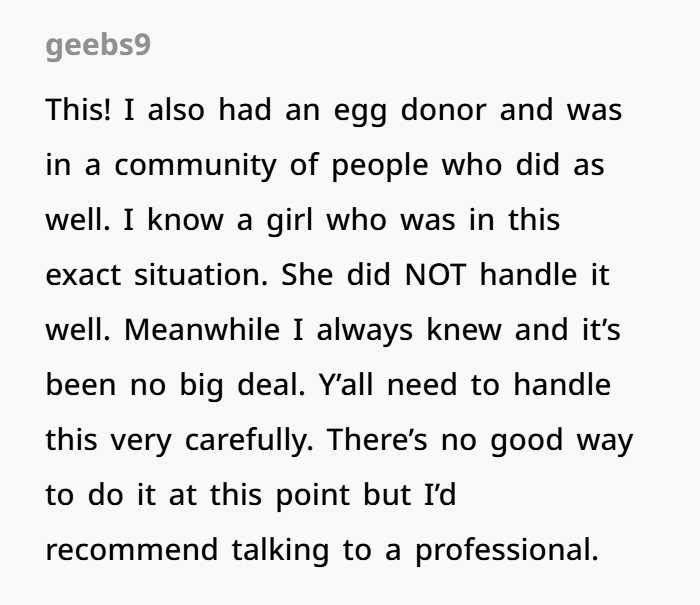
Because family egg donation can involve complicated emotions, specialists recommend that both the donor and the parents receive professional counseling before making a decision.
Counseling can help families talk about expectations, future relationships, and how they will explain the child’s birth story.
Medical and legal advice can also help protect everyone involved and make sure the process is handled carefully.
As fertility treatments continue to change the way families are created, conversations about honesty, identity, and parenthood are becoming more important. For many families, openness and trust can help build strong relationships for years to come.
See the comments to know what people said
Intra-family egg donation gives many people facing infertility a chance to build the family they have always hoped for. For some relatives, donating an egg is an act of love and support during one of the hardest times in their lives.
The biggest question for many families is not about the donation itself, but about honesty. Deciding when to tell a child about their birth story can feel difficult, but experts say open and caring conversations can help children understand their identity in a healthy way.
Every family has its own journey. There is no perfect timeline that works for everyone. What matters most is creating a home where a child feels loved, supported, and secure.
With good communication, professional guidance, and clear boundaries, families created through egg donation can grow strong and happy just like any other family.