
What Is Green Hydrogen Technology and Where Could It Be Most Useful?
Hydrogen is the lightest element in the universe, and one of the most talked-about fuels of the energy transition. It burns without producing carbon dioxide, it can be stored for months, and it can be made from water. The question is not whether hydrogen works as a fuel, but how it is made, and whether it actually helps the climate.
Green hydrogen technology is the cleanest way of producing it: splitting water with electricity from wind, solar, or other renewable sources. No fossil fuels are involved, and no carbon dioxide is released. The result is a fuel that can do jobs electricity struggles with, from making steel to powering ships.
This article explains what green hydrogen is, how it is produced, where it could be most useful, and where it makes little sense. It also looks at where the technology stands in 2026, and what still needs to happen before it becomes common.
What Green Hydrogen Actually Is
Hydrogen is an energy carrier, not an energy source. It has to be made, and the way it is made decides whether it helps the climate or harms it. Most hydrogen used today is made from natural gas, a process that releases large amounts of carbon dioxide.
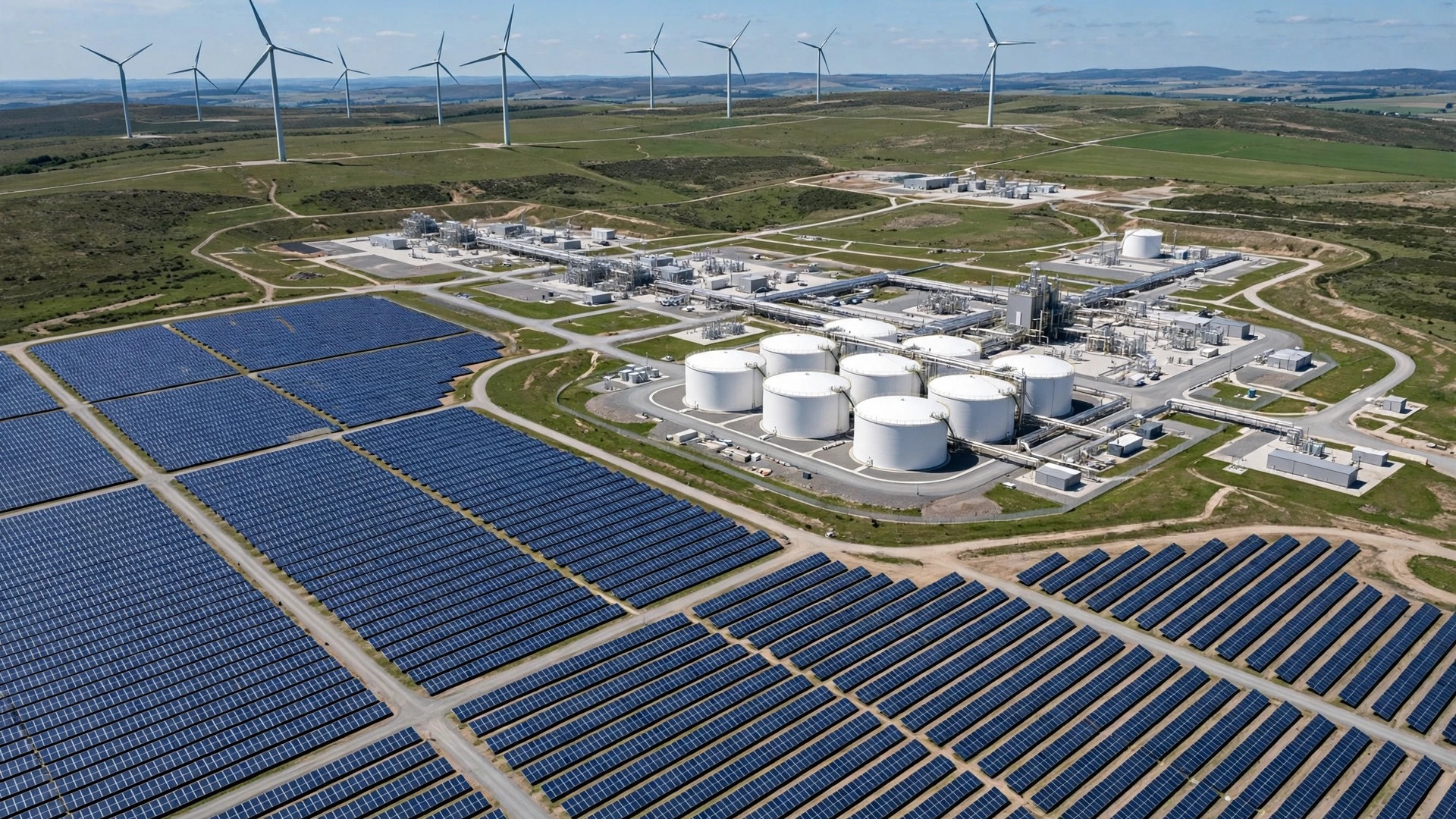
Green hydrogen is different. It is made by passing renewable electricity through water, which splits it into hydrogen and oxygen. The only byproduct is oxygen, and the hydrogen contains no carbon at all. That is what makes it green: the electricity comes from renewable sources, and the process releases no greenhouse gases.
Once made, hydrogen is remarkably flexible. It can be stored in tanks or underground caverns, moved through pipelines, or converted into ammonia for shipping. It can be burned for heat, fed into a fuel cell to make electricity, or used as a raw material in industry. That flexibility is why so many governments and companies are paying attention.
How Electrolysis Turns Water Into Fuel
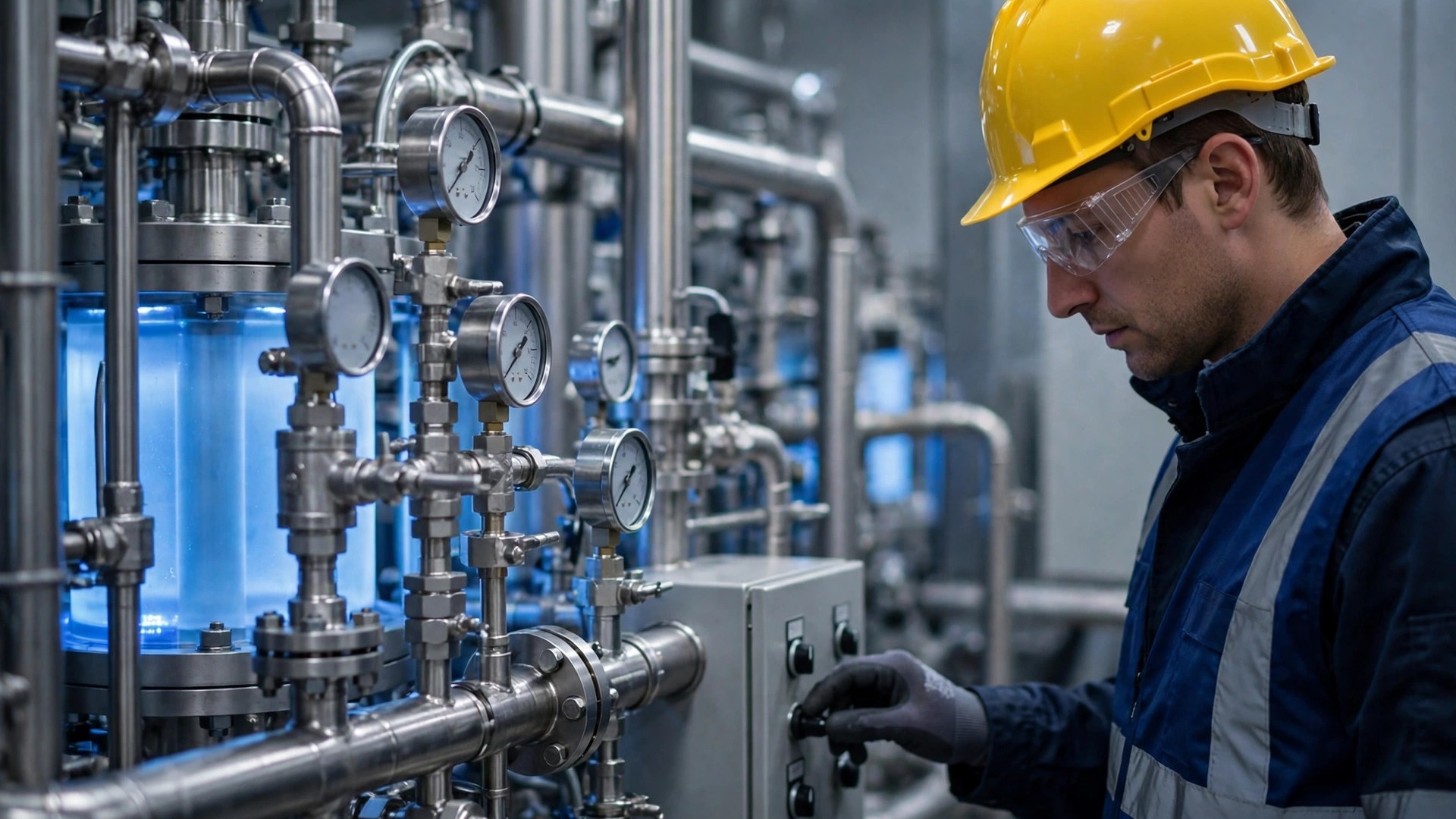
The process at the heart of green hydrogen technology is electrolysis. An electrolyser uses an electric current to split water into hydrogen and oxygen: the current pulls the molecules apart, and hydrogen bubbles off at one electrode while oxygen comes off at the other.
There are three main types of electrolyser. Alkaline electrolysers are the oldest and cheapest, and they are widely used in large industrial plants. Proton exchange membrane, or PEM, electrolysers are more compact and can ramp up and down quickly, which suits wind and solar power that varies by the hour. Solid oxide electrolysers run at very high temperatures and can be more efficient, but they are the least mature.
Every step loses some energy: making the hydrogen, compressing it, storing it, and turning it back into electricity each take a toll, so the round trip is far less efficient than using renewable electricity directly. That is why the cost of green hydrogen depends so heavily on the price of electricity, and why the cheapest supply comes from places with abundant wind and sun.
After production, the hydrogen has to go somewhere. It can be compressed into high-pressure tanks, cooled until it becomes a liquid, or stored in underground salt caverns, which can hold very large volumes for months. It can also be combined with nitrogen to make green ammonia, a liquid that is much easier to ship.
Green, Grey, Blue and Pink: What the Colors Mean
Hydrogen is often described by color, and the color tells you how it was made. Green hydrogen is made by electrolysis using renewable electricity, and it produces no carbon dioxide. Grey hydrogen is made from natural gas through steam methane reforming, and it releases carbon dioxide into the atmosphere.
Blue hydrogen is also made from natural gas, but the carbon dioxide is captured and stored underground instead of being released. That is better than grey hydrogen, but the capture is never complete, and some methane can leak during gas production. Pink hydrogen is made by electrolysis using electricity from nuclear power, so it is also low-carbon, though it depends on nuclear plants rather than renewables.
| Type | How it is made | Carbon emissions |
|---|---|---|
| Green hydrogen | Electrolysis powered by renewable electricity | None during production |
| Grey hydrogen | Natural gas, steam methane reforming | High, CO2 released |
| Blue hydrogen | Natural gas with carbon capture and storage | Lower than grey, but not zero |
| Pink hydrogen | Electrolysis powered by nuclear electricity | Very low during production |
| Turquoise hydrogen | Methane pyrolysis, producing solid carbon | Low, but still uses fossil gas |
The colors matter because the climate benefit depends entirely on them. Hydrogen made from natural gas without carbon capture does nothing to cut emissions, however clean it looks when it burns. Only green and pink hydrogen are genuinely low-carbon, and green hydrogen is the version most countries are planning around.
Where Green Hydrogen Production Stands in 2026
By September 2026, green hydrogen is real, but still a small share of the world’s hydrogen supply. Almost all hydrogen used today is still grey, made from natural gas for refineries and fertilizer plants.
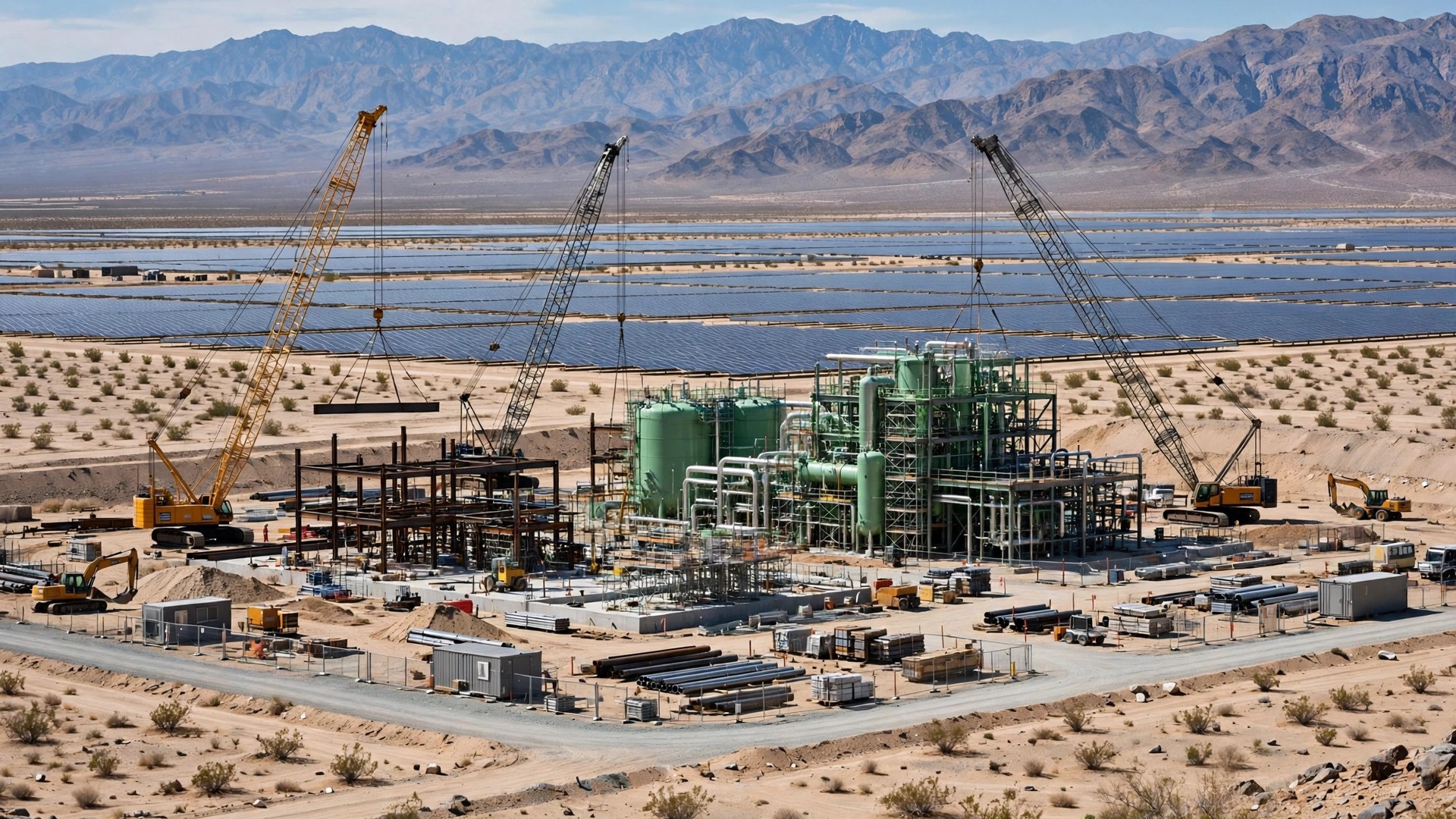
The biggest change is the scale of what is being built. The NEOM green hydrogen project in Saudi Arabia, one of the largest in the world, is under construction, using wind and solar power to make hydrogen and green ammonia for export. Large projects are also being developed in Australia, Chile, and Namibia, where sunshine and wind are abundant. In Europe, the first large electrolysers are running, and ports are preparing to receive imported hydrogen.
Governments have put serious policy behind it. The European Union has a hydrogen strategy with targets for producing and importing renewable hydrogen, and Germany is among the member states with a national hydrogen plan. In the United States, the Inflation Reduction Act of 2022 created a tax credit for clean hydrogen production, known as 45V. Japan and South Korea, with little land for renewable energy, plan to import hydrogen.
The equipment is getting cheaper as manufacturing scales up. Companies such as Nel, ITM Power, Thyssenkrupp Nucera, and Plug Power are building larger electrolyser factories, and each new generation costs less per unit of hydrogen. Even so, green hydrogen still costs more than grey hydrogen in most places. Closing that gap depends on cheaper renewable electricity, larger plants, and a price on carbon.
Steelmaking and Heavy Industry
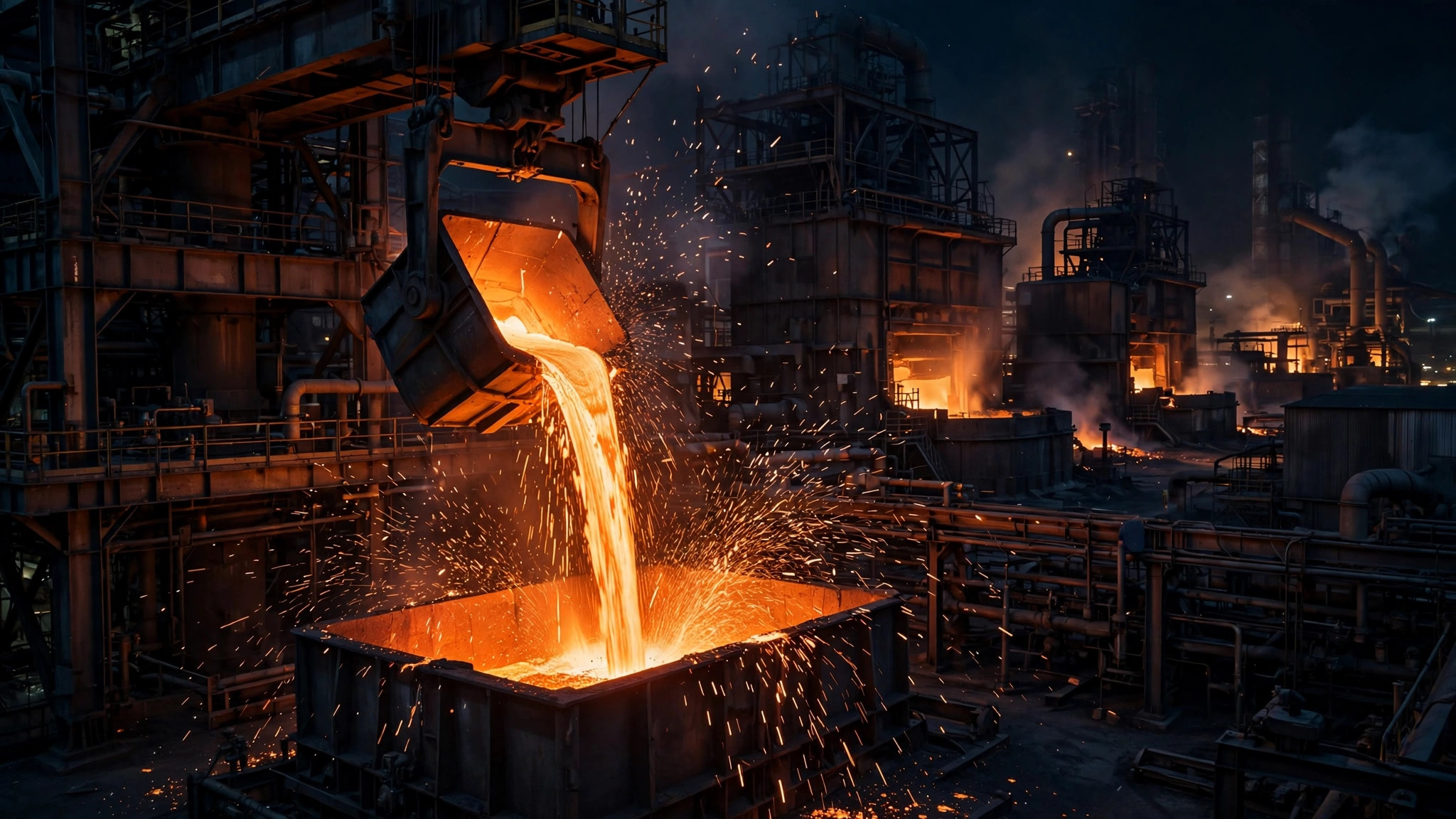
The most promising use for green hydrogen is heavy industry, where there is no easy electric alternative. Steelmaking is the best example. A conventional steel plant uses coal to strip oxygen from iron ore, releasing huge amounts of carbon dioxide. A hydrogen-based plant uses hydrogen instead, and the only byproduct is water.
Sweden is ahead of the rest of the world here. The HYBRIT project, a partnership of the steelmaker SSAB, the mining company LKAB, and the energy company Vattenfall, has already produced fossil-free steel at a pilot plant. A larger project, Stegra, formerly H2 Green Steel, is building a full-scale hydrogen-based steel plant in Boden in northern Sweden. If these plants work at scale, they will show steel can be made without coal.
Chemicals are the other big industrial use. Most of the world’s ammonia, used to make fertilizer, is produced from natural gas today. Making it from green hydrogen instead would cut a large source of emissions, and green ammonia can also fuel ships. Green methanol, made from hydrogen and captured carbon dioxide, is another product in growing demand from shipping companies.
Shipping and Aviation
Shipping is one of the hardest sectors to clean up, and hydrogen could play a real part. Large container ships cannot run on batteries, which would be too heavy for an ocean crossing. Green ammonia and green methanol, both made from green hydrogen, can be stored on board and burned in adapted engines.
The shipping industry is already moving in this direction. Maersk, the world’s largest container shipping company, has ordered vessels that can run on green methanol, and the first entered service in 2023. Ports in Europe and Asia are beginning to offer methanol and ammonia refuelling, though the infrastructure is still thin.
Aviation is further behind. Batteries are too heavy for long flights, and hydrogen itself is bulky, so it is difficult to store on a plane. The most realistic path for now is sustainable aviation fuel made using green hydrogen, which works in existing jet engines. Airbus has shown concepts for hydrogen-powered aircraft under its ZEROe program, but a commercial hydrogen plane is still years away.
Storing Renewable Energy and Balancing the Grid
One of the most useful jobs for green hydrogen has nothing to do with vehicles or factories. It is storing energy. Wind and solar power are variable: they produce a lot of electricity on windy, sunny days, and very little on calm, cloudy ones. Batteries are excellent for hours or days, but they are expensive at the scale needed for weeks or months.
Hydrogen fills that gap. When renewable power is abundant, the surplus can make hydrogen, which can be stored in salt caverns or tanks for months and turned back into electricity when needed. Germany and the Netherlands are already exploring underground hydrogen storage.
Smarter grids will move renewable power to electrolysers, and smart grids are already changing how electricity is distributed. At the same time, cheaper solar power is cutting the cost of the electricity that feeds electrolysers, as the latest next-generation solar panels show. Hydrogen storage only makes sense as part of a system that is already mostly renewable.

Heavy Transport on Land
Long-distance road transport is another area where hydrogen has a case. A battery-powered long-haul truck needs a very large and heavy battery, and charging it takes time. A hydrogen fuel cell truck can refuel in minutes and travel long distances. Several manufacturers, including Toyota, Hyundai, and Daimler, have built hydrogen trucks, and small fleets now operate in Europe, Japan, and the United States.
Buses and trains have a similar story. Hydrogen buses already run in several European cities, and hydrogen trains have entered service in Germany where electrifying the track would be too expensive. The winner depends on the route: short, predictable routes favor batteries, while long routes and heavy loads favor hydrogen.
Passenger cars, by contrast, are a poor fit. Battery electric cars are cheaper to run, more efficient, and already have a charging network. Hydrogen cars exist, but they are expensive, and hydrogen filling stations are rare. For most drivers, the battery has already won.
Where Green Hydrogen Makes Less Sense
Hydrogen is not the answer to everything, and using it in the wrong place wastes energy and money. Home heating is the clearest example. A heat pump turns one unit of electricity into several units of heat, while making hydrogen from electricity, piping it to a home, and burning it in a boiler loses energy at every step. For most homes, a heat pump is far more efficient.
The same logic applies wherever electricity can do the job directly. Lighting, cooking, and short-distance driving are better served by electricity, because every conversion from electricity to hydrogen and back throws energy away. Hydrogen should be reserved for the jobs electricity cannot do well: making steel, powering ships, storing energy for months, and fuelling heavy transport.
Building the wrong infrastructure is a risk too. Pipelines, filling stations, and import terminals are expensive, and if they serve uses that batteries or heat pumps could handle more cheaply, the money is wasted. The countries making the best progress are being selective, directing hydrogen at heavy industry, shipping, and storage, and leaving the rest to electricity.
The future of wireless electricity is still taking shape, aimed at small devices rather than heavy industry. The hydrogen question is not about the newest gadget. It is about where a molecule makes sense and where an electron does the job better.
Practical Tips / Examples / Things to Know
- Green hydrogen is made by splitting water with renewable electricity. If the electricity is not renewable, the hydrogen is not green.
- The color of hydrogen tells you how it was made: green from renewables, grey from natural gas, blue from gas with carbon capture.
- Steelmaking and fertilizer production are the most promising early uses, because they have no easy electric alternative.
- Green ammonia is hydrogen in a shippable form. It is how hydrogen from sunny, windy countries can reach buyers overseas.
- Hydrogen can store renewable energy for weeks or months, which batteries cannot do cheaply at large scale.
- If you hear a hydrogen plan for home heating or passenger cars, ask whether a heat pump or a battery would do the job more efficiently.
Common Mistakes / Considerations / What to Avoid
- Calling all hydrogen clean: most hydrogen today is grey, made from natural gas, and it releases carbon dioxide.
- Assuming blue hydrogen is emission-free: carbon capture never catches everything, and methane can leak during gas production.
- Thinking hydrogen is efficient everywhere: every conversion loses energy, so direct electricity wins wherever it works.
- Expecting hydrogen planes and ships tomorrow: shipping is moving first, and commercial hydrogen aircraft are still years away.
- Ignoring the cost of electricity: green hydrogen is only as cheap as the renewable power that makes it, so it works best where wind and sun are abundant.
- Building hydrogen infrastructure for the wrong uses: pipelines and filling stations should serve industry, shipping, and storage, not jobs electricity already does well.
Final Thoughts
Green hydrogen technology is not a miracle fuel, and it is not a distraction either. It is a specific tool for specific jobs: the parts of the economy that cannot easily run on electricity. Steelmaking, fertilizer, shipping, and long-term energy storage are where it can make the biggest difference, and those are the sectors where emissions are hardest to cut.
The next few years will decide how fast it grows. Costs are falling, factories are scaling up, and the first large plants are under construction. But green hydrogen will only live up to its promise if it is used where it genuinely helps, and if the electricity behind it is truly renewable.
Used wisely, it could clean up some of the toughest corners of the energy system. Used carelessly, it would be an expensive way of doing jobs electricity already does better.