I Exposed My Dad’s Affair… Now His Whole Family Is Torn Apart
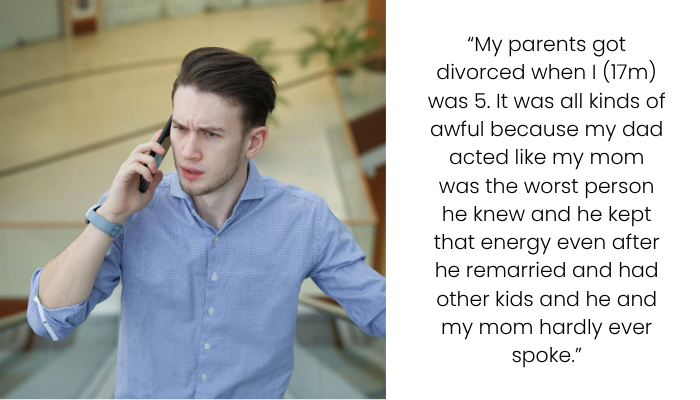
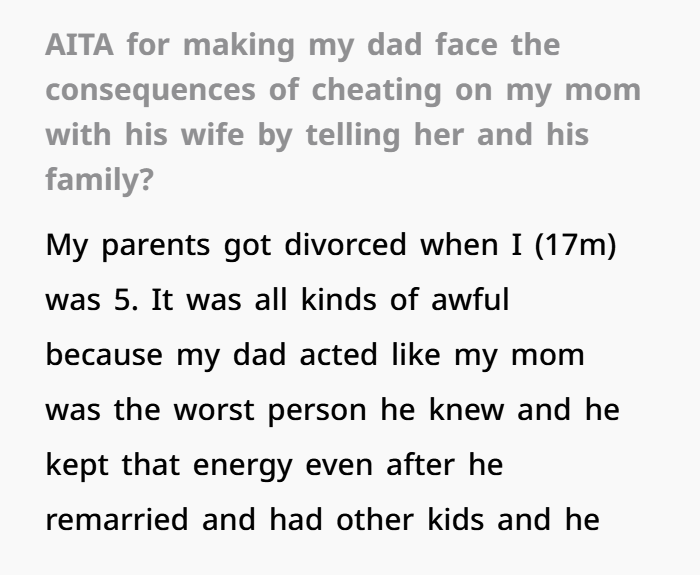
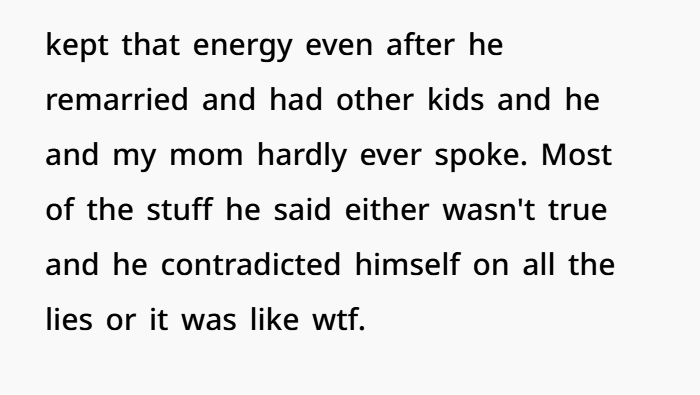
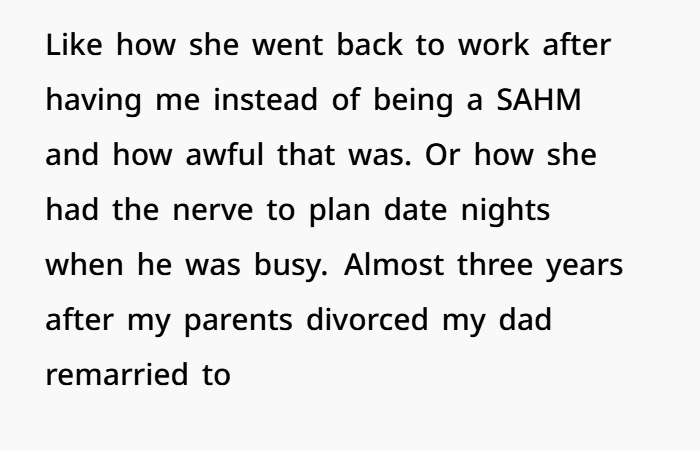
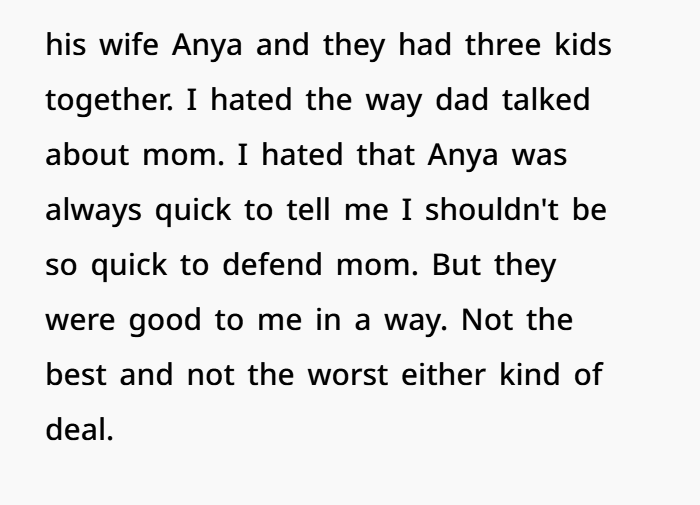
This story centers on a 17-year-old caught in years of bitterness, lies, and emotional manipulation following his parents’ divorce. Growing up, he watched his dad constantly tear down his mom, painting her as the villain while building a new life with his second wife, Anya. Despite the tension, he maintained a complicated relationship with his dad’s new family—never fully comfortable, but not completely disconnected either. That fragile balance shattered when his dad, drunk at a birthday party, casually admitted to cheating on his mom for years and leaving her for Anya—while proudly mocking the fact that he never got caught.
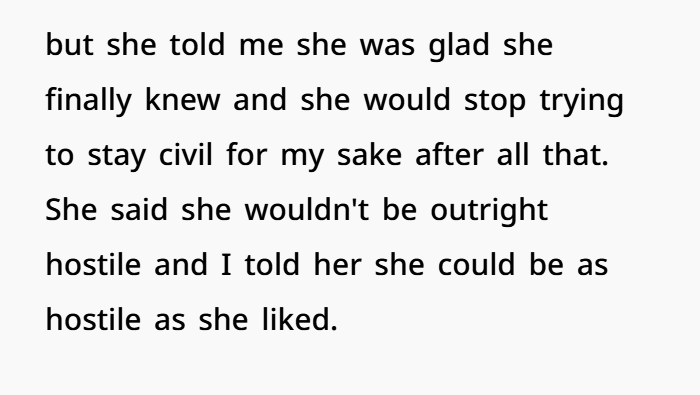
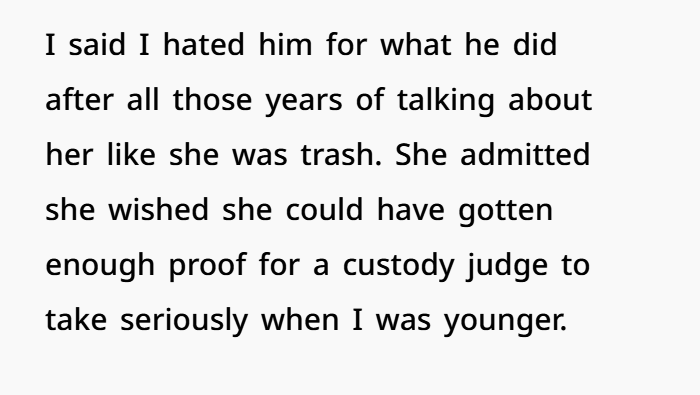
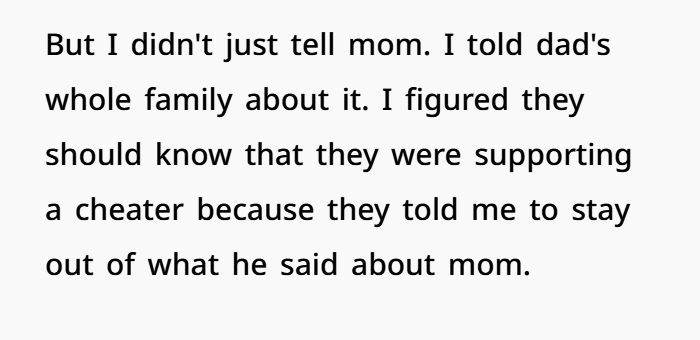
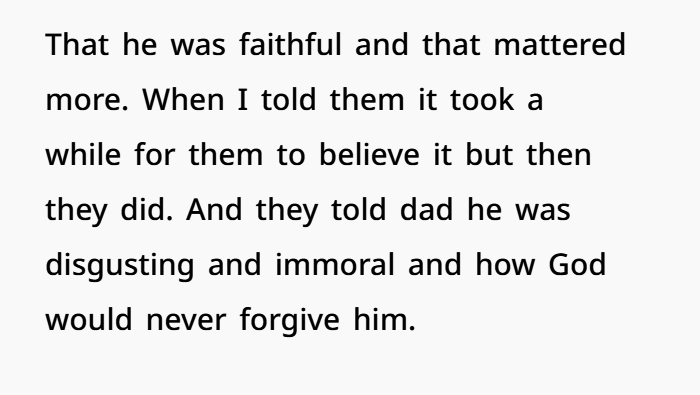
That confession flipped everything. Angry and feeling his mom deserved the truth after years of being blamed, he told her—and then went a step further by telling his dad’s entire family. The fallout was massive: his dad’s relatives cut him off, condemned his actions, and even rejected his younger kids. Now his dad and stepmom are furious, accusing him of destroying innocent lives and causing collateral damage. Caught between truth and consequences, he’s left wondering if exposing the lie made him justified—or if he crossed a line.

This situation is messy in a way that goes way beyond a typical family argument. It’s not just about cheating—it’s about years of narrative control, emotional pressure, and finally, a truth bomb that hit like a wrecking ball.
Let’s start with the core issue: long-term deception and character assassination.
For over a decade, this guy grew up hearing his dad tear his mom apart. Not just occasional complaints—but consistent, targeted criticism that painted her as selfish, unreasonable, even a bad parent. That kind of environment does something to a kid. It creates confusion. It forces them to internally pick sides, even when they shouldn’t have to.
And here’s the thing—this wasn’t just a difference of opinion between two divorced parents. It was built on a lie.
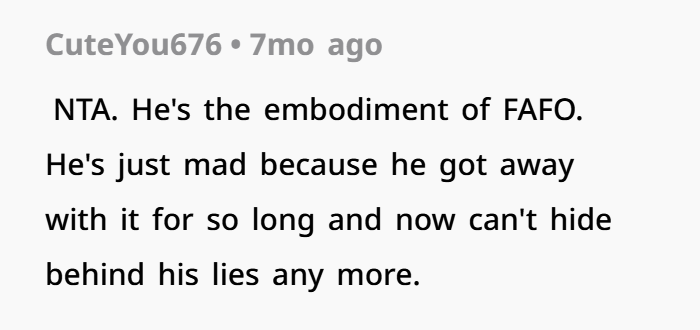
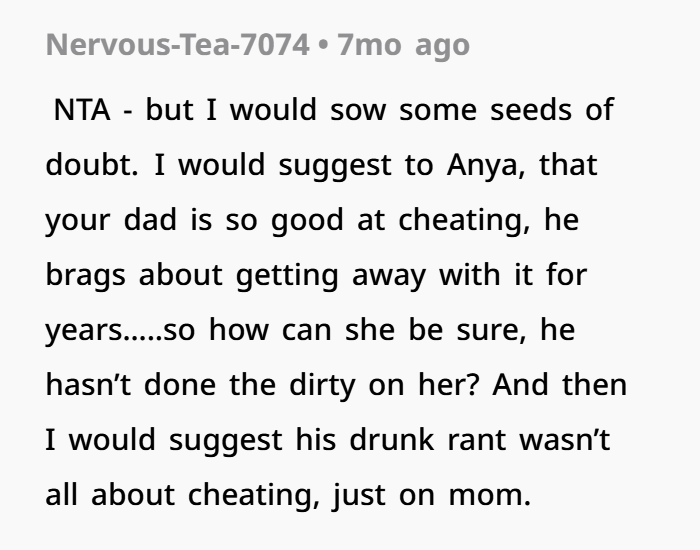
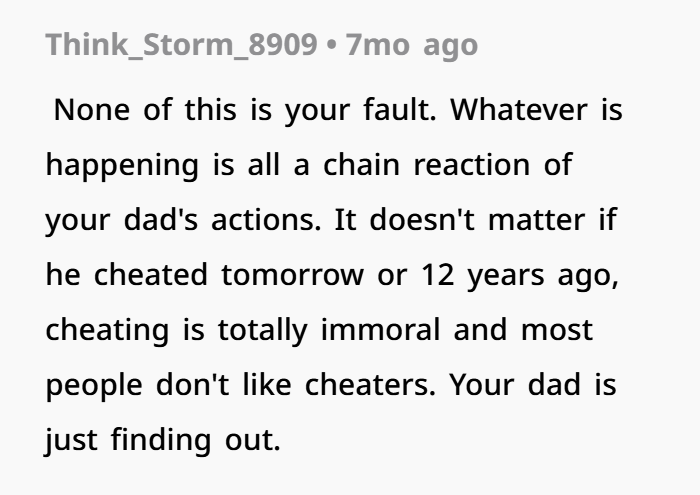
Because behind all that blame was a hidden truth: the dad was cheating. For two years. And not only that—he admits he left the marriage for the affair partner, and even laughed about not getting caught.
That detail matters a lot. This wasn’t guilt or regret slipping out. This was pride.
So psychologically speaking, what we’re looking at is a classic case of projection and narrative manipulation. When someone does something wrong but can’t—or won’t—own it, they often rewrite the story to make themselves the victim. By blaming the mom, the dad avoided accountability and controlled how others, including his own child, saw the situation.
Now fast forward to the moment everything comes out.
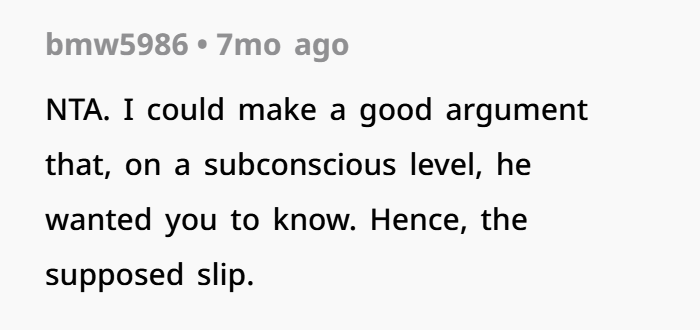
When the dad confesses (even if accidentally), it creates what psychologists call a “cognitive rupture.” Basically, the entire version of reality this guy grew up with suddenly cracks. Everything he was told doesn’t line up anymore. The villain isn’t who he thought it was.
That kind of realization doesn’t just sting—it shakes your identity.
So when he decides to tell his mom, that action isn’t just about revenge. It’s about correcting a false reality.
And honestly, from an ethical standpoint, telling his mom makes sense. She was directly affected. She lived through the marriage, the accusations, and the fallout—without ever knowing the full truth. Finding out now hurts, sure, but it also gives her clarity. It validates that she wasn’t crazy or unreasonable back then.
Her reaction even reflects that. She’s hurt—but also relieved. That’s very common in situations where long-hidden truths come out. Pain mixed with validation.
Now, the more complicated part: telling the extended family.
This is where opinions tend to split.
On one hand, his reasoning is understandable. The dad’s family had taken a stance for years—they defended him, dismissed concerns, and reinforced the idea that he was the “faithful” one. So from his perspective, they were supporting a false image. Telling them felt like setting the record straight.
But here’s where the consequences get heavier.
Because once that information spreads, it’s no longer just about truth—it’s about impact.
And the impact here is huge.
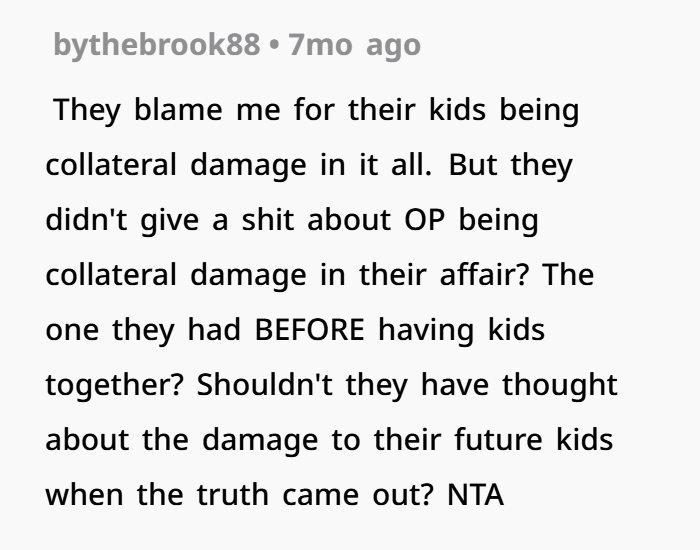
The extended family didn’t just confront the dad—they cut him off completely. They also rejected his younger children, calling them illegitimate. That’s a serious escalation, and it introduces something important: collateral damage.
The younger kids didn’t cheat. They didn’t lie. They didn’t control any of this. But they’re now facing rejection and loss because of the truth coming out.
Now, does that make it the 17-year-old’s fault?
Not exactly.
This is where we need to separate cause from responsibility.
- The cause of the situation is the dad’s actions—cheating, lying, and building a life on that foundation.
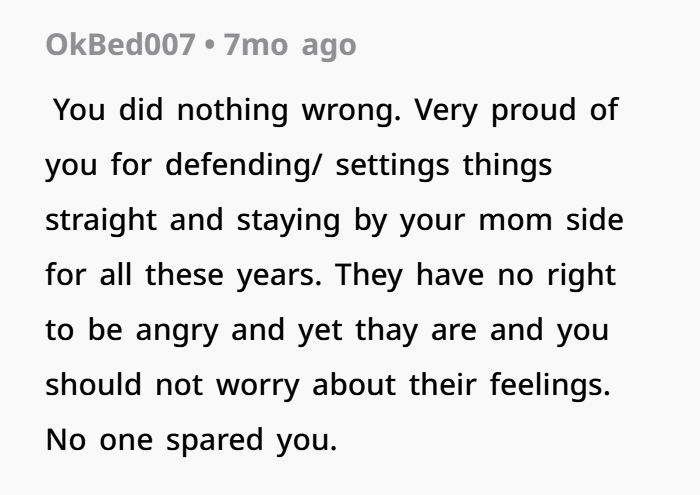
- The reaction of the extended family—cutting off innocent kids—is their choice.
Blaming the person who revealed the truth for how others react to it is a common deflection tactic. It shifts focus away from the original wrongdoing.
That said… it doesn’t mean the outcome isn’t complicated.
Because two things can be true at once:
- He had a valid reason to tell the truth.
- The way things unfolded caused real harm to people who didn’t deserve it.
That tension is what makes this situation so difficult.
Now let’s talk about the dad’s response.
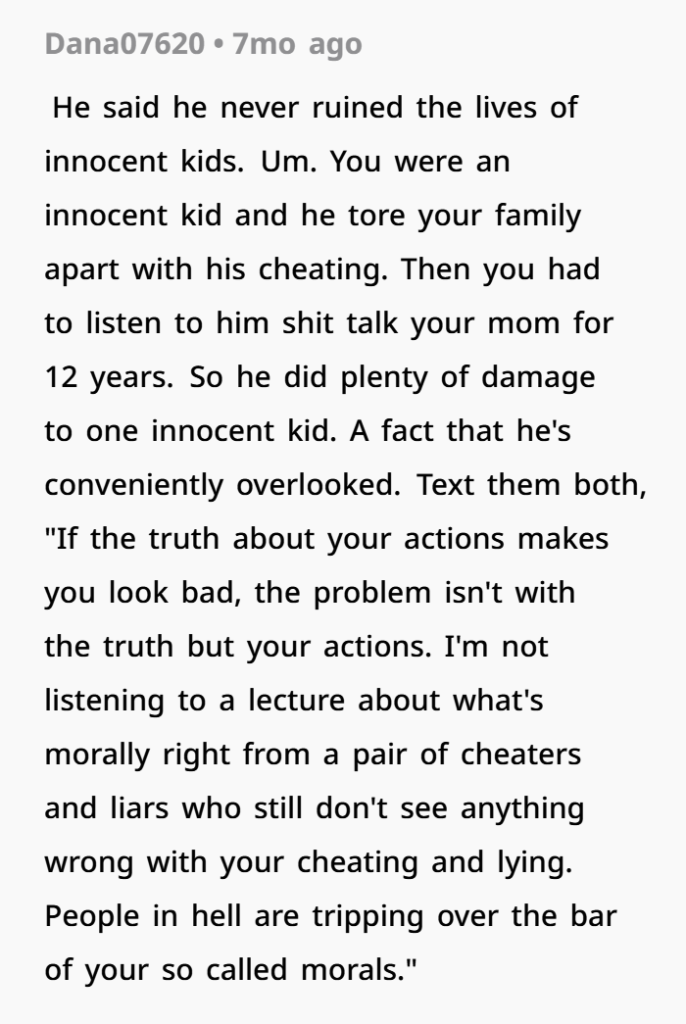
Calling his son “evil” and “spiteful” is a strong reaction—but it’s also very telling. Instead of acknowledging what he did, he focuses entirely on the consequences he’s now facing. There’s no real accountability there. No “I messed up.” Just “you ruined everything.”
That’s a pattern.
It mirrors what he did for years—avoiding responsibility and redirecting blame.
Even the argument about “innocent kids” is complicated. Yes, the younger kids are innocent. But the environment that led to this fallout? That was created by the dad’s choices long before the truth came out.
Also, it’s important to address something subtle but important: parentification.
Growing up, this guy was put in a position where he had to emotionally process adult issues—his dad’s anger, his parents’ conflict, the tension between households. That’s not something a kid should carry.
So when he finally acts—by telling the truth—it’s partly a reaction to years of being placed in that role.
Now, could things have been handled differently?
Maybe. He could have stopped at telling his mom. He could have let the rest unfold naturally. That might have reduced the blast radius.
But expecting a 17-year-old—who just had his entire understanding of his family flipped upside down—to respond with perfect restraint? That’s not very realistic.
Emotions matter here. Context matters.
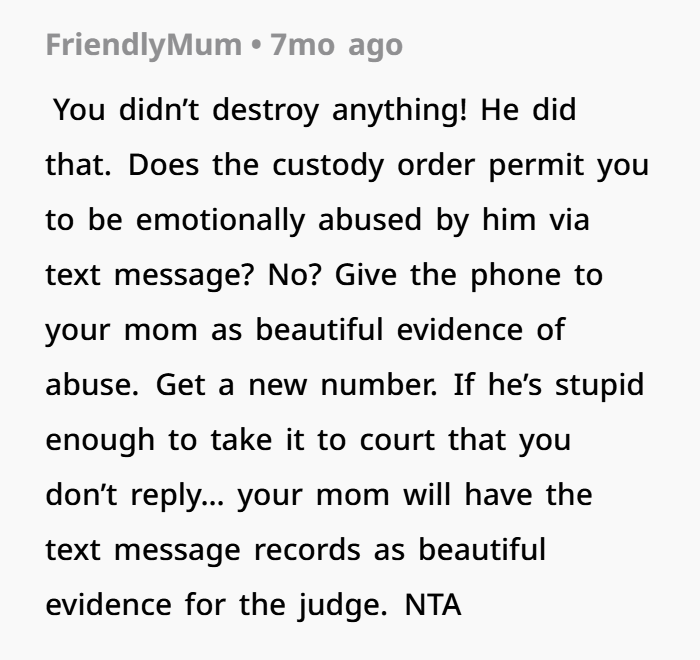
And right now, he’s also dealing with ongoing pressure—being shamed, blamed, and contacted repeatedly despite trying to go no-contact. That’s not accountability—that’s harassment.
At the end of the day, this comes down to one core idea:
Truth doesn’t destroy lives. Lies do.
The truth just exposes what was already there.
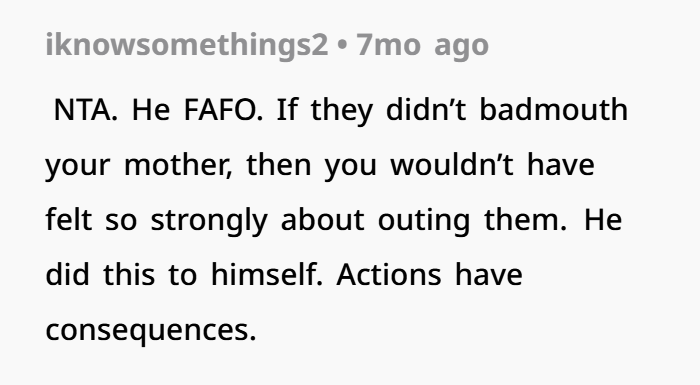
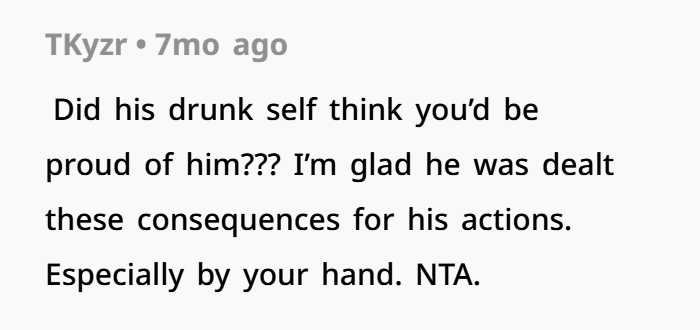
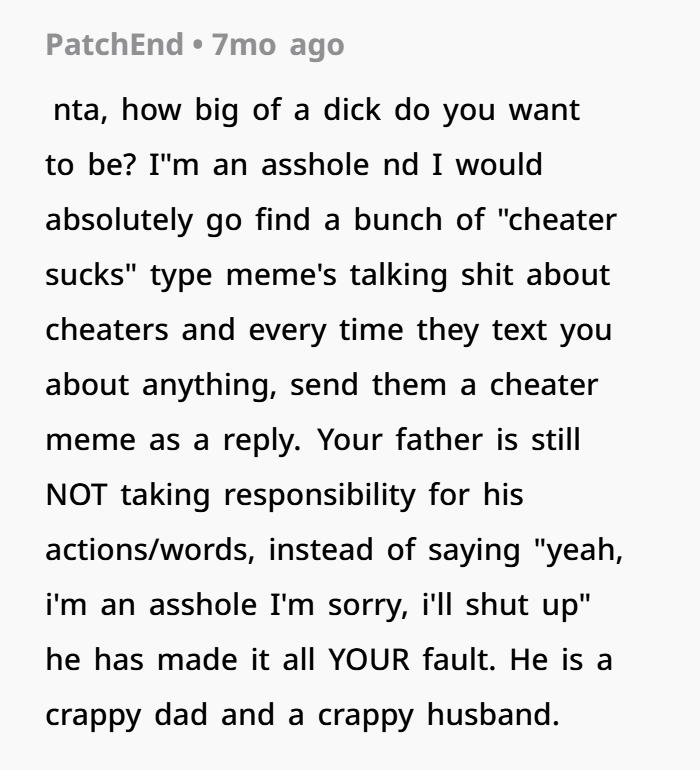
The Most Honest Comments