

I Refused to Move Again Now My Husband Says I’m Selfish
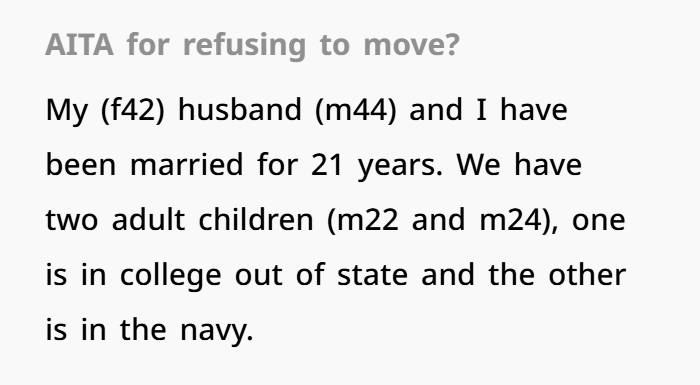
After over two decades of marriage, countless relocations, and full-time support of her husband’s career—from Navy moves to corporate climbs—this wife said enough is enough. The couple, married since they were teens, have moved multiple times across the country for his job. She gave up her early career dreams to be a stay-at-home mom, sacrificed stability, and repeatedly restarted her life. Now, with both sons grown and her own career finally thriving, her husband wants to move—again—for another promotion.
But this time, she’s not budging. She’s in a job she loves, earning great money, and has built a support system for the first time in years. The move would not only mean a massive pay cut and long commute for her, but it would sever closeness with her college-aged son. Her refusal sparked a rift—he accused her of being unsupportive and selfish. He even left to “think.” But she’s holding the line: she’s not uprooting her life anymore, and if he wants to go, he’ll be going alone.
She’s spent the better part of 20 years relocating each time her husband got a new position

She’s decided “enough is enough” and is refusing to move yet again — but he says she’s selfish




This story highlights something thousands of couples quietly struggle with: what happens when one partner wants to move for their career—and the other is finally settled?
In long-term relationships, especially those that span decades and military service, it’s common for one partner (usually the wife) to sacrifice her own career and stability for the other’s opportunities. But eventually, it becomes a question of equity. How many times can someone restart their life before it starts feeling like they’re being dragged instead of walking beside someone?
The Military Spouse Effect
Military life brings frequent relocation. On average, military families move every 2–3 years. Studies from the U.S. Department of Defense and Blue Star Families have shown that military spouses (primarily women) face unemployment rates around 22%, with underemployment being even more widespread.
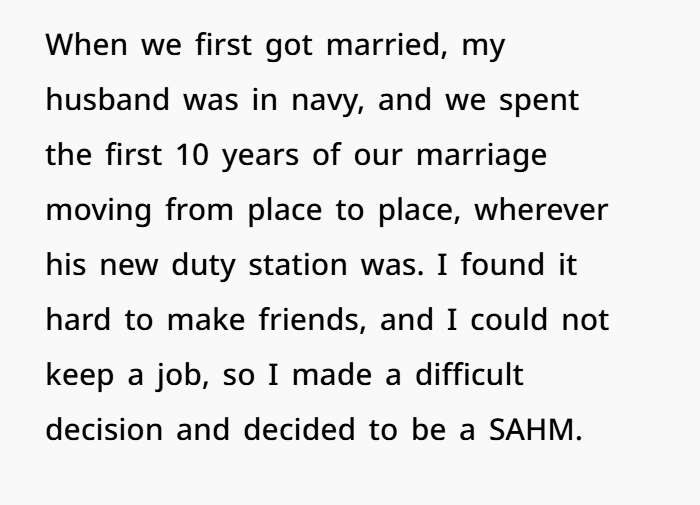
This woman was a textbook example—struggling to make friends, giving up employment, and shouldering all the emotional labor of each move. She became a stay-at-home mom not by dream but by necessity.
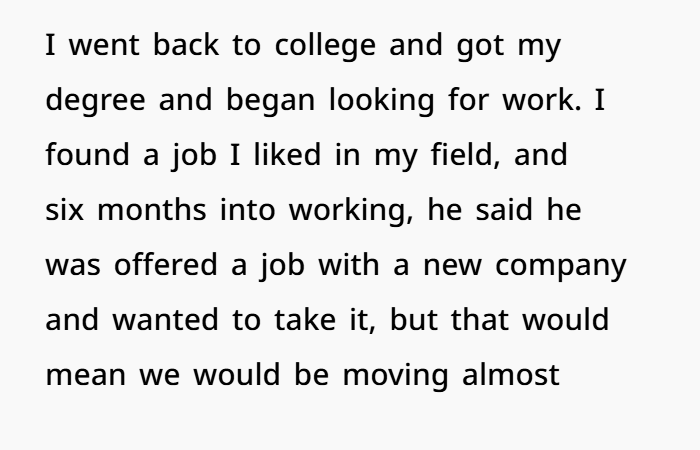
When her husband left the Navy, she finally got a taste of personal progress. She went back to college, got a degree, and landed a job in her field. After another move, she found a high-paying role, built community ties, and finally created a life for her. That’s not selfish—it’s survival.
A History of One-Sided Sacrifice
Let’s look at the pattern:
- 10 years in the Navy: Multiple moves, no career for her.
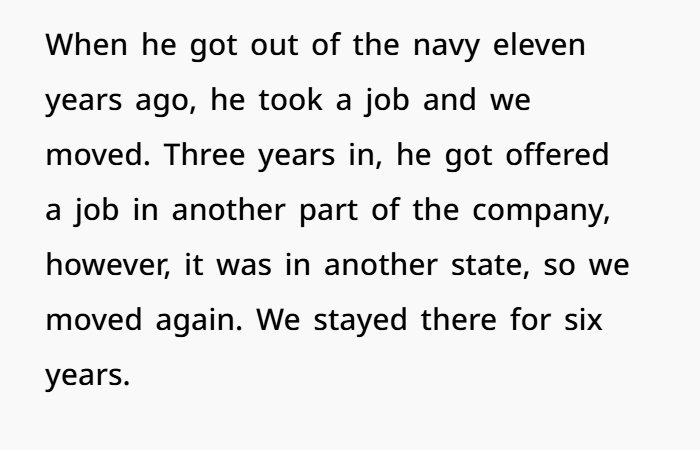
- Move for a civilian job post-Navy.
- Another move for a better job for him while she was job-hunting.
- Another move, 2,000 miles away, after she just got hired in her field.
And now, after three short years of finally settling down, he wants to uproot again. It’s easy to see why she said no. She’s not just drawing a boundary—she’s reclaiming agency.
When he says, “You’re not supporting me,” he’s ignoring the decades she already did—in silence, in sacrifice, in stalled dreams. Career advancement should be a two-way street, not a toll road paid by one spouse’s lost potential.

The “Selfish” Label: A Red Flag in Relationships
Calling your partner selfish for protecting their peace? That’s manipulation. It’s also a red flag in long-term dynamics where one partner has historically made all the decisions.
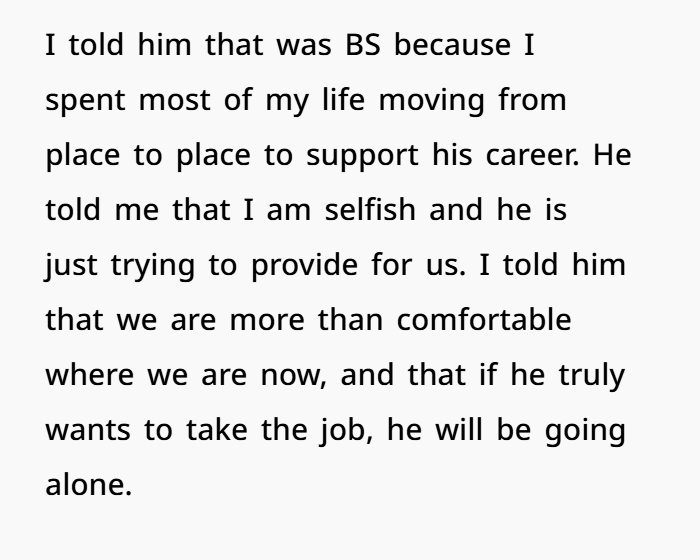
This isn’t about money. The couple is financially secure. She said it outright: “We are more than comfortable.” The proposed move wouldn’t solve a financial crisis. It’s purely about his career ambitions—at the cost of her hard-earned stability.
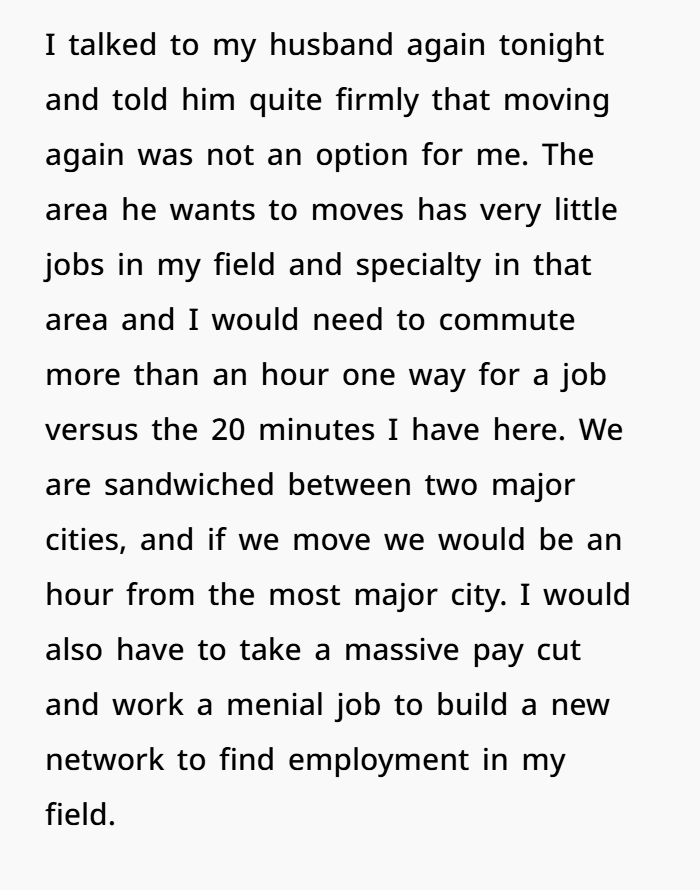
Here’s the math she’s doing:
- Current commute: 20 minutes
- Post-move commute: 1 hour+
- Current income: Excellent
- Post-move job: Menial, lower-paid
- Access to son: Now — monthly, in-person. Later — yearly, maybe.
That’s a steep price to pay for a “promotion.”
When Living Apart Becomes the Compromise
In dual-career households, there’s a growing trend of couples living apart temporarily to pursue their careers—a setup known as a commuter marriage. While not ideal for everyone, it’s a valid middle ground.
If he really wants that job, maybe he should be the one commuting or relocating short-term. After all, she did that for decades.
But let’s not pretend that’s an easy fix. Emotional intimacy takes a hit. Daily life changes. And clearly, this request came with guilt and disappointment, not negotiation. That’s the problem.
Autonomy Isn’t Selfish—It’s Essential
The wife’s decision to not move again isn’t about stubbornness. It’s a boundary. Boundaries aren’t ultimatums—they’re self-respect.
She made a powerful statement:
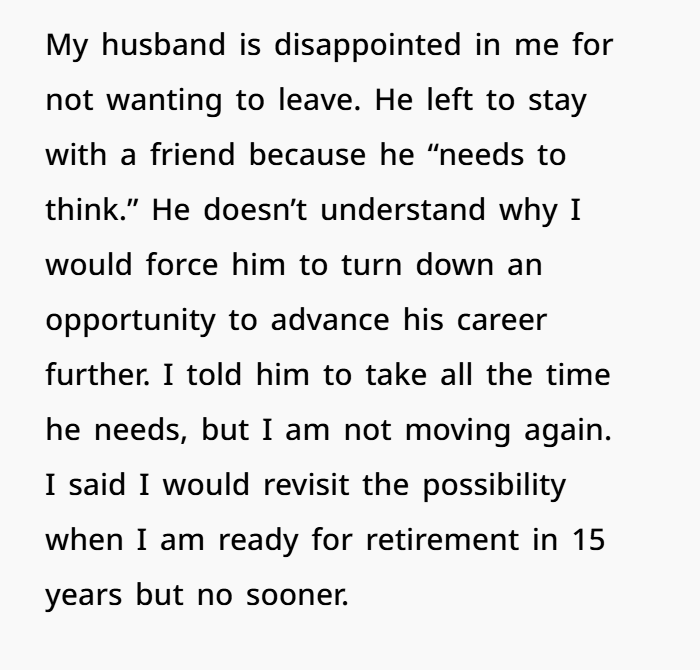
“I told him to take all the time he needs, but I am not moving again. I said I would revisit the possibility when I am ready for retirement in 15 years but no sooner.”
That’s not a wall. That’s a door with a timeline. It says: I’m open to reevaluating—but not at the expense of the life I finally built.

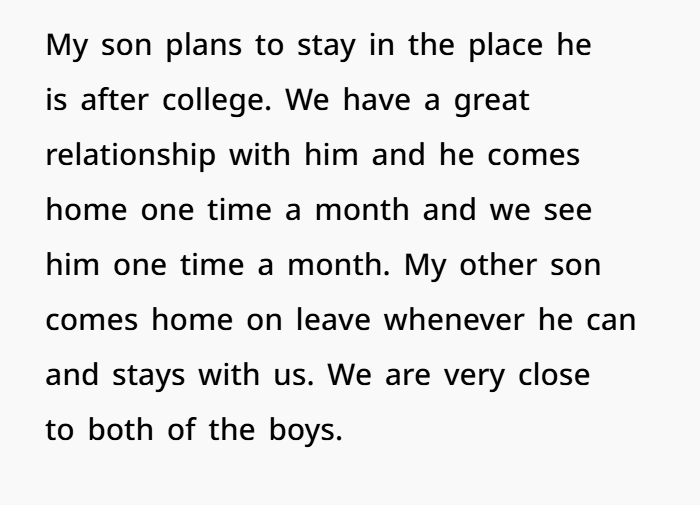
And here’s something even more important: her sons support her. The one in college plans to stay nearby. They have a tight relationship. Her other son visits when on leave. These boys are watching how their mother values herself. That’s a legacy more valuable than any promotion.
“Polish that backbone!”: many felt it was time for the woman to put her needs first









You’re not the A-hole for refusing to move again. You’ve already moved mountains for your husband’s career. You’ve earned your roots, your routine, and your right to say, “this time, I’m staying.”
If he wants to go, he can—but your life, your career, and your happiness are finally yours. Don’t let anyone take that from you.