When Polyamory Left Me Feeling Invisible: Growing Up in My Parents’ Open Doors
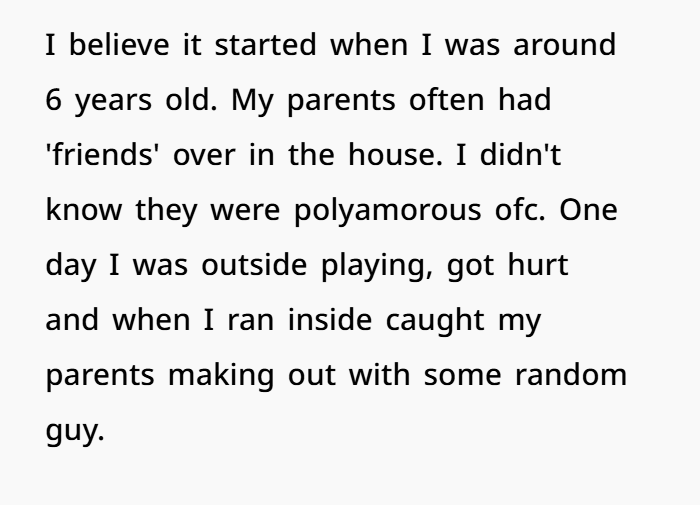
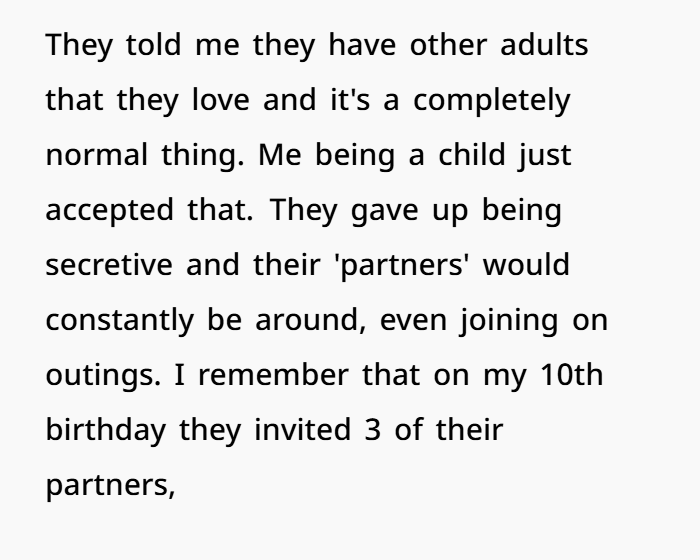
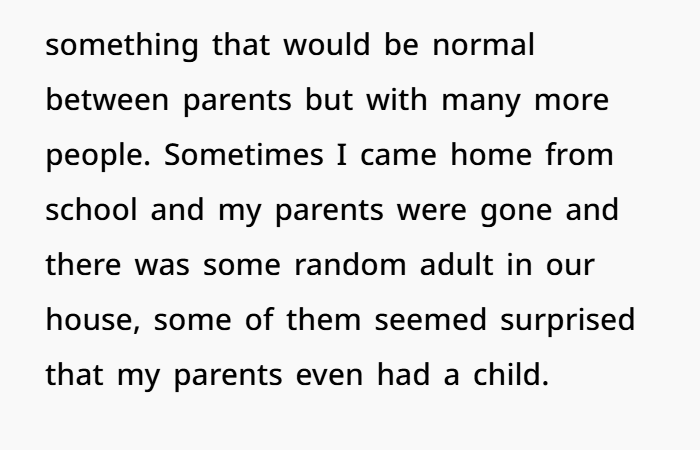
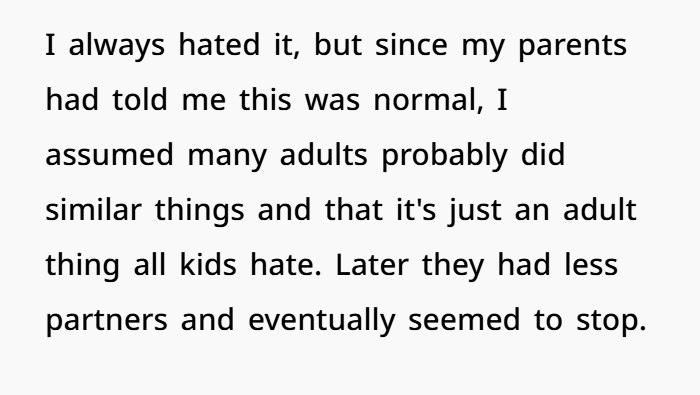
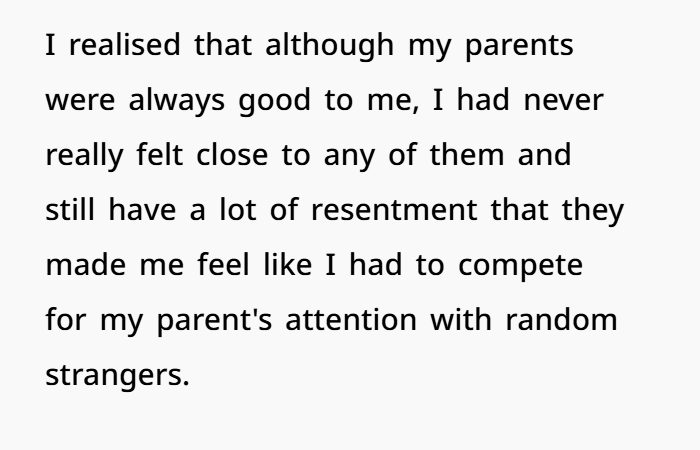
A person shared a difficult childhood memory and how they understand it better now as an adult. Growing up, their parents often had different partners and many adults would come in and out of the home. As a child, they thought this was normal and did not question it.
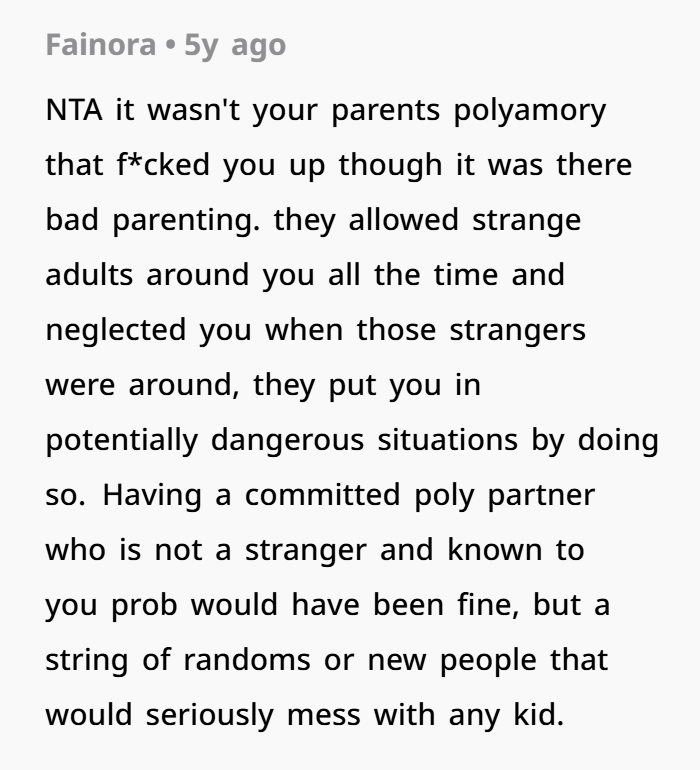
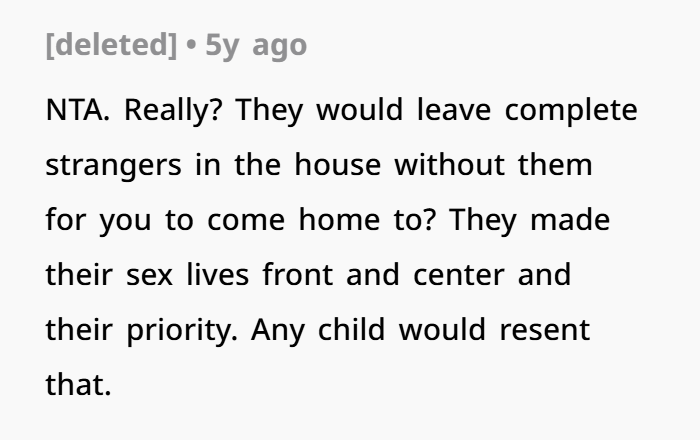
Looking back as an adult, they now realize the home environment often felt confusing and unstable. There were always new people around, and important moments like birthdays, school nights, and daily family life were shared with many strangers. Even though their parents did care for them, they often felt like they had to compete for attention and emotional support.
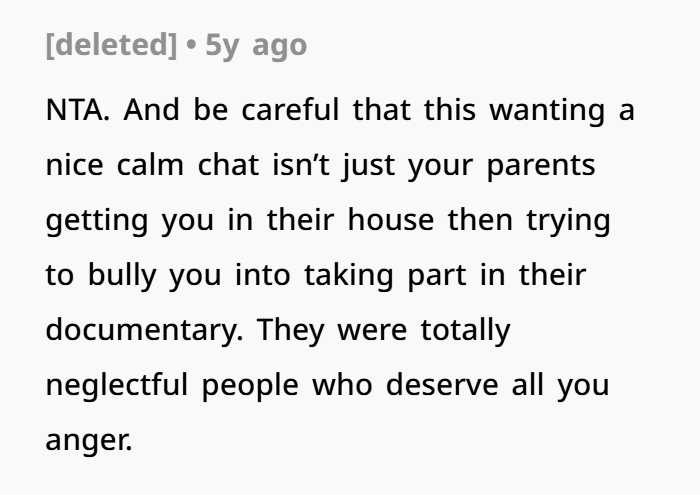
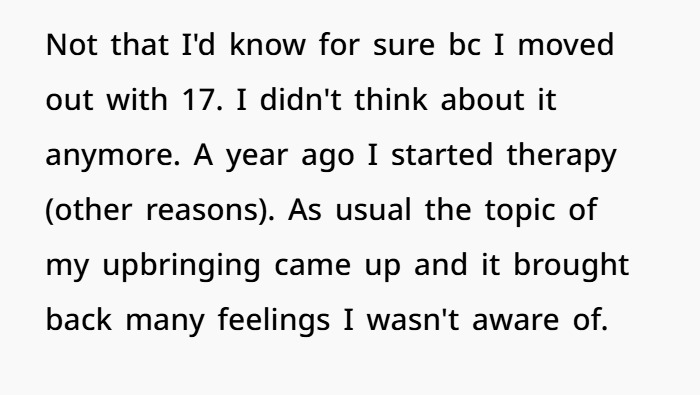
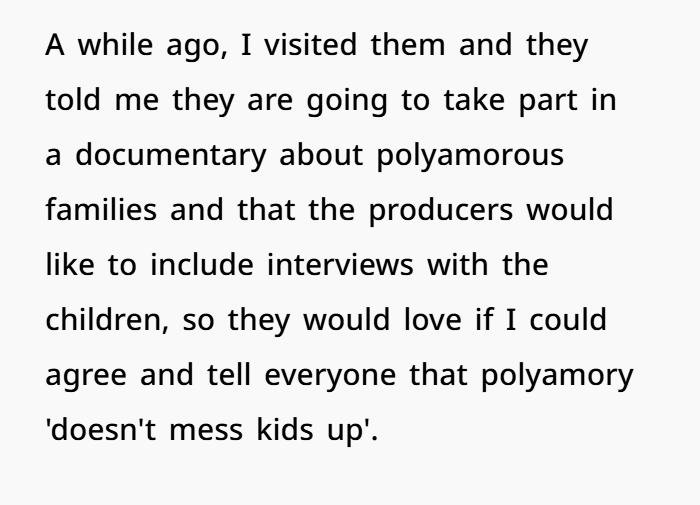
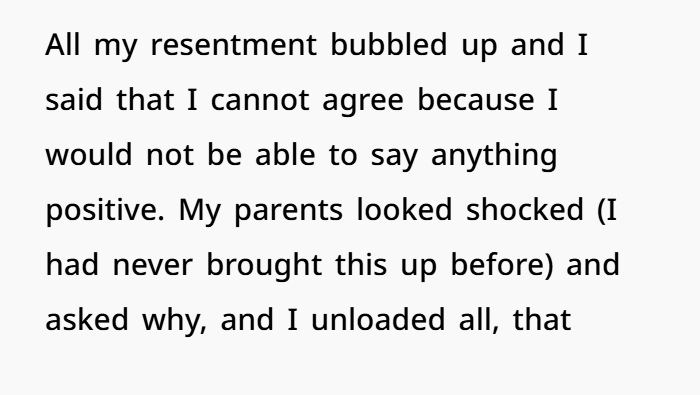
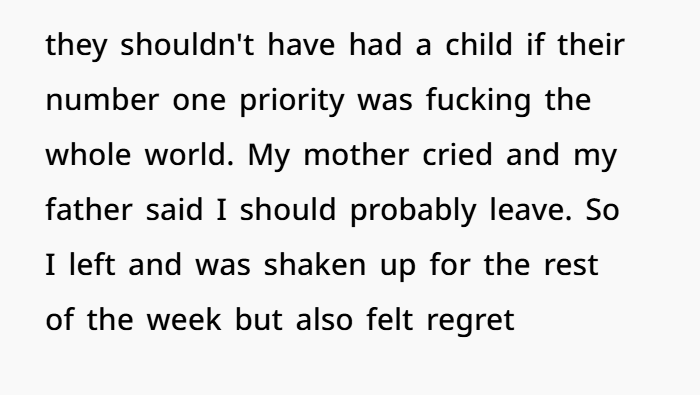
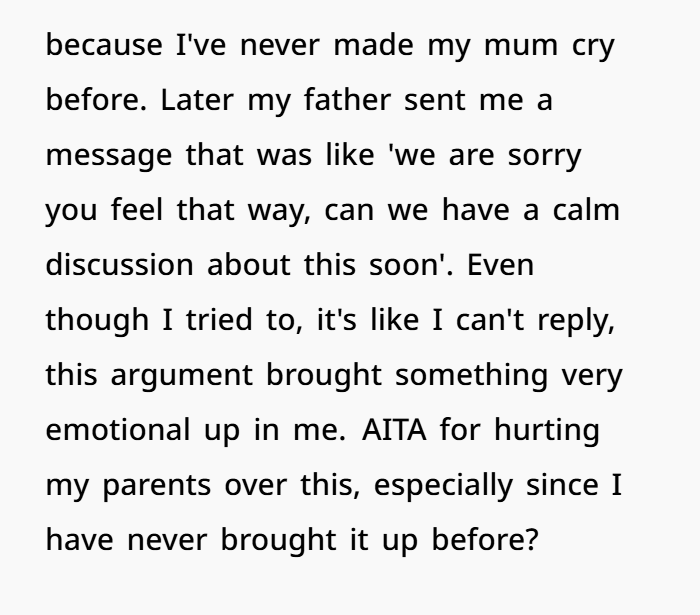
After years of therapy, their feelings about the past became clearer. Later, their parents asked them to speak positively about polyamory in a documentary. This request brought up a lot of old emotions, and the person decided to finally speak honestly about their experience.
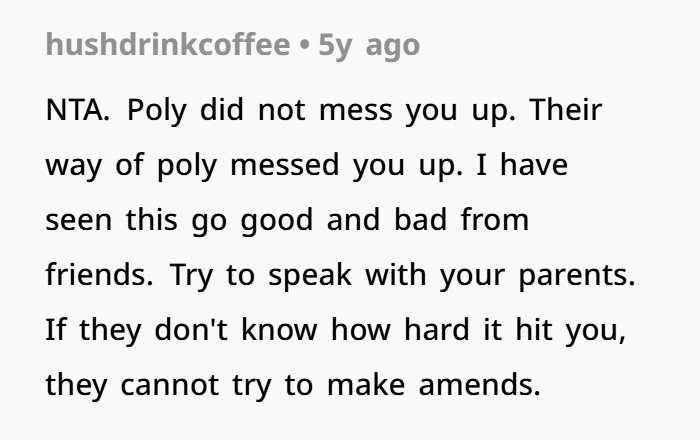
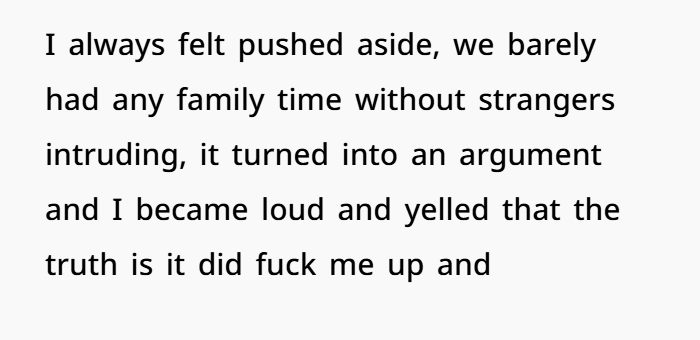
They told their parents that growing up in that situation had a negative impact on their childhood. The conversation became emotional, and it caused hurt feelings in the family. Afterward, the person felt both relief for being honest and guilt for how strongly they expressed their feelings. This situation highlights complex family dynamics, childhood emotional health, and the long-term effects of growing up in an unstable environment.
Here, the parents of today’s OP were polyamorous


Growing up in a polyamorous family is different for everyone. Some children feel happy and supported, some feel okay, and others feel confused or left out. Research shows both positive and negative experiences, depending on the family situation.
✅ The “Poly Families Can Work” View
Some research suggests that polyamorous families can work well when adults are responsible and caring.
Studies by sociologists like Elisabeth A. Sheff show that children in consensual non-monogamous (CNM) or polyamorous families can grow up healthy and emotionally stable, similar to children from traditional families.
Some recent studies also found that children in these families may see their parents’ partners as trusted adults. They may feel supported, have more caregivers around, and sometimes enjoy more help in daily life.
In some cases, having more than two adults in the home can mean more emotional support, shared parenting duties, and more financial stability.
Some children also report being more open-minded about relationships and better at understanding different family structures.
This shows that polyamorous parenting can work when there is stability, respect, and strong communication between adults.
⚠️ But It Does Not Always Work for Every Child
However, not all research is complete or balanced. Many studies focus on families where things are already going well. This means families who are struggling are not always included.
So, we do not see the full picture of children who had difficult or painful experiences in polyamorous homes.
Even in positive studies, some children said it was confusing to explain their family setup. Some used step-family terms, even when those did not fully fit.
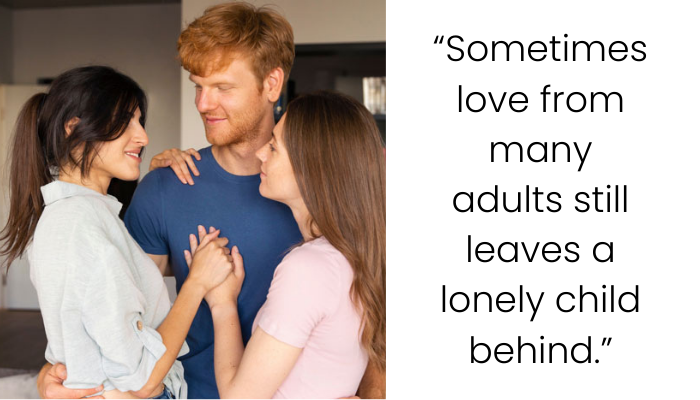
In some homes, children felt that the extra adults were more important for the parents than for the kids. This can make children feel less important or emotionally left out.
A polyamorous home only works well for children when adults stay stable, emotionally present, and focused on the child’s needs.
🎯 Why Some Children’s Struggles Are Not in Studies
There are several reasons why negative experiences are not always seen in research:
Many stable families are more likely to join studies. Families with problems often do not participate.
Some studies are very small and cannot show all types of experiences.
Children may not feel comfortable sharing negative feelings about their parents.
Some families in studies already have strong financial or emotional support, which can affect results.
Because of this, not every child’s experience is fully shown in research data.
🧠 Concerns and Criticism From Experts
Some family experts and therapists say that polyamorous parenting can become difficult if boundaries are not clear.
Problems may happen when adults focus more on their relationships than on their children’s emotional needs.
In these cases, children may feel confused, insecure, or emotionally unsupported.
Some therapists warn that frequent changes in partners or unclear family roles can affect a child’s sense of stability and trust.
There is also legal confusion in some countries because family laws are mostly built for two-parent households.
🧭 Where This Leaves Real Children’s Experiences
Not every child has the same experience in a polyamorous family.
Some children feel supported, but others may feel ignored or emotionally left out.
If adults are not consistent or do not prioritize the child, it can create feelings of loneliness, low self-worth, or confusion about relationships.
Even if research shows positive results in some cases, it does not erase the experiences of children who struggled.
Every child needs emotional safety, attention, and stability at home, no matter the family structure.
🧰 What Healthy Polyamorous Parenting Should Look Like
Experts suggest some important things for any family structure to work well for children:
Children’s emotional needs should always come first, before adult relationships.
Parents should explain the family situation in a simple and honest way that children can understand.
There should be stable routines, clear roles, and predictable caregiving.
Adults should focus on long-term child development, not just their personal relationships.
Children should feel safe to express their feelings without fear or shame.
When these things are in place, children are more likely to feel secure, supported, and emotionally healthy, even in non-traditional families.
📝 Why Your Feelings Are Valid — Even If Research Doesn’t Capture It