
AITA for Refusing to Apologize After My Friend’s Husband Falsely Accused Me?
A woman found herself caught in the middle of her friend Kelly’s troubled marriage after an innocent meeting at a local bar led to accusations, demands, and a year-long friendship conflict.
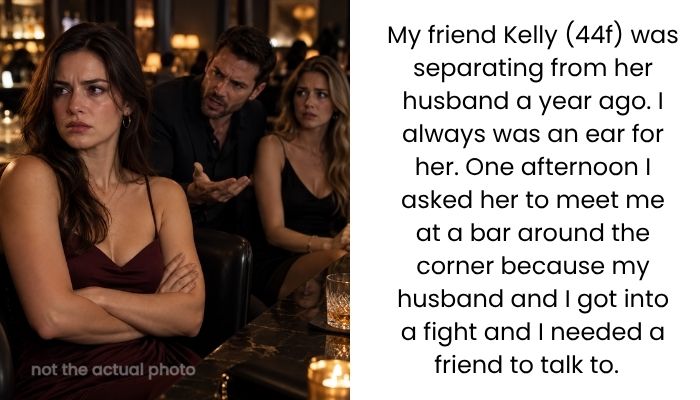
Kelly, 44, was separating from her husband when her friend invited her out for a drink. The invitation had nothing to do with Kelly’s marriage. The woman had recently argued with her own husband and simply needed someone she trusted to talk to.
While at the bar, they unexpectedly met a mutual male friend who had recently divorced. The three of them talked for about an hour before the woman left. Kelly remained behind to finish her drink and later exchanged contact information with the man in case she needed a divorce lawyer.
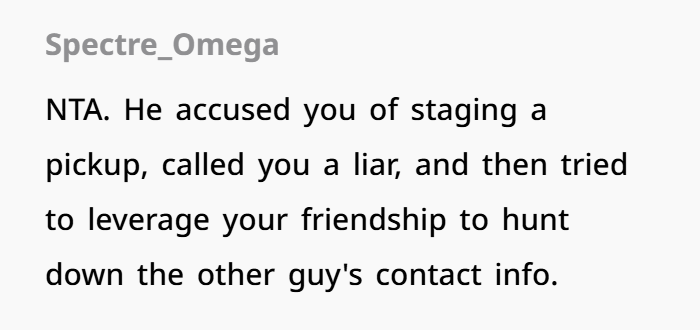
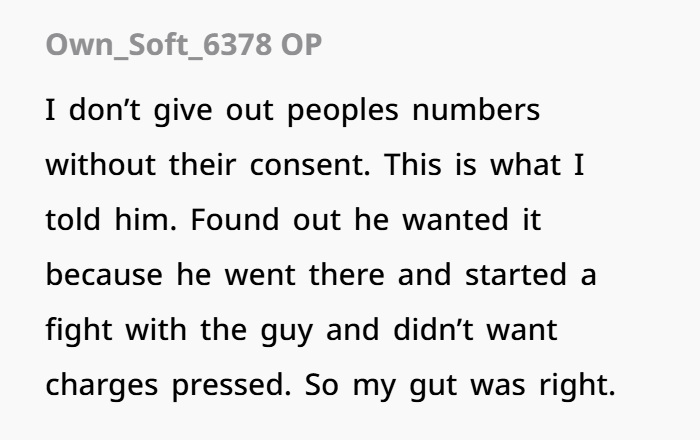
Two days later, Kelly’s husband accused the woman of deliberately taking his wife to the bar to set her up with another man. Although she explained what had actually happened, he called her a liar. A month later, he demanded the divorced man’s phone number and threatened to cut her out of their lives if she refused.
She did not give him the number.
Nearly a year later, Kelly’s husband demanded an apology. When the woman refused to accept responsibility for something she had not done, he ordered her to take her daughter and leave their home.

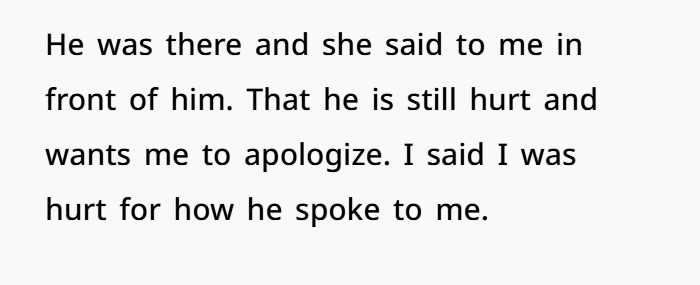
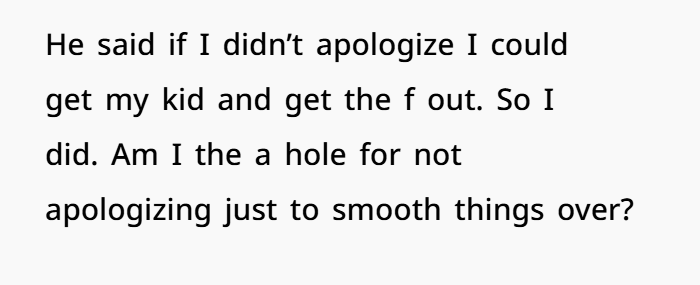
The main problem began when Kelly’s husband placed responsibility for his marital fears on someone outside the marriage.
Kelly and her husband were already separating, which meant their relationship was likely experiencing serious problems involving trust, communication, or uncertainty. Meeting a recently divorced man may have intensified his insecurity, but that did not prove that the meeting had been arranged.
The woman invited Kelly to the bar because she needed emotional support after arguing with her own husband. The encounter with the divorced friend happened by chance, and Kelly made her own decision to stay after her friend left.
Blaming the woman ignored Kelly’s independence. Kelly was a 44-year-old adult who could decide where to go, whom to speak with, and whether to exchange contact information. Her husband’s belief that another person had “set her up” shifted attention away from the problems inside their marriage.
Healthy conflict resolution requires people to discuss disagreements directly and with respect. Research shared by the Gottman Institute emphasizes the importance of listening and responding to attempts at communication. Accusations, insults, and threats usually make productive discussion more difficult.
If Kelly and her husband were struggling with jealousy or trust, marriage counseling, couples therapy, or professional relationship counseling would have been more constructive than blaming a friend.
Was Refusing to Share the Man’s Number Wrong?
The woman was also justified in refusing to give Kelly’s husband the other man’s phone number.
A phone number is personal information. Unless its owner has given permission, another person should not feel pressured to share it—especially when the person requesting it appears angry or confrontational.
Kelly’s husband did not explain why he wanted the number or what he intended to do with it. Given his previous accusations, sharing it could have exposed the man to harassment or an unwanted confrontation.
The demand also placed the woman in an inappropriate position. She was being asked to help Kelly’s husband investigate or confront someone connected to his marital problems. That was not her responsibility.
If the couple needed information about separation, custody, property, or their legal rights, they could seek confidential legal advice from a qualified family law attorney or divorce attorney. A friend should not be expected to serve as an investigator, mediator, or source of private contact information.
Her refusal was therefore a reasonable boundary—not evidence that she had arranged anything improper.
Why a Forced Apology Would Not Resolve the Problem
Kelly’s husband wanted an apology, but he apparently did not identify any genuine wrongdoing for which the woman should take responsibility.
A meaningful apology normally involves acknowledging a specific action, accepting responsibility, recognizing the harm caused, and showing sincere regret. Guidance on meaningful apologies explains that sincerity and acknowledgment of an actual failure are important if an apology is expected to repair conflict.
In this case, the woman would effectively have been apologizing for:
- Inviting a friend to have a drink.
- Unexpectedly meeting a mutual acquaintance.
- Leaving before Kelly exchanged contact information.
- Refusing to disclose another person’s private phone number.
- Defending herself after being called a liar.
None of those actions prove that she attempted to interfere in the marriage.
She could have expressed regret that the situation caused tension without admitting to something she did not do. For example, she might have said, “I am sorry the situation became so upsetting, but I did not arrange the meeting.”
However, she was not obligated to offer even that compromise after being insulted and threatened. An apology demanded through an ultimatum is unlikely to create genuine reconciliation because it prioritizes submission over mutual understanding.
Kelly’s Responsibility in the Conflict
Kelly’s role should not be ignored.
She knew why she had been invited to the bar and knew that the encounter with the divorced friend was not planned. She was also present when her husband demanded an apology a year later.
If Kelly wanted to protect the friendship, she could have clearly corrected the accusation. She could have told her husband that the meeting happened unexpectedly and that exchanging numbers was her own decision.
Instead, she allowed her friend to face the accusation alone.
This may indicate that Kelly was trying to avoid conflict with her husband. However, avoiding a difficult conversation can place an unfair burden on someone else. Staying silent allowed her husband’s version of events to continue without challenge.
It also created a situation in which the woman was expected to accept blame so that Kelly and her husband would not have to address their own marital tension.
The Husband’s Behavior Was More Concerning Than the Refusal to Apologize
Kelly’s husband was entitled to feel uncomfortable about the encounter, particularly while his marriage was unstable. Feelings of jealousy, fear, and betrayal can be intense during separation.
However, feelings do not automatically make accusations true.
He called the woman a liar after she explained what happened. He demanded another person’s number, threatened to remove her from their lives, held onto the dispute for a year, and eventually ordered her out of the house when she would not apologize.
These actions suggest an attempt to control the outcome rather than understand what happened. Productive disagreement requires calm communication and a willingness to consider another person’s explanation. Conflict specialist Amy Gallo notes that speaking up during disagreement can be constructive when it is handled with compassion and respect.
Kelly’s husband did not have to believe every part of the explanation, but he could have discussed his concerns without insults, threats, or demands.
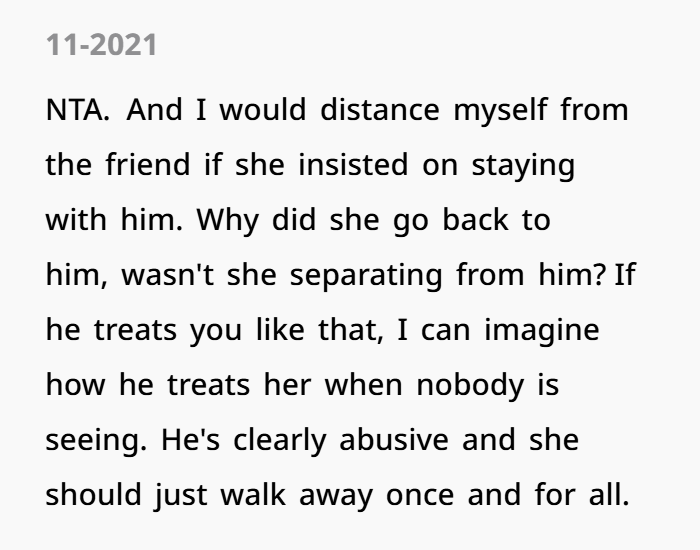
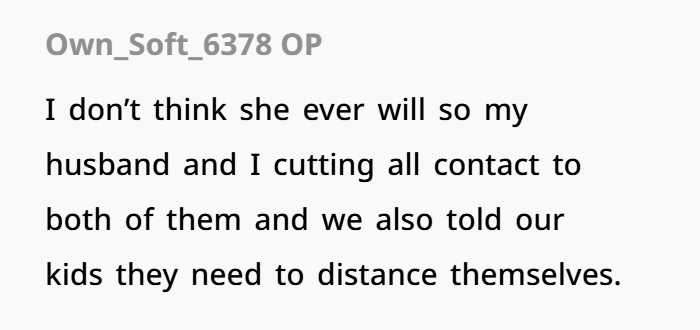
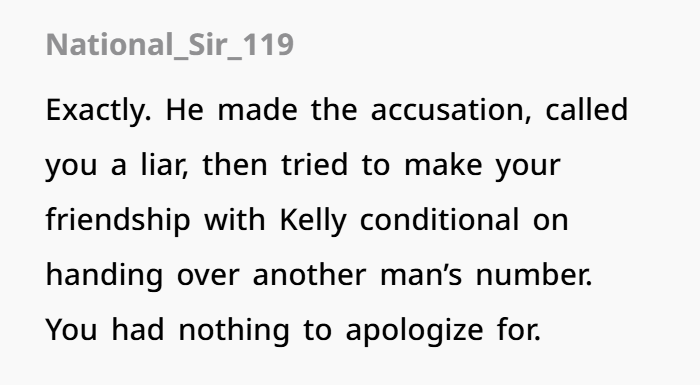
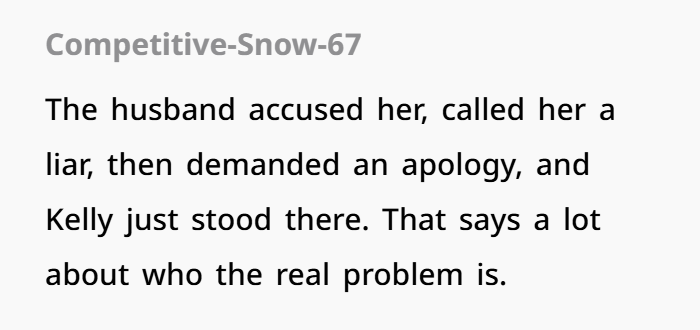
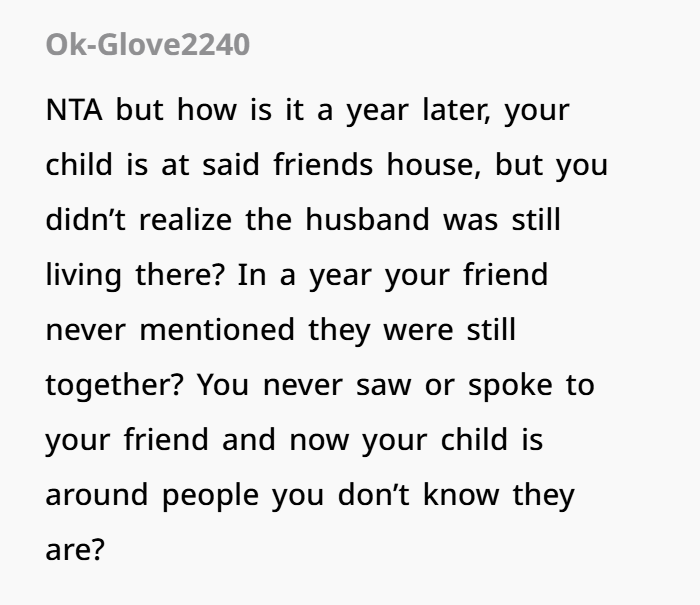
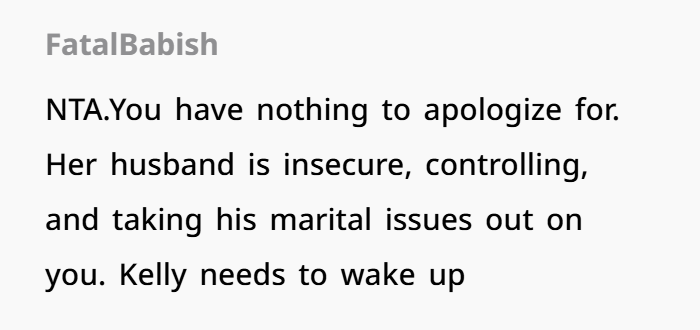
See the comments to know what people said

The woman was not wrong for refusing to give a false apology.
She did not arrange a romantic meeting, control Kelly’s behavior, or force her to exchange numbers. She also had a legitimate reason to protect the divorced man’s private contact information.
Apologizing merely to “smooth things over” might have ended the immediate argument, but it would also have reinforced a false accusation. It could have allowed Kelly’s husband to present her apology as proof that she had intentionally interfered in their marriage.
The stronger response was to leave when asked and maintain clear boundaries. If Kelly wants to restore the friendship, she will need to acknowledge what happened and speak honestly about her own role. Meanwhile, the couple should address their trust issues through direct communication, professional counseling, or appropriate family law services rather than placing responsibility on a third party.