
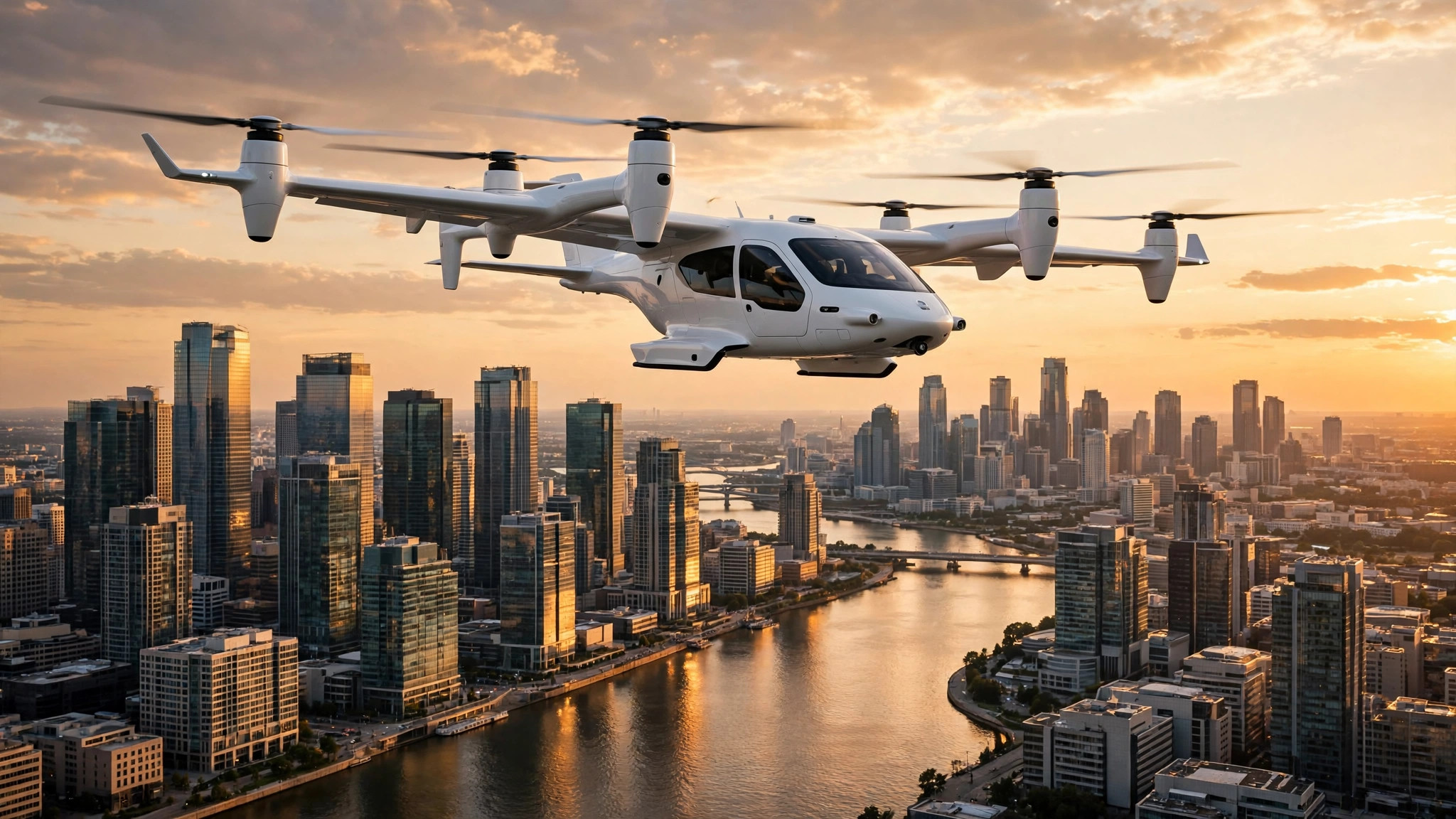
What Are Electric Vertical Takeoff Aircraft and Could They Become Urban Air Taxis?
Picture a weekday morning in a large city. The roads below are full, the train is packed, and a meeting across town starts in 40 minutes. Now picture a different option: a small electric aircraft lifts off from a rooftop pad, rises straight up, and flies over the traffic. Twenty minutes later, it lands on another rooftop near your meeting.
That is the promise behind the electric vertical takeoff aircraft, usually shortened to eVTOL. These aircraft take off and land like a helicopter, then fly forward on a wing like a plane, all on battery power. Several companies have built working prototypes, and one model is already certified in China.
Yet no eVTOL has been certified to carry paying passengers in the United States or Europe. This article explains what these aircraft are, how they work, where the industry stands in 2025, and what still has to happen before they can become urban air taxis.
What Electric Vertical Takeoff Aircraft Are
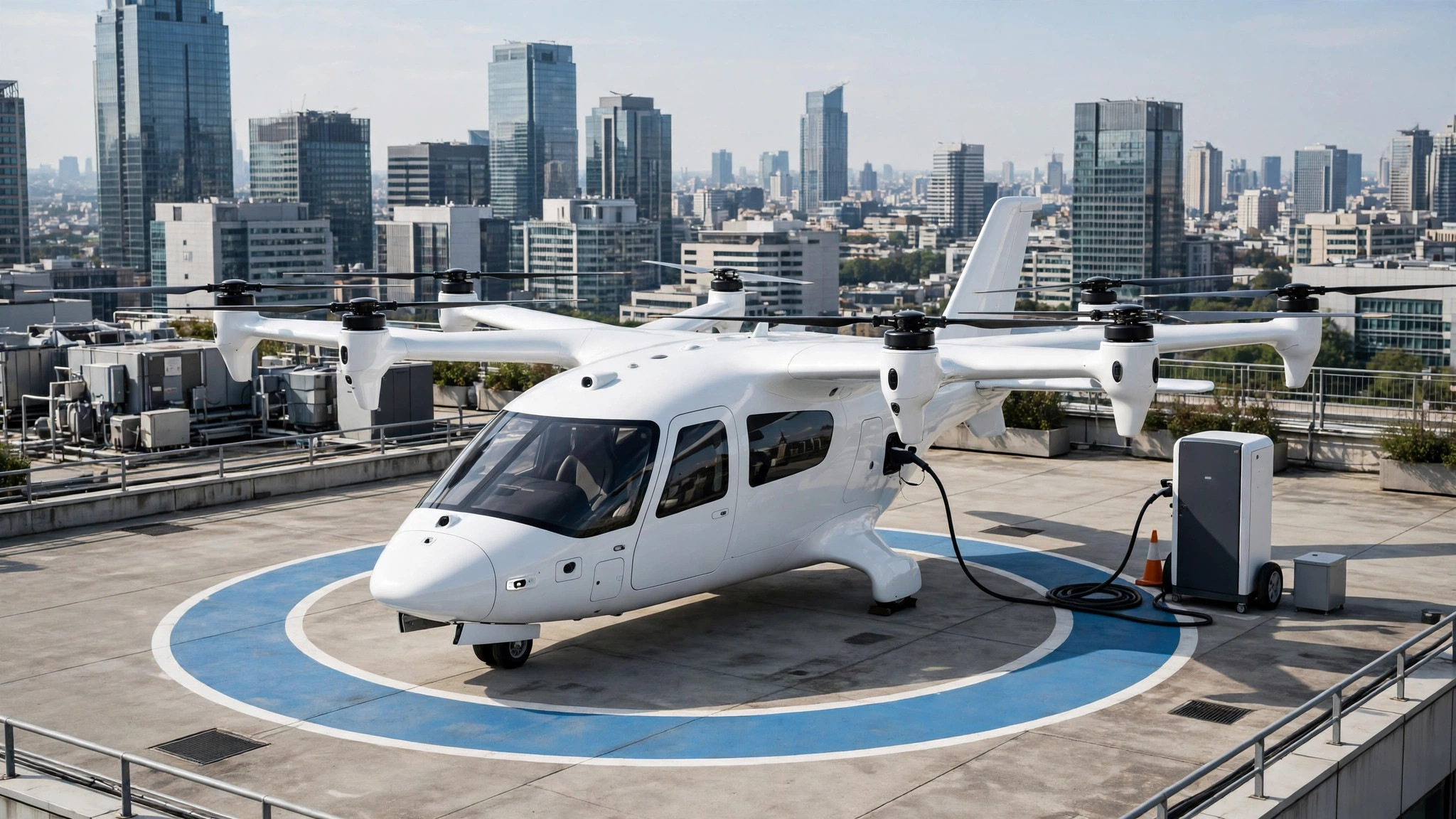
An electric vertical takeoff aircraft rises straight up using electric motors, then flies forward like a normal plane. It combines two familiar kinds of flight. A helicopter can take off from a small pad, but it is noisy, costly to run, and slow. A small plane is faster and cheaper to run, but it needs a runway.
Most designs carry a pilot and four passengers, though some are built to fly without a pilot at all. They are designed for short trips, usually across a city or between a city centre and its airport. A flight that takes an hour by car in heavy traffic could take 15 or 20 minutes in the air.
The US Federal Aviation Administration, the FAA, puts these aircraft in a category called powered-lift, the first new category of civil aircraft since helicopters were added in the 1940s. The FAA created operating and pilot rules for powered-lift in a final rule published in October 2024, which took effect in January 2025.
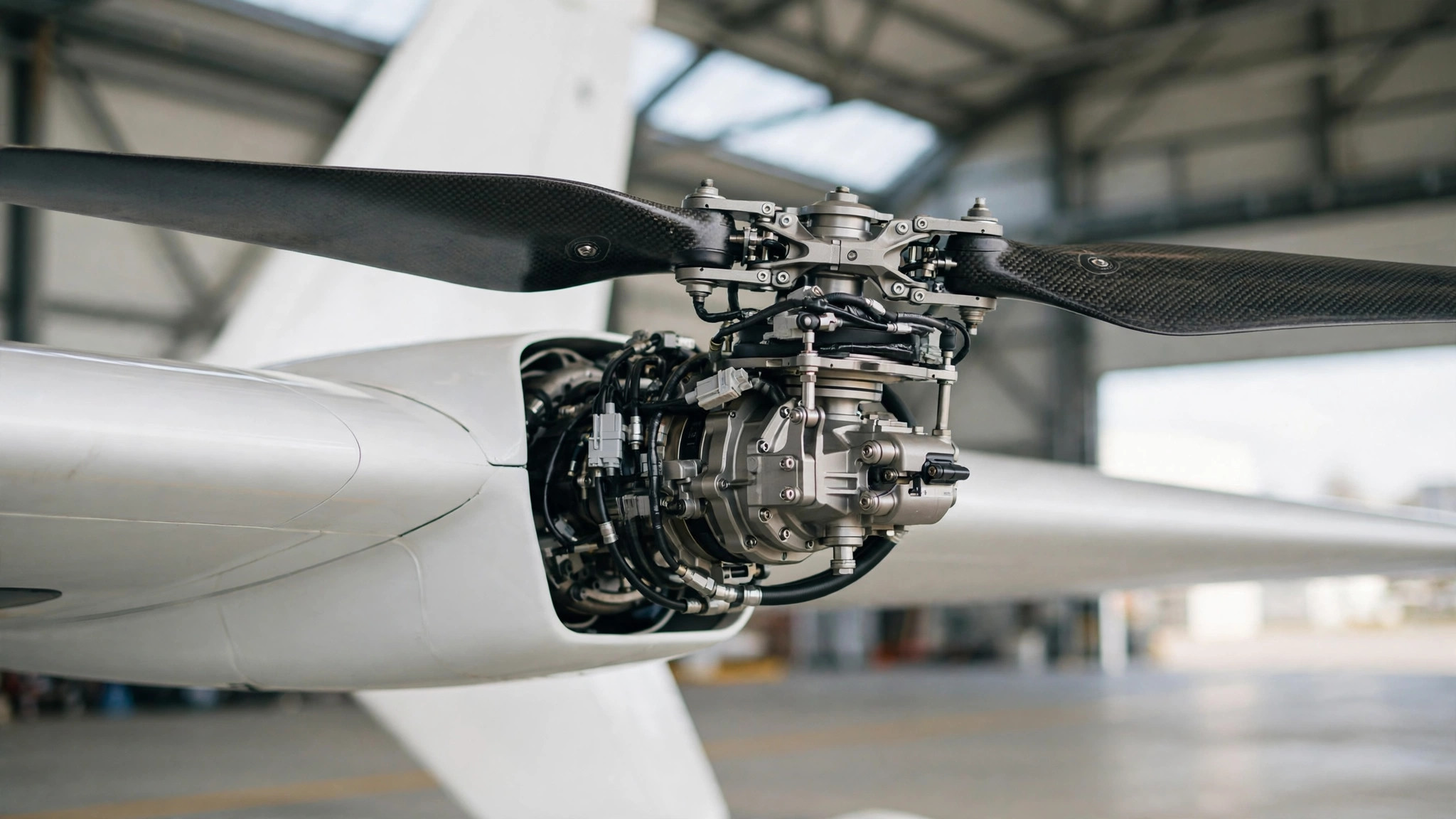
What makes an eVTOL different from a helicopter is not only the battery. Instead of one large main rotor, most designs use several smaller rotors, each driven by its own electric motor. This is called distributed electric propulsion. If one motor fails, the others can keep the aircraft flying.
How eVTOL Aircraft Fly: Tilt Rotors, Lift, and Batteries
Takeoff is the simplest part to picture. The rotors point upward and lift the aircraft straight off the pad. Then comes the part that makes these aircraft unusual: transition. The rotors tilt forward, the aircraft gains speed, and the wing starts to carry the weight.
Landing reverses the process. The aircraft slows down, the rotors tilt back up, and it drops straight down onto a pad. Flight computers adjust each motor many times a second, while the pilot, where there is one, gives directions.
Batteries are the main limit on what these aircraft can do. Today’s lithium-ion batteries hold far less energy per kilogram than aviation fuel, so an eVTOL can only fly a limited distance before it needs to recharge. That is why the first designs are aimed at short city trips rather than long flights.
This is where battery research matters. Our article on solid-state batteries for electric vehicles looks at a newer design that could store more energy in the same weight. If it reaches aircraft, eVTOL flights could go further and cover more routes.
Charging is part of the plan too. A vertiport, the name for a small landing site for these aircraft, would need fast chargers so an aircraft can top up between flights. Turnaround time will decide how many trips one aircraft can make in a day, and that feeds into the ticket price.

eVTOL vs Helicopter vs Drone
| Feature | eVTOL aircraft | Helicopter | Delivery drone |
|---|---|---|---|
| Takeoff and landing | Vertical, from a small pad | Vertical, from a helipad | Vertical, from a small pad |
| Power source | Battery electric | Jet fuel or aviation petrol | Battery electric |
| Passengers | Pilot plus up to four passengers | Pilot plus several passengers | None, carries parcels only |
| Noise | Designed to be far quieter than a helicopter | Loud, with a large main rotor | Quiet, but only carries small loads |
| Typical trip | Short city hops | Short to medium trips | Short local deliveries |
| Maturity in 2025 | Test flights, no US or EU passenger certification | In everyday service for decades | In limited commercial service |
The table shows why the eVTOL sits in a gap of its own. It carries people like a helicopter and runs on electricity like a drone. Whether that gap is big enough to support a business is the question the whole industry is trying to answer.
Where the Industry Stands in 2025
As of October 2025, the industry is split between one country that has certified an eVTOL and the rest of the world, which has not.
China is furthest ahead. The Civil Aviation Administration of China gave a type certificate to EHang’s EH216-S in October 2023. It is a two-seat aircraft with 16 rotors that flies without a pilot on board. In March 2025, the first air operator certificates were issued for sightseeing flights with it in China. It is still the only certified passenger eVTOL service anywhere.
In the United States, no eVTOL holds an FAA type certificate yet. Joby Aviation is furthest along. Its S4 aircraft, which carries a pilot and four passengers on six tilt rotors, has had its final airworthiness criteria published by the FAA. Joby has flown piloted test flights, including in Dubai in 2025, where it holds an agreement to launch air taxi service.
Archer Aviation is close behind with its Midnight aircraft, also built for a pilot and four passengers. Archer is working through the FAA’s certification phases and has an order from United Airlines. In 2024, Archer was named the official air taxi provider for the Los Angeles 2028 Olympic Games.
Not every company has survived. Lilium, the German maker of a jet-powered eVTOL, filed for insolvency in December 2024 and again in February 2025 after a rescue plan fell through. Volocopter, another German maker, filed for insolvency in December 2024.
Could They Become Urban Air Taxis?
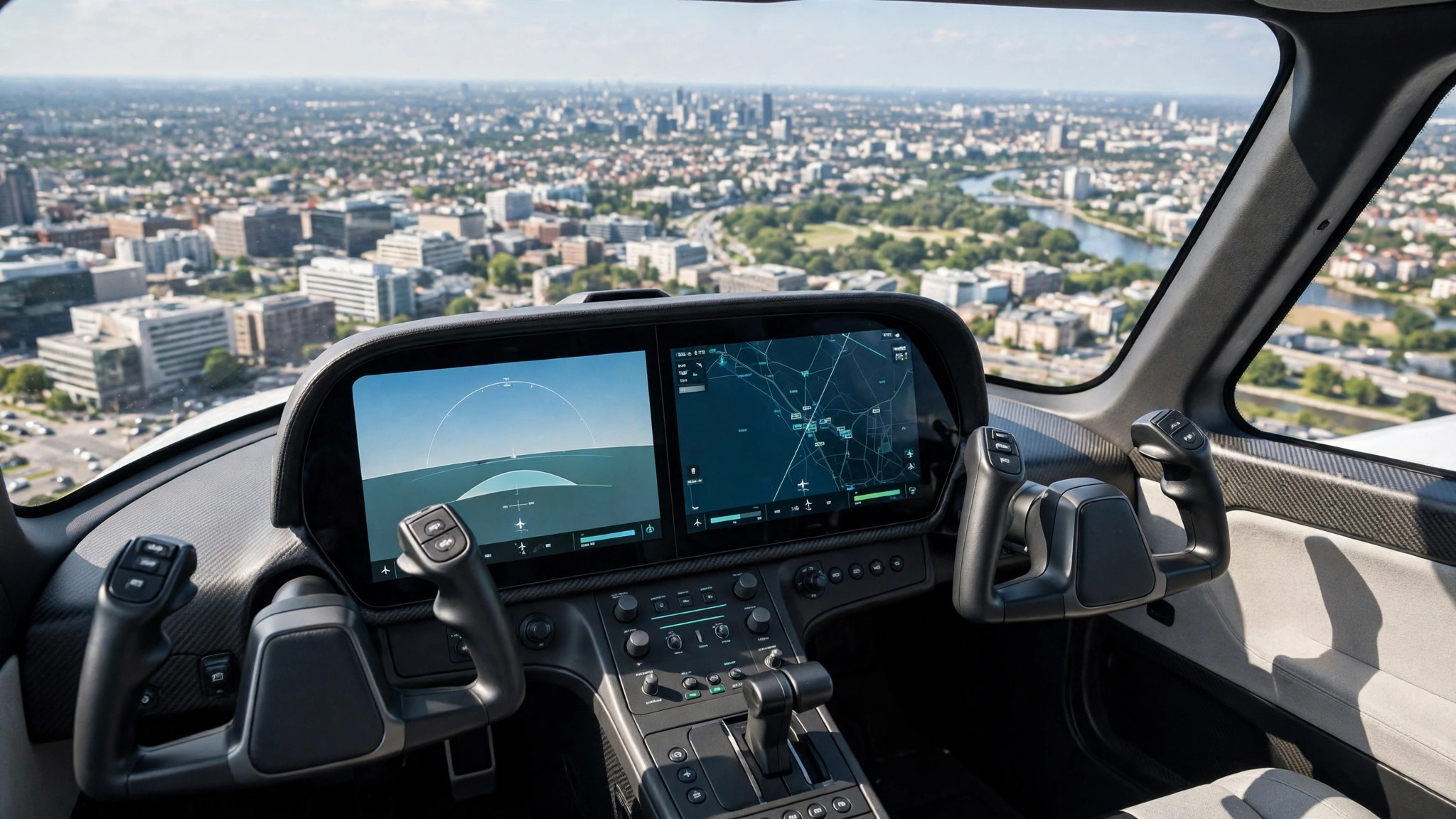
The first air taxi routes will probably be simple ones. An airport run is the obvious start: a flight from a city centre vertiport to the airport, skipping the traffic on the road below. Cross-town routes between business districts would come next. The aircraft suit trips that are slow by car but short enough for a battery.
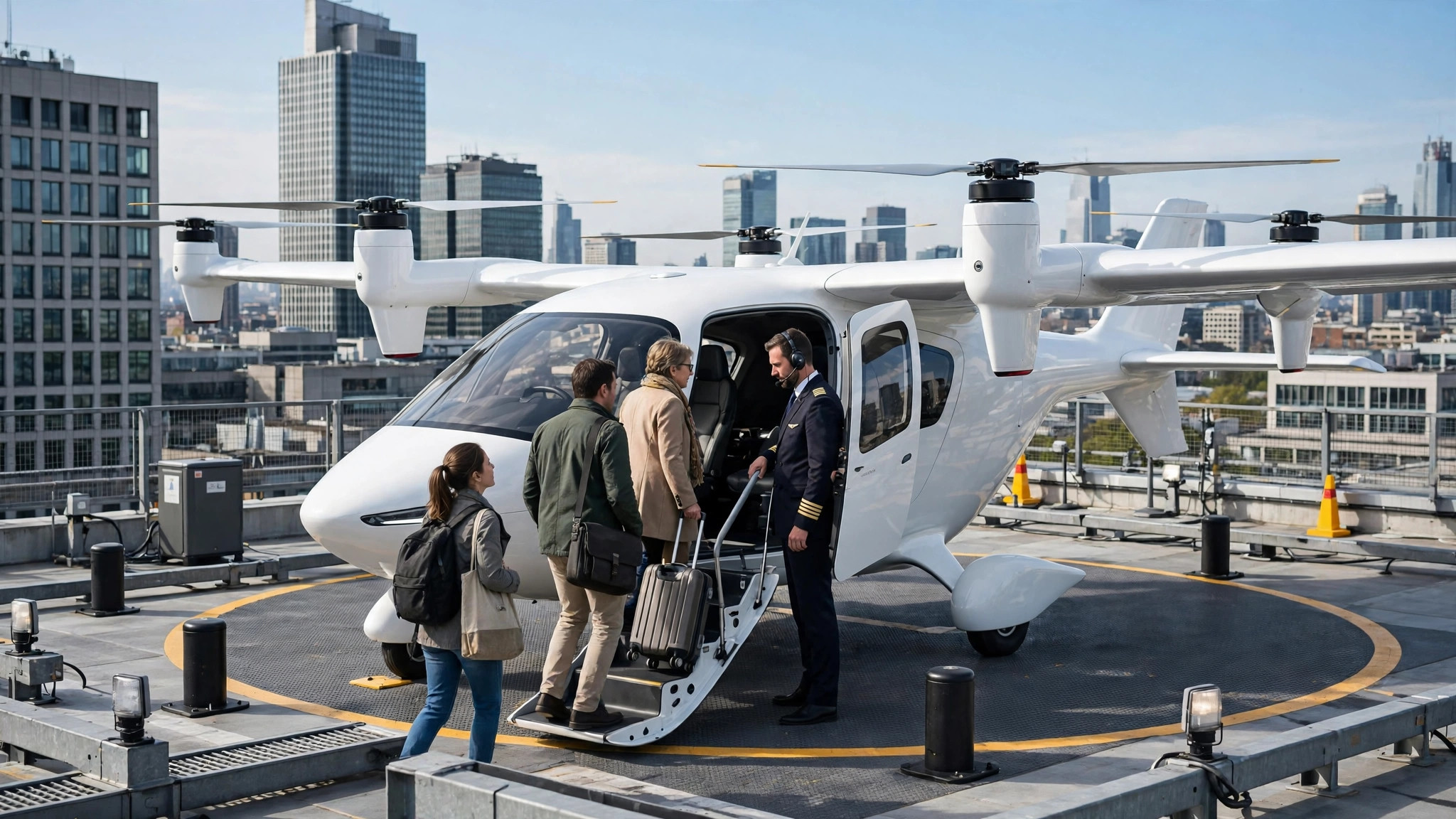
The vertiport is the piece of ground infrastructure that makes this possible. It is more than a flat roof. A vertiport needs a landing pad, charging equipment, a place for passengers to wait and board, and safety space around the pad. City planners are already looking at rooftops and parking garages as possible sites.
Booking would work much like booking a car today. A rider would open an app, pick a departure vertiport and a destination, and get a price and a departure time. Behind the app, dispatch software would match riders to aircraft and manage charging between flights. Our article on agentic AI describes software that carries out multi-step work on a user’s behalf, which is close to what an air taxi network will need.
Sharing the sky is another part of the plan. eVTOL aircraft will fly at low altitude, in airspace that is already getting busier. Delivery drones are already flying in some cities, and our article on autonomous delivery robots looks at how machines are taking over last-mile trips.
Testing is where much of the quiet work happens. Before an aircraft carries passengers, makers test every part of it in computer models and in the air. Engineers build virtual copies of the aircraft to test ideas before cutting metal, a method we explain in our article on digital twins.
Challenges and Limits to Keep in Mind
Certification is the first and biggest hurdle. An aircraft that carries paying passengers must prove it is safe, and that proof takes years of testing. The FAA and EASA are writing new rules as they go, because powered-lift aircraft do not fit neatly into the old categories.
Range is the second limit. Batteries set a hard ceiling on how far an eVTOL can fly, and a safety reserve has to be kept for a missed landing or a diversion. Bad weather adds to the problem: strong winds, icing, and low cloud can ground a small electric aircraft more easily than a large plane.
Cost is the third question. Building and certifying these aircraft is expensive, and early ticket prices are likely to be high. Air taxis may start as a premium service for business travellers and airport runs, not as a daily commute for everyone.
Noise and community acceptance come next. These aircraft are designed to be quieter than helicopters, but they will still be heard, and a vertiport with aircraft coming and going all day will change a neighbourhood.
Finally, there is trust. Passengers will need to feel safe stepping into a small electric aircraft, and even more so into one with no pilot. EHang’s pilotless flights in China are the first real test of that trust.
Practical Tips / Examples / Things to Know
- Think of an eVTOL as a battery-powered helicopter that flies on a wing, not as a flying car: it needs a vertiport, not a road.
- Follow certification milestones, not launch dates: a type certificate is the real sign that passenger service is close.
- Learn the difference between a type certificate, which approves the aircraft design, and an operator certificate, which approves a company to fly it.
- If your city has announced air taxi plans, check where the vertiports are planned: that decides whether the service will ever be useful to you.
- Treat range claims with care, and ask whether the number includes the safety reserve a real flight must carry.
- Remember that the first services will likely be airport runs and premium routes, not everyday commuting.
- Watch battery progress as closely as aircraft progress, since better batteries decide how far these aircraft can fly.
Common Mistakes / Considerations / What to Avoid
- Assuming air taxis are already flying, when no eVTOL has a US or European type certificate for passenger service yet.
- Believing a company’s launch date without checking whether its aircraft is certified, since many early dates have slipped.
- Confusing a test flight with a commercial service, when the two are very different things.
- Thinking pilotless flight is around the corner, when the first Western services are expected to have a pilot on board.
- Expecting eVTOL tickets to cost the same as a taxi ride, when early prices are likely to be much higher.
- Ignoring the vertiport problem, since an air taxi network needs landing sites, charging, and city approval, not just aircraft.
- Treating a company’s insolvency as proof the idea is dead, when the setbacks so far have been about funding and cost, not about whether the aircraft can fly.
Final Thoughts
Electric vertical takeoff aircraft are real machines, not drawings on a slide. Prototypes fly, one model is certified in China, and the leading American companies are deep into the FAA’s certification process. The technology works well enough to fly; what it has not yet done is prove it can carry paying passengers safely, regularly, and at a price people will pay.
The honest answer to the question in the title is that these aircraft probably will become urban air taxis, but not soon and not everywhere at once. Airport runs in a few cities are the likely first step, with a pilot on board and ticket prices that start high. The years between now and then will be decided by certification, batteries, vertiports, and whether cities want these aircraft overhead. For readers, the best move is to watch the regulators, not the launch dates.