
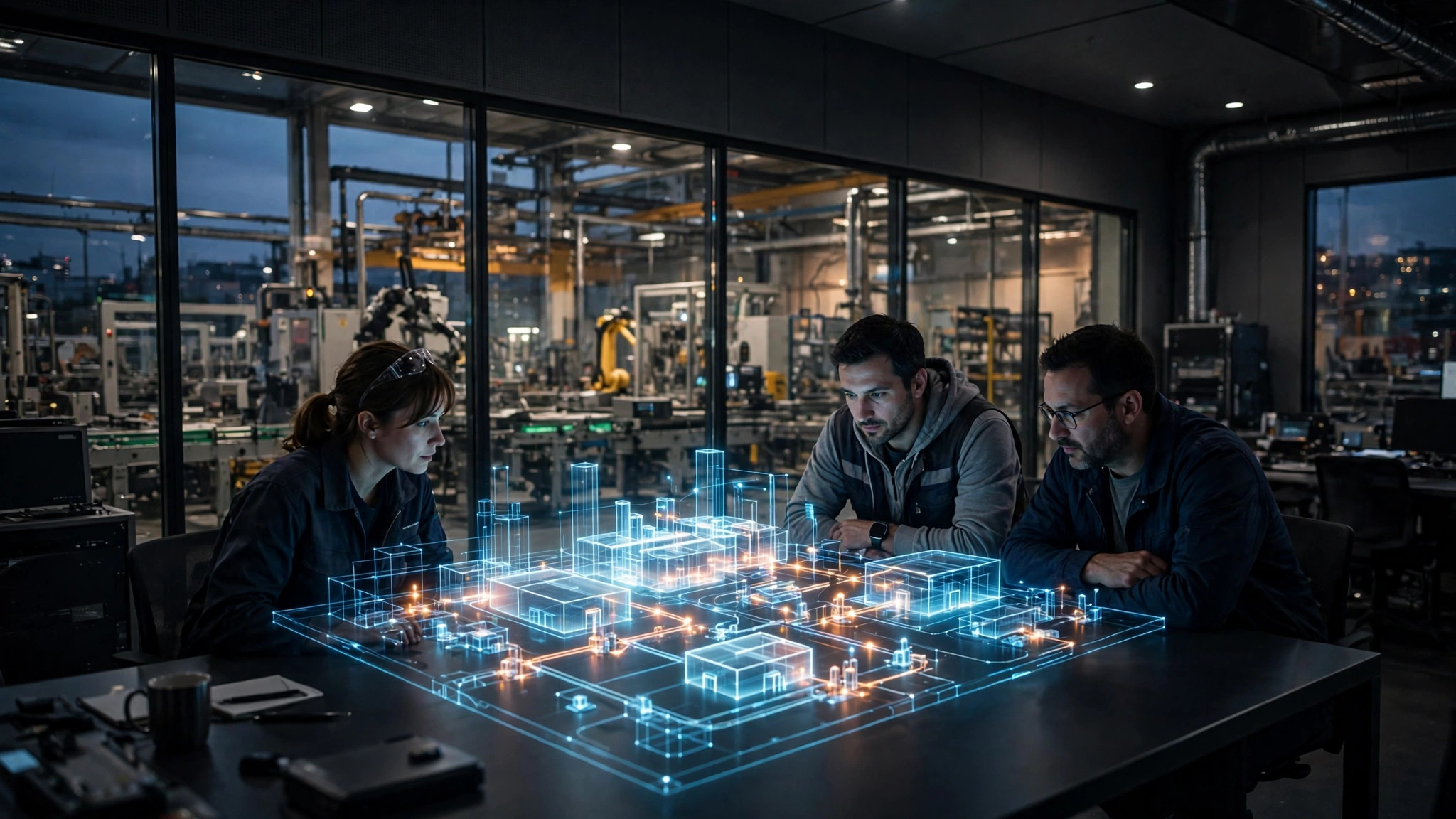
How Digital Twins Are Helping Engineers Test Ideas Before Building Them
Imagine an engineer who needs to test a new wind turbine blade. Building a full-size prototype takes months and a large budget, and a flaw shows up only after the money is spent. A digital twin changes that order of events. It gives the engineer a working virtual copy to test first, while the real machine is still on the drawing board.
A digital twin is a virtual replica of a physical thing — a machine, a building, a vehicle, or even a whole city — that stays connected to the real thing through live data. When the real machine heats up, vibrates, or slows down, its twin shows the same change. Engineers can then try out ideas on the twin and see the results before they touch the real thing.
This article explains what digital twins are, how they work, where engineers use them in 2025, and their limits.
What Digital Twins Actually Are
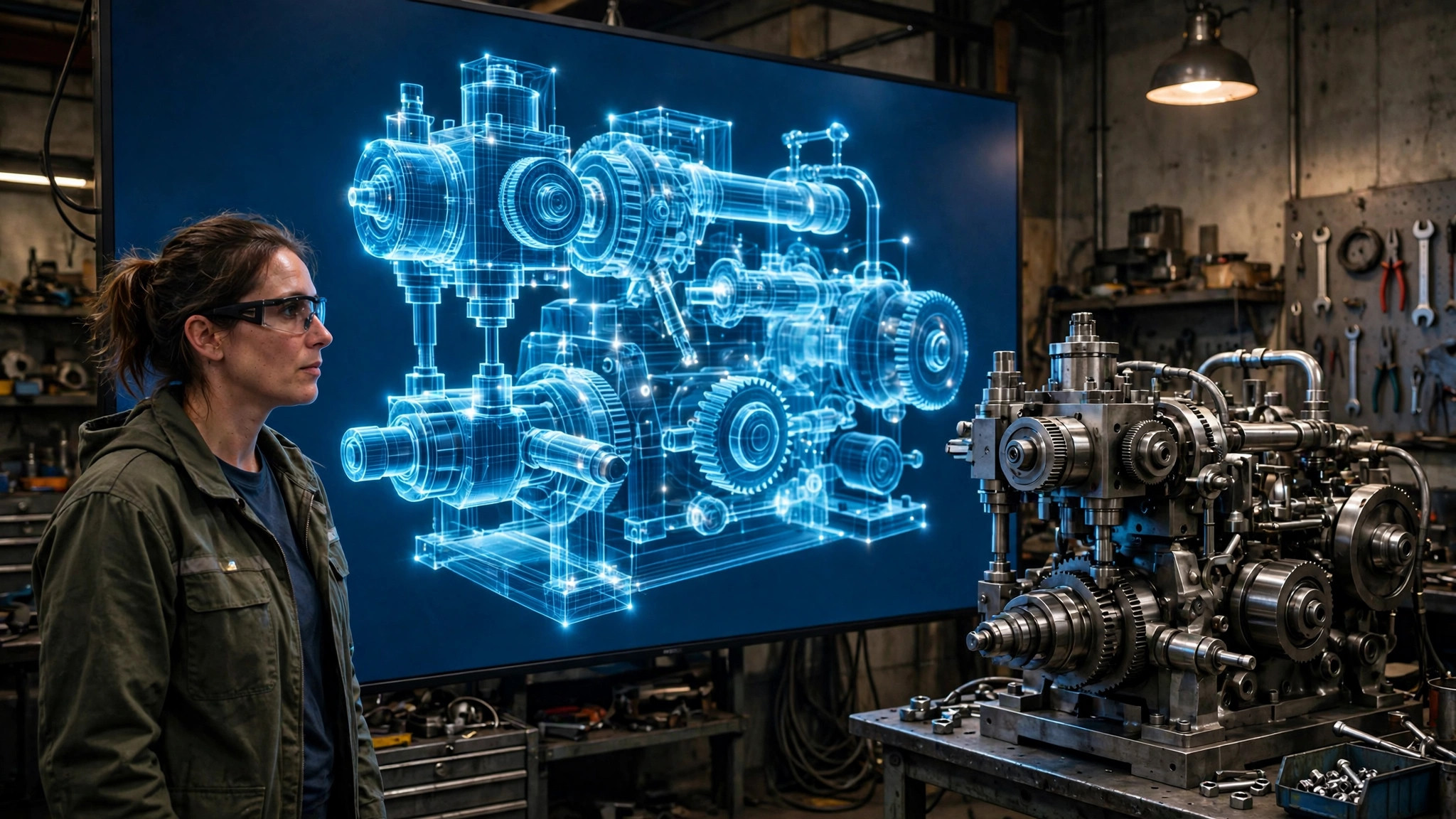
A digital twin is a living virtual copy of something real. It is built from design files, engineering knowledge, and measurements, and kept up to date by data flowing in from the physical object. That live link is what makes it a twin rather than an ordinary 3D model. A model is a snapshot. A twin keeps changing as the real thing changes.
The idea goes back further than most people expect. In the early 2000s, engineer Michael Grieves described a virtual copy tied to a physical product through its whole life, from design to disposal. NASA later adopted the term for spacecraft, where real-world testing is costly and sometimes impossible. The Apollo 13 mission in 1970 is often held up as an early example: ground crews used simulators on Earth to test fixes before sending instructions to the crew. A modern twin takes that idea further, because the link between the real thing and its copy never stops.
Digital twins come in different sizes. A component twin copies one part, such as a pump or a valve. An asset twin copies a whole machine, such as a jet engine. A system twin copies several machines working together, such as a production line. A process twin copies a whole operation, such as a factory floor or a city’s traffic network. The same idea applies at every scale, from a single bearing to an entire city.
How a Digital Twin Works: Sensors, Models, and Live Data
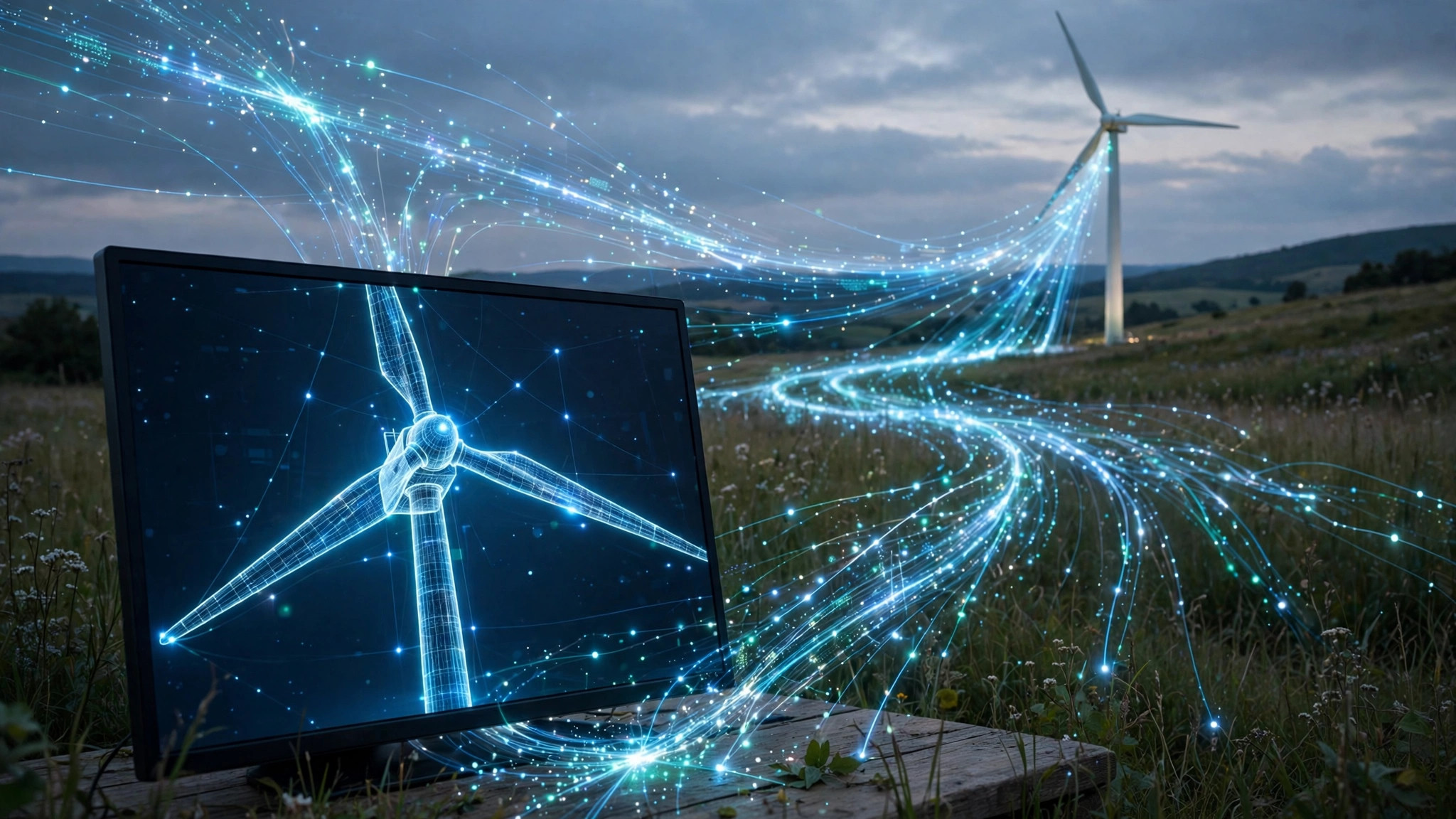
A digital twin starts with sensors: small devices fitted to the physical object that measure temperature, vibration, pressure, and speed. These sensors are part of the Internet of Things, the network of connected devices that send data back to computers. On a wind turbine, sensors track blade speed and gearbox temperature around the clock.
That stream of readings flows into a software model of the object. The model combines physics-based rules — how metal bends under load, how heat moves, how fluids flow — with patterns learned from past data. Together, the rules and the data keep the twin in step with the real machine. Engineers describe this as real-time data, though in practice the twin may update every few seconds rather than every instant.
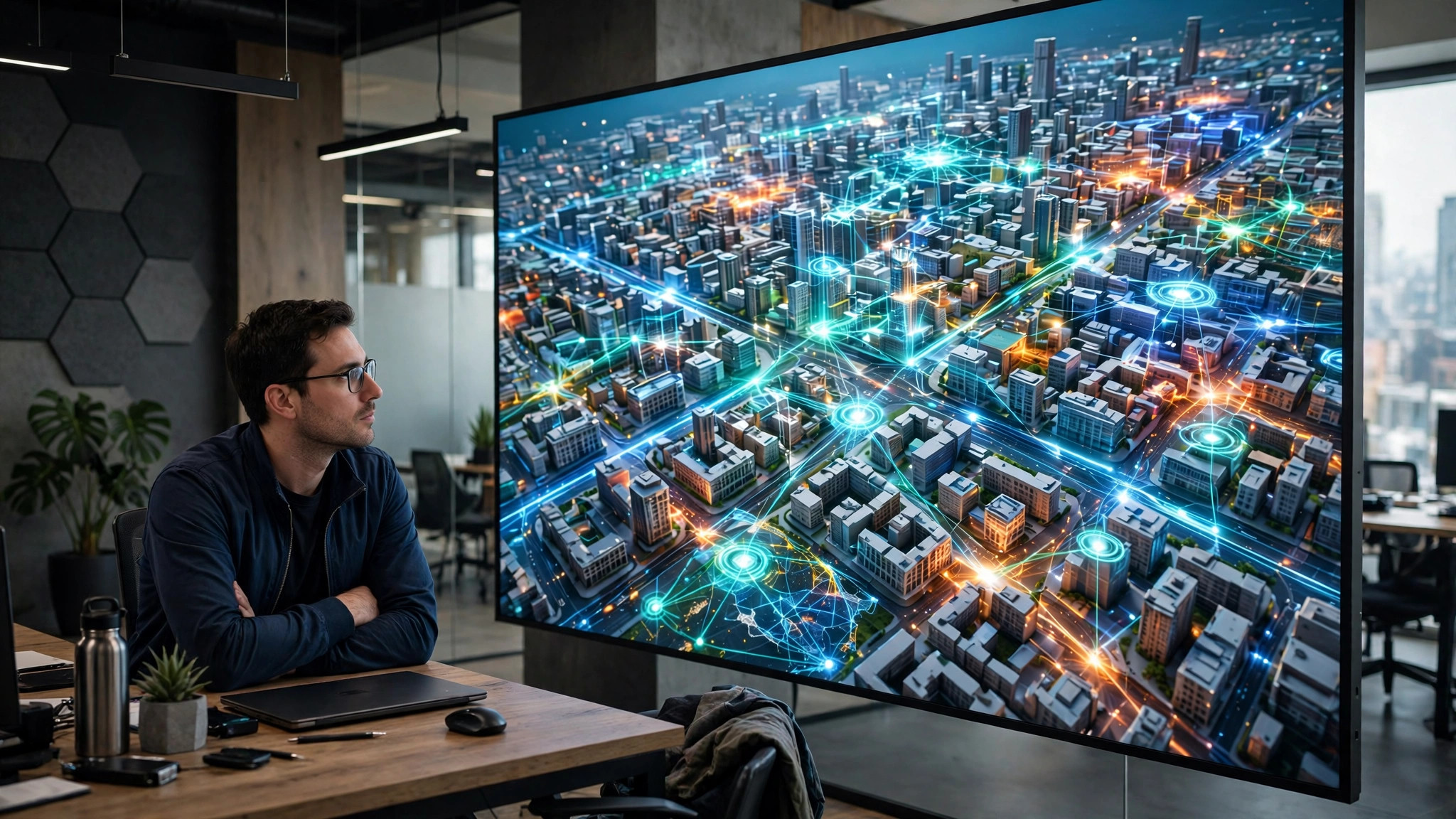
The flow runs both ways. The twin does not only watch. Engineers can change something in the twin — raise the load, swap a material, shut a valve — and see what happens before they do it for real. The results feed back into decisions about the physical object: when to service a part, how to run a machine more gently, or whether a design change is worth making. The records linking the twin to the real thing over a product’s life form what engineers call the digital thread.
Digital Twin vs Simulation vs BIM
| Feature | Digital twin | Simulation | Building information modelling (BIM) |
|---|---|---|---|
| What it is | A live copy linked to a real object | One test of a design or event | A shared 3D model of a building |
| Data source | Live sensor data | Engineer-set inputs | Design and construction records |
| Updates | Continuously | When run again | When the design changes |
| Main use | Testing and predicting | Checking a design | Planning and managing a building |
| Example | A wind turbine twin mirroring live wear | Testing a bridge against wind loads | A hospital model shared by builders |
A simulation answers one question at one moment, while a twin keeps answering as conditions change. A building’s twin can be built on its BIM model, with live sensor data added.
Where Engineers Use Digital Twins in 2025
Manufacturing is where digital twins are most visible. Car makers build virtual copies of their factories to plan production lines before any equipment is installed. BMW, for example, uses NVIDIA Omniverse-based factory twins to lay out production lines and test changes in software. Siemens offers digital twin tools that link product design with factory planning, so a change to a part can be checked against the line that will make it.
Energy is another major user. GE Digital uses twins of jet engines and wind turbines, fed by sensor data from machines in service. Engineers watch how a turbine performs in different weather and plan service visits before a fault forces a shutdown. Power companies use twins of grids and plants to test how the system copes when demand rises.
Buildings and cities have their own twins. Singapore’s Virtual Singapore project built a detailed 3D model of the city, used for planning new developments, shade, and airflow. Building managers use twins of offices, hospitals, and airports to track energy use and test changes such as a new ventilation schedule before rolling it out.
Vehicles and robots are a growing area too. Delivery companies test routes on twins of their fleets, and our article on autonomous delivery robots looks at how those machines handle the last stretch of a delivery. Researchers building soft robots — machines made from flexible materials — test designs virtually first, as we explored in our article on soft robotics. A twin lets them try a grip or a movement without wearing out a physical prototype.
Testing Ideas Before Building: How the Loop Works
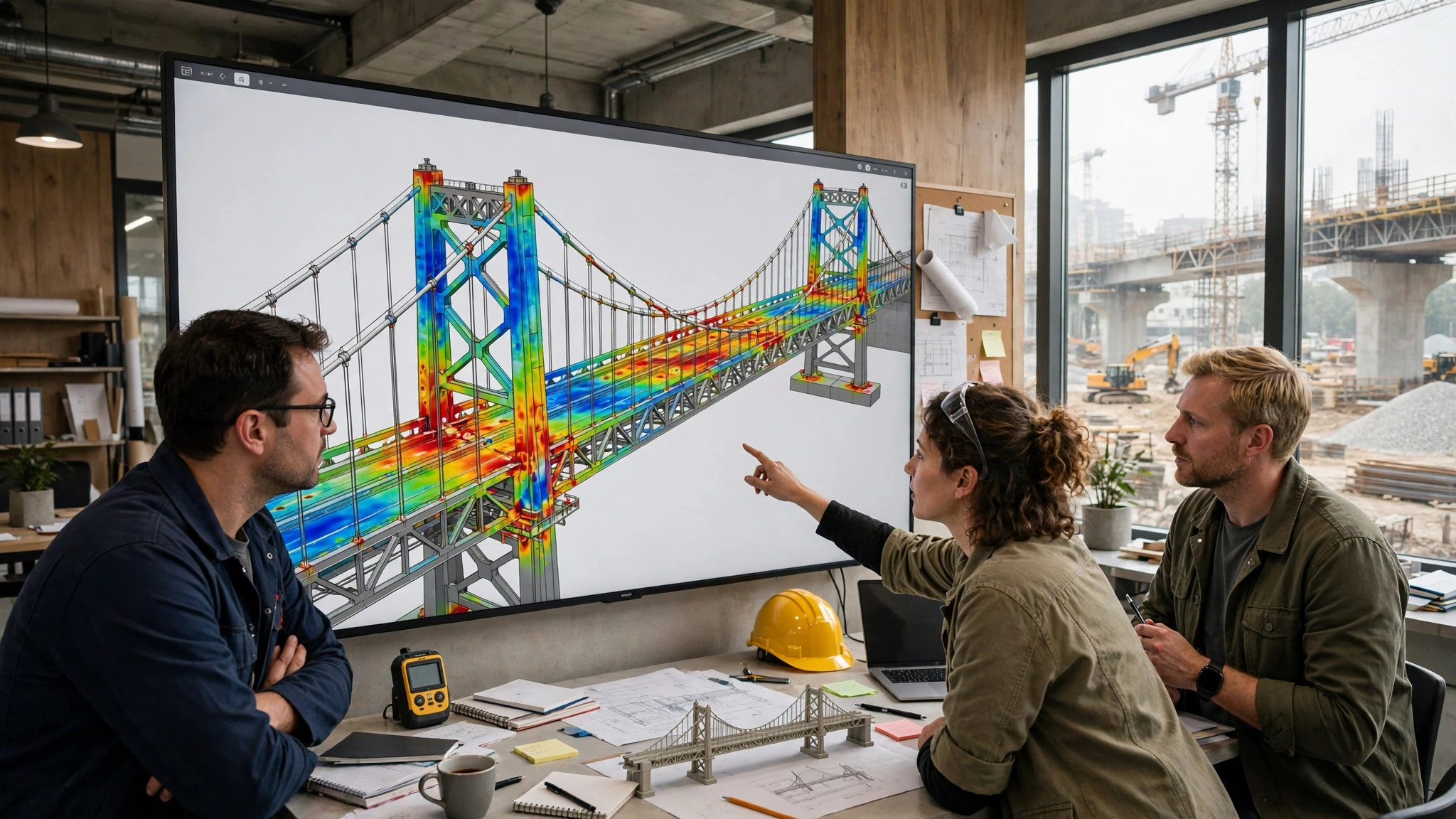
The testing loop is the most useful part of a digital twin. An engineer starts with a question: will this new material hold up, will this part overheat, will this layout slow the line down? They change the twin and run the test. If the idea fails in the twin, it costs only computing time. If it works, the team has evidence to support building it for real.
Materials are a good example. New alloys and composites behave in ways that are hard to predict from theory alone, and our article on AI designing new materials describes how computer models speed up the search for better ones. A twin tests how a material behaves inside a real machine under real loads.
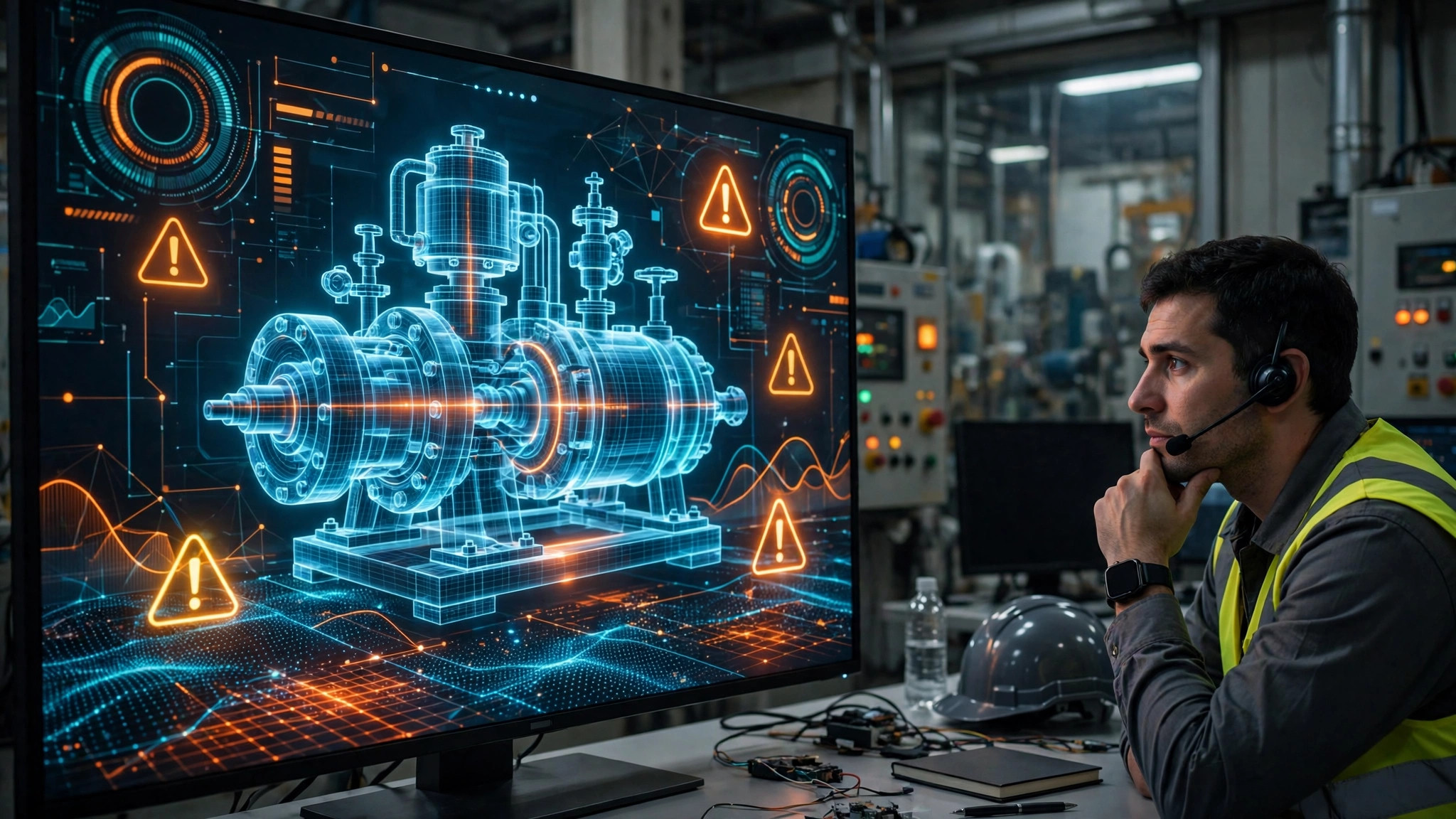
The same loop helps during operation. A twin can run ahead of the real machine, trying settings to find the one that uses the least energy or stresses a part least. This is where predictive maintenance comes in: by watching how the twin’s wear patterns develop, engineers can tell that a bearing is likely to fail in the coming weeks and replace it during a planned stop, instead of waiting for a breakdown.
Training is a quieter benefit. Operators can practise on a twin of a plant or a machine, including rare faults that would be dangerous to cause for real, without any risk to people or equipment. Some simulation methods behind these twins overlap with AI world models, which build virtual environments for machines to learn in, as explained in our article on AI world models.
Challenges and Limits to Keep in Mind
Data quality is the first limit. A twin is only as good as the data feeding it. If a sensor fails, drifts out of calibration, or is fitted in the wrong place, the twin will quietly show the wrong picture. Engineers must check sensors and validate the twin against the real machine regularly, or its answers become unreliable.
Cost is the second limit. Building a twin means buying sensors, setting up data links, building models, and keeping all of it running. For a large factory or a power plant, that cost can be justified. For a small workshop, it often cannot. Sensors and software have become cheaper, but a useful twin is still a real project, not a quick add-on.
Integration is the third challenge. Most teams already use several tools: one for design, one for simulation, one for maintenance records. A twin has to pull data from all of them, and those tools do not always speak the same language. Getting them to share data cleanly is often the hardest part of a twin project, and it is why some projects stall before they deliver value.
Security deserves attention too. A twin that can change how a machine runs is a valuable target. If someone gains access to the twin, they could learn how a plant operates or send bad instructions back to the physical system. Twins for important infrastructure need the same protection as any control system.
Finally, a twin is never a perfect copy. Every model leaves something out, and every prediction carries some error. Engineers treat a twin as a guide, not as the truth. It suggests where to look and what to test, but the final decision still rests on judgement, physical testing, and experience.
Practical Tips / Examples / Things to Know
- Start with one clear question, such as cutting unplanned downtime on a single machine, rather than trying to twin a whole factory at once.
- Check sensor health first: a twin fed by faulty sensors will give confident but wrong answers.
- Keep the twin’s purpose narrow at the start, and expand it only after the first version proves useful.
- Use the twin to compare options side by side, such as two maintenance schedules, instead of testing one idea at a time.
- Involve the people who run the machine, because operators often spot when the twin disagrees with reality.
- Plan for security from the start, with limited access and no twin changing a real machine without human approval.
Common Mistakes / Considerations / What to Avoid
- Building a twin with no clear question in mind, and ending up with an expensive model nobody uses.
- Trusting the twin without checking it against the real machine, and missing sensor drift.
- Treating a digital twin as a one-off simulation, and forgetting that its value comes from the live link to real data.
- Trying to twin everything at once, instead of starting small and proving the value on one asset.
- Ignoring the cost of keeping the twin running: sensors, data storage, and model updates.
- Expecting the twin to replace physical testing entirely, when its real job is to cut down the amount of physical testing needed.
Final Thoughts
Digital twins give engineers something they have always wanted: a way to test an idea against reality without paying the full price of building it first. In 2025 the technology is well past the idea stage. Factories, wind turbines, jet engines, buildings, and whole cities have twins that mirror their behaviour day by day, helping teams spot wear, plan maintenance, and try changes in software before committing to steel and concrete.
The twin does not replace engineering judgement. It sharpens it, by showing what might happen before it happens and by keeping a live record of how things really behave. For any team that builds or runs complex machines, the sensible next step is a small one: pick a single asset, a single question, and a twin built to answer it. The lessons from that first twin will show whether a bigger one is worth building.