
What Is Ambient Computing and How Could It Change Smart Homes?
For most of the history of computing, using a computer meant sitting in front of one. Then phones put a computer in every pocket, and we spent our days tapping screens. The next step is different: computing that fades into the background, working quietly around us without needing our attention at all.
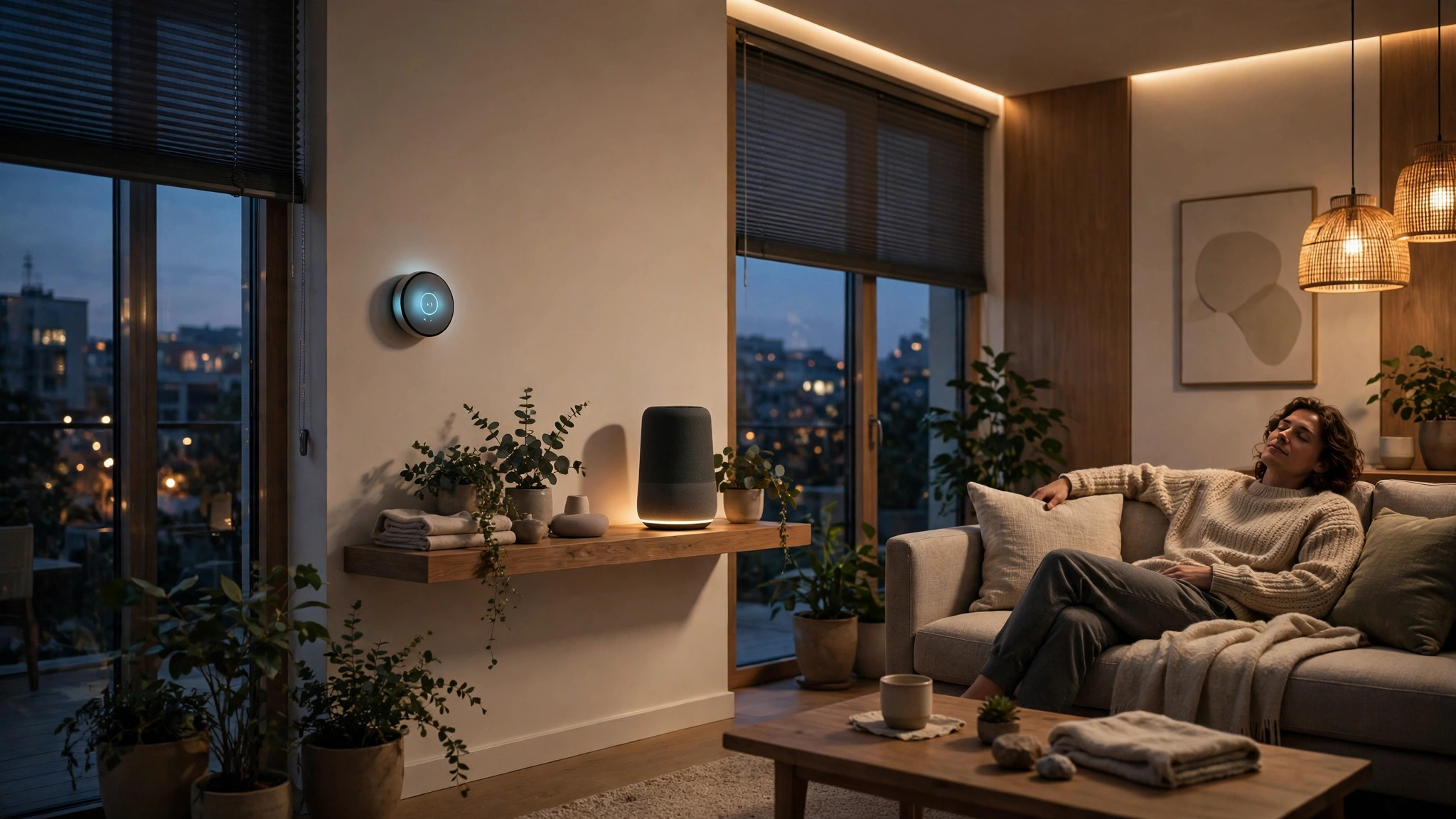
That idea is called ambient computing. It describes a home, an office, or a city where sensors, speakers, and small devices work together to understand what is happening and respond on their own. The lights dim when a film starts. The heating turns down when everyone leaves. The front door unlocks as you approach with your hands full.
This article explains what ambient computing is, how it differs from the smart home we already have, the technology that makes it possible, and what it could mean for the way we live at home.
The Idea: Computing That Disappears
The term ambient computing traces back to an older idea. In the early 1990s, the computer scientist Mark Weiser wrote about “ubiquitous computing“: a future where computers would be woven into everyday objects until they became invisible, like electricity or running water. Weiser imagined a world where you would use many computers a day without ever thinking of them as computers.
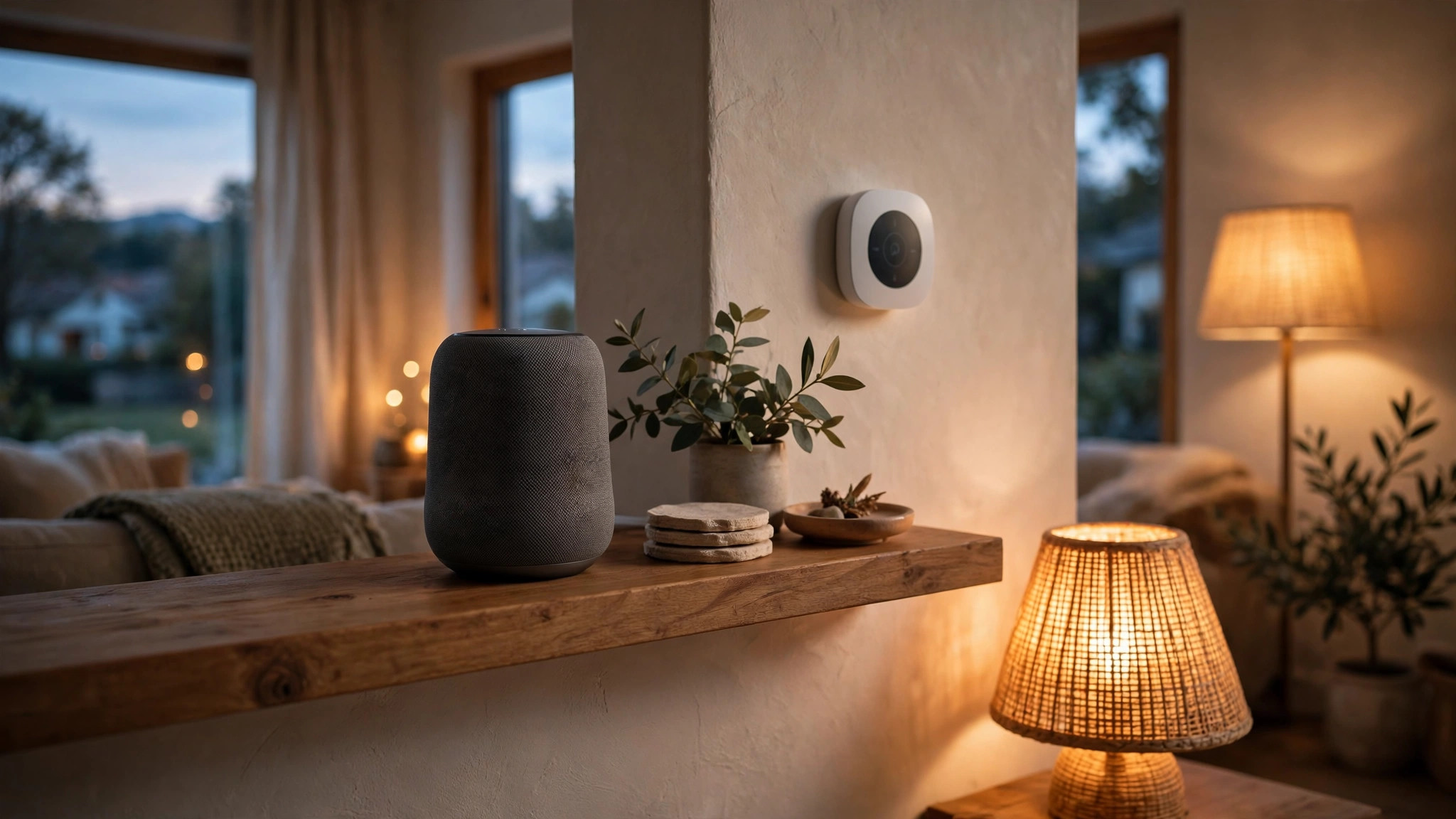
That future is arriving slowly. The smart speaker on a kitchen shelf, the thermostat that learns a routine, the light bulb that turns itself off: each is a small piece of it. Ambient computing is what happens when those pieces stop being separate gadgets and start working as one system, aware of who is in a room, what they are doing, and what they probably want next.
The difference from today’s smart home is the amount of attention it needs. A smart home today is mostly remote control: you open an app or speak a command, and a device obeys. An ambient home is closer to anticipation: the home works out what to do from context, and you only notice when it gets something wrong.
The Technology Behind It
Ambient computing rests on several technologies that have matured together. The first is sensing. Cheap sensors can now detect motion, temperature, humidity, light, and even whether a room is occupied, and they can do it without a camera. Newer sensors use radar to detect a person’s presence and movement through walls and furniture, which lets a home respond to someone without watching them.
The second is voice and language. Smart speakers from Amazon, Google, and Apple have been in homes for a decade, and their ability to understand natural speech has improved steadily. Amazon’s Alexa+, announced in early 2025, brought more conversational AI to its assistant, and Google has added similar capabilities to its Home devices. The assistant is becoming less a command system and more a conversation partner.
The third is on-device AI. Much of the understanding in an ambient home needs to happen locally, on a small chip in the room, because sending everything to the cloud would be slow and raise privacy questions. Efficient chips, including the new optical chips that use light to cut the energy cost of AI, are part of making that local intelligence practical.
The fourth is a shared language for devices. For years, the smart home was split between rival systems that refused to talk to each other. The Matter standard, launched by the Connectivity Standards Alliance in 2022 and developed steadily since, lets devices from different makers work together. A light from one company can now respond to a sensor from another, which is essential for a home that works as one system rather than a collection of apps.
What an Ambient Home Looks Like in Practice
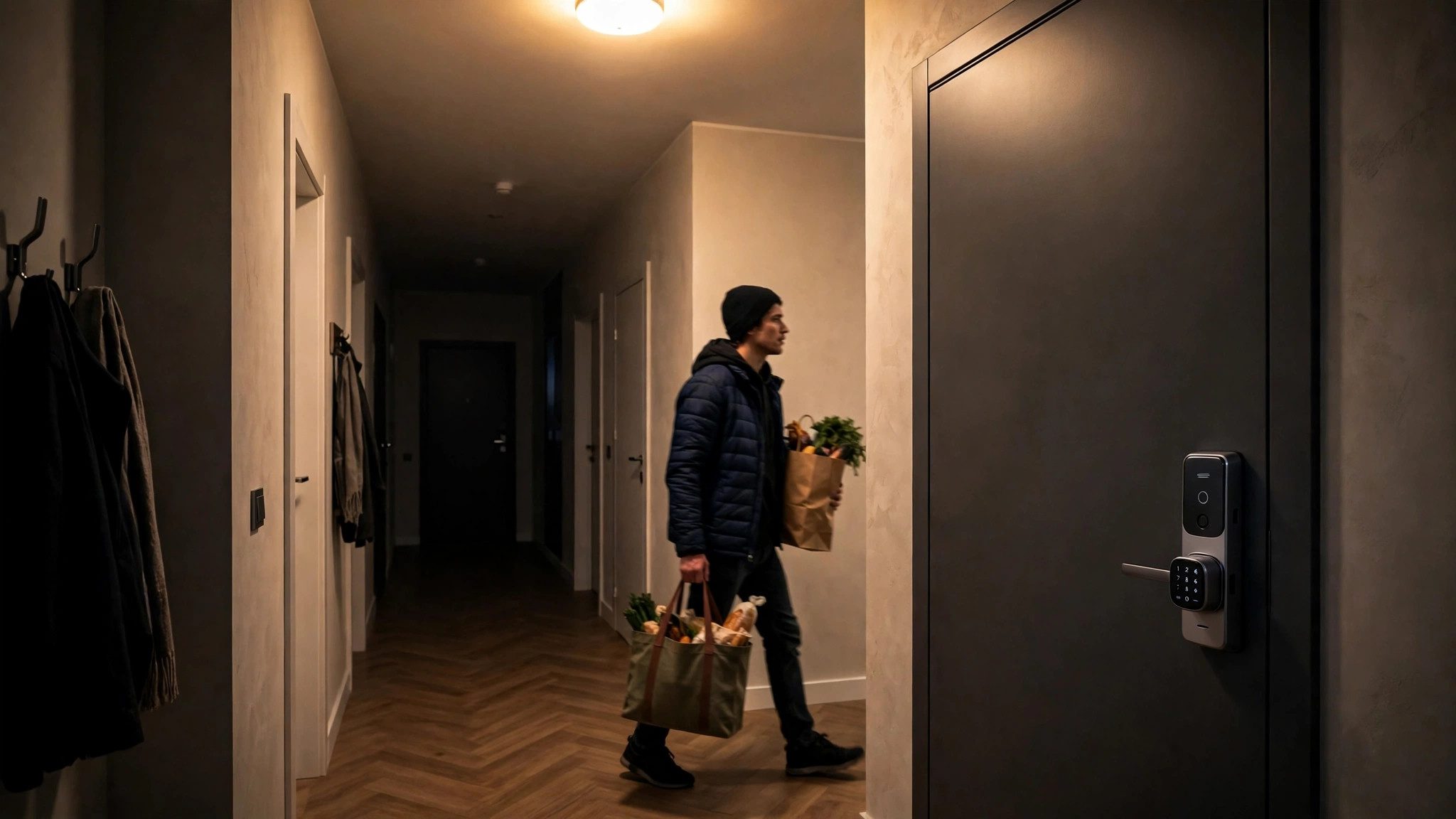
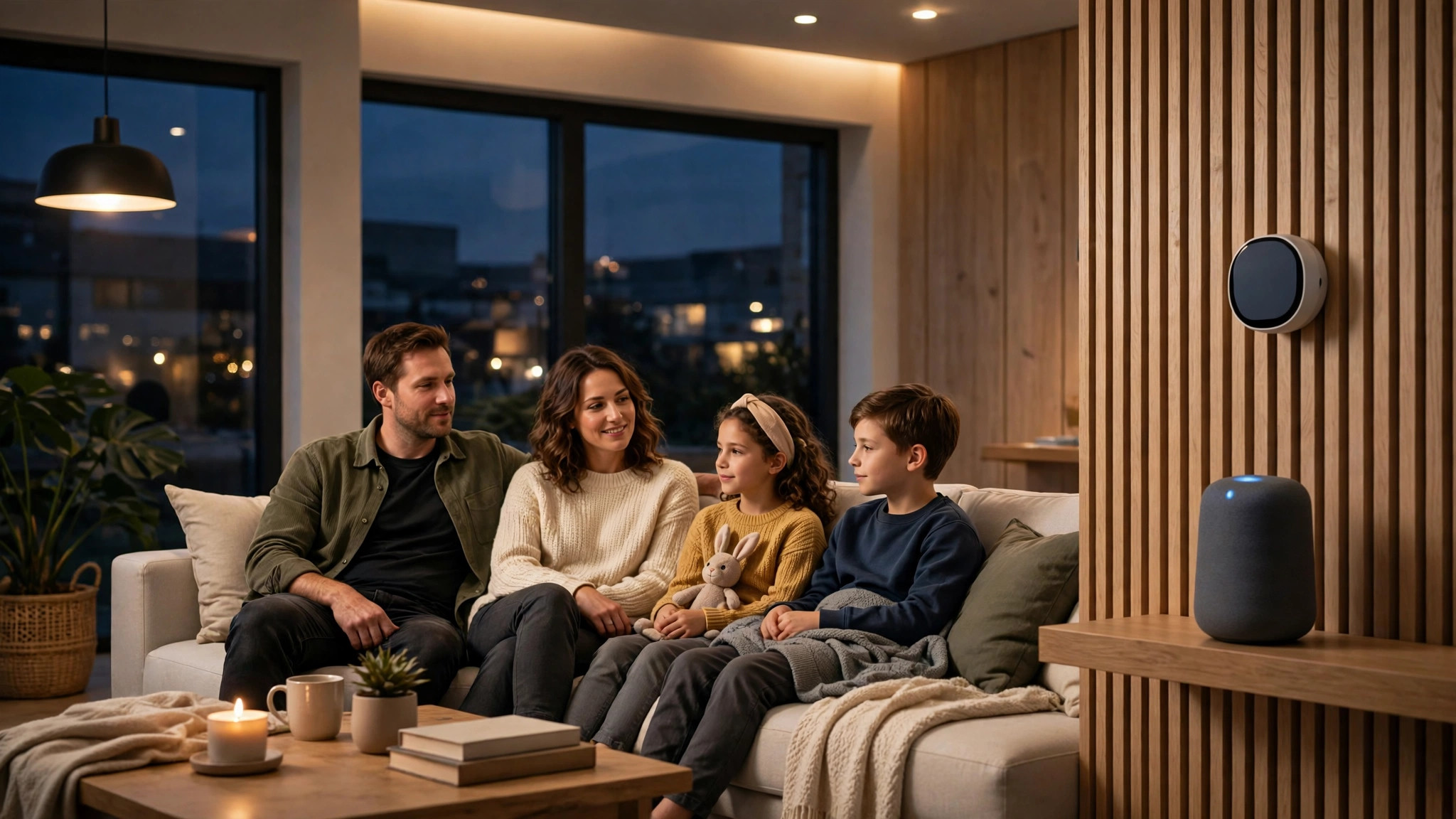
Imagine a normal evening in an ambient home. You arrive after dark, and the hallway light comes on as the door unlocks, because the home knows it is you and that the sun has set. The heating has already warmed the living room, because it learned that you usually come home at this time. The speaker plays the news quietly, then stops when it detects that you have picked up a book.
None of this needs a command. The home is using simple signals: who is present, what time it is, what the weather is doing, and what has happened on previous evenings. The intelligence is not in any single device. It is in the combination, and in the patterns the system has learned over time.
This is already possible in part. Routines in systems such as Amazon Alexa, Google Home, and Apple HomeKit can chain several actions together from a single trigger. Presence detection can turn lights on and off without a switch. What is still missing is the smoothness: the routines that need setting up by hand, the sensors that disagree, and the moments when the home guesses wrong. Ambient computing is the work of closing those gaps.
Ambient Computing and the Rest of the Home
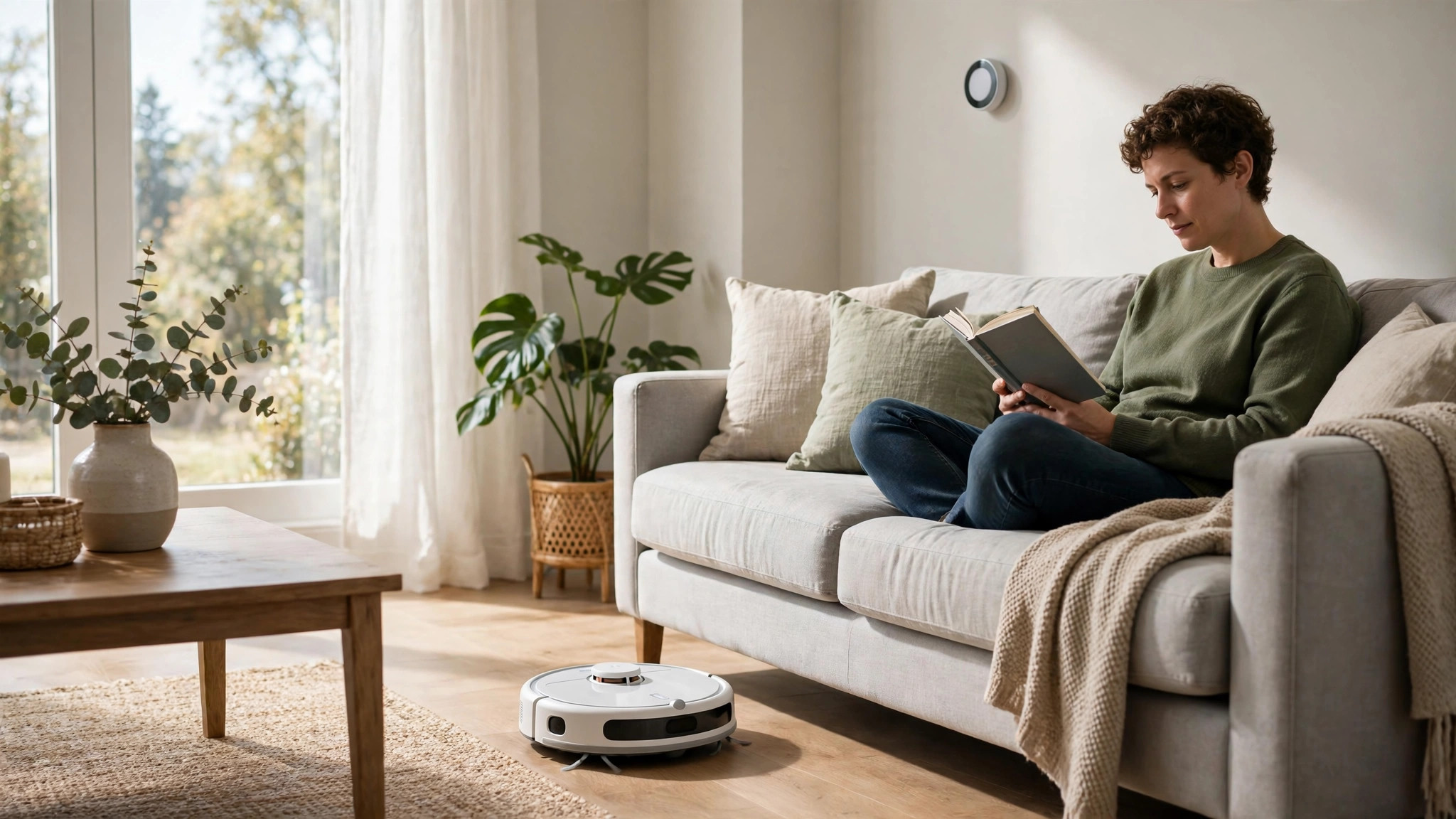
Ambient computing does not live on its own. It connects with the other technologies entering our homes. The household robots that clean floors and carry items will work better in a home that already knows where people are and what they are doing. A robot that knows the living room is empty can clean it without getting in anyone’s way.
It also connects with energy. A home that knows when rooms are occupied can heat and cool only the spaces in use, which saves energy without anyone thinking about it. Smart thermostats from companies such as Nest and Ecobee already do a simple version of this, learning a household’s routine and adjusting the temperature. An ambient system extends the same idea to lights, appliances, and windows.
Health is another connection. Sensors that notice a change in routine, such as an older person not moving around as usual in the morning, could alert a family member. This is sensitive territory, and it only works if the person involved has chosen it, but it shows how a home that pays attention could help people live independently for longer.
The Privacy Problem
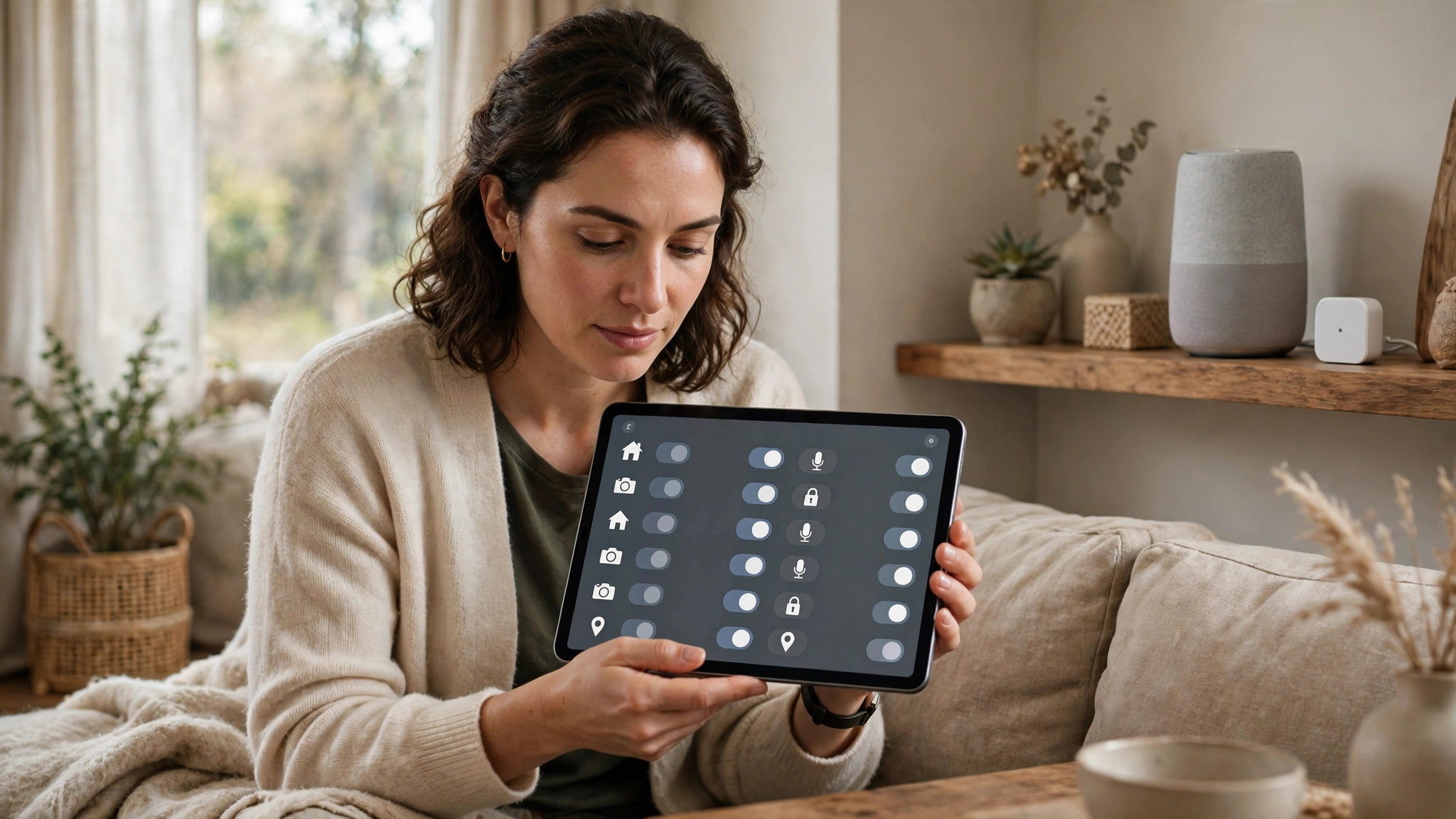
The hardest question about ambient computing is also the most important: what does the home know, and who else knows it? A system that understands who is in a room, what they are doing, and when they are away holds a great deal of personal information. A home that listens for commands is one thing. A home that listens all the time is another.
The industry’s answer, so far, has two parts. The first is local processing: doing as much of the understanding as possible on devices inside the home, so that recordings and sensor data never leave the building. The second is transparency: clear controls that show what a device records and let the owner delete it.
Both are works in progress. Local processing is limited by the power of small chips, which is one reason efficient computing matters. Transparency depends on companies being honest about what their devices do, and on owners taking the time to check. For anyone considering an ambient home, privacy is not a detail to check afterwards. It is the first thing to get right.
Where the Technology Stands in 2026
In early 2026, ambient computing is best described as partly here. The pieces exist: capable voice assistants, affordable sensors, the Matter standard, and on-device AI. What is missing is the polish that turns a collection of pieces into a home that simply works.
The most advanced examples are still in demonstration homes and in the houses of enthusiasts who enjoy setting up routines. For most people, the experience is more modest: a few devices that work well on their own, and a few routines that save a little time. The gap between that and a home that anticipates needs is real, but it is closing.
The next few years will decide how fast it closes. If Matter continues to spread, if voice assistants keep improving, and if local processing becomes cheap enough for every room, the ambient home could become ordinary by the end of the decade. If those pieces stall, it will stay a feature for enthusiasts. Either way, the direction is clear: computing is moving off the screen and into the room, and the home is where it will be felt first.
This shift is part of the wider wave of AI innovations that are changing everyday life, from the assistants we talk to to the robots that share our homes. Ambient computing is the part of that wave you will notice least, because its whole point is to be unnoticed.
Practical Tips / Examples / Things to Know
- Start with one room, not the whole house: a living room with a smart speaker, a few lights, and a presence sensor is enough to learn what works.
- Choose devices that support Matter, so they can work together even if they come from different makers.
- Set up one or two routines that save real time, such as lights and heating that adjust when you leave, rather than automating everything at once.
- Check what each device records, and turn on local processing where the option exists.
- Give the home time to learn: a thermostat or a routine that has seen a month of your habits will work better than one set up yesterday.
- Keep a manual switch for the important things, so a failed sensor never leaves you in the dark.
- Test routines with the whole household, since a system that works for one person may annoy everyone else.
Common Mistakes / Considerations / What to Avoid
- Buying devices from systems that cannot talk to each other, and ending up with five apps instead of one home.
- Automating everything at once and then spending more time fixing routines than the routines save.
- Ignoring privacy settings and letting microphones and sensors send data out of the home without realising it.
- Expecting the home to guess correctly every time, and being frustrated when it gets a routine wrong.
- Choosing cheap sensors that trigger falsely, so lights switch on and off for no reason.
- Forgetting guests: a home tuned to one person’s habits can confuse or annoy visitors.
- Replacing simple, reliable controls with automation that fails when the internet goes down.
Final Thoughts
Ambient computing is not a product you buy. It is a direction that computing is heading in: away from screens and commands, and towards rooms that understand what is happening and respond quietly. The smart home we have today is the early version. The ambient home is what it becomes when the devices stop needing our attention and start earning our trust.
That trust is the real test. A home that listens, watches, and anticipates must prove it is working for the people inside it, not for the companies that made it. If it can do that, the reward is a home that feels less like a collection of gadgets and more like a place that looks after itself, and after the people in it, without being asked.