
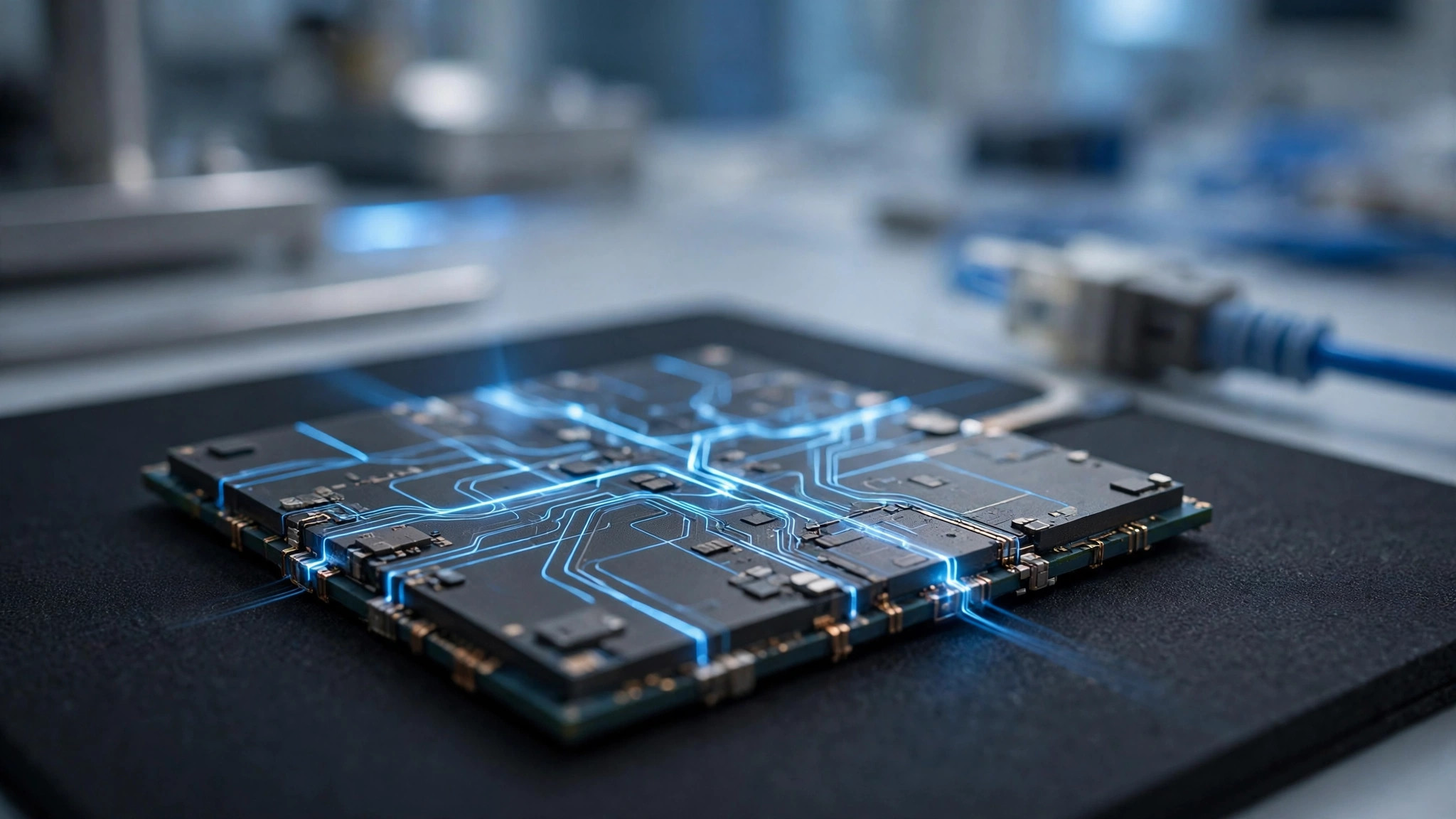
How Optical Chips Could Reduce the Energy Cost of AI Computing
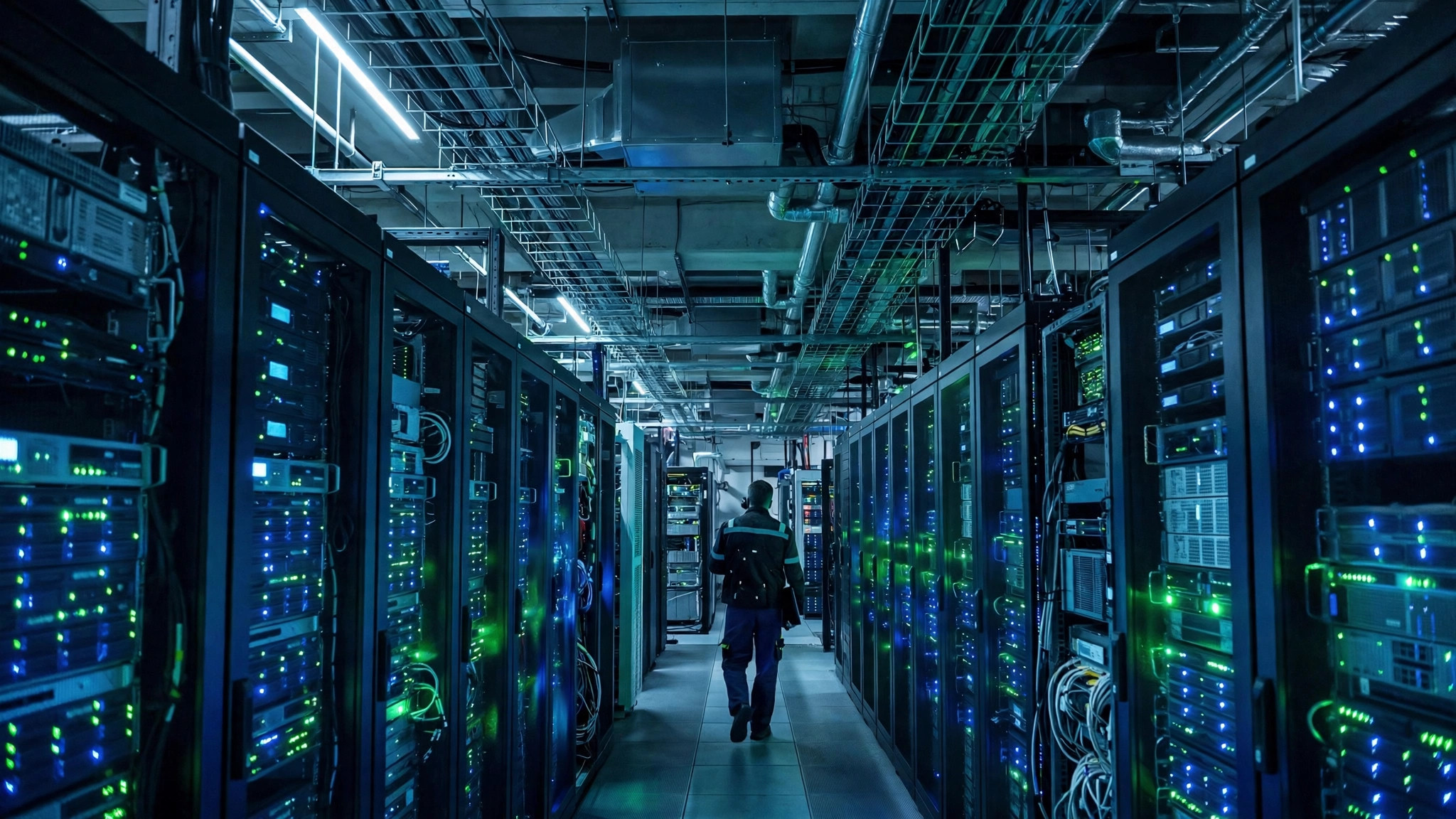
Artificial intelligence has a power problem. Training and running today’s AI models takes an enormous amount of electricity, and the data centres that house them are growing larger and thirstier every year. In many places, the limit on building more AI capacity is no longer the chips themselves, but the power to run them and the cooling to keep them from overheating.
Engineers have spent decades making electronic chips faster and more efficient, but those gains are slowing down while AI’s appetite keeps growing. That gap has pushed researchers towards a different idea: moving light through tiny optical channels instead of electrons through copper wires.
This article explains how optical chips work, why they could use far less energy than today’s electronics, where the technology stands in early 2026, and what still needs to happen before light-powered computing reaches everyday use.
Why AI Computing Uses So Much Energy
To understand why optical chips matter, it helps to see where the energy goes in a modern AI system. A large AI model runs on thousands of graphics processors, or GPUs, working together in a data centre. Each GPU performs billions of calculations per second, and each calculation uses a small amount of energy. Multiplied across a whole training run, the total becomes very large.
Much of that energy is not spent on the calculations themselves, but on moving data. Inside a chip, data travels along tiny copper wires, and every trip along a wire loses energy as heat. Between chips, data travels across circuit boards and through cables, losing more energy at each step. In a large AI system, moving data around can use as much energy as the computing itself, and all of that energy ends up as heat that must be removed by cooling systems, which use more power still.
Efficiency matters because a chip that does the same work with less energy also produces less heat, needs less cooling, and lets a data centre do more work with the same power supply. The gains multiply.
What Optical Chips Are
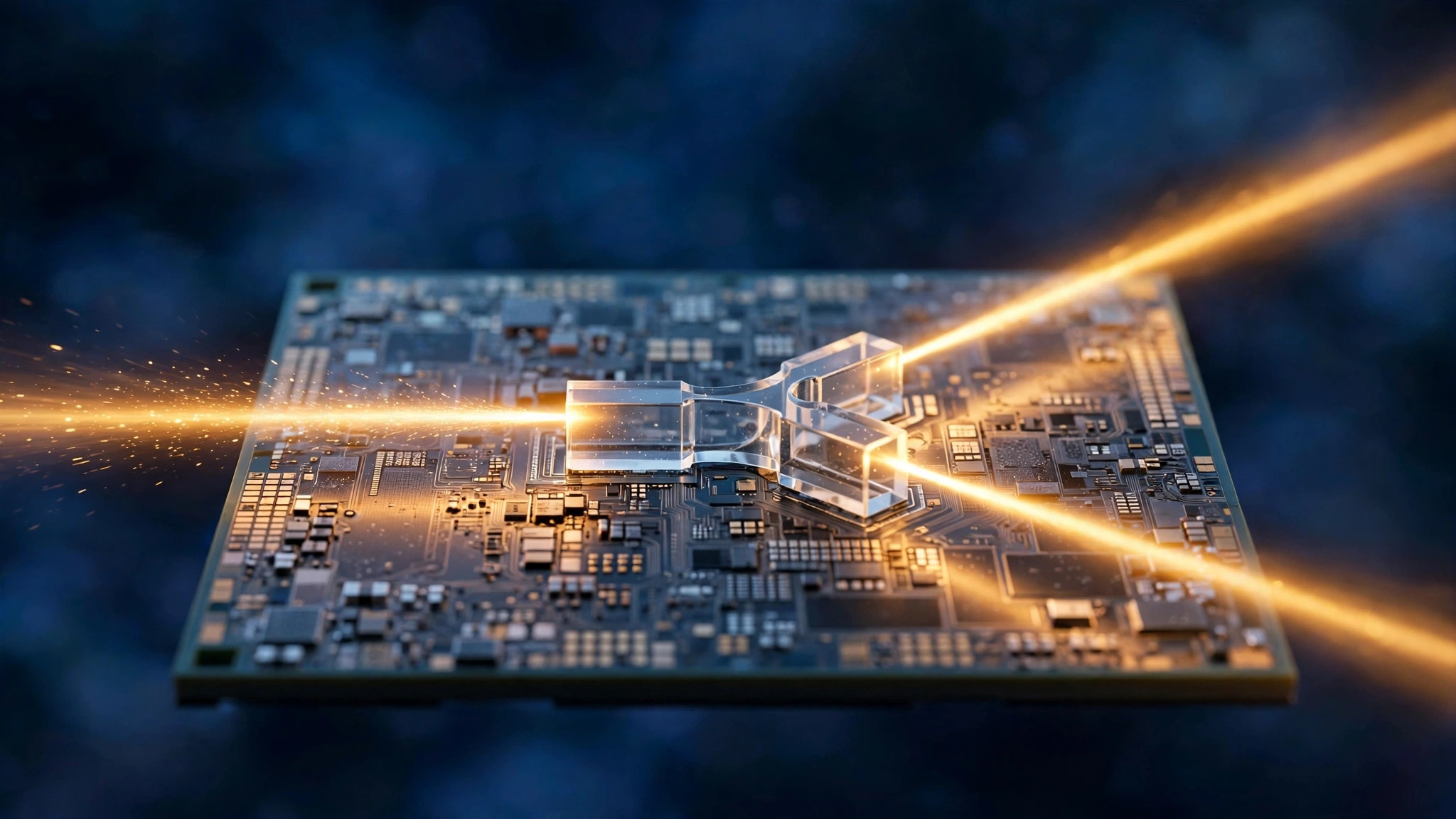
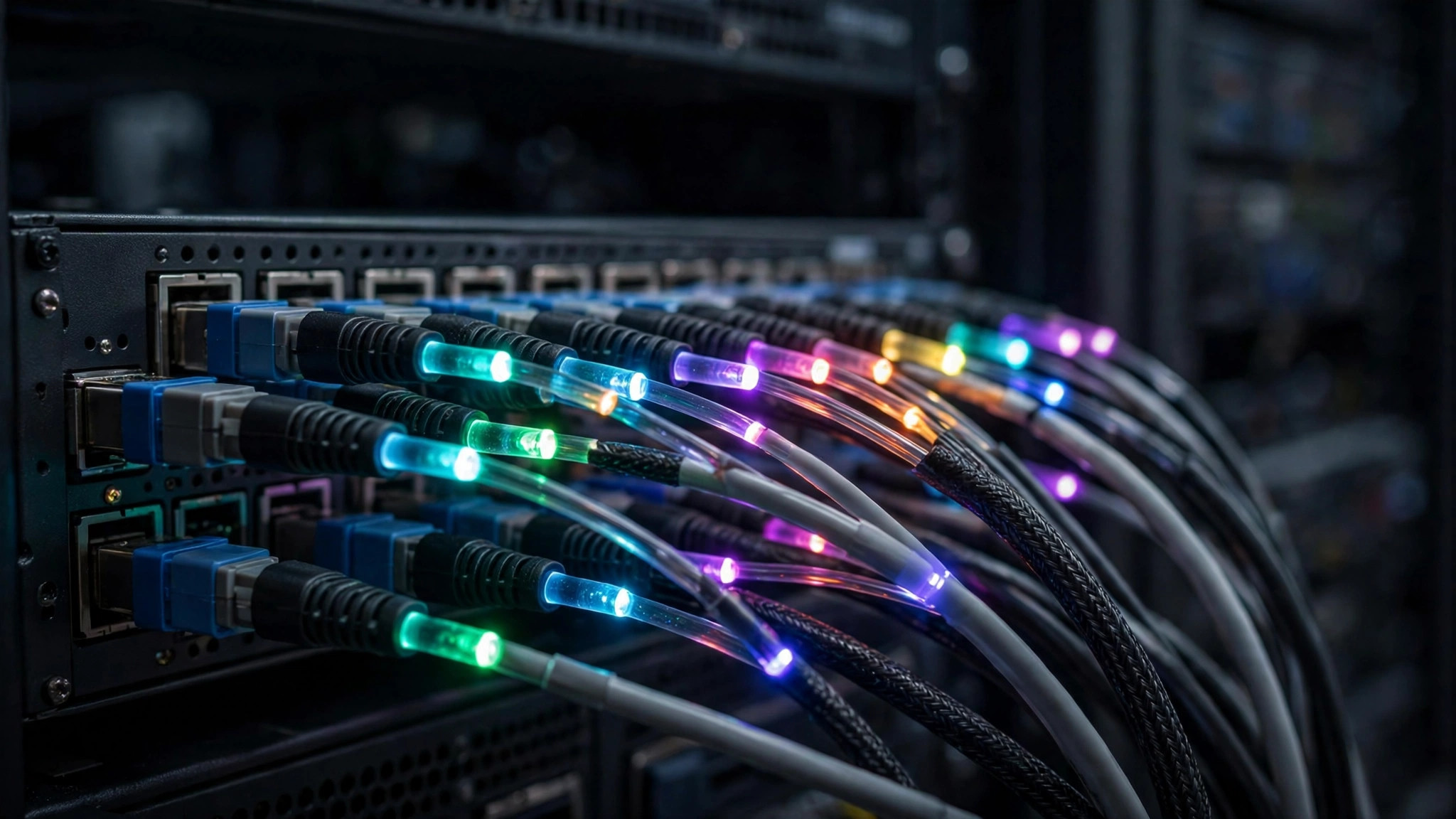
An optical chip, also called a photonic chip, does some or all of its work with light instead of electricity. Light travels through tiny channels called waveguides, carved into silicon, much as electricity travels through wires. The key difference is that light loses very little energy as it travels, and many different colours of light can travel through the same channel at once, each carrying its own stream of data.
The idea is not new. Fibre-optic cables have carried the world’s internet traffic as light for decades, and the lasers and detectors inside them are a mature technology. What is new is bringing that technology onto the chip itself, shrinking optical components down to the size of transistors so that light can do computing work, not just carry messages between distant machines.
Optical chips are being developed in two main ways: using light to move data between chips, replacing copper connections, and the more ambitious approach of performing the calculations themselves, carrying out the matrix multiplications at the heart of AI models with beams of light.
How Light Can Do the Maths
AI models are built from a mathematical operation called matrix multiplication: large grids of numbers multiplied and added together, over and over. In an electronic chip, this happens in circuits that switch on and off billions of times a second. In an optical system, the same operation can be done by passing light through a network of tiny devices that split, combine, and adjust the beams.
The advantage is speed and efficiency: light can perform many multiplications at once, in parallel, as the beams pass through the network, with no need to shuttle numbers back and forth between memory and processor, where much of an electronic chip’s energy goes. In principle, an optical processor could do the core work of an AI model with a fraction of the energy.
This is still a young technology. The first commercial optical AI chips are designed for specific tasks, not as general-purpose replacements for GPUs. They work best on the kind of maths that AI models use most, and they sit alongside electronic chips rather than replacing them entirely. But the direction is clear: where light can do the work, it can often do it with less energy.
Optical vs Electronic: A Simple Comparison
The table below summarises how optical and electronic approaches compare on the things that matter most for AI computing.
| Feature | Electronic chips | Optical chips |
|---|---|---|
| How data moves | Electrons through copper wires | Light through silicon waveguides |
| Energy lost moving data | Significant, and rises with distance | Very low over short and medium distances |
| Parallel work | Limited by wiring and heat | Many light colours can carry data at once |
| Heat produced | High, needs heavy cooling | Much lower for the same work |
| Maturity | Decades of development, mass production | Early commercial products, still scaling up |
| Best use today | General computing, all AI workloads | Data movement, specific AI maths |
The table makes the trade-off clear. Electronics are mature, flexible, and manufactured at enormous scale. Optics are more efficient at moving and processing data, but the manufacturing base is smaller and the designs are less flexible. The future is likely to be a mix: electronic chips doing what they do best, with optical components handling the data movement and the most energy-hungry calculations.
Who Is Building Optical Chips
Several companies are working to bring optical computing out of the laboratory. Lightmatter, a startup founded by researchers from MIT, has built chips that use light for AI calculations and for connecting processors together, and it has raised substantial funding to move into production. Ayar Labs, another startup, focuses on optical connections between chips, using tiny lasers to replace the copper links that currently limit data centre performance.
Larger companies are involved too. Intel has demonstrated silicon photonics technology that puts optical connections directly onto a chip package, and it has shipped optical transceivers for data centres for years. TSMC, the world’s largest chip manufacturer, has worked on silicon photonics manufacturing, which matters because new technology only becomes affordable when it can be made in existing factories.
Universities remain important: much of the core research comes from groups at MIT, Stanford, and elsewhere, solving problems such as manufacturing variation, where tiny differences in a waveguide change how light behaves.
Where Optical Chips Are Being Used First
The first place optical chips are appearing is not in a laptop or a phone, but in the data centre. The connections between servers and between racks of servers already use fibre optics, and the next step is to bring that light closer to the processor itself. Optical interconnects can move data between chips faster and with less energy than copper, which matters most exactly where AI systems are largest and hottest.
Some AI companies are testing optical processors for specific workloads, such as the inference step where a trained model answers questions. Inference happens far more often than training, and it happens in data centres all over the world, so even a modest efficiency gain there adds up to a large saving of electricity.
Wider use is measured in years, not months. Optical interconnects are already entering products, and optical processors for AI are in trials with early customers. A laptop or phone with a photonic chip inside is further away, and it will only happen if manufacturing becomes cheap and reliable enough. For now, the technology’s job is to make the data centre more efficient, where the energy problem is biggest.
The Challenges That Remain
Optical computing faces real obstacles. Manufacturing is the first. Silicon photonics uses the same factories as electronic chips, but the processes are different, and small variations in manufacturing can change how a waveguide guides light. Yields, the share of working chips from each wafer, need to improve before prices can fall.
Integration is the second challenge. An optical chip still needs electronic circuits to control it, to store data, and to talk to the rest of a computer. Packing lasers, detectors, waveguides, and electronics into one device, and keeping them all working together, is a difficult engineering problem.
The third challenge is flexibility: an electronic GPU can run almost any AI workload, while an optical processor is more specialised, designed for particular kinds of maths. That specialisation is part of why it is efficient, but it means optical chips will complement GPUs rather than replace them, at least for now.
None of these challenges looks impossible. They are the normal problems of a new technology moving from research to production, and the amount of investment going into solving them suggests the industry believes they can be solved.
What It Means for Everyday Users
Most people will never buy an optical chip directly, or know when one is working for them. The benefit will arrive indirectly: AI services that cost less to run, data centres that use less electricity, and phones whose AI features can run on the device instead of in the cloud.
That last point matters for the devices in our homes. On-device AI, from voice assistants to photo editing, is limited by how much energy a small battery can supply. More efficient chips, including optical ones, could let a phone or a pair of smart glasses run larger AI models without draining the battery. The same efficiency that helps a data centre could one day help the household robots and assistants that are starting to appear in our homes, giving them more intelligence without more power.
The wider wave of AI innovations reaching everyday life depends on computing becoming cheaper and more efficient. Optical chips are one of the most promising ways to make that happen, even if the change arrives gradually, one data centre at a time.

Practical Tips / Examples / Things to Know
- If you run AI workloads in the cloud, ask your provider about the efficiency of its hardware, since power use affects both cost and carbon footprint.
- When comparing AI services, remember that the energy cost of a query is part of its real price, even if you never see the electricity bill.
- For businesses, optical interconnects are worth watching first: they are the part of the technology closest to everyday products.
- Do not expect a photonic laptop soon; the technology is reaching data centres first, and consumer devices will follow years later.
- Follow the chip manufacturers, not just the startups: when TSMC and Intel invest in silicon photonics, it signals that production is becoming realistic.
- If you buy AI hardware, check its energy efficiency per unit of work, not just its raw speed.
Common Mistakes / Considerations / What to Avoid
- Assuming optical chips will replace GPUs overnight, when the realistic future is a mix of both.
- Believing a demonstration of one optical calculation proves the whole technology is ready.
- Ignoring the manufacturing challenge: a chip that works in a laboratory is not the same as one that can be made by the million.
- Judging the technology by a single company’s claims, rather than by independent testing and real deployments.
- Forgetting that AI’s energy problem also comes from how models are used, not just from the chips that run them.
- Overlooking the cooling and infrastructure costs that efficiency gains can reduce, which are part of the real saving.
Final Thoughts
Optical chips are not a magic answer to AI’s energy problem, but they are one of the most serious attempts to solve it. The physics is on their side: light moves data with less loss than electricity and can do the maths of AI in parallel, with less heat. The engineering is catching up, one product at a time, starting with the connections inside data centres.
The change will be gradual, and most people will notice it only as AI services become cheaper, faster, and less wasteful. That is how the best infrastructure improvements work: quietly, in the background, making everything else possible. If optical chips deliver on their promise, the AI of the next decade will run on light as well as electricity, and it will use far less power to do it.