
7 Robotics Innovations That Could Transform Industries in the Next Decade
Robots have worked in factories for decades, but for most of that time they stayed behind fences, doing one job over and over. The machines arriving now are different. They see, they learn, they work beside people, and they handle objects that used to need a human hand.
The change is not a single invention. It is several technologies maturing at the same time: better sensors, cheaper computing, and artificial intelligence that can make sense of a messy real world. Together, they are pushing robots out of their cages and into warehouses, hospitals, farms, and building sites. Many of these advances sit alongside the wider wave of AI innovations reaching everyday life in the coming years.
This article looks at seven robotics innovations that could reshape industries over the next decade. Each one already exists in some form today. What changes next is how widely they are used, and how much work they can take on.
1. Humanoid Robots Joining the Workforce
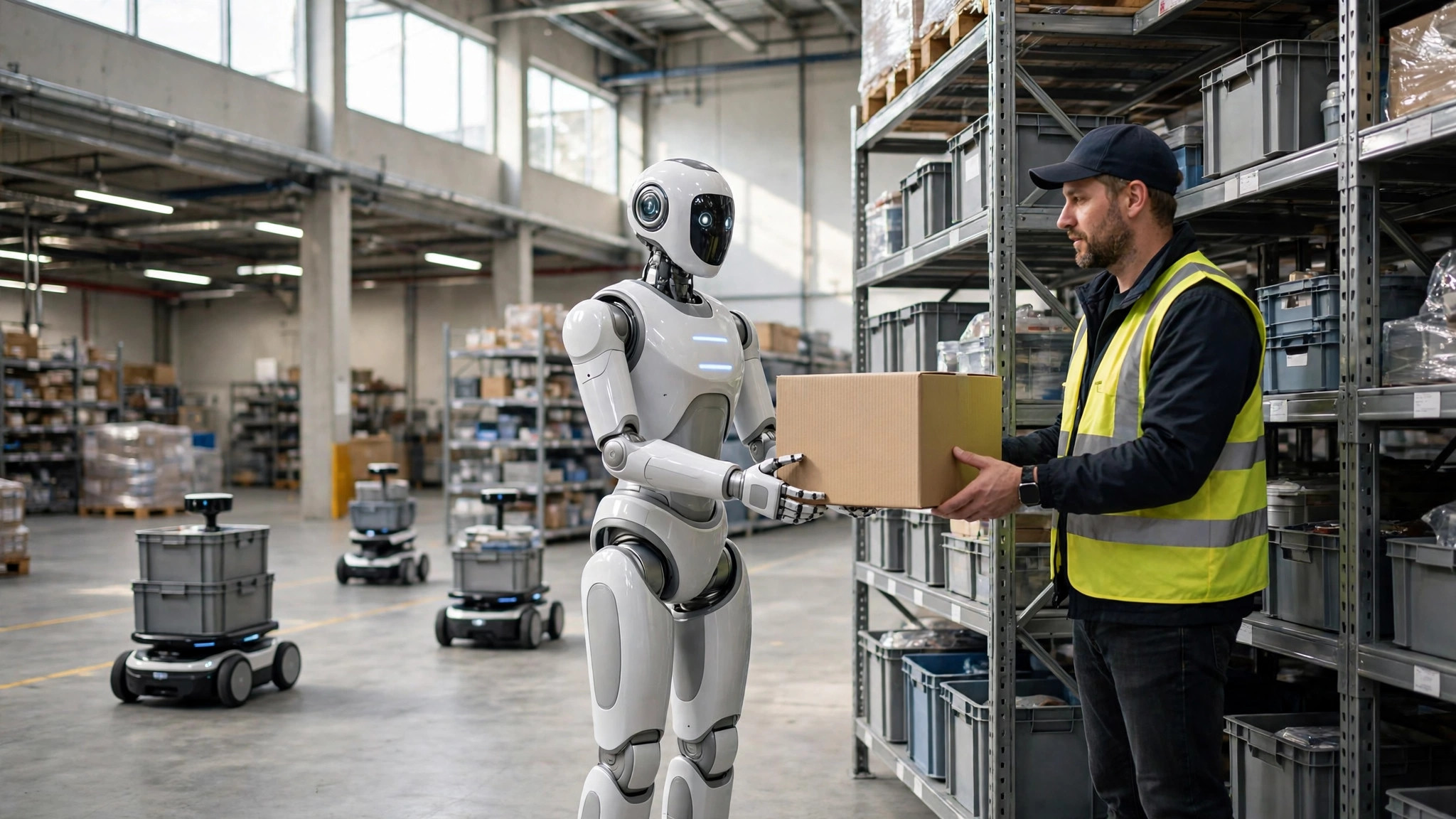
The most talked-about change in robotics is also the most visible: robots shaped like people. Companies such as Tesla, with its Optimus robot, and Figure AI, with its Figure robots, have spent the last few years building humanoids designed to work in warehouses and factories. In 2024, Figure began testing its robots in a BMW car plant, carrying out simple handling tasks alongside human workers.
The reason for the human shape is practical, not cosmetic. Our workplaces were built for human bodies: stairs, shelves, door handles, and tools all assume two arms and two legs. A robot that matches that shape can use the same spaces and equipment without a factory being rebuilt around it. That is a large part of the appeal for employers.
There are still real limits. Today’s humanoids are slow compared with a person, their batteries last a few hours at most, and their hands struggle with delicate or slippery objects. The tasks they handle now are simple ones: moving boxes, sorting parts, and carrying loads over short distances. Over the next decade, the question is not whether humanoids will appear in workplaces, but whether they can become fast and reliable enough to be worth their cost. The early trials suggest the direction of travel, even if the destination is still some way off.
2. Collaborative Robots Working Beside People
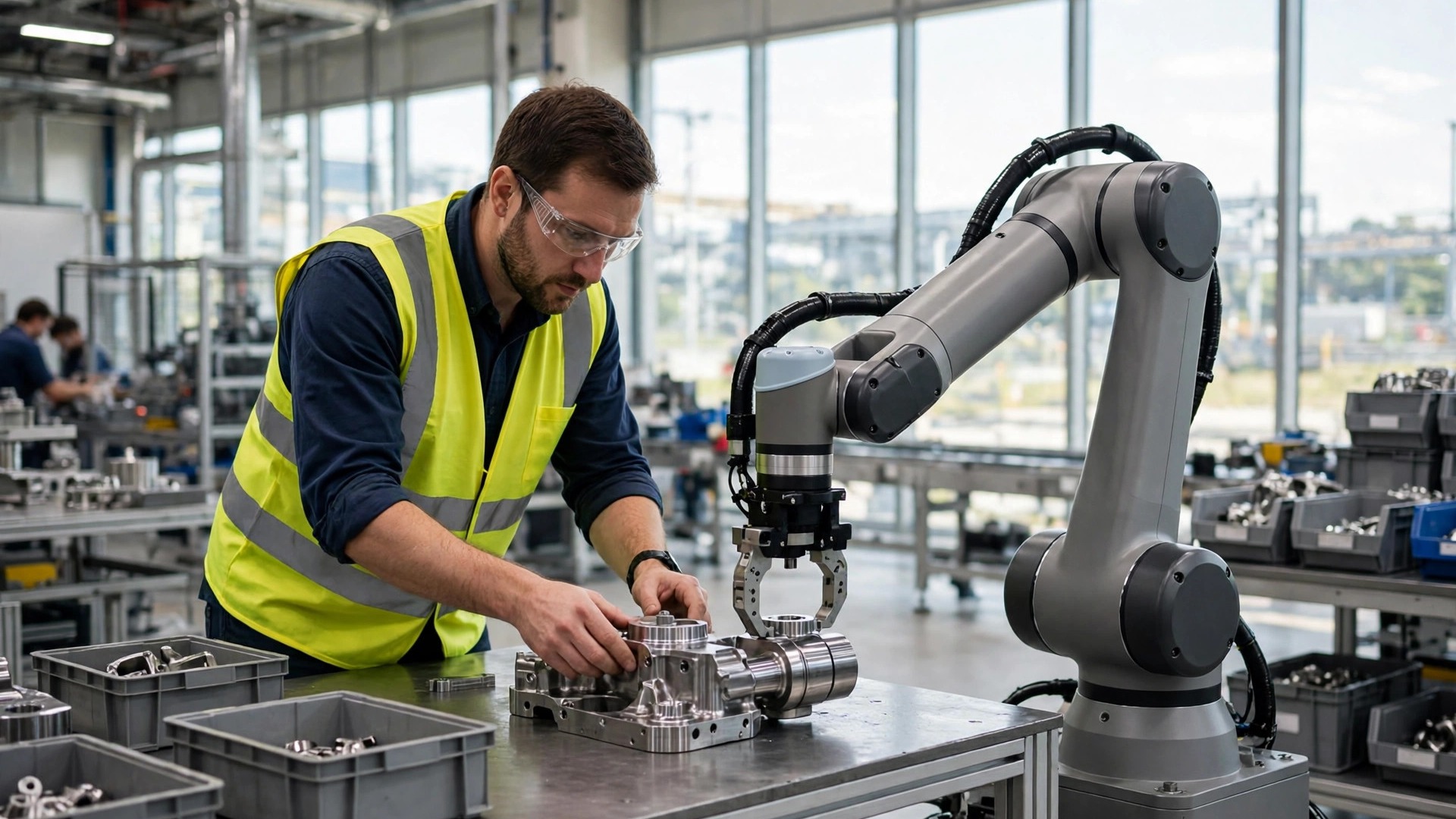
Not every industrial robot needs to look human. Collaborative robots, or cobots, are a quieter revolution that is already well under way. Unlike traditional industrial robots, which work inside safety cages, cobots are designed to share a workspace with people. They stop or slow down when they sense contact, and they can be taught a new task by guiding their arm through the motion by hand.
Companies such as Universal Robots, Fanuc, and ABB sell cobots that now appear in small workshops as well as large factories. A cobot might hold a part steady while a worker fastens it, apply glue along a seam, or lift heavy items so a person does not have to. For small businesses, the appeal is cost and flexibility: a cobot is cheaper than a traditional robot cell and can be moved to a different job in an afternoon.
The effect on work is different from the old picture of automation. Cobots are less about replacing workers and more about removing the repetitive or tiring parts of a job. A worker who used to spend a shift lifting boxes can spend it checking quality instead. That shift in the kind of work people do may be the most lasting change cobots bring.
3. AI Vision Systems That Let Robots Understand What They See
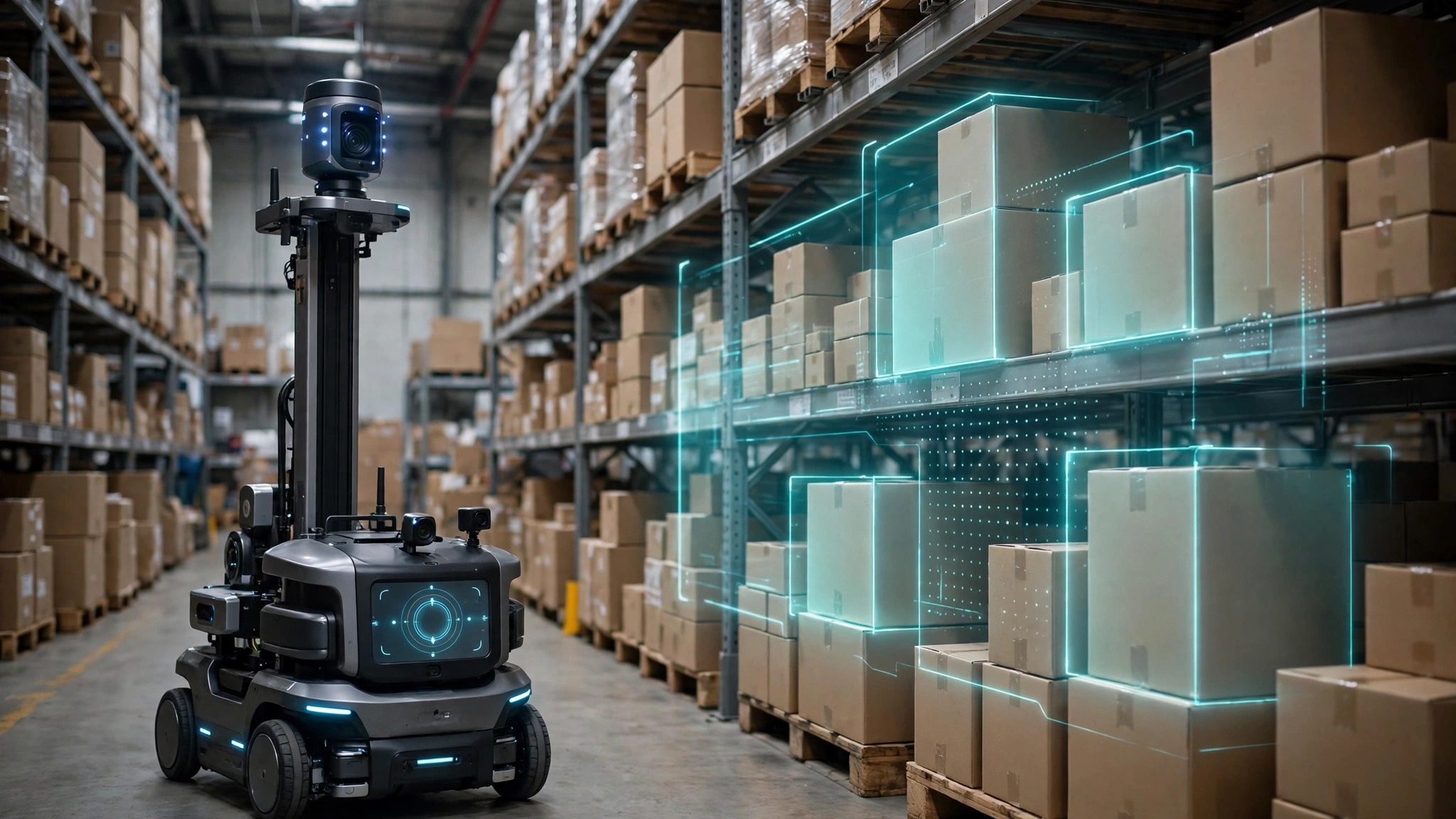
A robot is only as useful as its understanding of the world around it, and that understanding has improved quickly. Modern AI vision systems combine cameras with machine learning to identify objects, judge distances, and cope with things that are not in exactly the expected place.
In a warehouse, vision lets a robot pick an item from a mixed bin instead of needing every part presented in a neat row. On a farm, it lets a machine tell a weed from a crop. In a factory, it lets a robot inspect a finished part and spot a defect a human eye might miss. The key advance is tolerance for mess: real workplaces are cluttered, lighting changes, and objects move. Vision systems that handle that uncertainty make robots useful in far more places.
The technology still has weaknesses. A reflective surface, a transparent bag, or an object the system has never seen can confuse it. Training data matters too: a vision system trained on one warehouse may struggle in another. But the trend is clear, and every improvement in vision unlocks new jobs for robots.
4. Soft Robotics: Gentle Machines for Delicate Work
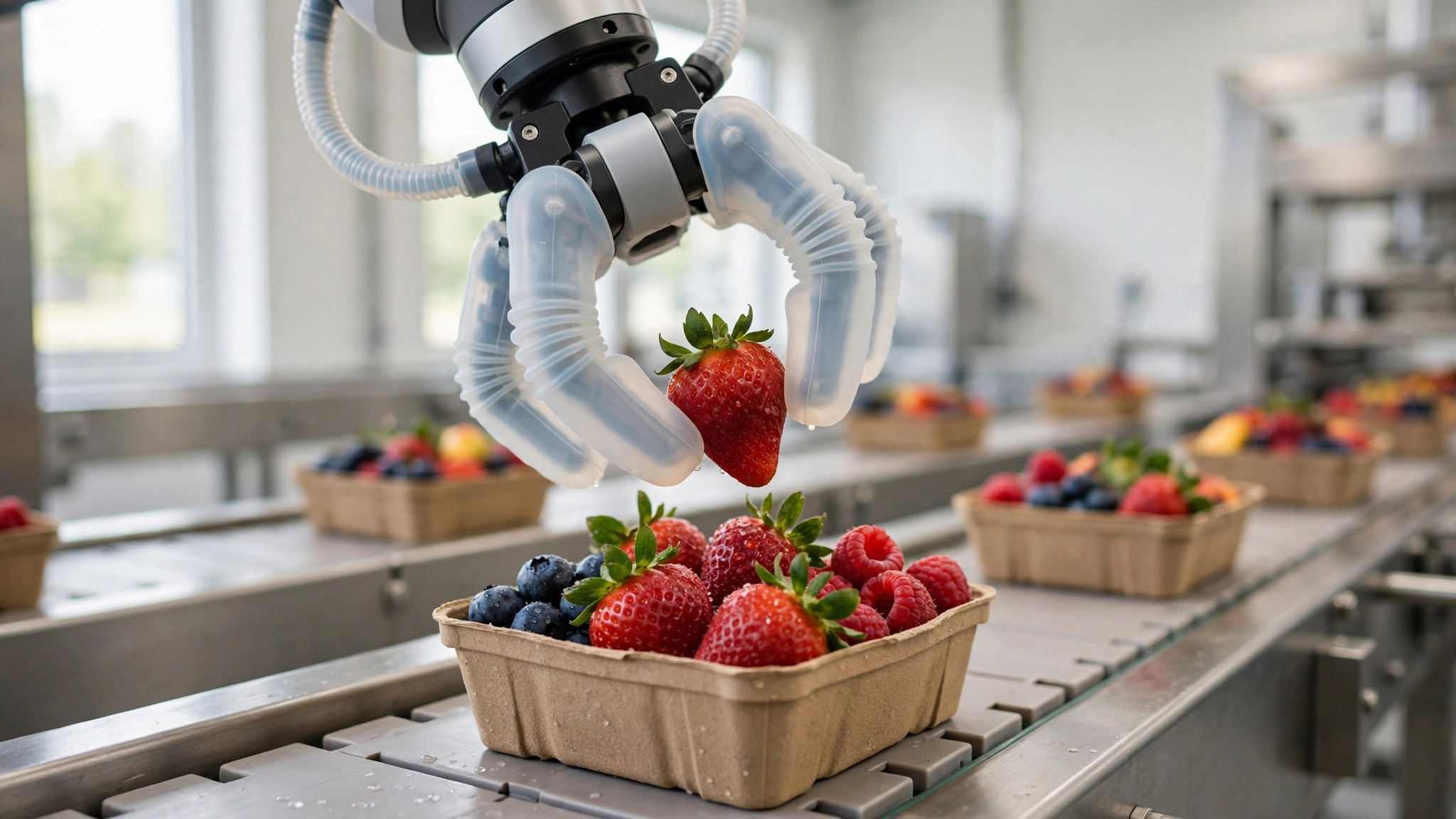
Traditional robots are made of metal and move with stiff precision. Soft robotics takes the opposite approach: robots built from flexible materials that bend, stretch, and grip gently. A soft gripper can pick up a strawberry without bruising it, handle a glass vial without cracking it, or assist a patient without causing pain.
The applications reach well beyond the factory floor. In food processing, soft grippers handle fruit, baked goods, and other items that rigid claws would damage. In medicine, soft devices can support rehabilitation, helping a patient relearn movement after an injury. In exploration, soft robots can squeeze through gaps and survive bumps that would break a rigid machine.
The challenge is control. A soft robot bends in many directions at once, which makes its movement harder to predict and program than a jointed metal arm. Researchers are working on new materials and control methods to solve this, and progress has been steady. As the control improves, soft robots could open up whole categories of work that rigid robots simply cannot do.
5. Swarm Robotics: Many Small Robots Instead of One Big One
Swarm robotics borrows an idea from nature: ants, bees, and birds achieve complex results by combining many simple individuals. Instead of one large, expensive robot, a swarm uses dozens or hundreds of small, simple machines working together, each following a few basic rules.
The approach has natural advantages. If one robot in a swarm fails, the rest carry on. A swarm can cover a large area quickly, and adding more robots scales the work up without redesigning the system. In warehouses, swarms of small robots already move shelves and sort parcels. In agriculture, researchers have tested swarms of small robots that monitor crops field by field. In disaster response, a swarm could search a collapsed building faster than a single machine.
The hard part is coordination. Getting hundreds of robots to share information, avoid collisions, and divide work fairly is a difficult problem, and it gets harder as the swarm grows. Early deployments use central control to keep things simple, but the most interesting research aims at true decentralisation, where each robot makes its own decisions based on what its neighbours are doing. That is the version that could transform the most industries.
6. Autonomous Mobile Robots in Logistics
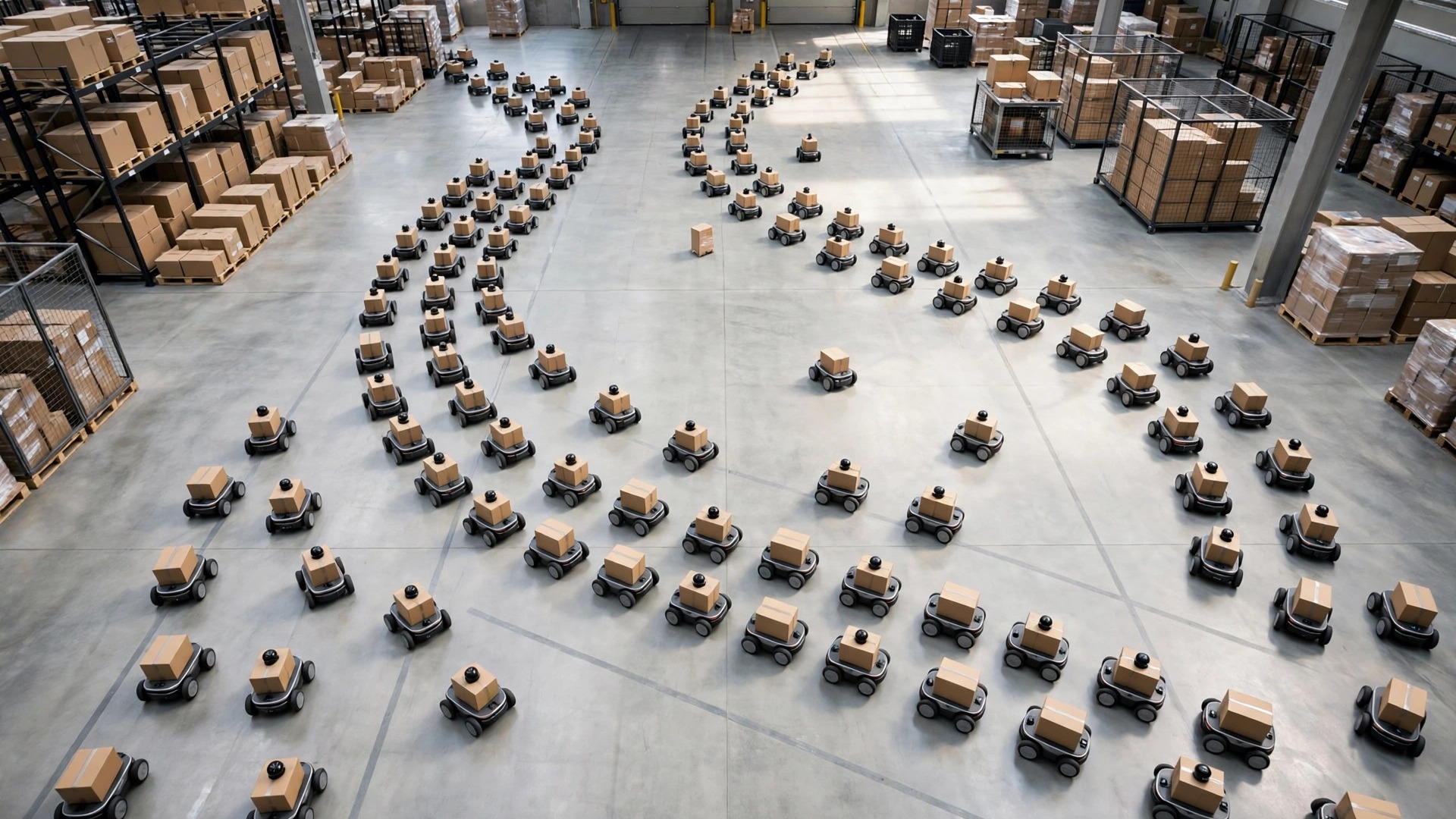
Warehouses have become one of the biggest markets for robots, and the workhorse is the autonomous mobile robot, or AMR. These are flat, wheeled platforms that move goods around a warehouse on their own, following maps they build and update as they go. Amazon’s warehouse robots are the best-known example, but similar machines now operate in the facilities of many large retailers and logistics companies.
AMRs differ from the older automated guided vehicles because they do not need fixed tracks or magnetic strips on the floor. They navigate freely, avoid obstacles, and reroute themselves when a path is blocked. That flexibility matters in a warehouse where layouts change with the seasons.
The next step is taking AMRs out of the warehouse. Hospitals use them to move medicines and samples between departments. Airports test them for moving luggage. Factories use them to carry parts between workstations. Each new setting brings new problems, from crowded corridors to uneven floors, but the core technology is the same. As labour shortages continue in logistics, the case for AMRs grows stronger every year.
7. Robotic Exoskeletons in Industry and Healthcare
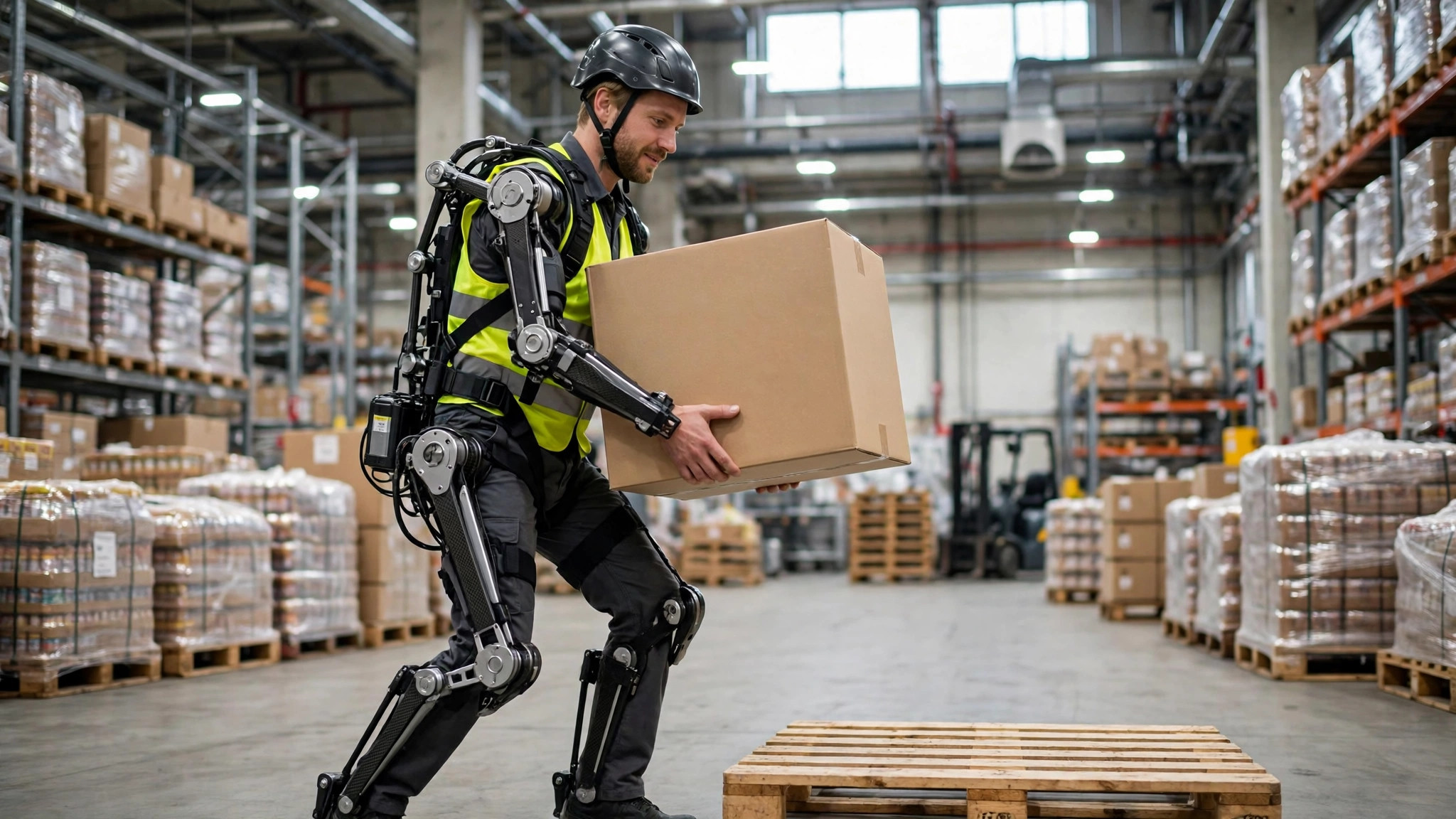
The final innovation is one you wear rather than watch. A robotic exoskeleton is a powered frame that supports a worker’s body, reducing strain when lifting, reaching overhead, or standing for long periods. Early versions were developed for rehabilitation and for soldiers, but industrial models are now appearing in warehouses, construction, and manufacturing.
The benefits are straightforward. A worker wearing a back-support exoskeleton can lift heavy items with less strain on their spine. A shoulder-support model helps with overhead work on an assembly line. Employers see fewer injuries and less fatigue, and workers keep jobs their bodies might otherwise have forced them to leave.
Cost and comfort are still obstacles. Industrial exoskeletons are expensive, and wearing one all day is not yet as comfortable as it needs to be. But as prices fall and designs improve, exoskeletons could become standard safety equipment, much as hard hats and gloves are today. They are a reminder that the most important robotics innovation of the next decade may not be a machine that replaces people, but one that helps people keep working.
Practical Tips / Examples / Things to Know
- If you run a small business, start with a cobot on one repetitive task rather than automating a whole line at once.
- Visit a trade show or a supplier demonstration before buying a robot, and watch it handle your actual products, not a prepared demo.
- Check the total cost, including installation, training, and maintenance, not just the price of the robot itself.
- Talk to the workers who will share space with a robot early, since their trust and feedback decide whether the deployment succeeds.
- Keep a human in the loop for quality checks, especially where a robot’s vision system is new to your products.
- Plan for downtime: a robot that stops working should not stop your whole operation.
- Look at exoskeleton trials if your team does heavy lifting, and measure injury rates before and after.
Common Mistakes / Considerations / What to Avoid
- Buying a humanoid robot for the headlines before it can do a job that pays for itself.
- Expecting a robot to work perfectly on day one in a messy, real-world setting.
- Automating a bad process, which only produces mistakes faster.
- Ignoring the training your staff need to work safely beside a cobot or AMR.
- Choosing a robot that only works with one supplier’s software and cannot be adapted later.
- Forgetting cybersecurity: a connected robot on a factory network is a target, like any connected device.
- Judging a swarm or soft robot by what it can do in a laboratory, rather than in your own environment.
Final Thoughts
None of these seven innovations will transform industry overnight. Robots are still expensive, still limited, and still need people to set them up, maintain them, and handle the jobs they cannot do. The change is gradual, and it looks different in every industry.
What ties the seven together is a shift in what robots are for. The old industrial robot was a machine that replaced a human motion. The new ones extend what people can do: a cobot takes the strain, a vision system catches the defect, an exoskeleton saves a back. The factories and warehouses of the next decade will still have people in them. They will simply be working with machines that are smarter, gentler, and closer than ever before.